

Main decision tree
Abnormal bleeding or no periods: anovulatory cycles
Key points
- Anovulatory cycles are the most common cause of abnormal bleeding in the first years after menarche.
- Heavy bleeding in a teen: CBC, ferritin and von Willebrand screening; stable patients get a combined hormonal contraceptive plus iron.
- Secondary amenorrhea: no menses for more than 3 months after regular cycles or 6 months after irregular ones; pregnancy is the most common cause.
- Primary dysmenorrhea: NSAIDs started 1–2 days before or at the start of menses, on a schedule; then combined hormonal contraception.
- PMDD: first-line treatment is an SSRI, taken continuously or in the luteal phase only.
- Sudden severe one-sided pelvic pain with vomiting and an adnexal mass: ovarian torsion, emergency laparoscopy.
- Imperforate hymen: primary amenorrhea with cyclic pain and a bulging membrane; ultrasound, then hymenectomy.
Heavy or irregular bleeding
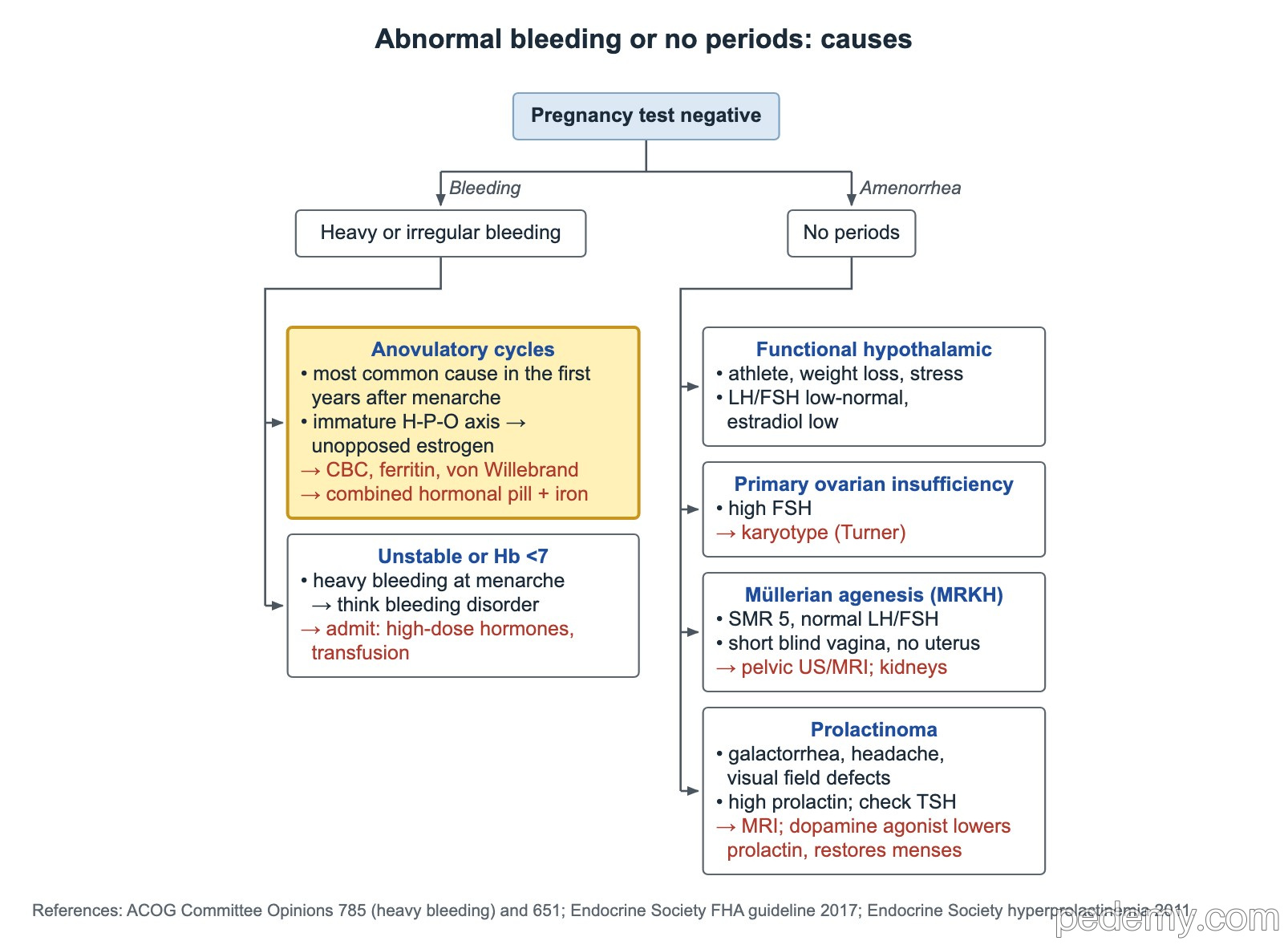
After a negative pregnancy test, the tree splits into heavy or irregular bleeding and no periods. In the first years after menarche, the hypothalamic–pituitary–ovarian axis is immature and many cycles are anovulatory. With no corpus luteum there is no progesterone, so unopposed estrogen builds a thick lining that sheds heavily and irregularly.
- Check a CBC, ferritin and von Willebrand disease screening. Heavy bleeding from menarche suggests a bleeding disorder.
- Hemodynamically stable with mild anemia: a combined estrogen–progestin contraceptive plus iron.
- Example: 13-year-old, menarche 8 months ago, 10 days of heavy bleeding, Hb 9.8 g/dL, normal BP. Check CBC, ferritin and von Willebrand screen; start a combined hormonal contraceptive and iron.
- Unstable, or hemoglobin below 7 g/dL: admit for high-dose hormones and transfusion if needed. Tranexamic acid is another option.
- Maintenance options after control include combined methods, progestins and the LNG IUD.
Amenorrhea: when to evaluate
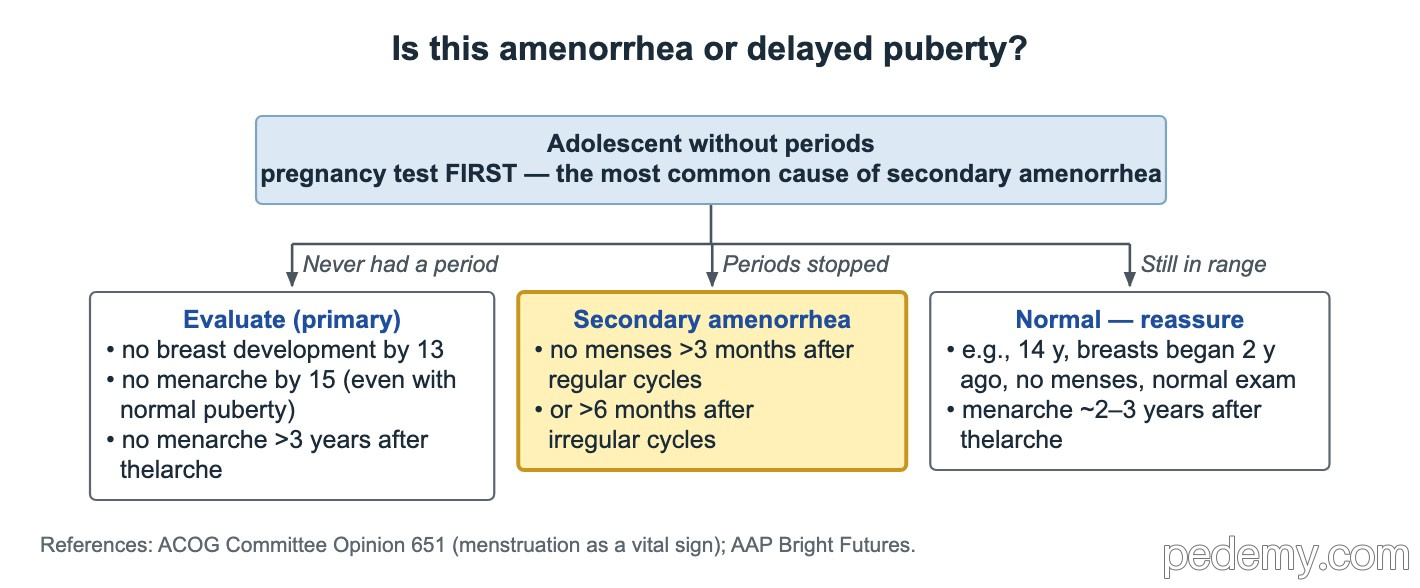
Always do a pregnancy test first: pregnancy is the most common cause of secondary amenorrhea.
| Pattern | Definition or action |
|---|---|
| Secondary amenorrhea | No menses for more than 3 months after regular cycles, or more than 6 months after irregular cycles |
| Primary amenorrhea: evaluate | No breast development by 13, no menarche by 15, or no menarche more than 3 years after thelarche |
| Still in the normal range | Menarche usually comes about 2–3 years after breast budding; reassure if the exam is normal |
Causes of no periods
| Cause | Clues | Next step |
|---|---|---|
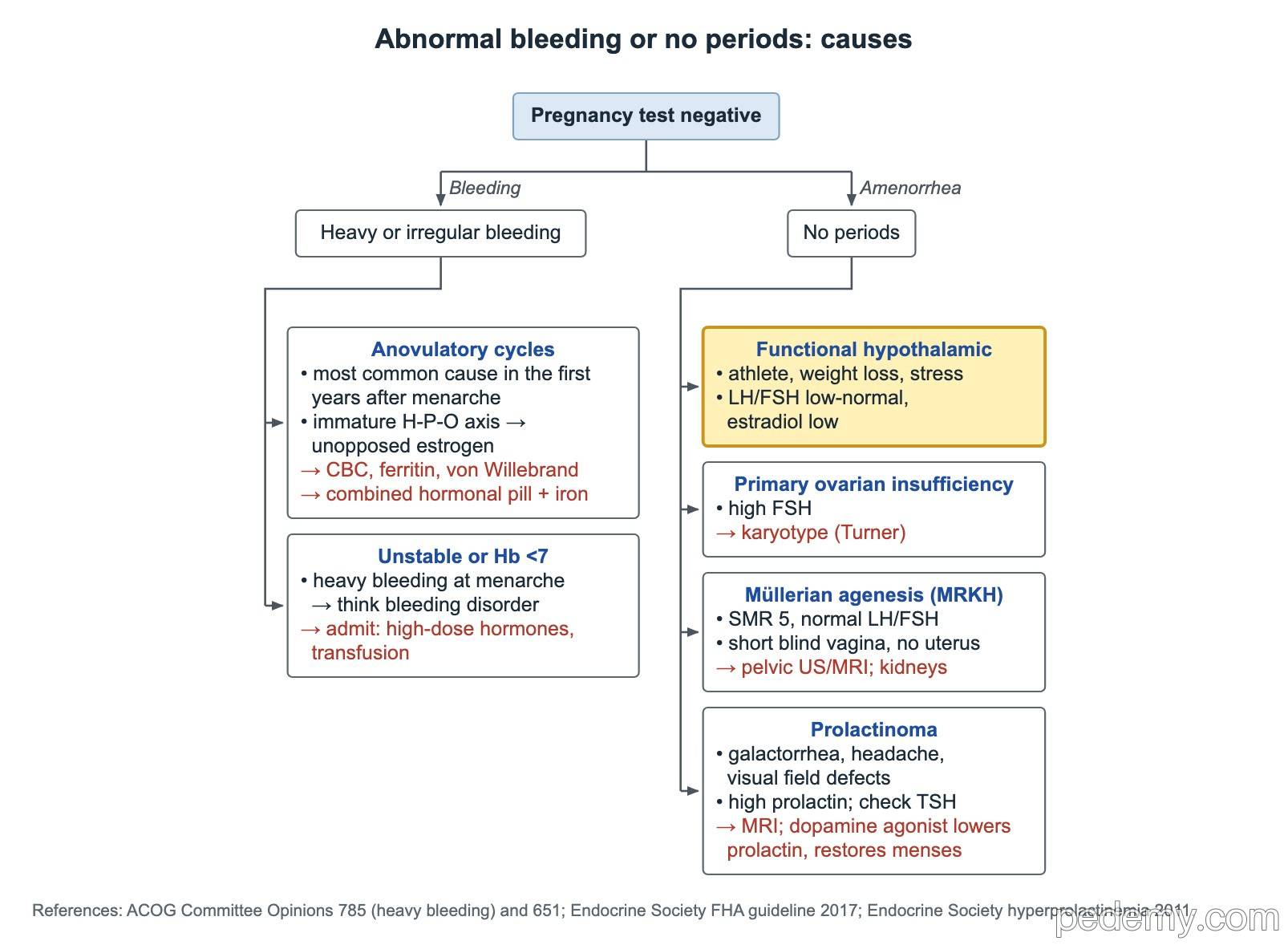
| Functional hypothalamic amenorrhea | Athlete, weight loss or stress; LH and FSH low or normal; estradiol low | Restore energy balance; DXA if amenorrhea 6 months or more or a stress fracture (low bone density is the main long-term risk) |
| Primary ovarian insufficiency | High FSH | Karyotype (Turner syndrome) |
| Müllerian agenesis (MRKH) | Normal breasts and pubic hair (SMR 5), normal LH and FSH, short blind vagina, no uterus | Pelvic ultrasound or MRI and a renal ultrasound (kidney anomalies are common) |
| Prolactinoma | Galactorrhea, headache, visual field defects; high prolactin | Check TSH; pituitary MRI; a dopamine agonist lowers prolactin and restores menses |
Dysmenorrhea, endometriosis and PMDD
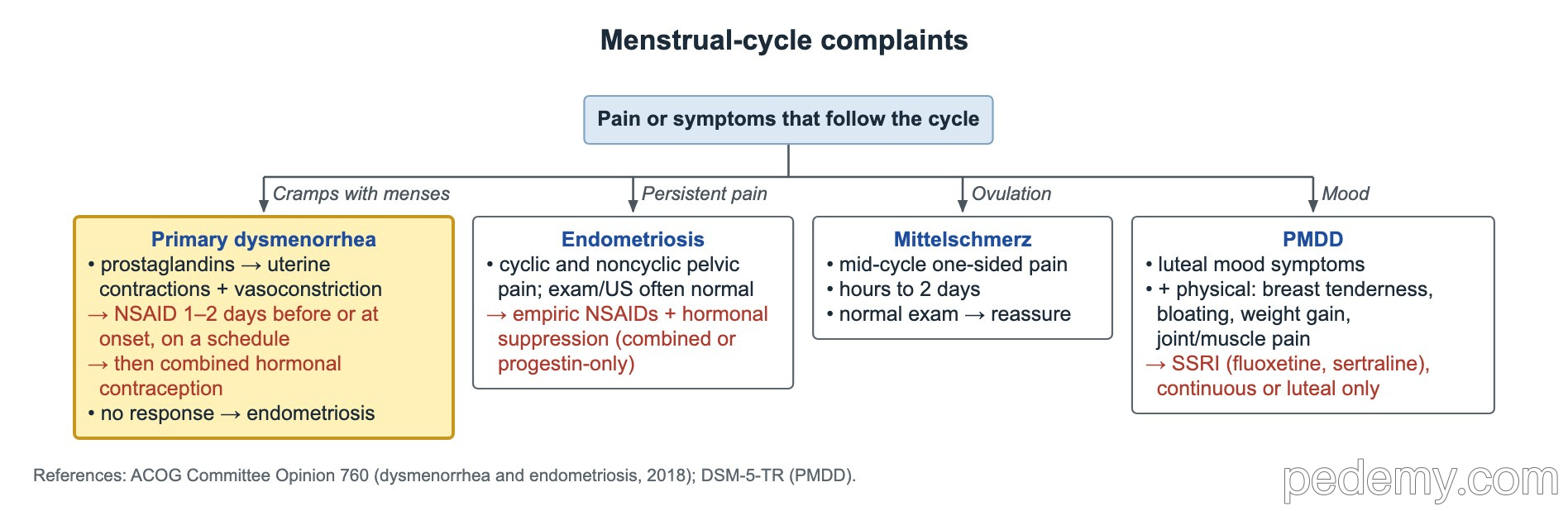
Primary dysmenorrhea is painful menses with no pelvic disease. Prostaglandins from the endometrium cause uterine contractions and vasoconstriction.
- First-line: an NSAID started 1–2 days before or at the very start of menses, then taken on a schedule.
- Still painful despite NSAIDs: combined hormonal contraception.
- No response after 3–6 months of treatment: think of endometriosis, the leading cause of secondary dysmenorrhea in teens.
- Suspected endometriosis (cyclic and noncyclic pelvic pain, normal exam and ultrasound): empiric NSAIDs plus hormonal suppression, combined or progestin-only.
- Mittelschmerz: one-sided mid-cycle pain lasting hours to 2 days with a normal exam. Reassure.
- PMDD: luteal-phase mood symptoms plus physical ones such as breast tenderness or swelling, bloating, weight gain, or joint and muscle pain. First-line treatment is an SSRI (fluoxetine or sertraline), continuously or in the luteal phase only.
Acute pelvic and vulvar pain
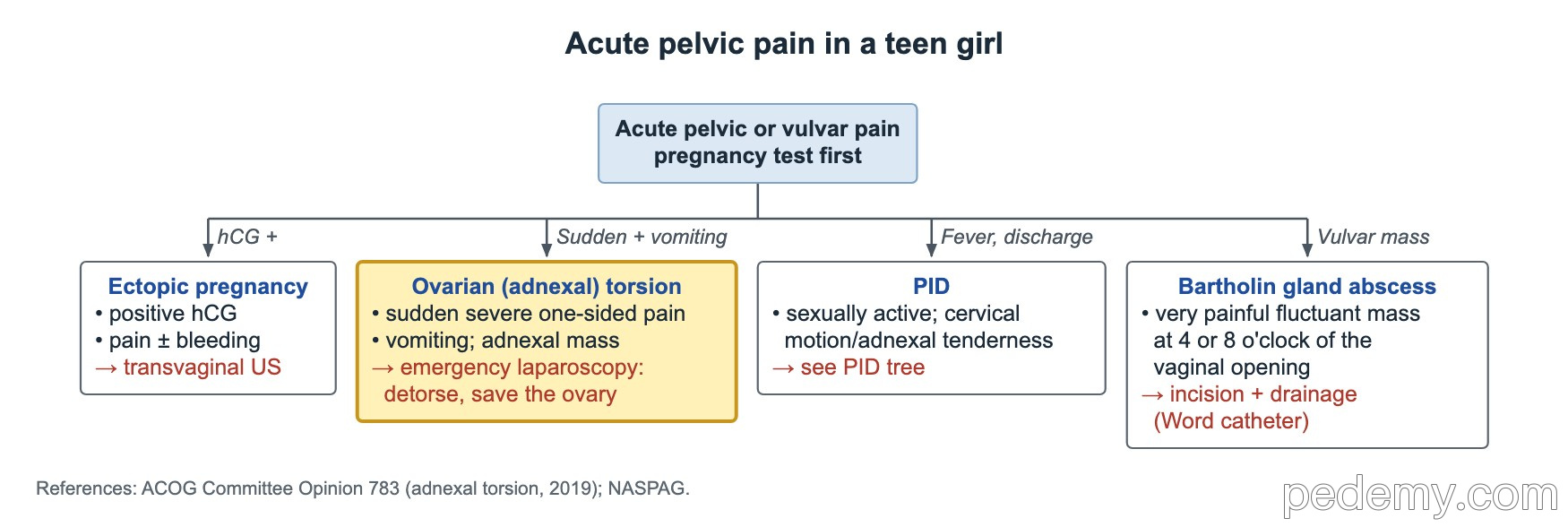
Start with a pregnancy test. A positive test with pain or bleeding needs a transvaginal ultrasound for ectopic pregnancy.
- Ovarian (adnexal) torsion: sudden severe one-sided pain, vomiting, adnexal mass. Emergency laparoscopy to detorse and save the ovary.
- PID: a sexually active teen with cervical motion or adnexal tenderness.
- Bartholin gland abscess: very painful fluctuant mass at the 4 or 8 o'clock position of the vaginal opening. Incision and drainage, for example with a Word catheter.
Imperforate hymen
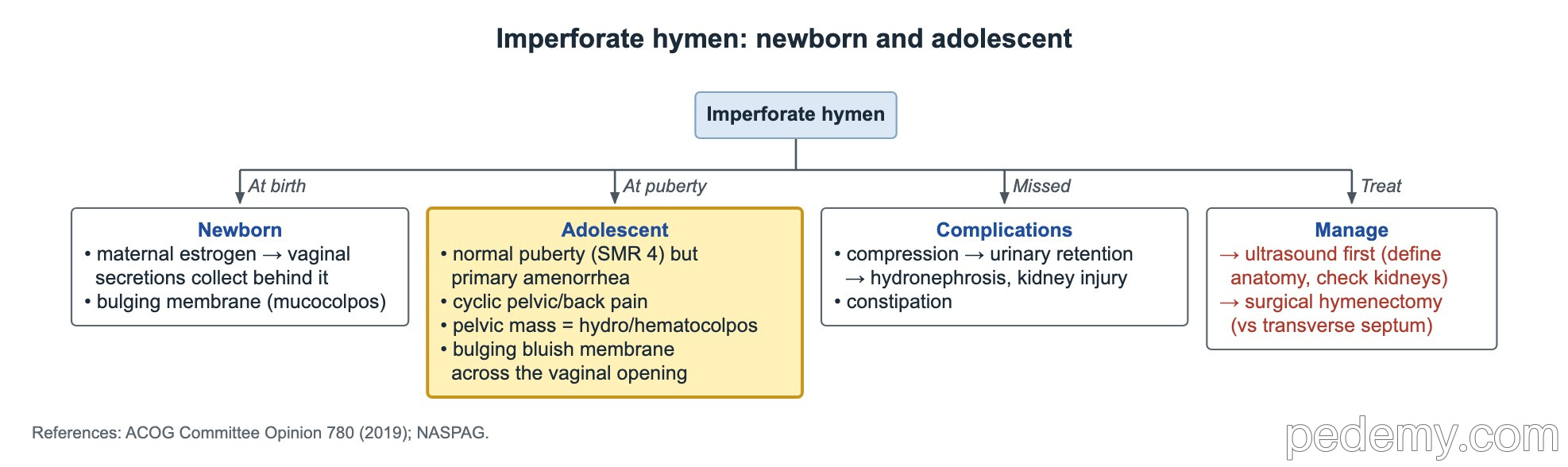
- Newborn: maternal estrogen stimulates vaginal secretions, which collect behind the membrane and make it bulge (mucocolpos).
- Adolescent: normal puberty (for example Tanner 4) with primary amenorrhea, monthly pelvic or back pain and a pelvic mass (hematometrocolpos). The membrane bulges, often bluish, across the introitus.
- Missed obstruction can compress the bladder and ureters, causing urinary retention and hydronephrosis, and constipation.
- Management: pelvic ultrasound first to define the anatomy and check the kidneys, then surgical hymenectomy. Distinguish from a transverse vaginal septum.
Other common findings
- Physiologic leukorrhea: thin, white, odorless discharge starting 6–12 months before menarche. Wet mount shows epithelial cells, few white cells and lactobacilli, pH below 4.5. Reassure.
- Labial adhesions: after separation with estrogen cream, apply petroleum jelly nightly for several weeks to prevent re-fusion.
Common questions
What is the most common cause of heavy periods in young teens?
Anovulatory cycles from an immature hormone axis. Still screen for a bleeding disorder, especially von Willebrand disease, when bleeding is heavy.
When should NSAIDs be started for period cramps?
One to two days before the period, or at the very start, and then taken on a regular schedule rather than only when pain is severe.
How long without a period is secondary amenorrhea?
More than 3 months after regular cycles, or more than 6 months after irregular cycles. Rule out pregnancy first.
Study this topic
Sources
- ACOG Committee Opinion 785: Bleeding disorders in adolescents with heavy menstrual bleeding (Obstet Gynecol 2019)
- ACOG Committee Opinion 760: Dysmenorrhea and endometriosis in the adolescent (Obstet Gynecol 2018)
- ACOG Committee Opinion 728: Müllerian agenesis (Obstet Gynecol 2018)
- Endocrine Society 2017: Functional hypothalamic amenorrhea guideline (J Clin Endocrinol Metab)
Written for Pedemy in our own words from the sources above; checked November 2026. For education only, not medical advice; check doses and local protocols before treating a patient. Pedemy is independent and not affiliated with or endorsed by the organizations cited.