

Main decision tree
Acute cardiac care: shock and pulmonary hypertension
Key points
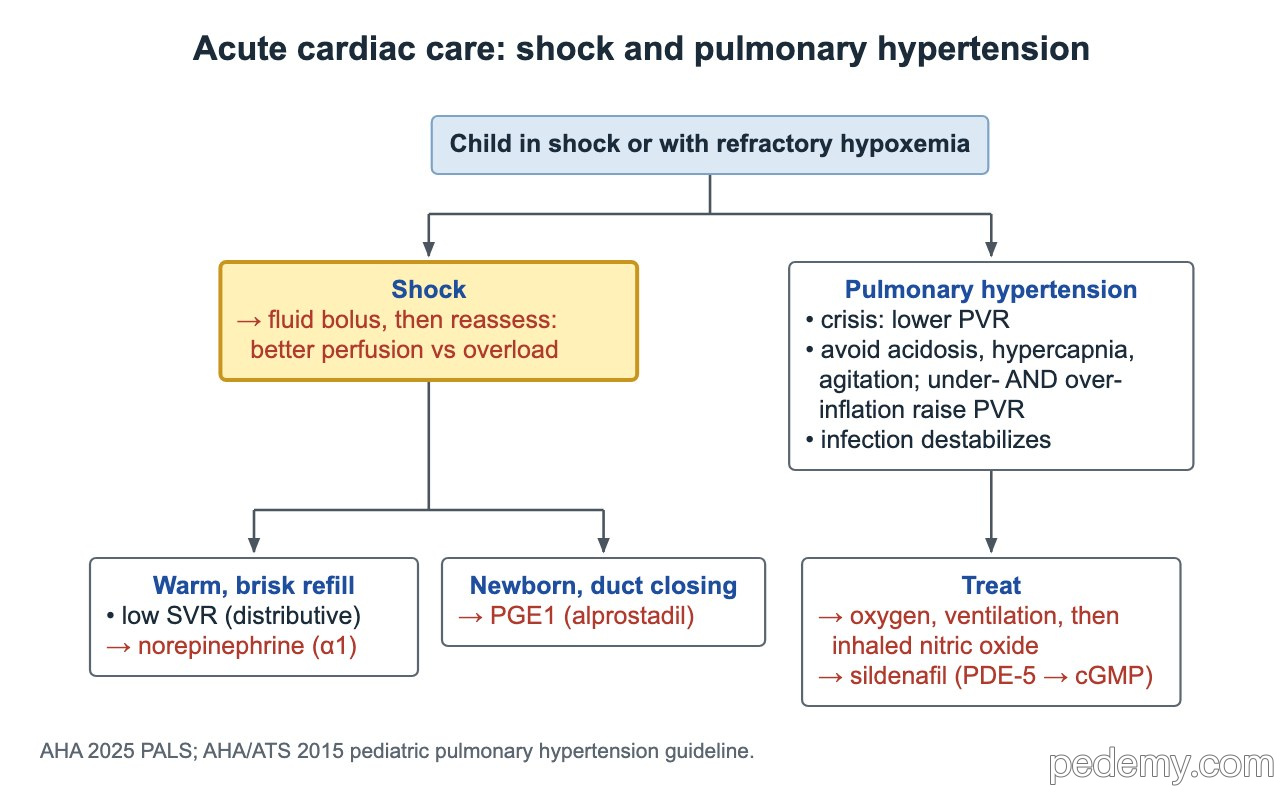
- Shock: give a fluid bolus, then reassess after each one for better perfusion or signs of fluid overload.
- Warm shock (low BP, warm extremities, flash refill) is distributive; norepinephrine constricts vessels through alpha-1 receptors.
- Suspected duct-dependent heart disease in a newborn: start prostaglandin E1 (alprostadil).
- Pulmonary hypertensive crisis: lower PVR; correct hypoxia, acidosis, hypercarbia, pain and agitation.
- Stable SVT: vagal maneuver, then adenosine 0.1 mg/kg (max 6 mg), then 0.2 mg/kg (max 12 mg).
- Irregular wide-complex tachycardia: no routine adenosine; pre-excited atrial fibrillation is possible.
- MIS-C starts 2–6 weeks after SARS-CoV-2 infection; once stable treat with IVIG plus steroids and low-dose aspirin.
Shock: fluids, reassessment and vasoactives
Treat shock with a fluid bolus and then look again. After each bolus, check whether perfusion is better (heart rate, capillary refill, mental status, urine output) or whether fluid overload is developing (rales, a bigger liver, worse work of breathing). Stop fluids when overload appears.
Low blood pressure with warm extremities and flash capillary refill means low systemic vascular resistance: distributive (warm) shock. When it does not respond to fluids, norepinephrine is a good choice; it constricts vessels mainly through alpha-1 receptors.
- Warm, vasodilated shock: norepinephrine.
- Newborn in shock as the duct closes: prostaglandin E1 (alprostadil).
- Cardiogenic shock (myocarditis, cardiomyopathy): give fluids carefully and in small amounts, and get early expert help.
Duct-dependent newborns and obstructed TAPVR
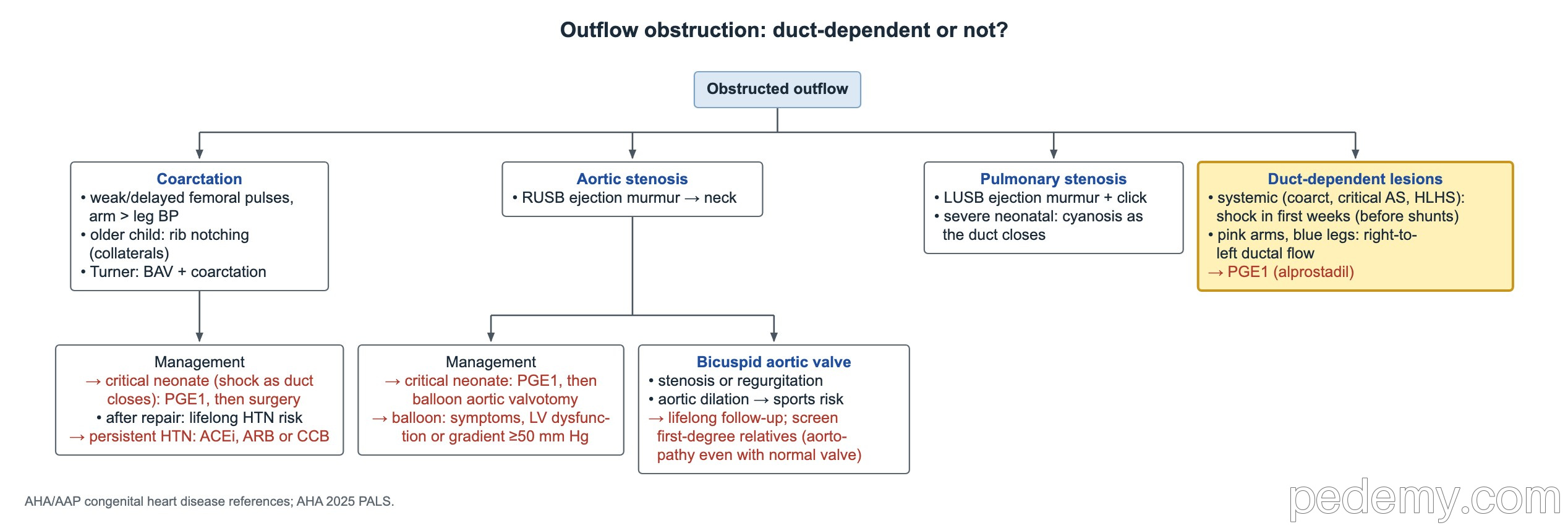
Some heart lesions need an open ductus arteriosus to supply the body or the lungs. When the duct closes in the first days or weeks, the baby goes into shock or turns very blue. Systemic duct-dependent lesions include critical coarctation, critical aortic stenosis and hypoplastic left heart syndrome.
Pink arms with blue legs means right-to-left flow across the duct to the lower body. When duct-dependent disease is suspected, start an alprostadil (prostaglandin E1) infusion without waiting for the echo. Apnea is the key side effect, so be ready to support breathing.
- Obstructed total anomalous pulmonary venous return (TAPVR) is a neonatal emergency: blocked pulmonary veins cause pulmonary edema, severe hypoxemia and rapid deterioration.
- The infracardiac type (veins draining below the diaphragm) is the one most often obstructed.
- Obstructed TAPVR needs urgent surgery; prostaglandin does not relieve the venous obstruction.
Pulmonary hypertensive crisis
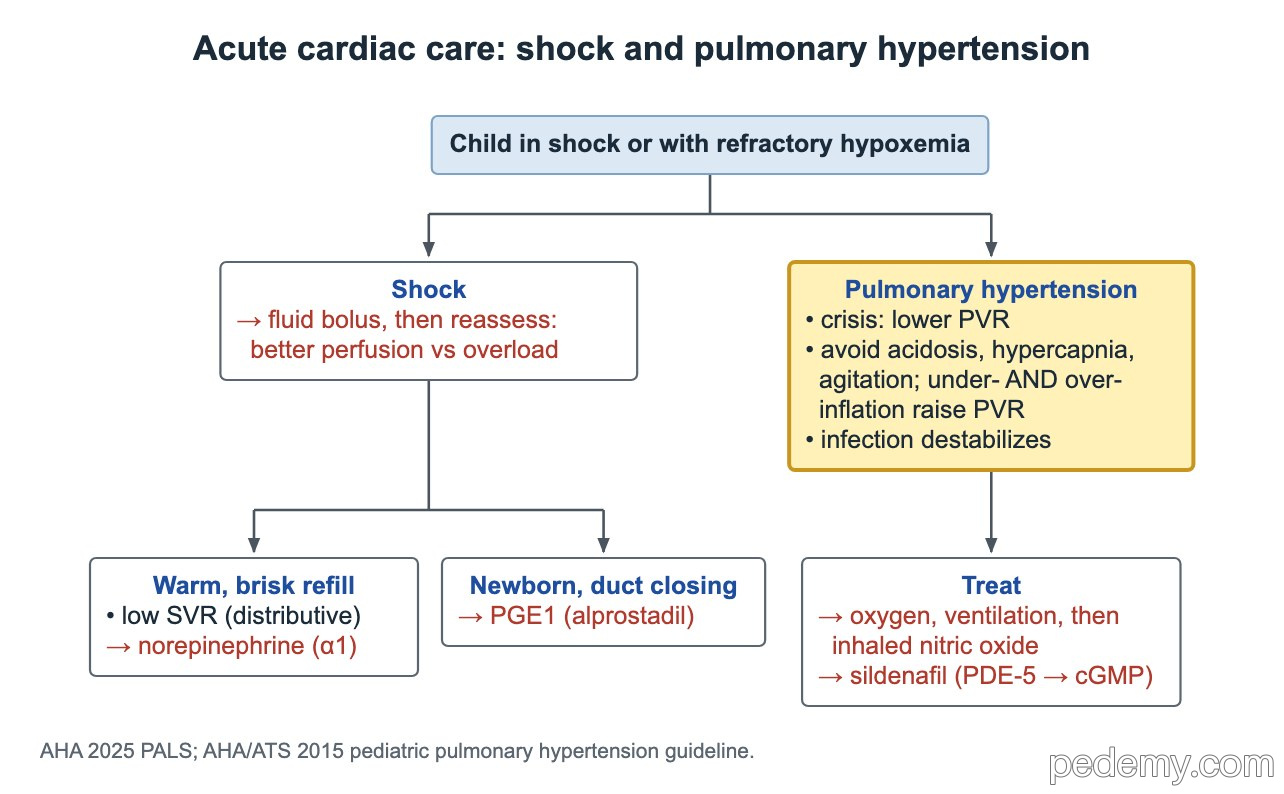
In a pulmonary hypertensive crisis, pulmonary vascular resistance (PVR) rises suddenly, the right ventricle fails and the child becomes hypoxemic and hypotensive. The main goal is to lower PVR.
- Correct the triggers: hypoxia, acidosis, hypercarbia, pain and agitation.
- On a ventilator, keep lung volume normal: both under-inflation and over-inflation raise PVR.
- A respiratory infection makes PH worse, because hypoxia, acidosis and lung disease all raise PVR.
- Give oxygen and ventilation; add inhaled nitric oxide for an infant with refractory hypoxemia on the ventilator.
- Sildenafil blocks phosphodiesterase-5, which raises cGMP and relaxes the pulmonary vessels.
SVT and wide-complex tachycardia
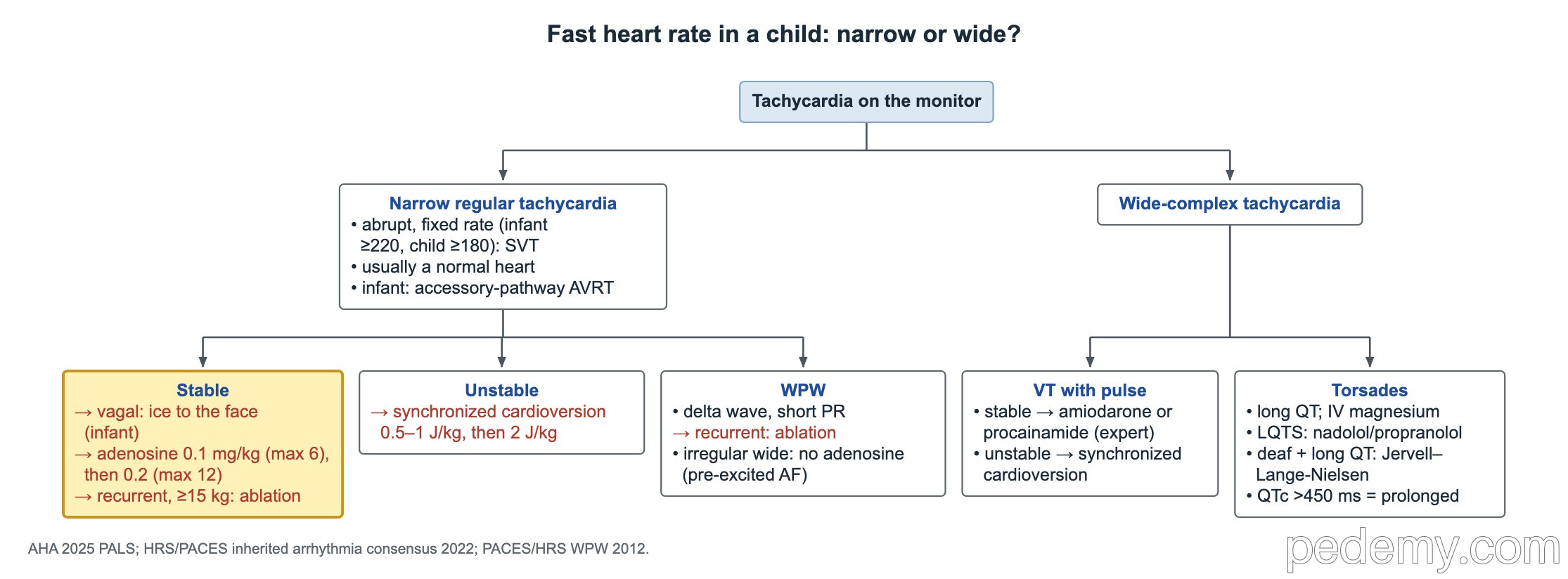
SVT starts and stops suddenly and has a fixed rate, usually ≥220/min in infants and ≥180/min in children. Most children have a normal heart; in infants the usual mechanism is an accessory pathway.
- Stable, regular narrow-complex SVT: try a vagal maneuver first, such as ice to the face in an infant.
- Adenosine IV or IO by rapid push with a flush: 0.1 mg/kg (max 6 mg); if needed, 0.2 mg/kg (max 12 mg).
- Warn about brief effects of adenosine: flushing, chest discomfort and a few seconds of asystole.
- Unstable SVT: synchronized cardioversion, 0.5–1 J/kg, then 2 J/kg.
- Recurrent SVT in a child ≥15 kg: catheter ablation is an option.
- Irregular wide-complex tachycardia: do not give adenosine routinely. Pre-excited atrial fibrillation (WPW) is a dangerous possibility; get urgent expert help.
- VT with a pulse: amiodarone or procainamide with expert advice if stable; synchronized cardioversion if unstable.
MIS-C
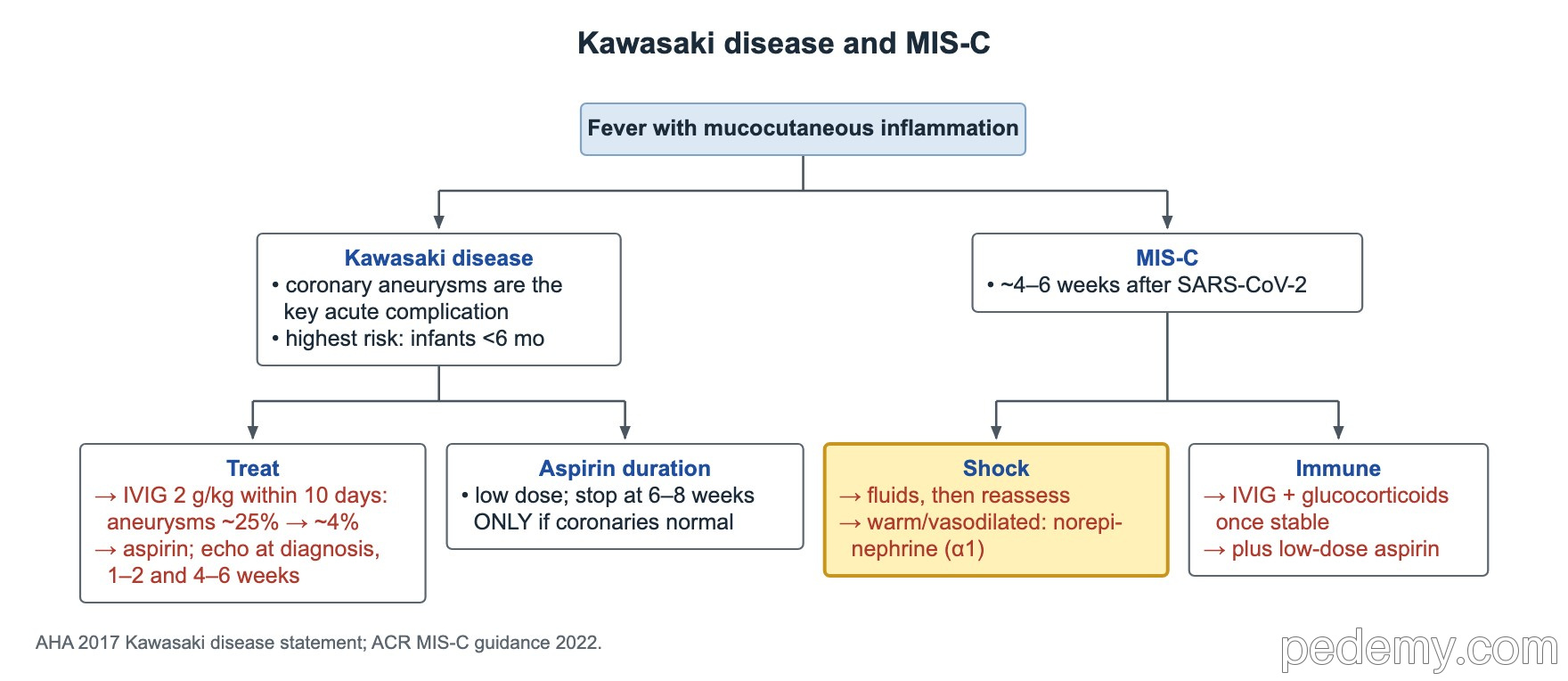
Multisystem inflammatory syndrome in children (MIS-C) usually starts 2–6 weeks after SARS-CoV-2 infection, often about 4 weeks. It can cause shock and myocardial dysfunction.
- Shock: give fluids, then reassess; for fluid-refractory shock with warm, vasodilated extremities, use norepinephrine.
- Once stable, first-line immunomodulation is IVIG plus glucocorticoids.
- Add low-dose aspirin as an antiplatelet.
Common questions
What is the pediatric adenosine dose for SVT?
0.1 mg/kg IV or IO by rapid push (max 6 mg). If SVT continues, give 0.2 mg/kg (max 12 mg).
Which vasopressor is used for warm shock in children?
Norepinephrine, when shock with warm, vasodilated extremities does not respond to fluids.
Why give prostaglandin E1 to a newborn with suspected heart disease?
It keeps the ductus arteriosus open, which keeps blood flowing to the body or the lungs in duct-dependent lesions until surgery or a catheter procedure.
Study this topic
Sources
- AHA/AAP 2025: Pediatric advanced life support guidelines (Circulation)
- Surviving Sepsis Campaign 2020: Pediatric septic shock guidelines (Pediatr Crit Care Med)
- AHA/ATS 2015: Pediatric pulmonary hypertension guidelines (Circulation)
- ACR 2022: Clinical guidance for MIS-C associated with SARS-CoV-2 (Arthritis Rheumatol)
Written for Pedemy in our own words from the sources above; checked November 2026. For education only, not medical advice; check doses and local protocols before treating a patient. Pedemy is independent and not affiliated with or endorsed by the organizations cited.