

Main decision tree
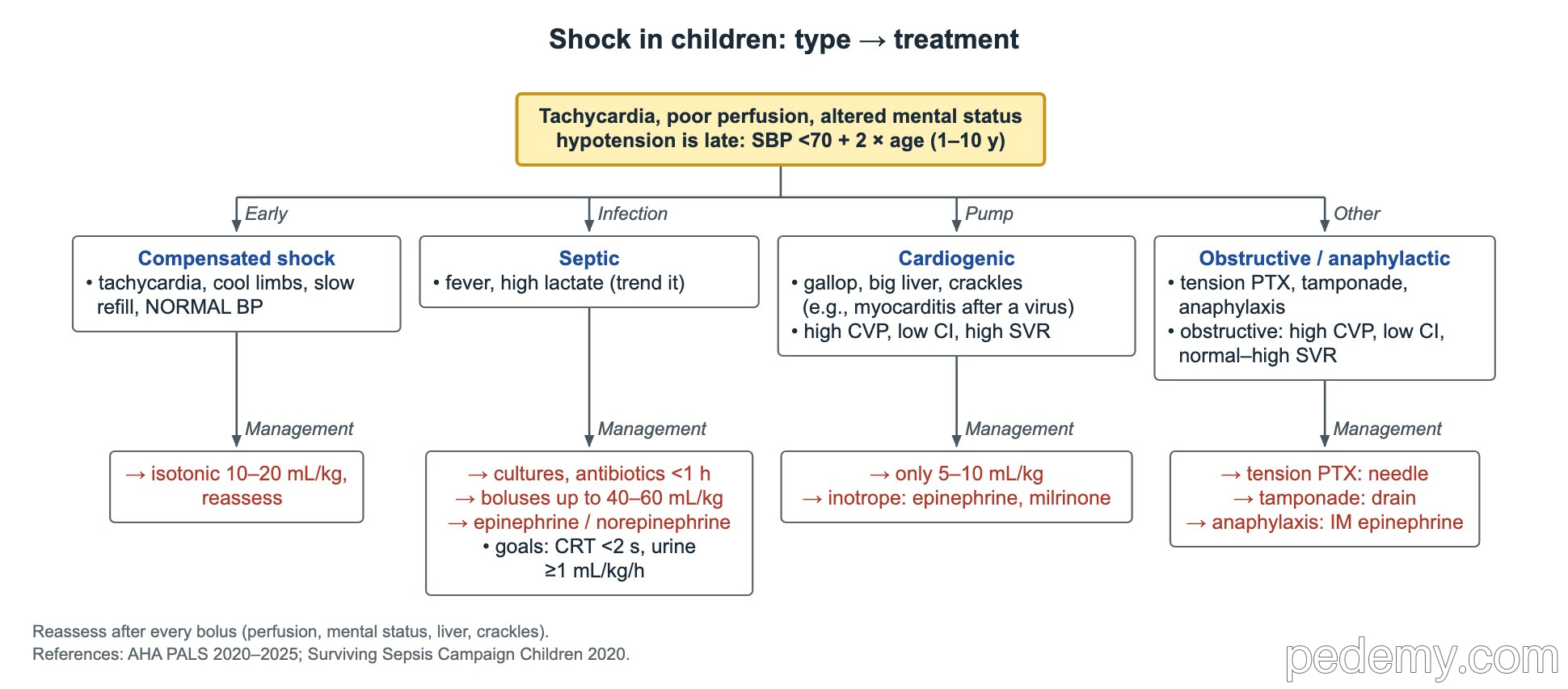
Shock in children: type → treatment
Key points
- Hypotension in children 1–10 years: systolic BP below 70 + (2 × age in years) mm Hg; it is a late sign.
- Compensated shock: tachycardia, cool limbs, slow capillary refill, normal BP → isotonic bolus 10–20 mL/kg and reassess.
- Cardiogenic shock: smaller boluses of 5–10 mL/kg, then an inotrope such as epinephrine or milrinone.
- CPR: 30:2 with one rescuer, 15:2 with two; 100–120 compressions/min; depth at least one third of the chest.
- Epinephrine 0.01 mg/kg IV/IO (max 1 mg) every 3–5 minutes: as soon as possible for asystole/PEA, after the second shock for VF/pVT.
- Defibrillation: 2 J/kg, then 4 J/kg, then 4 J/kg or more (max 10 J/kg or the adult dose); resume CPR for 2 minutes after each shock.
- Septic shock: antibiotics within 1 hour; measure and trend lactate.
Recognize shock
Shock is inadequate oxygen delivery to tissues. Children keep their blood pressure up by tachycardia and by alpha-1 mediated arteriolar constriction that raises systemic vascular resistance (SVR), so a normal BP does not exclude shock.
- Early signs: tachycardia, poor perfusion (cool limbs, capillary refill over 2 seconds, weak pulses), low urine output, altered mental status.
- Hypotension thresholds (systolic): below 60 mm Hg in term neonates, below 70 mm Hg in infants, below 70 + (2 × age) mm Hg at 1–10 years, below 90 mm Hg over 10 years.
- Reassess after every bolus: perfusion, heart rate, mental status, liver size and lung crackles.
| Shock type | CVP (preload) | Cardiac index | SVR |
|---|---|---|---|
| Hypovolemic | Low | Low | High |
| Distributive (warm sepsis, anaphylaxis) | Low | High | Low |
| Cardiogenic | High | Low | High |
| Obstructive (tension pneumothorax, tamponade) | High | Low | Normal to high |
Compensated and hypovolemic shock
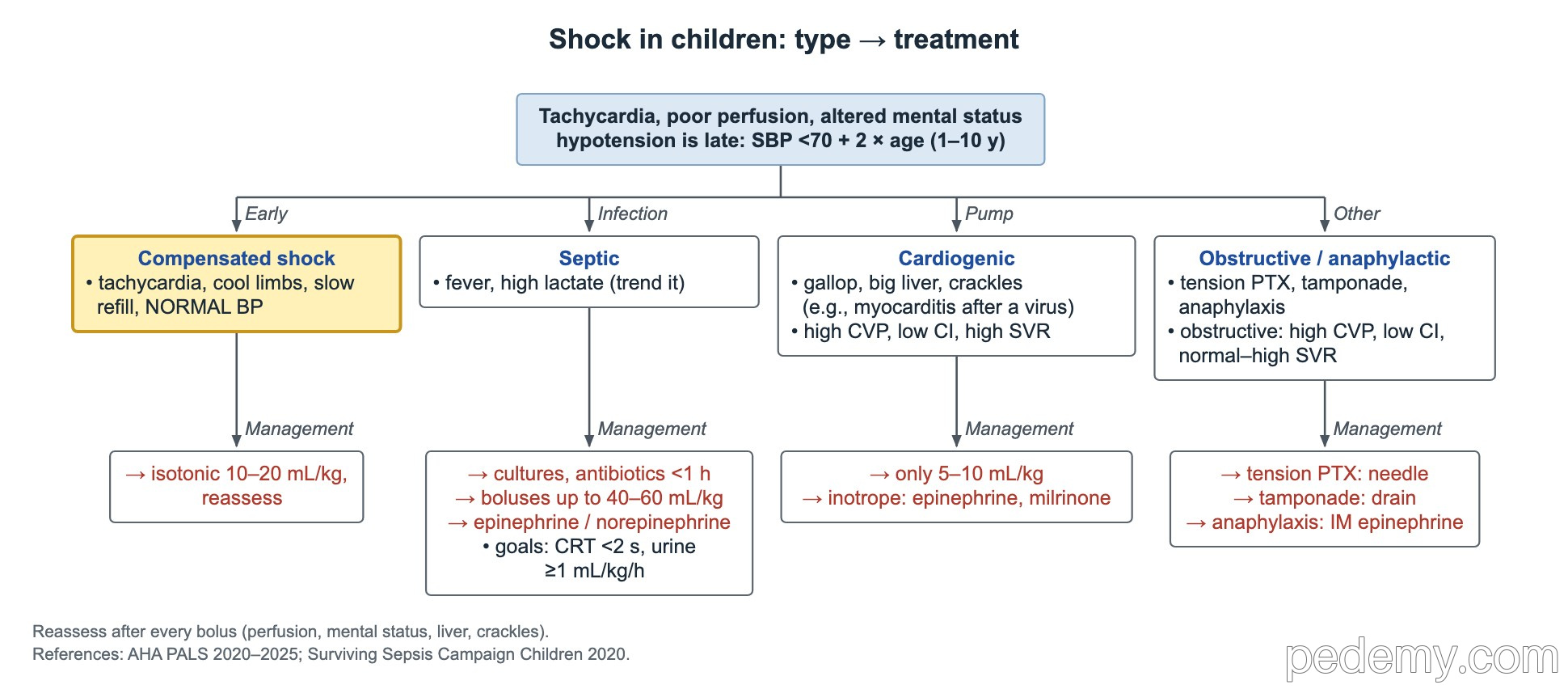
- Tachycardia, cool extremities and delayed capillary refill with a normal BP = compensated shock.
- Give a rapid isotonic crystalloid bolus of 10–20 mL/kg, then reassess before each further bolus.
- Hypovolemic shock (diarrhea, vomiting, hemorrhage) has low CVP, low cardiac index and high SVR; replace losses, and give blood for hemorrhage.
Septic shock
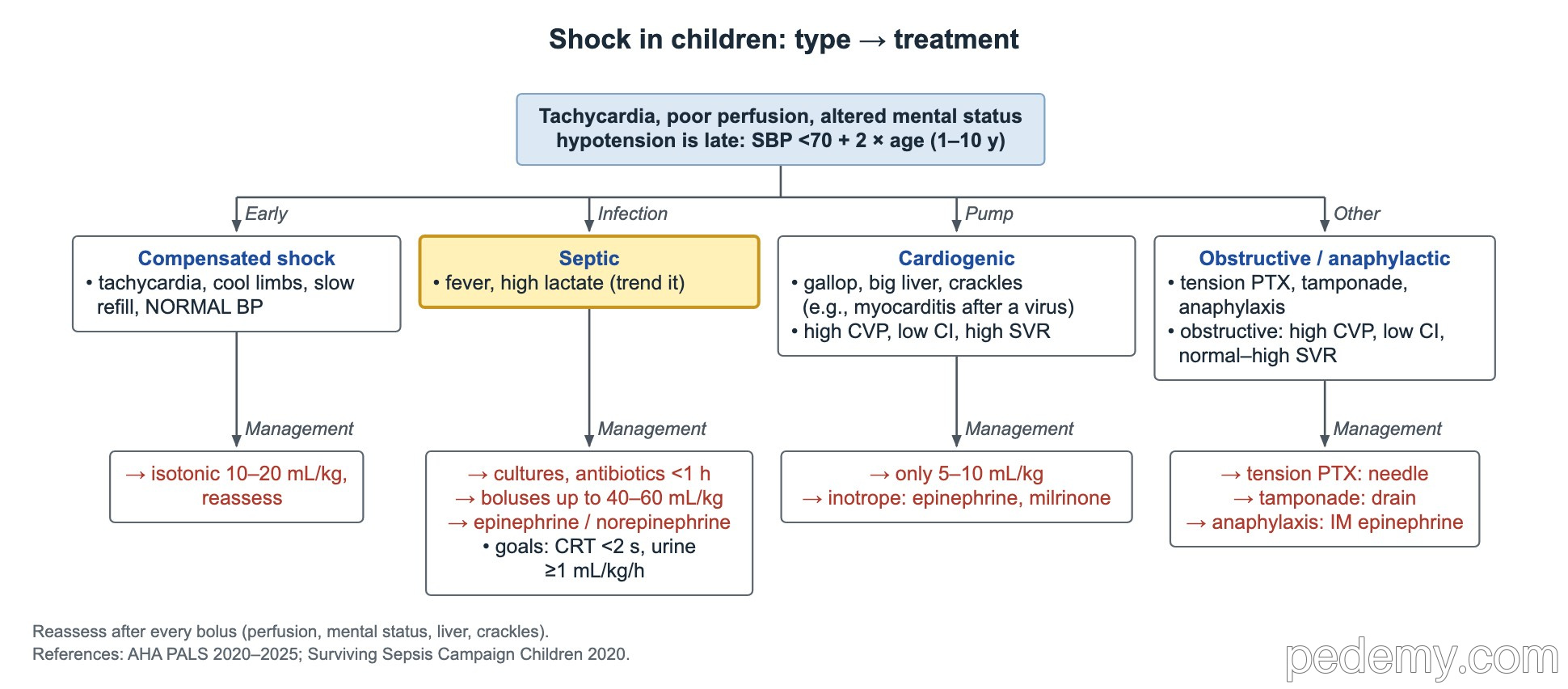
- Get blood cultures, then give broad-spectrum antibiotics within 1 hour of recognizing septic shock.
- Measure lactate early and trend it.
- Fluids in 10–20 mL/kg boluses, reassessing after each; total volumes of 40–60 mL/kg in the first hour are used where intensive care is available, and fluids stop if signs of overload appear.
- Shock that persists after fluids: start a vasoactive infusion (epinephrine or norepinephrine) to support cardiac output and SVR; it can start through a peripheral line.
- Perfusion goals: capillary refill under 2 seconds, normal mental status and urine output of 1 mL/kg/h or more.
Cardiogenic and obstructive shock
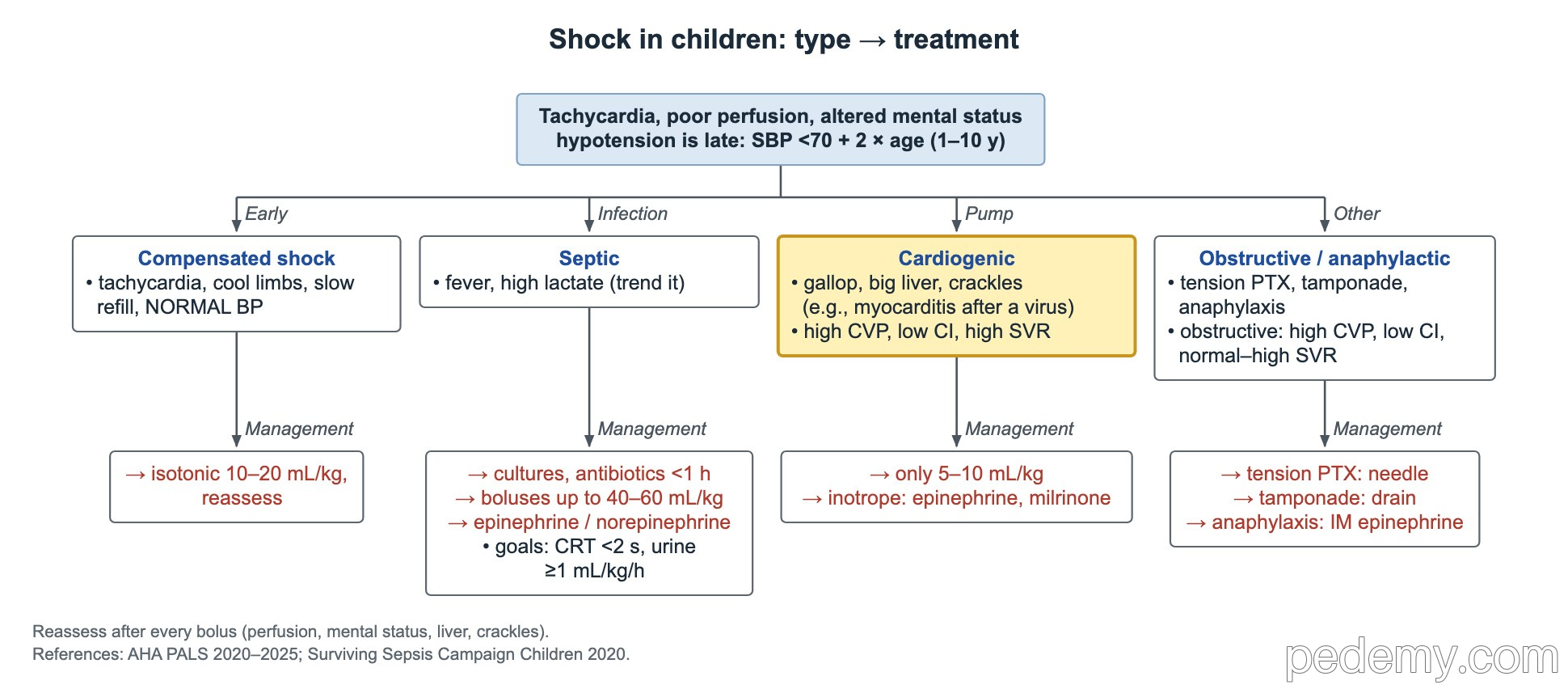
Cardiogenic shock often follows a viral illness (myocarditis). Clues are a gallop rhythm, an enlarged liver and lung crackles. The liver enlarges from venous congestion, because the high CVP reflects right heart failure.
- Cardiogenic: high CVP, low cardiac index, high SVR. Give only small boluses of 5–10 mL/kg slowly, stop if the liver grows or crackles appear, and start an inotrope (epinephrine or milrinone).
- Obstructive: tension pneumothorax or cardiac tamponade; high CVP, low cardiac index, normal to high SVR. The definitive fix is relieving the obstruction: needle decompression or pericardiocentesis.
- Anaphylaxis is distributive shock: IM epinephrine first, then fluids.
Respiratory distress and failure
- A tiring child on low-flow oxygen with a normal SpO2 is not reassured: oxygen can hide rising CO2 (hypercapnic respiratory failure). Check work of breathing, mental status and a blood gas.
- High-flow nasal cannula lowers work of breathing by washing out nasopharyngeal dead space and adding mild positive airway pressure.
- The pressure–rate product (esophageal pressure swing × respiratory rate) is a research measure of work of breathing.
Cardiac arrest: CPR and nonshockable rhythms
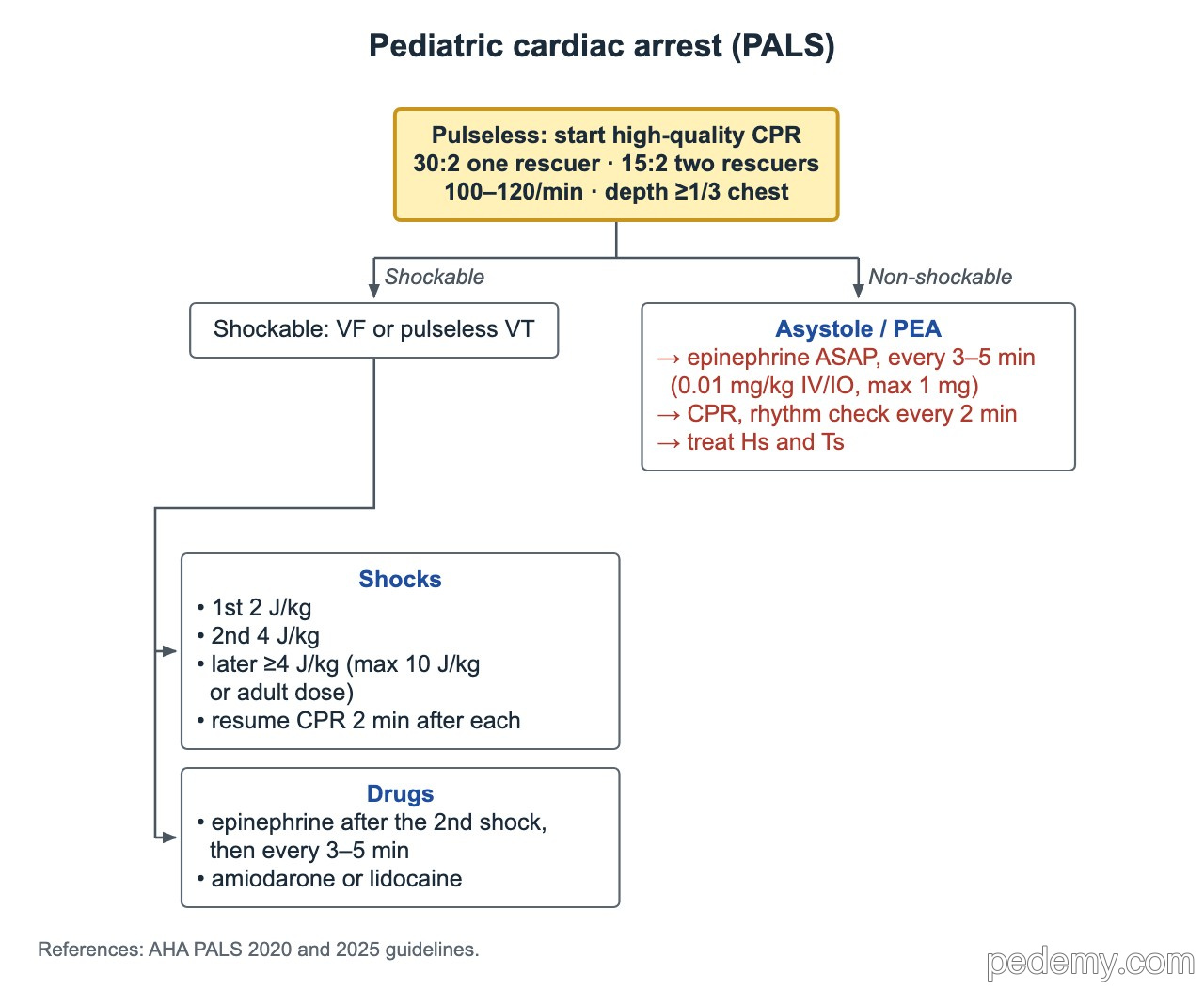
- Start high-quality CPR: 30:2 with one rescuer, 15:2 with two rescuers, 100–120 compressions/min, depth at least one third of the chest's front-to-back diameter, full recoil and few pauses.
- Asystole or PEA: give epinephrine 0.01 mg/kg IV/IO (0.1 mL/kg of 0.1 mg/mL; max 1 mg) as soon as possible, then every 3–5 minutes.
- Check the rhythm every 2 minutes.
- In PEA, search for and treat reversible causes (Hs and Ts): hypoxia, hypovolemia, hydrogen ion (acidosis), hypo- or hyperkalemia, hypothermia, hypoglycemia; tension pneumothorax, tamponade, toxins, thrombosis.
Shockable rhythms: VF and pulseless VT
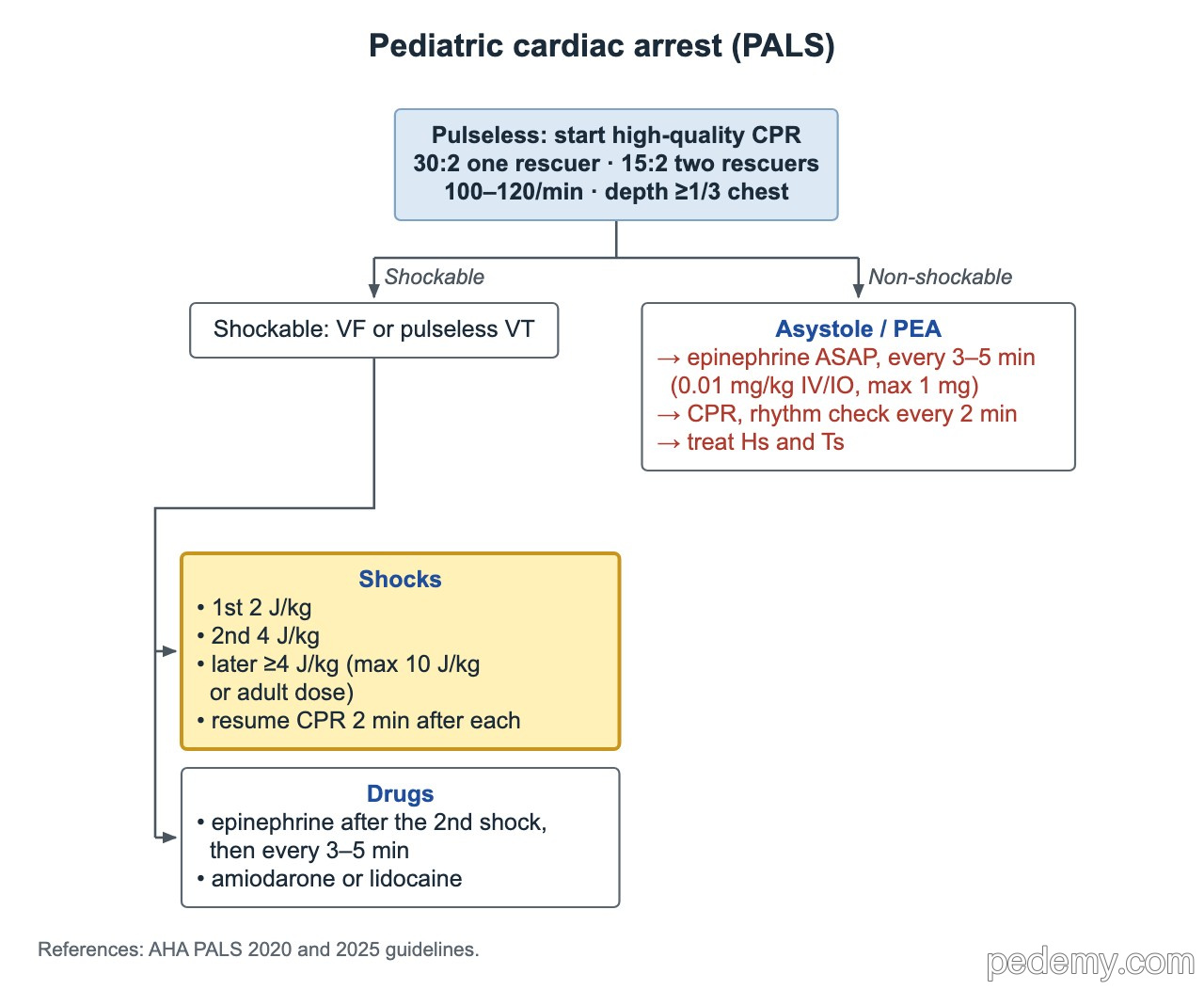
- Shockable rhythms: ventricular fibrillation and pulseless ventricular tachycardia.
- First shock 2 J/kg; second shock 4 J/kg; later shocks 4 J/kg or more, up to 10 J/kg or the adult maximum.
- Resume CPR for 2 minutes straight after each shock, before the next rhythm check.
- Epinephrine after the second shock, then every 3–5 minutes.
- Refractory VF/pVT: amiodarone or lidocaine.
Common questions
What is the CPR ratio for children?
30 compressions to 2 breaths for a single rescuer and 15:2 when two rescuers are present, at 100–120 compressions per minute.
What is the pediatric epinephrine dose in cardiac arrest?
0.01 mg/kg IV or IO (maximum 1 mg), repeated every 3–5 minutes.
How do you calculate hypotension in a child?
For ages 1–10 years, a systolic blood pressure below 70 + (2 × age in years) mm Hg is hypotension.
Study this topic
Sources
- AHA/AAP 2025: Part 8, Pediatric Advanced Life Support (Circulation)
- Surviving Sepsis Campaign 2026: Management of sepsis and septic shock in children (Pediatr Crit Care Med)
Written for Pedemy in our own words from the sources above; checked November 2026. For education only, not medical advice; check doses and local protocols before treating a patient. Pedemy is independent and not affiliated with or endorsed by the organizations cited.