

Main decision tree
Specific poisons: timeline and antidote
Key points
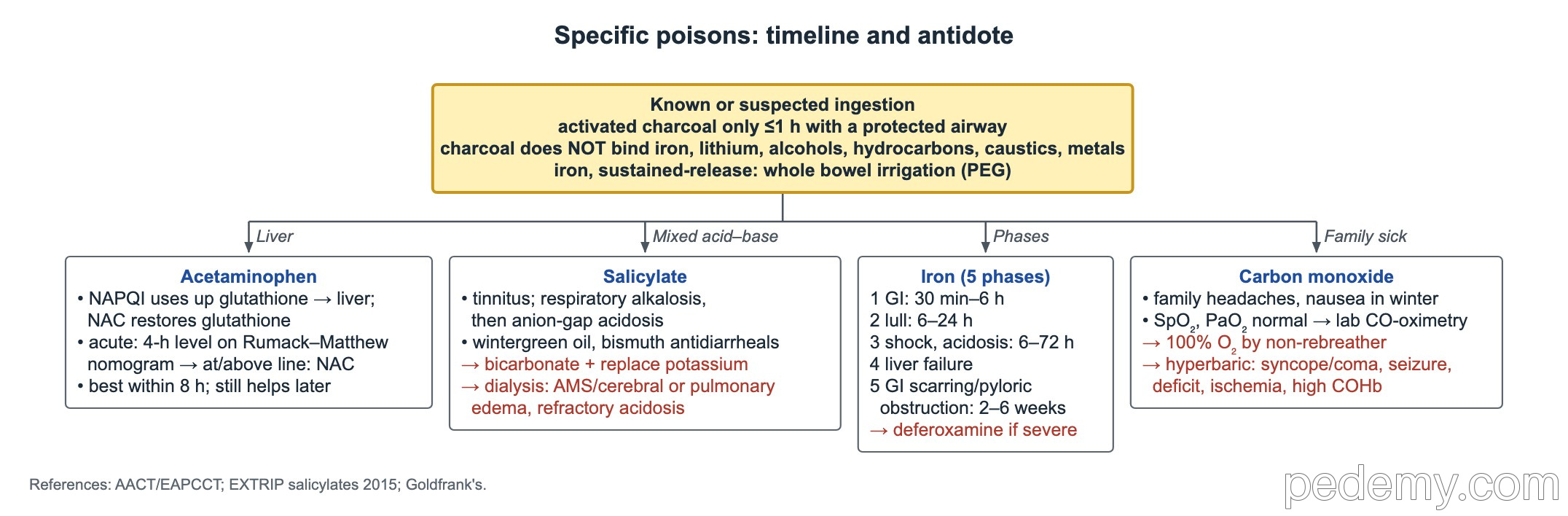
- Activated charcoal works best within 1 hour, only with a protected airway; it does not bind iron, lithium, alcohols, hydrocarbons, caustics or metals.
- Acetaminophen: treat a 4-hour level on or above the 150 µg/mL nomogram line with NAC; best within 8 hours.
- TCA overdose: QRS over 100 ms → sodium bicarbonate, target pH 7.50–7.55; avoid physostigmine, flumazenil and phenytoin.
- Anion gap = Na − (Cl + HCO3); an osmolal gap over 10 mOsm/kg suggests a toxic alcohol.
- Naloxone 4 mg nasal spray: one spray, repeat with a new device every 2–3 minutes as needed.
- Methylene blue 1–2 mg/kg IV for methemoglobinemia above 20% with symptoms or above 30% without.
- Lead: chelate with oral succimer at 45 µg/dL or more.
First steps: decontamination and screening
Support airway, breathing and circulation first and check glucose. Call poison control (1-800-222-1222) early.
- Activated charcoal: consider within 1 hour of a dangerous ingestion if the airway is protected.
- Charcoal does not bind iron, lithium, alcohols, hydrocarbons, caustics or metals.
- Whole bowel irrigation with polyethylene glycol: iron, sustained-release pills and other substances charcoal cannot bind.
- Skin exposure (for example organophosphates): remove clothing and wash with soap and water.
- A negative urine drug immunoassay does not rule out an ingestion: the drug may not be on the panel (fentanyl is often missed) or may be below the cutoff.
Toxidromes: start with pupils and skin
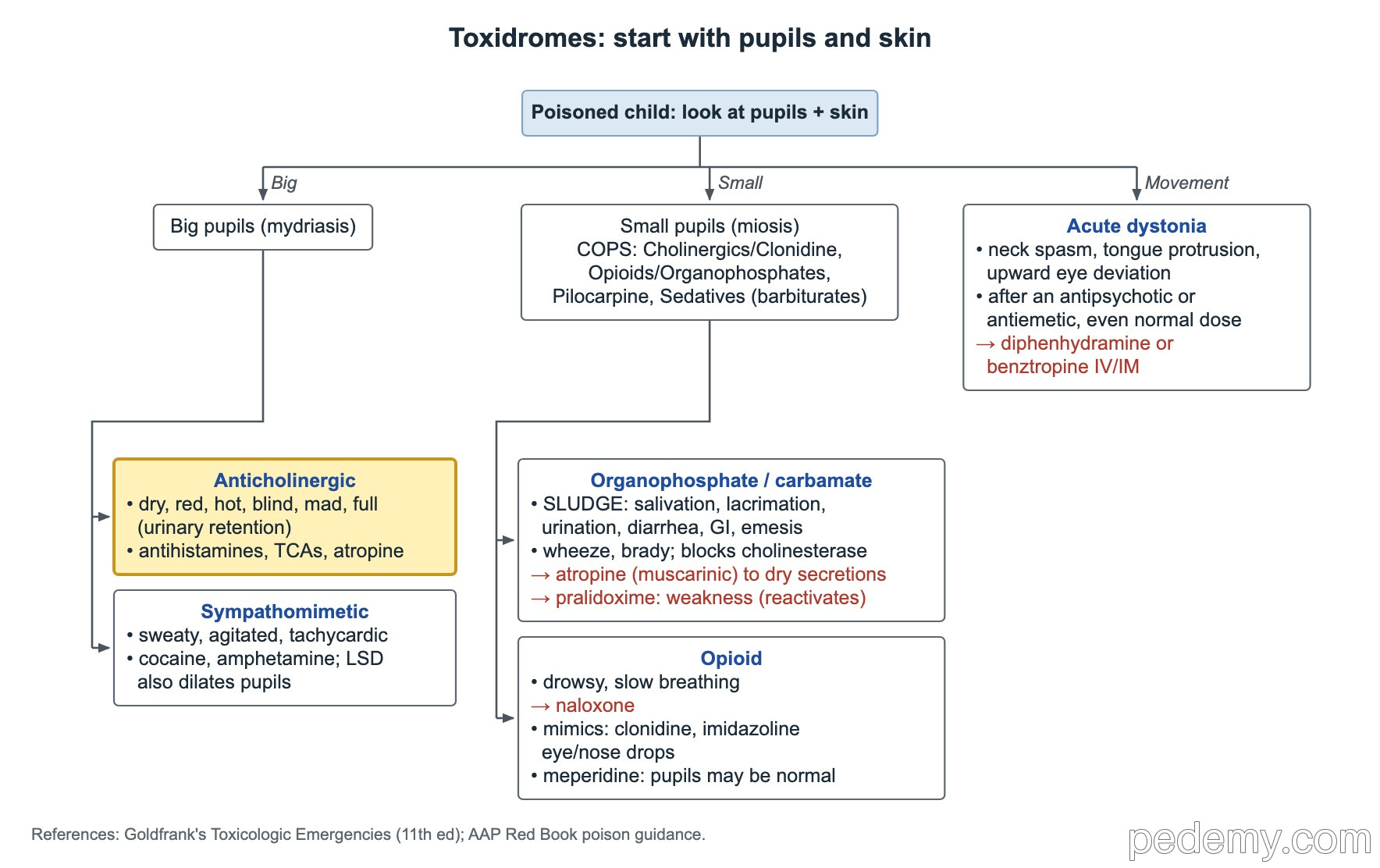
- Small pupils (COPS): cholinergics and clonidine, opioids and organophosphates, pilocarpine, sedatives such as barbiturates.
- Organophosphates block acetylcholinesterase. Atropine treats only muscarinic effects (secretions, bronchospasm, bradycardia); pralidoxime reactivates the enzyme.
- Meperidine may not cause pinpoint pupils.
- Clonidine and imidazoline eye or nose drops mimic opioid poisoning; one tablet or a used patch can be dangerous for a toddler.
| Toxidrome | Clues | Treatment |
|---|---|---|
| Anticholinergic | Dry, red, hot, blind (big pupils), mad, full (urinary retention); antihistamines, TCAs, atropine | Supportive care, benzodiazepines for agitation |
| Sympathomimetic | Big pupils but sweaty, agitated, tachycardic; cocaine, amphetamines (LSD also dilates pupils) | Benzodiazepines, cooling |
| Cholinergic (organophosphate, carbamate) | SLUDGE (salivation, lacrimation, urination, defecation, GI upset, emesis), small pupils, bronchorrhea, wheeze, bradycardia | Atropine until bronchial secretions dry; pralidoxime for weakness or fasciculations |
| Opioid | Small pupils, drowsy, slow breathing | Ventilation and naloxone |
| Acute dystonia | Neck spasm, tongue protrusion, upward eye deviation after an antipsychotic or antiemetic, even at a normal dose | Diphenhydramine or benztropine IV or IM |
Acetaminophen, salicylates, iron and carbon monoxide
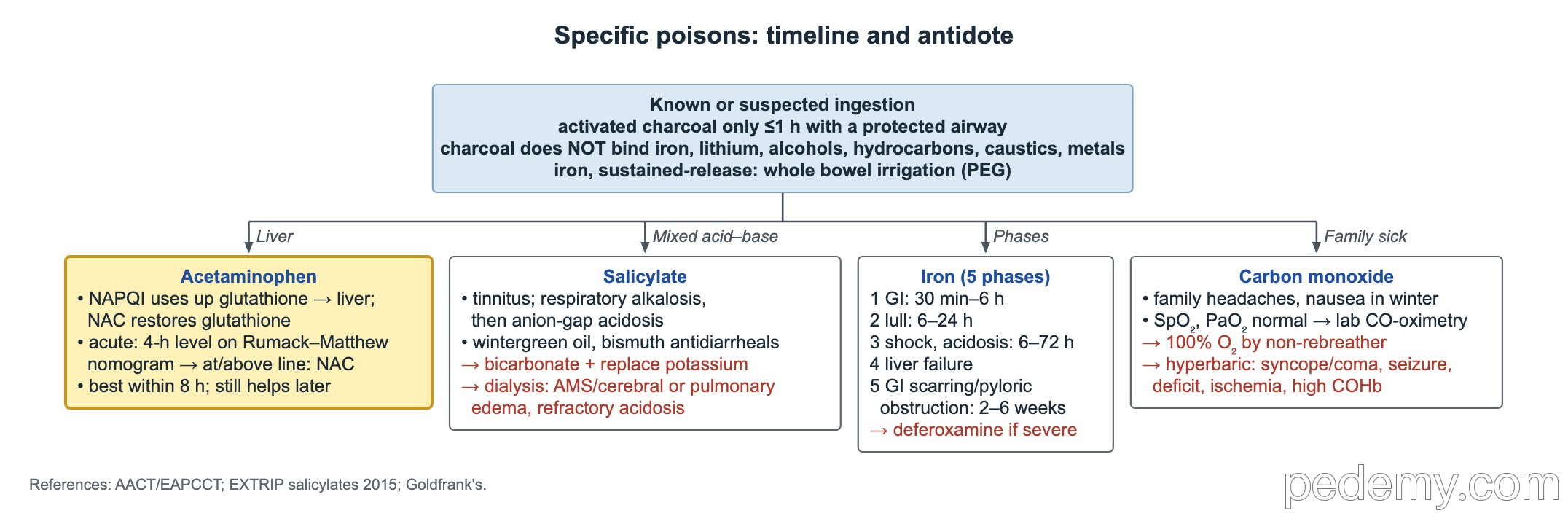
Iron is often a mother's prenatal vitamin. Give IV deferoxamine for severe toxicity.
- Acetaminophen: the toxic metabolite NAPQI uses up glutathione and injures the liver; NAC restores glutathione.
- Acetaminophen course: vomiting, apparent recovery the next day, then right upper quadrant pain and rising AST/ALT. Give IV NAC even when late.
- Watch for duplicate acetaminophen in combination cold and cough products.
- Salicylate: tinnitus; respiratory alkalosis comes first, then anion-gap metabolic acidosis. Hidden sources: oil of wintergreen, bismuth subsalicylate.
- Salicylate treatment: sodium bicarbonate to alkalinize the urine; replace potassium, or the urine will not turn alkaline.
- Salicylate hemodialysis: altered mental status or cerebral edema, pulmonary edema needing oxygen, refractory acidosis or failing standard care.
- Carbon monoxide: several family members with headache and nausea in winter; pulse oximetry and PaO2 look normal. Confirm with laboratory CO-oximetry; give 100% oxygen by non-rebreather; hyperbaric oxygen for syncope, coma, seizure, neurologic deficit, cardiac ischemia or a very high carboxyhemoglobin.
| Iron phase | Timing | Features |
|---|---|---|
| 1. GI | 30 minutes–6 hours | Vomiting, diarrhea, abdominal pain, GI bleeding |
| 2. Latent | 6–24 hours | Apparent improvement (misleading) |
| 3. Systemic | 6–72 hours | Shock, metabolic acidosis, altered consciousness |
| 4. Hepatic | 2–5 days | Liver injury or failure |
| 5. Late GI | 2–6 weeks | Scarring, pyloric obstruction |
Ethanol and toxic alcohols
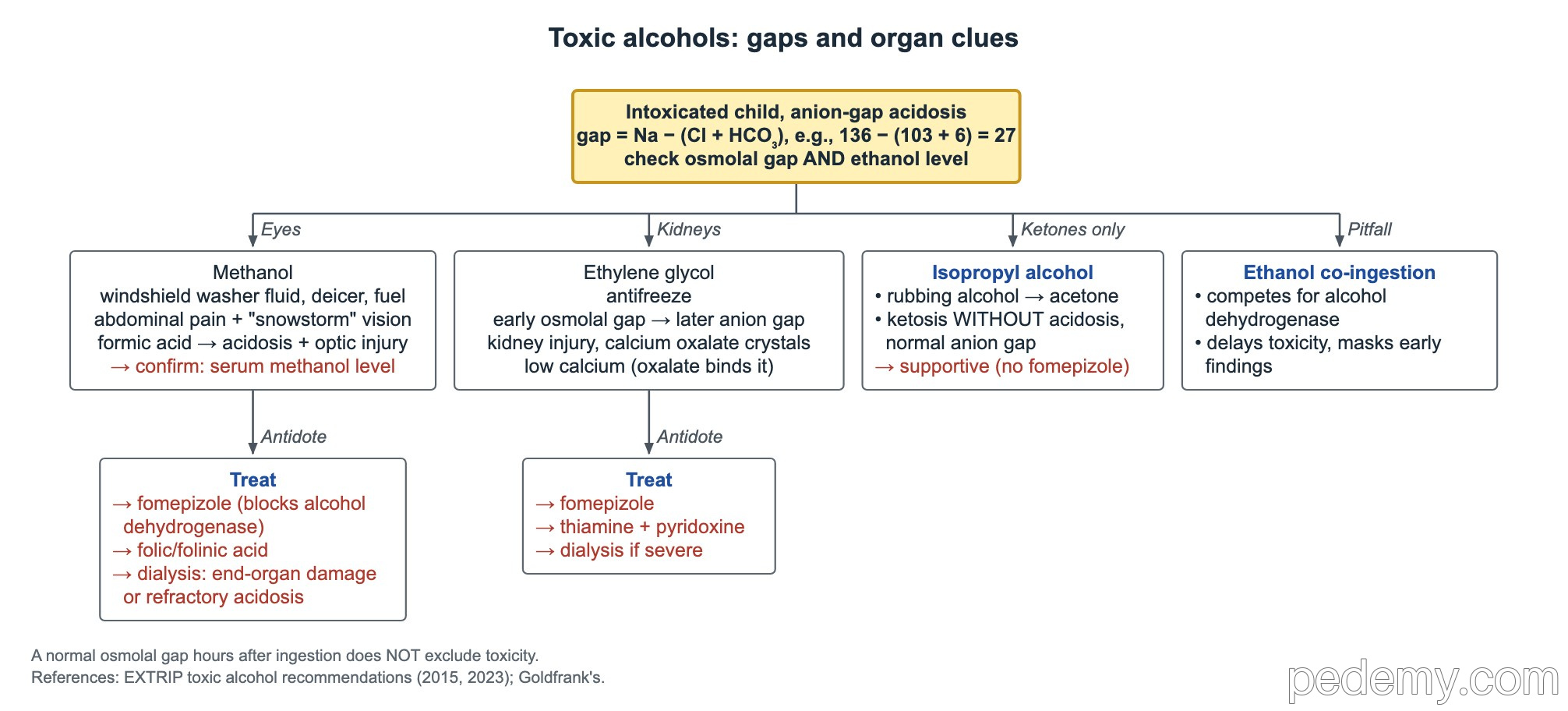
In an intoxicated child with anion-gap acidosis, calculate the anion gap, the osmolal gap and an ethanol level. Example: Na 136, Cl 103, HCO3 6 gives a gap of 27 mEq/L. An osmolal gap above 10 mOsm/kg that ethanol does not explain suggests a toxic alcohol; a normal osmolal gap late after ingestion does not exclude one.
- Fomepizole blocks alcohol dehydrogenase. Ethanol competes for the same enzyme, so a co-ingestion can delay toxicity and hide early findings.
- A toddler found obtunded after a party who keeps seizing despite a benzodiazepine: check glucose and give IV dextrose.
| Alcohol | Sources and clues | Treatment |
|---|---|---|
| Methanol | Windshield-washer fluid, deicer, fuel additives; abdominal pain, "snowstorm" vision; formate causes acidosis and optic injury; confirm with a serum methanol level | Fomepizole; folic or folinic acid; dialysis for end-organ damage or refractory acidosis |
| Ethylene glycol | Antifreeze; early osmolal gap, later anion gap; kidney injury, calcium oxalate crystals, low calcium | Fomepizole; thiamine and pyridoxine; dialysis if severe |
| Isopropyl alcohol | Rubbing alcohol → acetone; ketosis with normal anion gap and pH | Supportive care, no fomepizole |
| Ethanol (young child) | Mouthwash, vanilla extract, hand sanitizer, perfume; hypoglycemia because ethanol blocks gluconeogenesis | IV dextrose; no fomepizole; hemodialysis only if severe and not improving |
Cardiotoxic overdoses: TCA, beta-blocker, calcium-channel blocker
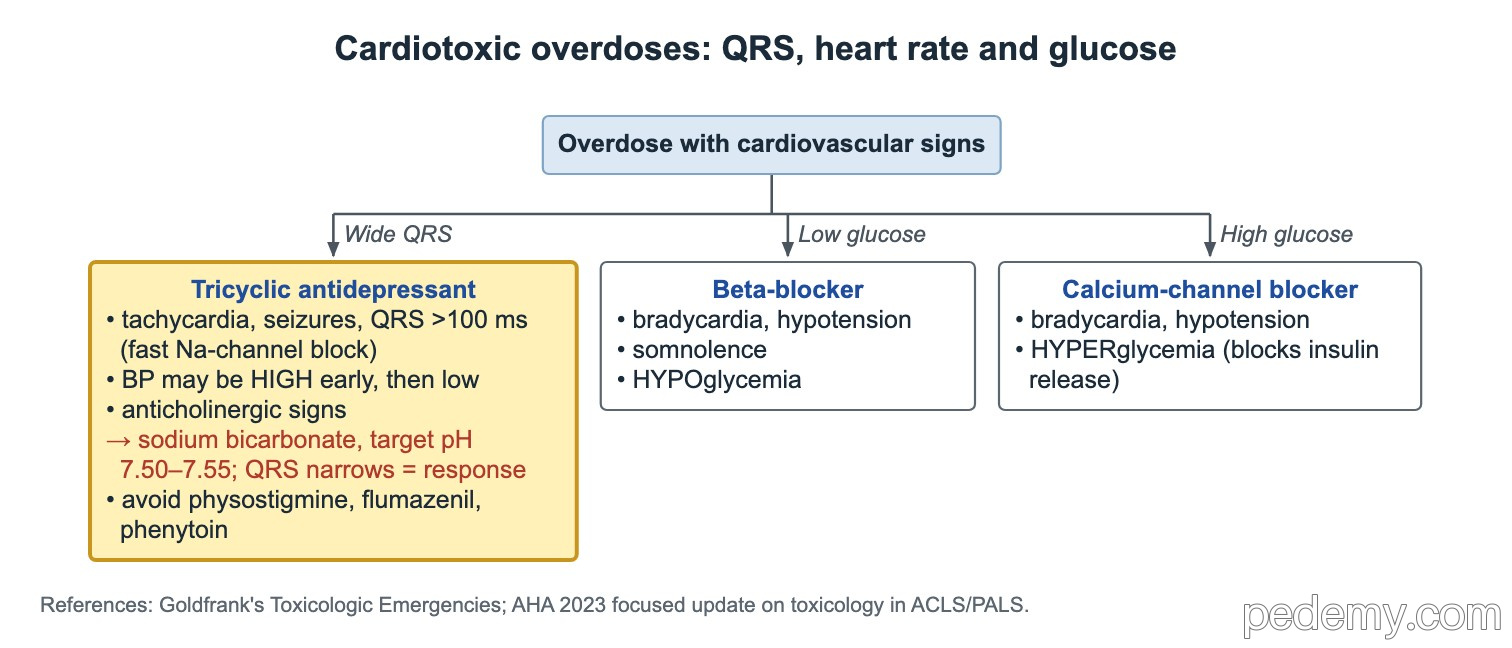
- Tricyclic antidepressants block fast sodium channels: tachycardia, seizures, anticholinergic signs and QRS over 100 ms. Blood pressure may be high at first, then falls.
- TCA treatment: sodium bicarbonate, targeting a pH of 7.50–7.55; a narrowing QRS shows a response.
- In TCA poisoning avoid physostigmine and flumazenil, and avoid phenytoin for seizures (use benzodiazepines).
- Beta-blocker: bradycardia, hypotension, somnolence and hypoglycemia.
- Calcium-channel blocker: bradycardia and hypotension with hyperglycemia, because insulin release is blocked.
- For shock from either, the 2023 AHA update supports high-dose insulin with glucose, along with calcium (for calcium-channel blockers), vasopressors and glucagon.
Opioids, cannabis and other drugs
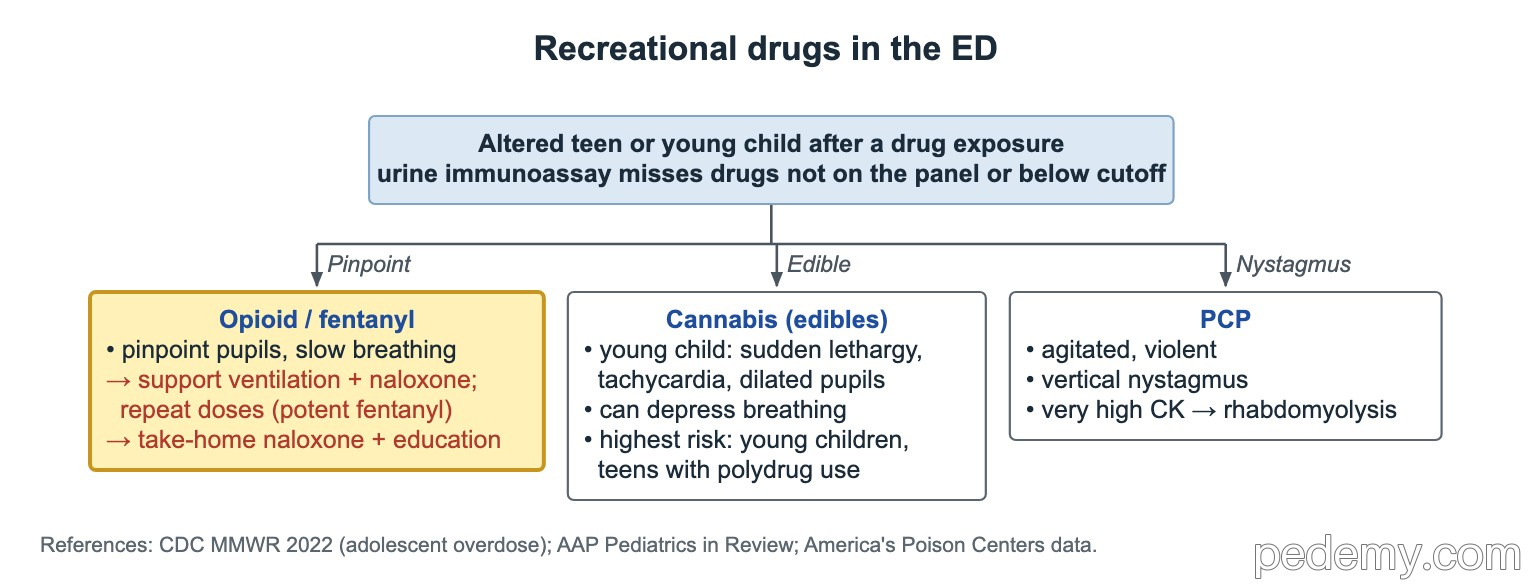
- Suspected opioid overdose with poor breathing: support airway and ventilation, give naloxone and monitor continuously.
- Naloxone 4 mg nasal spray: one spray in one nostril; repeat with a new device every 2–3 minutes if needed.
- Partial response, or breathing slows again: give more naloxone. Fentanyl is potent, and many opioids outlast naloxone.
- Know whether an opioid is immediate- or extended-release: it changes how long to monitor.
- Infants are especially prone to hypoventilation and apnea from opioids.
- Teens at risk of overdose: prescribe take-home naloxone and teach families how to use it.
- Cannabis edibles in toddlers: sudden drowsiness, ataxia, tachycardia, big pupils; severe cases depress breathing. Highest risk: young children and teens with co-ingestants.
- Phencyclidine (PCP): agitated, violent teen with vertical nystagmus; very high CK and dark urine mean rhabdomyolysis.
Household products, lead and other telltale clues
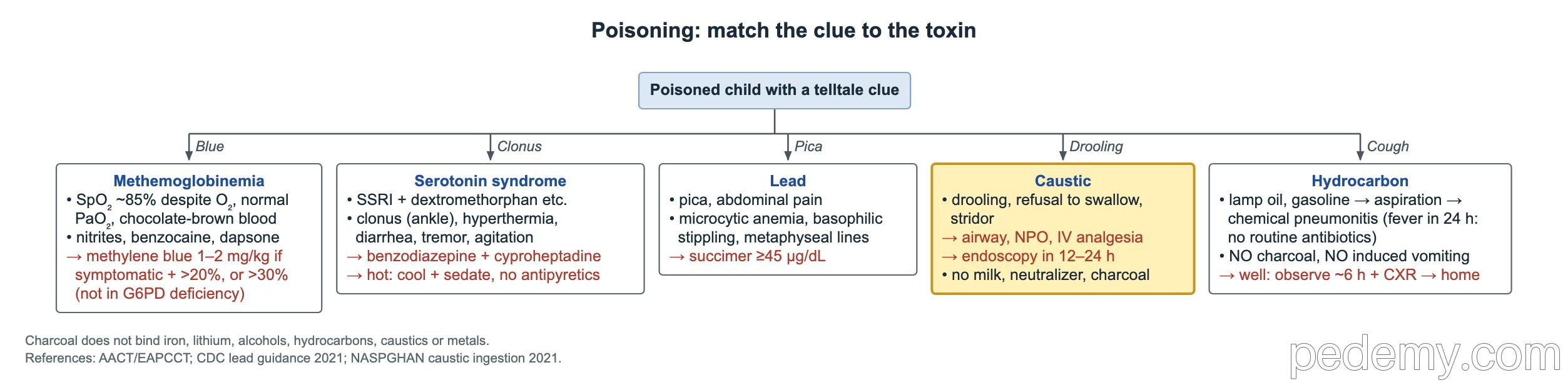
- Lead: pica, abdominal pain, microcytic anemia, basophilic stippling and dense metaphyseal lines on X-ray.
- Venous lead 20–44 µg/dL: find and remove the source; consider an abdominal X-ray for swallowed lead objects; involve poison control or a lead specialist.
- Venous lead 45 µg/dL or more: chelation with oral succimer if there is no encephalopathy, guided by a lead expert.
- Admit for encephalopathy or other severe symptoms, or when the child cannot return to a lead-safe home.
| Toxin | Clue | Management |
|---|---|---|
| Caustic (drain or pool cleaner) | Drooling, refusal to swallow, stridor | Airway, nothing by mouth, IV analgesia, endoscopy within 12–24 hours; no milk, neutralizer, charcoal or induced vomiting |
| Hydrocarbon (lamp oil, gasoline) | Cough after ingestion; aspiration causes chemical pneumonitis | No charcoal or induced vomiting; well child: observe about 6 hours, chest X-ray at about 6 hours, home if normal; fever in the first 24 hours does not need routine antibiotics |
| Methemoglobinemia | SpO2 about 85% despite oxygen, normal PaO2, chocolate-brown blood; nitrates in well water used for formula, benzocaine, dapsone | Methylene blue 1–2 mg/kg IV if symptomatic and above 20%, or above 30%; not in G6PD deficiency |
| Serotonin syndrome | SSRI plus dextromethorphan; inducible ankle clonus, hyperthermia, diarrhea, tremor, agitation | Benzodiazepines and cyproheptadine; cool and sedate (antipyretics do not help) |
| Camphor (vapor rub) | Vomiting, then seizures within about an hour | Seizure control and support |
| Nicotine (e-cigarette liquid) | Vomiting, seizures, slow heart rate | Support; prevent by locking refills away |
Common questions
When should activated charcoal be given to a child?
Consider it within 1 hour of a dangerous ingestion when the airway is protected. It does not bind iron, lithium, alcohols, hydrocarbons, caustics or metals.
What acetaminophen level needs treatment?
After a single acute ingestion, a 4-hour level on or above the 150 µg/mL treatment line of the nomogram needs NAC. NAC is most protective within 8 hours but still helps later.
Why can breathing slow again after naloxone?
Many opioids, and large or potent doses such as fentanyl, last longer than naloxone. Keep monitoring and repeat doses as needed.
Study this topic
Sources
- AHA 2023 focused update: cardiac arrest or life-threatening toxicity due to poisoning (Circulation)
- Management of acetaminophen poisoning in the US and Canada: consensus statement (JAMA Netw Open 2023)
- EXTRIP: Extracorporeal treatment for salicylate poisoning (Ann Emerg Med 2015)
Written for Pedemy in our own words from the sources above; checked November 2026. For education only, not medical advice; check doses and local protocols before treating a patient. Pedemy is independent and not affiliated with or endorsed by the organizations cited.