

Main decision tree
Adrenal insufficiency: primary or secondary?
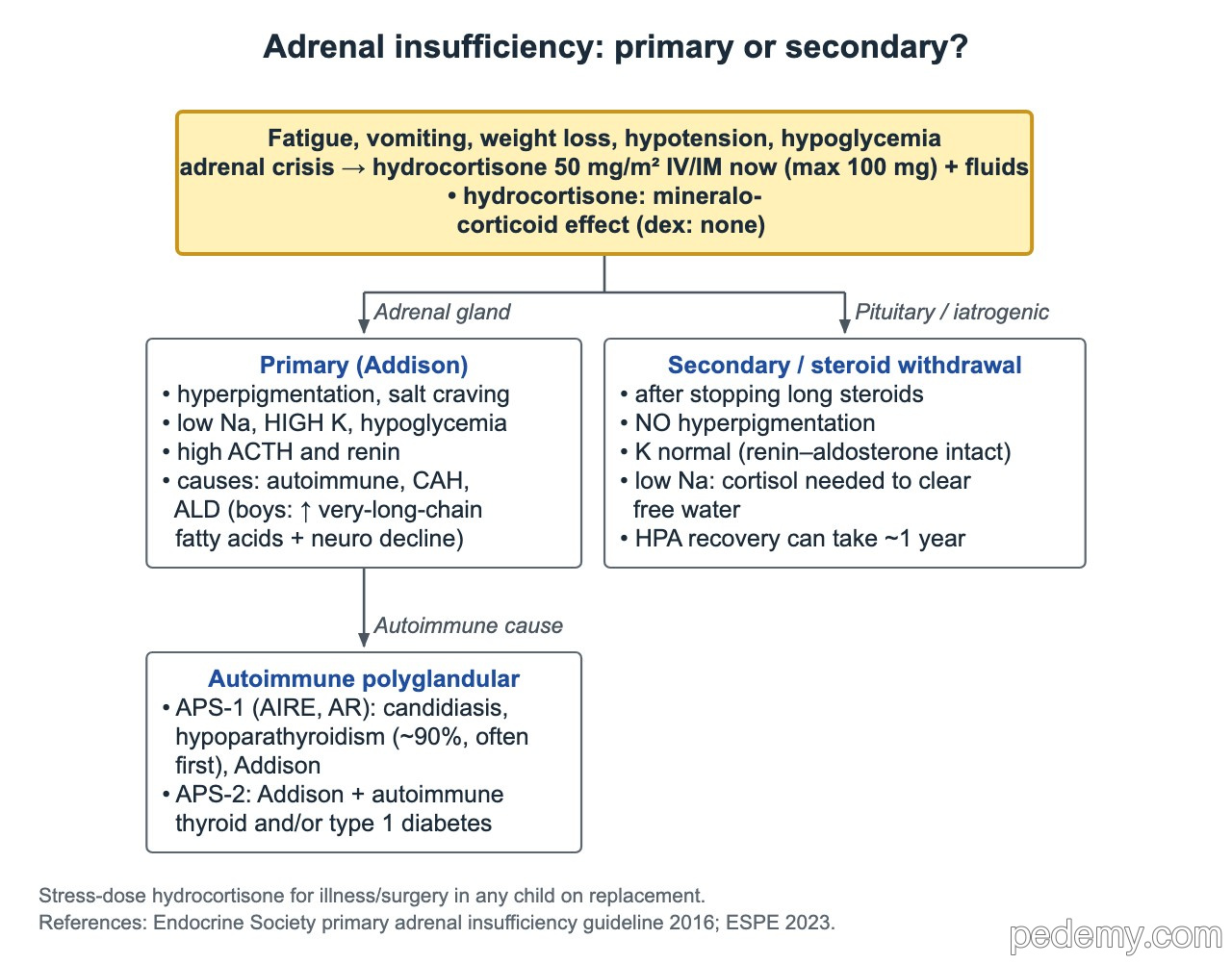
Key points
- Adrenal crisis: hydrocortisone 50 mg/m² IV or IM at once (usual maximum 100 mg), plus fluids and glucose.
- Primary adrenal insufficiency: low sodium, HIGH potassium, high ACTH and renin, hyperpigmentation.
- Secondary or steroid-withdrawal insufficiency: normal potassium and no hyperpigmentation; HPA recovery can take 6–12 months or longer.
- Classic 21-hydroxylase deficiency (about 95% of CAH): very high 17-OHP; salt-wasting crisis at 1–3 weeks of life.
- 11β-hydroxylase and 17α-hydroxylase deficiency cause hypertension with low potassium from excess DOC.
- Hypertension + low potassium: check renin and aldosterone; low renin with high aldosterone = primary aldosteronism.
- Cushing syndrome: weight up while height velocity falls; exogenous steroids are the commonest cause; screening needs 2 abnormal tests.
Adrenal crisis: treat first
Suspect adrenal crisis in a child with vomiting, weakness, hypotension or shock, hypoglycemia or low sodium, especially with known adrenal disease, CAH or recent long-term steroids. Do not wait for cortisol results; draw blood for cortisol and ACTH if it does not delay treatment.
- Hydrocortisone 50 mg/m² IV or IM immediately (usual maximum 100 mg), then repeated doses over 24 hours.
- Isotonic saline boluses for shock and IV dextrose for hypoglycemia.
- Hydrocortisone is preferred: at stress doses it also has mineralocorticoid action. Dexamethasone has none and does not replace aldosterone.
- Any child on daily replacement needs stress doses for fever, vomiting, injury or surgery, and an emergency IM hydrocortisone kit at home.
Primary adrenal insufficiency (Addison disease)
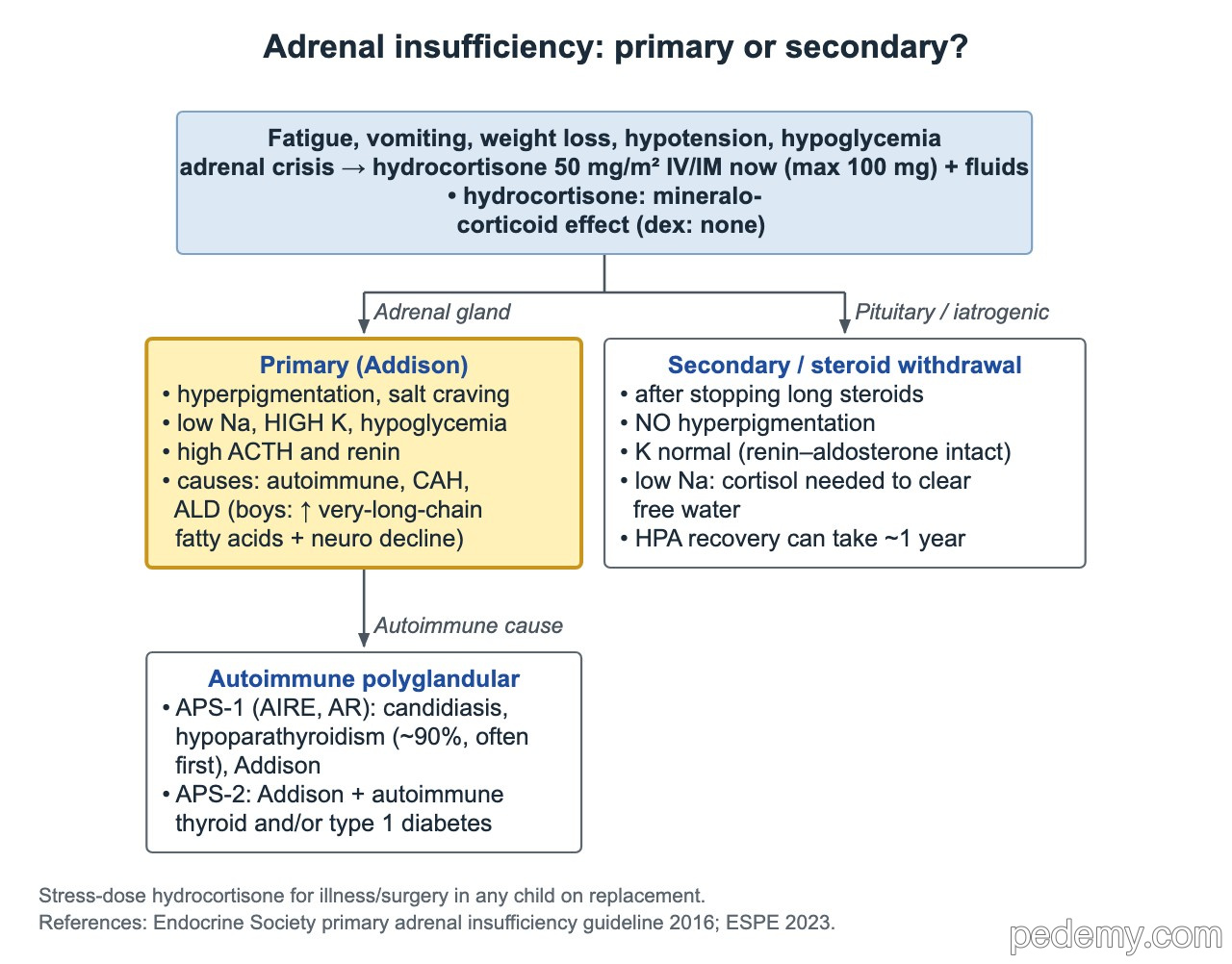
When the adrenal gland itself fails, both cortisol and aldosterone fall. The pituitary drives ACTH up, and the pigment-stimulating effect of ACTH and MSH darkens the skin, gums and skin creases.
- Symptoms: fatigue, salt craving, weight loss, abdominal pain, hypotension, hyperpigmentation.
- Labs: hyponatremia with hyperkalemia, often hypoglycemia; high ACTH and high plasma renin.
- Causes: autoimmune adrenalitis, CAH (infants), and X-linked adrenoleukodystrophy in boys.
- X-ALD: ABCD1 variants block transport of very-long-chain fatty acids into peroxisomes, so VLCFA build up. Check VLCFA in any boy with primary adrenal insufficiency of unclear cause, especially with school decline, behavior change or loss of vision or hearing.
- Treatment: daily hydrocortisone plus fludrocortisone for the mineralocorticoid loss.
Autoimmune polyglandular syndromes
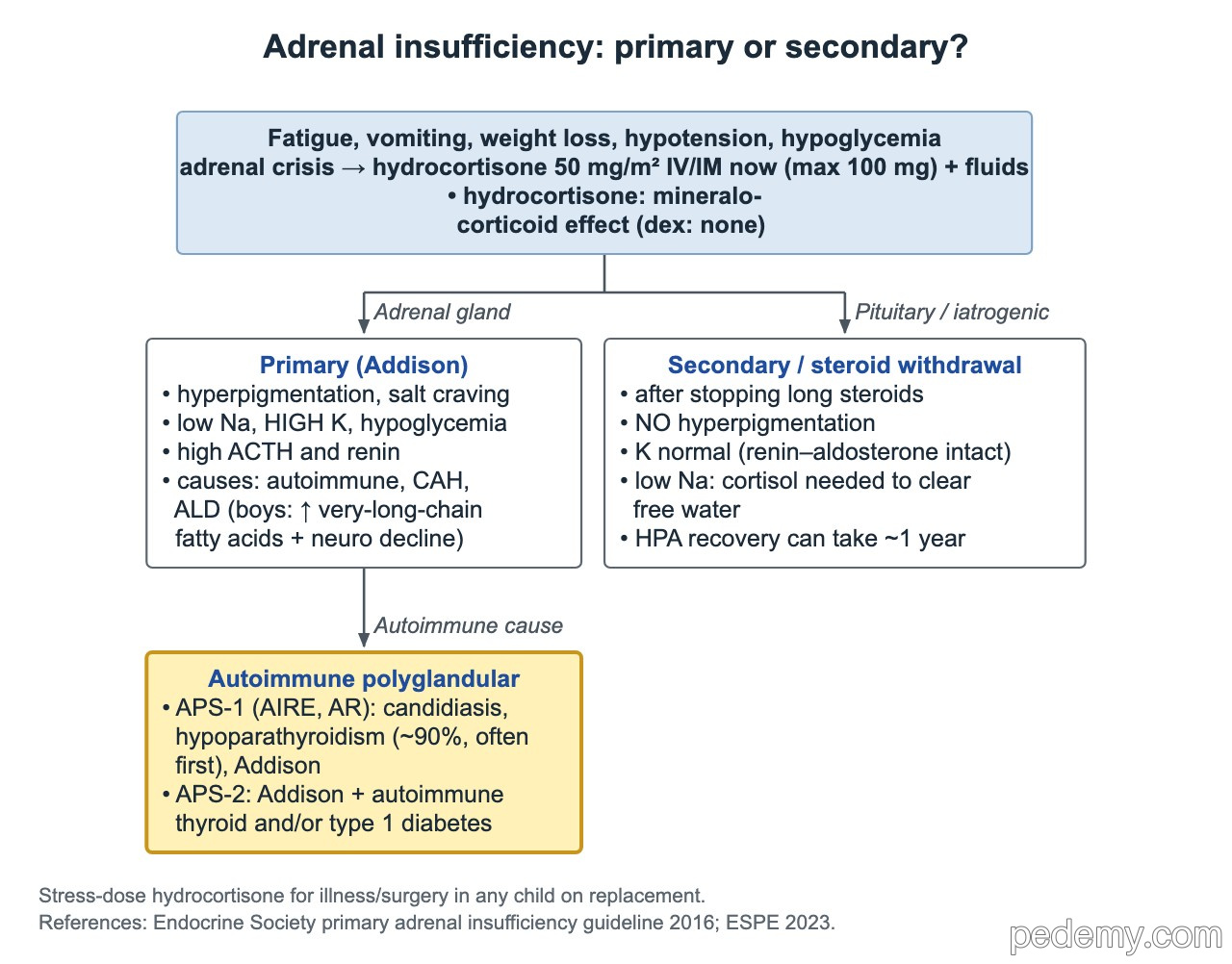
A child with one autoimmune endocrine disease who develops a second deserves screening for the others, including adrenal antibodies and a morning cortisol.
| Feature | APS-1 (APECED) | APS-2 |
|---|---|---|
| Gene and inheritance | AIRE; autosomal recessive | Polygenic (HLA-linked) |
| Typical age | Childhood | Usually adolescence and adulthood |
| Core features | Chronic mucocutaneous candidiasis, hypoparathyroidism, Addison disease | Addison disease with autoimmune thyroid disease and/or type 1 diabetes |
| Key board fact | Hypoparathyroidism is the most common endocrine feature; candidiasis often appears first | No candidiasis or hypoparathyroidism |
Secondary and steroid-withdrawal adrenal insufficiency
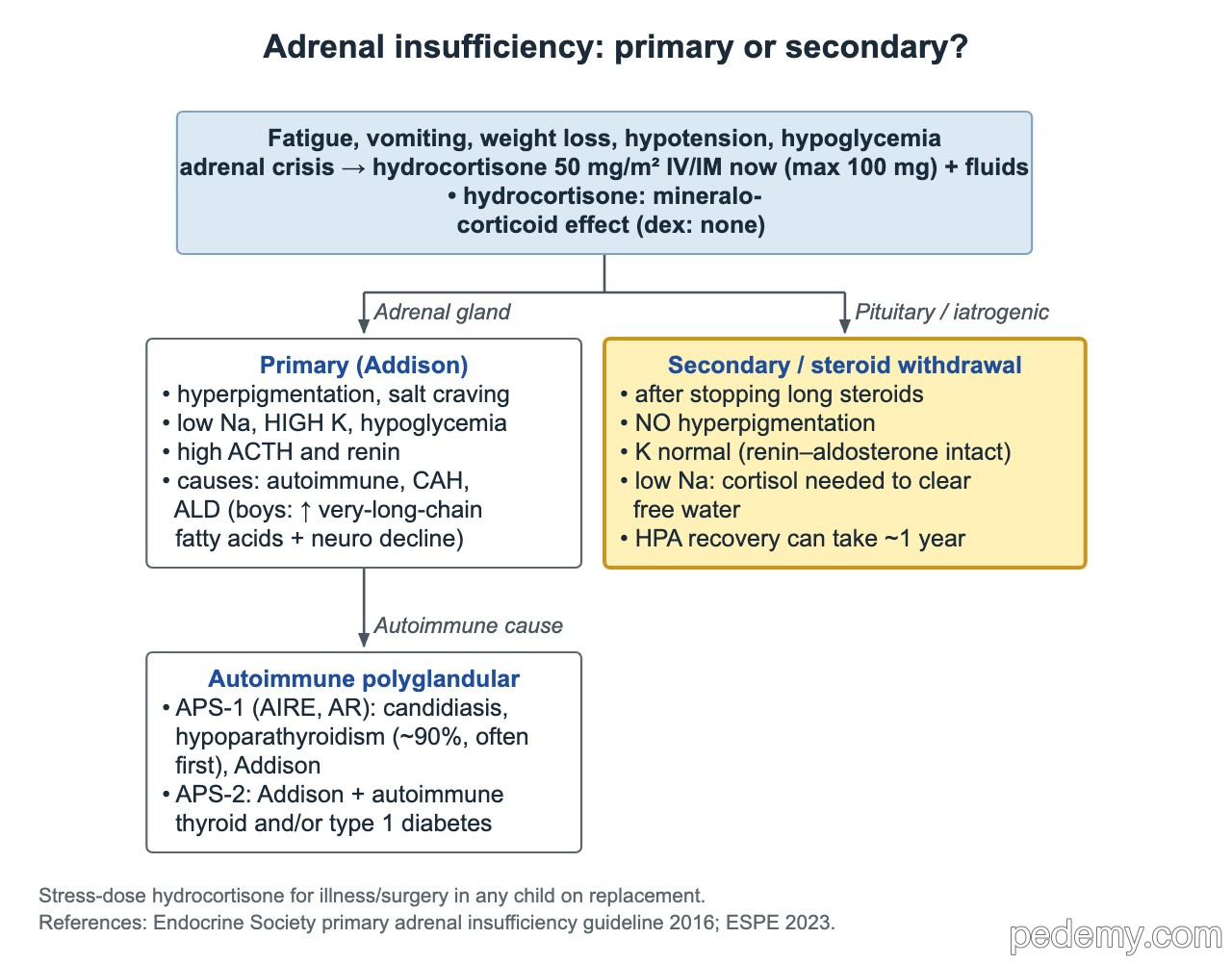
Long courses of supraphysiologic glucocorticoids suppress the hypothalamus and pituitary. When steroids stop abruptly, ACTH and cortisol stay low, but the renin–angiotensin–aldosterone system still works.
- Potassium is usually normal, because aldosterone is preserved.
- No hyperpigmentation, because ACTH is low.
- Hyponatremia still happens: cortisol is needed to excrete free water, and cortisol deficiency allows ADH excess.
- Risk rises with supraphysiologic doses for more than about 3–4 weeks; taper rather than stop suddenly.
- The HPA axis may stay suppressed for 6–12 months or longer after stopping.
- Vomiting, hypotension and low sodium after stopping long-term steroids: give IV stress-dose hydrocortisone.
Congenital adrenal hyperplasia
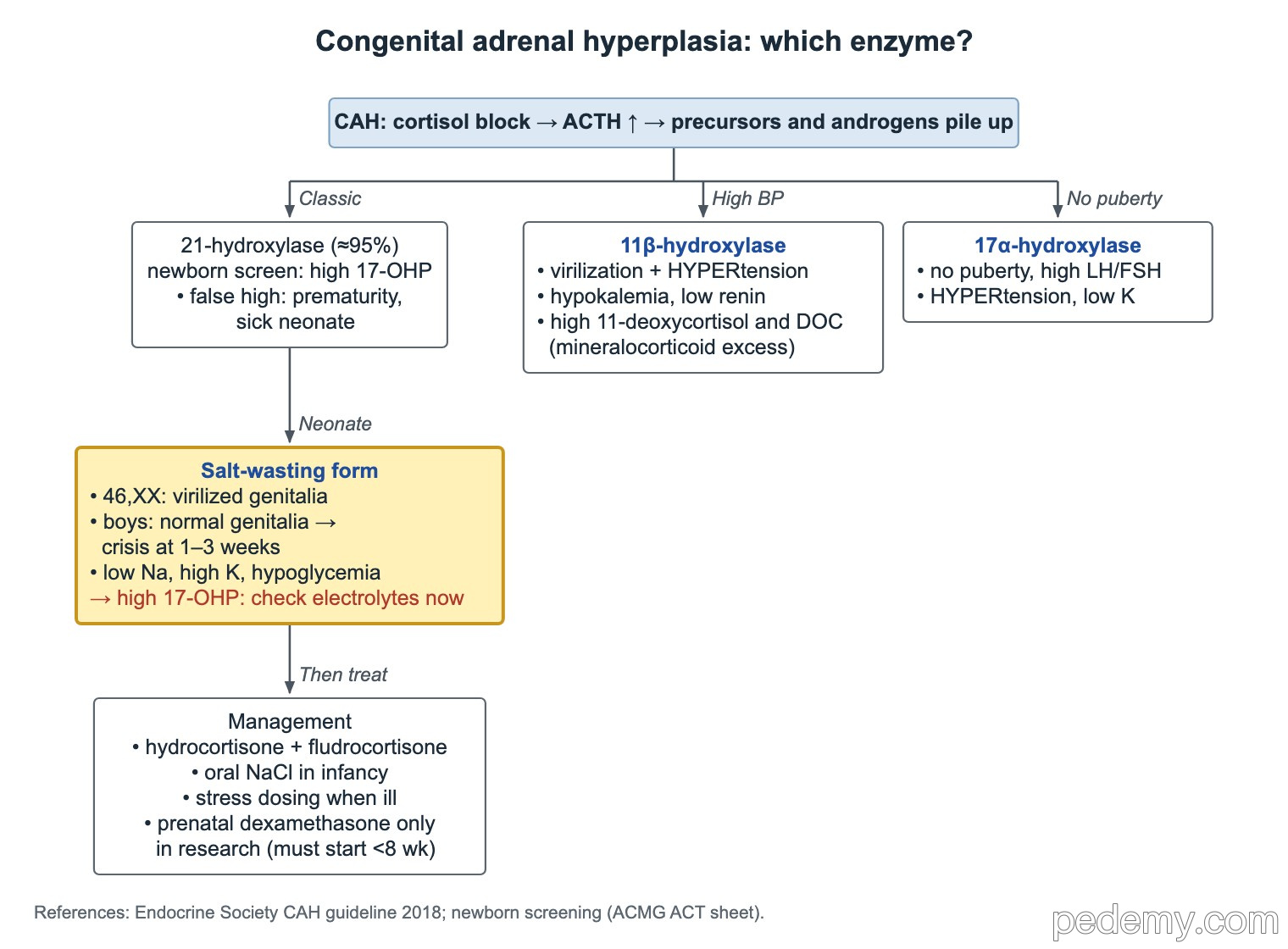
In CAH a block in cortisol synthesis raises ACTH, so precursors before the block and adrenal androgens pile up. The enzyme decides whether the child loses salt or has high blood pressure.
- Newborn screening measures 17-OHP. Prematurity, low birth weight and neonatal illness can give a false-high result.
- A very high screening 17-OHP is urgent: check electrolytes and glucose at once, because boys look normal and can present in salt-wasting crisis.
- Treatment: hydrocortisone and fludrocortisone, plus oral sodium chloride through infancy, and stress dosing during illness.
- Prenatal dexamethasone to prevent virilization is used only in research settings.
| Enzyme | Key findings | Blood pressure and potassium |
|---|---|---|
| 21-hydroxylase (about 95%) | Very high 17-OHP; 46,XX virilized genitalia; 46,XY normal male genitalia; salt-wasting crisis at 1–3 weeks | Low BP, low sodium, high potassium, hypoglycemia |
| 11β-hydroxylase | Virilization; high 11-deoxycortisol and deoxycorticosterone (DOC) | Hypertension, hypokalemia, low renin (DOC acts as a mineralocorticoid) |
| 17α-hydroxylase | No sex steroids: no puberty, high LH and FSH; 46,XY undervirilized | Hypertension, hypokalemia (excess DOC) |
Endocrine hypertension and low potassium
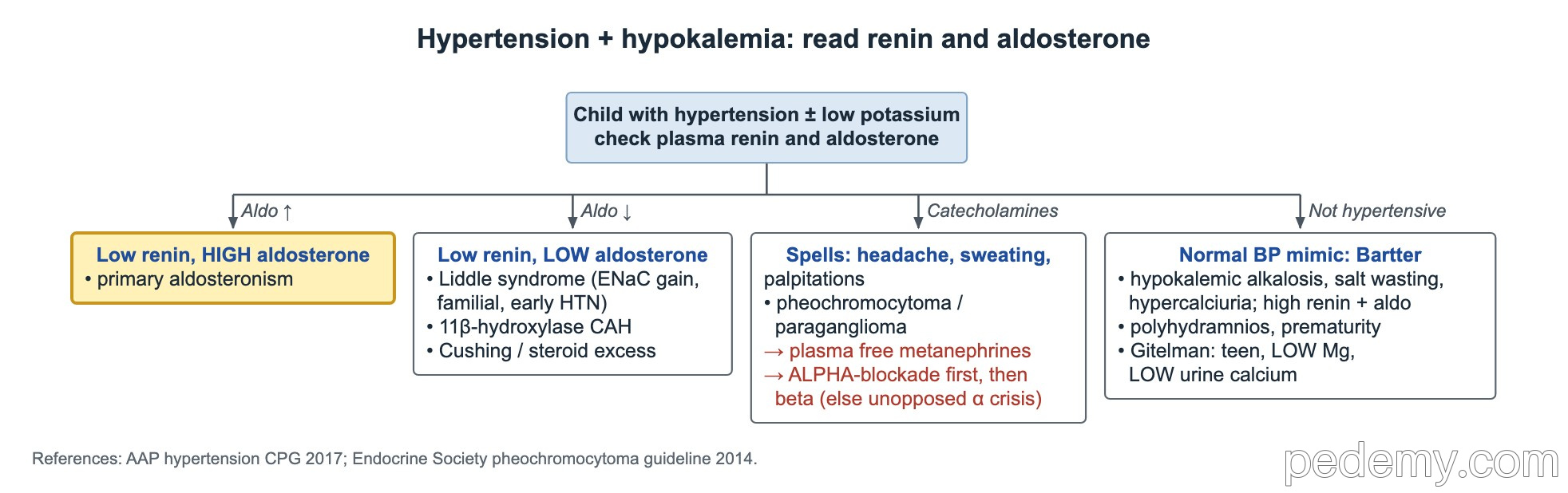
In a child with hypertension and low potassium, measure plasma renin and aldosterone together. Renin is low in all mineralocorticoid-excess states; the aldosterone level separates them.
- Pheochromocytoma surgery: start alpha-blockade first and add a beta-blocker only after adequate alpha-blockade. Beta-blockade alone leaves alpha-mediated vasoconstriction unopposed and can cause a hypertensive crisis.
- Many children with pheochromocytoma or paraganglioma carry a germline variant, so genetic testing is advised.
| Pattern | Causes | Clues |
|---|---|---|
| Low renin, HIGH aldosterone | Primary aldosteronism | Aldosterone inappropriately high for the low renin |
| Low renin, LOW aldosterone | Liddle syndrome; 11β-hydroxylase CAH; Cushing syndrome or steroid excess | Liddle: autosomal dominant ENaC gain of function, early family hypertension; responds to amiloride, not spironolactone |
| Episodic spells | Pheochromocytoma or paraganglioma | Headache, palpitations, sweating; measure plasma free or urine fractionated metanephrines |
| Normal or low BP | Bartter or Gitelman syndrome | Hypokalemic alkalosis with high renin and aldosterone; Gitelman: teen, low magnesium, low urine calcium |
Cushing syndrome
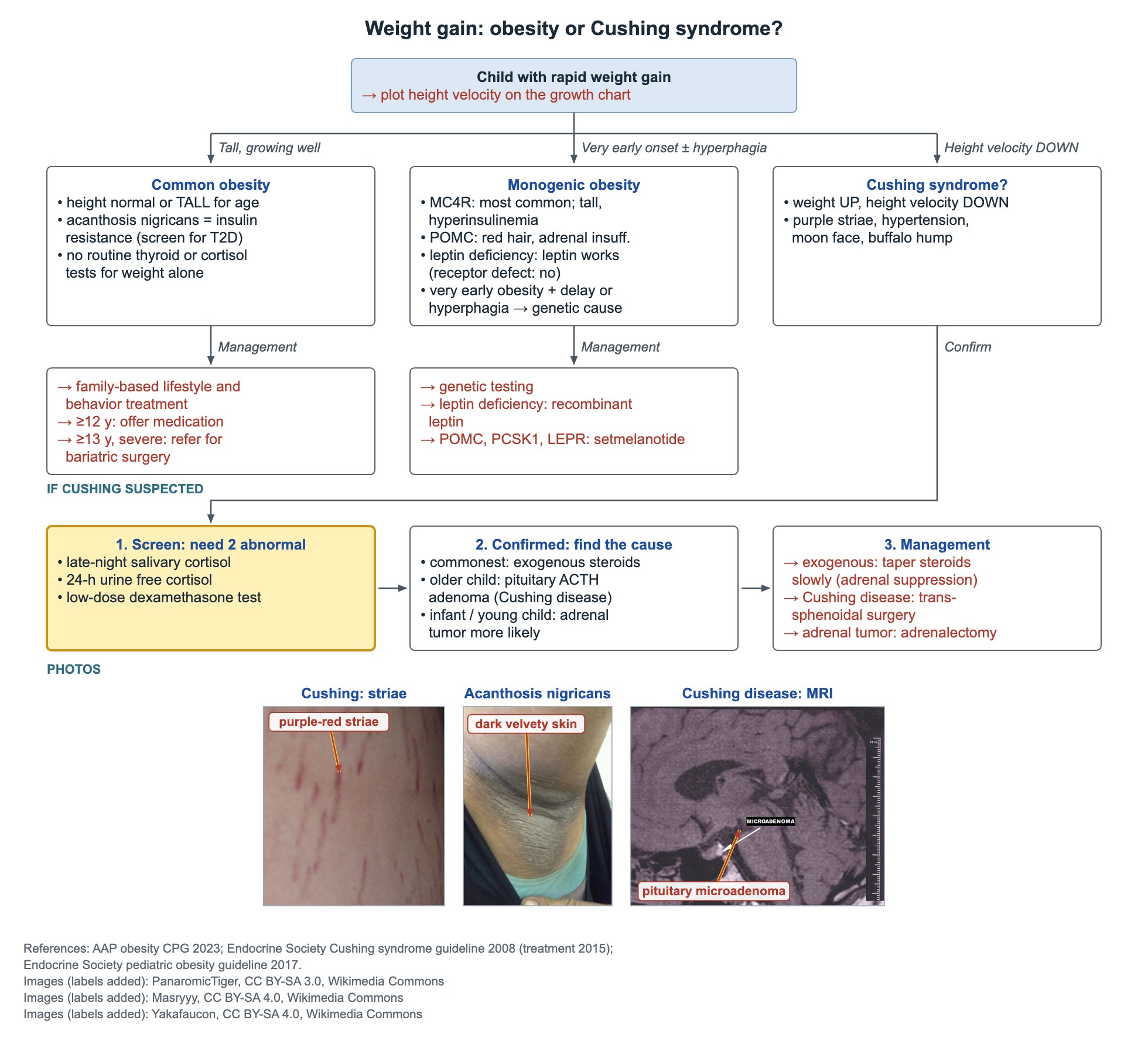
The key growth clue is the height curve. A child with common obesity is usually tall for age; a child with Cushing syndrome gains weight while height velocity falls. Moon face, buffalo hump, purple striae and hypertension support it.
- Commonest cause overall: exogenous (iatrogenic) glucocorticoids, for example deflazacort or prednisone in Duchenne muscular dystrophy.
- Endogenous, school-age child or teen: ACTH-secreting pituitary adenoma (Cushing disease). Infants and young children: adrenal tumor is more likely.
- Earliest lab change: loss of the normal diurnal rhythm, with a high late-night cortisol.
- Screening tests: late-night salivary cortisol, 24-hour urinary free cortisol, or a low-dose dexamethasone suppression test. One abnormal result does not confirm it; at least 2 should be abnormal.
- Overnight 1-mg dexamethasone test: morning cortisol is suppressed in simple obesity and not suppressed in Cushing syndrome.
- Management: exogenous steroids are tapered slowly (adrenal suppression); Cushing disease needs transsphenoidal surgery; adrenal tumors need adrenalectomy.
Common questions
What is the hydrocortisone dose for pediatric adrenal crisis?
50 mg/m² IV or IM immediately, usually up to a maximum of 100 mg, together with fluid resuscitation and treatment of hypoglycemia.
How do you tell primary from secondary adrenal insufficiency?
Primary disease has high ACTH and renin, high potassium and hyperpigmentation. Secondary disease, including steroid withdrawal, has low ACTH, normal potassium and no hyperpigmentation.
Which CAH types cause high blood pressure?
11β-hydroxylase deficiency (with virilization) and 17α-hydroxylase deficiency (with absent puberty). Both raise deoxycorticosterone, which causes hypertension and low potassium.
Study this topic
Sources
- Endocrine Society 2016: Diagnosis and treatment of primary adrenal insufficiency (J Clin Endocrinol Metab)
- Endocrine Society 2018: Congenital adrenal hyperplasia due to 21-hydroxylase deficiency (J Clin Endocrinol Metab)
- ESE/Endocrine Society 2024: Glucocorticoid-induced adrenal insufficiency (Eur J Endocrinol)
- Endocrine Society 2014: Pheochromocytoma and paraganglioma (J Clin Endocrinol Metab)
- Endocrine Society 2008: The diagnosis of Cushing syndrome (J Clin Endocrinol Metab)
Written for Pedemy in our own words from the sources above; checked November 2026. For education only, not medical advice; check doses and local protocols before treating a patient. Pedemy is independent and not affiliated with or endorsed by the organizations cited.