

Main decision tree
Diabetes: confirm it, then type it
Key points
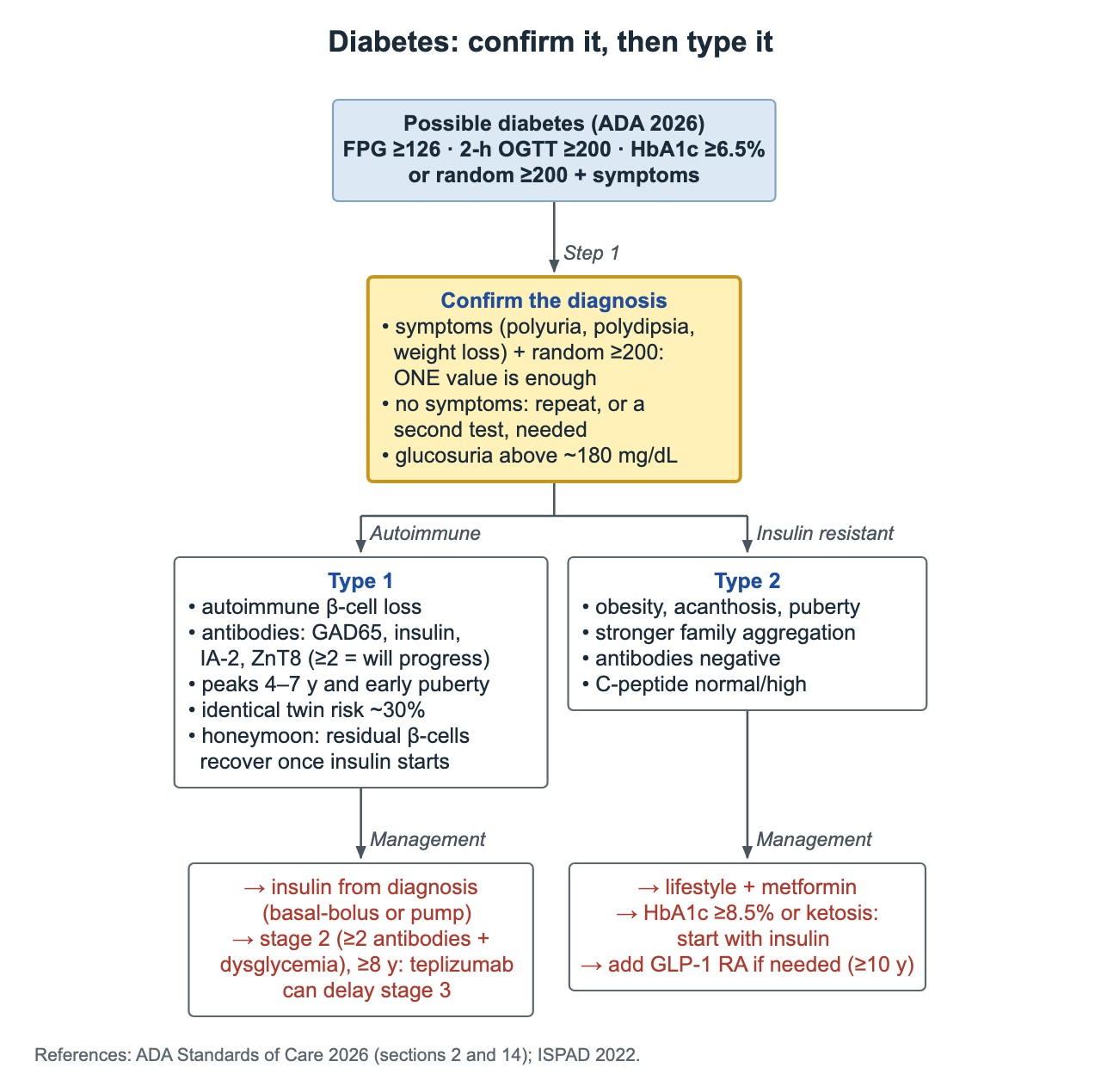
- Diabetes: HbA1c ≥6.5%, fasting glucose ≥126 mg/dL, 2-hour OGTT ≥200 mg/dL, or random ≥200 mg/dL with classic symptoms.
- Without symptoms, one abnormal value needs a repeat or a second test; test islet autoantibodies to type the diabetes.
- Hypoglycemia in diabetes: treat below 70 mg/dL; unconscious at home → glucagon (IM, SC or nasal).
- DKA (ISPAD 2022): glucose >200 mg/dL, pH <7.3 or bicarbonate <18 mmol/L, and beta-hydroxybutyrate ≥3 mmol/L.
- DKA insulin: 0.05–0.1 unit/kg/hour IV, no bolus, started after at least 1 hour of fluids; correct low potassium first.
- Cerebral edema in DKA: give mannitol 0.5–1 g/kg or 3% saline 2.5–5 mL/kg before any CT.
- Type 2 screening: BMI ≥85th percentile plus ≥1 risk factor, from puberty or age 10 years, every 3 years.
Diagnosis and types of diabetes
- An asymptomatic child with one abnormal result needs a repeat test or a second test unless hyperglycemia is unequivocal.
- Glycosuria appears when blood glucose exceeds the kidney threshold of about 180 mg/dL.
- Type 1: autoimmune destruction of beta cells. Antibodies: GAD65, insulin, IA-2 and ZnT8.
- Genetic risk and gradual autoimmune beta-cell loss come before symptoms, which may last only weeks. Two or more islet antibodies with normal glucose mean a high chance of progressing to type 1 diabetes.
- Type 1 onset peaks at about 4–7 years and in early puberty (10–14 years). An identical twin has about a 30% risk.
- Honeymoon (partial remission): insulin needs fall weeks after diagnosis as surviving beta cells recover from glucose toxicity.
- Type 2: obesity, acanthosis nigricans, puberty, antibodies negative, C-peptide normal or high; stronger family aggregation than type 1.
- An obese teen with a parent with type 2 diabetes still needs islet autoantibodies to classify new hyperglycemia.
| Test | Diabetes | Prediabetes |
|---|---|---|
| HbA1c | ≥6.5% | 5.7–6.4% |
| Fasting plasma glucose | ≥126 mg/dL | 100–125 mg/dL |
| 2-hour OGTT glucose | ≥200 mg/dL | 140–199 mg/dL |
| Random glucose with polyuria, polydipsia, weight loss | ≥200 mg/dL (one value is enough) | — |
Type 2 diabetes: screening and first treatment
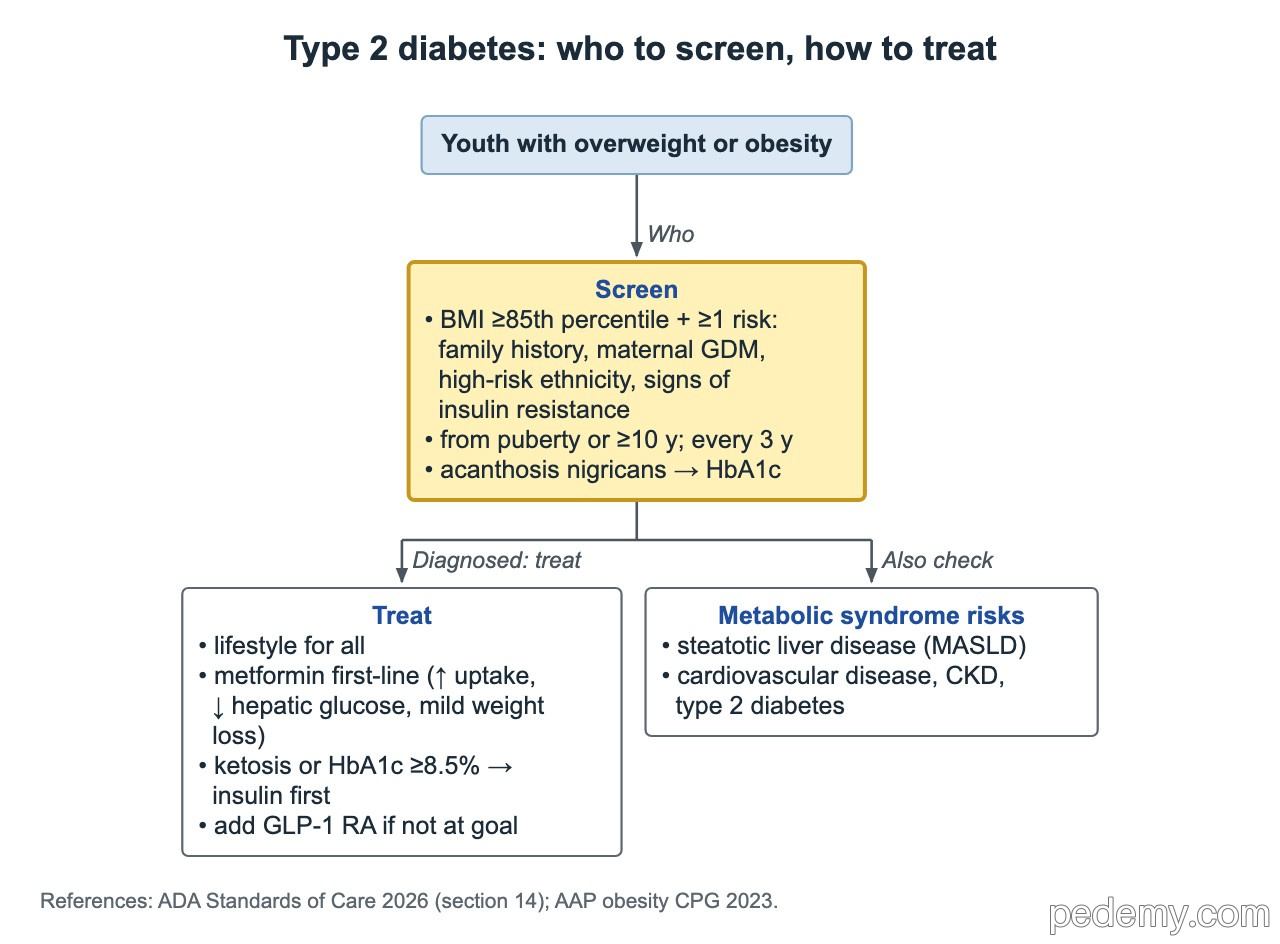
- Screen youth with BMI ≥85th percentile plus at least 1 risk factor (family history, maternal gestational diabetes, high-risk ethnicity, signs of insulin resistance such as acanthosis nigricans), from puberty or age 10 years, whichever is first.
- Screening tests: HbA1c, fasting glucose or OGTT; repeat at least every 3 years.
- New type 2 diabetes with HbA1c below 8.5% and no acidosis: metformin (if kidney function allows) plus lifestyle change.
- HbA1c 8.5% or more without acidosis: basal insulin while metformin is started and titrated.
- Ketoacidosis: treat as DKA with IV insulin.
- Not at goal on metformin: add a GLP-1 receptor agonist (approved from 10 years of age).
- Look for other metabolic problems: steatotic liver disease, hypertension, dyslipidemia, kidney disease.
Insulin types, regimens and dose adjustment
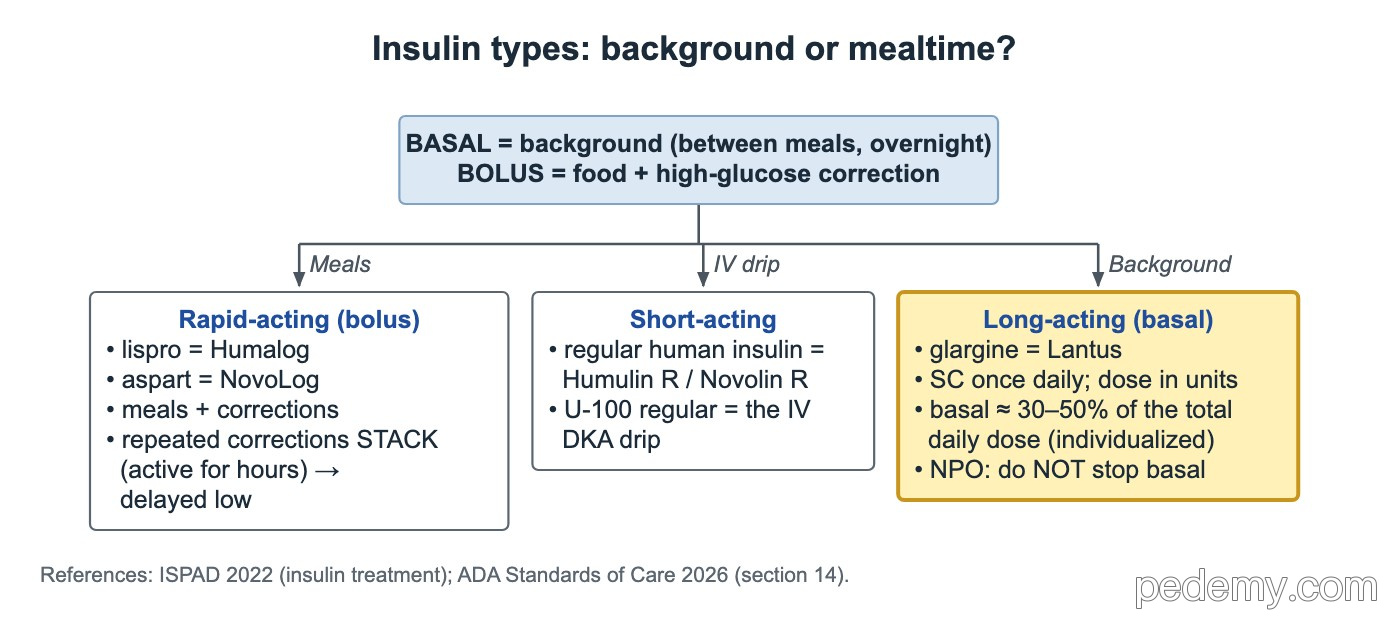
- Preferred type 1 regimen: basal-bolus (long-acting plus rapid-acting with meals); automated insulin delivery (pump with CGM) when feasible.
- Basal is often about 30–50% of the total daily dose, individualized.
- Repeated rapid-acting corrections can stack, because earlier insulin is still active, and cause delayed hypoglycemia.
- Before raising doses, check doses actually given, missed doses, calculations, food, activity and the glucose pattern.
- Patterns: fasting and overnight readings guide basal insulin; a high pre-lunch glucose suggests too little breakfast bolus; repeated low bedtime glucose suggests too much dinner bolus.
- Normal overnight glucose that rises before breakfast without a preceding low: dawn phenomenon.
- Overnight highs should not automatically get the daytime correction: sensitivity, active insulin and targets differ.
- Long exercise on a pump: temporary basal reduction of about 50% (up to 80%), started 60–90 minutes before; disconnect for no more than about 1–2 hours. Glucose above 250 mg/dL before exercise: check ketones first.
| Type | Examples (brand) | Role |
|---|---|---|
| Rapid-acting | Lispro (Humalog), aspart (NovoLog) | Meal boluses and high-glucose corrections |
| Short-acting | Regular human insulin (Humulin R, Novolin R) | U-100 regular is the usual IV insulin for DKA |
| Long-acting | Glargine U-100 (Lantus) | Basal (background) insulin, SC once daily |
Hypoglycemia
- Treat glucose below 70 mg/dL.
- Awake child who can swallow: fast-acting carbohydrate, recheck in 15 minutes, repeat if still low.
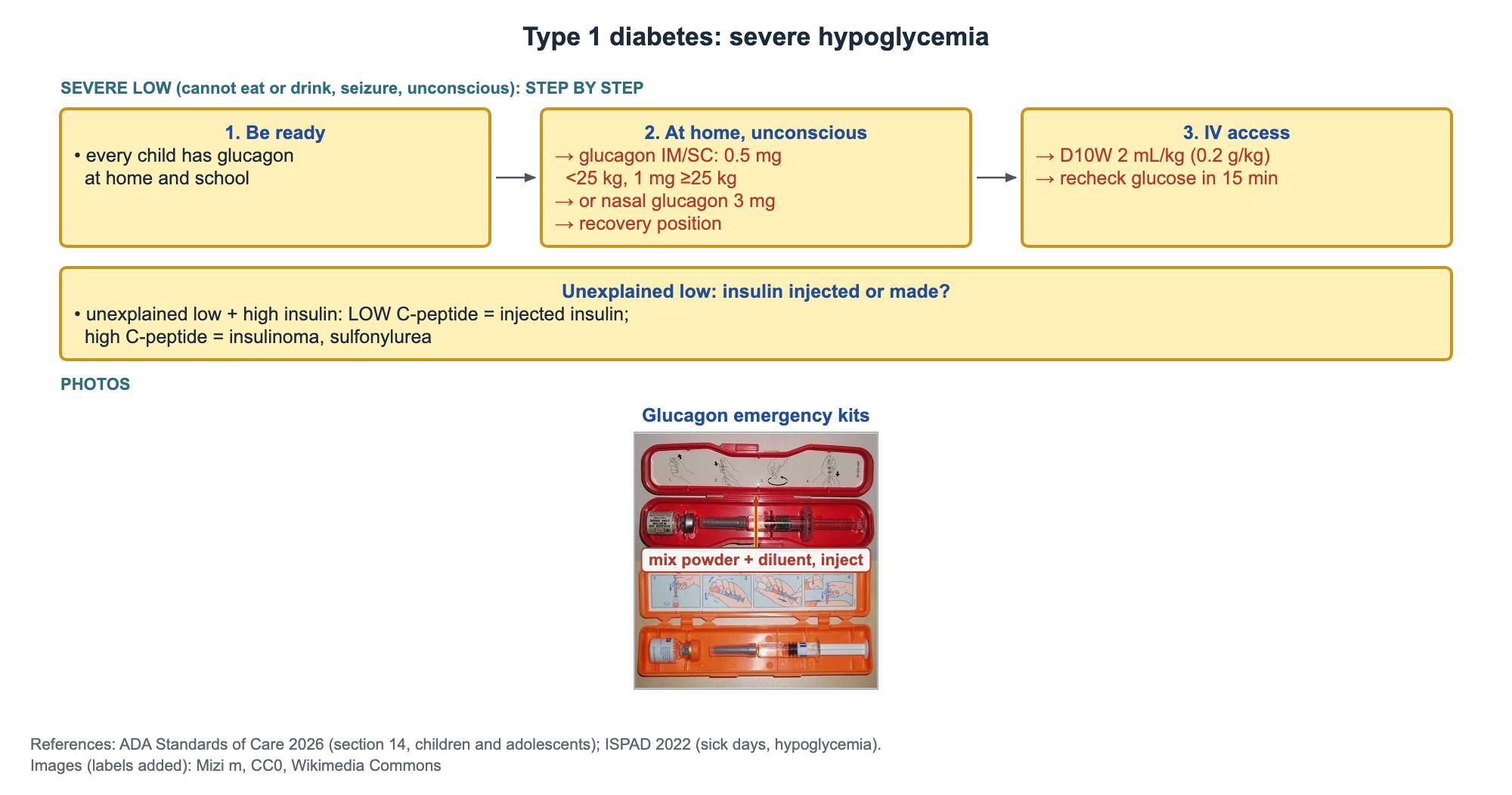
- Cannot eat or drink, seizing or unconscious at home: glucagon IM or SC (0.5 mg under 25 kg, 1 mg at 25 kg or more) or nasal glucagon 3 mg; place in the recovery position.
- Every child with type 1 diabetes should have glucagon at home and at school.
- With IV access: 10% dextrose 2 mL/kg (0.2 g/kg); 2.5 mL/kg delivers 250 mg/kg. Recheck glucose in 15 minutes.
- Unexplained hypoglycemia with high insulin: C-peptide is low with injected insulin and high with endogenous insulin (insulinoma, sulfonylurea). High C-peptide → send a sulfonylurea screen.
Sick days and steroids
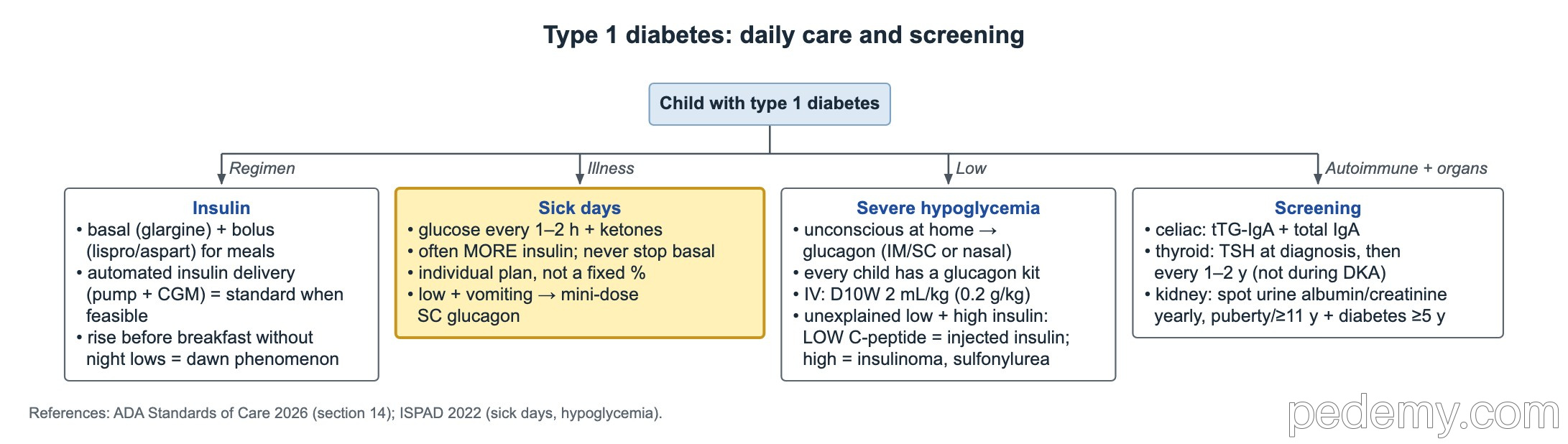
- Check glucose every 1–2 hours and check ketones (blood or urine).
- Never stop basal insulin; illness often raises insulin needs, but follow the child's own sick-day plan rather than a fixed percentage for everyone.
- Vomiting with glucose below 70 mg/dL in an awake child: mini-dose SC glucagon at home.
- A glucose below 400–500 mg/dL is not proof of safety: assess ketones, symptoms, hydration and insulin delivery.
- A pump delivers only rapid-acting insulin, so a blocked or detached set can lead to DKA within hours: check the site, tubing and ketones and use backup pens.
- Glucocorticoids raise insulin needs; as the steroid dose is tapered, insulin needs fall and hypoglycemia risk rises.
Diabetic ketoacidosis and cerebral edema
DKA (ISPAD 2022) is glucose above 200 mg/dL, venous pH below 7.3 or bicarbonate below 18 mmol/L, and ketosis (blood beta-hydroxybutyrate ≥3 mmol/L or moderate to large urine ketones). Deep, rapid Kussmaul breathing blows off CO₂ to offset the acidosis. Leukocytosis is common from stress and does not by itself mean infection.
- Aim for a gradual fall in glucose (ISPAD: about 2–5 mmol/L, or roughly 36–90 mg/dL, per hour).
- Low measured sodium is dilutional: hyperglycemia draws water out of cells. Corrected Na = measured Na + 1.6 × [(glucose − 100) ÷ 100]. Measured sodium should rise as glucose falls.
- Follow blood beta-hydroxybutyrate rather than urine ketones: it is the main circulating ketone and tracks recovery directly.
- Fluids with only potassium chloride add chloride: hyperchloremic acidosis can slow the rise in bicarbonate; split potassium between chloride and phosphate or acetate.
- Move to SC insulin when acidosis has resolved and the child can eat, usually at a meal. Give SC insulin before stopping the IV infusion so there is no gap in insulin coverage; the overlap depends on the preparation. Prescribe basal insulin plus meal and correction doses.
- Cerebral edema: usually within the first 12 hours of treatment, often after initial improvement.
- Risk factors at presentation: young age, new-onset diabetes, severe acidosis, low pCO₂ (cerebral vasoconstriction and hypoperfusion), high BUN, and bicarbonate treatment.
- Warning signs: headache, worsening consciousness, recurrent vomiting, bradycardia especially with rising blood pressure, abnormal breathing. Hypertension alone is not a warning sign.
- Treat at once: mannitol 0.5–1 g/kg IV over 10–15 minutes (repeat if no response in 30 minutes to 2 hours) or 3% saline 2.5–5 mL/kg over 10–15 minutes. Reduce fluid rate.
- Treat first, then image: CT only after the child is stabilized.
- If CNS infection is also possible, give empiric antibiotics and delay the lumbar puncture.
| Step | What to do | Why |
|---|---|---|
| Fluids | Isotonic fluid 10–20 mL/kg over 20–30 minutes without shock, then reassess; replace the deficit over 24–48 hours | PECARN FLUID 2018: faster rates or 0.45% saline did not raise cerebral injury |
| Potassium | Add potassium to fluids; if potassium is low (for example 2.8 mmol/L), replace it and delay insulin | Insulin shifts potassium and phosphate into cells and can cause arrhythmias |
| Insulin | Regular insulin IV 0.05–0.1 unit/kg/hour, no bolus, after at least 1 hour of fluids | A bolus adds risk without benefit |
| Dextrose | Add dextrose when glucose falls to about 250–300 mg/dL; keep insulin running | Insulin is still needed to clear ketones |
| Bicarbonate | Not routine | No benefit and linked to cerebral edema |
Goals and complication screening in type 1 diabetes
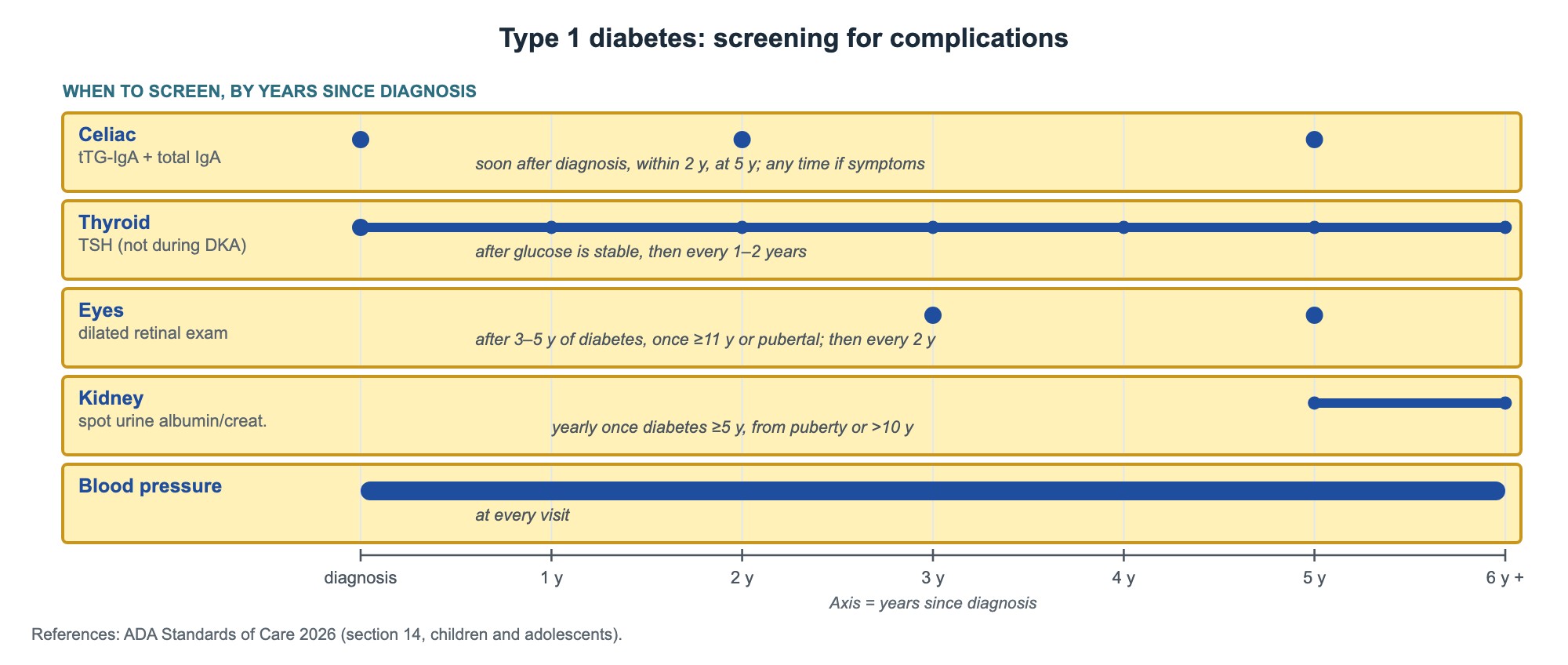
- HbA1c goal: below 7% for most children, individualized; below 6.5% when it can be reached safely.
- Interpret thyroid tests drawn during severe DKA with caution: acute illness alters them.
- Vaccines: diabetes is a pneumococcal risk condition, but PPSV23 is not automatic; choose by age, risk and prior doses, including PCV20. Give yearly influenza vaccine.
| Screen | Test | When (ADA 2026) |
|---|---|---|
| Celiac disease | tTG-IgA with total IgA | Soon after diagnosis, within 2 years and at 5 years; any time with symptoms |
| Thyroid disease | TSH (with thyroid antibodies) | Soon after diagnosis once glucose is stable, then every 1–2 years |
| Kidney | Spot urine albumin-to-creatinine ratio, first-morning sample preferred | Yearly from puberty or age over 10 years, once diabetes has lasted 5 years |
| Eyes | Dilated retinal exam | After 3–5 years of diabetes once age ≥11 years or puberty has started; then about every 2 years |
| Blood pressure | Measured BP | At every visit |
Common questions
What glucose level defines DKA in children?
Glucose above 200 mg/dL with venous pH below 7.3 or bicarbonate below 18 mmol/L, and ketosis with beta-hydroxybutyrate of 3 mmol/L or more (ISPAD 2022).
Should insulin be bolused in pediatric DKA?
No. Start an IV infusion of 0.05–0.1 unit/kg/hour without a bolus, after at least 1 hour of fluid therapy and after checking potassium.
When should children be screened for type 2 diabetes?
From puberty or age 10 years, whichever comes first, if BMI is at or above the 85th percentile with at least one risk factor; repeat at least every 3 years.
What is the glucagon dose for a child with severe hypoglycemia?
0.5 mg IM or SC under 25 kg and 1 mg at 25 kg or more, or nasal glucagon 3 mg.
Study this topic
Sources
- ADA 2026: Children and adolescents, Standards of Care in Diabetes (Diabetes Care)
- ISPAD 2022: Diabetic ketoacidosis and hyperglycemic hyperosmolar state (Pediatr Diabetes)
- PECARN FLUID trial 2018: Fluid infusion rates for pediatric DKA (N Engl J Med)
Written for Pedemy in our own words from the sources above; checked November 2026. For education only, not medical advice; check doses and local protocols before treating a patient. Pedemy is independent and not affiliated with or endorsed by the organizations cited.