

Main decision tree
Short stature: normal variant or disease?
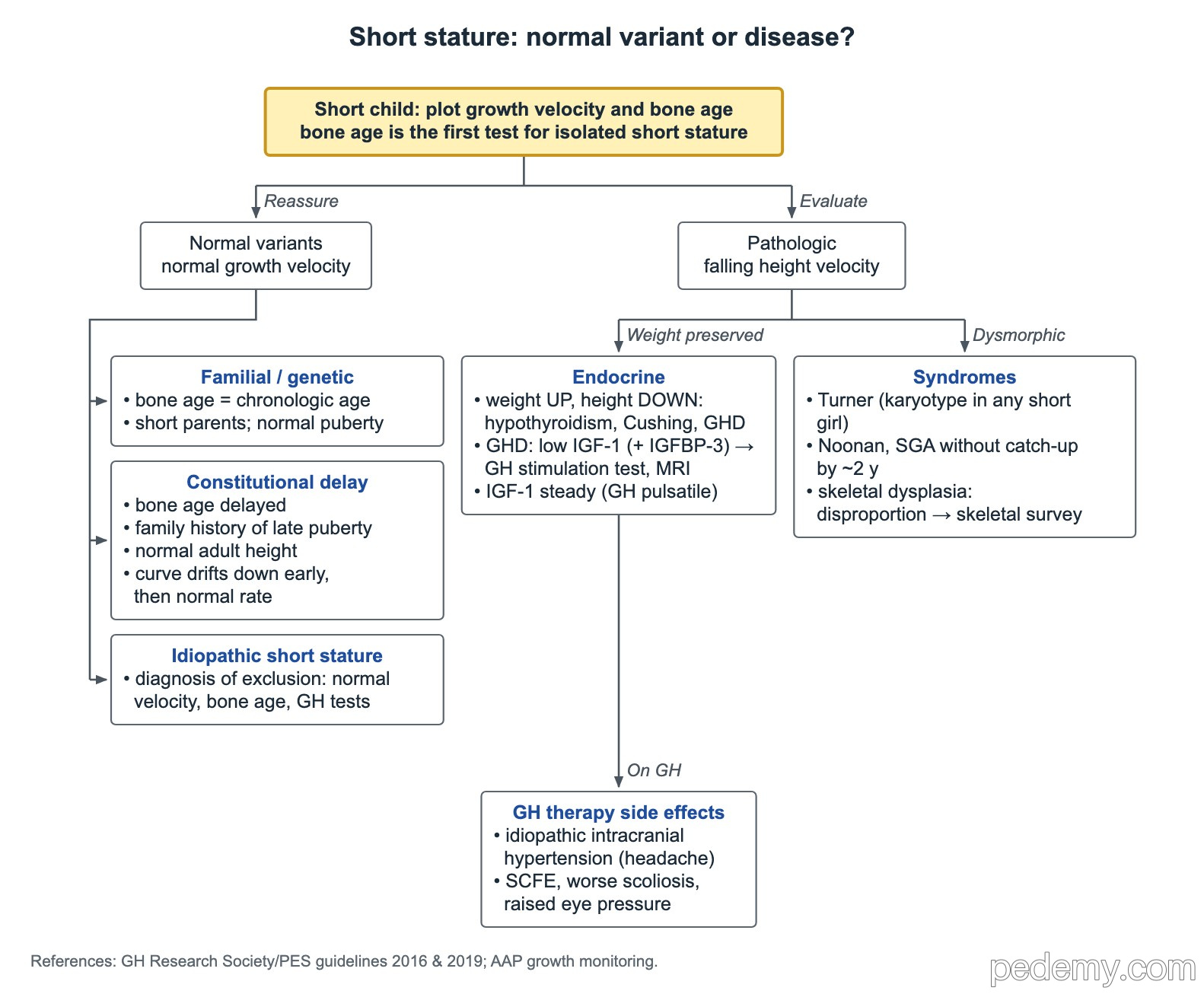
Key points
- Mid-parental height (cm): boys (father + mother + 13) ÷ 2; girls (father + mother − 13) ÷ 2; target range ±10 cm (2 SD).
- Bone-age X-ray of the left hand and wrist is the first test for isolated short stature or tall stature.
- Familial short stature: normal velocity, bone age equal to age, short parents. Constitutional delay: normal velocity, delayed bone age, late puberty in a parent, normal adult height.
- Weight falling first suggests systemic disease or undernutrition; weight kept while height falls suggests an endocrine cause.
- GH deficiency: screen with IGF-1 (and IGFBP-3), confirm with GH stimulation testing; a low IGF-1 alone does not diagnose it.
- Consider Turner syndrome (karyotype) in any girl with unexplained short stature, even without other features.
- On GH: headache or vision change → intracranial hypertension; limp or hip or knee pain → SCFE.
Assessing a short child
The three most useful data at a short-stature visit are accurate serial heights, growth velocity and the family height potential. Plot them before ordering tests.
- Isolated short stature with a steady, low-normal growth rate: the first test is a bone-age X-ray of the left hand and wrist.
- Normal growth velocity points to a normal variant; a falling height velocity points to disease.
- Poor weight gain that comes with or before slowing height growth suggests systemic disease or undernutrition (celiac disease, inflammatory bowel disease, kidney disease, inadequate intake).
- Weight preserved or rising while height velocity falls suggests an endocrine cause: hypothyroidism, Cushing syndrome or GH deficiency.
- Short limbs relative to trunk (disproportion) suggest a skeletal dysplasia: consider a skeletal survey.
Mid-parental target height
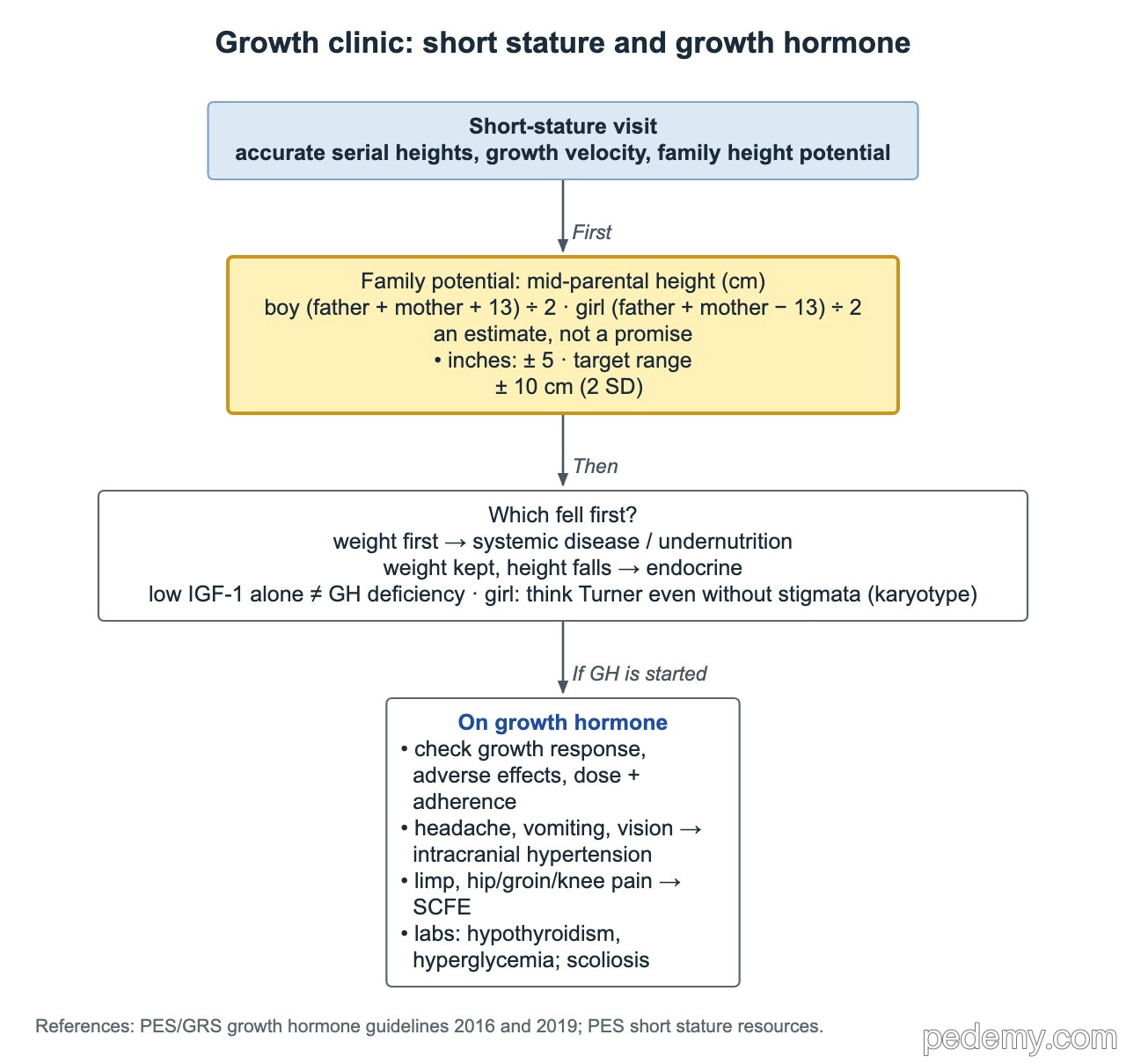
The result is an estimate, not a promise. The expected adult range is about ±10 cm (2 SD) around the target. A child tracking well below the family range needs evaluation even if the parents are short.
| Child | Centimeters | Inches |
|---|---|---|
| Boy | (father + mother + 13) ÷ 2 | (father + mother + 5) ÷ 2 |
| Girl | (father + mother − 13) ÷ 2 | (father + mother − 5) ÷ 2 |
Normal variants: familial short stature and constitutional delay
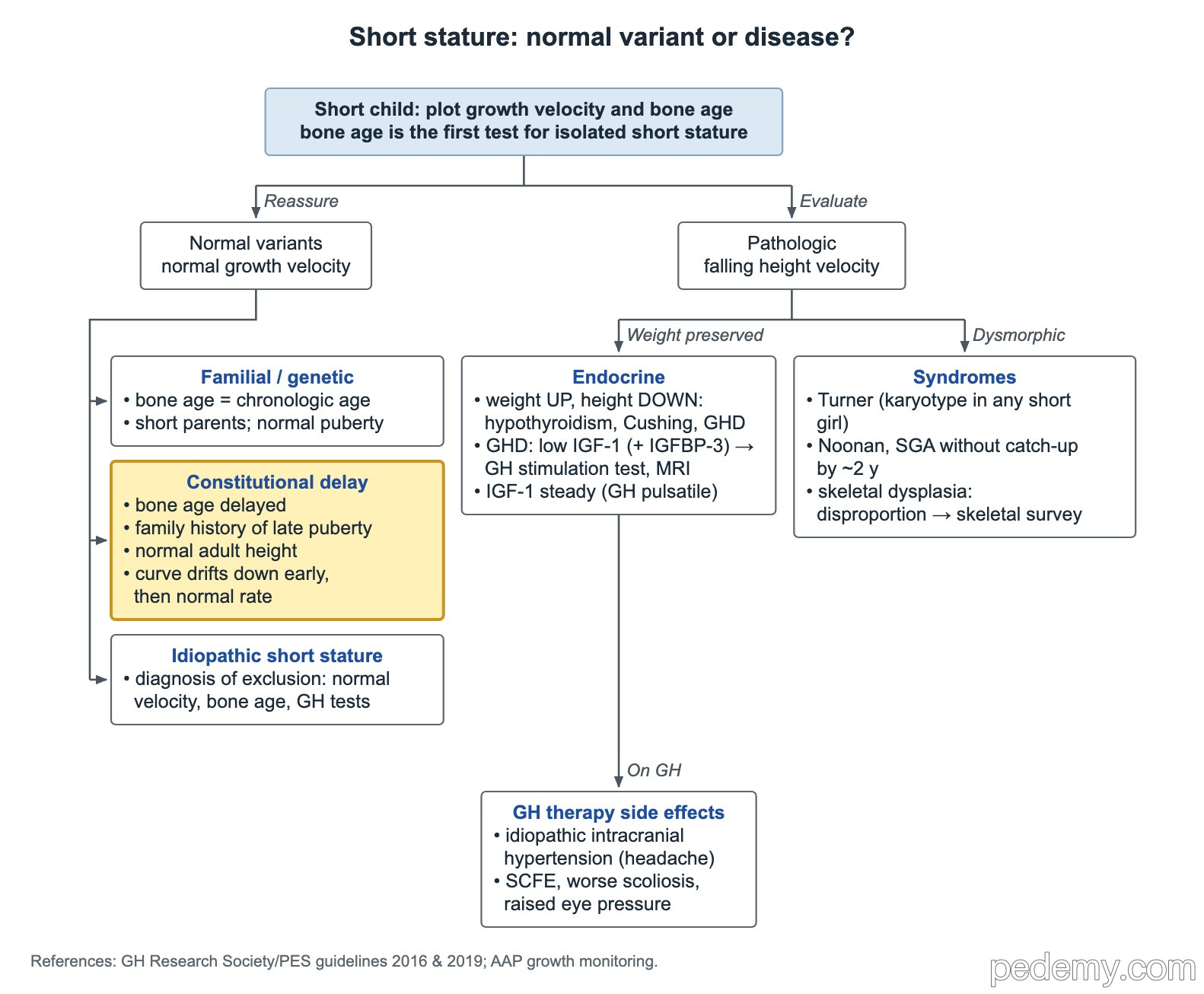
- In constitutional delay the curve often drifts down in the first 2–3 years, then grows at a normal rate parallel to the lines.
- A 13-year-old boy with 3-mL testes, delayed bone age and a parent with late puberty: constitutional delay; reassure and recheck in about 6 months.
- Idiopathic short stature is a diagnosis of exclusion: height below −2 SD with normal growth velocity, normal GH testing and no other cause; bone age is often delayed.
| Feature | Familial short stature | Constitutional delay of growth and puberty |
|---|---|---|
| Growth velocity | Normal | Normal after an early drift down |
| Bone age | Equal to chronological age | Delayed |
| Family history | Short parents | A parent with late puberty |
| Puberty | Normal timing | Late |
| Adult height | Short, within the family target | Normal, near the genetic target |
Growth hormone deficiency and endocrine causes
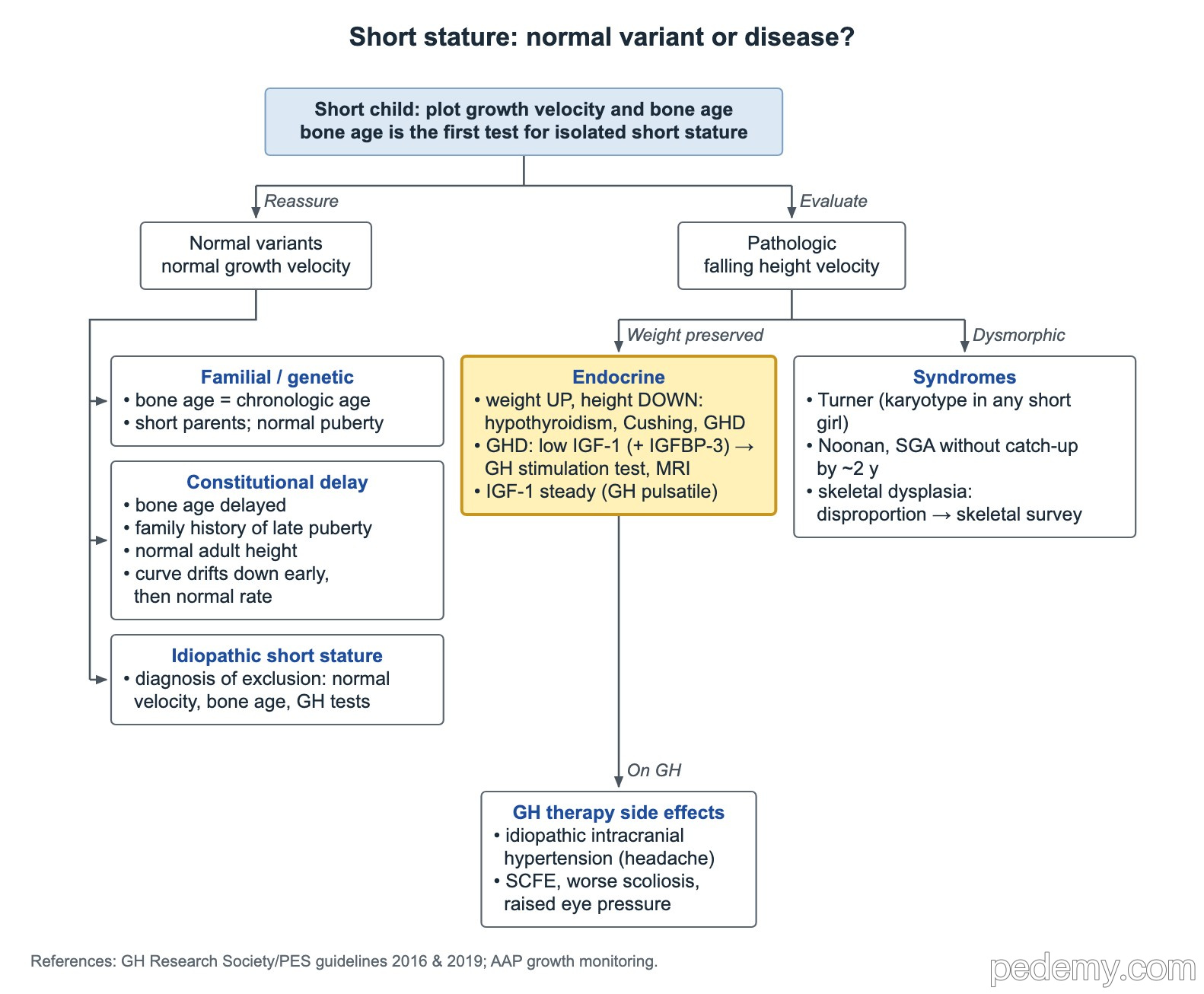
Endocrine short stature usually shows a falling height velocity with preserved or increasing weight. Check thyroid tests and think of Cushing syndrome as well as GH deficiency.
- GH deficiency clues: falling height velocity, immature face, central fat; in infants micropenis and hypoglycemia.
- Screen with IGF-1 (and IGFBP-3), not a random GH: GH is released in pulses, while IGF-1 stays steady.
- A low IGF-1 alone does not diagnose GH deficiency; it is also low with undernutrition, hypothyroidism and chronic illness.
- Confirm with GH stimulation testing, then pituitary MRI.
Turner syndrome, SGA and other syndromes
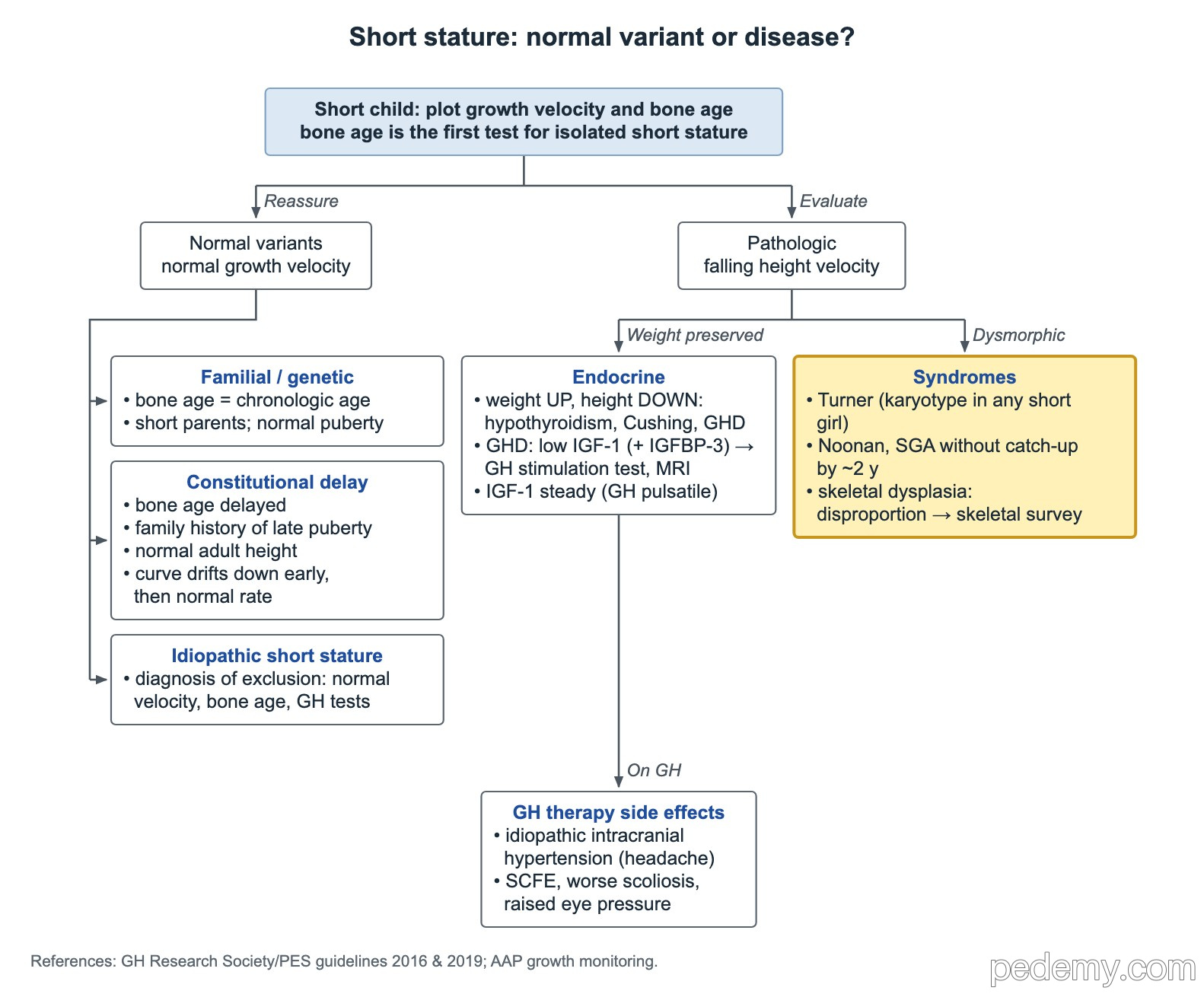
- Turner syndrome (45,X or mosaic): short stature may be the only sign, so get a karyotype in any girl with unexplained short stature.
- Turner clues: webbed neck, bicuspid aortic valve, coarctation, high-arched palate, short 4th metacarpals, Madelung deformity, primary ovarian insufficiency.
- Girls with Turner syndrome are not GH-deficient, but GH speeds growth and increases adult height; estrogen is added for puberty from about 11–12 years at a low, slowly rising dose (2024 international guideline).
- Noonan syndrome is another syndromic cause treated with GH.
- Born small for gestational age: most catch up by age 2 years. A child still short at 2 years is less likely to catch up later and may qualify for GH.
- Early catch-up after SGA does not remove all risk: puberty and bone age can advance and growth can stop early. A former SGA teen whose pubertal growth slows unexpectedly needs a bone-age film.
Growth hormone therapy: follow-up and side effects
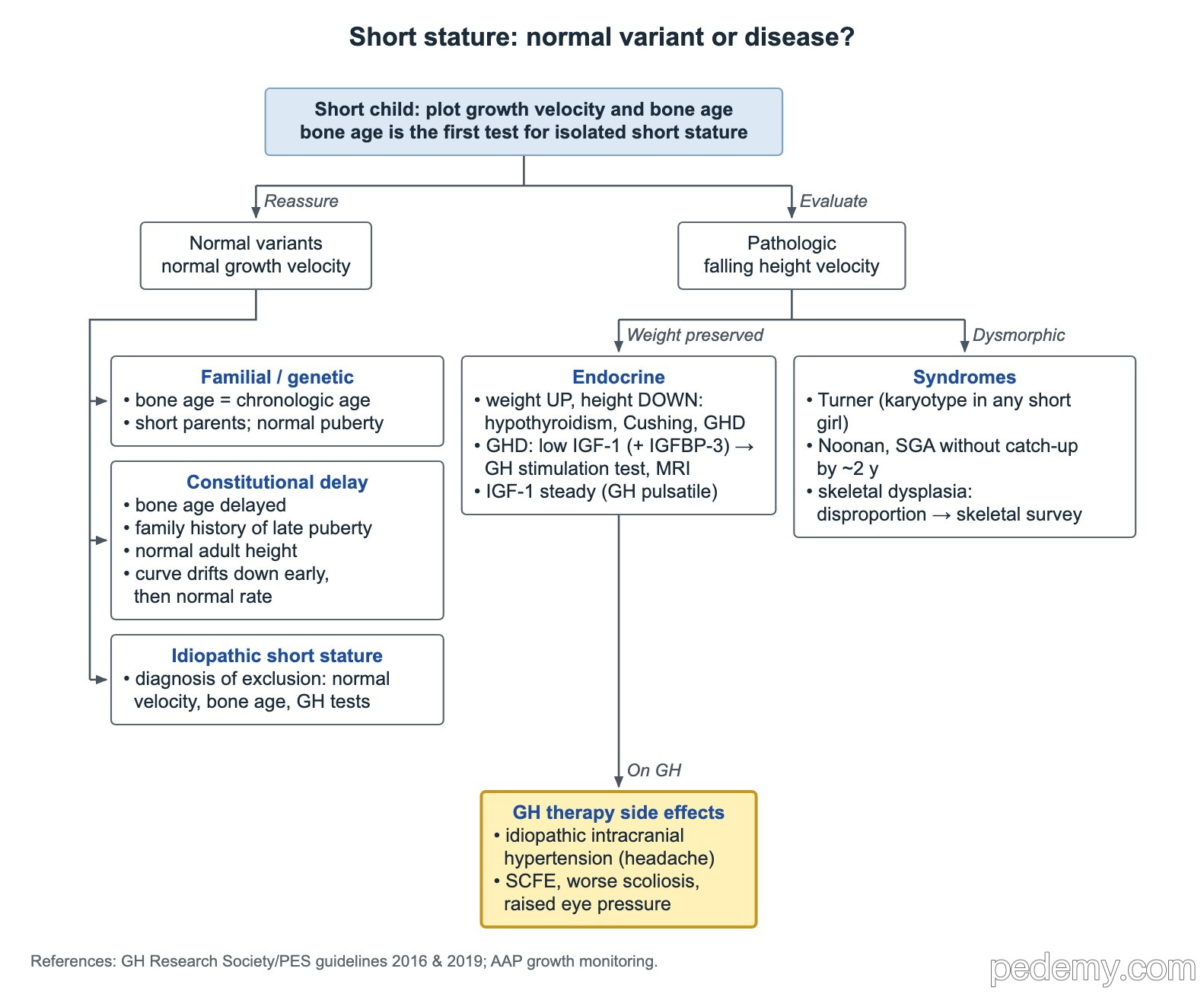
Each GH visit checks three things: growth response, adverse effects, and dose and adherence.
- New persistent headache, vomiting or visual symptoms, or papilledema: idiopathic intracranial hypertension.
- Limp or hip, groin or knee pain: slipped capital femoral epiphysis.
- Scoliosis can worsen during fast growth.
- Labs: GH can reveal or worsen hypothyroidism and cause hyperglycemia; check thyroid tests and glucose.
Tall stature and overgrowth
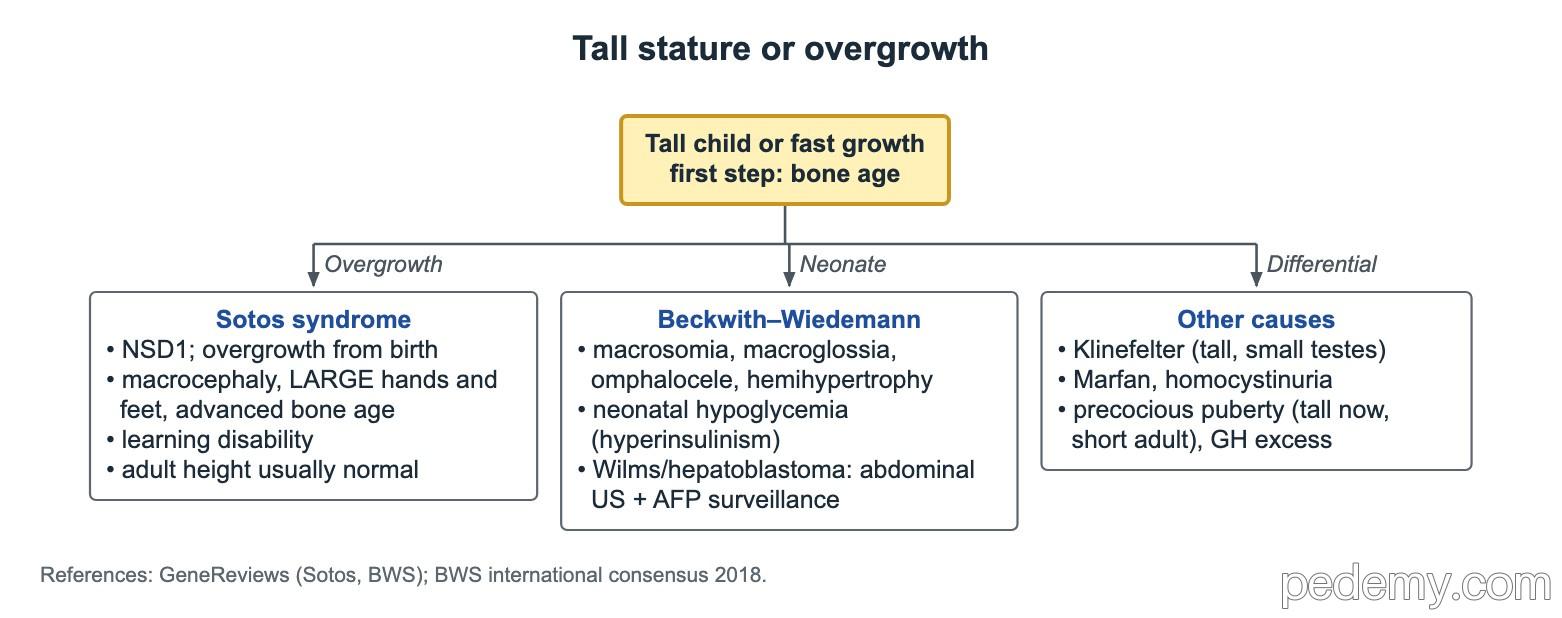
- First step in a tall child or accelerated height velocity: bone-age X-ray.
- Precocious puberty: tall now with advanced bone age, but short as an adult because the growth plates fuse early.
- Sotos syndrome (NSD1): overgrowth from birth, macrocephaly, large hands and feet, advanced bone age, learning disability.
- Beckwith–Wiedemann syndrome: macrosomia, macroglossia, omphalocele, hemihypertrophy and neonatal hypoglycemia from hyperinsulinism; screen for Wilms tumor and hepatoblastoma with abdominal ultrasound and AFP.
- Other causes: Klinefelter syndrome (tall, small testes), Marfan syndrome, homocystinuria, GH excess.
Common questions
How do you calculate mid-parental height?
Add the parents' heights in centimeters, add 13 for a boy or subtract 13 for a girl, then divide by 2. The expected adult range is about ±10 cm. In inches, use 5 instead of 13.
What is the first test for a short child?
A bone-age X-ray of the left hand and wrist, after plotting accurate serial heights and the growth velocity.
How do you tell constitutional delay from familial short stature?
Both have a normal growth rate. Bone age is delayed in constitutional delay, often with a parent who had late puberty, and adult height is normal. In familial short stature bone age equals age and the parents are short.
Study this topic
Sources
- Pediatric Endocrine Society 2016: Growth hormone and IGF-I treatment in children and adolescents (Horm Res Paediatr)
- Growth Hormone Research Society 2019: Diagnosis, genetics and therapy of short stature in children (Horm Res Paediatr)
- International guideline 2024: Care of girls and women with Turner syndrome (Eur J Endocrinol)
- Pediatric Endocrine Society: Constitutional growth delay
Written for Pedemy in our own words from the sources above; checked November 2026. For education only, not medical advice; check doses and local protocols before treating a patient. Pedemy is independent and not affiliated with or endorsed by the organizations cited.