

Main decision tree
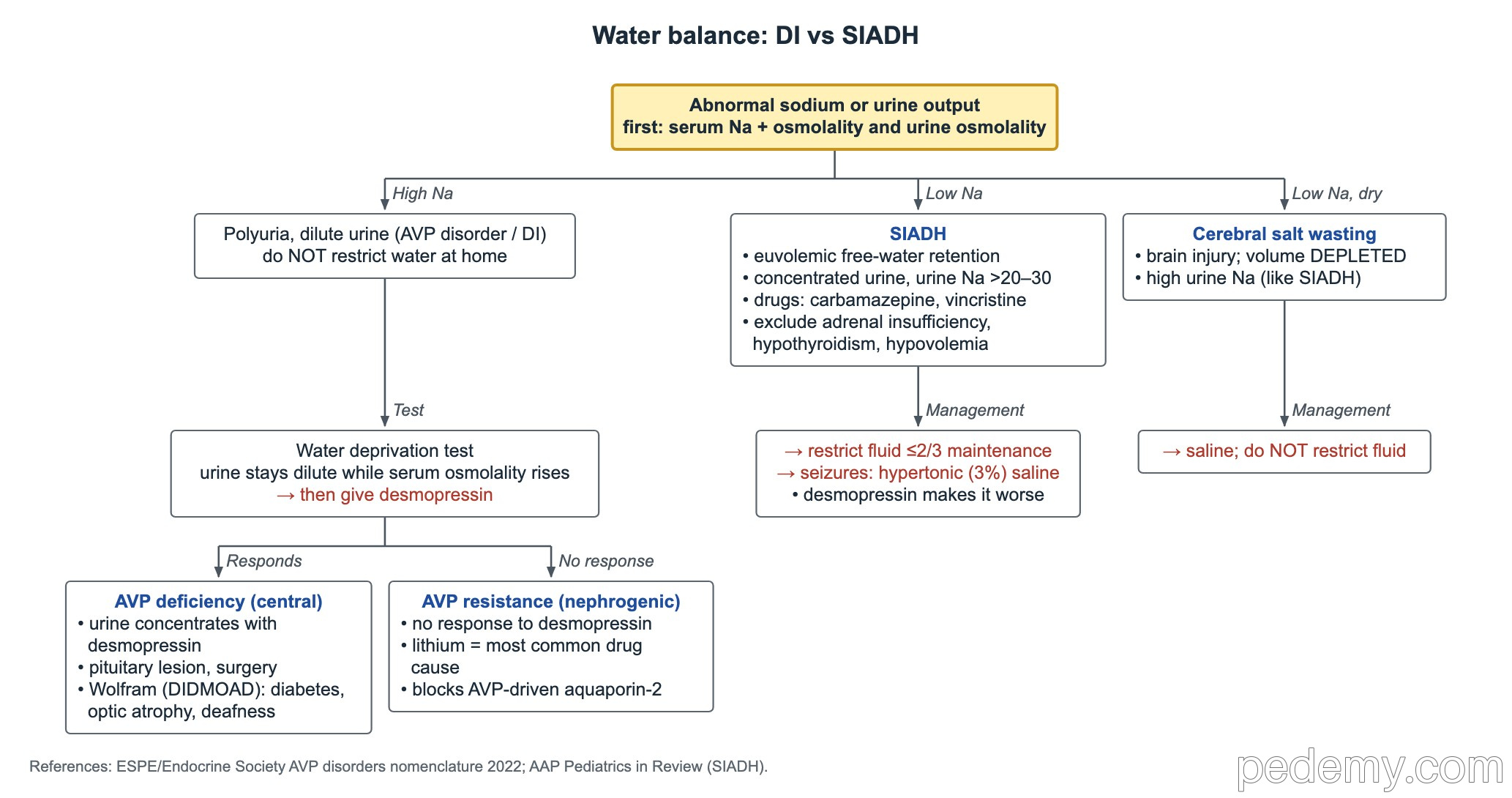
Water balance: DI vs SIADH
Key points
- Polyuria and thirst: check serum sodium, serum osmolality, urine osmolality and glucose together first.
- Diabetes insipidus is now called AVP deficiency (central) or AVP resistance (nephrogenic); never restrict water at home.
- Water deprivation then desmopressin: urine concentrates in AVP deficiency, not in AVP resistance (lithium is the classic drug cause).
- SIADH: euvolemic low sodium, inappropriately concentrated urine, urine sodium above 20–30 mEq/L; exclude hypothyroidism and adrenal insufficiency.
- Hyponatremic seizure: 3% saline bolus now; mild SIADH: restrict fluid to about two-thirds of maintenance or less.
- Cerebral salt wasting looks like SIADH in the urine but the child is volume depleted: give saline, do not restrict fluid.
- Newborn hypoglycemia, micropenis and prolonged direct (conjugated) jaundice suggest congenital hypopituitarism.
Abnormal sodium or urine output: the first tests
Arginine vasopressin (AVP, antidiuretic hormone) makes the kidney save free water through aquaporin-2 channels in the collecting duct. Too little AVP effect gives large volumes of dilute urine and a rising sodium. Too much AVP gives concentrated urine, water retention and a falling sodium.
So the first step is the same for both problems: a paired sample of serum sodium and osmolality with urine osmolality, plus glucose to rule out diabetes mellitus as the cause of polyuria.
| Pattern | Think of |
|---|---|
| High sodium, high serum osmolality, dilute urine, large urine volume | AVP deficiency (central DI) or AVP resistance (nephrogenic DI) |
| Low sodium, euvolemic, inappropriately concentrated urine, high urine sodium | SIADH |
| Low sodium, high urine sodium, volume depleted, after brain injury | Cerebral salt wasting |
Diabetes insipidus: AVP deficiency or AVP resistance
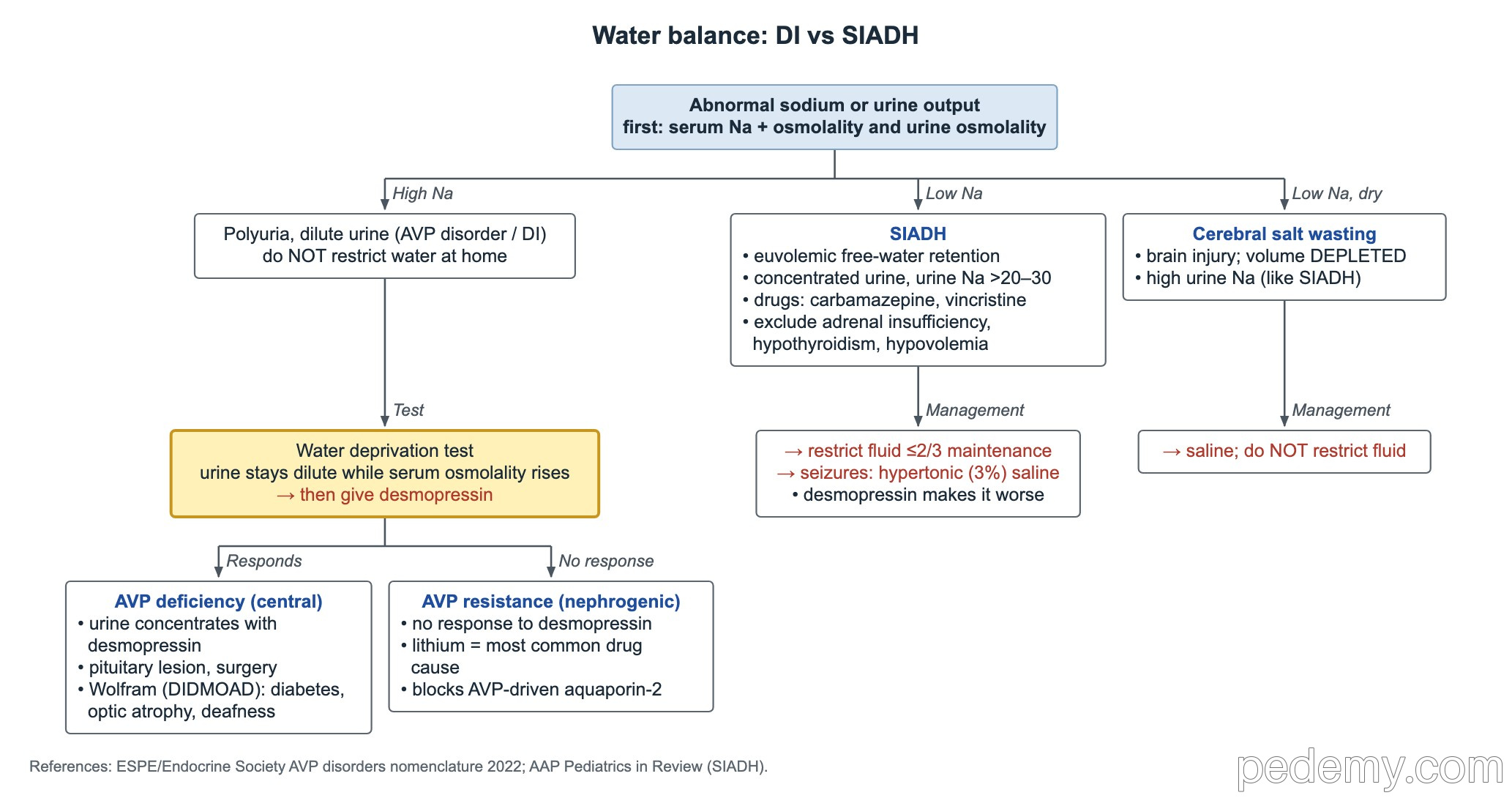
In 2022 a working group of endocrine societies renamed central DI arginine vasopressin deficiency (AVP-D) and nephrogenic DI arginine vasopressin resistance (AVP-R), to stop confusion with diabetes mellitus.
A child with suspected untreated DI must keep free access to water. Restricting water at home can cause dangerous hypernatremia; a water deprivation test is done only under specialist supervision.
In the test, water is withheld and the urine stays dilute while serum osmolality rises. Desmopressin is then given. In AVP deficiency the urine concentrates; in AVP resistance it does not, because the kidney cannot respond to AVP.
- Lithium blocks AVP-driven aquaporin-2 insertion in the collecting duct. A teen on lithium with polyuria, high sodium and dilute urine has AVP resistance.
- Wolfram syndrome (DIDMOAD, WFS1 gene): diabetes mellitus and optic atrophy in childhood, then AVP deficiency and sensorineural deafness. The DI is central and responds to desmopressin.
- Central DI in a child with no clear cause needs pituitary MRI and repeat imaging over time, because a germinoma can appear later.
| AVP deficiency (central) | AVP resistance (nephrogenic) | |
|---|---|---|
| Response to desmopressin | Urine concentrates | Little or no change |
| Causes | Pituitary or hypothalamic lesion (craniopharyngioma, germinoma, Langerhans cell histiocytosis), neurosurgery, head trauma, Wolfram syndrome | Lithium (classic drug cause), X-linked AVPR2 or AQP2 gene variants, hypercalcemia, hypokalemia |
| Treatment | Desmopressin | Free water, low-solute diet; thiazide with or without NSAID; stop the offending drug |
SIADH
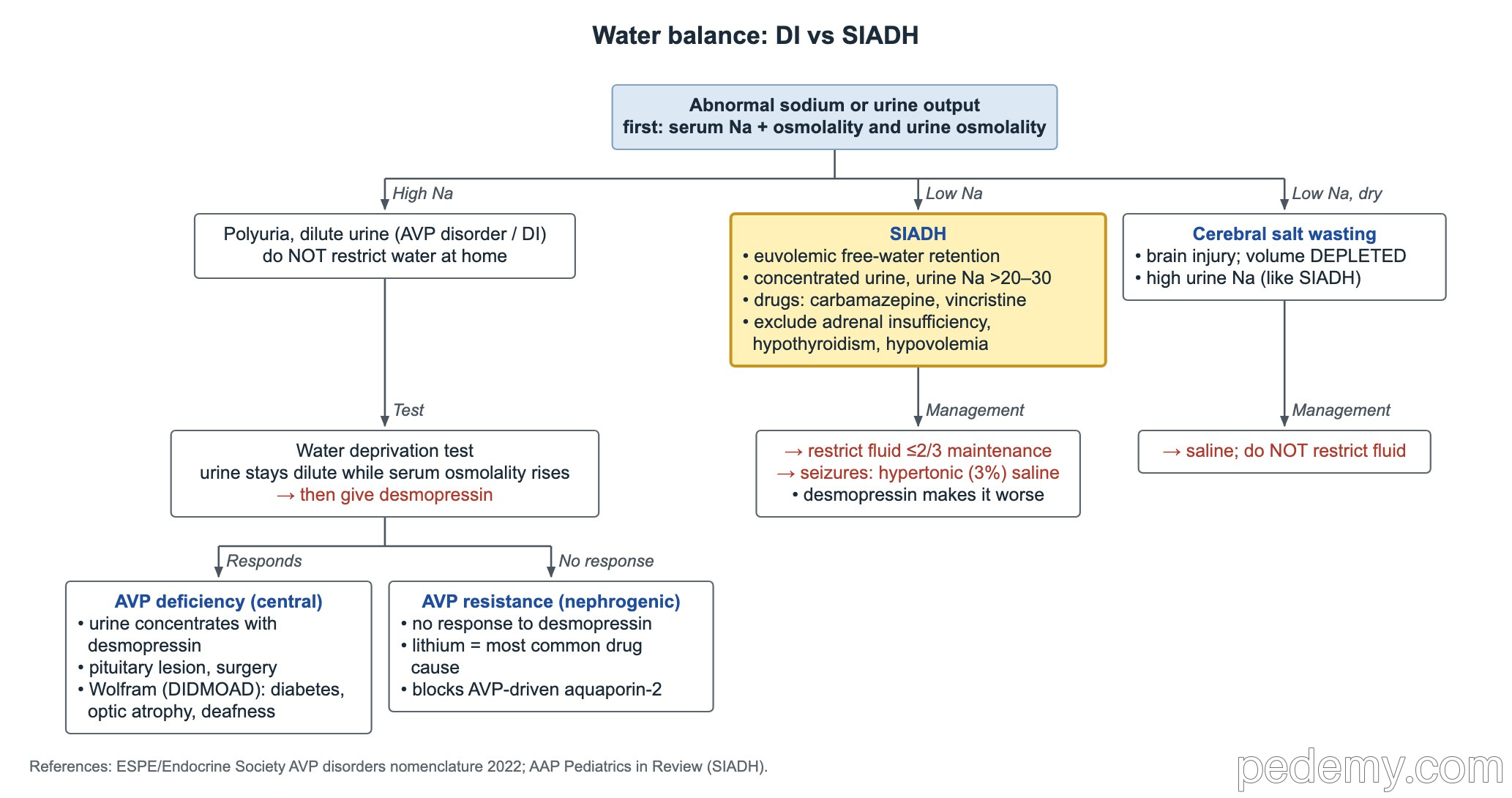
In SIADH, AVP is released when it should be suppressed. The kidney keeps free water, which dilutes sodium. The child is euvolemic: total body sodium is near normal.
Volume status comes first. A hypovolemic child also has concentrated urine, but needs fluid replacement, not restriction.
- Labs: low serum sodium and osmolality, urine osmolality inappropriately high (above 100 mOsm/kg), urine sodium usually above 20–30 mEq/L.
- Before the diagnosis, exclude hypothyroidism and adrenal insufficiency, which cause the same pattern, and hypovolemia.
- Drug causes in children: carbamazepine and oxcarbazepine, vincristine and cyclophosphamide.
- Other causes: meningitis, head injury, brain surgery, pneumonia, positive-pressure ventilation and postoperative pain or nausea.
- Hypotonic IV fluid in a child with high AVP (such as severe head injury) quickly causes hyponatremia. The AAP 2018 guideline recommends isotonic maintenance fluid with potassium chloride and dextrose for most children aged 28 days to 18 years.
Treating SIADH and cerebral salt wasting
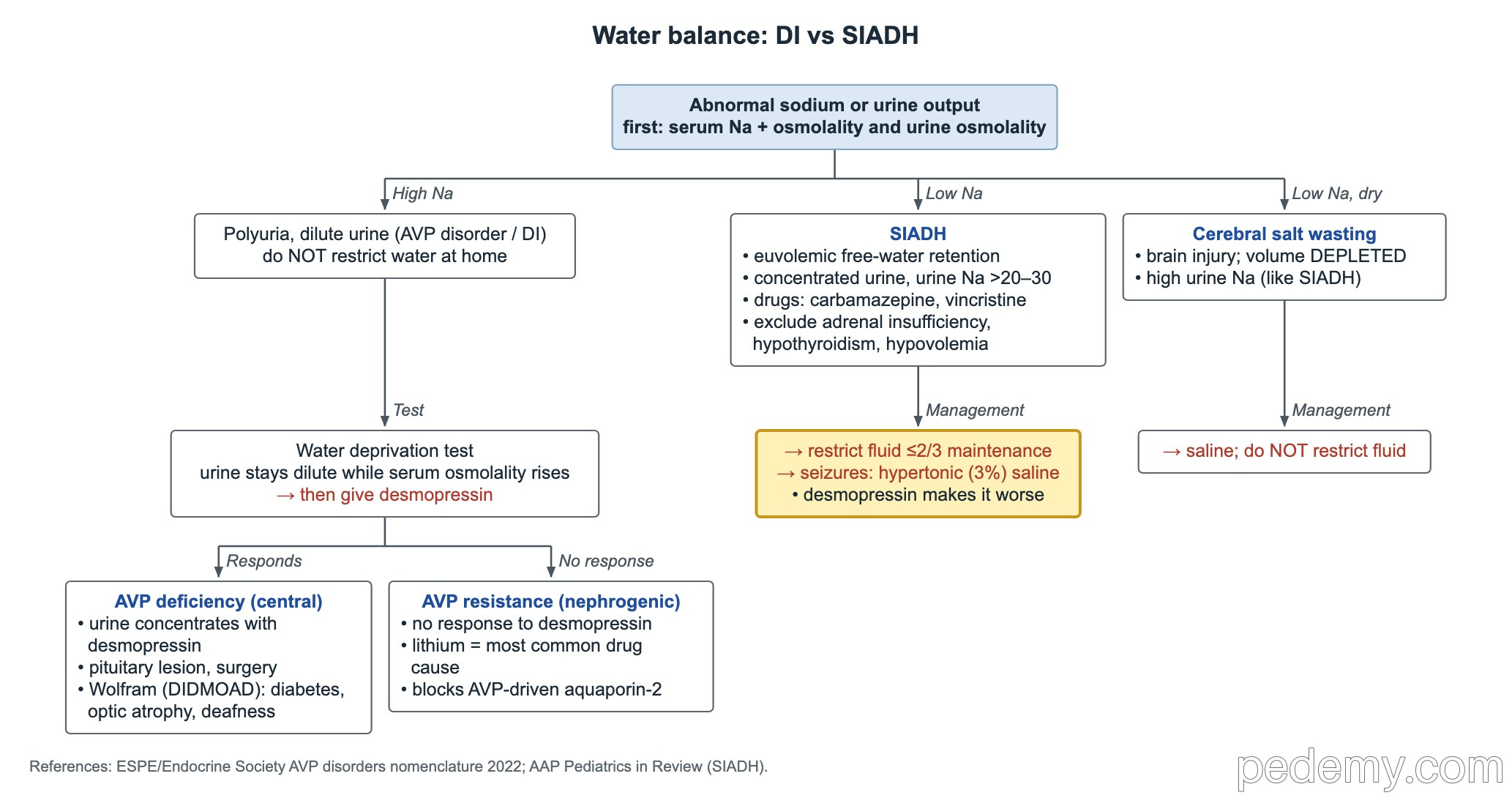
Cerebral salt wasting follows brain injury or neurosurgery. Urine sodium is high, as in SIADH, but the child is volume depleted (weight loss, tachycardia, high urine output). Treat with saline to replace salt and water. Fluid restriction would make it worse.
- Seizure, coma or severe symptoms: 3% saline bolus (about 2 mL/kg, up to 100 mL, over 10 minutes; repeat if symptoms continue), with frequent sodium checks.
- Do not raise sodium by more than about 10 mEq/L in the first 24 hours, to avoid osmotic demyelination.
- Mild, stable, symptom-free SIADH: restrict fluid to about two-thirds of maintenance or less and stop or change the offending drug.
- Restriction not enough: add oral salt, with or without a loop diuretic.
- Desmopressin is an AVP agonist and makes SIADH hyponatremia worse.
Congenital hypopituitarism and septo-optic dysplasia
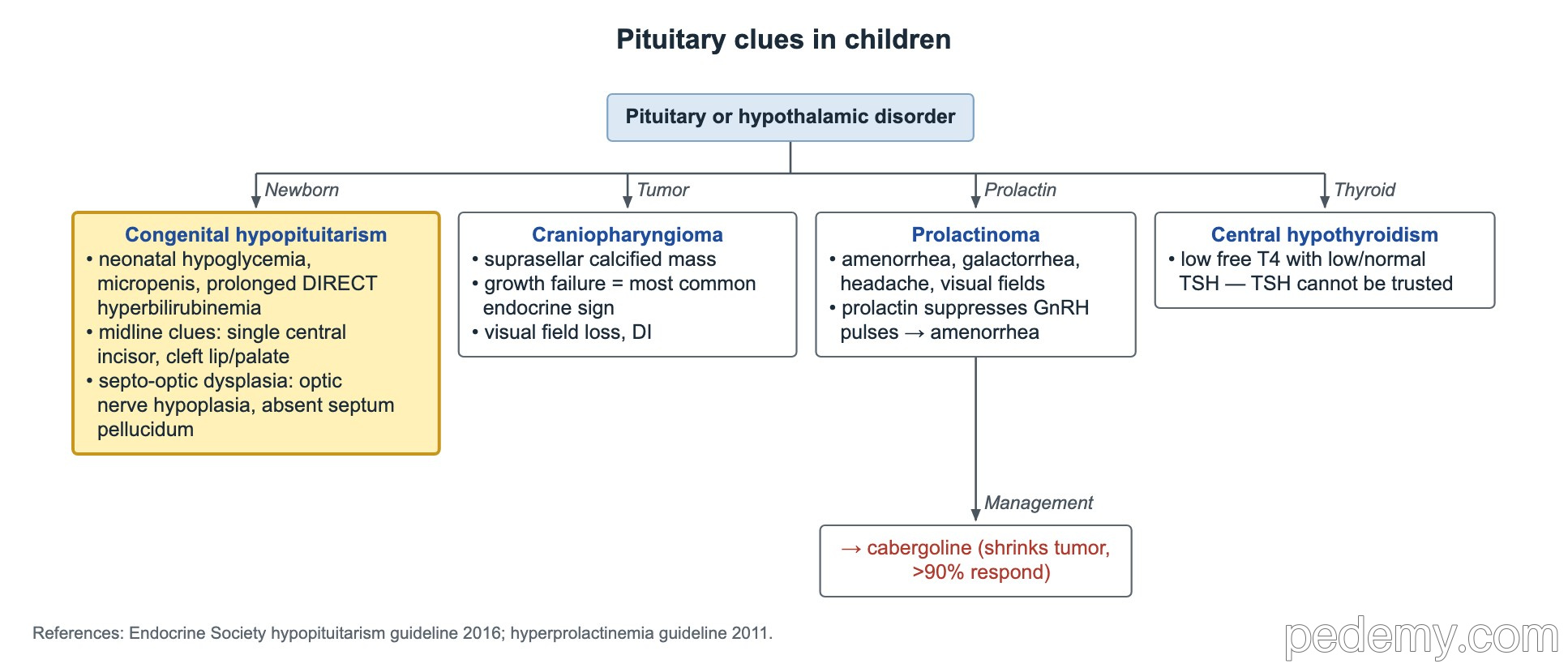
A newborn with several missing pituitary hormones can present with hypoglycemia (GH and ACTH deficiency), micropenis (gonadotropin deficiency) and prolonged direct (conjugated) hyperbilirubinemia. Growth failure appears later in infancy.
Central hypothyroidism often coexists. TSH is low or normal, so the TSH-based newborn screen misses it; follow free T4.
- Midline clues: single (solitary median) maxillary central incisor, cleft lip or palate, optic nerve hypoplasia. Check the pituitary axes, especially growth hormone, in these children.
- Septo-optic dysplasia: optic nerve hypoplasia, absent septum pellucidum or other midline brain defects, and pituitary hormone deficiencies.
- Growth hormone deficiency is the most common hormone deficiency in septo-optic dysplasia.
- Check cortisol before starting levothyroxine, because thyroid hormone can trigger adrenal crisis in untreated ACTH deficiency.
Craniopharyngioma
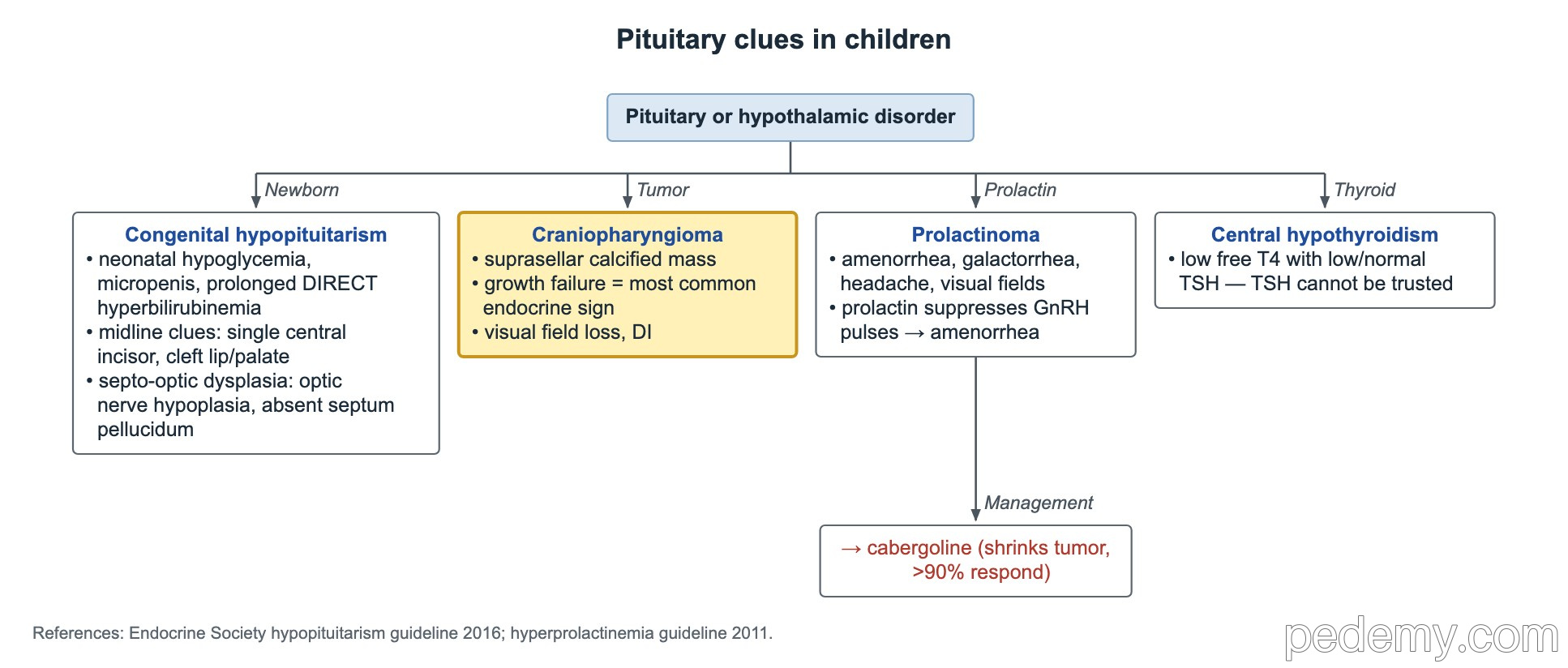
Craniopharyngioma is the classic suprasellar tumor of childhood. It is usually cystic and calcified on CT.
- Headache and raised intracranial pressure.
- Bitemporal visual field loss from pressure on the optic chiasm.
- Growth failure is the most common endocrine sign (GH deficiency); other pituitary hormones can be lost too.
- AVP deficiency (central DI) may be present at diagnosis and is common after surgery.
- Hypothalamic damage can cause severe obesity after treatment.
Prolactinoma
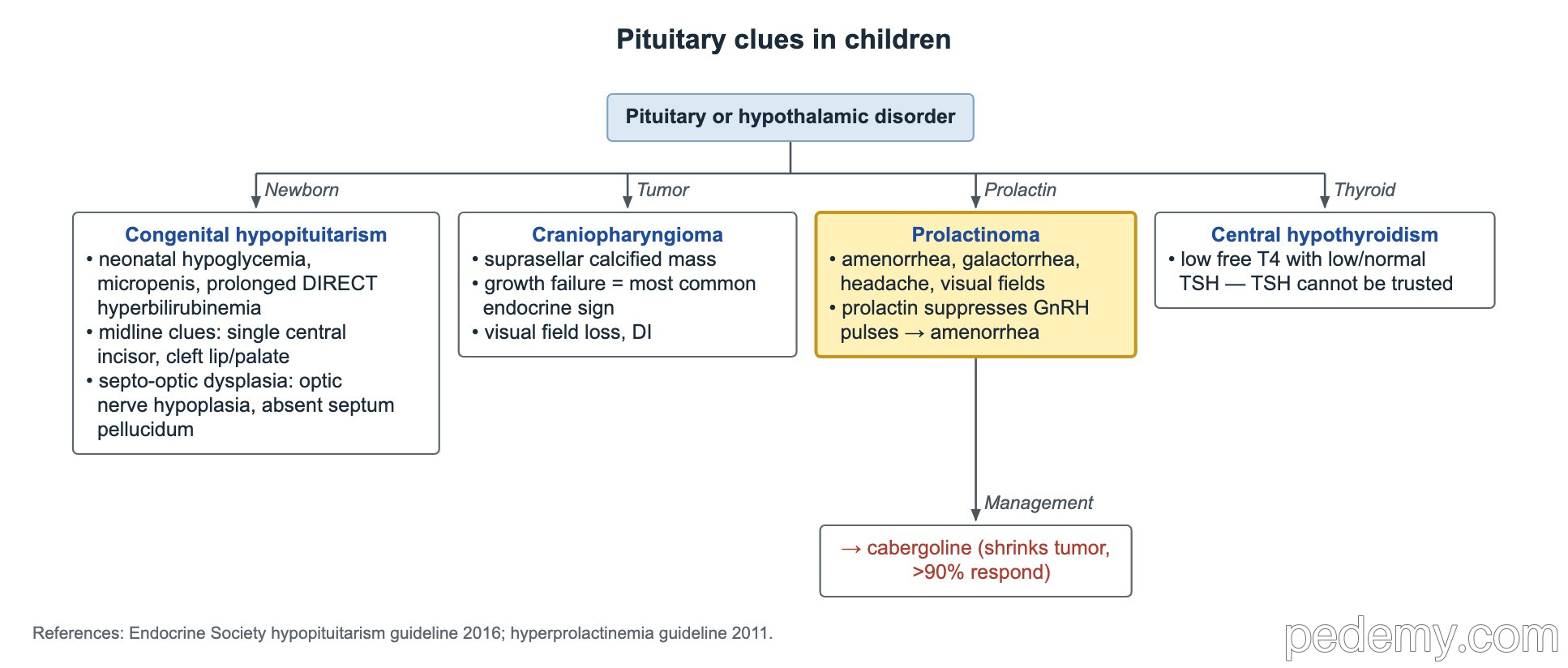
A teen girl with amenorrhea, galactorrhea and headache may have a prolactinoma, after pregnancy, hypothyroidism and drugs (especially antipsychotics) are excluded. Boys more often present with a large tumor, headache and visual field loss.
High prolactin suppresses GnRH pulses, which lowers LH and FSH and stops menses.
- Confirm a high serum prolactin, then pituitary MRI.
- First-line treatment is a dopamine agonist, cabergoline. It lowers prolactin and shrinks the tumor in most patients.
- Surgery is kept for tumors that do not respond to or cannot tolerate medicine.
Common questions
What is the new name for diabetes insipidus?
Central DI is now called arginine vasopressin deficiency (AVP-D) and nephrogenic DI is called arginine vasopressin resistance (AVP-R).
How do you tell SIADH from cerebral salt wasting?
Both have low sodium and high urine sodium. In SIADH the child is euvolemic and needs fluid restriction; in cerebral salt wasting the child is volume depleted and needs saline.
How do you tell central from nephrogenic diabetes insipidus?
After water deprivation, desmopressin makes the urine concentrate in central DI (AVP deficiency) but not in nephrogenic DI (AVP resistance).
Study this topic
Sources
- Working Group 2022: Changing the name of diabetes insipidus (J Clin Endocrinol Metab)
- AAP 2018: Maintenance intravenous fluids in children (Pediatrics)
- ESE/ESICM/ERA-EDTA 2014: Diagnosis and treatment of hyponatraemia (Eur J Endocrinol)
- Endocrine Society 2016: Hormonal replacement in hypopituitarism (J Clin Endocrinol Metab)
- Endocrine Society 2011: Diagnosis and treatment of hyperprolactinemia (J Clin Endocrinol Metab)
Written for Pedemy in our own words from the sources above; checked November 2026. For education only, not medical advice; check doses and local protocols before treating a patient. Pedemy is independent and not affiliated with or endorsed by the organizations cited.