

Main decision tree
Newborn thyroid tests: what do they mean?
Key points
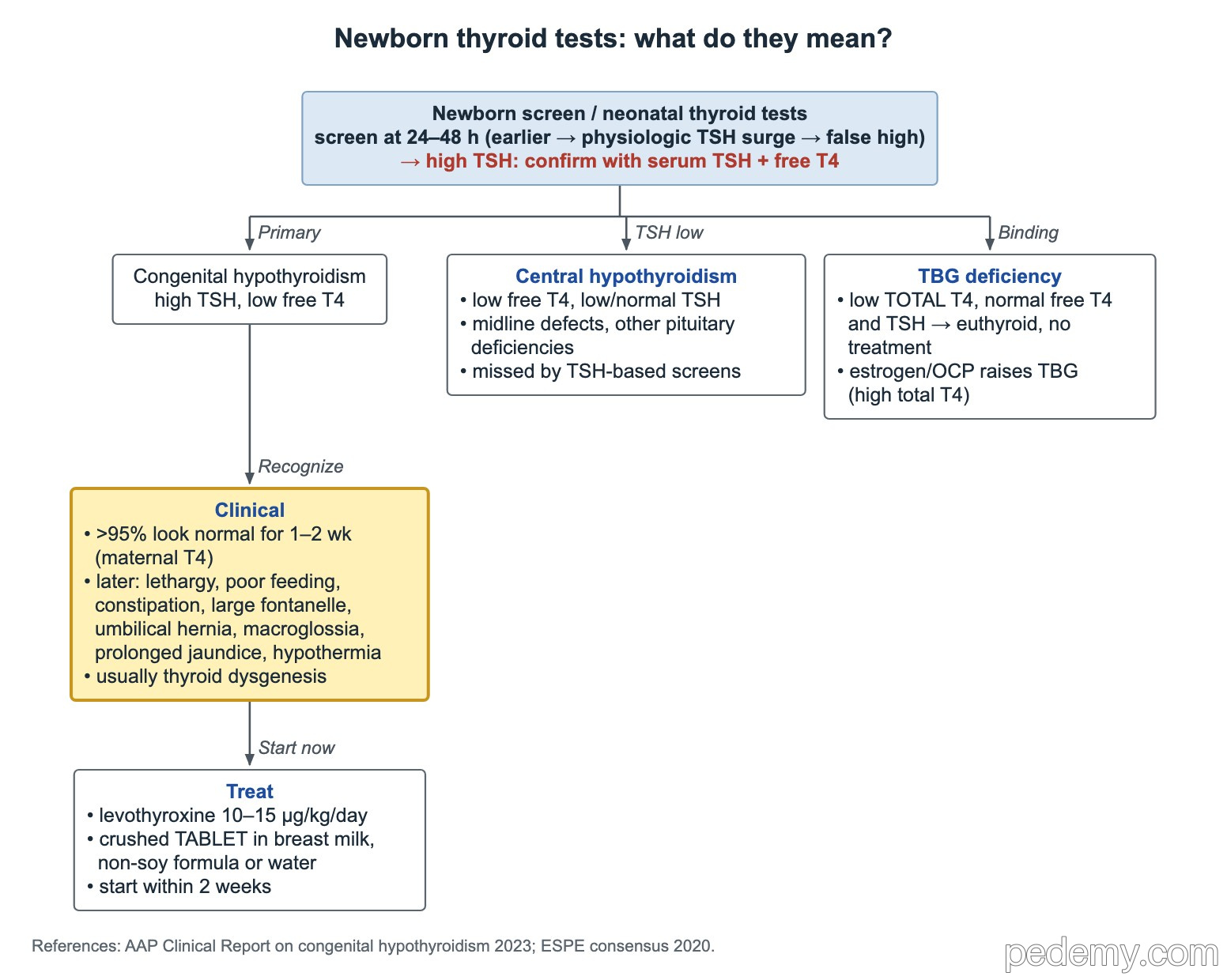
- Newborn screen at 24–48 hours; earlier samples can show a false high TSH from the normal post-birth surge.
- Abnormal screen → serum TSH and free T4 now; start levothyroxine 10–15 µg/kg/day within the first 2 weeks.
- Most newborns with congenital hypothyroidism look normal at first because maternal T4 crosses the placenta.
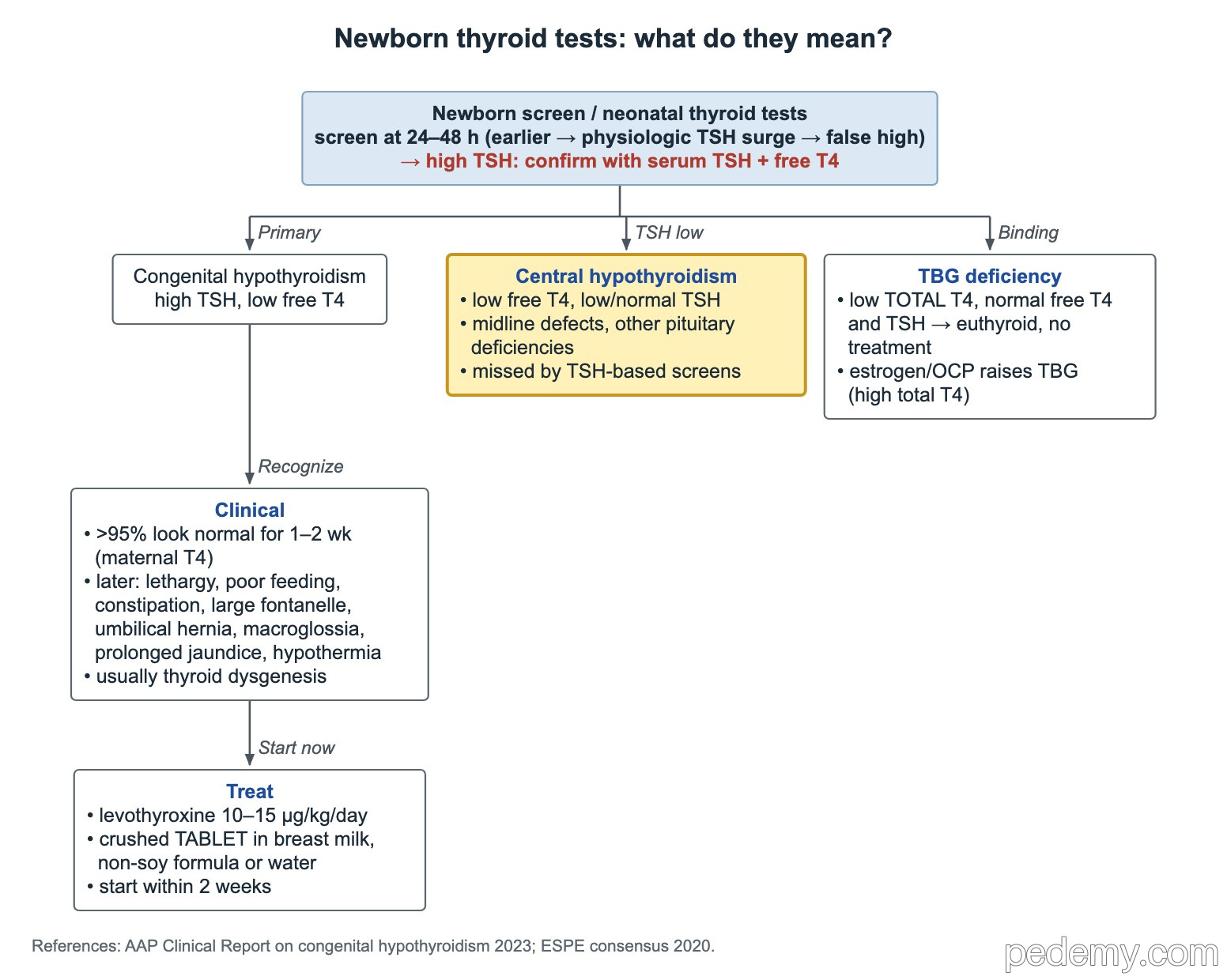
- Central hypothyroidism (low free T4, low or normal TSH) is missed by TSH-based screens; follow free T4, not TSH.
- Hashimoto thyroiditis is the commonest cause of acquired hypothyroidism; TSH 5–10 with normal free T4 usually needs no treatment.
- Graves disease: methimazole first; PTU is avoided because of severe liver injury.
- A thyroid nodule is more often cancer in a child than in an adult: start with ultrasound and TSH.
Newborn screening and congenital hypothyroidism
Every newborn is screened. A high TSH on the screen is confirmed with serum TSH and free T4, and treatment starts as soon as serum results confirm the diagnosis, without waiting for imaging.
Most permanent cases come from thyroid dysgenesis: an absent, ectopic or small gland. Dyshormonogenesis is the next most common cause.
- Late signs: prolonged jaundice, large posterior fontanelle, umbilical hernia, large tongue, constipation, lethargy, hypothermia.
- Check serum TSH and free T4 in any infant with these signs, even when the newborn screen was normal.
- Infants with trisomy 21, preterm or very low birth weight infants and sick newborns may need a repeat screen at 2–4 weeks.
Treating congenital hypothyroidism
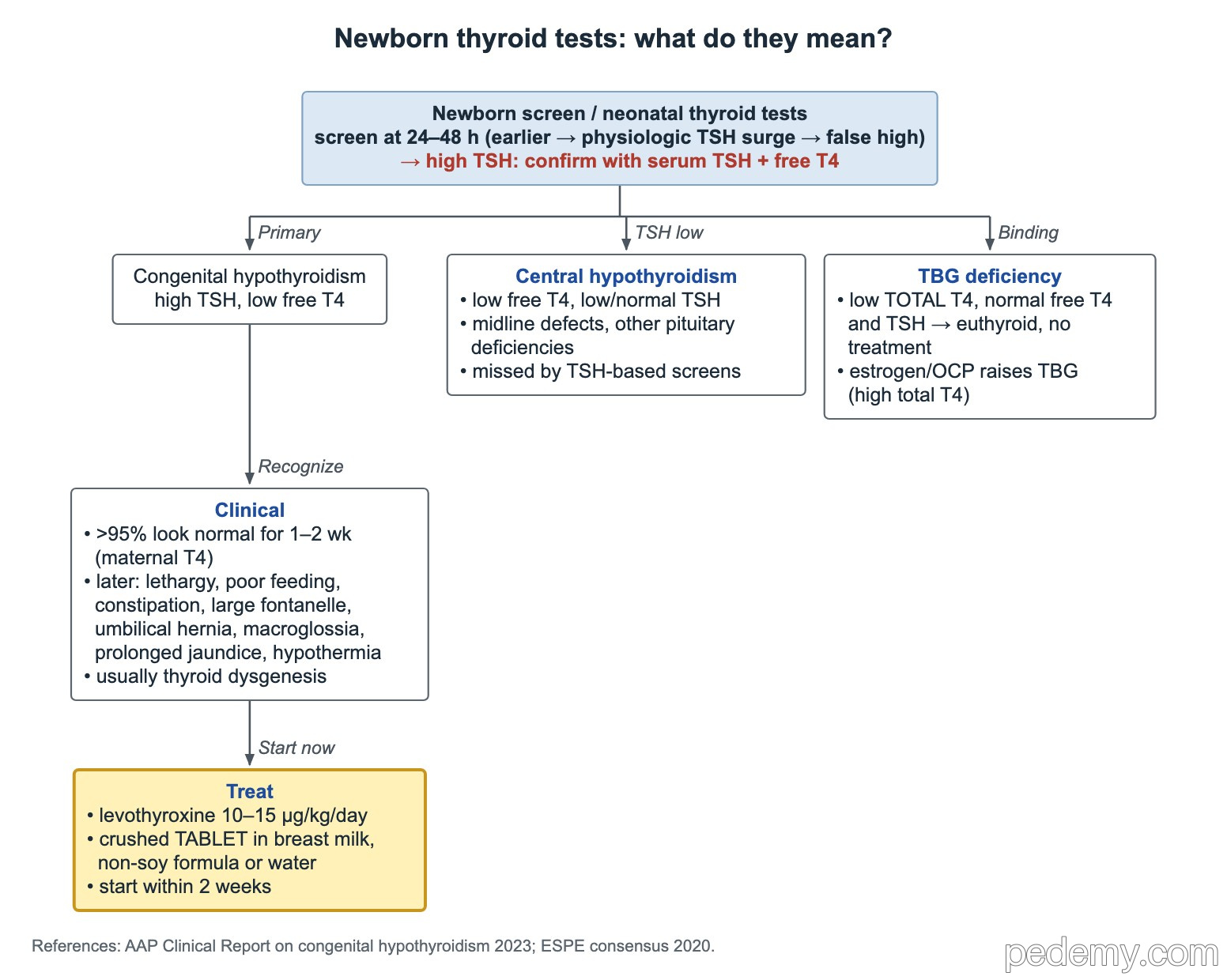
- Levothyroxine 10–15 µg/kg/day by mouth, as a crushed tablet in a little breast milk, non-soy formula or water.
- Give it apart from soy formula, iron and calcium, which reduce absorption.
- Aim for a normal TSH with free T4 in the upper half of the age range.
- Recheck 1–2 weeks after starting, then often during the first 3 years, when the brain is most sensitive.
Central hypothyroidism and TBG problems
| Pattern | Meaning | What to do |
|---|---|---|
| Low free T4, low or normal TSH | Central hypothyroidism; look for midline defects and other pituitary deficiencies | Treat with levothyroxine; dose by free T4; check cortisol first |
| Low total T4, normal free T4 and TSH | TBG deficiency | No treatment; the child is euthyroid |
| High total T4, normal free T4 and TSH | High TBG, e.g. estrogen or an oral contraceptive | No treatment |
| Low T3, normal TSH, low-normal T4 in a very sick child | Euthyroid sick syndrome | Do not treat; retest after recovery |
Hashimoto thyroiditis
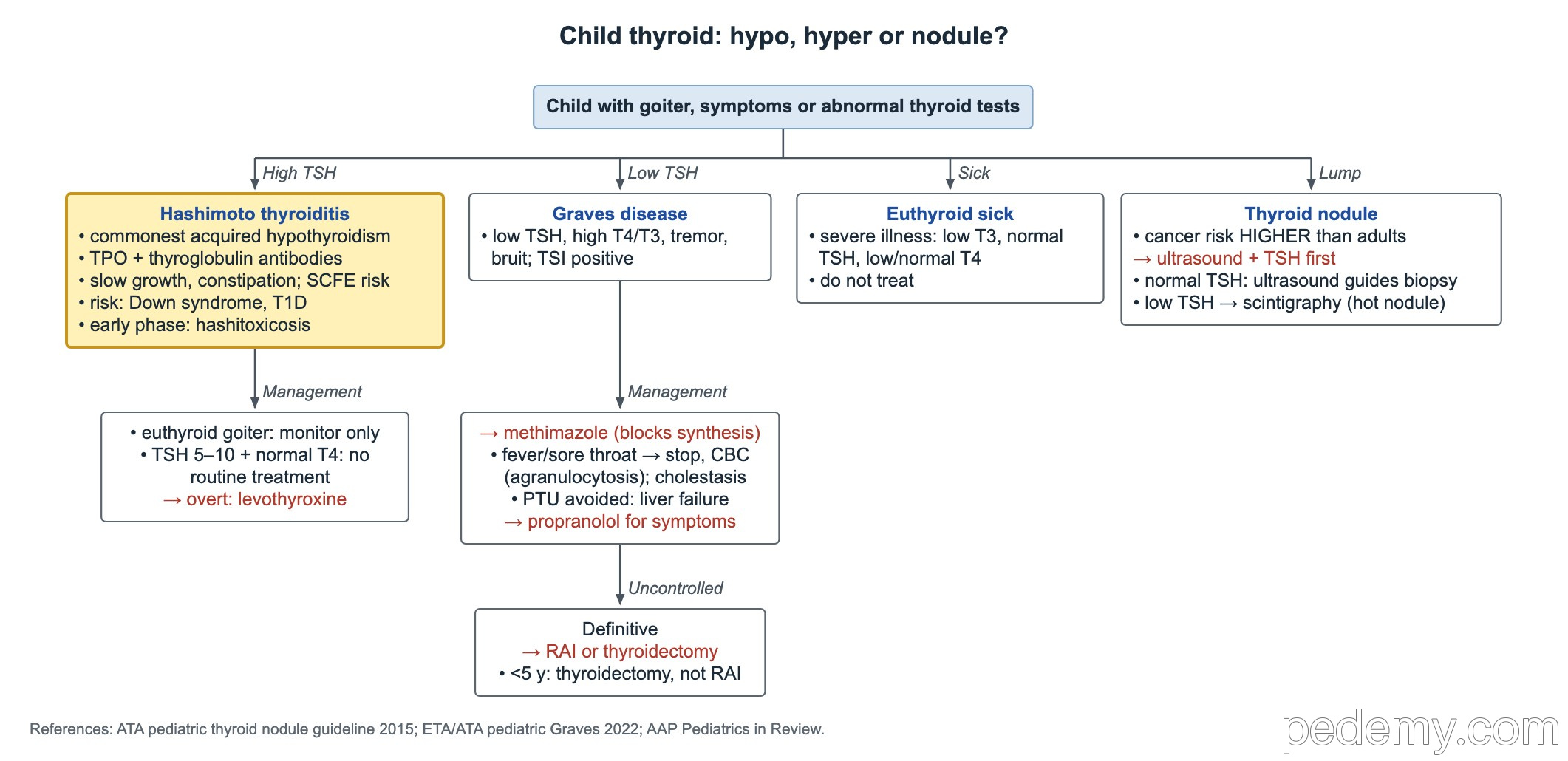
Autoimmune thyroiditis is the usual cause of acquired hypothyroidism in iodine-sufficient countries. Anti-TPO and anti-thyroglobulin antibodies support the diagnosis.
- Clues: slowing height growth with ongoing weight gain, goiter, constipation, delayed relaxation of reflexes, delayed bone age.
- Higher risk: trisomy 21, Turner syndrome, type 1 diabetes and celiac disease.
- A brief thyrotoxic phase can come first (hashitoxicosis).
- Hypothyroid children have a higher risk of slipped capital femoral epiphysis.
When to treat with levothyroxine
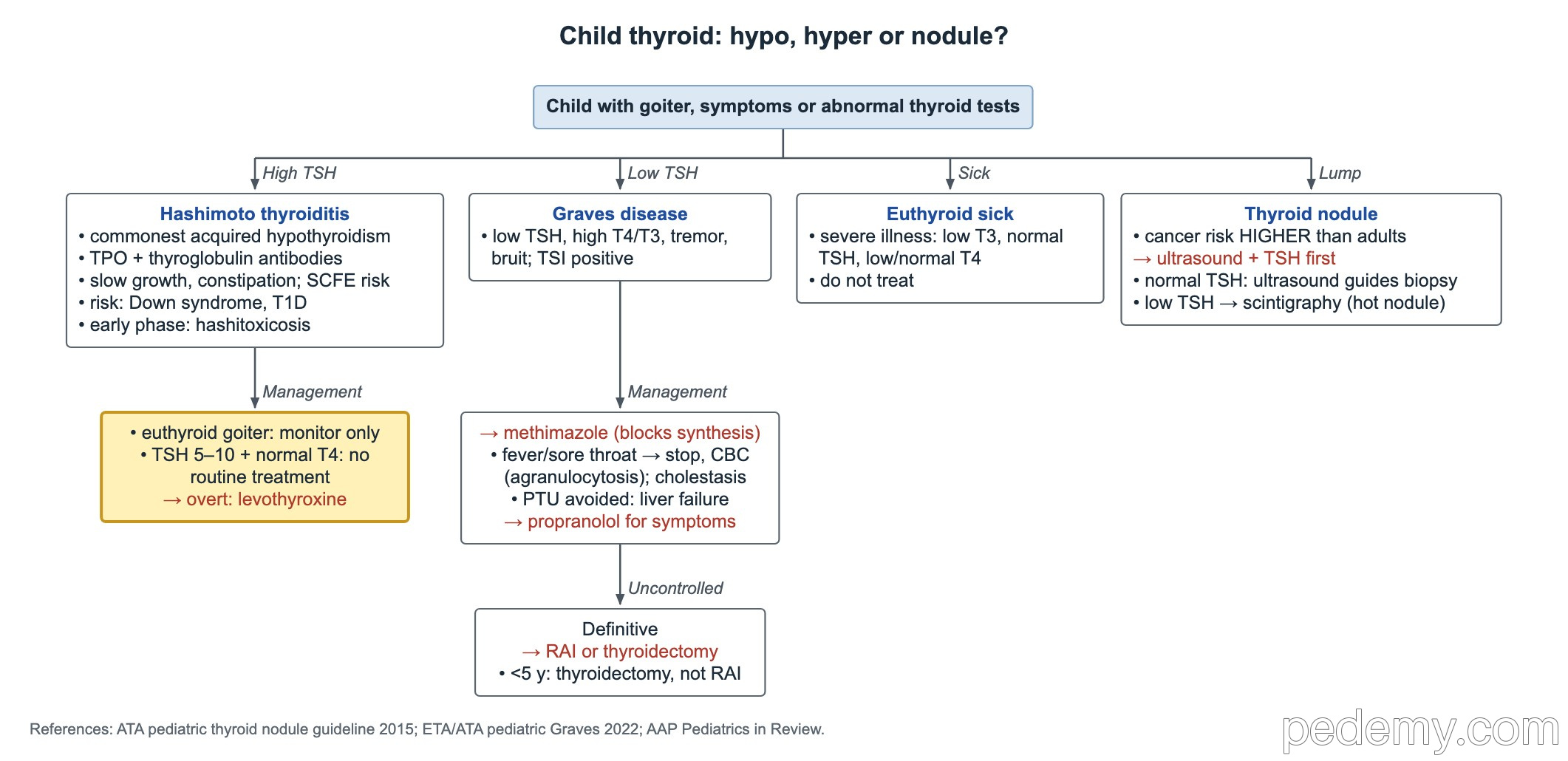
- Overt hypothyroidism (high TSH, low free T4): levothyroxine.
- Goiter with antibodies but normal tests: no medicine; recheck thyroid tests regularly.
- TSH 5–10 with normal free T4 and no goiter: usually monitor rather than treat.
- Obese child with a mildly high TSH and normal height growth: treat the weight, not the TSH.
- Older children take levothyroxine once daily, ideally on an empty stomach; recheck labs 4–8 weeks after a dose change.
Graves disease
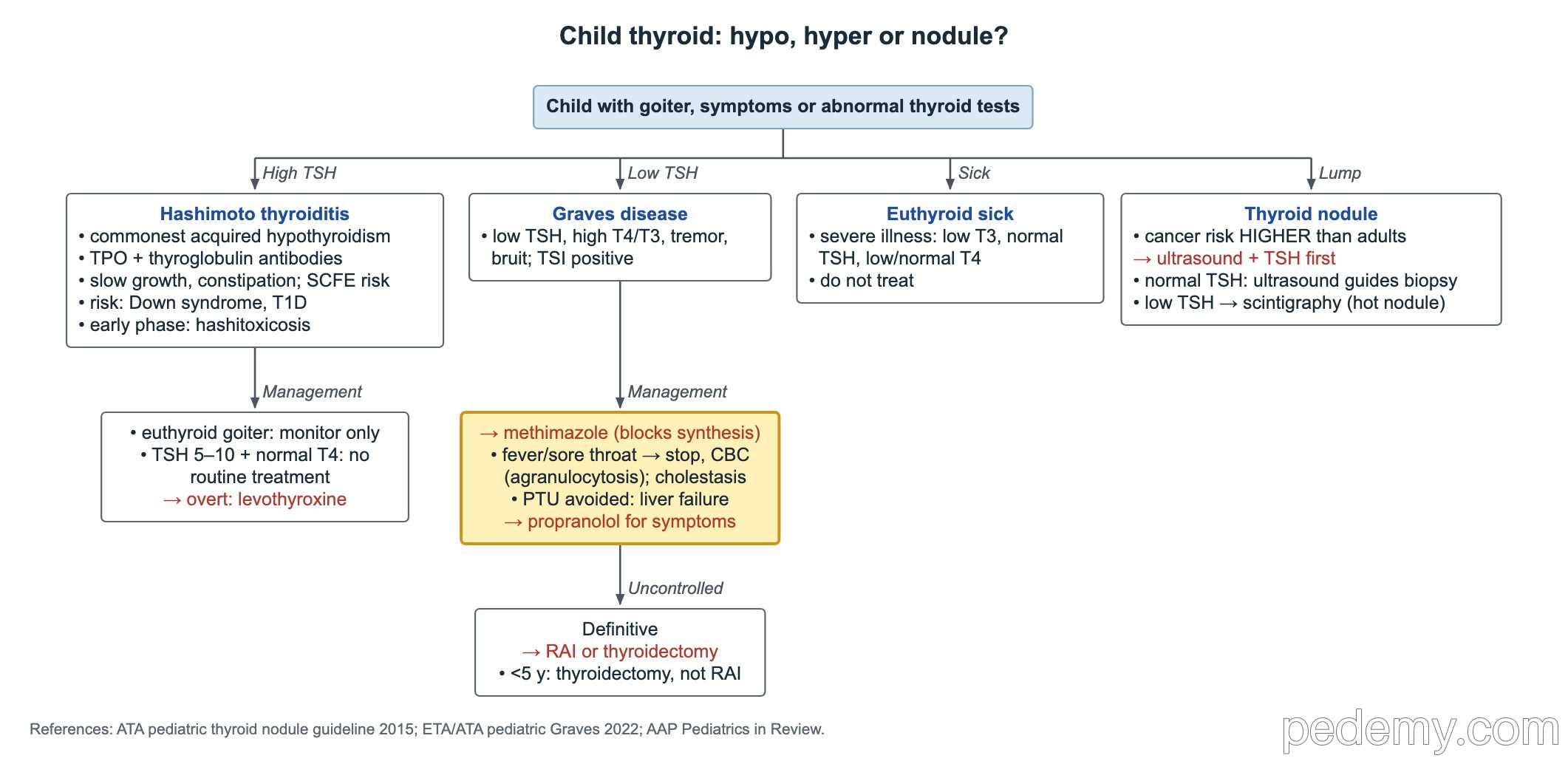
Graves disease causes most hyperthyroidism in children: suppressed TSH, high free T4 and T3, goiter with a bruit, tremor, weight loss, poor school performance or behavior change. TSH receptor antibodies (TRAb or TSI) confirm it.
- Methimazole is first line and blocks new hormone synthesis; a long course of 3 years or more raises the remission rate.
- Fever or sore throat on methimazole: stop the drug and check a CBC for agranulocytosis.
- Other serious reactions: cholestatic liver injury and rash.
- PTU is avoided in children because of the risk of liver failure.
- A beta-blocker such as propranolol controls symptoms until the drug works; avoid it in asthma.
- No remission or serious side effects: definitive treatment with total thyroidectomy or radioactive iodine. Radioactive iodine is avoided under 10 years of age, and surgery is preferred for a large goiter (European Thyroid Association 2022).
Thyroid nodules
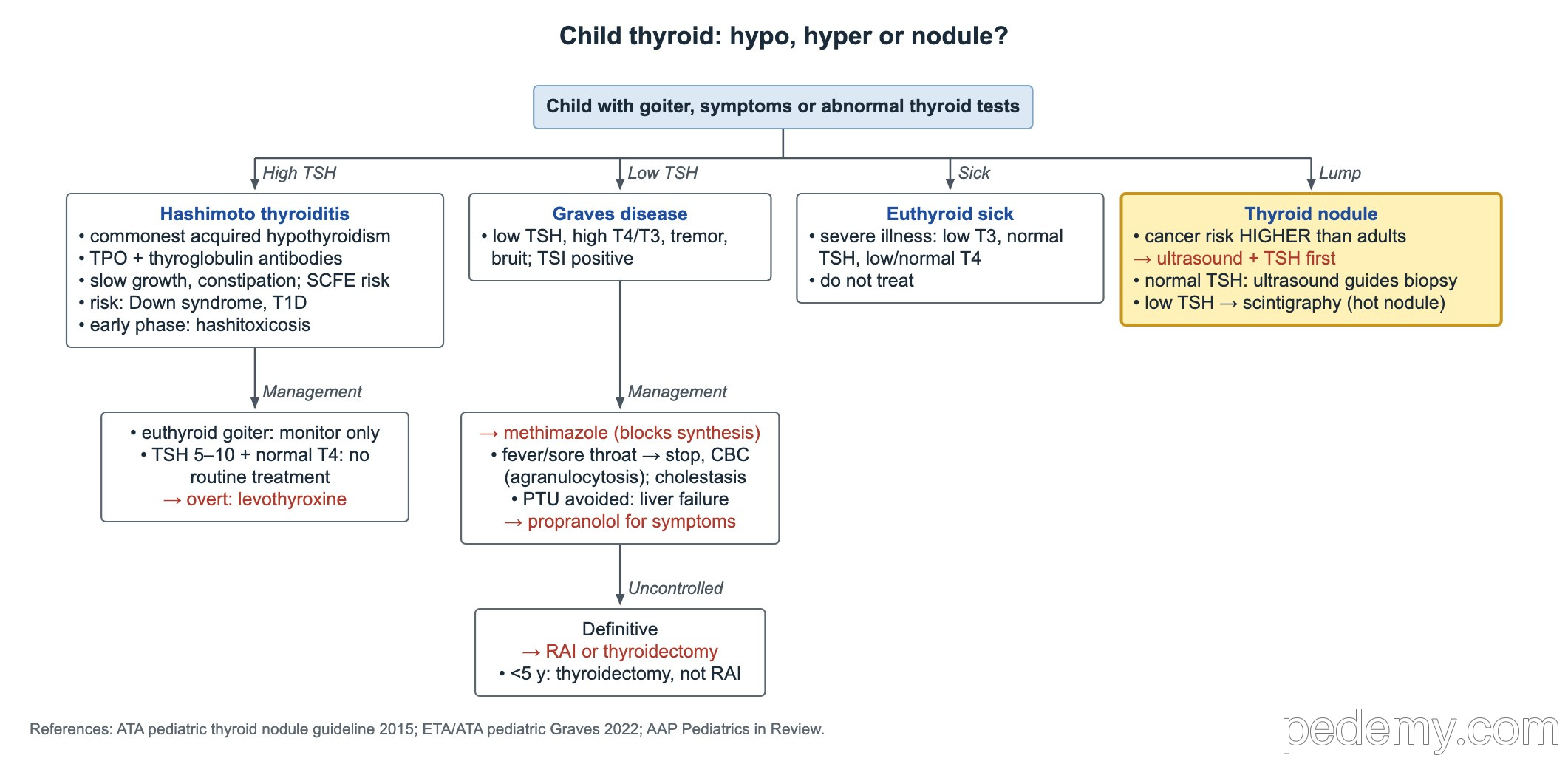
- A nodule in a child is more likely to be cancer than in an adult, usually papillary carcinoma.
- Start with thyroid ultrasound and TSH.
- Normal or high TSH: ultrasound features, not size alone, decide on fine-needle aspiration.
- Low TSH: a radionuclide scan looks for an autonomous (hot) nodule.
Common questions
What is the starting levothyroxine dose for congenital hypothyroidism?
10–15 µg/kg/day, started within the first 2 weeks of life, adjusted to keep free T4 in the upper half of the normal range.
Why is PTU not used in children?
Propylthiouracil can cause severe, sometimes fatal liver injury, so methimazole is preferred for Graves disease in children.
Does a normal TSH rule out hypothyroidism?
No. In central hypothyroidism TSH can be low or normal while free T4 is low, so check free T4 in children with pituitary disease or midline defects.
Study this topic
Sources
- AAP 2023: Congenital hypothyroidism, screening and management (Pediatrics)
- ENDO-ERN/ESPE 2020–2021: Congenital hypothyroidism consensus guidelines update (Thyroid)
- European Thyroid Association 2022: Management of pediatric Graves disease
- ATA 2016: Diagnosis and management of hyperthyroidism and thyrotoxicosis (Thyroid)
- ATA 2015: Children with thyroid nodules and differentiated thyroid cancer (Thyroid)
Written for Pedemy in our own words from the sources above; checked November 2026. For education only, not medical advice; check doses and local protocols before treating a patient. Pedemy is independent and not affiliated with or endorsed by the organizations cited.