

Main decision tree
Amino acid disorders
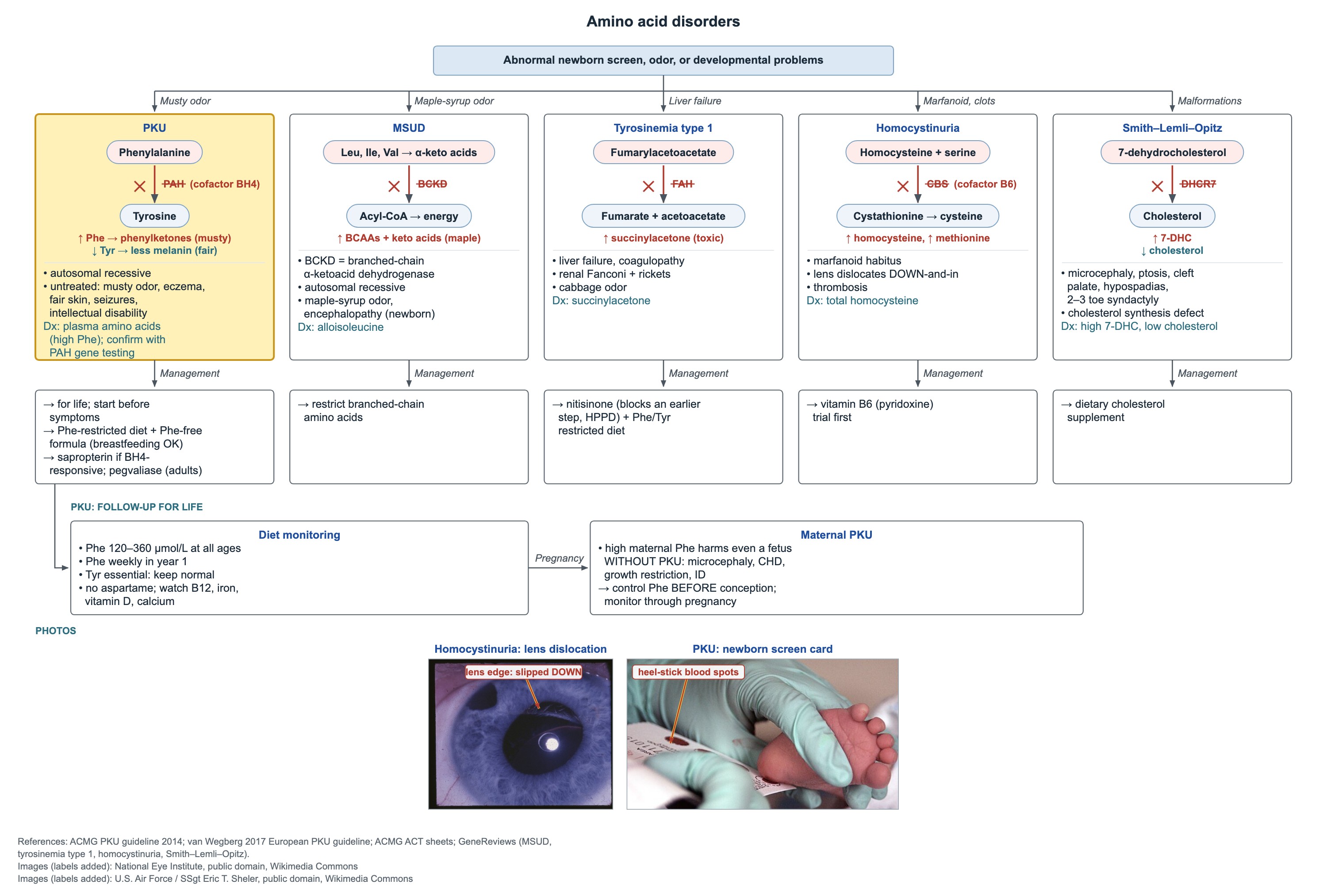
Key points
- PKU: phenylalanine hydroxylase (cofactor BH4) fails, so Phe builds up and tyrosine becomes an essential amino acid.
- Untreated PKU: musty odor, eczema, fair skin, seizures and intellectual disability; first test is plasma amino acids.
- PKU target blood Phe 120–360 µmol/L (2–6 mg/dL) for life; check Phe weekly in the first year.
- Maternal PKU harms a fetus without PKU: reach Phe 2–6 mg/dL at least 3 months before conception.
- MSUD: maple-syrup odor and encephalopathy in a newborn; alloisoleucine is diagnostic; restrict leucine, isoleucine and valine.
- Tyrosinemia type 1: liver failure, renal Fanconi with rickets, cabbage odor; succinylacetone; treat with nitisinone plus a Phe/Tyr diet.
- Homocystinuria: lens slips down and in, thrombosis, marfanoid build; measure total homocysteine; try vitamin B6 first.
Phenylketonuria (PKU): recognize and confirm
PKU is phenylalanine hydroxylase (PAH) deficiency, inherited as autosomal recessive. PAH turns phenylalanine into tyrosine and needs tetrahydrobiopterin (BH4) as its cofactor. When it fails, phenylalanine rises to levels that are toxic to the brain, and tyrosine falls.
Newborn screening exists because early treatment prevents the brain injury. Children born without screening, for example some internationally adopted children, can present later with the untreated picture.
- Untreated signs: musty odor, eczema, fair skin and hair (less melanin), seizures, intellectual disability.
- First test in a symptomatic child: plasma amino acids (high phenylalanine).
- Positive newborn screen: confirm with plasma amino acids and PAH gene testing.
- The 2023 ACMG guideline recommends genetic testing at diagnosis because the genotype helps predict BH4 response and severity.
PKU treatment: start early, continue for life
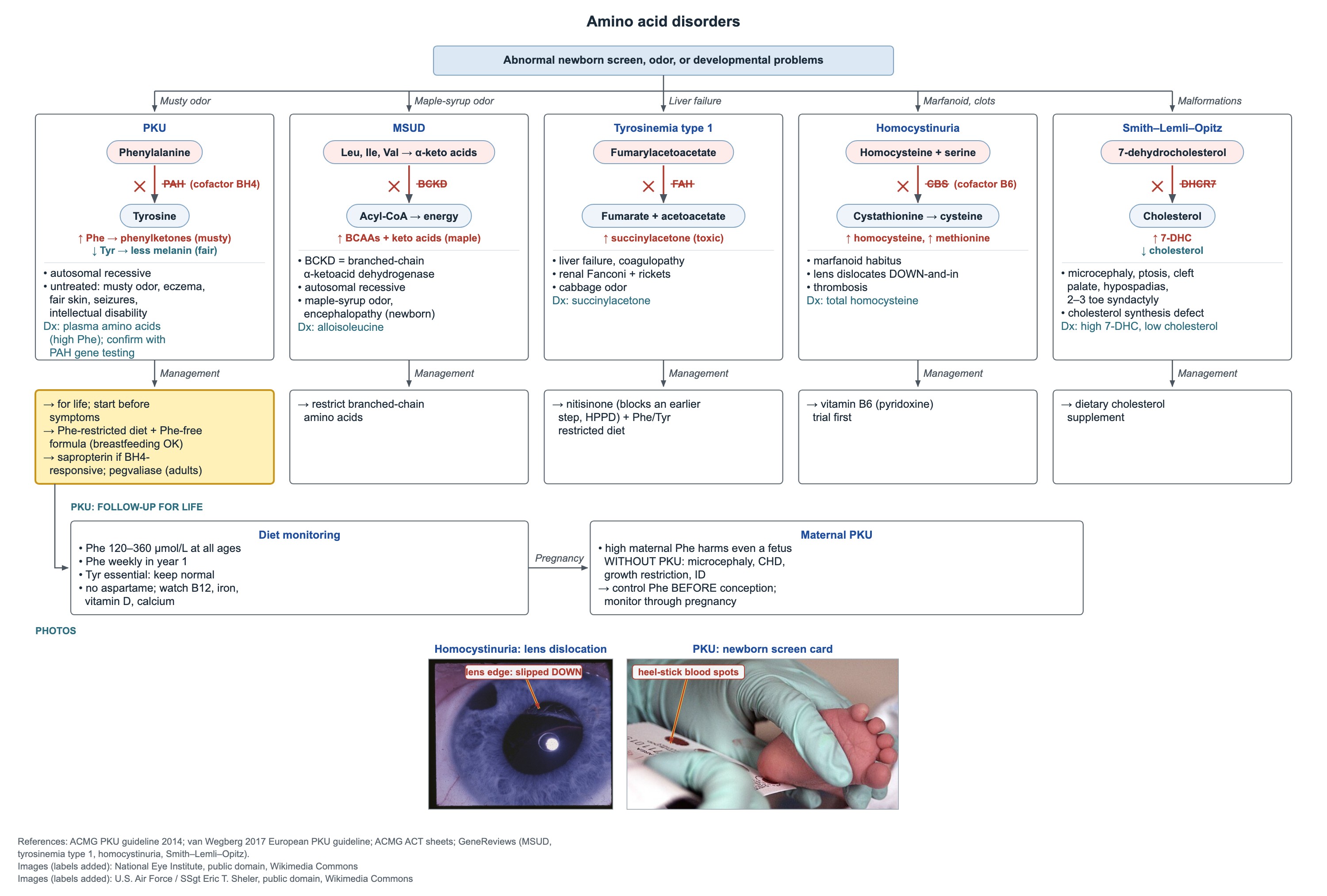
Treatment is for life. Stopping the diet in later childhood or adulthood worsens attention, mood and executive function.
- Start treatment as soon as the diagnosis is confirmed, before symptoms appear.
- Phenylalanine-restricted diet plus a phenylalanine-free medical formula, lifelong.
- Breastfeeding can continue: measured breast milk is given with Phe-free formula, and the Phe in breast milk is counted.
- BH4-responsive patients: sapropterin (or sepiapterin) lowers Phe and allows more natural protein.
- Adults: pegvaliase, an enzyme that breaks down phenylalanine, is an option.
PKU follow-up: Phe targets and diet monitoring
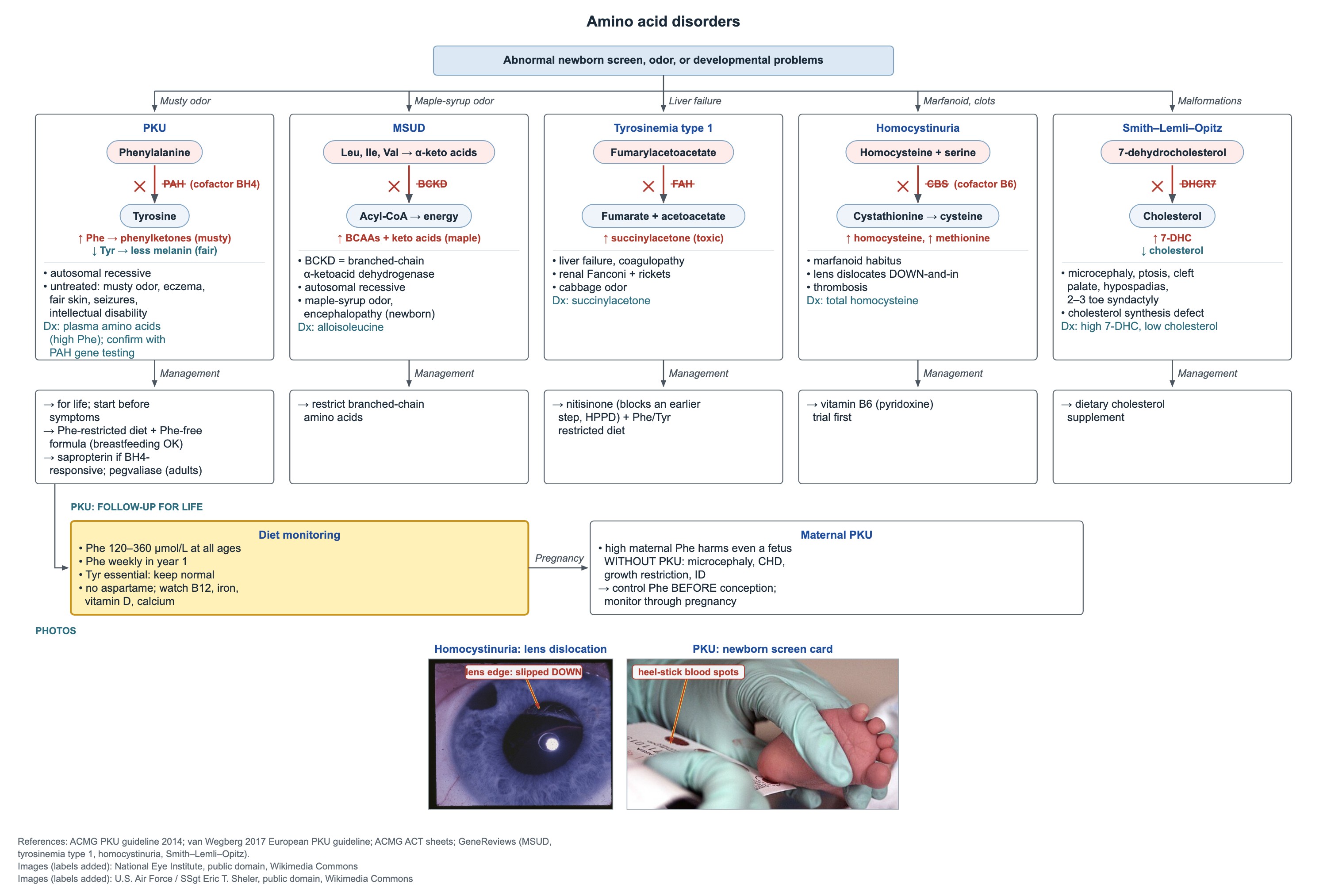
- Target blood Phe 120–360 µmol/L (2–6 mg/dL) at all ages.
- Check blood Phe weekly in the first year of life, then less often as the child grows.
- Keep tyrosine in the normal range: in PKU it becomes essential, and it is the precursor of catecholamines, melanin and thyroxine.
- Avoid aspartame: this sweetener is broken down to phenylalanine.
- A strict diet can run low in vitamin B12, iron, vitamin D and calcium, so monitor them.
Maternal PKU
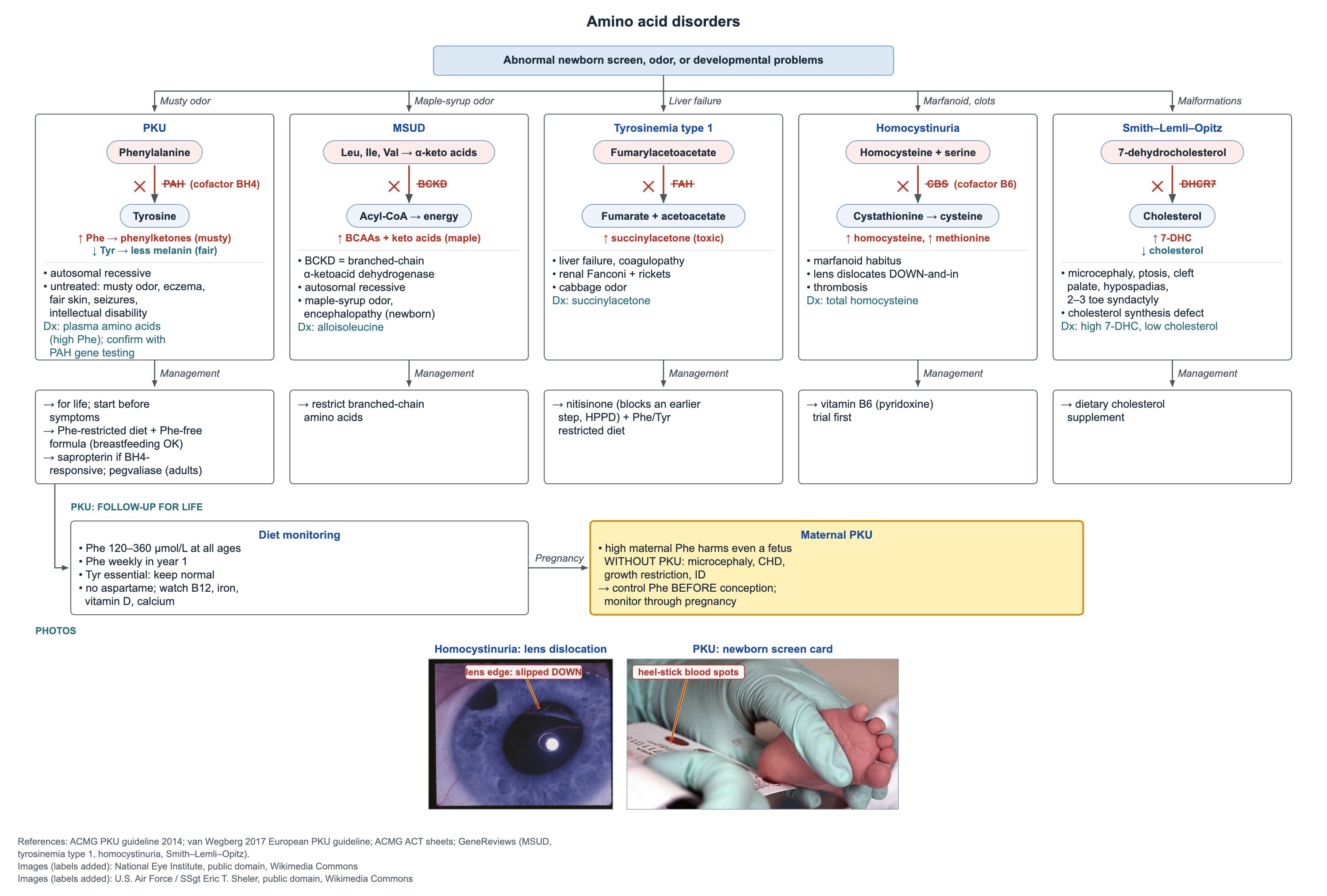
High maternal phenylalanine is a teratogen. It damages the fetus even when the fetus does not have PKU, and the damage starts in early embryogenesis, often before a pregnancy is known.
- Fetal effects: microcephaly, congenital heart defects, growth restriction and intellectual disability.
- Bring maternal Phe to 2–6 mg/dL (120–360 µmol/L) at least 3 months before conception.
- Monitor maternal Phe levels closely through the whole pregnancy.
Maple syrup urine disease (MSUD)
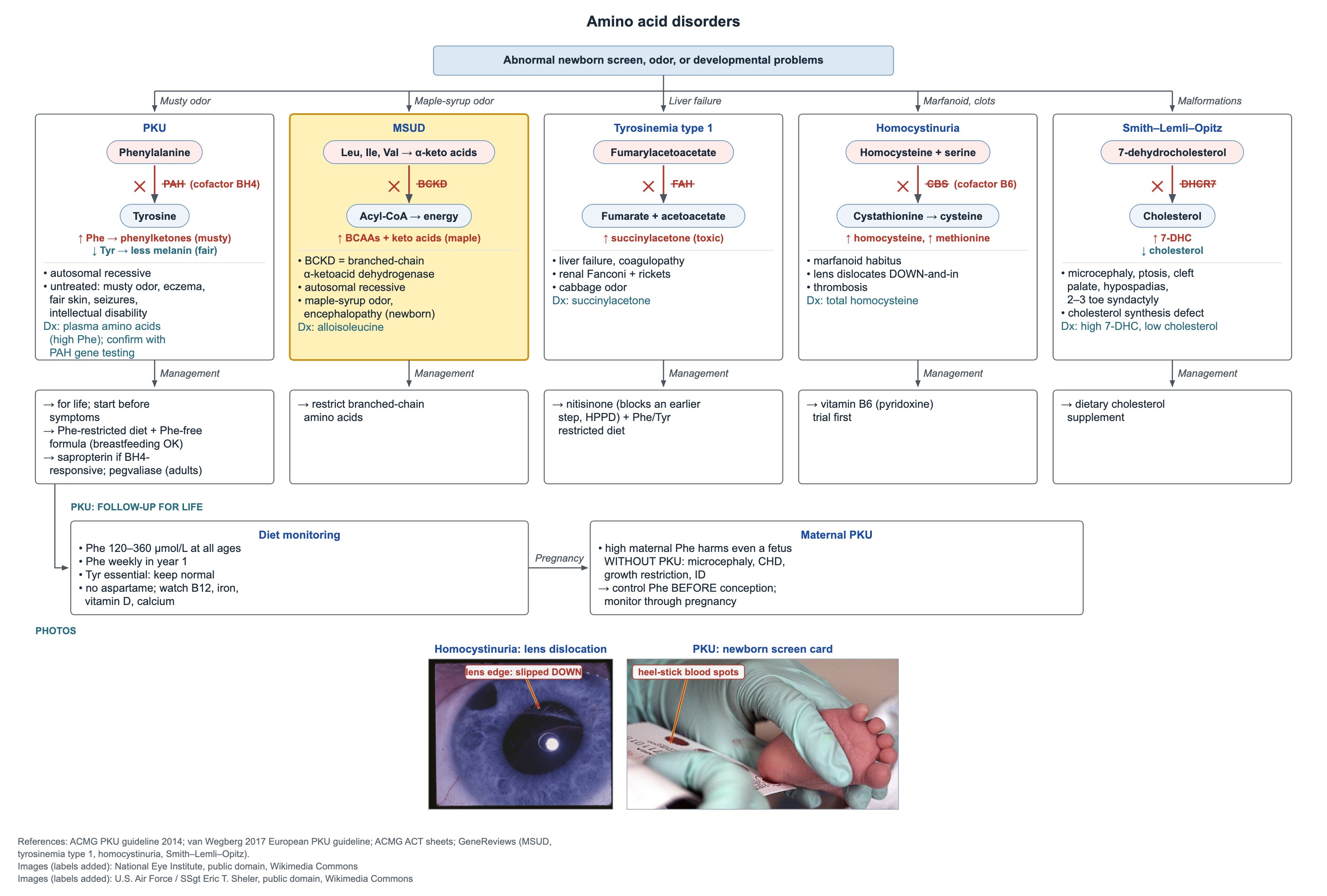
MSUD is a block in branched-chain alpha-ketoacid dehydrogenase (BCKD), inherited as autosomal recessive. The three branched-chain amino acids, leucine, isoleucine and valine, and their keto acids build up; leucine is the most toxic to the brain.
- Classic picture: a newborn who is well at first, then feeds poorly and becomes encephalopathic, with a maple-syrup odor.
- Newborn screen: raised leucine/isoleucine and valine.
- Diagnostic plasma marker: alloisoleucine.
- Treatment: restrict the branched-chain amino acids with a special medical formula; acute crises need emergency metabolic care.
Tyrosinemia type 1
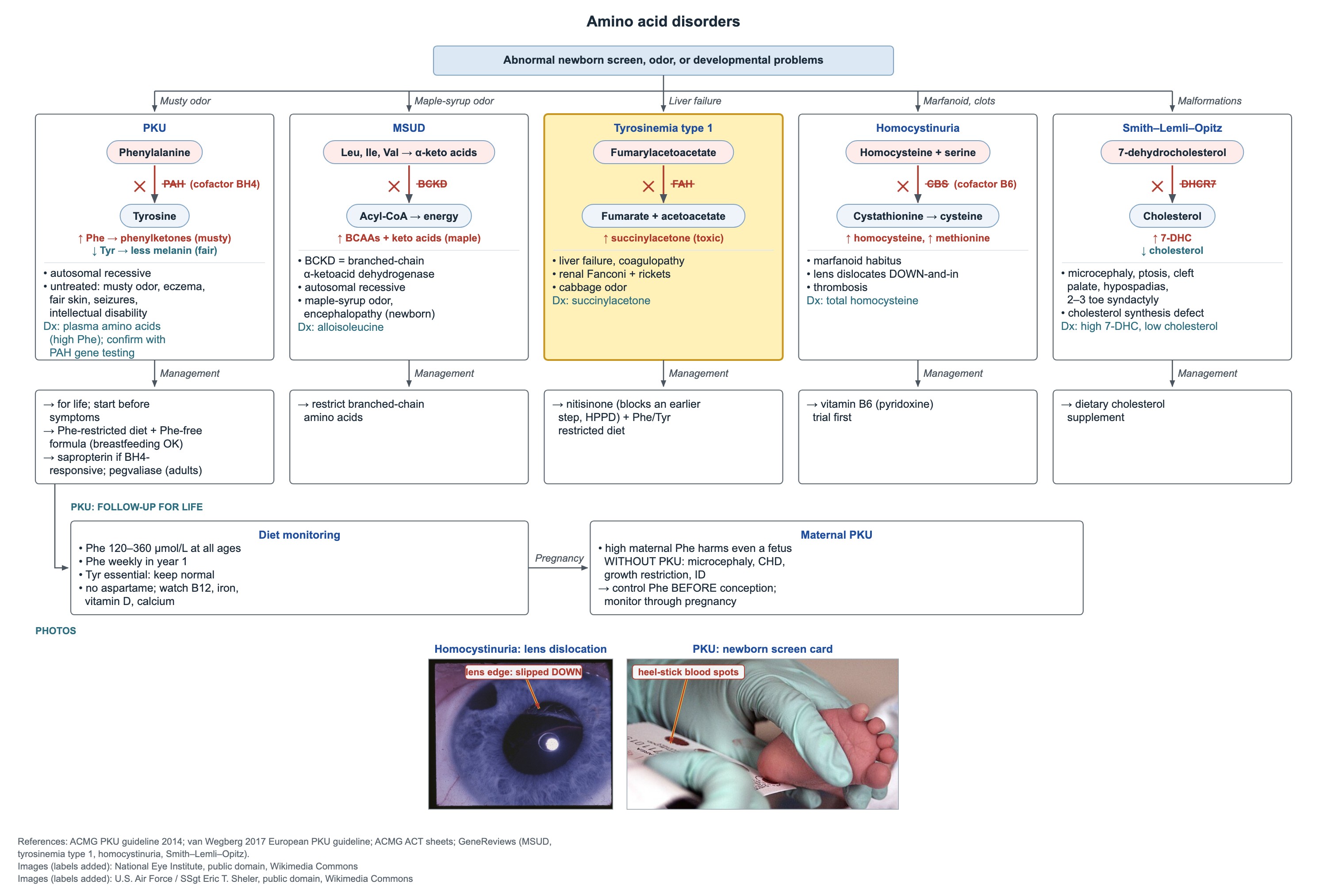
Tyrosinemia type 1 is fumarylacetoacetate hydrolase (FAH) deficiency, the last step of tyrosine breakdown. The toxic product succinylacetone injures the liver and kidney tubules.
- Infant with liver failure and coagulopathy (prolonged PT), jaundice and poor weight gain.
- Renal Fanconi syndrome: glucosuria and phosphaturia, leading to rickets.
- Cabbage-like odor.
- Test: succinylacetone in blood or urine (it is also the newborn screening marker).
- Treatment: nitisinone (NTBC), which blocks an earlier step (HPPD) so succinylacetone is not made, plus a phenylalanine- and tyrosine-restricted diet.
- Children still need monitoring for liver cancer (alpha-fetoprotein and liver imaging).
Classic homocystinuria
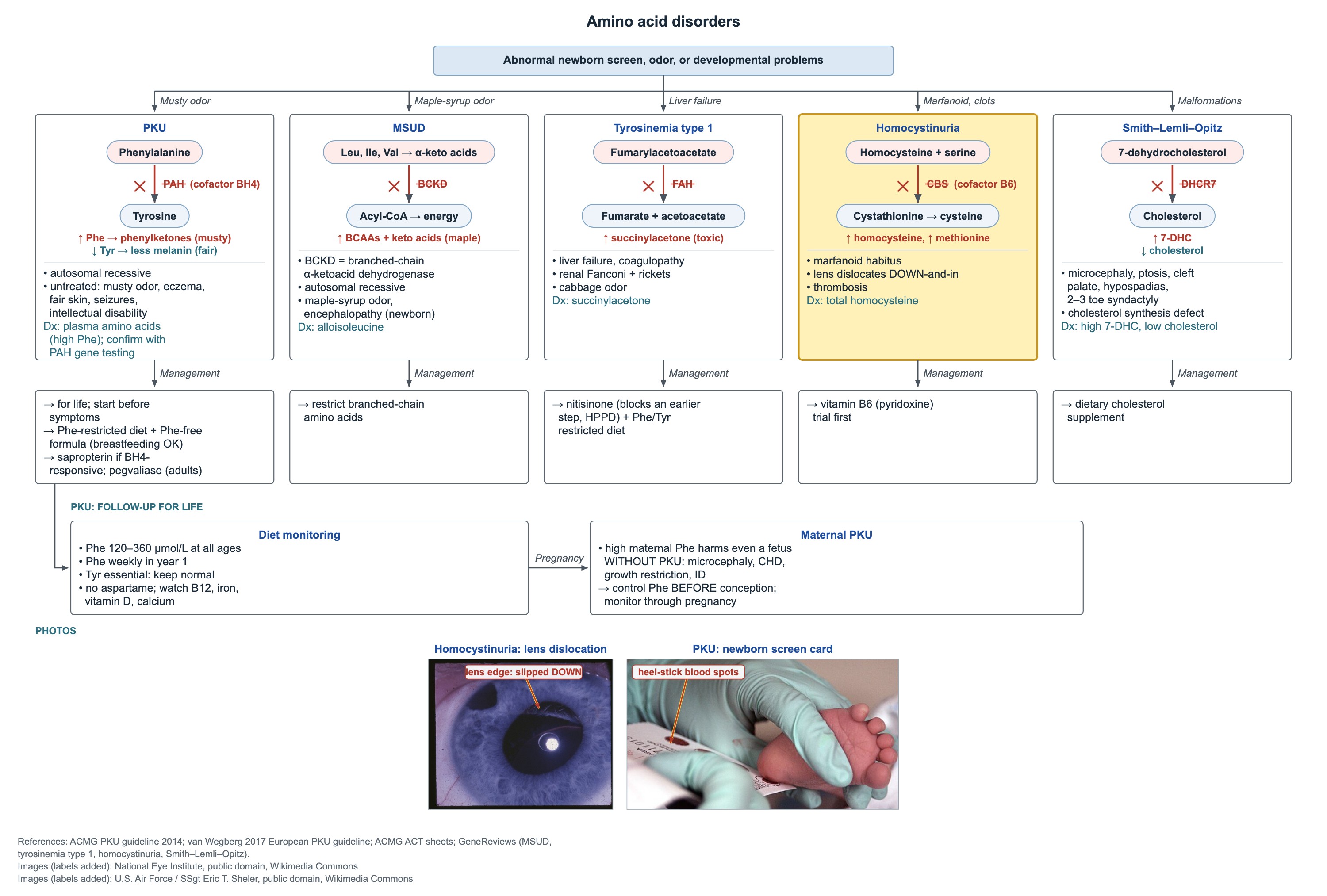
Classic homocystinuria is cystathionine beta-synthase (CBS) deficiency; CBS uses vitamin B6 as its cofactor. Homocysteine and methionine rise. A high methionine is the newborn screening marker, but screening misses some cases.
- First treatment: a trial of vitamin B6 (pyridoxine). Response is judged by total plasma homocysteine.
- Non-responders need a methionine-restricted diet, and often betaine.
| Feature | Homocystinuria | Marfan syndrome |
|---|---|---|
| Lens dislocation | Down and in (inferonasal) | Up and out (superotemporal) |
| Development | Often delayed or intellectual disability | Usually normal |
| Vascular risk | Thromboembolism (can be fatal) | Aortic root dilation |
| Key test | Total plasma homocysteine | Clinical criteria and FBN1 testing |
Common questions
What is the target phenylalanine level in PKU?
120–360 µmol/L (2–6 mg/dL) at every age, and the same range before and during pregnancy.
Can a baby with PKU be breastfed?
Yes. Breast milk is low in phenylalanine; it is given in measured amounts together with a phenylalanine-free formula, guided by blood Phe levels.
Why must people with PKU avoid aspartame?
Aspartame is broken down into phenylalanine, so it raises blood Phe.
Study this topic
Sources
- ACMG 2023: Phenylalanine hydroxylase deficiency diagnosis and management (Genet Med 2025)
- European guidelines on PKU diagnosis and treatment (Orphanet J Rare Dis 2017)
- Tyrosinemia type 1: recommendations for diagnosis and management (Genet Med 2017)
- Guidelines for the diagnosis and management of CBS deficiency (J Inherit Metab Dis 2017)
- GeneReviews: Maple syrup urine disease
Written for Pedemy in our own words from the sources above; checked November 2026. For education only, not medical advice; check doses and local protocols before treating a patient. Pedemy is independent and not affiliated with or endorsed by the organizations cited.