

Main decision tree
Galactose disorders
Key points
- Classic galactosemia (GALT deficiency): milk-fed newborn with jaundice, liver failure, hypoglycemia, cataracts and E. coli sepsis.
- Suspected galactosemia: stop breast milk and cow-milk formula and switch to soy formula before results return.
- Even with an early diet, most girls with classic galactosemia develop primary ovarian insufficiency.
- Galactokinase deficiency: cataracts in an otherwise well infant; treat with galactose restriction.
- GSD I: onset about 3–4 months, fasting hypoglycemia, huge liver, high lactate, uric acid and triglycerides.
- Pompe disease (GSD II) is the only glycogen storage disease on the US newborn screening panel; ECG shows a short PR and huge QRS.
- McArdle disease (GSD V): exercise cramps and myoglobinuria; lactate fails to rise with exercise while ammonia rises.
Classic galactosemia
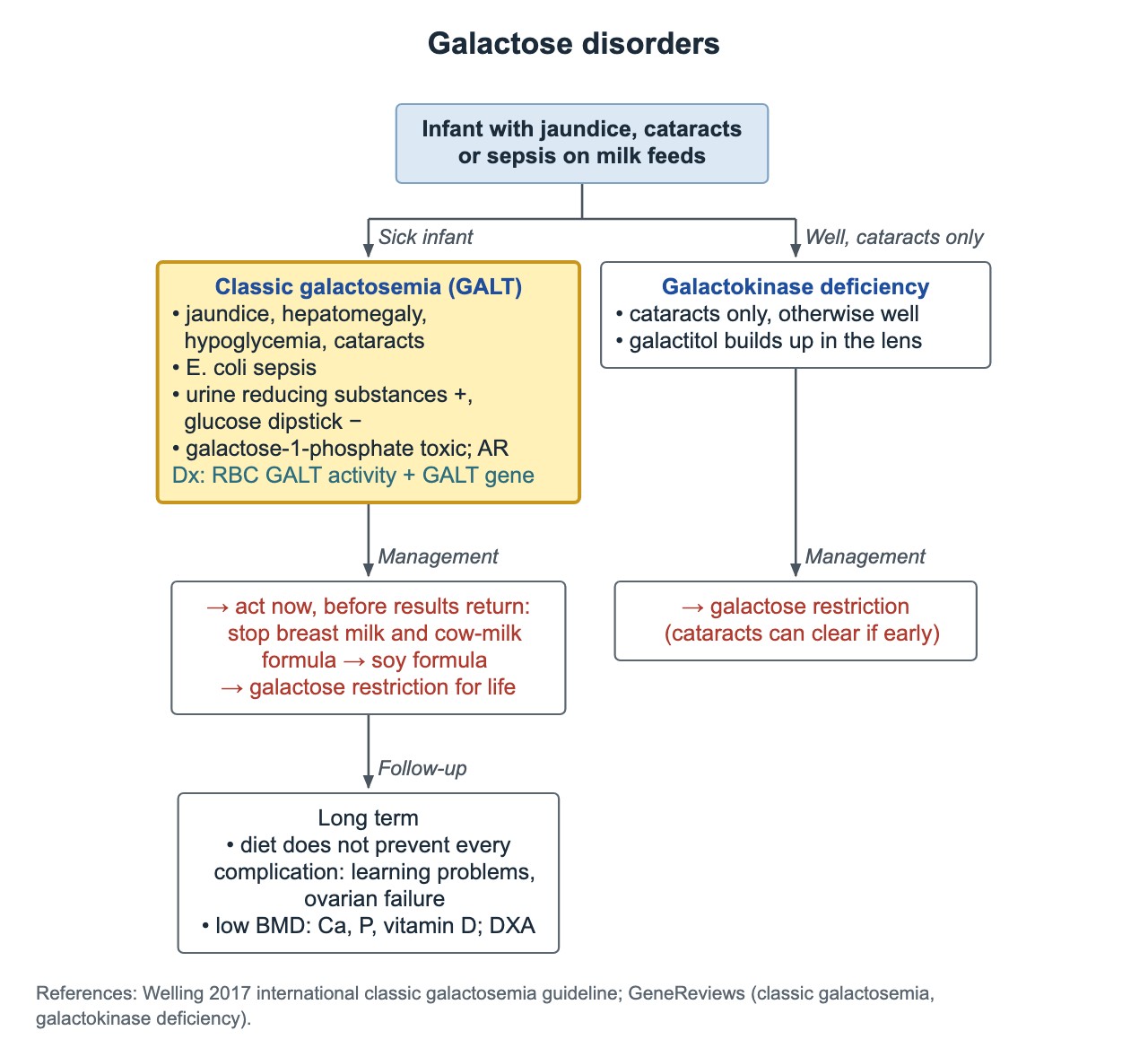
Classic galactosemia is galactose-1-phosphate uridylyltransferase (GALT) deficiency, inherited as autosomal recessive. Galactose-1-phosphate builds up and damages the liver, brain and kidneys. Babies become ill within days of starting breast milk or cow-milk formula.
- Jaundice, hepatomegaly, liver failure and bleeding, hypoglycemia, vomiting and poor feeding.
- Cataracts, from galactitol in the lens.
- High risk of E. coli sepsis in the newborn period.
- Urine positive for reducing substances but negative for glucose on dipstick (galactose in the urine).
- Confirm with red blood cell GALT activity, red cell galactose-1-phosphate and GALT gene analysis. A recent blood transfusion can make GALT activity look normal.
Galactosemia: what to do before results return
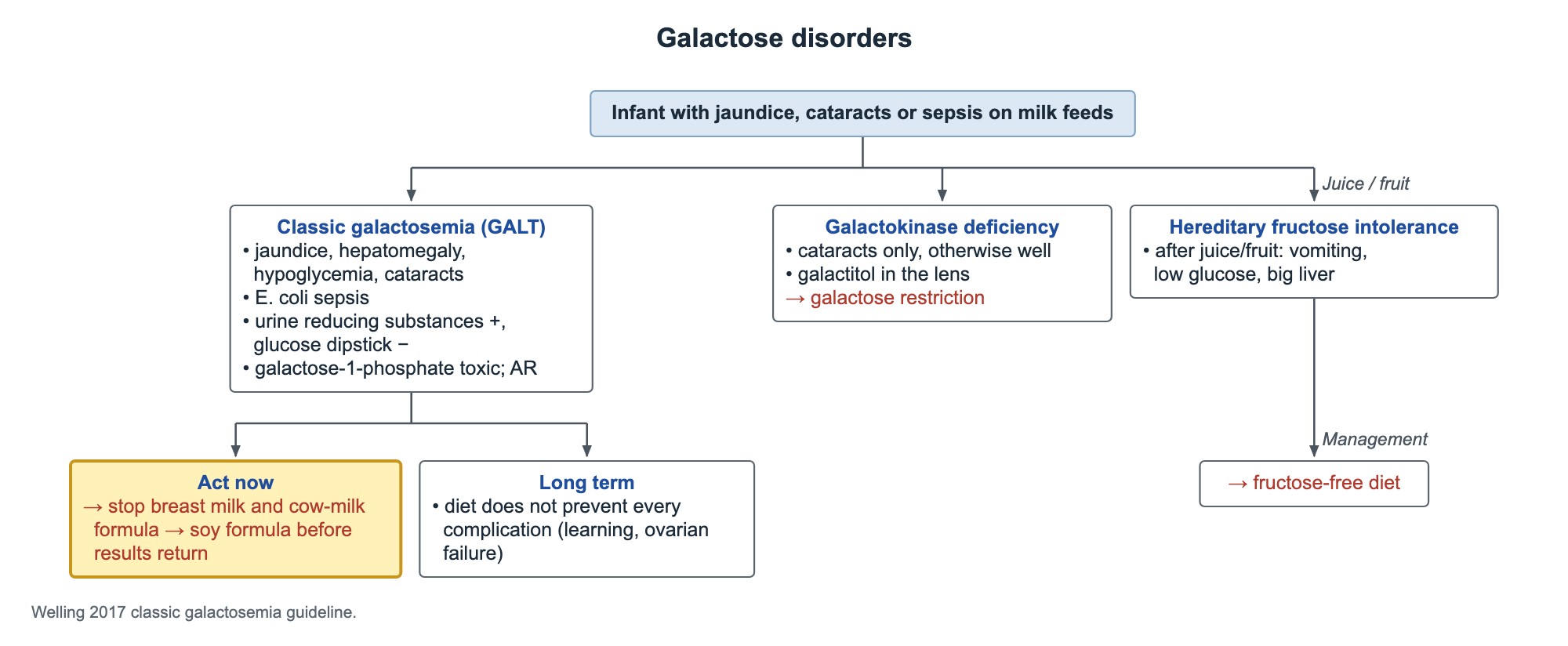
Do not wait for confirmation. A septic, jaundiced newborn with possible galactosemia should stop all lactose at once.
- Stop breast milk and cow-milk formula; feed a soy-based, lactose-free formula.
- Breast milk is not acceptable as main nutrition in classic galactosemia; this is one of the few true contraindications to breastfeeding.
- Treat sepsis and liver failure, and involve the metabolic team the same day.
- Lifelong diet: avoid milk and dairy galactose; fruit, vegetables and legumes are allowed.
Galactosemia: long-term problems
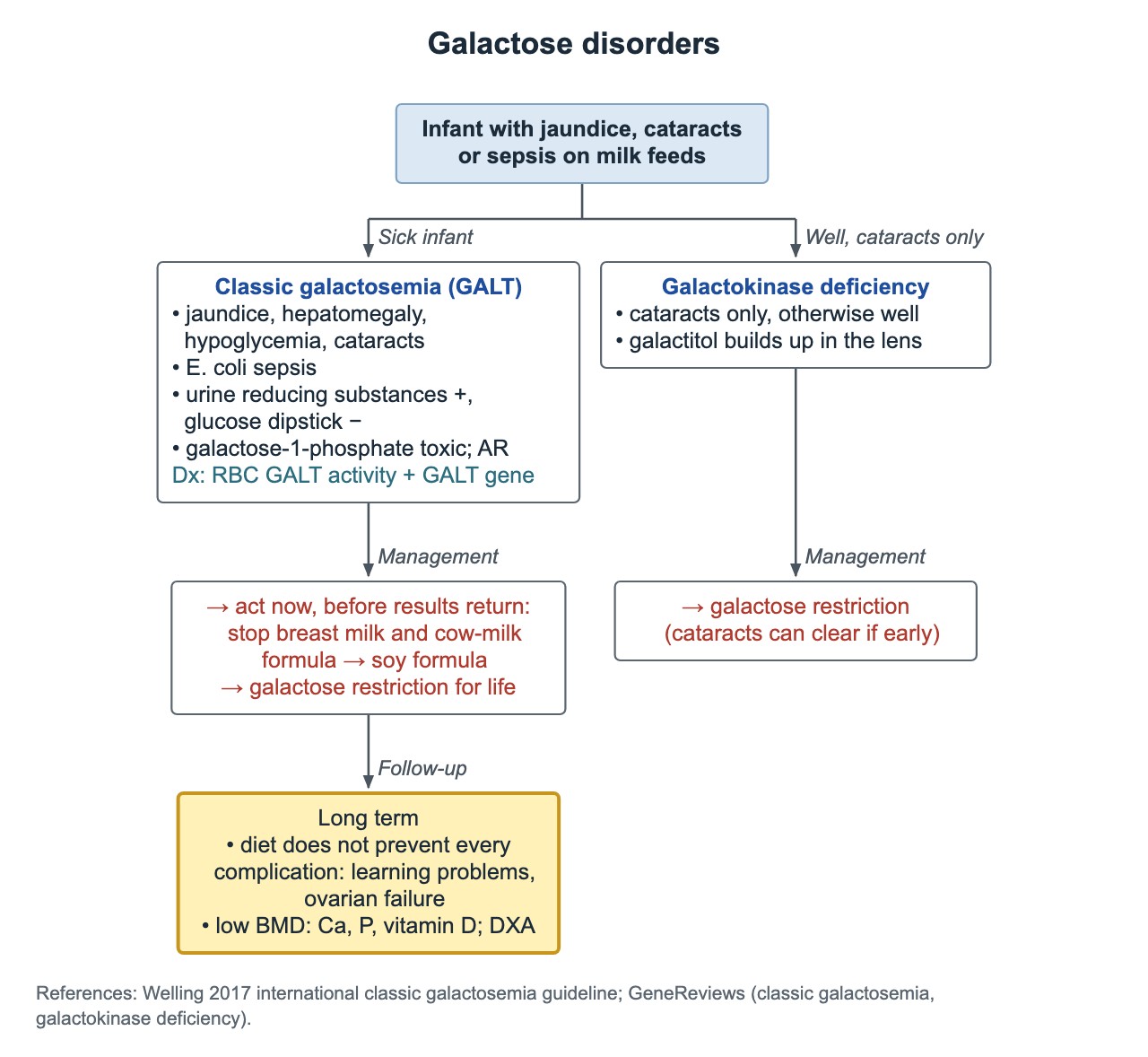
Early treatment saves lives and prevents the liver disease, but it does not prevent every complication. Follow-up looks for these problems even in well-controlled children.
- Primary (premature) ovarian insufficiency in most girls and women.
- Learning problems, speech delay and tremor.
- Reduced bone density: check calcium, vitamin D and phosphate, and do DXA scans.
Galactokinase deficiency and hereditary fructose intolerance
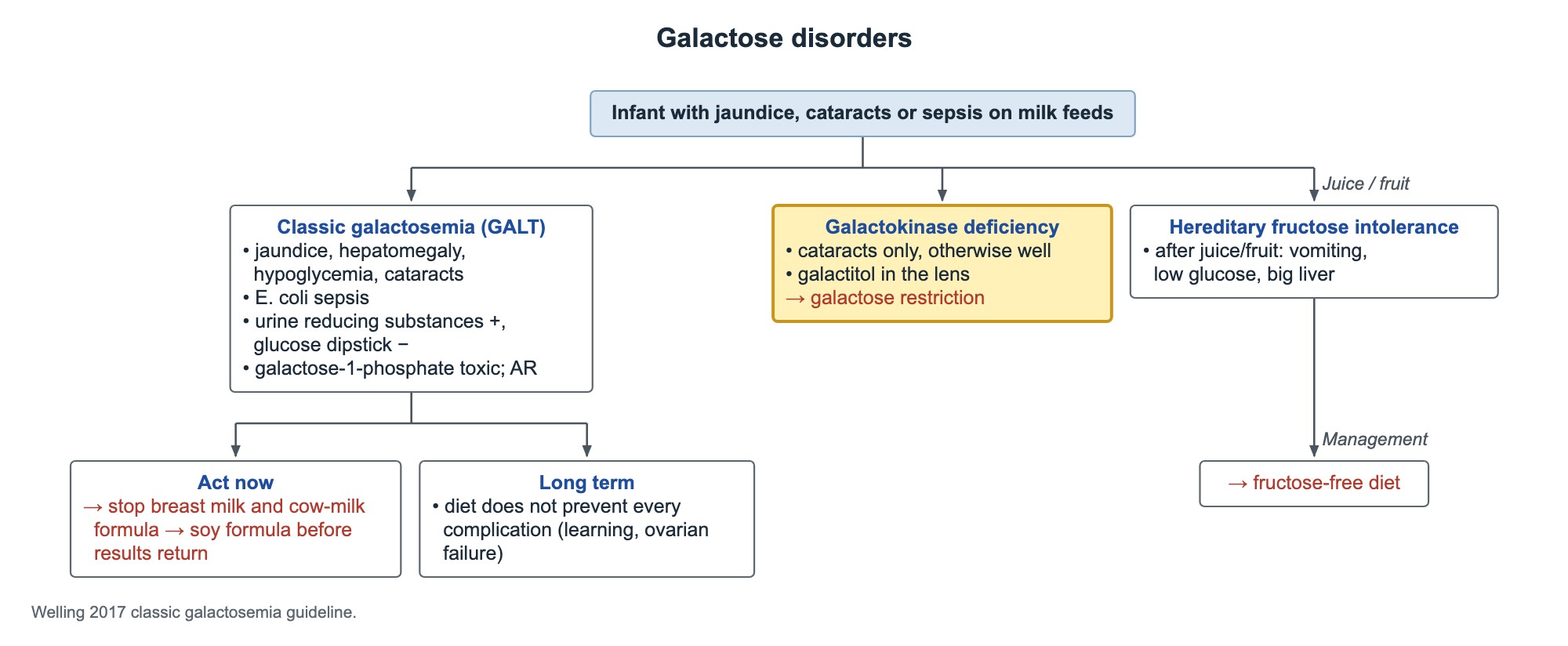
Galactokinase deficiency causes cataracts in an infant who is otherwise well. Galactitol builds up in the lens. Galactose restriction is the treatment, and early cataracts can clear.
Hereditary fructose intolerance (aldolase B deficiency) appears when fructose or sucrose enters the diet, often with juice or fruit. The infant vomits, becomes hypoglycemic and develops a big liver. Treatment is a fructose- and sucrose-free diet.
- Hypoglycemia with ketones and urine reducing substances that are not glucose: think of galactosemia or hereditary fructose intolerance.
GSD I (von Gierke disease)
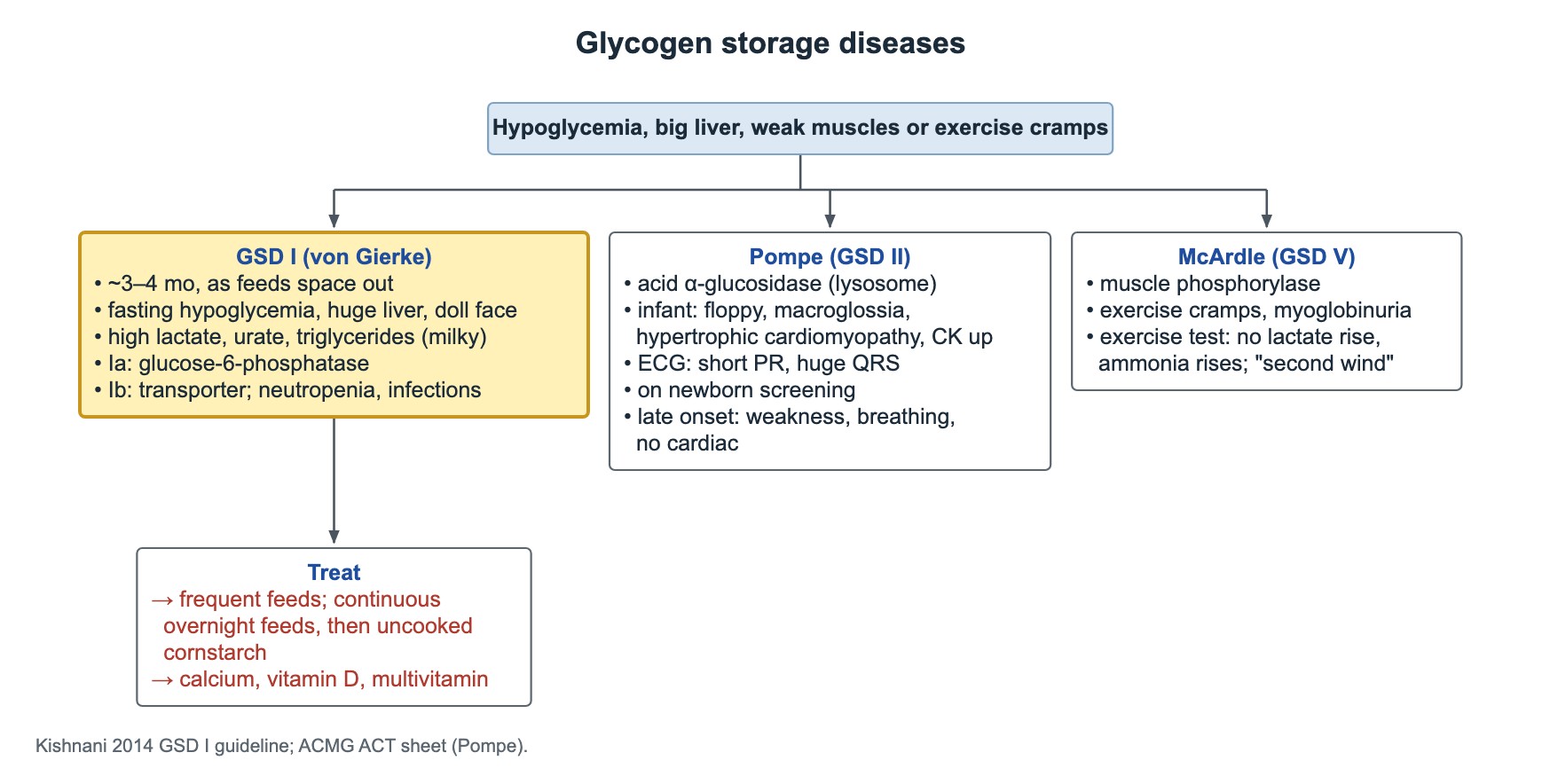
In GSD I the liver can store glycogen but cannot release free glucose, so fasting quickly causes hypoglycemia. Symptoms usually begin around 3–4 months, when feeds start to space out or the baby first sleeps through the night.
- GSD Ia: glucose-6-phosphatase deficiency.
- GSD Ib: defect of the transporter that moves glucose-6-phosphate into the endoplasmic reticulum; adds neutropenia, recurrent infections and inflammatory bowel disease.
- Severe fasting hypoglycemia (seizures), huge liver, doll-like face, short stature.
- High lactate, uric acid and triglycerides; marked hypertriglyceridemia can make the plasma look milky.
- Treatment: frequent daytime feeds and continuous overnight feeds by nasogastric tube or gastrostomy, later uncooked cornstarch.
- Limit fructose, galactose and sucrose; add a multivitamin, calcium and vitamin D.
Pompe disease (GSD II)
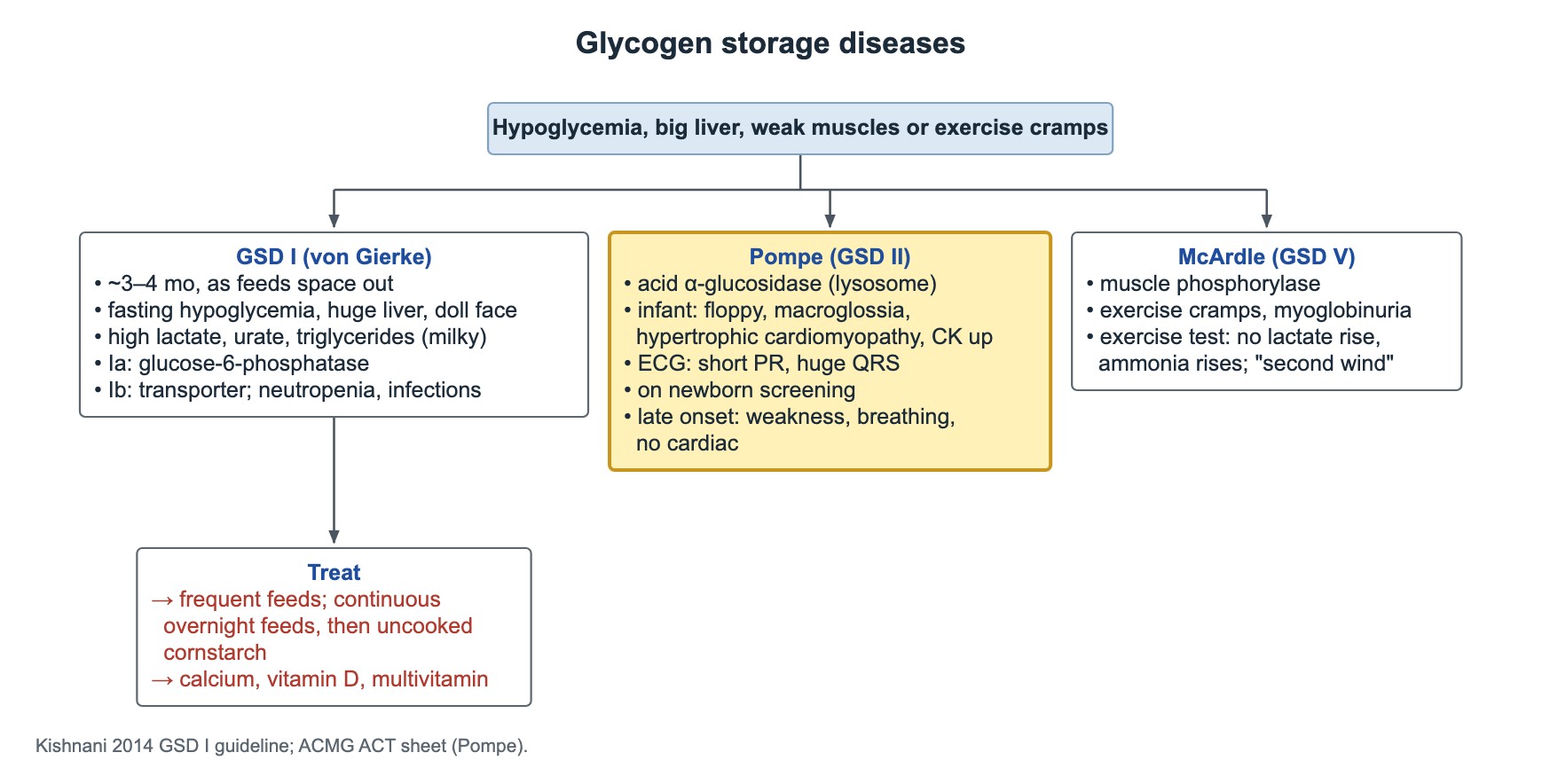
Pompe disease is lysosomal acid alpha-glucosidase (acid maltase) deficiency, inherited as autosomal recessive. Glycogen collects inside lysosomes of muscle; a muscle biopsy shows glycogen-filled vacuoles. It is the only glycogen storage disease on the US Recommended Uniform Screening Panel.
- Treatment is enzyme replacement therapy, started as early as possible in infantile-onset disease.
| Form | Features |
|---|---|
| Infantile onset | Floppy infant, macroglossia, hypertrophic cardiomyopathy, high CK; ECG: short PR and very large QRS voltages |
| Late onset | Limb-girdle weakness and respiratory insufficiency, without major heart involvement |
McArdle disease (GSD V)
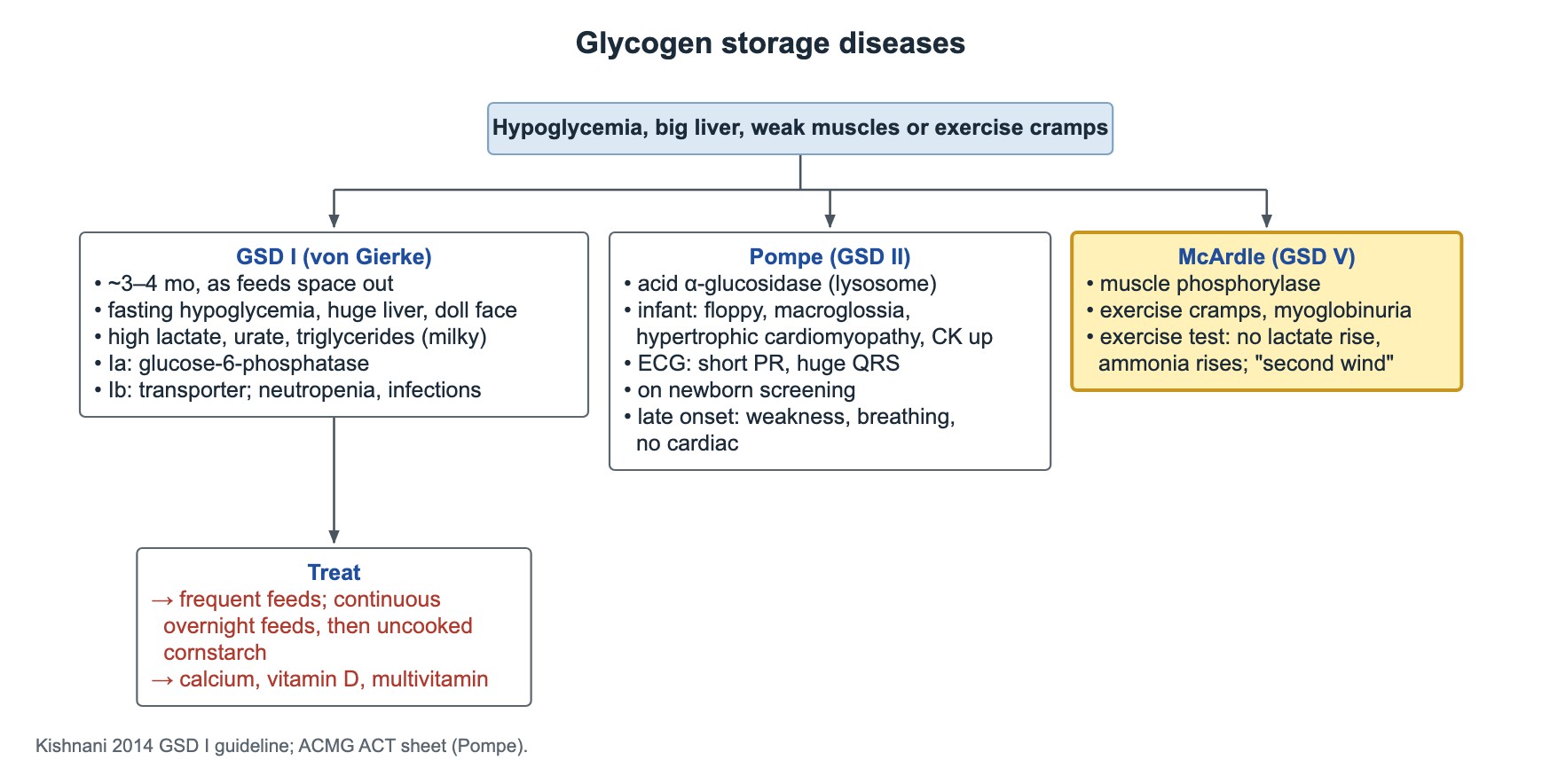
- Deficient enzyme: muscle glycogen phosphorylase (myophosphorylase).
- Exercise intolerance with cramps, myoglobinuria (dark urine) and a high CK.
- Exercise test: lactate fails to rise normally, while ammonia rises.
- Second wind: after a few minutes of rest or slower effort, symptoms ease as muscle uses blood-borne glucose and fatty acids.
- No liver involvement and no fasting hypoglycemia.
Common questions
Can a baby with galactosemia breastfeed?
No. Classic galactosemia is a contraindication to breastfeeding; the baby needs a soy-based, lactose-free formula.
Why does GSD I often start at 3–4 months?
Frequent feeds cover the defect at first. When the baby starts to go longer between feeds or sleeps through the night, the fast exposes the inability to release glucose.
What is uncooked cornstarch used for?
It is a slowly digested starch that keeps blood glucose up between meals and overnight in certain glycogen storage diseases, such as GSD I.
Study this topic
Sources
- International clinical guideline for classic galactosemia (J Inherit Metab Dis 2017)
- ACMG 2014: Diagnosis and management of glycogen storage disease type I (Genet Med)
- GeneReviews: Pompe disease
- HRSA: Recommended Uniform Screening Panel
Written for Pedemy in our own words from the sources above; checked November 2026. For education only, not medical advice; check doses and local protocols before treating a patient. Pedemy is independent and not affiliated with or endorsed by the organizations cited.