

Main decision tree
Recurrent infections + syndrome clue
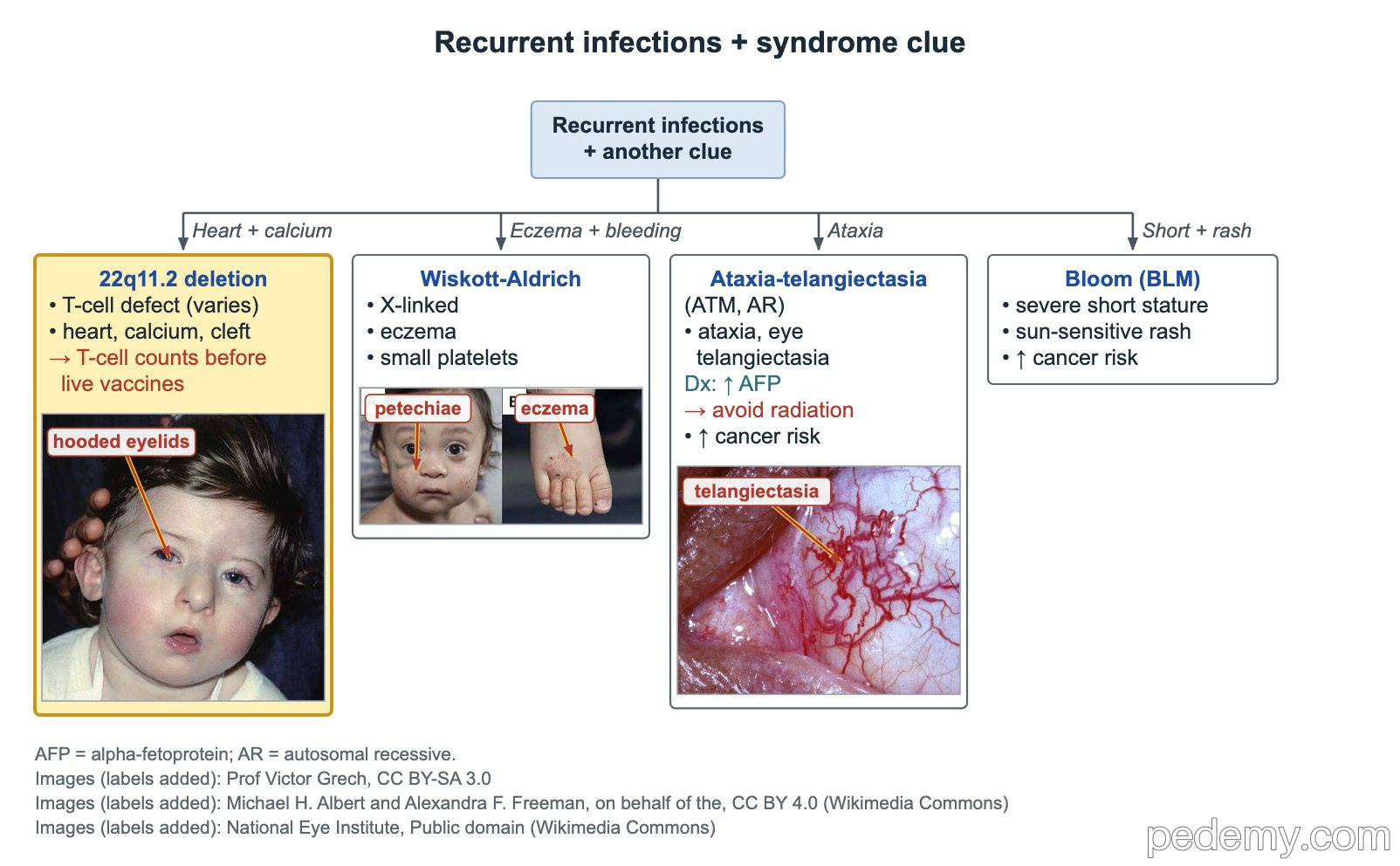
Key points
- 22q11.2 deletion: T-cell impairment varies from none to severe, so check T-cell counts before live vaccines.
- Wiskott–Aldrich syndrome: X-linked; eczema + small platelets + infections.
- Ataxia-telangiectasia (ATM, autosomal recessive): ataxia, eye telangiectasia, raised AFP.
- Ataxia-telangiectasia: marked sensitivity to ionizing radiation and high cancer risk; avoid unnecessary X-rays and CT.
- Bloom syndrome: BLM, a RecQ DNA helicase; severe growth deficiency, sun-sensitive facial rash, cancer risk.
22q11.2 deletion syndrome
The immune problem in 22q11.2 deletion comes from a small or absent thymus. Most children have mild, partial T-cell lymphopenia; a few have no T cells and need urgent care like severe combined immunodeficiency.
Because the degree varies, every child needs an immune assessment, and that result guides vaccines and infection precautions.
- Other clues: conotruncal heart defect, low calcium, palate problems and hooded eyelids.
- Check lymphocyte subsets (T-cell counts) at diagnosis.
- Live vaccines only when T-cell counts and function are adequate.
- Until immunity is known, give irradiated, CMV-safe blood products.
Wiskott–Aldrich syndrome
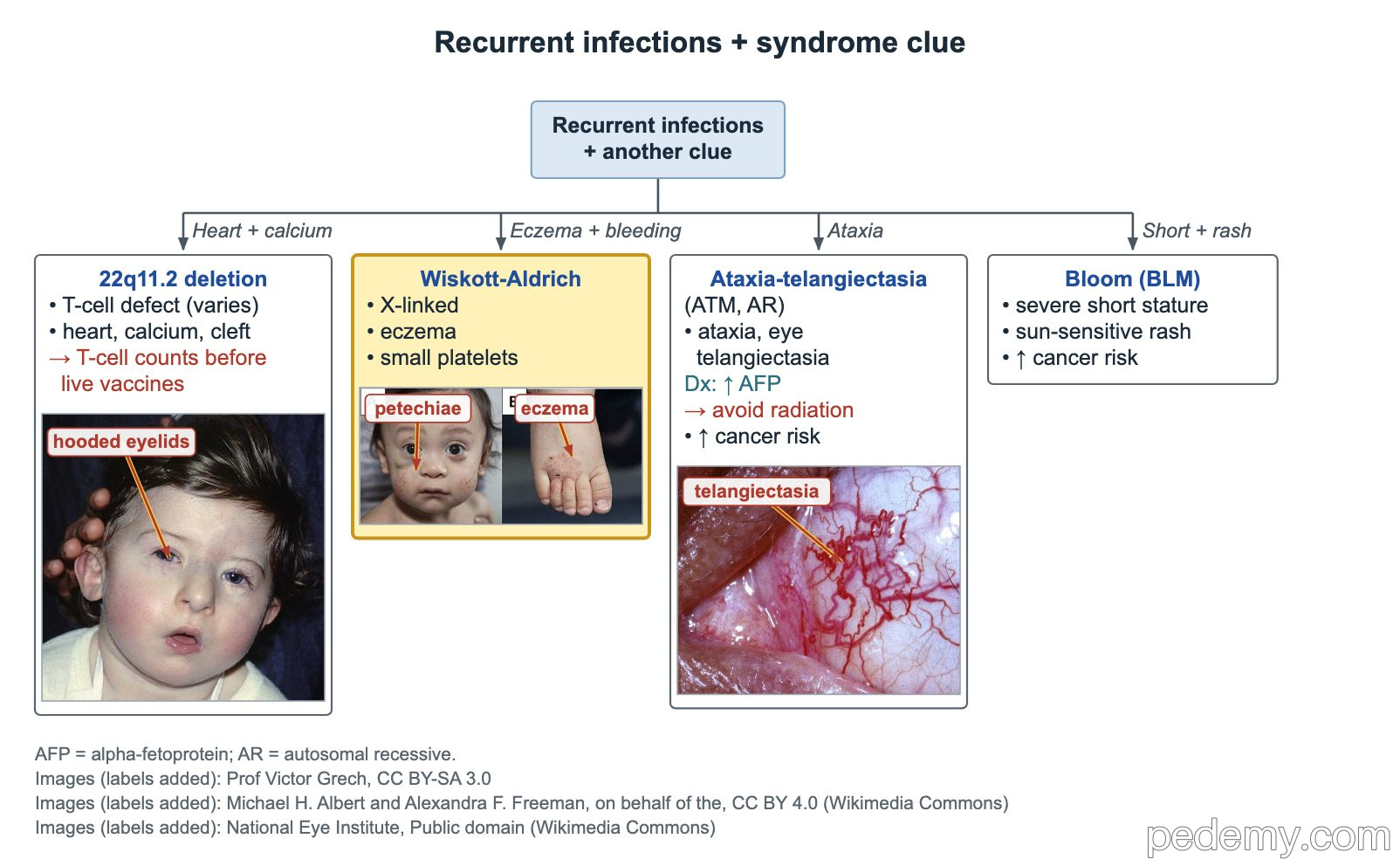
Classic Wiskott–Aldrich syndrome is X-linked, so it affects boys. It is more than a platelet disorder: it combines thrombocytopenia with immune dysfunction.
- Triad: eczema, infections and bleeding from low platelets.
- Platelets are small, a useful clue on the smear.
- Higher risk of autoimmunity and lymphoma.
- Hematopoietic stem cell transplant can cure classic disease.
DNA repair disorders: ataxia-telangiectasia and Bloom syndrome
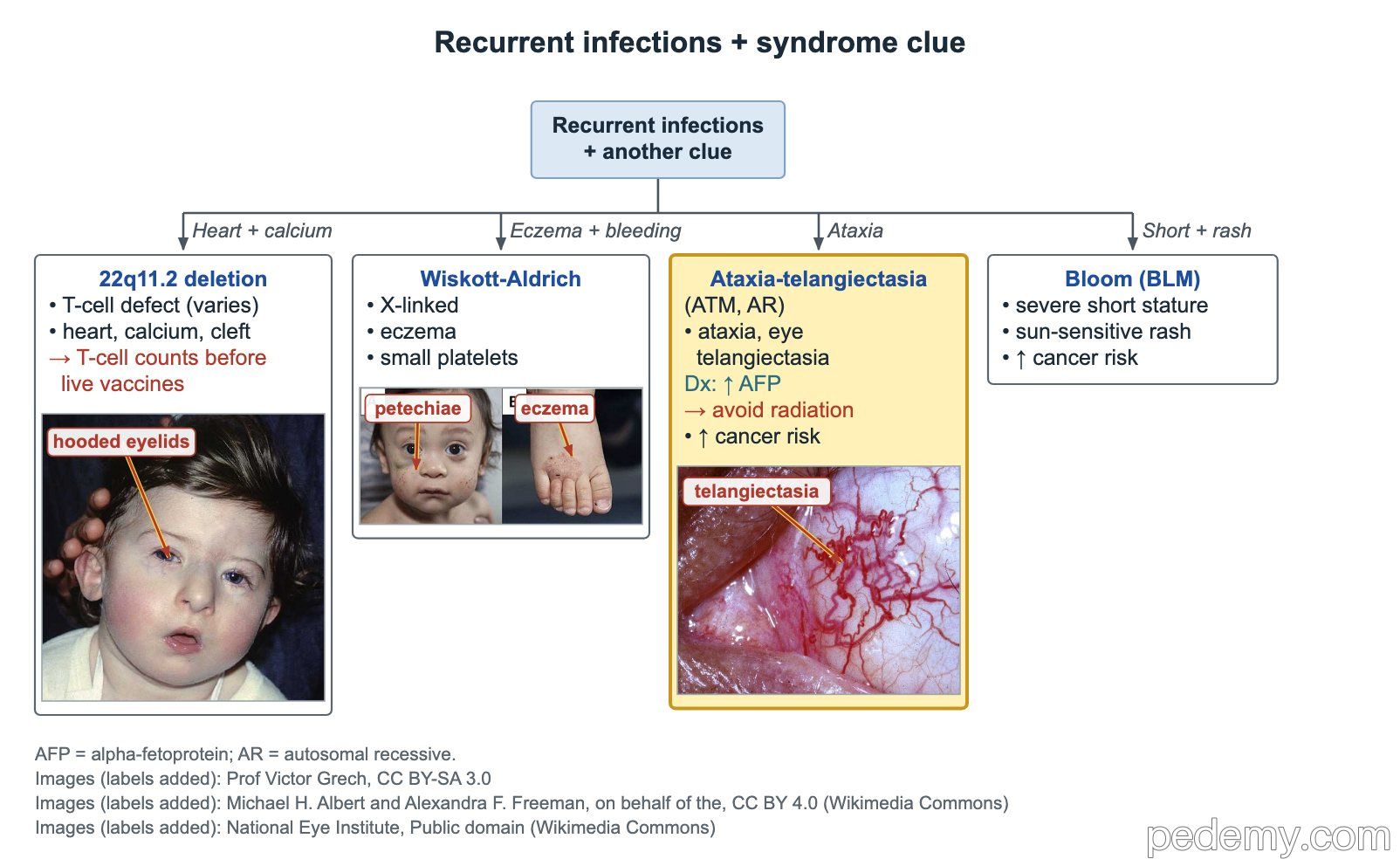
Both conditions are autosomal recessive and impair the cell's ability to repair DNA, so cancer risk is high.
In ataxia-telangiectasia, ionizing radiation causes extra DNA damage. Limit X-rays and CT, prefer MRI or ultrasound, and adjust radiotherapy and some chemotherapy if cancer develops.
| Feature | Ataxia-telangiectasia | Bloom syndrome |
|---|---|---|
| Gene | ATM | BLM (RecQ-family DNA helicase) |
| Key clues | Ataxia from toddler age, eye telangiectasia, infections | Severe prenatal and postnatal growth deficiency, sun-sensitive facial redness |
| Lab clue | Raised alpha-fetoprotein (AFP) | Increased sister chromatid exchange |
| Cancer | Leukemia and lymphoma | Many cancers, often at young ages |
| Care point | Avoid unnecessary ionizing radiation | Sun protection and cancer surveillance |
Common questions
Can children with 22q11.2 deletion get live vaccines?
Many can, but only after an immune assessment shows adequate T-cell counts and function. Children with severe T-cell deficiency should not get live vaccines.
Why avoid X-rays in ataxia-telangiectasia?
Cells in ataxia-telangiectasia cannot repair radiation damage well, so ionizing radiation adds to an already high cancer risk. MRI or ultrasound is preferred when imaging is needed.
Study this topic
Sources
- 2025 Inborn errors of immunity practice parameter (AAAAI, ACAAI, CIS; Ann Allergy Asthma Immunol)
- Updated clinical practice recommendations for children with 22q11.2 deletion syndrome (Genet Med 2023)
Written for Pedemy in our own words from the sources above; checked November 2026. For education only, not medical advice; check doses and local protocols before treating a patient. Pedemy is independent and not affiliated with or endorsed by the organizations cited.