

Main decision tree
Inherited kidney disease
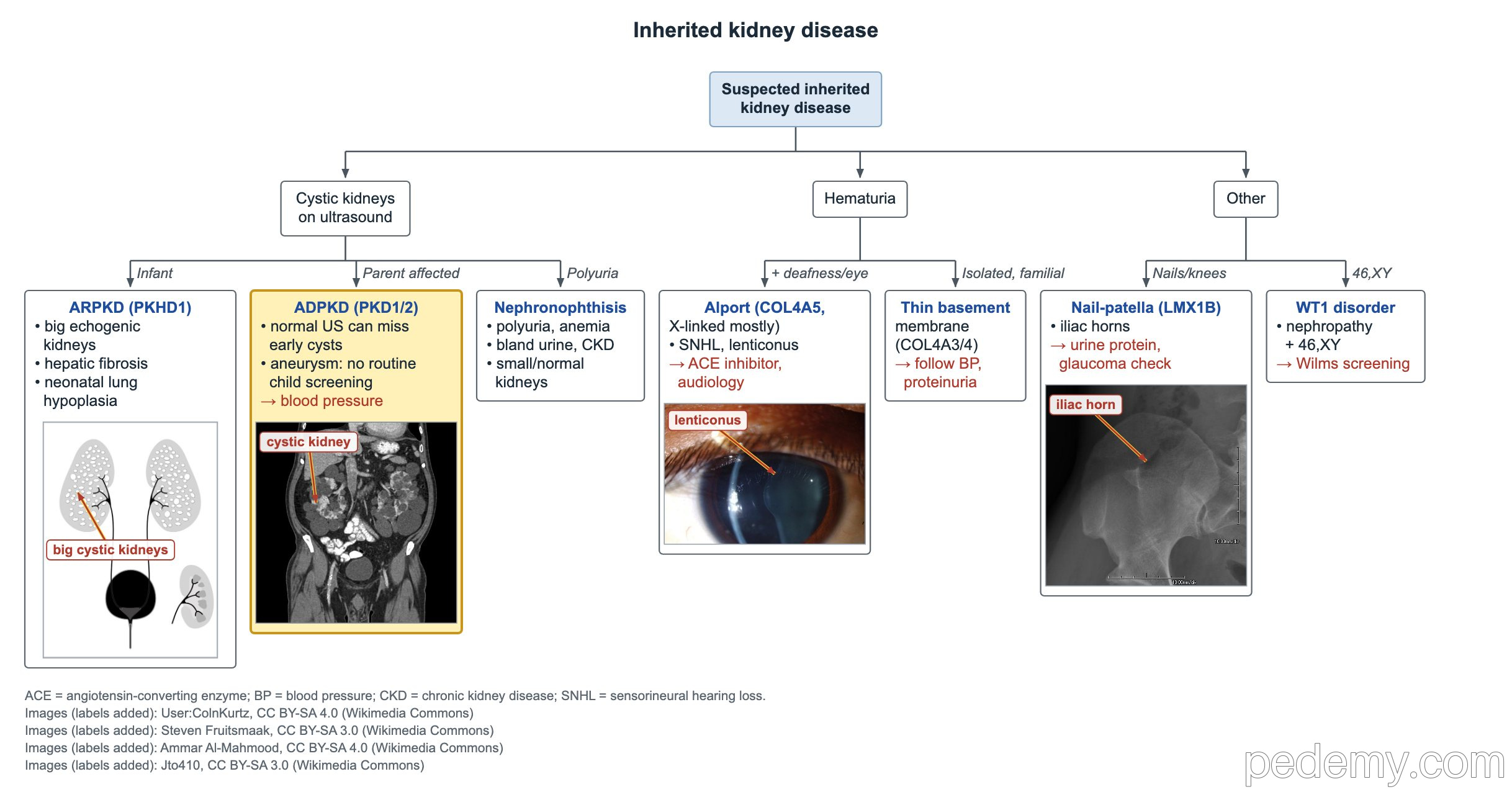
Key points
- A normal kidney ultrasound does not exclude ADPKD in a young at-risk child: cysts may not have formed yet.
- ADPKD: no routine intracranial aneurysm screening for children without symptoms; check blood pressure.
- ARPKD (PKHD1): large echogenic kidneys plus congenital hepatic fibrosis; 25% recurrence for each pregnancy.
- Nephronophthisis: polyuria, polydipsia, anemia, growth failure and progressive CKD with a bland urine.
- Alport syndrome: type IV collagen; hematuria + sensorineural hearing loss + lenticonus; start ACE inhibitor early.
- Nail-patella syndrome (LMX1B, AD): iliac horns, small patellae, nail dysplasia; screen urine protein and for glaucoma.
- WT1 disorder: early steroid-resistant nephrotic syndrome, 46,XY gonadal dysgenesis and Wilms tumor risk.
Autosomal dominant polycystic kidney disease (ADPKD)
ADPKD is caused by PKD1 or PKD2 variants and passes to 50% of children of an affected parent. Most children have no symptoms; cysts grow with age.
Because cysts may not be visible yet, a normal ultrasound in a young child of an affected parent does not rule ADPKD out. Genetic testing can answer the question when the result would change care.
- Check blood pressure regularly in at-risk and affected children; hypertension is often the first sign.
- Also look for proteinuria and flank pain or hematuria from cyst bleeding.
- Intracranial aneurysm is a known association, but routine screening of children without symptoms is not recommended.
- Severe early-onset ADPKD can look like ARPKD on ultrasound.
ARPKD and nephronophthisis
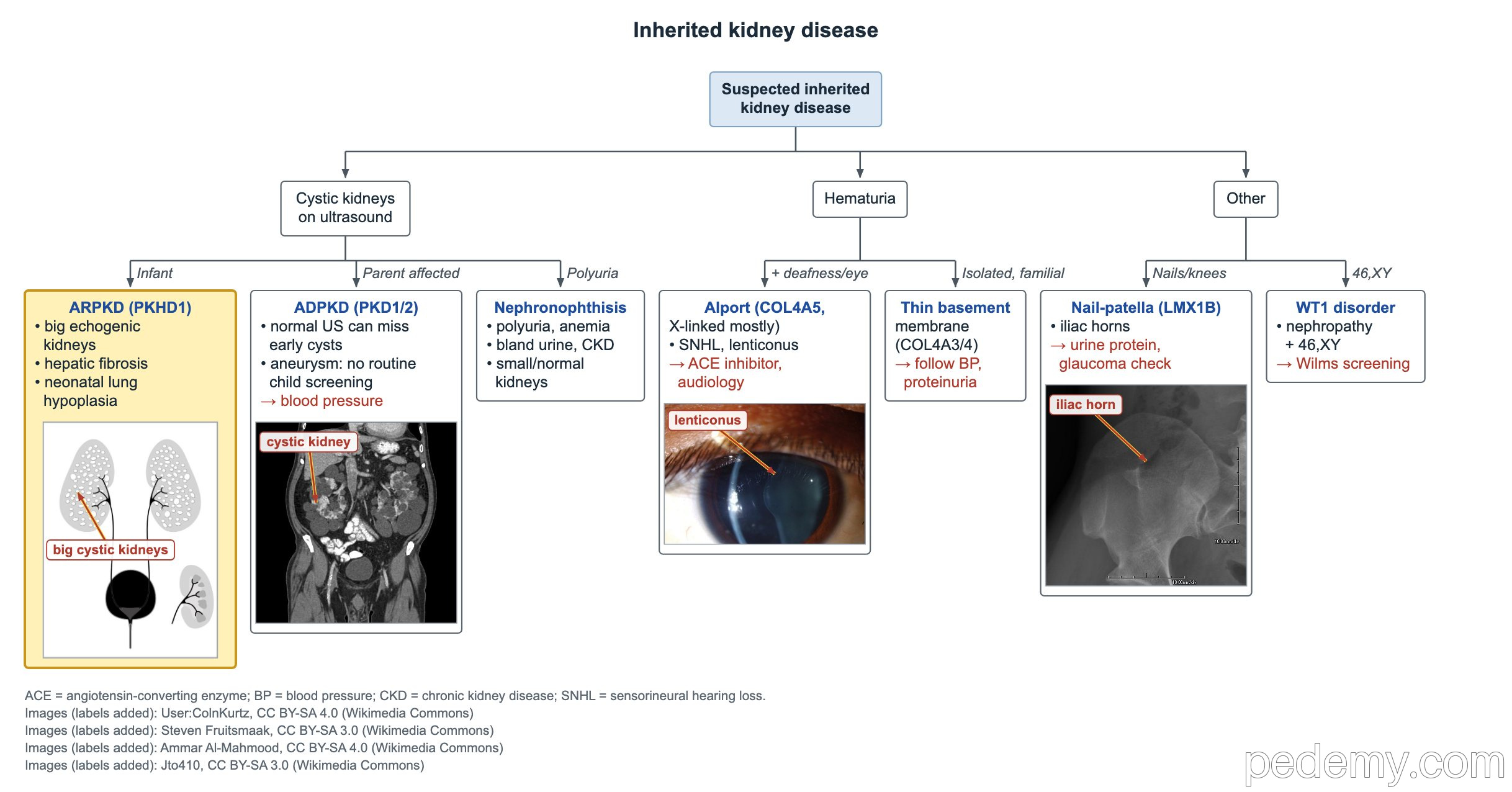
Autosomal recessive polycystic kidney disease (ARPKD) is usually caused by PKHD1. It presents in the fetus or infant with large, bright (echogenic) kidneys, and always involves the liver as congenital hepatic fibrosis.
Nephronophthisis is a recessive ciliopathy that presents later in childhood. The kidneys cannot concentrate urine, so polyuria and polydipsia come first; anemia and growth failure follow, and CKD progresses.
| Feature | ARPKD | Nephronophthisis |
|---|---|---|
| Age | Fetus, newborn, infant | Childhood to adolescence |
| Kidneys | Large, echogenic | Normal-sized or small; cysts at the corticomedullary junction |
| Clues | Oligohydramnios, lung hypoplasia, hepatic fibrosis, portal hypertension | Polyuria, polydipsia, anemia, growth failure |
| Urine | Often hypertension and impaired function early | Bland: little blood or protein |
| Inheritance | Autosomal recessive (25% recurrence) | Autosomal recessive |
Hematuria: Alport syndrome and thin basement membrane
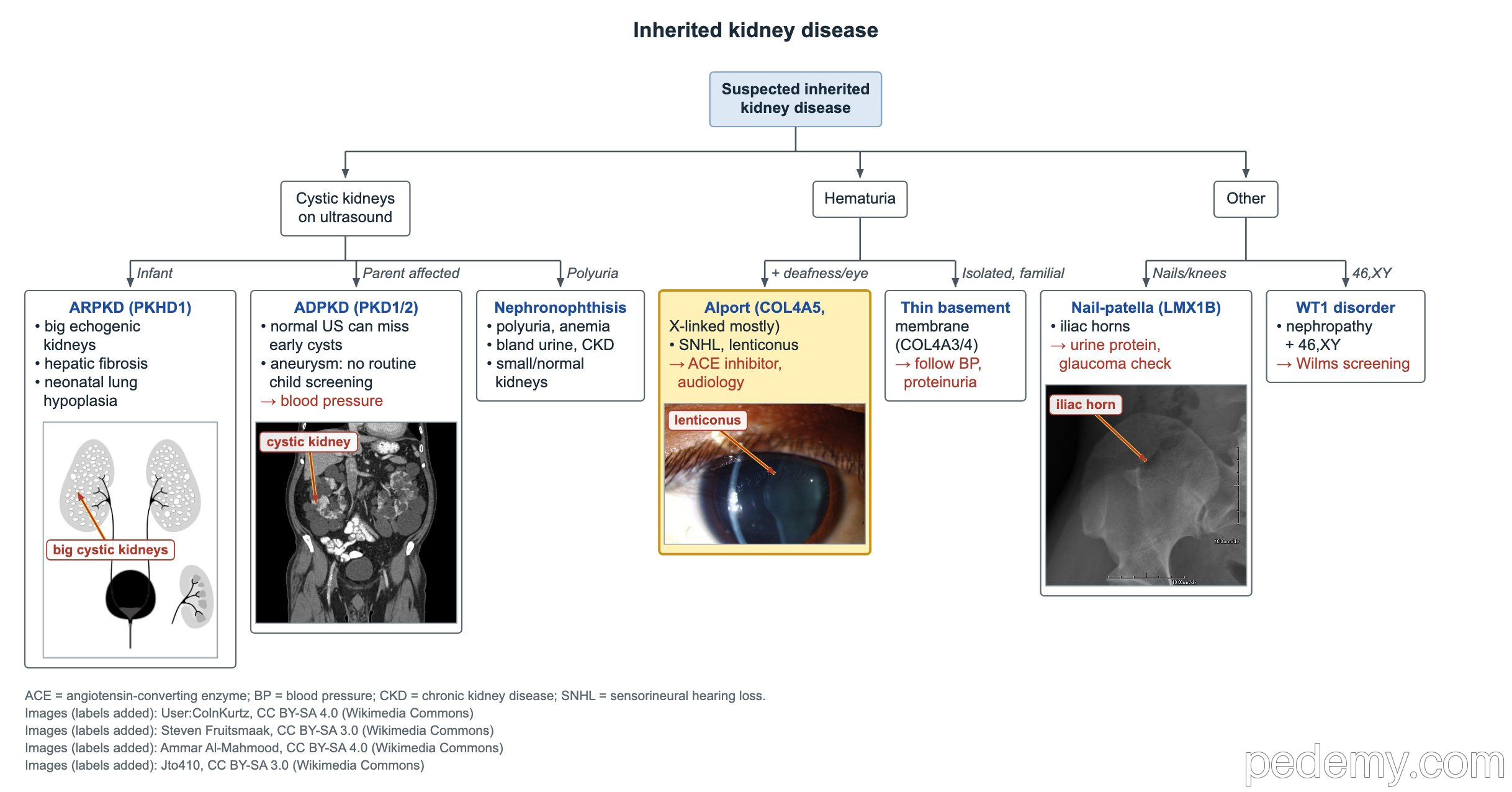
Alport syndrome is a type IV collagen disorder of the glomerular basement membrane, the inner ear and the eye. Classic disease is X-linked (COL4A5), so boys are affected more severely; COL4A3 and COL4A4 cause autosomal forms.
Persistent familial hematuria with a thin basement membrane is not always harmless. Many families carry a single COL4A3 or COL4A4 variant, which sits within the Alport spectrum and can lead to proteinuria and CKD later.
- Clues: persistent hematuria, sensorineural hearing loss, anterior lenticonus and retinal flecks.
- Genetic testing of COL4A3, COL4A4 and COL4A5 is the key diagnostic test.
- Start renin-angiotensin blockade (an ACE inhibitor) early to slow progression.
- Arrange regular audiology and eye checks.
- Thin basement membrane or a single COL4A3/4 variant: follow blood pressure and proteinuria for life.
Syndromic clues: nail-patella and WT1
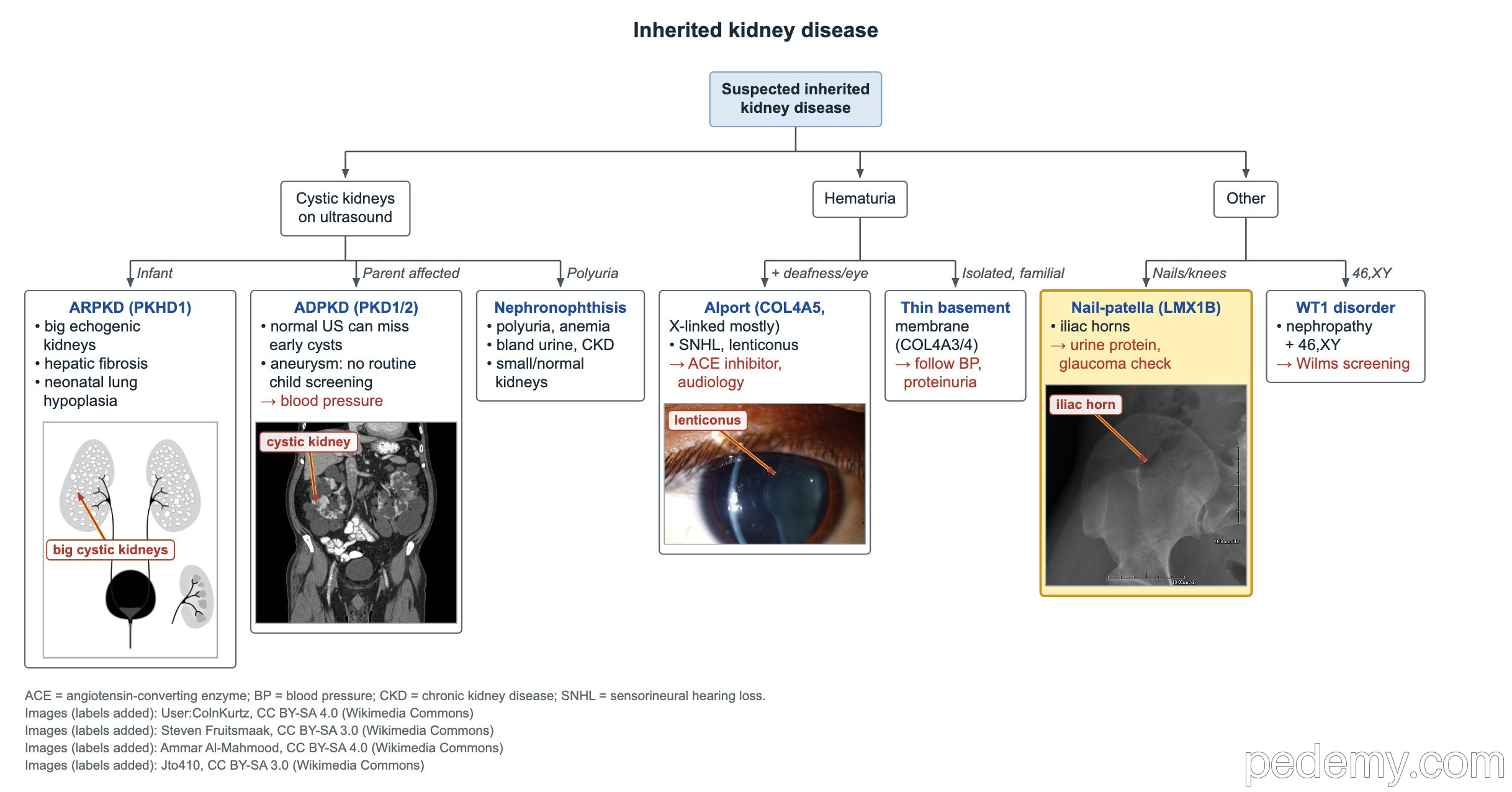
- Nail-patella syndrome: LMX1B, autosomal dominant. Dysplastic nails, small or absent patellae, elbow anomalies and iliac horns on pelvic X-ray.
- Nail-patella follow-up: check urine protein for kidney involvement and screen for glaucoma.
- WT1 disorder: early steroid-resistant nephrotic syndrome, 46,XY gonadal dysgenesis and a high Wilms tumor risk (the old Denys–Drash picture).
- WT1 follow-up: Wilms tumor screening with kidney ultrasound; gonadal assessment in 46,XY children.
Common questions
Can a normal ultrasound rule out polycystic kidney disease in a child?
No. In a young child of a parent with ADPKD, cysts may not be visible yet. Genetic testing can confirm or exclude the family variant.
Should children with ADPKD be screened for brain aneurysms?
Not routinely. Children without symptoms do not need aneurysm screening; it is considered later, mainly in adults with a family history of aneurysm or brain bleed.
Is thin basement membrane disease benign?
Not always. Many cases are caused by a single COL4A3 or COL4A4 variant in the Alport spectrum and need lifelong checks of blood pressure and urine protein.
Study this topic
Sources
- KDOQI US commentary on the KDIGO 2025 ADPKD guideline (Am J Kidney Dis 2026)
- Diagnosis, management and treatment of Alport syndrome: 2024 guideline (Nephrol Dial Transplant)
- AACR 2024: Surveillance for Wilms tumor and hepatoblastoma in predisposition syndromes (Clin Cancer Res)
Written for Pedemy in our own words from the sources above; checked November 2026. For education only, not medical advice; check doses and local protocols before treating a patient. Pedemy is independent and not affiliated with or endorsed by the organizations cited.