

Main decision tree
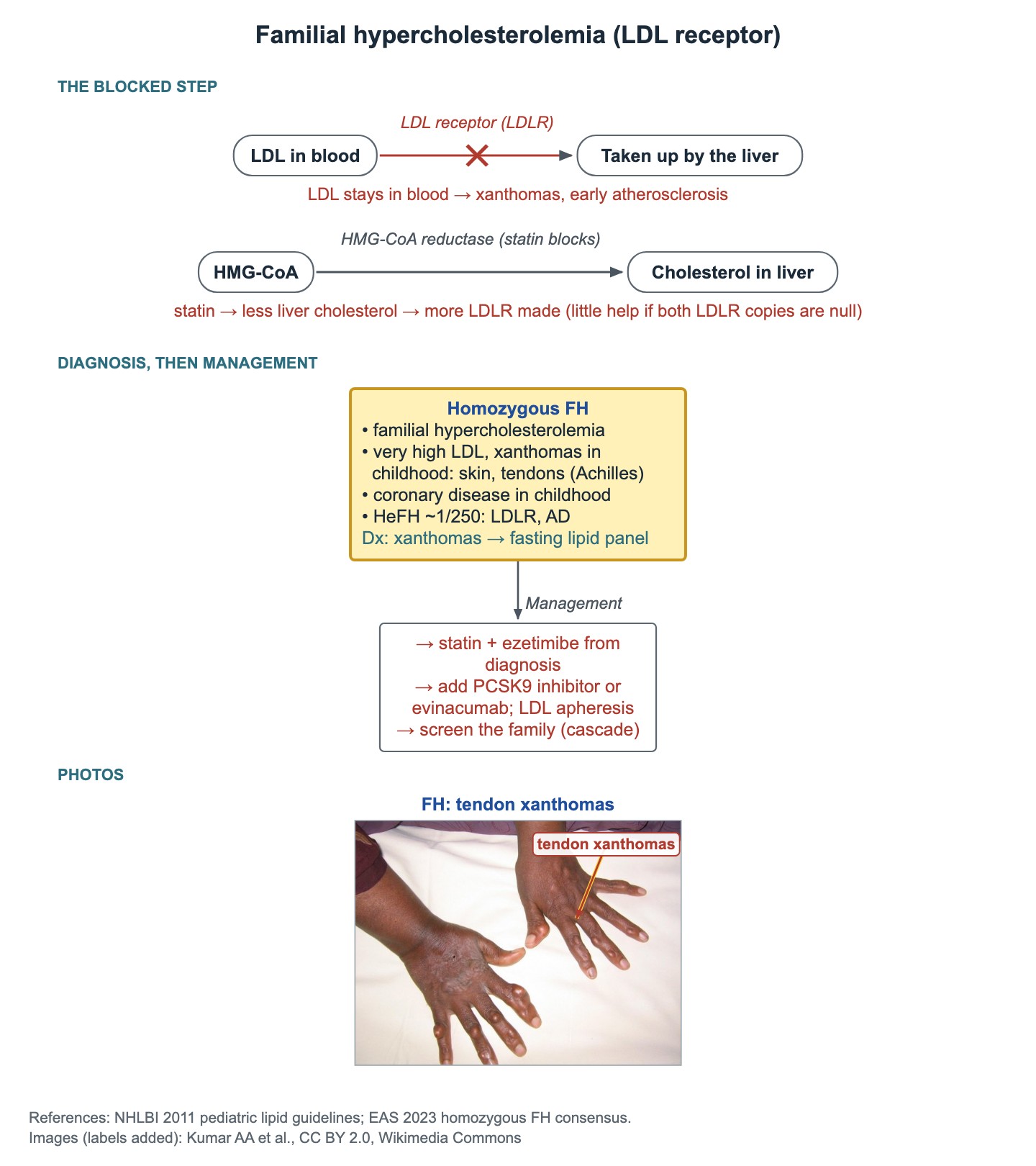
Familial hypercholesterolemia (LDL receptor)
Key points
- Heterozygous familial hypercholesterolemia affects about 1 in 250 people; most cases are LDL receptor variants, autosomal dominant.
- A child with xanthomas or xanthelasma needs a fasting lipid panel.
- Homozygous FH: very high LDL, skin and tendon xanthomas and coronary disease in childhood; statin plus ezetimibe from diagnosis.
- Menkes disease: boy with seizures, hypotonia, regression and kinky hair; low copper and ceruloplasmin; ATP7A, X-linked.
- Menkes subdural hemorrhages can mimic abuse.
- X-ALD: school-age boy with new inattention and falling grades; plasma very-long-chain fatty acids; early cerebral disease → stem cell transplant.
- Smith–Lemli–Opitz: 2–3 toe syndactyly, ptosis, cleft palate, hypospadias; high 7-dehydrocholesterol; give dietary cholesterol.
Familial hypercholesterolemia (FH)
In FH the LDL receptor cannot clear LDL from the blood, so LDL stays high from birth. Most cases are LDL receptor (LDLR) variants with autosomal dominant inheritance. Statins lower liver cholesterol, which makes the liver produce more LDL receptors; this helps little when both LDLR copies are null.
Heterozygous FH is common, about 1 in 250. Homozygous or compound heterozygous FH is rare and severe.
- Clues: yellow tuberous xanthomas on knees or elbows, xanthelasma, thickened Achilles tendons (tendon xanthomas), a parent with early heart attack.
- Next test for a child with xanthomas: a fasting lipid panel.
- Homozygous FH: extremely high LDL, xanthomas in childhood, and symptomatic coronary artery disease in childhood or adolescence.
- Homozygous FH treatment: statin plus ezetimibe from diagnosis; add a PCSK9 inhibitor or evinacumab; lipoprotein apheresis.
- Screen relatives of every child with FH (cascade screening).
Lipid screening in children
- Universal lipid screening once at 9–11 years and again at 17–21 years.
- Earlier targeted screening (from age 2) when a parent or grandparent has early heart disease or very high cholesterol, or when the child has other risk factors.
- In heterozygous FH, statins usually start from about age 8–10 years if LDL stays high on diet.
Menkes disease
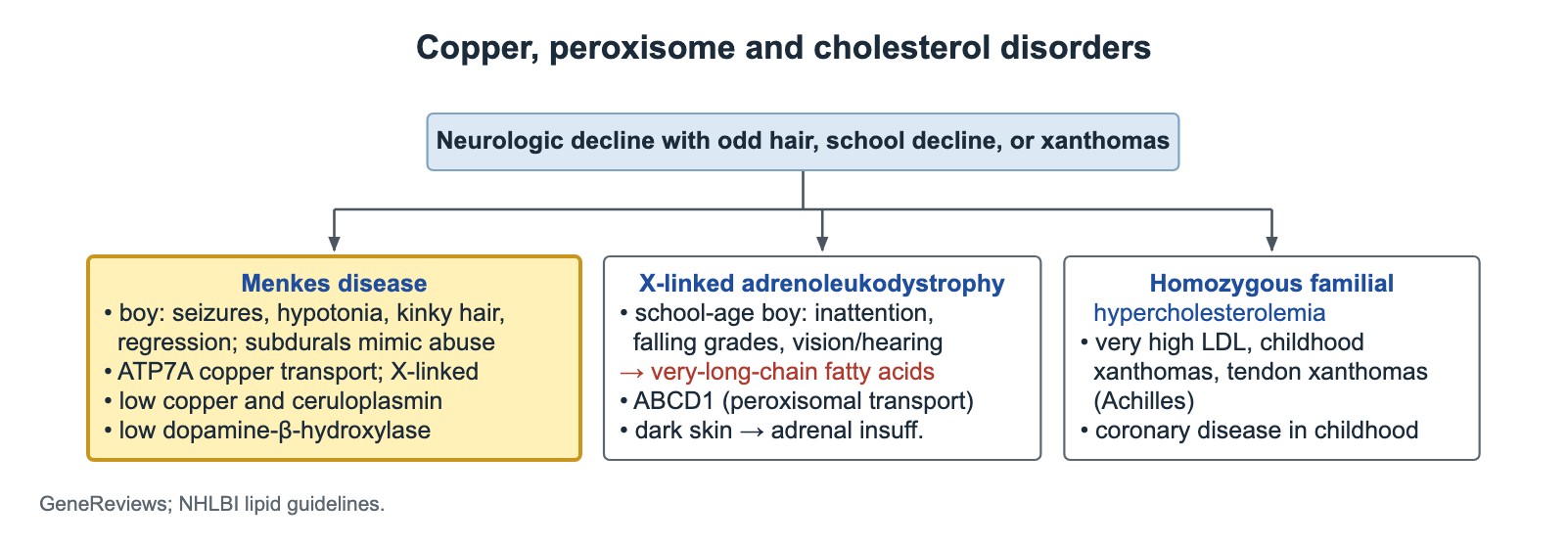
Menkes disease is a defect of the ATP7A copper transporter, inherited as X-linked recessive, so it affects boys. Copper cannot reach copper-dependent enzymes, including dopamine-beta-hydroxylase, which changes catecholamine levels.
- Infant boy with seizures, hypotonia, developmental regression and sparse, kinky, brittle hair.
- Subdural hemorrhage can occur and can be mistaken for abusive head trauma.
- Labs: low serum copper and low ceruloplasmin.
- Early copper replacement started in the first weeks of life may help some infants.
X-linked adrenoleukodystrophy (X-ALD)
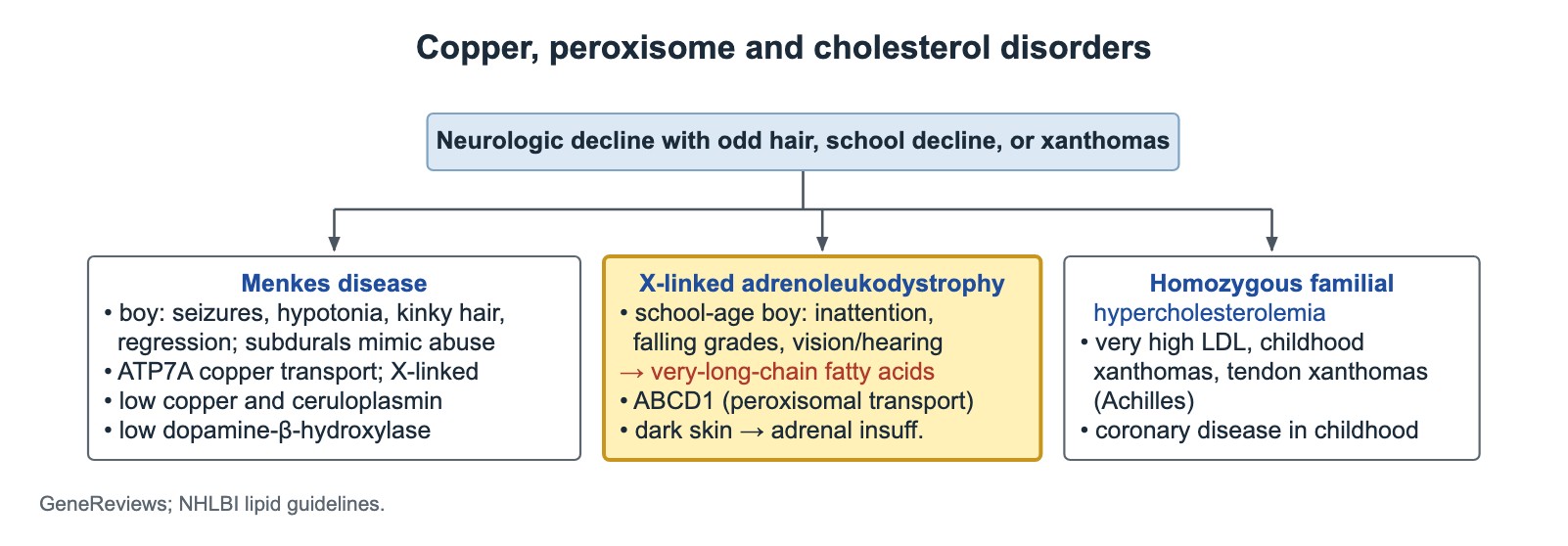
X-ALD is caused by variants in ABCD1, a peroxisomal transporter, so very-long-chain fatty acids cannot be broken down. It is on the US newborn screening panel.
- Cerebral form: a previously well school-age boy with new ADHD-like inattention, falling grades, and vision or hearing problems.
- Test: plasma very-long-chain fatty acids.
- Hyperpigmented skin, for example over knees and elbows, signals primary adrenal insufficiency; check adrenal function in every boy with X-ALD.
- Early cerebral disease is treated with hematopoietic stem cell transplant, so boys found by screening get regular brain MRI.
Smith–Lemli–Opitz syndrome (SLOS)
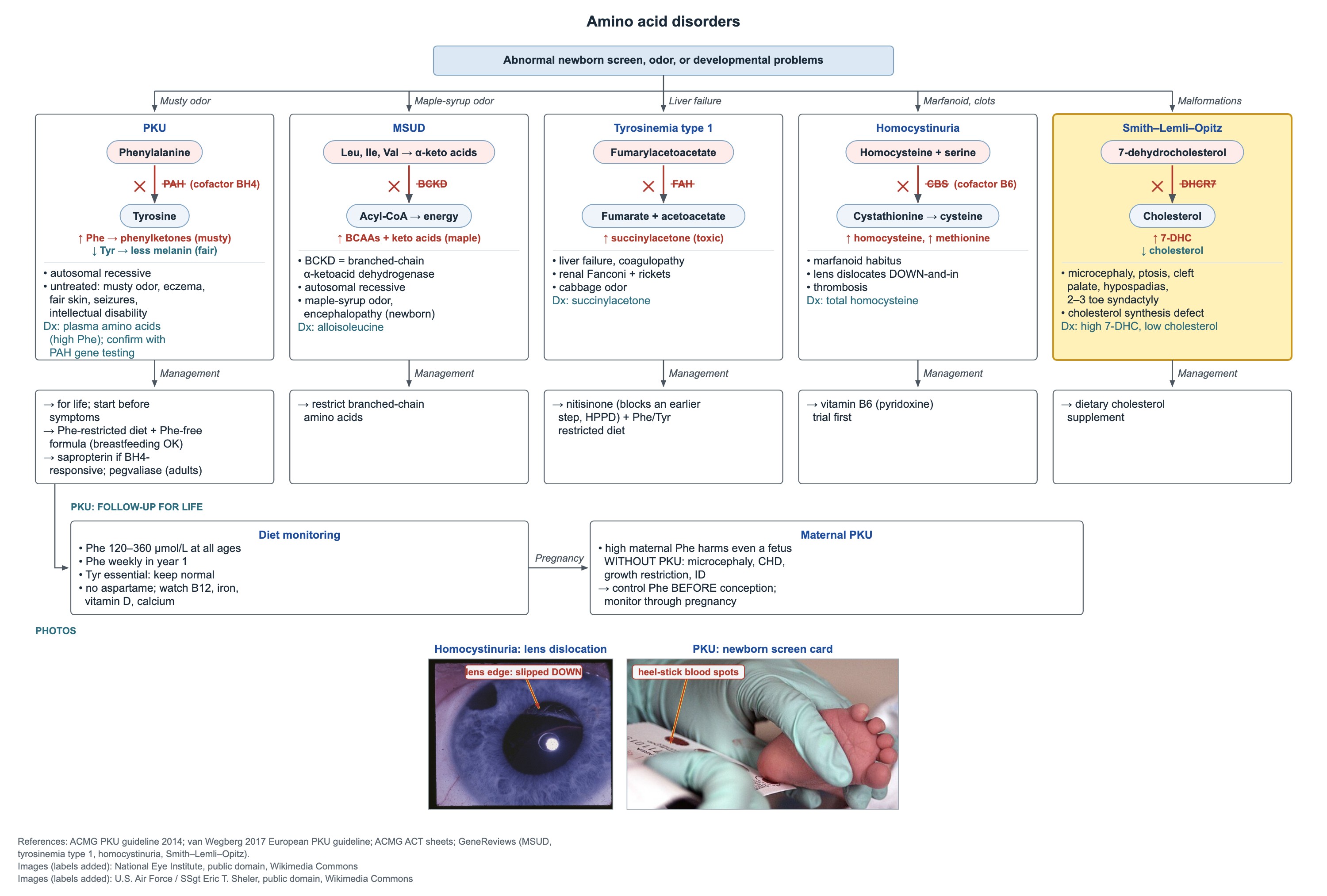
SLOS is 7-dehydrocholesterol reductase (DHCR7) deficiency, the last step of cholesterol synthesis, inherited as autosomal recessive. 7-dehydrocholesterol rises and cholesterol is low.
- Newborn with microcephaly, ptosis, cleft palate, hypospadias or ambiguous genitalia, and syndactyly of the 2nd and 3rd toes.
- Later: intellectual disability and behavior problems.
- Lab: high 7-dehydrocholesterol with low cholesterol.
SLOS treatment
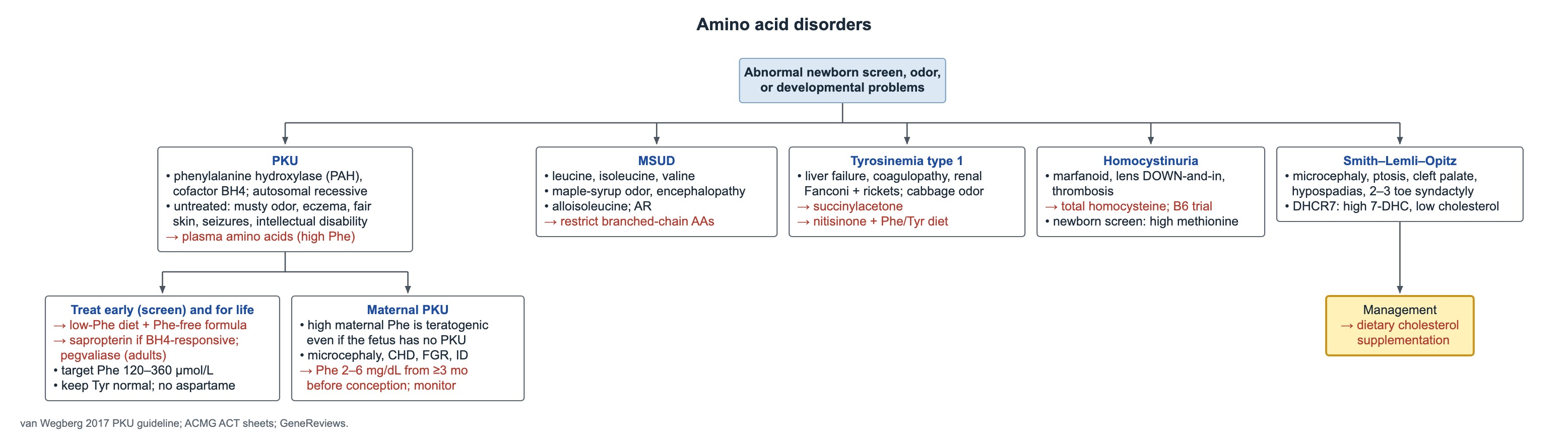
Treatment is dietary cholesterol supplementation, with supportive care for feeding, development and behavior.
Common questions
What does a child with xanthomas need first?
A fasting lipid panel. Xanthomas in childhood suggest severe, often homozygous, familial hypercholesterolemia.
How common is familial hypercholesterolemia?
Heterozygous FH affects about 1 in 250 people. Homozygous FH is rare.
What test diagnoses adrenoleukodystrophy?
Plasma very-long-chain fatty acids, confirmed with ABCD1 gene testing.
Study this topic
Sources
- NHLBI Expert Panel: Cardiovascular health and risk reduction in children (Pediatrics 2011)
- EAS 2023 consensus statement on homozygous familial hypercholesterolaemia (Eur Heart J)
- International recommendations for diagnosis and management of X-ALD (Neurology 2022)
- GeneReviews: Smith-Lemli-Opitz syndrome
Written for Pedemy in our own words from the sources above; checked November 2026. For education only, not medical advice; check doses and local protocols before treating a patient. Pedemy is independent and not affiliated with or endorsed by the organizations cited.