

Main decision tree
Lysosomal lipid storage disorders
Key points
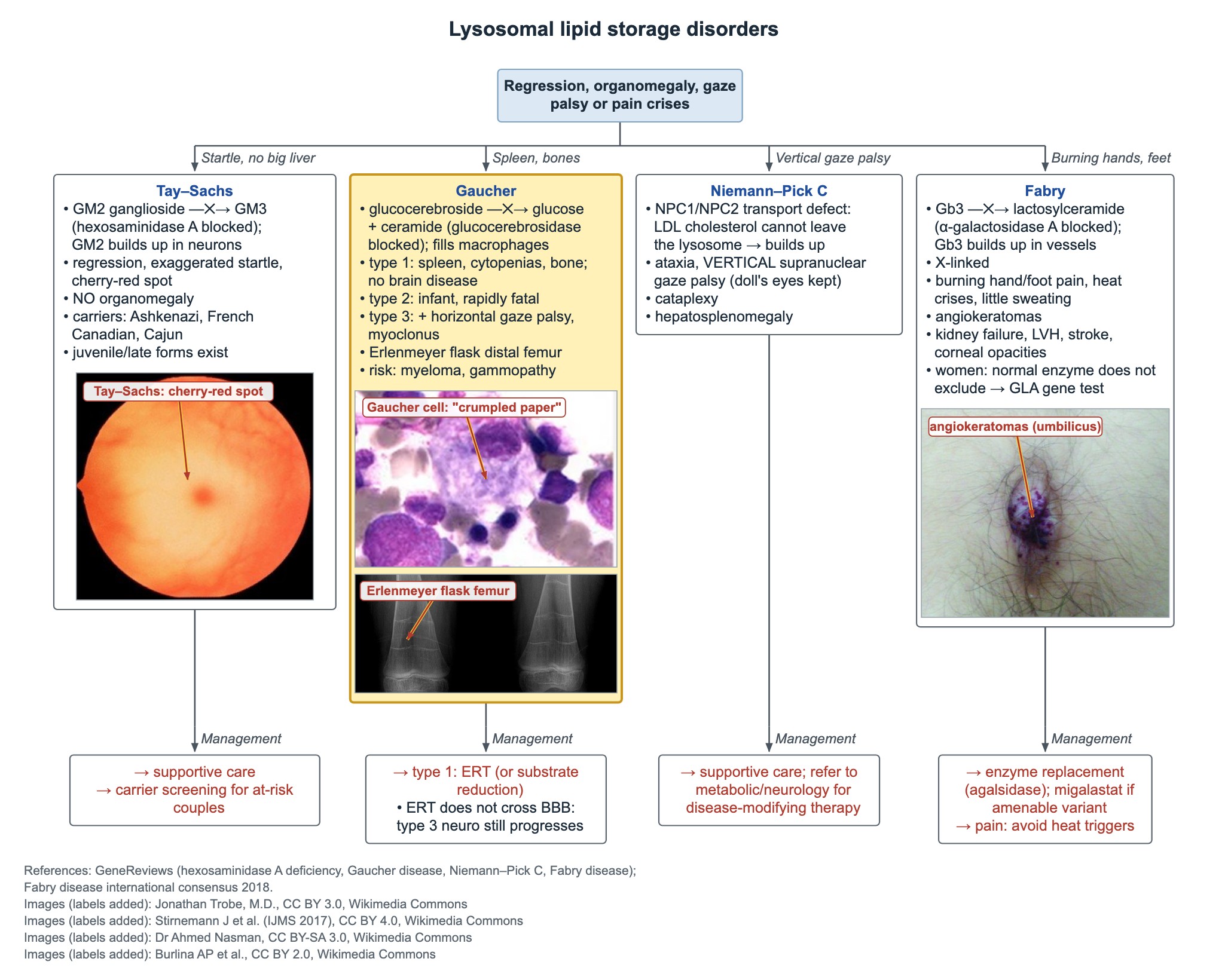
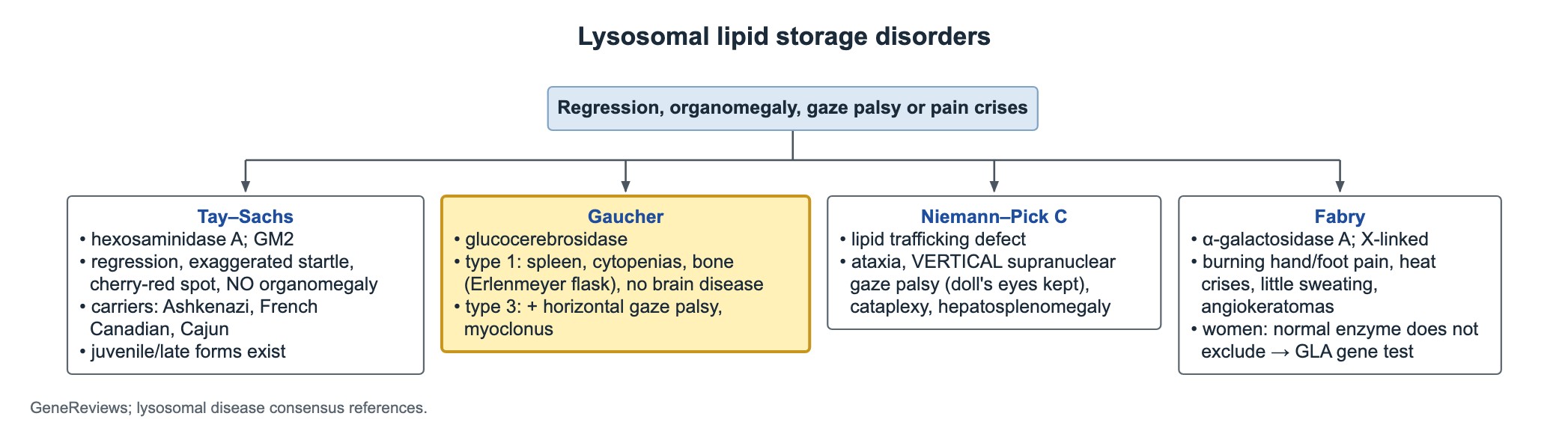
- Gaucher disease: glucocerebrosidase deficiency (GBA1), autosomal recessive; big spleen, cytopenias, bone crises, Erlenmeyer flask femur.
- Gaucher type 1 has no primary brain disease; type 2 is infantile and rapidly fatal; type 3 adds horizontal gaze palsy and myoclonus.
- Gaucher type 1: enzyme replacement (substrate reduction is an option); ERT does not cross the blood–brain barrier.
- Tay–Sachs: hexosaminidase A, GM2 ganglioside; regression, exaggerated startle, cherry-red spot and NO organomegaly.
- Niemann–Pick C: ataxia, vertical supranuclear gaze palsy, cataplexy and hepatosplenomegaly.
- Fabry disease: X-linked alpha-galactosidase A deficiency; burning hand and foot pain, little sweating, angiokeratomas.
- A symptomatic female with normal alpha-galactosidase A activity still needs GLA gene testing.
Gaucher disease
Gaucher disease is glucocerebrosidase (beta-glucosidase) deficiency from GBA1 variants, inherited as autosomal recessive. Glucocerebroside fills macrophages, which look like crumpled paper on marrow smears. It is the most common lysosomal storage disease, and type 1 is common in Ashkenazi Jewish families.
- Massive spleen, big liver, anemia and low platelets.
- Bone: pain and bone crises, osteonecrosis, osteopenia, pathologic fractures.
- X-ray: Erlenmeyer flask flaring of the distal femur.
- Associated risks: polyclonal and monoclonal gammopathy and multiple myeloma.
- Diagnosis: low glucocerebrosidase activity in white blood cells, confirmed by GBA1 testing.
Gaucher types 1, 2 and 3
| Type | Onset | Brain involvement | Key features |
|---|---|---|---|
| Type 1 (non-neuronopathic) | Any age | No primary neurologic disease | Spleen, cytopenias, bone disease |
| Type 2 (acute neuronopathic) | Infancy | Severe, rapidly progressive | Usually fatal in early childhood |
| Type 3 (subacute neuronopathic) | Childhood | Slower | Horizontal gaze palsy, myoclonic seizures, plus type 1 features |
Gaucher treatment
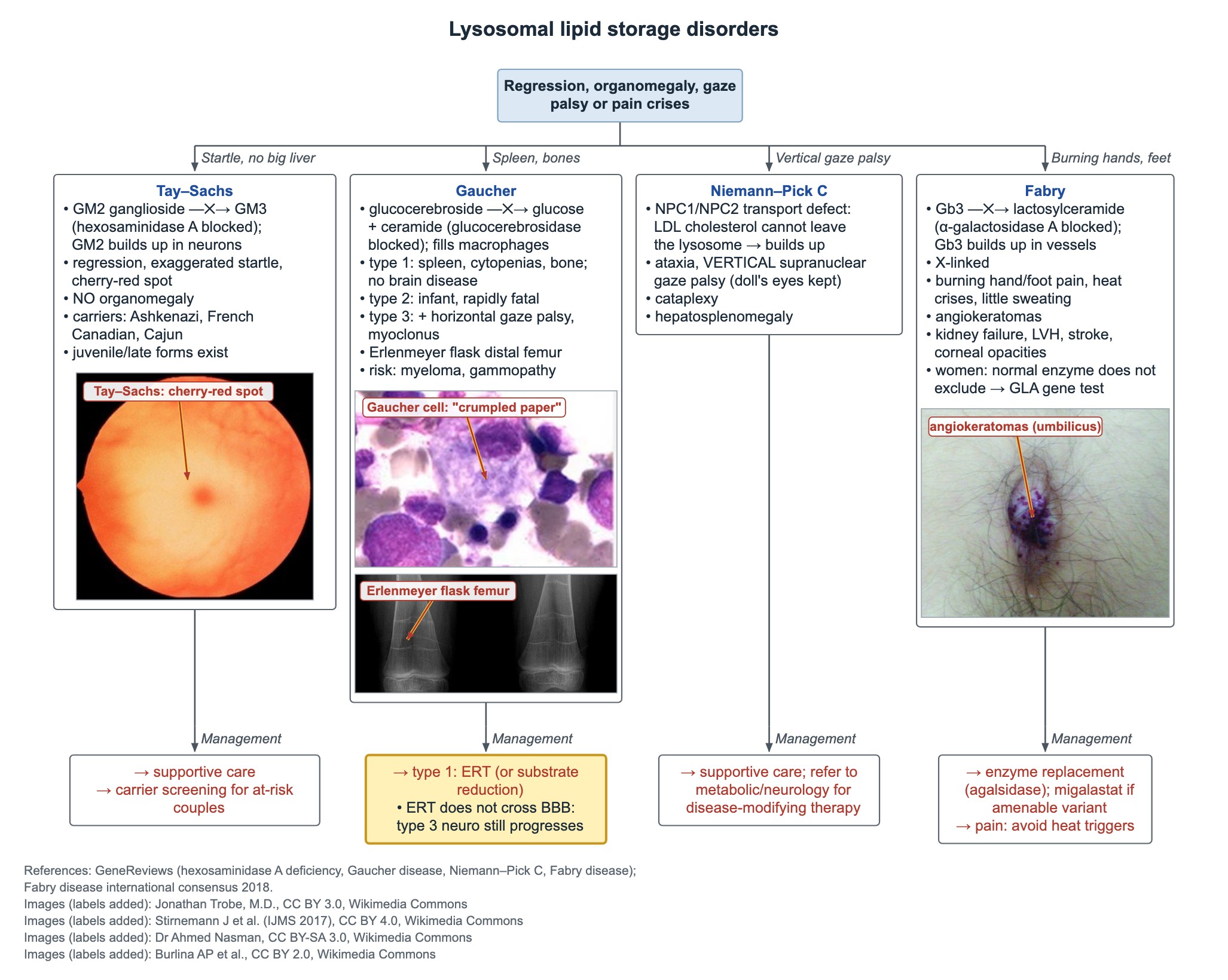
- Type 1: enzyme replacement therapy (for example imiglucerase) is first line; substrate reduction therapy is an option.
- Treatment shrinks the spleen and liver, raises blood counts and reduces bone disease.
- Enzyme replacement does not cross the blood–brain barrier, so the neurologic disease of type 3 still progresses.
Tay–Sachs disease
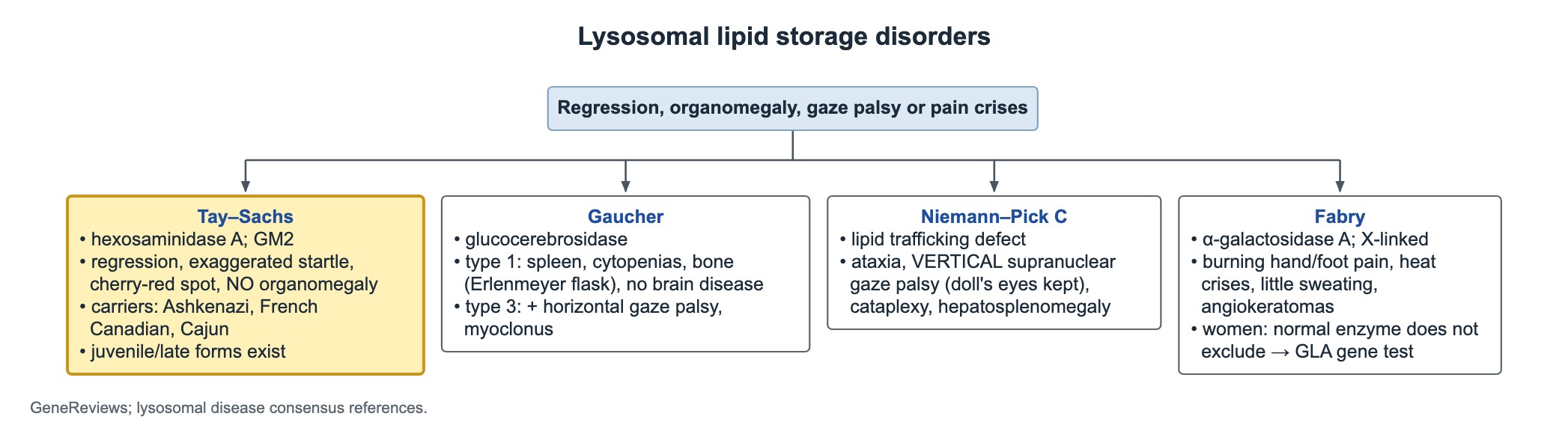
Tay–Sachs is hexosaminidase A deficiency (HEXA), inherited as autosomal recessive. GM2 ganglioside builds up in neurons.
- Infant who loses milestones, with an exaggerated startle to sound and a cherry-red spot on the macula.
- Liver and spleen are not enlarged, which separates it from many other storage diseases.
- Juvenile and late-onset forms also exist.
- High carrier rates: Ashkenazi Jewish, French Canadian and Louisiana Cajun populations.
- Care is supportive; carrier screening is offered to at-risk couples.
Niemann–Pick disease type C
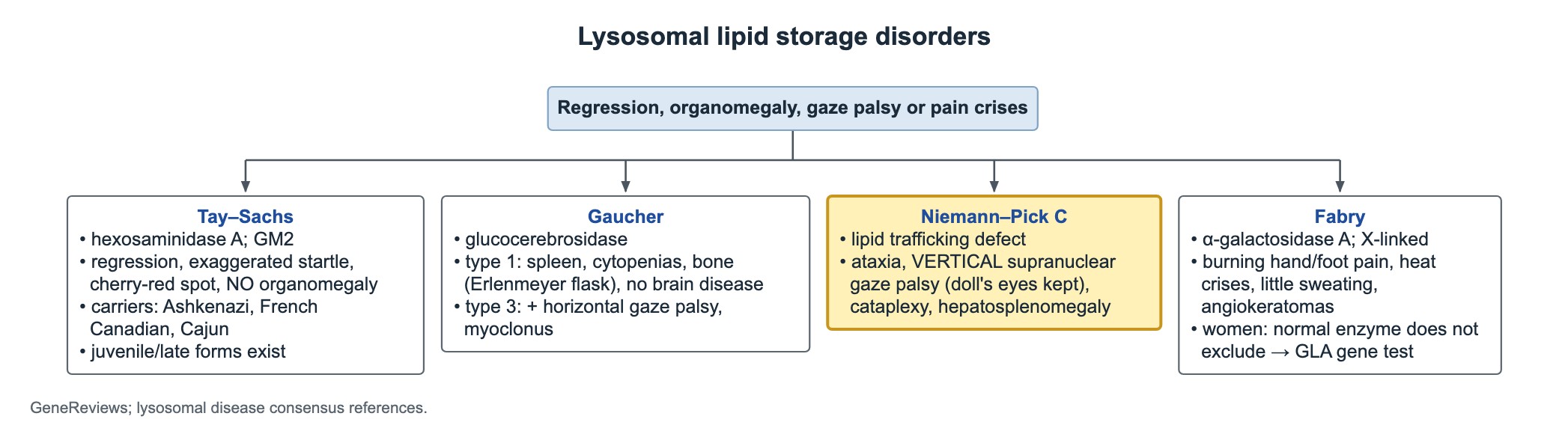
Niemann–Pick type C is a defect of NPC1 or NPC2, which move cholesterol out of the lysosome. The primary problem is impaired intracellular lipid trafficking, not a missing degrading enzyme.
- Child with ataxia and vertical supranuclear gaze palsy: voluntary vertical eye movements are lost while reflex doll's-eye movements are relatively preserved.
- Cataplexy: sudden loss of muscle tone triggered by laughter or emotion.
- Hepatosplenomegaly, sometimes with neonatal cholestasis.
- Supportive care and referral to metabolic and neurology teams for disease-modifying therapy.
Fabry disease
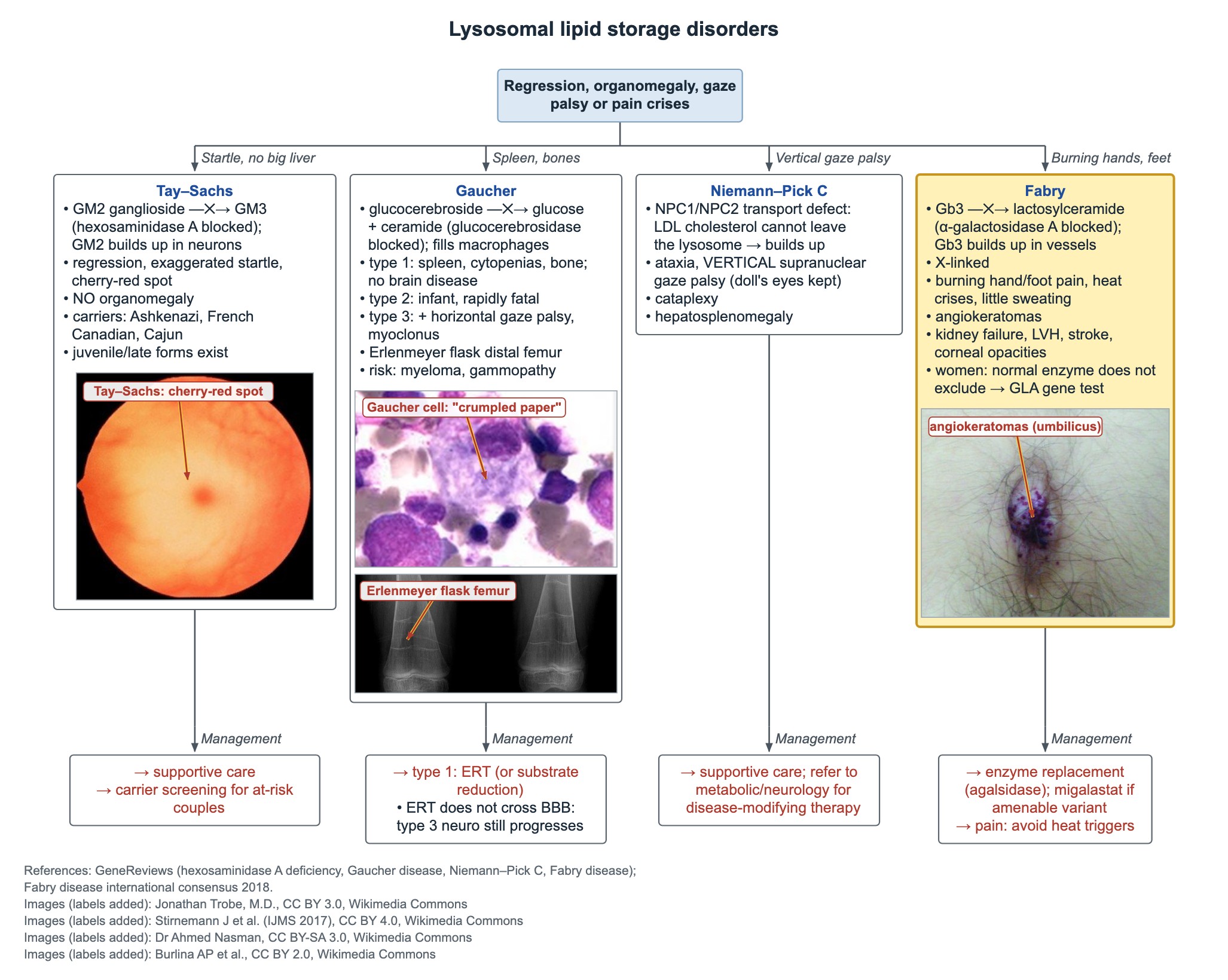
Fabry disease is alpha-galactosidase A deficiency (GLA), inherited as X-linked. Globotriaosylceramide (Gb3) builds up in blood vessels, nerves, kidneys and heart. Boys are usually most affected, but many women also have symptoms.
- Child or teen with burning pain in the hands and feet, pain crises triggered by heat, fever or exercise, and little sweating.
- Angiokeratomas: small dark-red vascular skin spots, often around the umbilicus and the bathing-trunk area.
- Corneal opacities on slit-lamp exam.
- Later organ damage: kidney failure, left ventricular hypertrophy and stroke.
- Women can have normal enzyme activity, so a normal level does not exclude Fabry; test the GLA gene.
- Treatment: enzyme replacement (agalsidase), or migalastat for amenable variants; avoid heat triggers.
Common questions
What is the difference between Tay–Sachs and Niemann–Pick?
Both can show a cherry-red spot, but Tay–Sachs has no liver or spleen enlargement. Niemann–Pick C presents with ataxia, vertical gaze palsy, cataplexy and hepatosplenomegaly.
Does enzyme replacement treat neurologic Gaucher disease?
No. The enzyme does not cross the blood–brain barrier, so it treats the spleen, blood and bone disease but not the brain disease of type 3.
Can women have Fabry disease?
Yes. It is X-linked, but many heterozygous women have symptoms. Their enzyme activity can be normal, so GLA gene testing is needed.
Study this topic
Sources
- GeneReviews: Gaucher disease
- GeneReviews: Hexosaminidase A deficiency
- Consensus clinical management guidelines for Niemann-Pick disease type C (Orphanet J Rare Dis 2018)
- Fabry disease revisited: management and treatment recommendations (Mol Genet Metab 2018)
Written for Pedemy in our own words from the sources above; checked November 2026. For education only, not medical advice; check doses and local protocols before treating a patient. Pedemy is independent and not affiliated with or endorsed by the organizations cited.