

Main decision tree
MCAD and fatty-acid oxidation defects
Key points
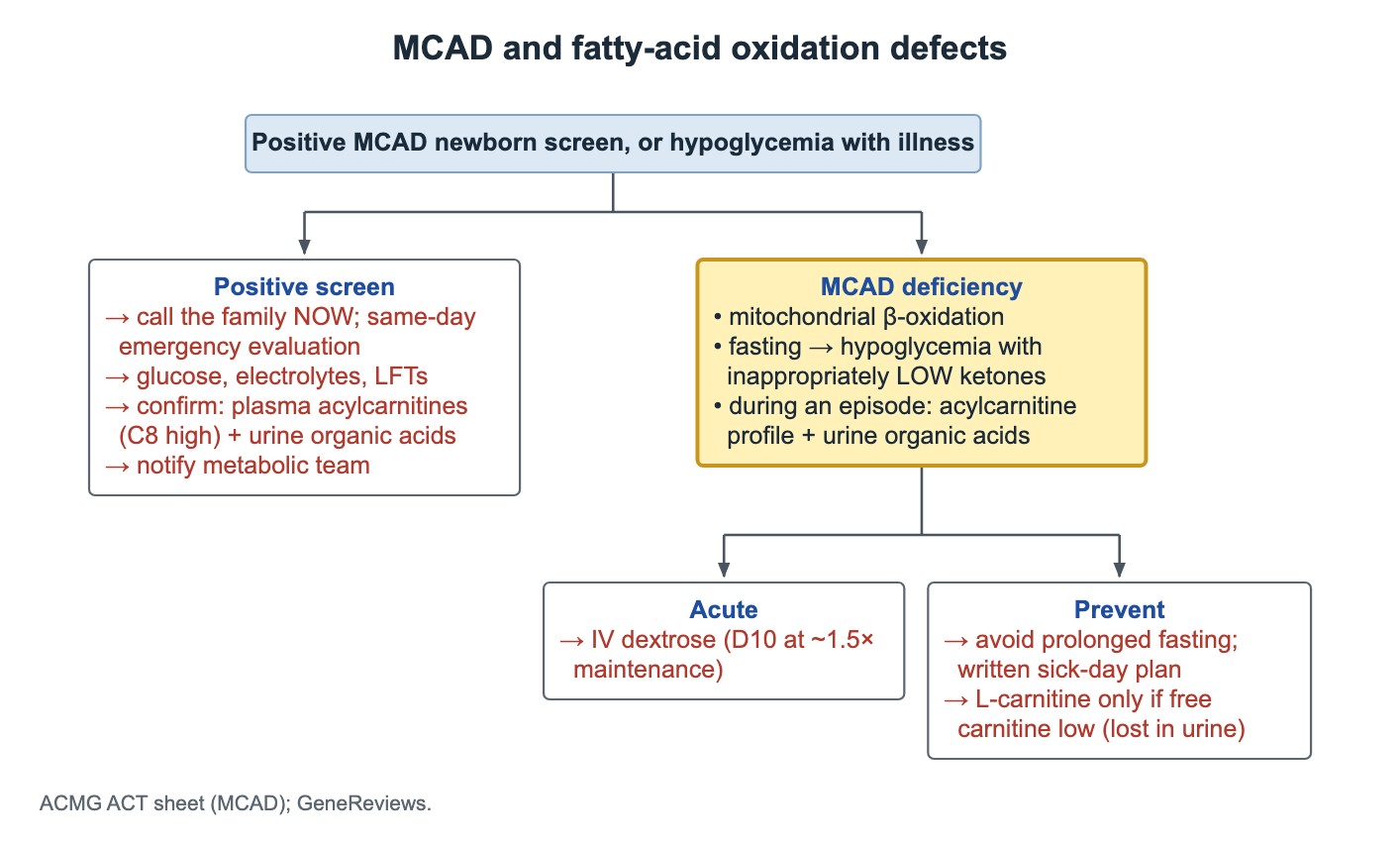
- Fatty-acid oxidation disorders cause hypoglycemia with inappropriately low ketones (hypoketotic hypoglycemia).
- MCAD deficiency: mitochondrial beta-oxidation defect; the newborn screen marker is high C8 (octanoylcarnitine).
- Abnormal MCAD screen: contact the family the same day and check glucose, electrolytes and liver tests; confirm with acylcarnitines and urine organic acids.
- MCAD crisis with vomiting or hypoglycemia: IV dextrose (D10 at about 1.5 × maintenance).
- Prevention: avoid prolonged fasting and give the family a written sick-day plan; L-carnitine only if free carnitine is low.
- mtDNA disorders pass from the mother, but nuclear-gene and de novo cases do not follow that rule.
- MELAS: short, deaf child with stroke-like posterior lesions and high lactate; most often m.3243A>G; onset about 2–15 years.
MCAD deficiency and fatty-acid oxidation defects
Medium-chain acyl-CoA dehydrogenase (MCAD) deficiency is the most common fatty-acid oxidation disorder, inherited as autosomal recessive. During fasting the body cannot burn fat for energy or make ketones, so glucose runs out and ketones stay low.
A child who is well between episodes becomes vomiting, lethargic and hypoglycemic during a fasting illness. Untreated episodes can cause seizures, coma and sudden death.
- Pattern: fasting or illness → hypoglycemia with low ketones.
- Marker: high C8 (octanoylcarnitine) on the acylcarnitine profile.
- During an episode, send a plasma acylcarnitine profile and urine organic acids before or as glucose is given.
- Contrast: hypoglycemia with ketones plus urine reducing substances that are not glucose suggests galactosemia or hereditary fructose intolerance.
Abnormal MCAD newborn screen
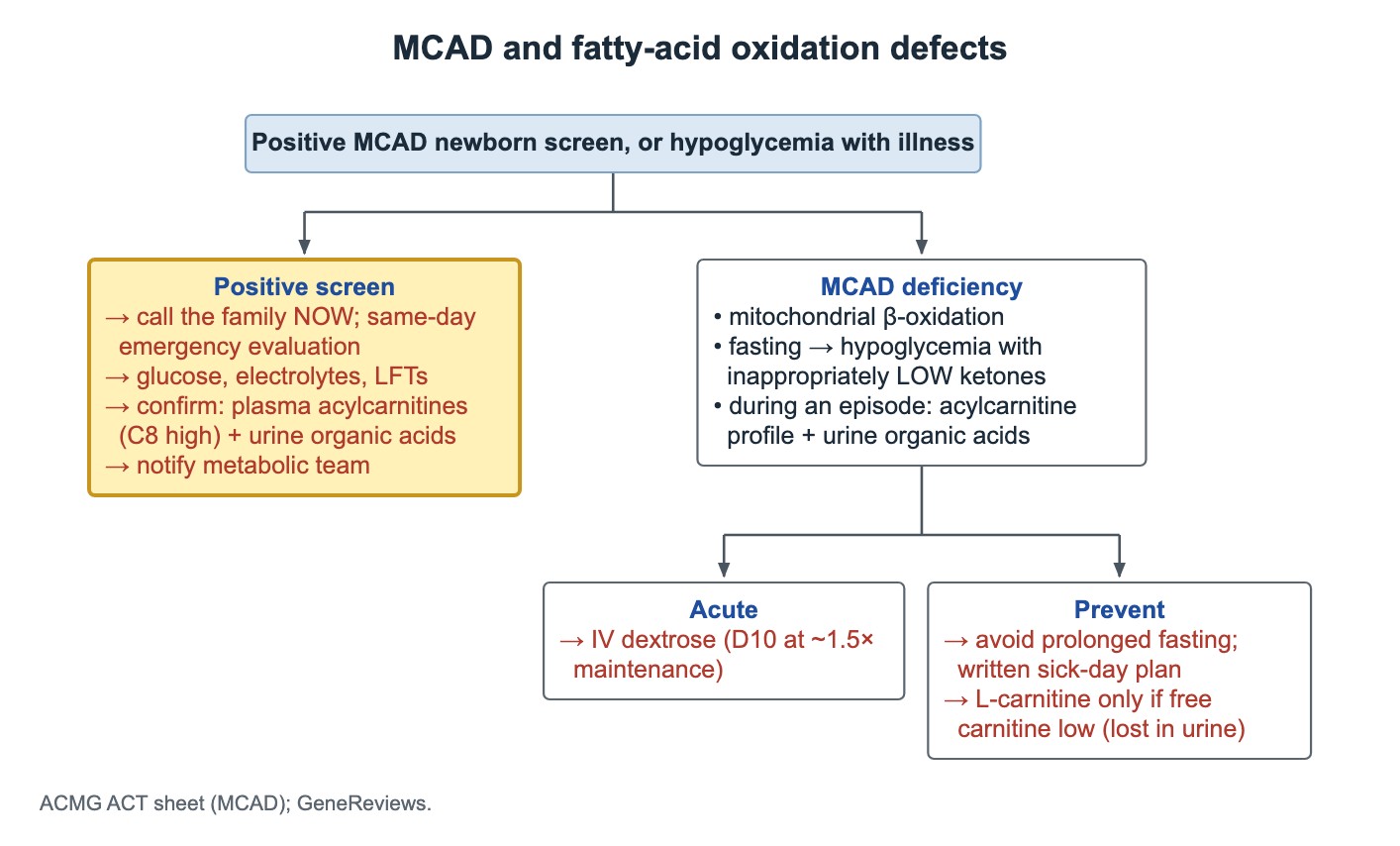
A positive MCAD screen is urgent even when the baby looks well, because the first episode can be fatal.
- Contact the family the same day; a result received after hours means evaluation in the emergency department that night.
- Ask about feeding and lethargy, and make sure the baby is not fasting.
- First labs: glucose, electrolytes and liver tests.
- Confirm with a plasma acylcarnitine profile (high C8) and urine organic acids; ACADM gene testing follows.
- Involve the metabolic (biochemical genetics) team right away.
Acute treatment of an MCAD crisis
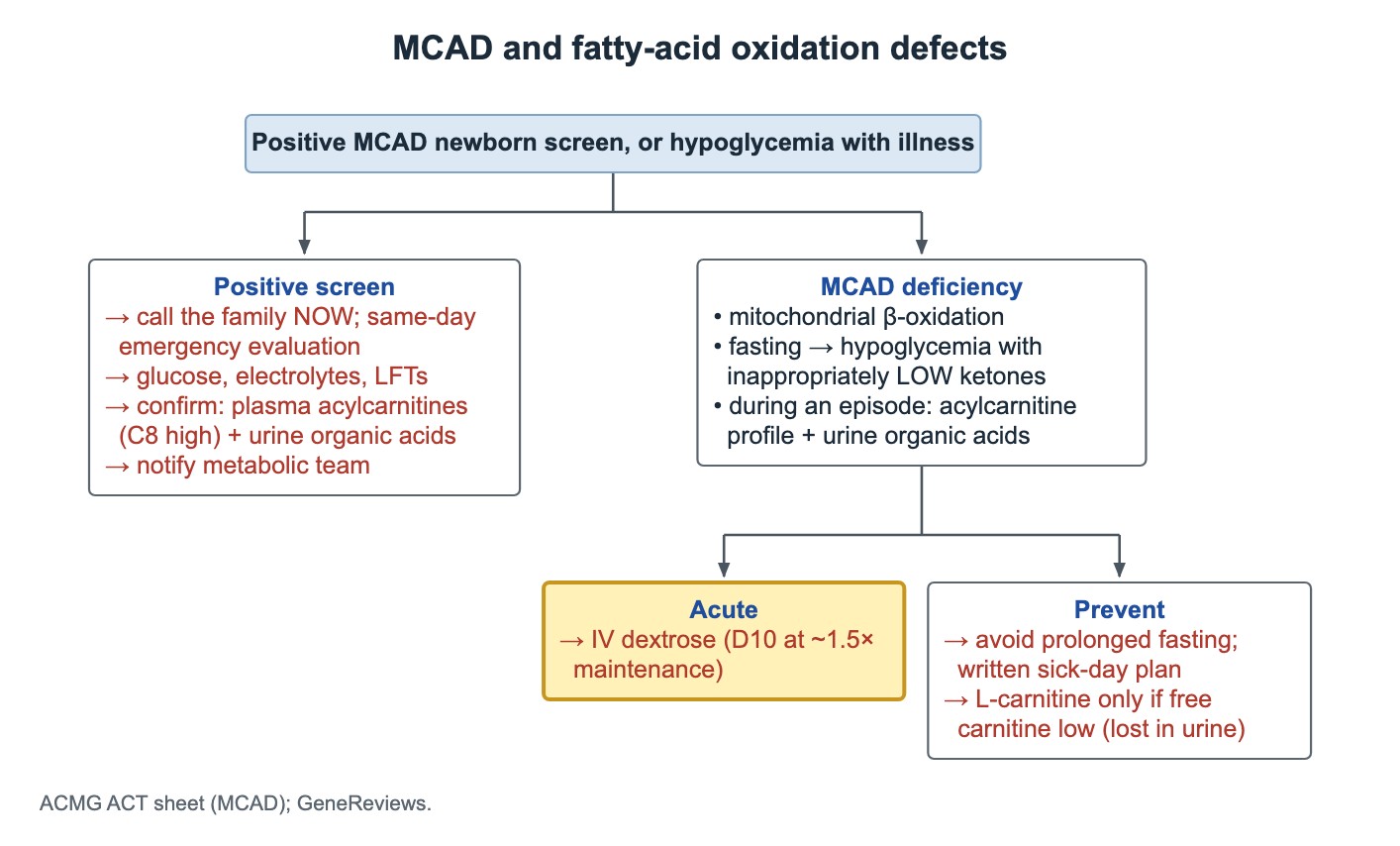
- A child with MCAD deficiency who is vomiting, lethargic or hypoglycemic needs IV dextrose at once.
- Give D10 with electrolytes at about 1.5 times maintenance to stop fat breakdown, not just to correct the glucose.
- Do not wait for oral intake to fail repeatedly; children who cannot keep down fluids should come in early.
Preventing MCAD episodes
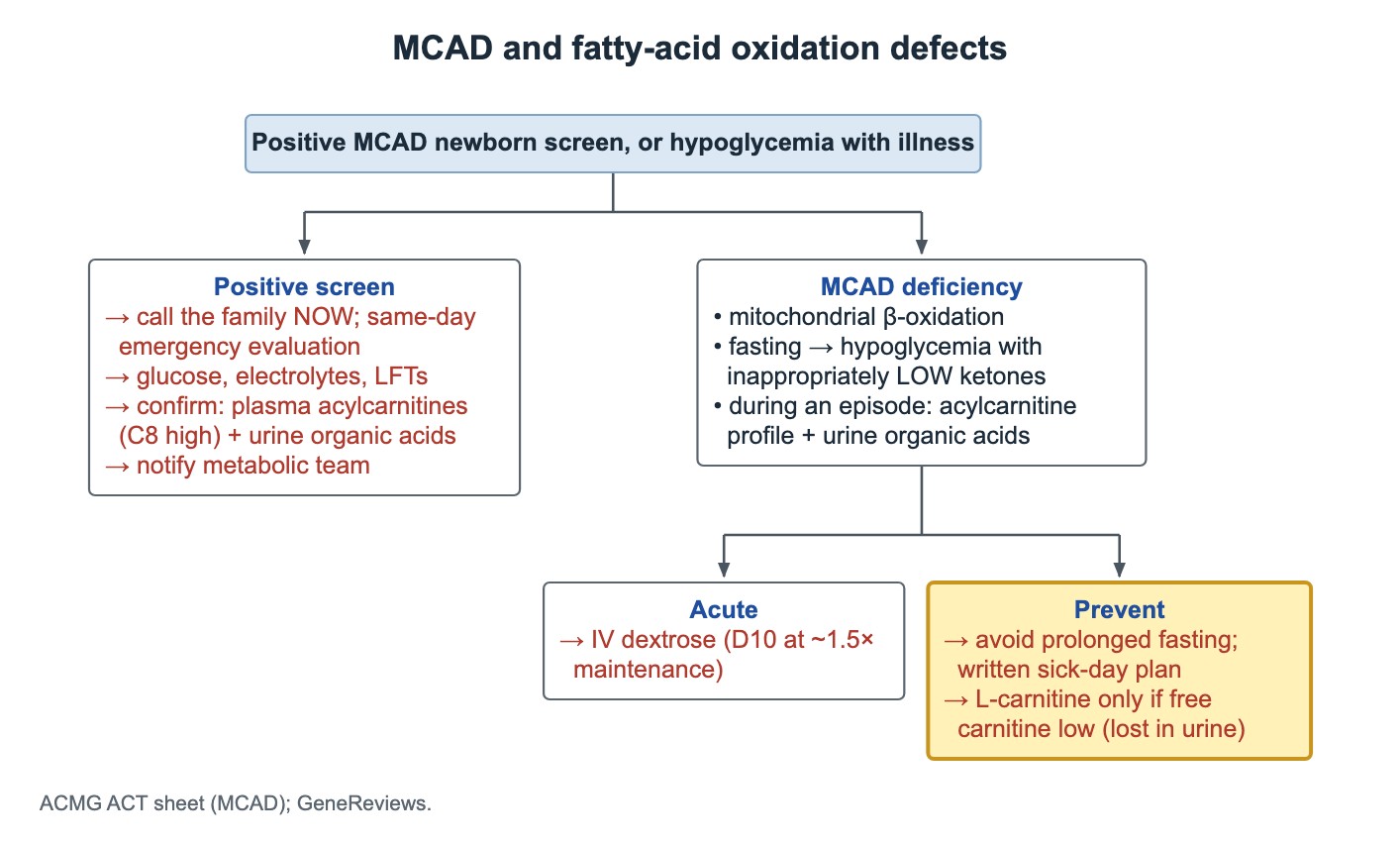
- Avoid prolonged fasting, with age-appropriate limits on time between feeds.
- A written sick-day (emergency) plan for families, schools and emergency departments.
- Free carnitine can be low because it is lost in the urine as acylcarnitines; add L-carnitine only when free carnitine is low.
- Outcomes are excellent when episodes are prevented.
Mitochondrial disease: inheritance and CPEO
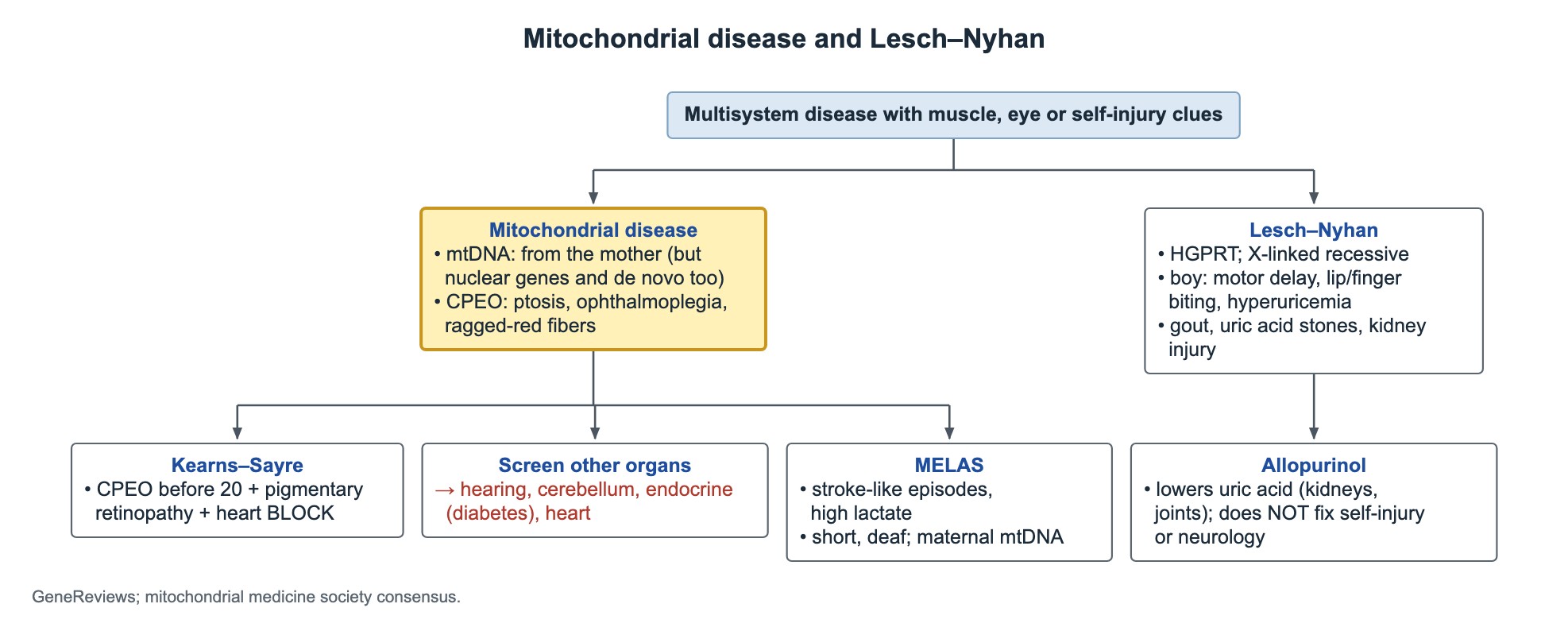
When the respiratory chain fails, too little ATP is made and tissues with high energy needs suffer most: brain, muscle, eye, ear and heart. NADH builds up, pyruvate is shunted to lactate, and blood lactate and the lactate-to-pyruvate ratio rise.
- Variants in mitochondrial DNA (mtDNA) are passed on by the mother.
- Not every mitochondrial disease is maternal: many are caused by nuclear genes (often autosomal recessive), and some variants arise de novo.
- Chronic progressive external ophthalmoplegia (CPEO): ptosis and weak eye movements, with ragged-red fibers on muscle biopsy.
- In mitochondrial ophthalmoplegia with multisystem disease, screen hearing, cerebellar function, endocrine function (including diabetes) and the heart.
MELAS
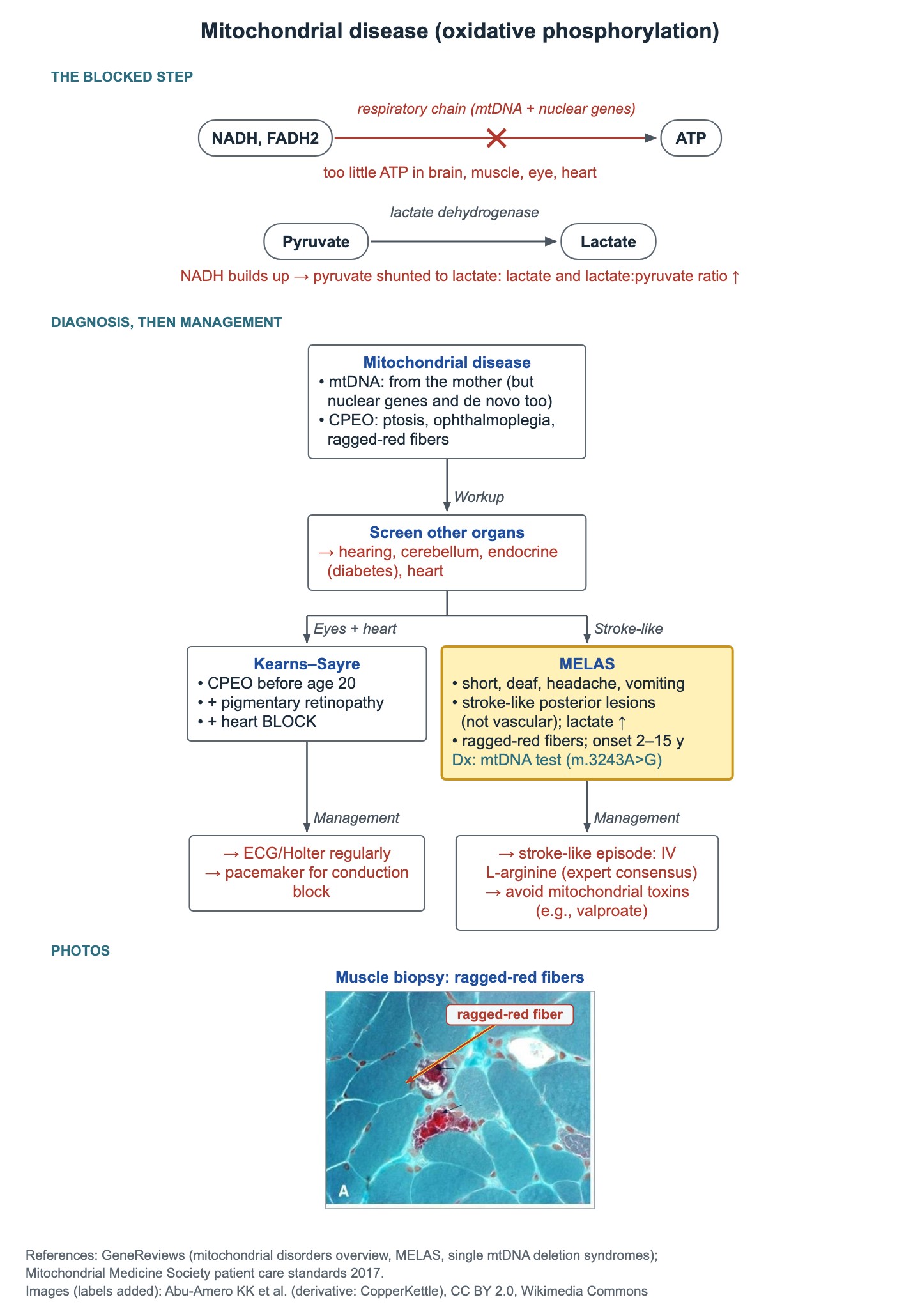
MELAS stands for mitochondrial encephalomyopathy, lactic acidosis and stroke-like episodes. It is maternally inherited through mtDNA.
- Onset usually in childhood, about 2–15 years.
- Short stature, hearing loss, migraine-like headaches and vomiting, then seizures and stroke-like episodes.
- MRI: stroke-like lesions in the posterior cortex (temporal, parietal, occipital) that do not follow a vascular territory.
- High lactate; ragged-red fibers on muscle biopsy (Gomori trichrome stain).
- Confirm with mtDNA testing; the most common variant is m.3243A>G.
- Stroke-like episode: IV L-arginine (expert consensus). Avoid mitochondrial toxins such as valproate.
Kearns–Sayre syndrome
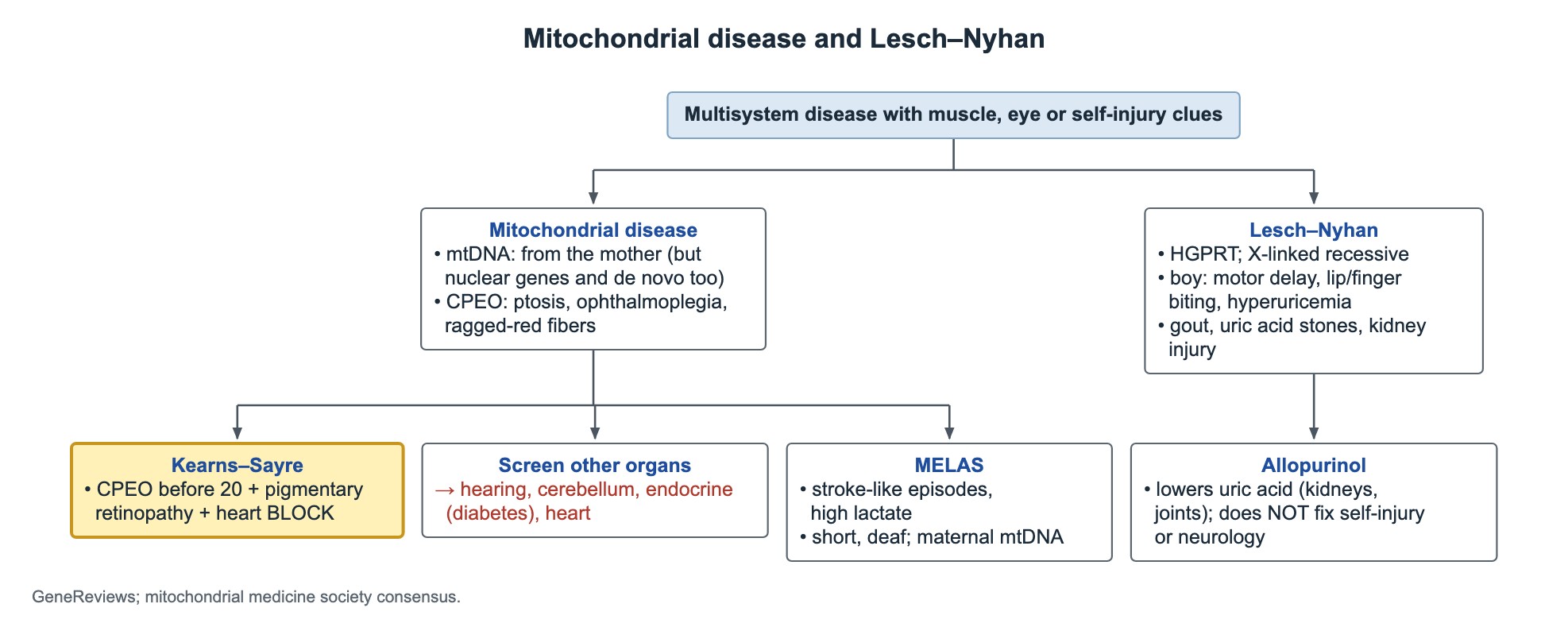
- CPEO beginning before age 20, plus pigmentary retinopathy, plus heart block.
- The key cardiac risk is conduction block, which can cause sudden death.
- Do regular ECG and Holter monitoring; place a pacemaker for conduction block.
Common questions
What does hypoketotic hypoglycemia mean?
Low blood glucose with ketones that are lower than expected for the degree of fasting. It points to a fatty-acid oxidation disorder such as MCAD deficiency, or to hyperinsulinism.
What should happen after an abnormal MCAD newborn screen?
Contact the family the same day, check the baby and glucose, electrolytes and liver tests, send confirmatory acylcarnitines and urine organic acids, and involve the metabolic team.
Are all mitochondrial diseases inherited from the mother?
No. Only mtDNA variants pass from the mother. Many mitochondrial diseases come from nuclear genes, and some variants are new in the child.
Study this topic
Sources
- GeneReviews: Medium-chain acyl-CoA dehydrogenase deficiency
- Pediatric Endocrine Society: Recommendations for evaluation of persistent hypoglycemia (J Pediatr 2015)
- Mitochondrial Medicine Society: Patient care standards for primary mitochondrial disease (Genet Med 2017)
- Mitochondrial Medicine Society: Diagnosis and management consensus (Genet Med 2015)
- GeneReviews: MELAS
Written for Pedemy in our own words from the sources above; checked November 2026. For education only, not medical advice; check doses and local protocols before treating a patient. Pedemy is independent and not affiliated with or endorsed by the organizations cited.