

Main decision tree
Mucopolysaccharidoses
Key points
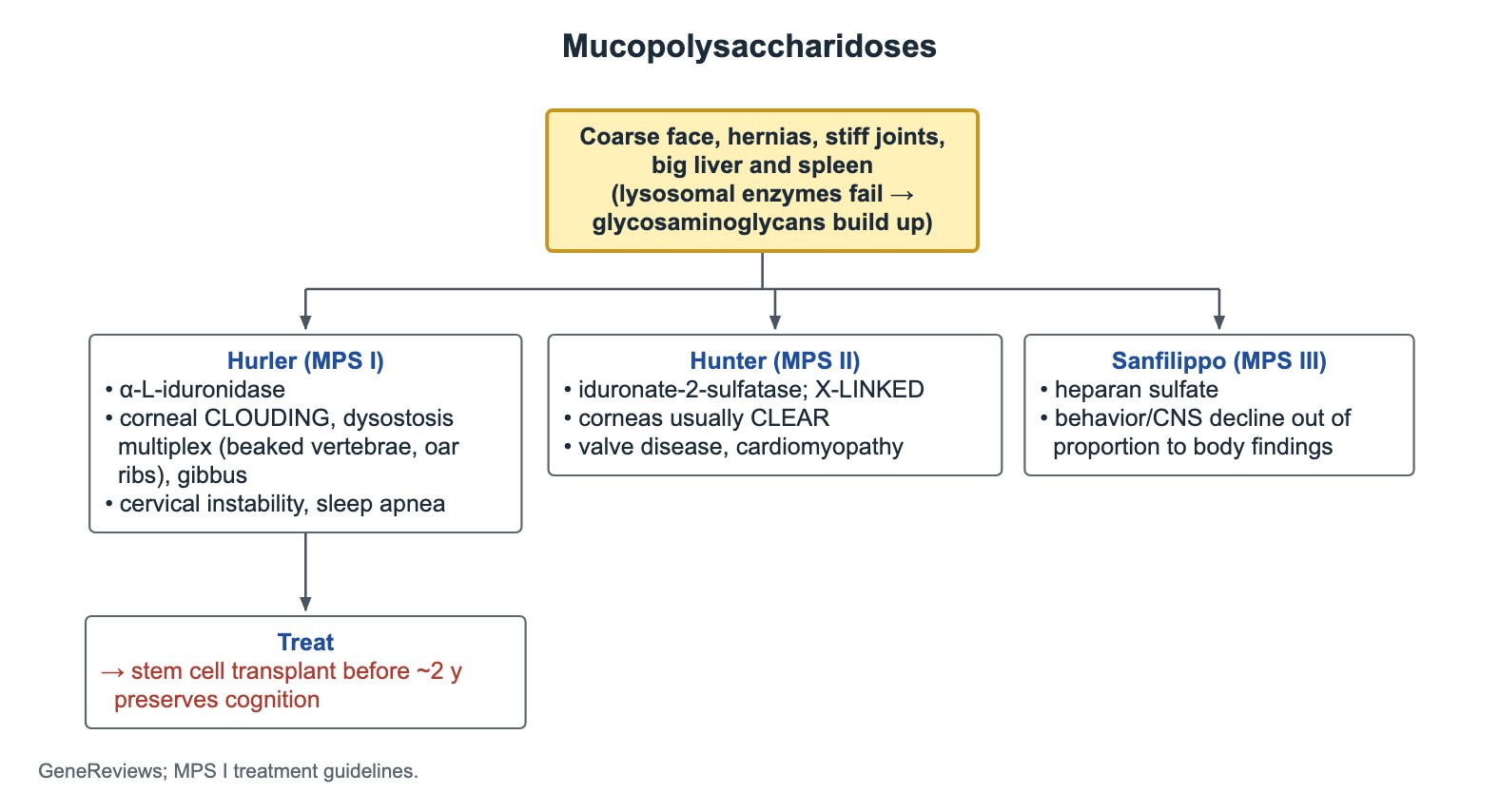
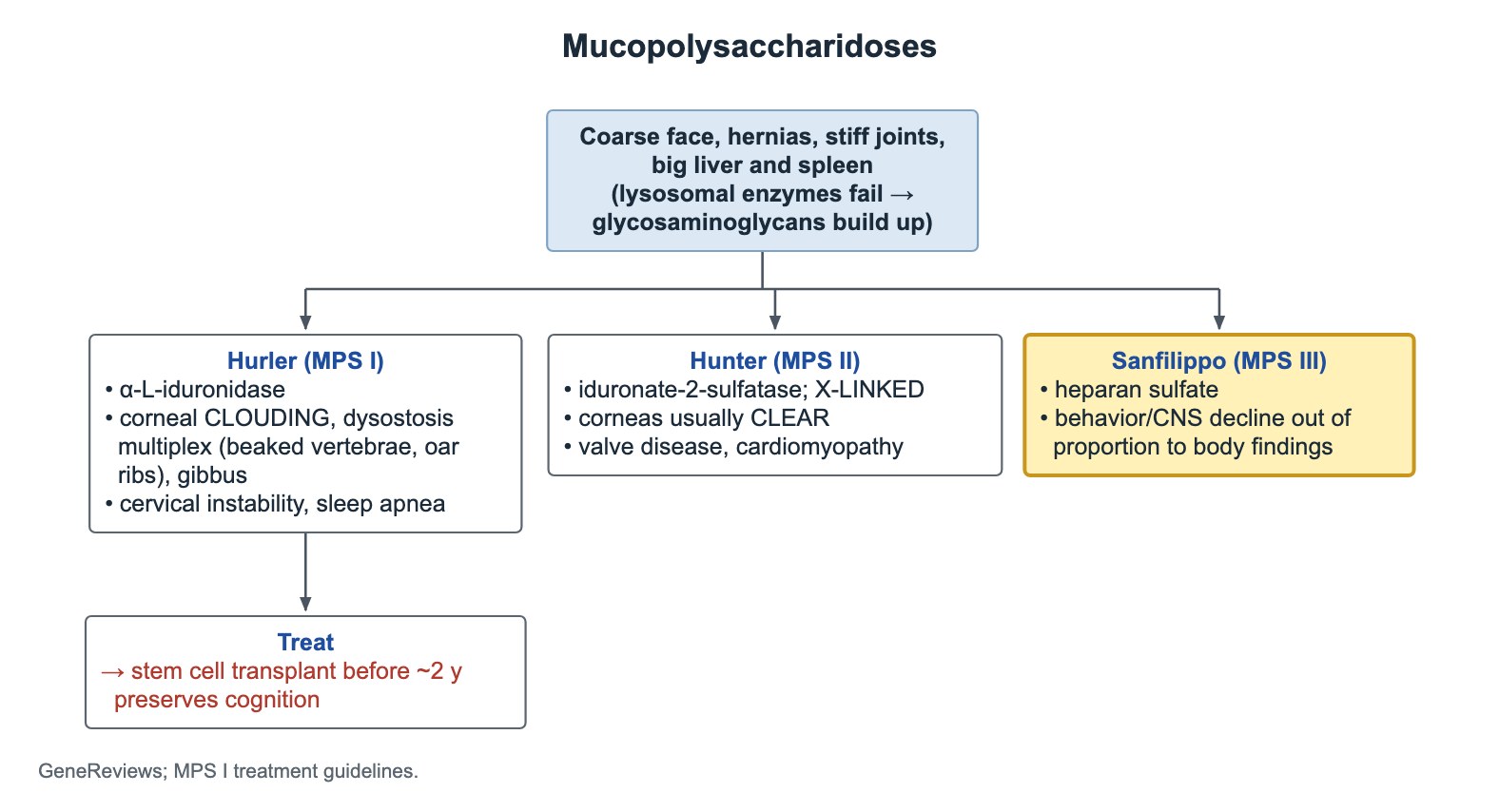
- MPS: deficient lysosomal enzymes cannot break down glycosaminoglycans → coarse face, hernias, stiff joints, big liver and spleen.
- Hurler (MPS I): alpha-L-iduronidase deficiency; corneal clouding, dysostosis multiplex and gibbus.
- Hurler X-rays: beaked lower thoracic and upper lumbar vertebrae, oar-shaped ribs, bullet-shaped phalanges.
- Severe MPS I: hematopoietic stem cell transplant, ideally before about 2 years, preserves cognition.
- Hunter (MPS II): iduronate-2-sulfatase deficiency, X-linked, corneas usually clear, valve disease.
- Sanfilippo (MPS III): heparan sulfate; behavior and brain decline out of proportion to mild body findings.
- MPS I risks: cervical instability with cord compression and obstructive sleep apnea.
What the mucopolysaccharidoses have in common
Each MPS is a deficiency of one lysosomal enzyme that breaks down glycosaminoglycans (GAGs). GAGs collect in skin, bone, joints, heart valves, airway, liver, spleen and, in some types, the brain.
- Coarse facial features, umbilical and inguinal hernias, stiff joints, hepatosplenomegaly.
- Most types are autosomal recessive; Hunter syndrome (MPS II) is X-linked.
- Screening test: urine glycosaminoglycans; confirm with enzyme activity and gene testing.
Hurler syndrome (MPS I)
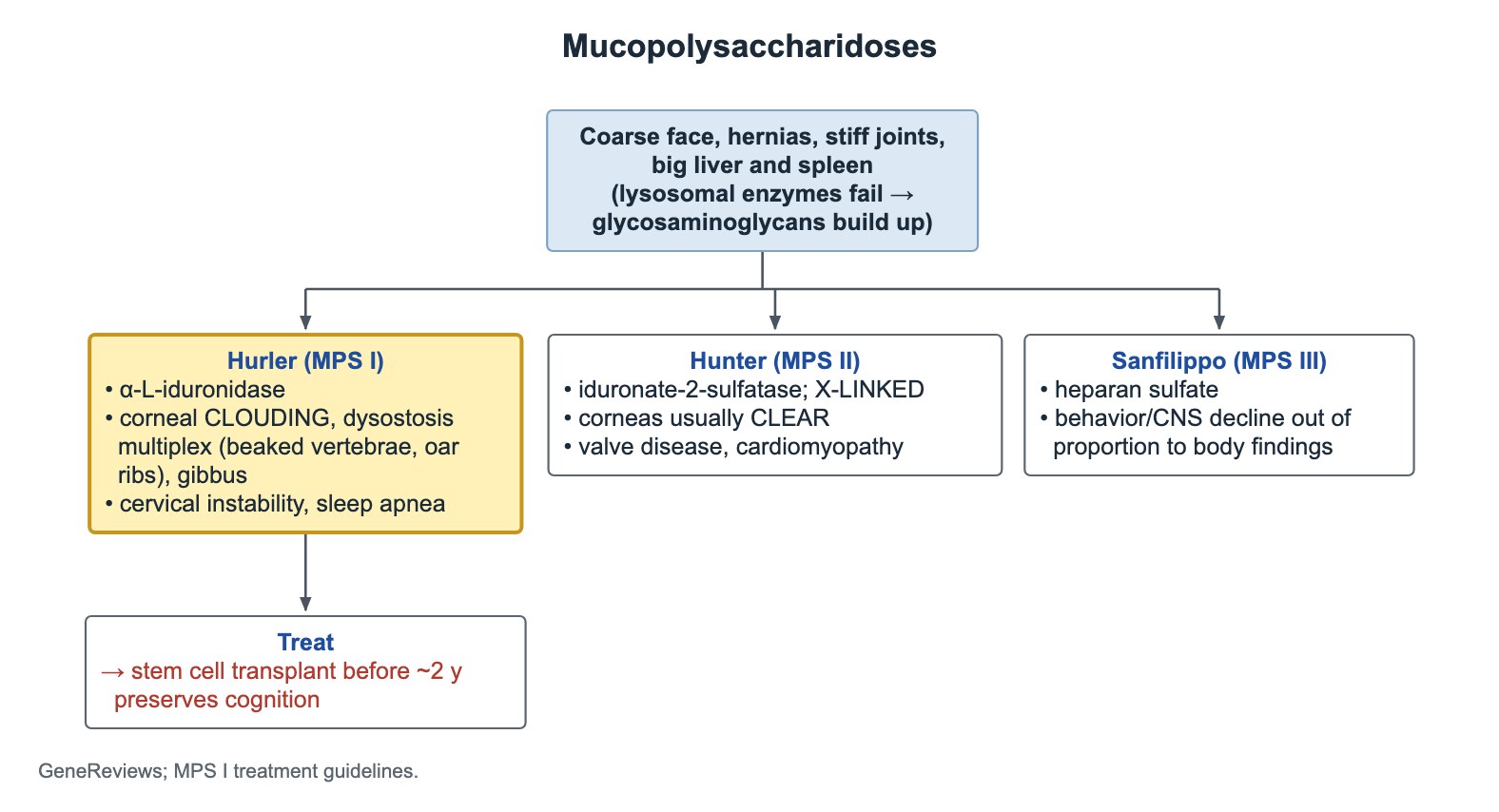
Hurler syndrome is the severe form of MPS I, caused by alpha-L-iduronidase deficiency. A toddler develops coarse features, hernias, hepatosplenomegaly and corneal clouding, and development slows and then regresses.
- Corneal clouding.
- Dysostosis multiplex on X-ray: beaked lower thoracic and upper lumbar vertebrae, oar-shaped ribs, bullet-shaped phalanges.
- Gibbus deformity (sharp angulation of the spine) and stiff joints.
- Cervical spine abnormalities, including atlantoaxial instability: risk of spinal cord compression, especially during anesthesia.
- Large tongue, big tonsils and adenoids, and thick airway tissues: obstructive sleep apnea and recurrent upper-airway symptoms.
- Heart valve disease and hearing loss are also common.
Treating severe MPS I
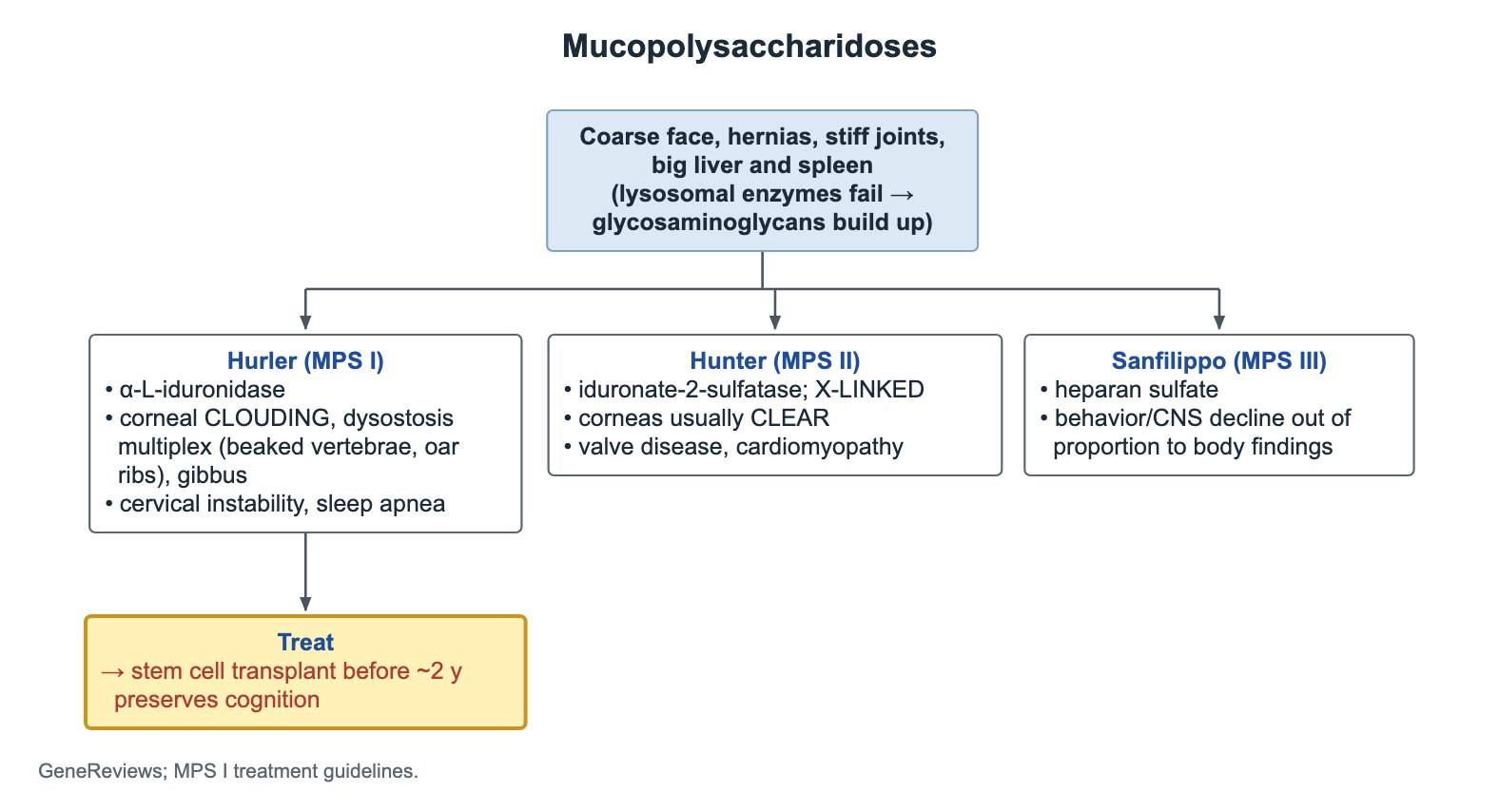
- Hematopoietic stem cell transplant preserves cognition when done early, ideally before about 2 years of age.
- Enzyme replacement therapy (laronidase) treats body findings but does not cross the blood–brain barrier; it is often given around transplant and used in attenuated MPS I.
- MPS I is on the US newborn screening panel, which allows transplant before damage occurs.
Hunter syndrome (MPS II)
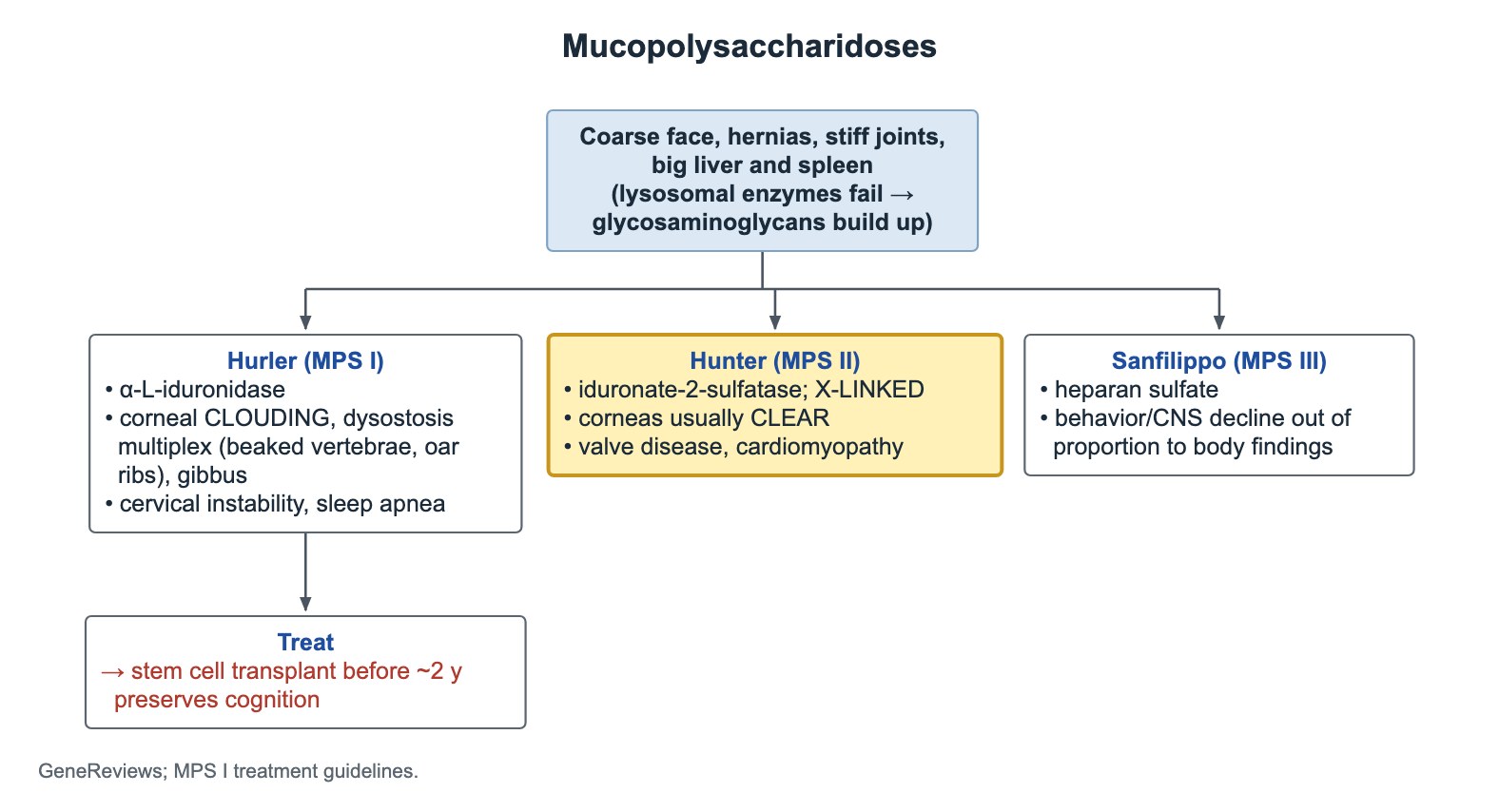
- Iduronate-2-sulfatase deficiency, X-linked, so it affects boys.
- An MPS picture with clear corneas: corneal clouding is typical of Hurler and usually absent in Hunter.
- Heart: thickened, leaking mitral and aortic valves and myocardial hypertrophy.
- Enzyme replacement therapy is available for the body disease.
Sanfilippo syndrome (MPS III)
- Defective breakdown of heparan sulfate.
- Brain and behavior decline (hyperactivity, sleep problems, loss of speech) out of proportion to mild physical findings.
- Physical features are subtle, so diagnosis is often delayed.
Common questions
How do you tell Hurler from Hunter syndrome?
Hurler (MPS I) is autosomal recessive and has cloudy corneas. Hunter (MPS II) is X-linked, affects boys and usually has clear corneas.
What treatment preserves cognition in Hurler syndrome?
Hematopoietic stem cell transplant, ideally before about 2 years of age. Enzyme replacement alone does not reach the brain.
Study this topic
Sources
- Mucopolysaccharidosis I: management and treatment guidelines (Pediatrics 2009)
- Guidelines for the HSCT and ERT treatment of MPS I (Orphanet J Rare Dis 2011)
- GeneReviews: Mucopolysaccharidosis type I
- HRSA: Recommended Uniform Screening Panel
Written for Pedemy in our own words from the sources above; checked November 2026. For education only, not medical advice; check doses and local protocols before treating a patient. Pedemy is independent and not affiliated with or endorsed by the organizations cited.