

Main decision tree
Sick newborn: which metabolic emergency?
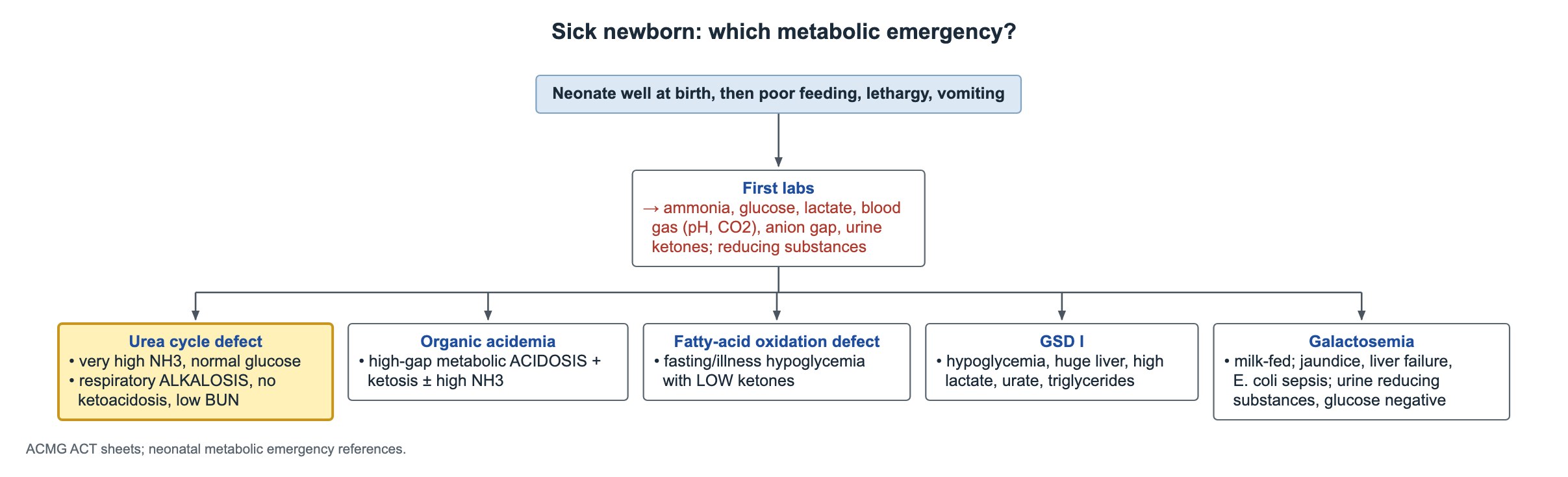
Key points
- Severe neonatal urea cycle disorders present 24–72 hours after protein feeds start: poor feeding, lethargy, vomiting, tachypnea.
- Classic pattern: very high ammonia, normal glucose, respiratory alkalosis, no ketoacidosis, low BUN.
- Hyperammonemia with ketotic anion-gap acidosis points to an organic acidemia; with high lactate, to a pyruvate carboxylase or dehydrogenase defect.
- Low citrulline with high urine orotic acid = OTC deficiency; low or normal orotic acid = CPS1 or NAGS deficiency.
- OTC deficiency is the most common urea cycle disorder and is X-linked; carrier girls can present late.
- Treat at once: stop protein, high-calorie IV dextrose ± lipids, IV sodium phenylacetate/benzoate plus arginine, dialysis if ammonia is very high or not falling.
- Lesch-Nyhan: HPRT deficiency, X-linked recessive; allopurinol lowers uric acid but does not fix the self-injury or neurologic disease.
Recognize a urea cycle disorder in a sick newborn
The baby is well at birth, then feeds poorly, becomes lethargic and vomits after protein feeds begin, usually at 24–72 hours. Fast breathing is common and can progress to seizures and coma.
The first labs sort the metabolic emergencies: ammonia, glucose, lactate, blood gas with anion gap, and urine ketones. A urea cycle disorder gives very high ammonia with normal glucose, a respiratory alkalosis, no ketoacidosis and a low BUN.
- Example: a 2-day-old boy, lethargic and tachypneic, with pH 7.50, normal glucose and anion gap, no ketones and ammonia 650 µmol/L has a urea cycle disorder until proven otherwise.
- Do not wait for a genetic result when a child is encephalopathic with high ammonia: start treatment at once.
| Pattern with high ammonia | Think of |
|---|---|
| Respiratory alkalosis, normal glucose and anion gap, no ketones | Urea cycle disorder |
| Marked anion-gap metabolic acidosis with ketosis | Organic acidemia |
| High lactate | Pyruvate carboxylase or pyruvate dehydrogenase defect |
| Hypoglycemia with low ketones | Fatty-acid oxidation defect |
Why ammonia, alkalosis and brain swelling
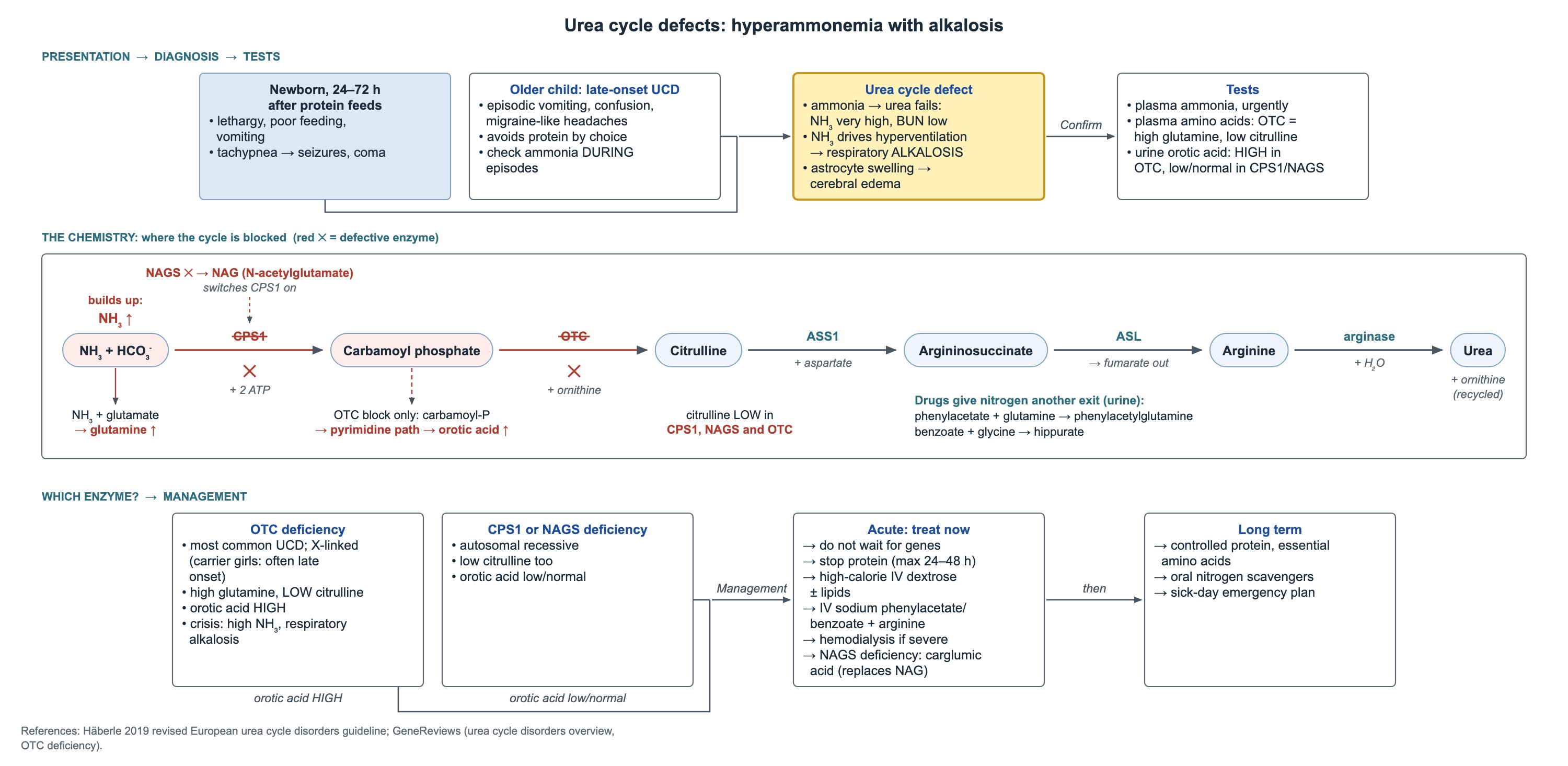
The urea cycle turns ammonia into urea so it can leave in the urine. When an enzyme in the cycle fails, ammonia builds up and little urea is made, so the BUN is low.
- Ammonia stimulates the respiratory center: central hyperventilation causes the respiratory alkalosis.
- In astrocytes, ammonia is combined with glutamate to make glutamine; glutamine draws water in, the cells swell and cerebral edema follows.
- NAGS makes N-acetylglutamate, which switches CPS1 on; CPS1 makes carbamoyl phosphate; OTC joins it with ornithine to make citrulline.
- Citrulline is low when the block is at NAGS, CPS1 or OTC.
Tests that pinpoint the defect
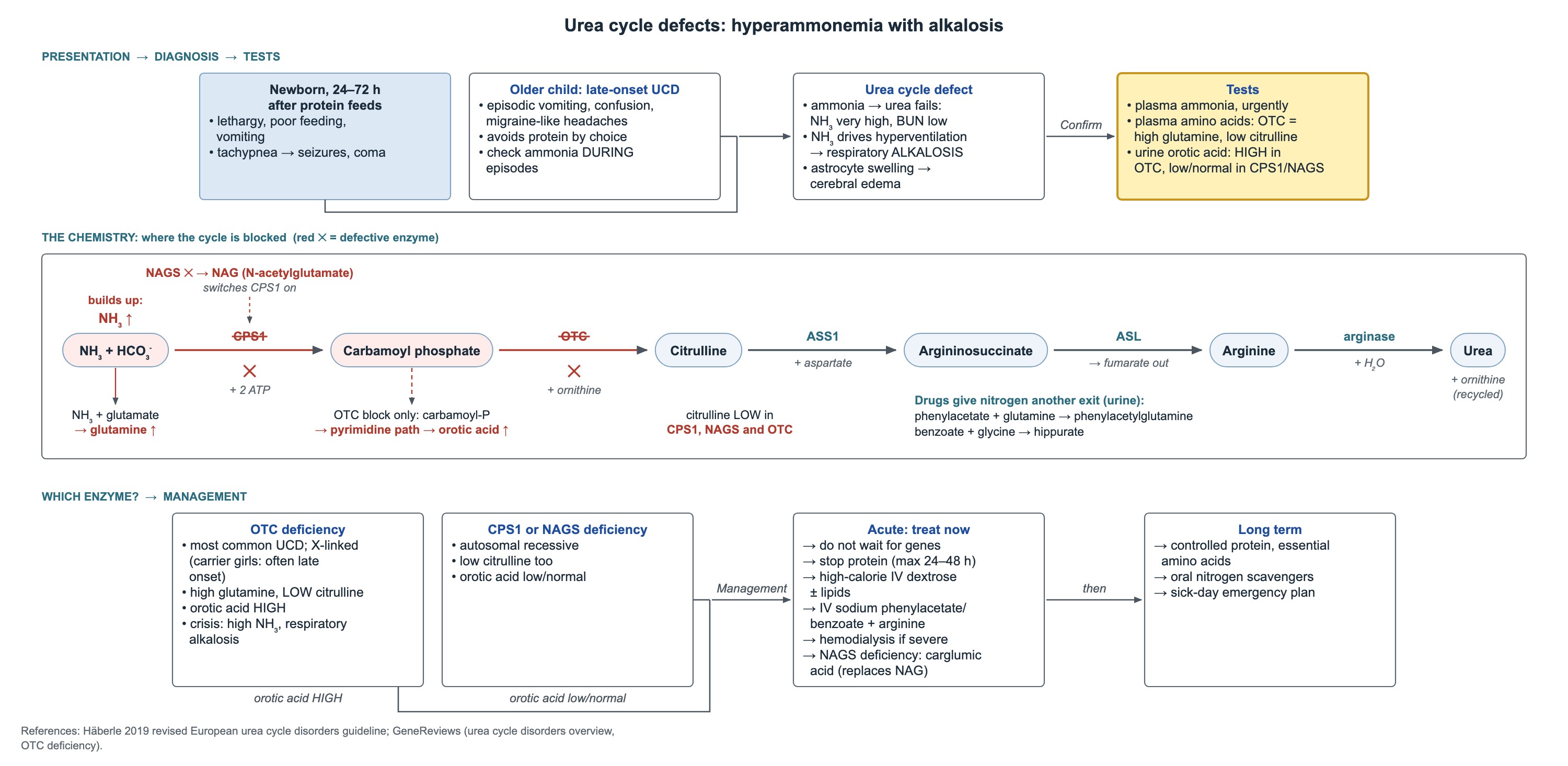
In OTC deficiency, carbamoyl phosphate cannot enter the cycle, so it spills into the pyrimidine pathway and makes orotic acid. That is why orotic acid separates OTC from CPS1 and NAGS deficiency when citrulline is low.
- Plasma ammonia, urgently, from a free-flowing sample sent on ice.
- Plasma amino acids: glutamine high; citrulline low in NAGS, CPS1 and OTC deficiency.
- Urine orotic acid: high in OTC deficiency; low or normal in CPS1 and NAGS deficiency.
- Urine organic acids: rule out an organic acidemia, which can also raise ammonia.
- Genetic testing confirms the enzyme, but treatment never waits for it.
OTC deficiency versus CPS1 or NAGS deficiency
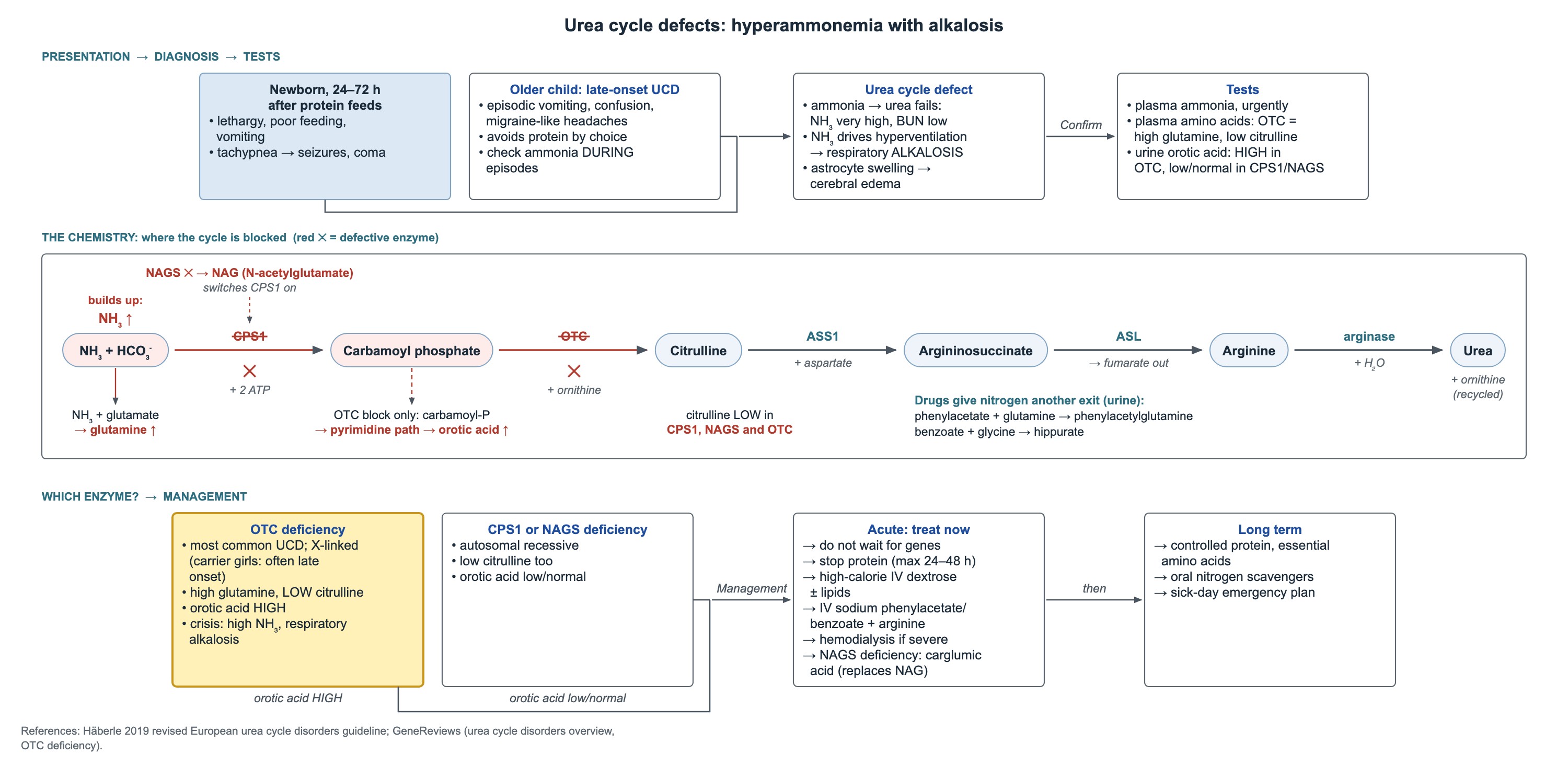
An OTC crisis looks like any severe urea cycle crisis: very high ammonia with a respiratory alkalosis.
| Feature | OTC deficiency | CPS1 or NAGS deficiency |
|---|---|---|
| Inheritance | X-linked; most common urea cycle disorder | Autosomal recessive |
| Glutamine | High | High |
| Citrulline | Low | Low |
| Urine orotic acid | High | Low or normal |
| Who presents | Boys in the newborn period; carrier girls often later | Boys and girls, often neonatal |
| Specific drug | None beyond standard therapy | NAGS deficiency: carglumic acid replaces N-acetylglutamate |
Emergency treatment of hyperammonemia
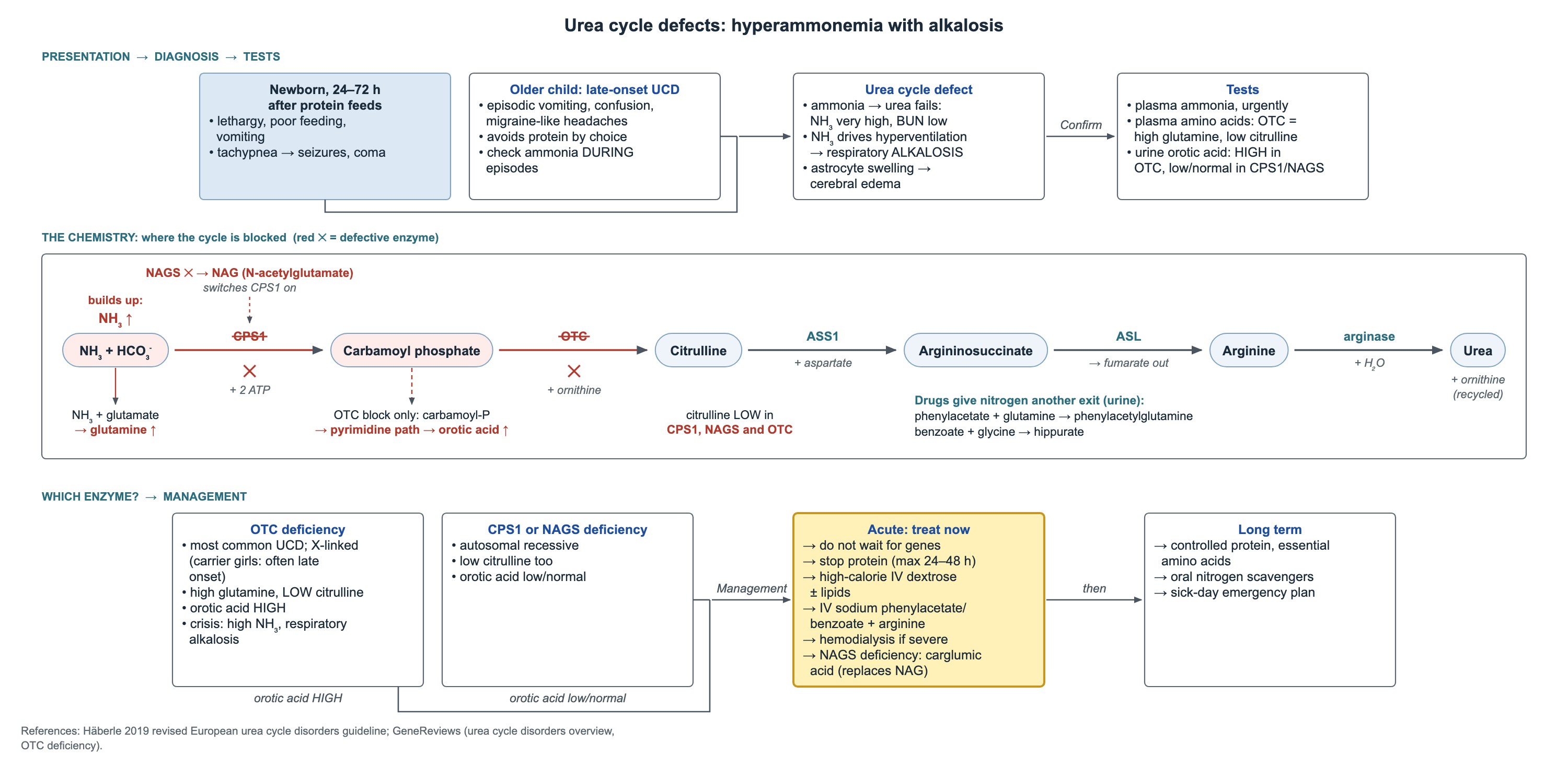
The goals are to lower ammonia fast, give nitrogen another way out, and stop catabolism. Treat in a unit that can start dialysis, with a metabolic specialist involved early.
- Stop protein, but for no more than 24–48 hours, because the body then breaks down its own protein.
- Give high-calorie IV dextrose, with or without IV lipids, to stop catabolism.
- IV sodium phenylacetate/sodium benzoate: phenylacetate binds glutamine and benzoate binds glycine; both leave in the urine.
- IV arginine, which becomes essential when the cycle is blocked.
- Hemodialysis if ammonia is very high or does not fall quickly on drug therapy.
- NAGS deficiency: add carglumic acid.
Late-onset disease and long-term care
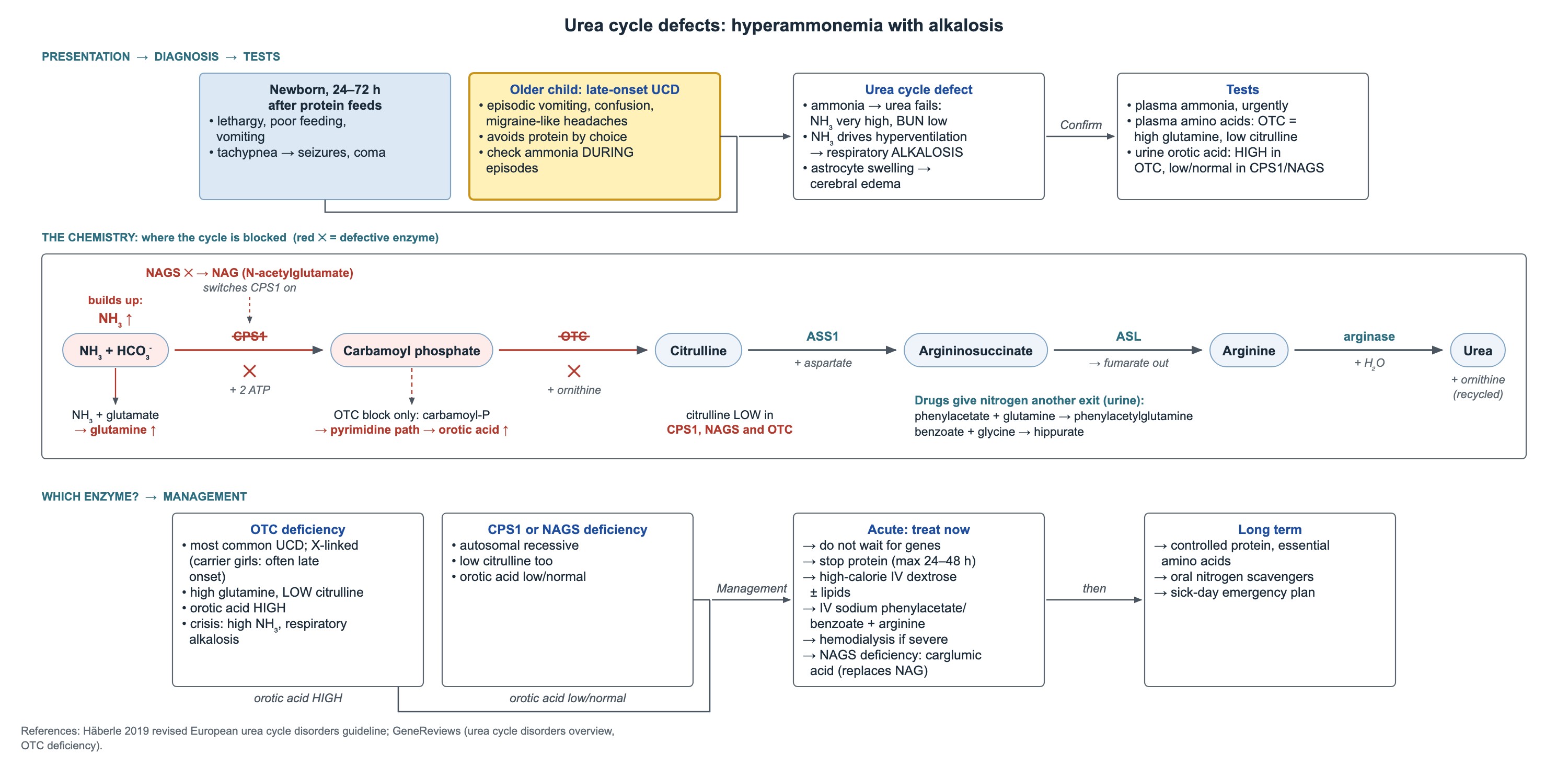
Partial enzyme defects, such as OTC deficiency in a carrier girl, can show up at any age. Think of a late-onset urea cycle disorder in a child with episodic vomiting, confusion or migraine-like headaches who avoids protein by choice. Check ammonia during an episode, when it is high; between episodes it may be normal.
- Controlled protein intake, often with essential amino acid supplements.
- Oral nitrogen scavengers.
- A written sick-day emergency plan for illness, fasting or surgery.
Lesch-Nyhan disease (HPRT deficiency)
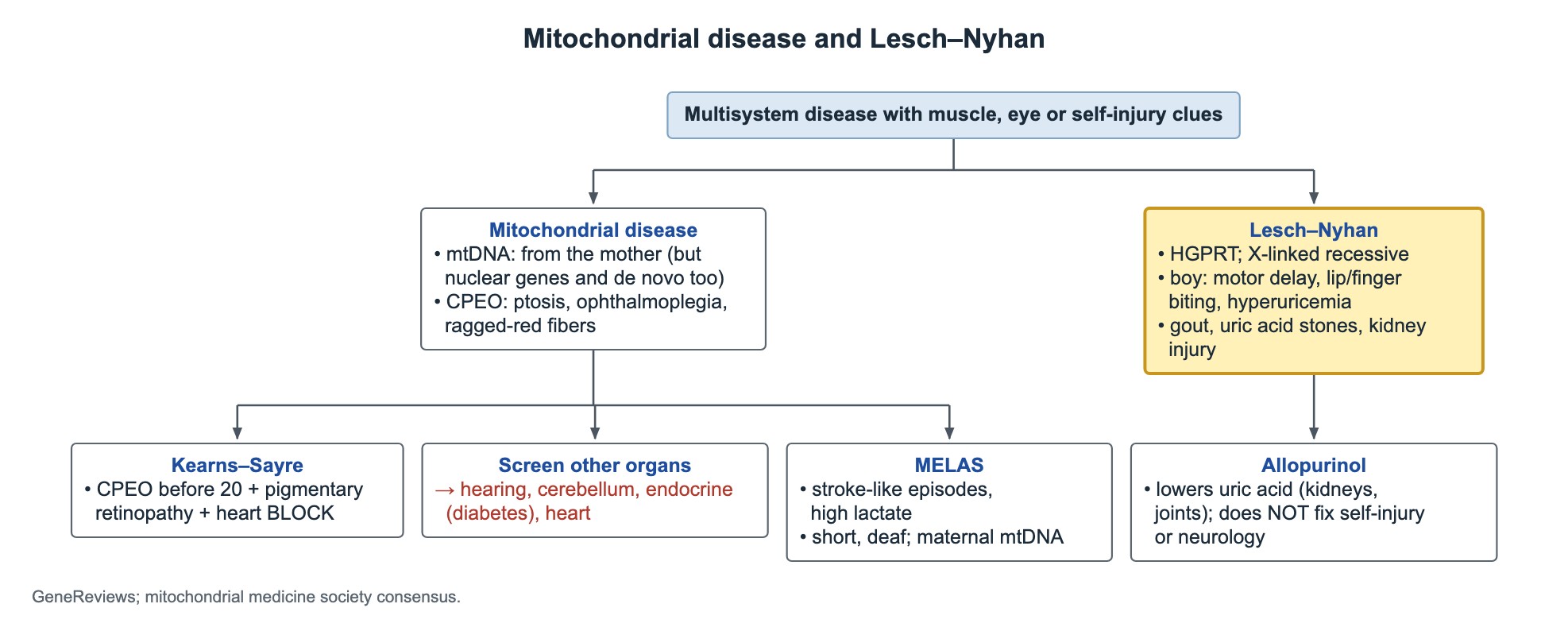
Lesch-Nyhan disease is caused by deficiency of HPRT (hypoxanthine-guanine phosphoribosyltransferase), an enzyme that recycles purines. It is X-linked recessive, so it affects boys.
- Typical child: a boy with motor delay and dystonia who begins biting his lips and fingers, with a high uric acid.
- Uric acid overproduction causes uric acid kidney stones, kidney failure and gouty arthritis.
- Allopurinol lowers uric acid and protects the kidneys and joints.
- Allopurinol does not improve the self-injury or the neurologic disease.
Common questions
What is the most common urea cycle disorder?
Ornithine transcarbamylase (OTC) deficiency. It is X-linked, so boys usually present as newborns, while carrier girls may have milder, later episodes.
Why is the blood gas alkalotic in hyperammonemia?
Ammonia stimulates the brain's breathing center. The child hyperventilates and develops a respiratory alkalosis, unlike the metabolic acidosis of an organic acidemia.
How do you tell OTC deficiency from CPS1 deficiency?
Both have high glutamine and low citrulline. Urine orotic acid is high in OTC deficiency and low or normal in CPS1 or NAGS deficiency.
Study this topic
Sources
- Häberle et al. 2019: Suggested guidelines for the diagnosis and management of urea cycle disorders, first revision (J Inherit Metab Dis)
- GeneReviews: Urea cycle disorders overview
- GeneReviews: HPRT1 disorders
Written for Pedemy in our own words from the sources above; checked November 2026. For education only, not medical advice; check doses and local protocols before treating a patient. Pedemy is independent and not affiliated with or endorsed by the organizations cited.