

Main decision tree
Sick newborn: which metabolic emergency?
Key points
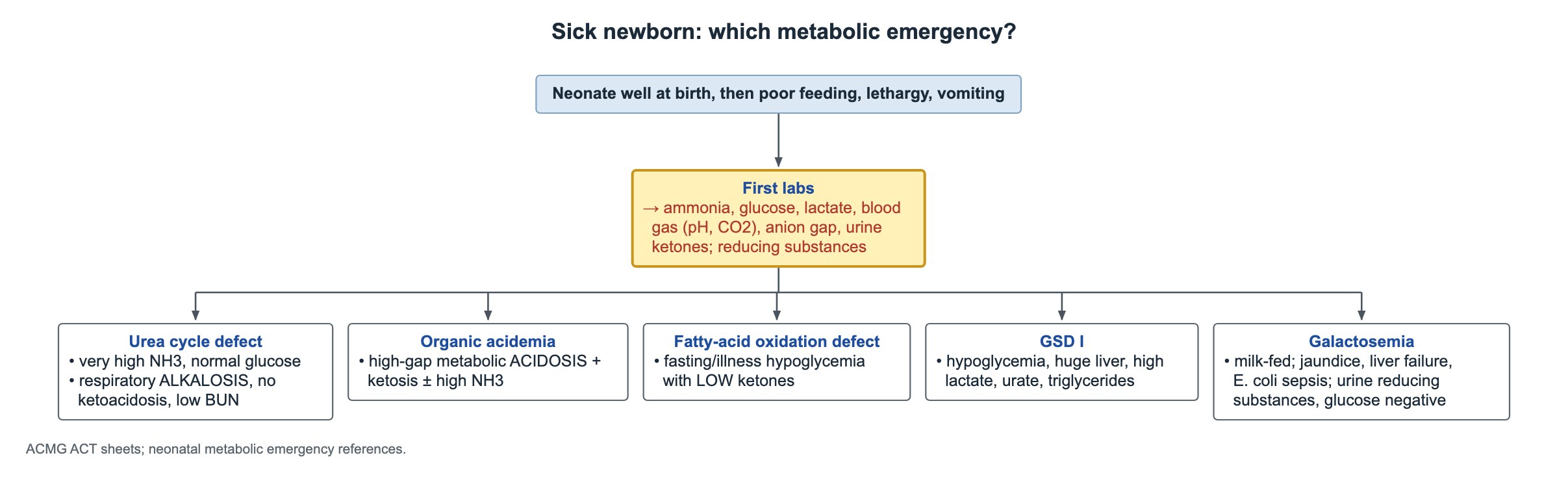
- Sick newborn with a suspected inborn error: check ammonia, glucose, lactate, blood gas and urine ketones first.
- Anion-gap metabolic acidosis + ketosis ± high ammonia → organic acidemia; send urine organic acids and plasma acylcarnitines.
- Crisis: stop protein briefly, high-dose IV dextrose (± insulin) and lipids, L-carnitine, carglumic acid for high ammonia, dialysis if severe.
- Propionic acidemia: cytopenias, infections, cardiomyopathy and pancreatitis.
- Isovaleric acidemia: sweaty-feet odor; decompensates with infection or extra protein.
- Glutaric acidemia type 1: macrocephaly, subdural and retinal hemorrhages; it does not exclude abuse.
- Alopecia + rash + encephalopathy → multiple carboxylase deficiency; treat with biotin.
First labs in a sick newborn
A newborn who was well at birth and then feeds poorly, becomes lethargic or vomits may have an inborn error of metabolism. Sepsis is common and is treated at the same time, but a few basic labs sort the metabolic causes.
- Ammonia, glucose, lactate, blood gas (pH, CO2) with anion gap, and urine ketones.
- Urine reducing substances when galactosemia is possible.
| Pattern | Think of |
|---|---|
| Very high ammonia, respiratory alkalosis, normal glucose, low BUN | Urea cycle defect |
| High anion-gap metabolic acidosis with ketosis ± high ammonia | Organic acidemia |
| Hypoglycemia with fasting or illness, low ketones | Fatty-acid oxidation defect |
| Hypoglycemia, large liver, high lactate, urate and triglycerides | Glycogen storage disease type I |
| Milk-fed, jaundice, liver failure, E. coli sepsis | Galactosemia |
Diagnose an organic acidemia
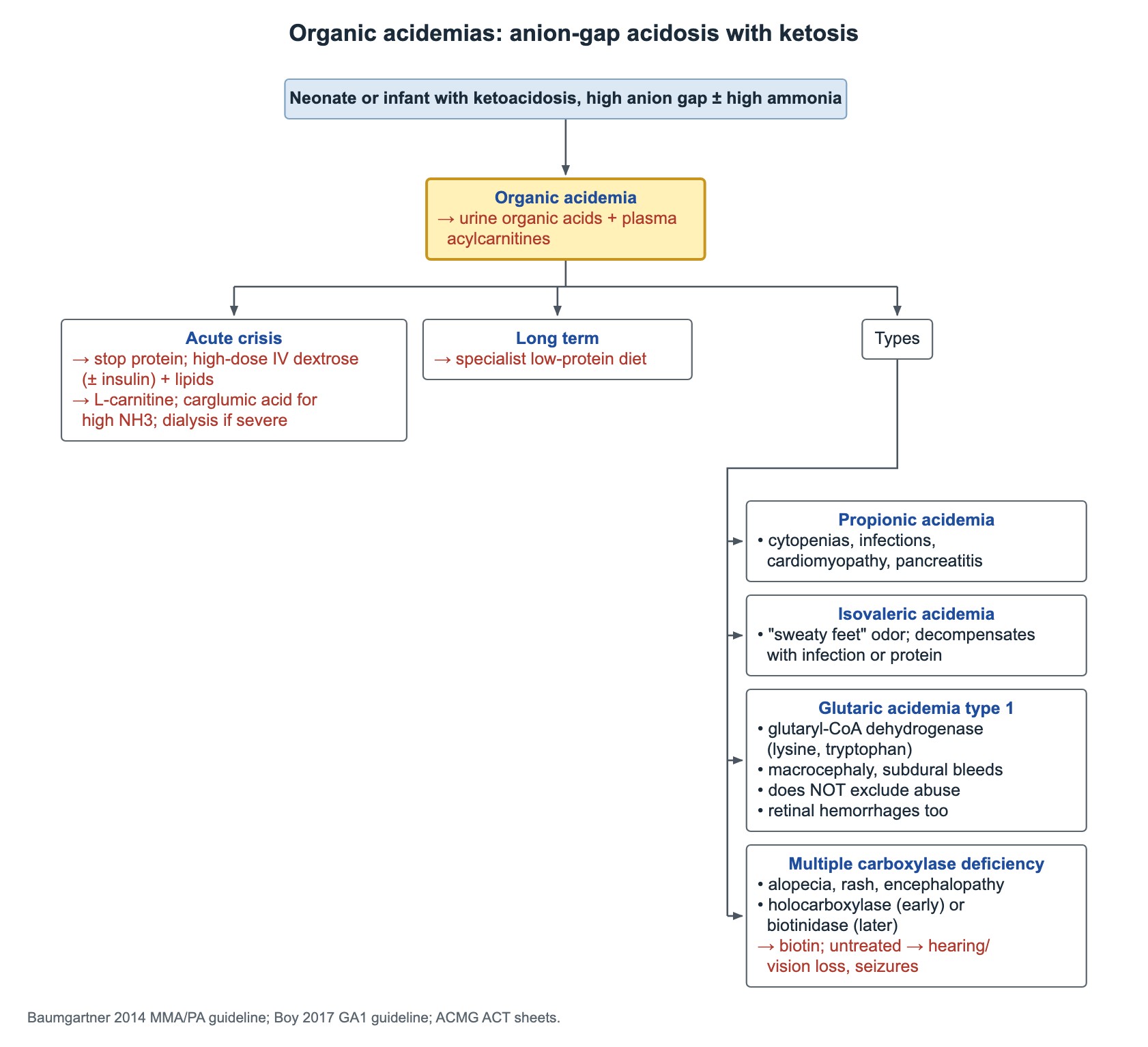
High ammonia with ketosis and an anion-gap metabolic acidosis points to a defect in organic acid (branched-chain amino acid) metabolism rather than a urea cycle disorder. Methylmalonic and propionic acidemia are the classic examples.
The key tests are urine organic acids and plasma acylcarnitines. Most US newborn screens detect these disorders, but a baby can become sick before the result returns.
Acute crisis and long-term treatment
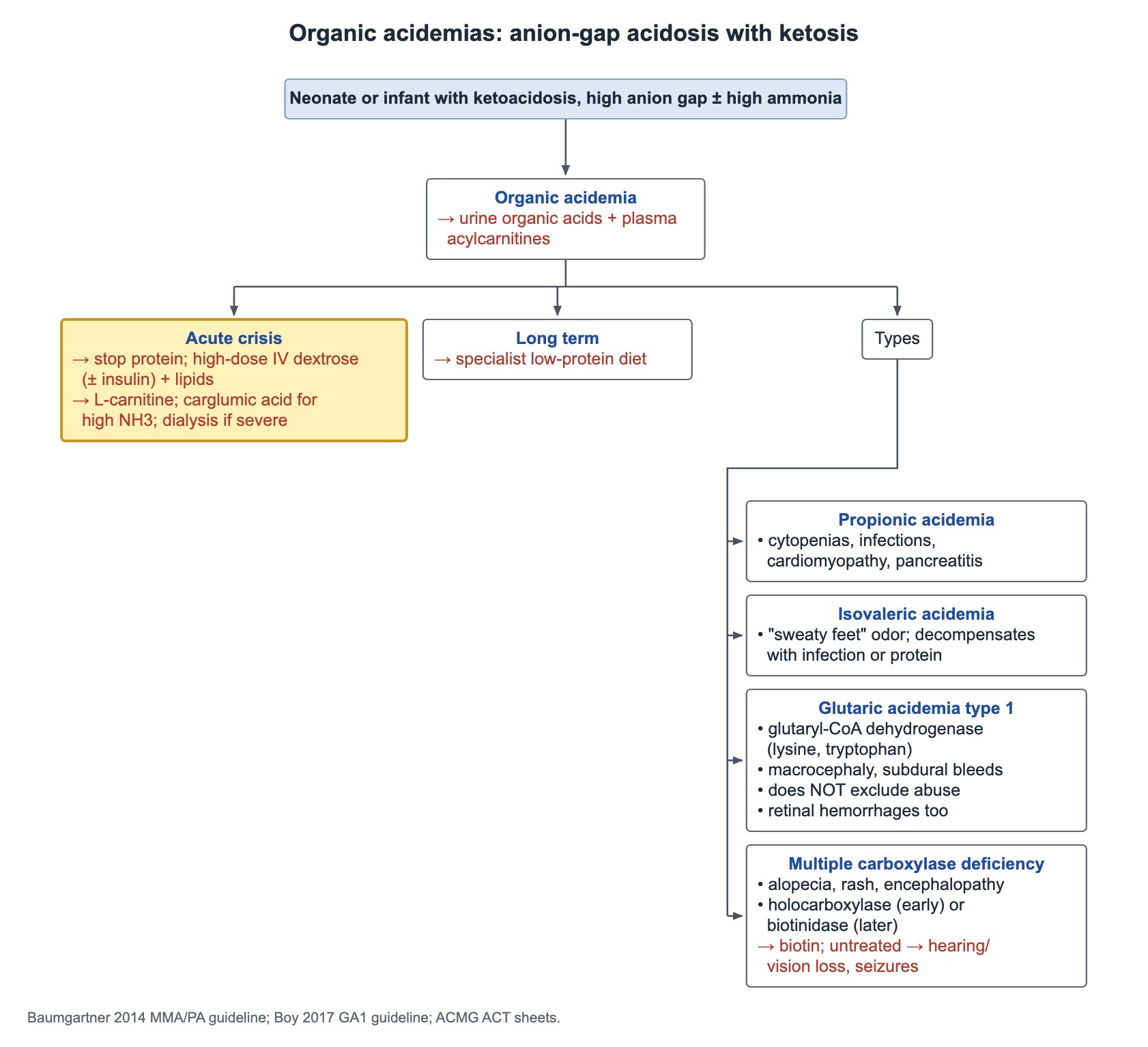
The aim in a crisis is to reverse catabolism and remove the toxic acids. Involve a metabolic specialist at once.
- Stop protein for a short time only, usually 24–48 hours.
- High-dose IV dextrose with IV lipids; add insulin if glucose rises, so calories can still be given.
- L-carnitine to bind and remove toxic acyl groups.
- Carglumic acid for high ammonia.
- Hemodialysis if the acidosis or ammonia is severe or does not improve on medical therapy.
- Long term: a protein-restricted diet with a medical metabolic formula, planned by a metabolic dietitian, plus a sick-day emergency plan.
Propionic acidemia
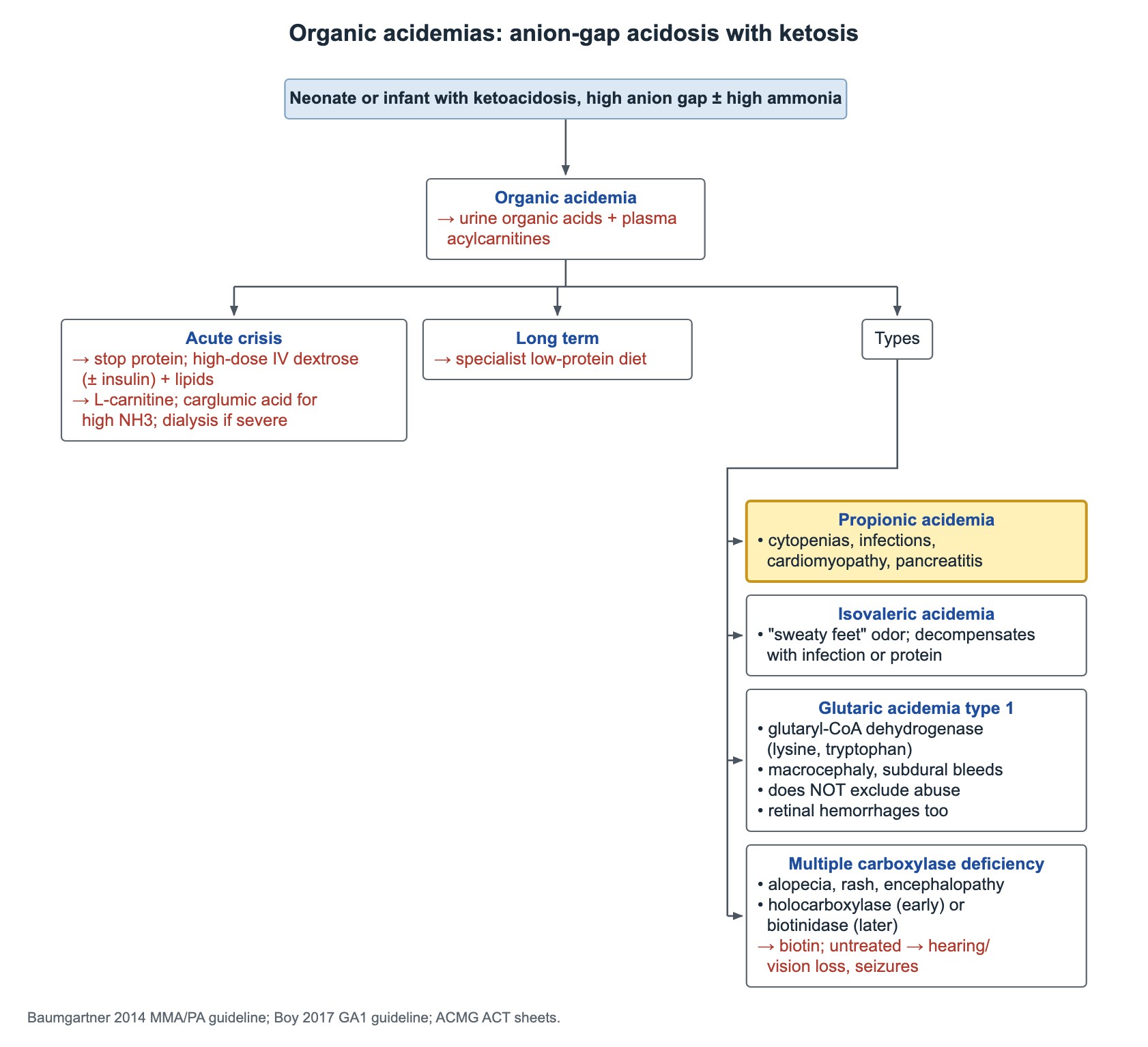
Consider propionic acidemia in a neonate with encephalopathy, ketoacidosis, with or without high ammonia, and low blood counts.
- Marrow suppression: neutropenia, thrombocytopenia and recurrent infections.
- Poor growth.
- Cardiomyopathy: an important chronic complication, so heart checks continue lifelong.
- Pancreatitis: think of it with recurrent abdominal pain and vomiting.
Isovaleric acidemia
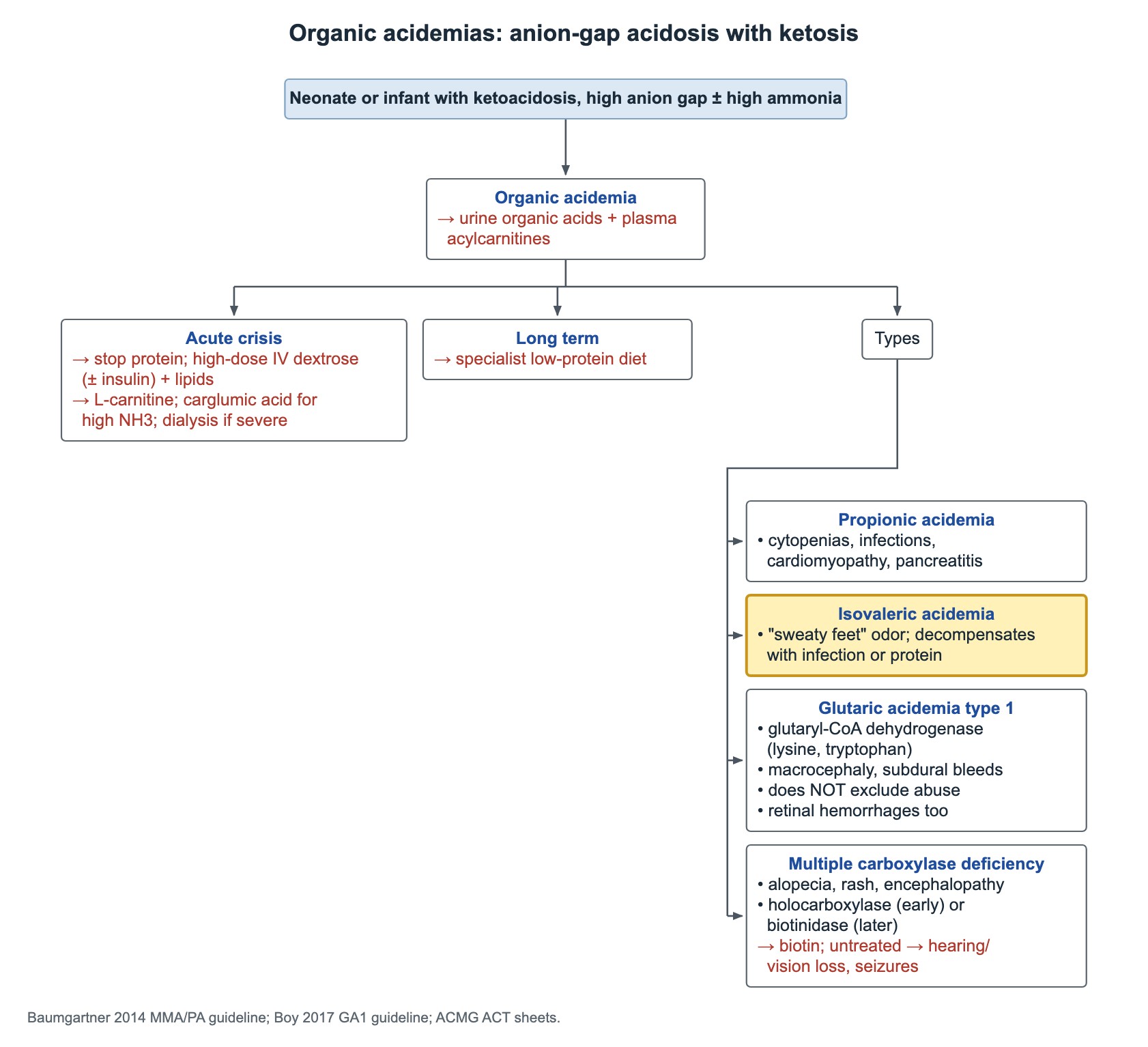
- Encephalopathy, ketotic metabolic acidosis and a sweaty-feet odor.
- Deficient enzyme: isovaleryl-CoA dehydrogenase, in leucine breakdown.
- Decompensates with infection or other catabolic stress, or with extra protein intake.
Glutaric acidemia type 1 and the abuse mimic
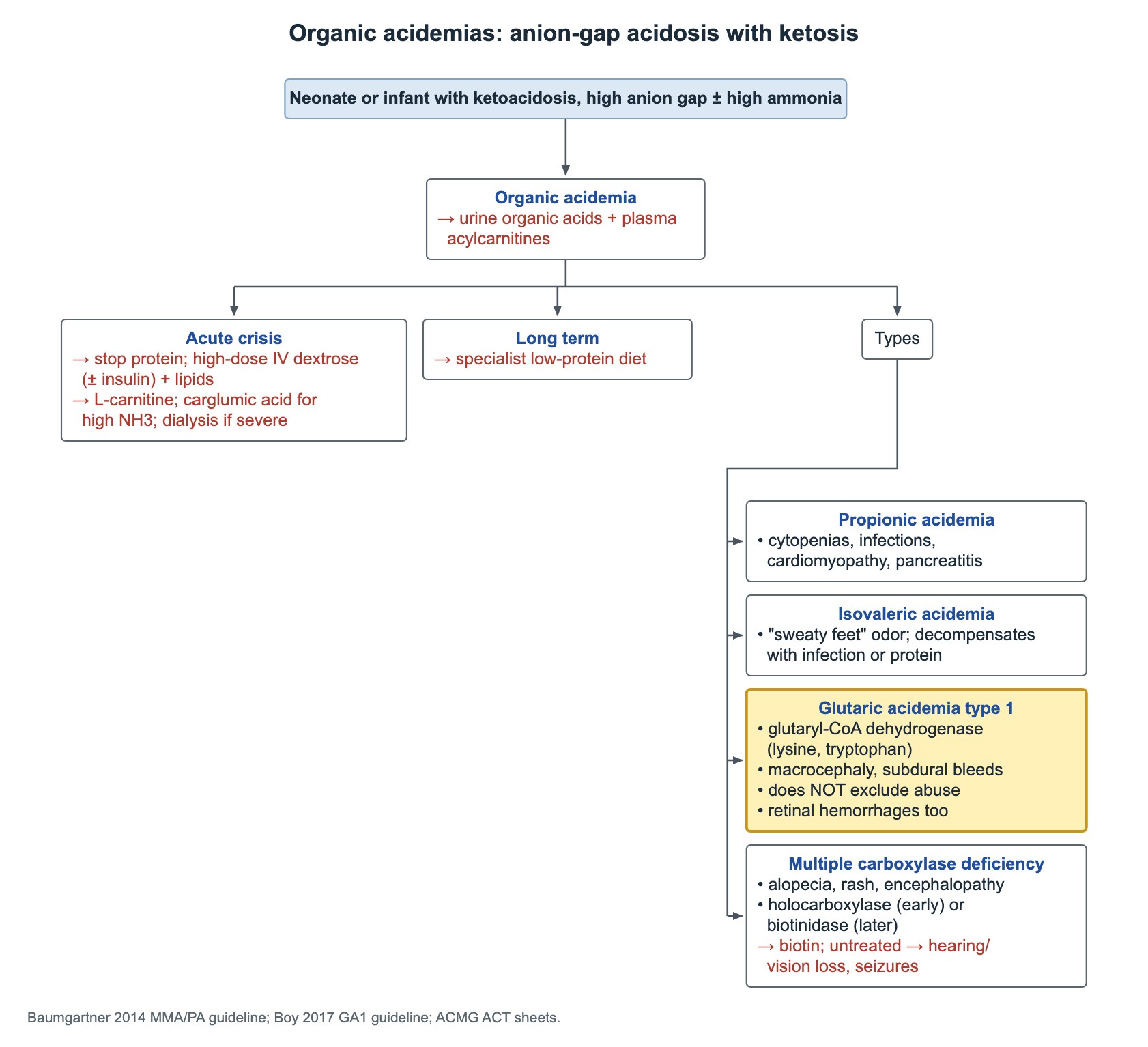
Glutaric acidemia type 1 (GA1) is caused by glutaryl-CoA dehydrogenase deficiency, which blocks the breakdown of lysine, hydroxylysine and tryptophan. Untreated infants are at risk of sudden striatal damage with a lasting dystonic movement disorder, often triggered by fever or illness before about 6 years of age.
- Clues: macrocephaly and characteristic brain imaging, with widened spaces around the brain.
- Subdural hemorrhages and retinal hemorrhages can occur, so GA1 can look like abusive head trauma.
- A GA1 diagnosis, or suspicion of it, does not exclude inflicted injury: complete the abuse evaluation.
- Newborn screening allows treatment before symptoms: low-lysine diet, carnitine and emergency treatment during illness.
Biotin disorders: multiple carboxylase deficiency
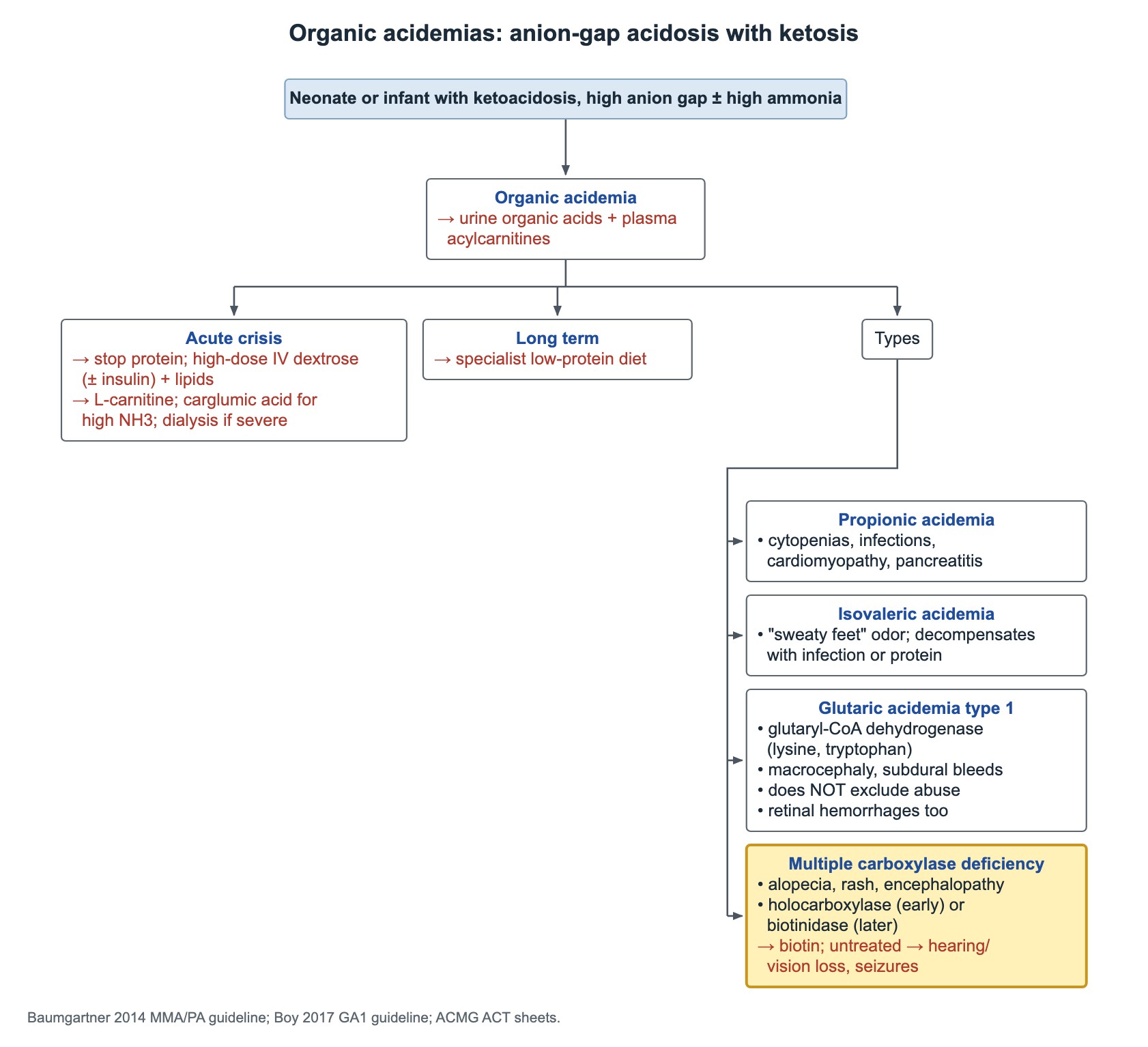
Several carboxylase enzymes need biotin. When biotin cannot be attached or recycled, all of them fail together: multiple carboxylase deficiency. Think of it in a child with alopecia, a scaly rash and encephalopathy.
- Untreated biotinidase deficiency can cause seizures and permanent hearing and vision loss.
- Biotinidase deficiency is on the US newborn screen; biotin started early prevents symptoms.
| Feature | Holocarboxylase synthetase deficiency | Biotinidase deficiency |
|---|---|---|
| Problem | Biotin cannot be attached to the carboxylases | Biotin cannot be recycled |
| Usual onset | Earlier, often in the newborn period | Later, usually in infancy |
| Treatment | Biotin | Biotin |
Common questions
What is the best test for a suspected organic acidemia?
Urine organic acids, together with plasma acylcarnitines. Check ammonia, glucose, lactate, a blood gas and urine ketones at the same time.
Which organic acidemia smells like sweaty feet?
Isovaleric acidemia, caused by isovaleryl-CoA dehydrogenase deficiency.
Can glutaric acidemia type 1 be mistaken for child abuse?
Yes. GA1 can cause subdural and retinal hemorrhages, but finding or suspecting GA1 does not rule out abuse, so the full abuse evaluation still goes ahead.
Study this topic
Sources
- Forny et al. 2021: Guidelines for methylmalonic and propionic acidaemia, first revision (J Inherit Metab Dis)
- Boy et al. 2023: Recommendations for glutaric aciduria type 1, third revision (J Inherit Metab Dis)
- ACMG 2017: Laboratory diagnosis of biotinidase deficiency (Genet Med)
- GeneReviews: Biotinidase deficiency
Written for Pedemy in our own words from the sources above; checked November 2026. For education only, not medical advice; check doses and local protocols before treating a patient. Pedemy is independent and not affiliated with or endorsed by the organizations cited.