

Main decision tree
Newborn anomalies: congenital diaphragmatic hernia
Key points
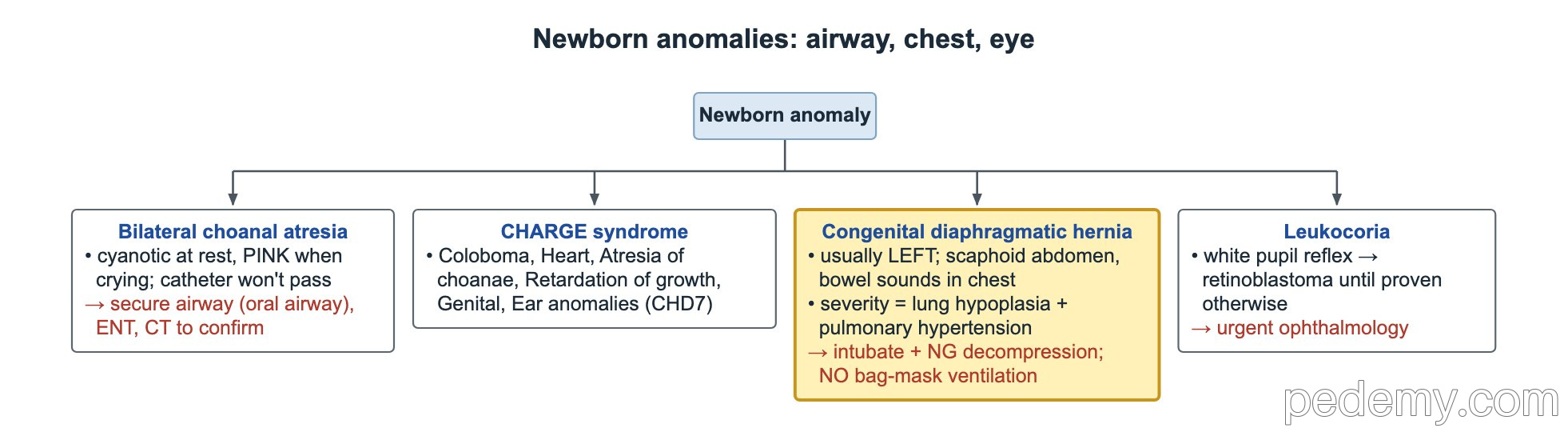
- Congenital diaphragmatic hernia is most often left-sided; severity depends on pulmonary hypoplasia and pulmonary hypertension.
- Distressed newborn with CDH → intubate and decompress the stomach; avoid bag-mask ventilation.
- Bilateral choanal atresia: cyanosis at rest that improves with crying; a catheter will not pass through the nose.
- CHARGE: Coloboma, Heart defect, Atresia of the choanae, Retardation of growth and development, Genital and Ear anomalies (CHD7).
- A white pupillary reflex (leukocoria) is retinoblastoma until proven otherwise → urgent ophthalmology.
- Mild redness within 24 hours of erythromycin eye ointment is chemical conjunctivitis and clears within 48 hours.
- Maternal varicella in the first 20 weeks can cause scarring, limb hypoplasia and eye defects (congenital varicella syndrome).
Congenital diaphragmatic hernia
Abdominal organs herniate into the chest through a diaphragm defect, most often on the left and posterolateral. The lung on that side, and often both lungs, are small, and the pulmonary vessels are abnormal, so pulmonary hypoplasia and pulmonary hypertension decide how sick the baby is.
- Clues: respiratory distress at birth, scaphoid abdomen, bowel sounds in the chest, heart sounds shifted to the right.
- Many cases are found on prenatal ultrasound; plan delivery at a center with neonatal surgery.
- Delivery room: intubate promptly and place a large orogastric or nasogastric tube to decompress the bowel.
- Avoid bag-mask ventilation: it inflates the herniated bowel and squeezes the lungs further.
- Use gentle ventilation and accept preductal saturation of 80–95%; surgical repair follows once the baby is stable.
Choanal atresia and CHARGE syndrome
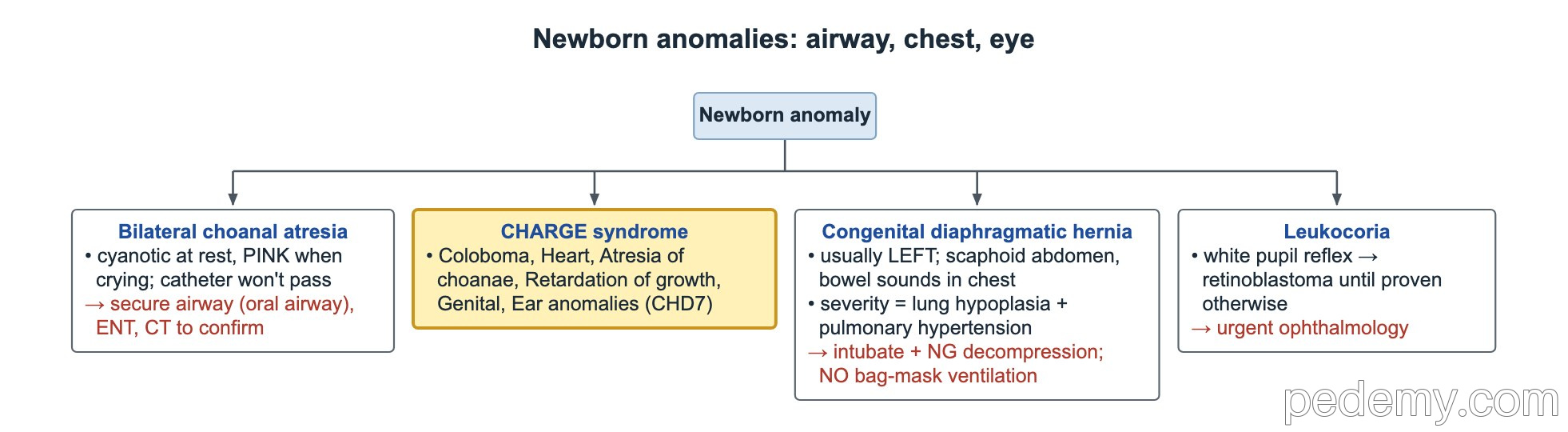
Newborns breathe mainly through the nose. With bilateral choanal atresia the baby is cyanotic at rest and pinks up when crying, because crying opens the mouth. A catheter cannot be passed through the nose into the pharynx.
- Secure the airway first with an oral airway; then ENT review and CT to confirm.
- Look for CHARGE syndrome (CHD7 variant) in any baby with choanal atresia.
- C = coloboma, H = heart defects, A = atresia of the choanae, R = retardation of growth and development, G = genital hypoplasia, E = ear anomalies and hearing loss.
Red reflex and leukocoria
The AAP recommends a red reflex check in the newborn nursery and at every routine well visit. Both eyes should show a symmetric red-orange reflex.
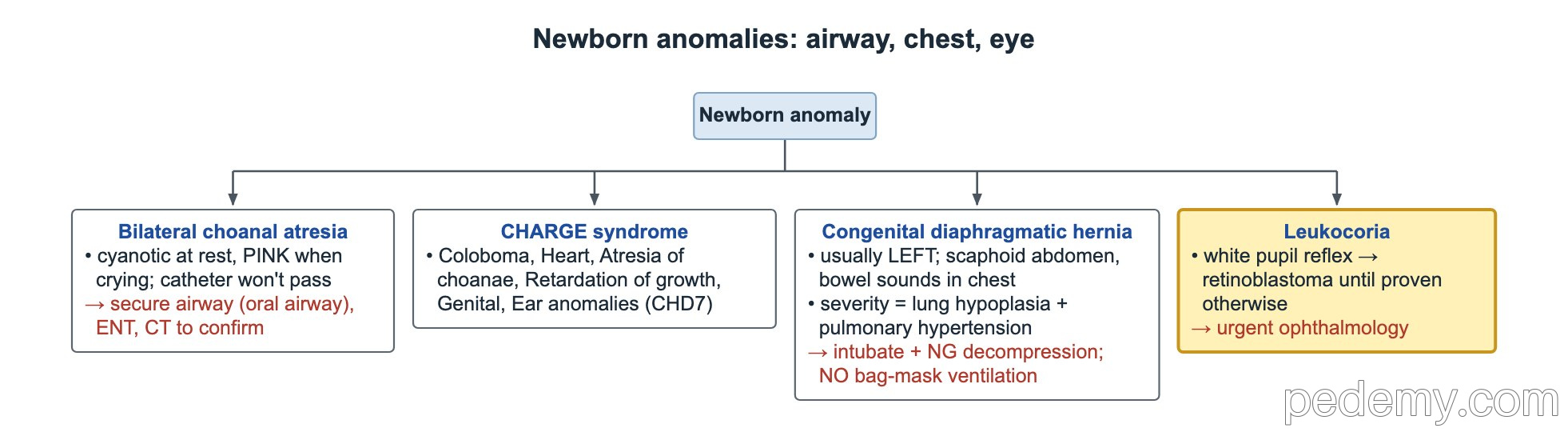
- A white pupillary reflex (leukocoria) is retinoblastoma until proven otherwise.
- Other causes include congenital cataract, retinopathy of prematurity, persistent fetal vasculature and Coats disease.
- Unexplained leukocoria, an absent reflex or an asymmetric reflex → urgent referral to a pediatric ophthalmologist.
- A family history of retinoblastoma needs ophthalmology screening from birth.
Craniosynostosis with limb findings: Apert syndrome
Apert syndrome is an FGFR2 craniosynostosis syndrome. It joins early fusion of skull sutures, usually the coronal sutures, with a flat midface and a typical limb finding.
- Confirming limb finding: symmetric syndactyly of the 2nd–4th fingers and toes, often a 'mitten hand' with a shared nail bed.
- Crouzon syndrome has similar skull and face findings but normal hands and feet.
- Pfeiffer syndrome has broad, deviated thumbs and great toes.
- Refer to a craniofacial team; watch for raised intracranial pressure, airway obstruction and hearing loss.
Eye prophylaxis and newborn conjunctivitis
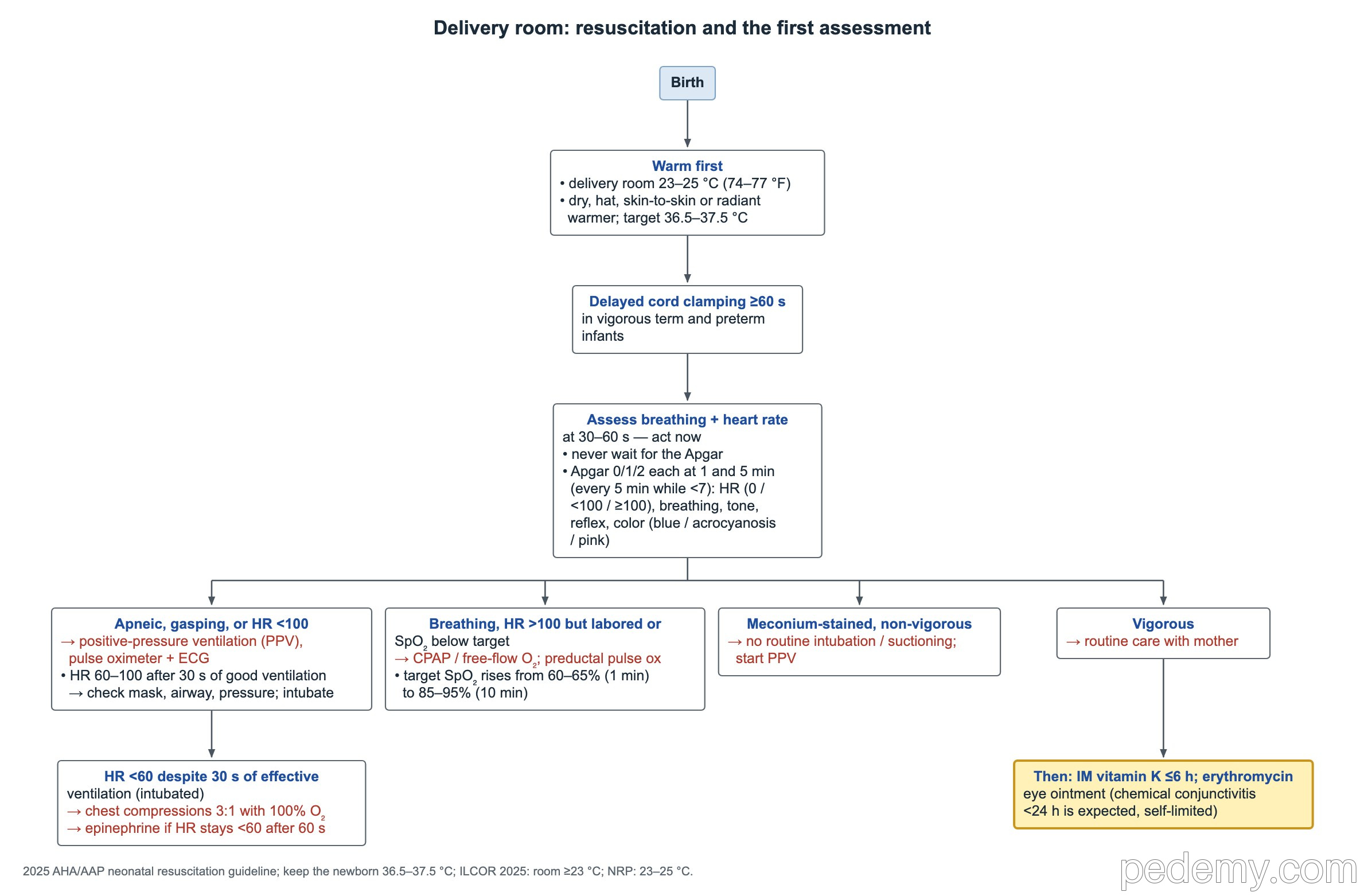
USPSTF (2019 reaffirmation) recommends ocular prophylaxis for all newborns to prevent gonococcal ophthalmia neonatorum. In the US this is erythromycin 0.5% ointment in both eyes, given soon after birth.
| Cause | Typical onset | Clues |
|---|---|---|
| Chemical (ointment) | Within 24 hours | Mild redness; clears within 48 hours without treatment |
| Gonococcal | Day 2–5 | Profuse pus, swollen lids; risk of corneal perforation; needs ceftriaxone |
| Chlamydial | Day 5–14 | Watery to purulent discharge; prophylaxis does not reliably prevent it; treat with oral erythromycin or azithromycin |
Congenital varicella syndrome
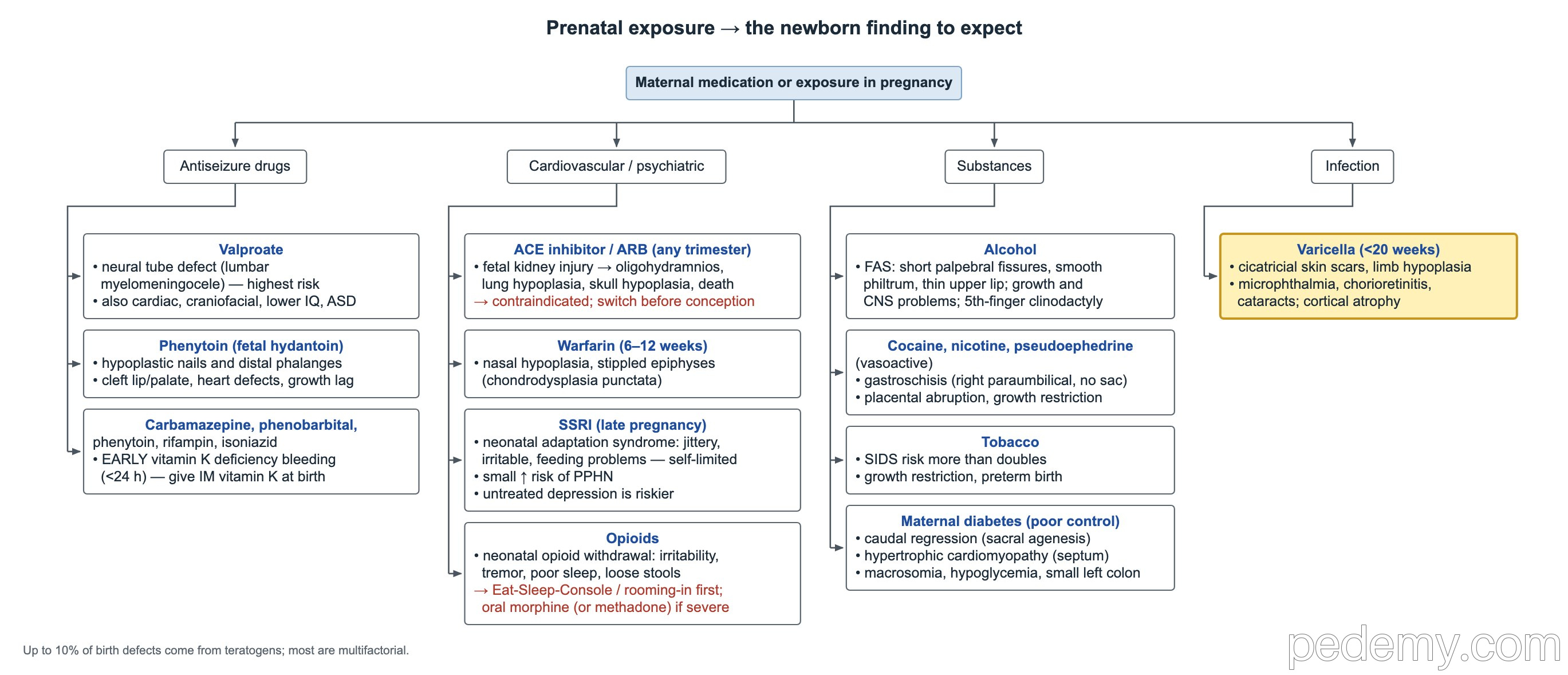
Maternal chickenpox in the first 20 weeks of pregnancy carries a small risk (about 1–2%) of congenital varicella syndrome.
- Skin: cicatricial (zigzag) scars, often in a dermatome pattern.
- Limbs: hypoplasia of a limb.
- Eyes: microphthalmia, chorioretinitis and cataracts.
- Brain: cortical atrophy, seizures and developmental delay.
- Different problem: maternal varicella from 5 days before to 2 days after delivery puts the newborn at risk of severe disease; give the baby varicella-zoster immune globulin.
Common questions
Why avoid bag-mask ventilation in congenital diaphragmatic hernia?
Air forced into the stomach and herniated bowel expands them inside the chest and compresses the small lungs. Intubate and decompress the stomach instead.
What does a white pupil in a baby mean?
Leukocoria must be treated as retinoblastoma until proven otherwise. The baby needs an urgent pediatric ophthalmology examination.
Is red eye after newborn eye ointment normal?
Mild redness within the first 24 hours is chemical conjunctivitis from the ointment. It clears within 48 hours without treatment.
Study this topic
Sources
- CDH EURO Consortium 2015 update: Standardized postnatal management of infants with congenital diaphragmatic hernia (Neonatology)
- AAP 2008: Red reflex examination in neonates, infants, and children (Pediatrics)
- USPSTF 2019: Ocular prophylaxis for gonococcal ophthalmia neonatorum, reaffirmation (JAMA)
- GeneReviews: CHD7 disorder (NCBI Bookshelf)
Written for Pedemy in our own words from the sources above; checked November 2026. For education only, not medical advice; check doses and local protocols before treating a patient. Pedemy is independent and not affiliated with or endorsed by the organizations cited.