

Main decision tree
Prenatal exposure: the newborn finding to expect
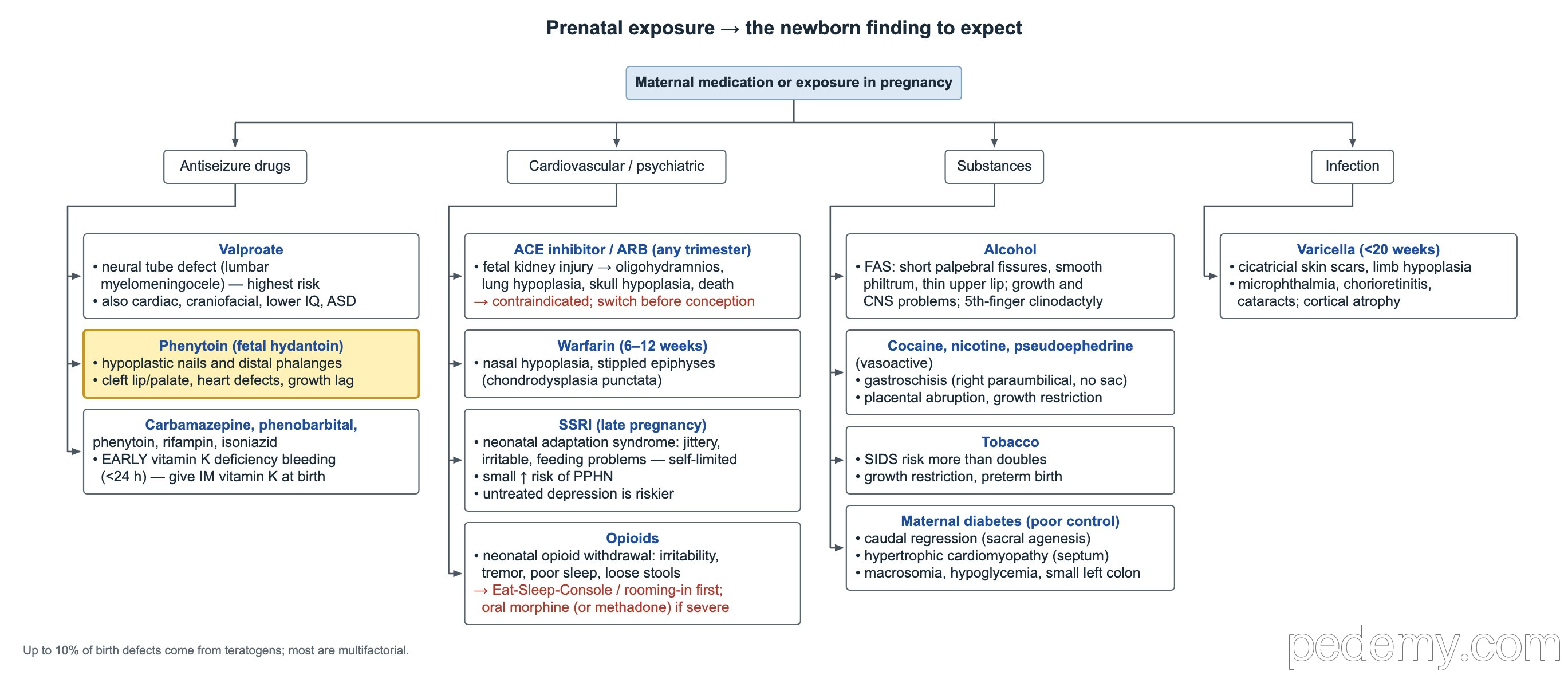
Key points
- Valproate and carbamazepine → neural tube defects (spina bifida); risk differs by antiseizure drug and is highest with valproate.
- Phenytoin: hypoplastic nails and distal phalanges, cleft lip/palate, heart defects (fetal hydantoin syndrome).
- ACE inhibitors and ARBs are avoided throughout pregnancy: fetal kidney injury → oligohydramnios, lung hypoplasia, poor skull ossification.
- Warfarin at 6–12 weeks: nasal hypoplasia and stippled epiphyses; switch to low-molecular-weight heparin.
- Late-pregnancy SSRI: self-limited neonatal adaptation syndrome and a small rise in PPHN risk; supportive care.
- Neonatal opioid withdrawal: non-drug care (Eat, Sleep, Console, rooming-in) first; oral morphine or methadone if that fails.
- Fetal alcohol syndrome: smooth philtrum, thin upper lip, short palpebral fissures, plus growth deficiency and CNS problems.
Antiseizure drugs and early vitamin K deficiency bleeding
Fetal risk is drug-specific, not the same for all antiseizure medicines. Valproate carries the highest risk; lamotrigine and levetiracetam carry the lowest. Uncontrolled seizures are also dangerous, so treatment is planned before conception, with folic acid.
- Enzyme-inducing drugs (phenytoin, phenobarbital, carbamazepine), rifampin, isoniazid and warfarin can cause early vitamin K deficiency bleeding in the first 24 hours: cord bleeding, melena, intracranial bleeding.
- Every newborn should get IM vitamin K at birth; these exposed babies need it most.
| Drug | Classic newborn findings |
|---|---|
| Valproate | Neural tube defect (lumbar myelomeningocele), heart and craniofacial defects, lower IQ |
| Carbamazepine | Neural tube defect (spina bifida) |
| Phenytoin (fetal hydantoin syndrome) | Hypoplastic nails and distal phalanges, cleft lip/palate, heart defects, growth lag |
ACE inhibitors, warfarin and older teratogens
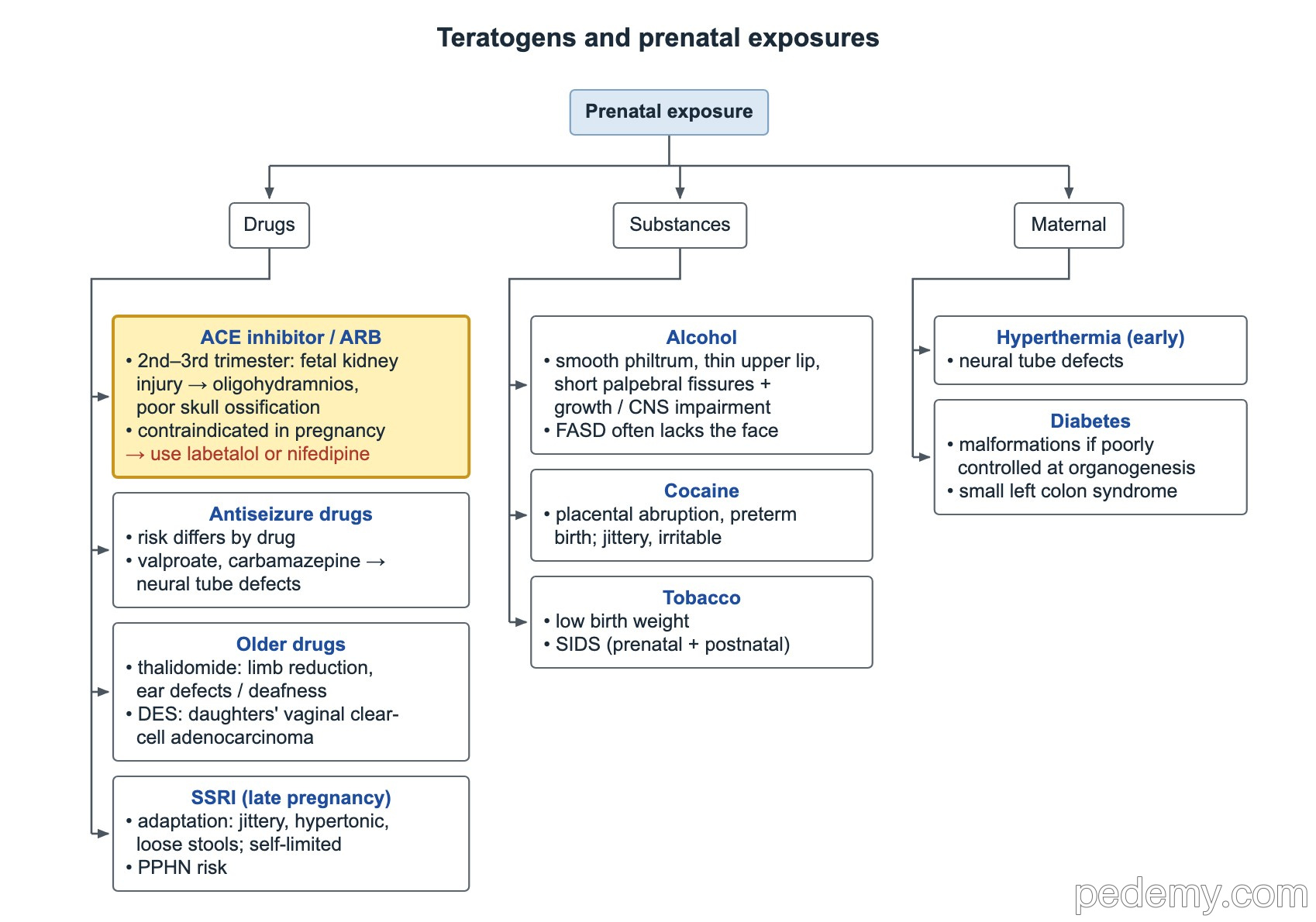
ACE inhibitors and ARBs are avoided in all trimesters and stopped before conception or as soon as pregnancy is found. The fetopathy comes mainly from 2nd- and 3rd-trimester exposure: fetal kidney injury causes fetal oliguria and therefore oligohydramnios.
- ACE inhibitor fetopathy: oligohydramnios, lung hypoplasia, limb contractures, flat face, poorly ossified skull (skull hypoplasia) and fetal death.
- Preferred drugs for hypertension in pregnancy: labetalol or nifedipine.
- Warfarin at 6–12 weeks: nasal hypoplasia and stippled epiphyses (chondrodysplasia punctata). Switch to low-molecular-weight heparin, which does not cross the placenta.
- Thalidomide (early pregnancy): severe limb-reduction defects, with ear malformations and hearing loss.
- Diethylstilbestrol (DES): clear-cell adenocarcinoma of the vagina or cervix in exposed daughters.
SSRIs in late pregnancy
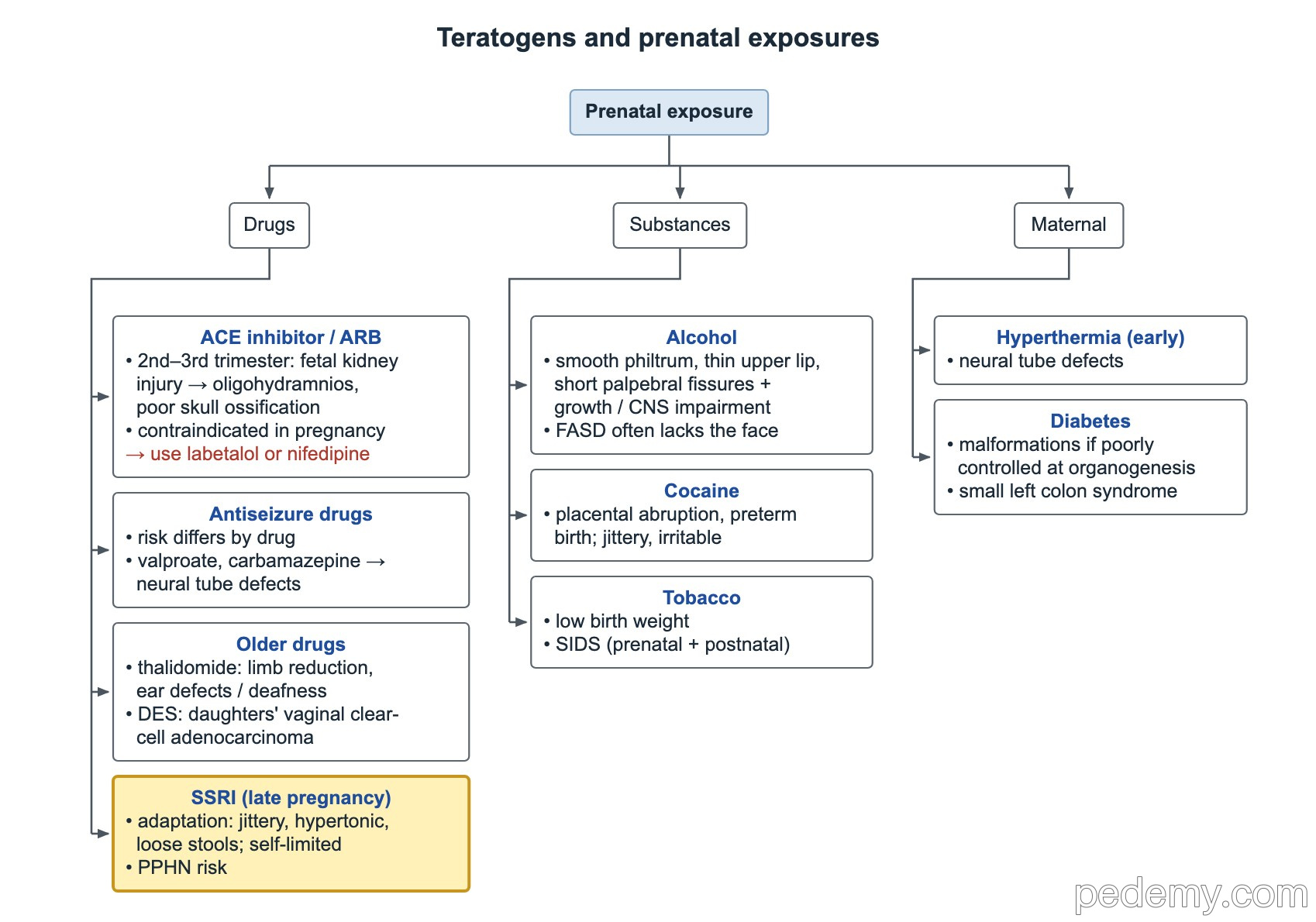
Untreated maternal depression has its own risks, so SSRIs are not stopped just because of pregnancy (ACOG 2023). Late-pregnancy exposure has two newborn effects to counsel about.
- Neonatal adaptation syndrome in the first days: jitteriness, irritability, hypertonia, loose stools, feeding and sleep problems. It is self-limited; treatment is supportive.
- A small increase in the risk of PPHN: low saturation with a preductal–postductal difference and a structurally normal heart.
Neonatal opioid withdrawal
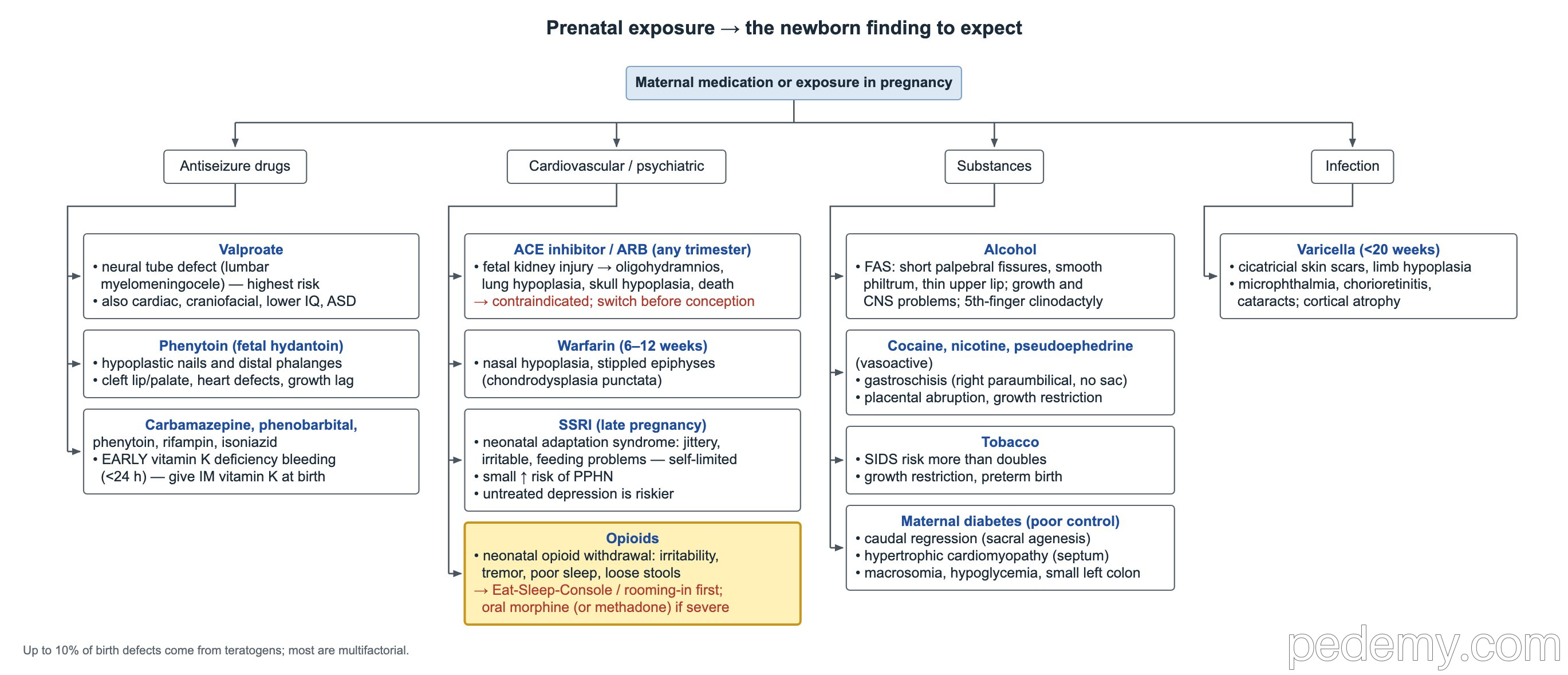
Babies exposed to opioids in utero can develop neonatal opioid withdrawal syndrome (NOWS): irritability, inconsolable crying, tremor, hypertonia, poor sleep, poor feeding and loose stools. Signs start earlier after short-acting opioids and later after methadone or buprenorphine.
- First-line care is non-drug: rooming-in with the parent, swaddling, skin-to-skin, a quiet room, on-demand feeding and breastfeeding when the parent is stable in treatment.
- Function-based assessment (Eat, Sleep, Console) reduces drug treatment and length of stay.
- If symptoms persist despite good non-drug care, give an oral opioid: morphine or methadone.
- Maternal treatment for opioid use disorder (methadone or buprenorphine) is continued in pregnancy.
Fetal alcohol spectrum disorders
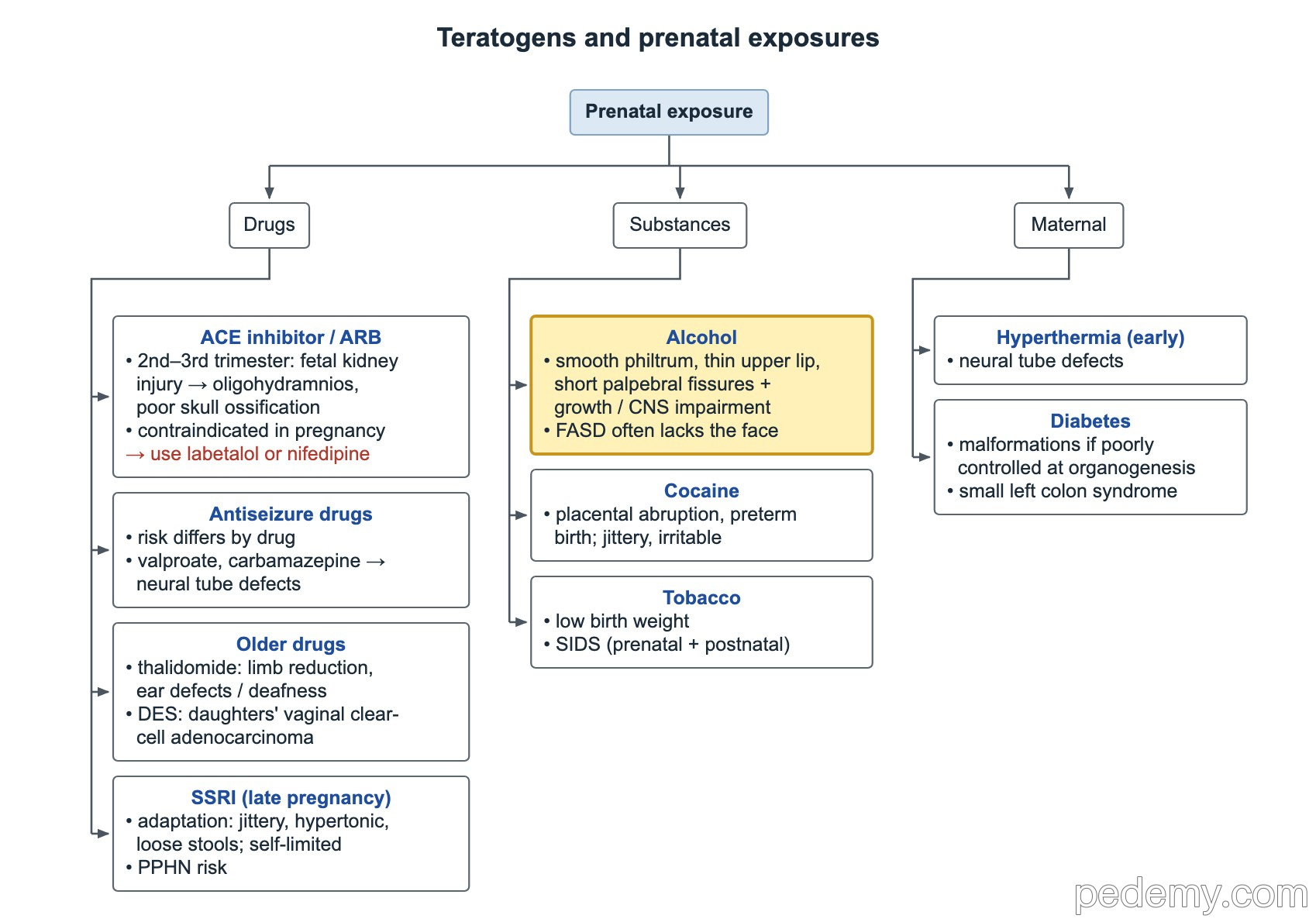
No amount of alcohol is known to be safe in pregnancy. Fetal alcohol syndrome (FAS) is the most recognizable form, but most children with a fetal alcohol spectrum disorder do not have the classic face.
- Face: short palpebral fissures, smooth philtrum and thin upper lip (at least 2 of the 3 for FAS).
- Plus growth deficiency (height or weight at or below the 10th percentile) and CNS problems (small head, brain abnormalities or neurobehavioral impairment).
- When all features of FAS are present, documented alcohol exposure is not required for the diagnosis.
- Supporting signs: fifth-finger clinodactyly (about half of affected infants) and 'railroad track' ears.
Cocaine, tobacco and cannabis
- Gastroschisis is usually an isolated defect, so a karyotype is not routinely needed (unlike omphalocele).
- The AAP advises against cannabis use in pregnancy and while breastfeeding.
| Exposure | Main effects |
|---|---|
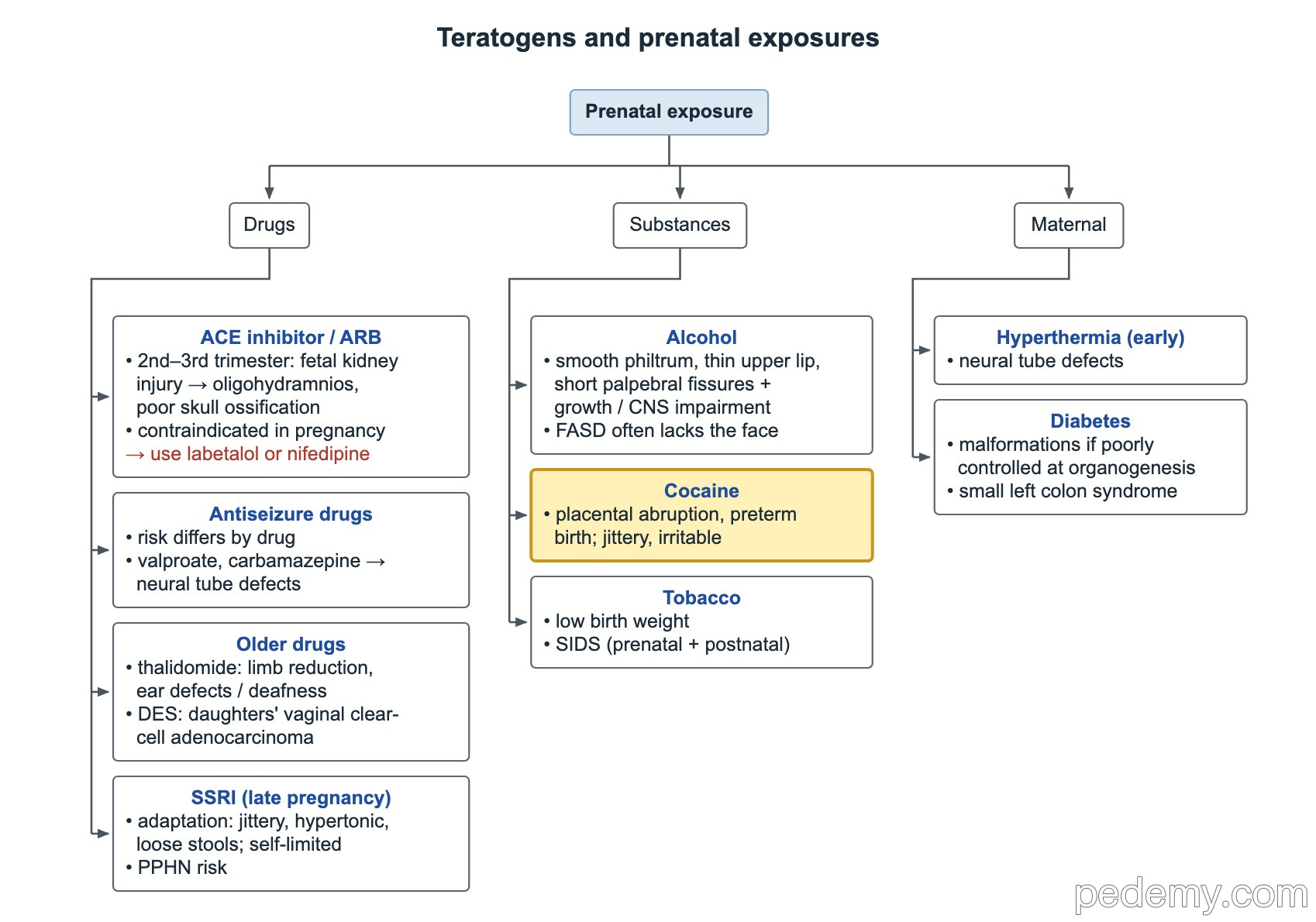
| Cocaine | Vasoconstriction → placental abruption near delivery, preterm birth, growth restriction; jittery, irritable newborn |
| Tobacco | Low birth weight, preterm birth; SIDS risk more than doubles (prenatal and postnatal smoke) |
| Cannabis (regular use) | Later attention problems, hyperactivity, and lower verbal reasoning and reading skills |
| Vasoactive substances (cocaine, nicotine, pseudoephedrine) | Linked with gastroschisis: bowel outside the abdomen to the right of the umbilicus, no sac |
Maternal diabetes and fever
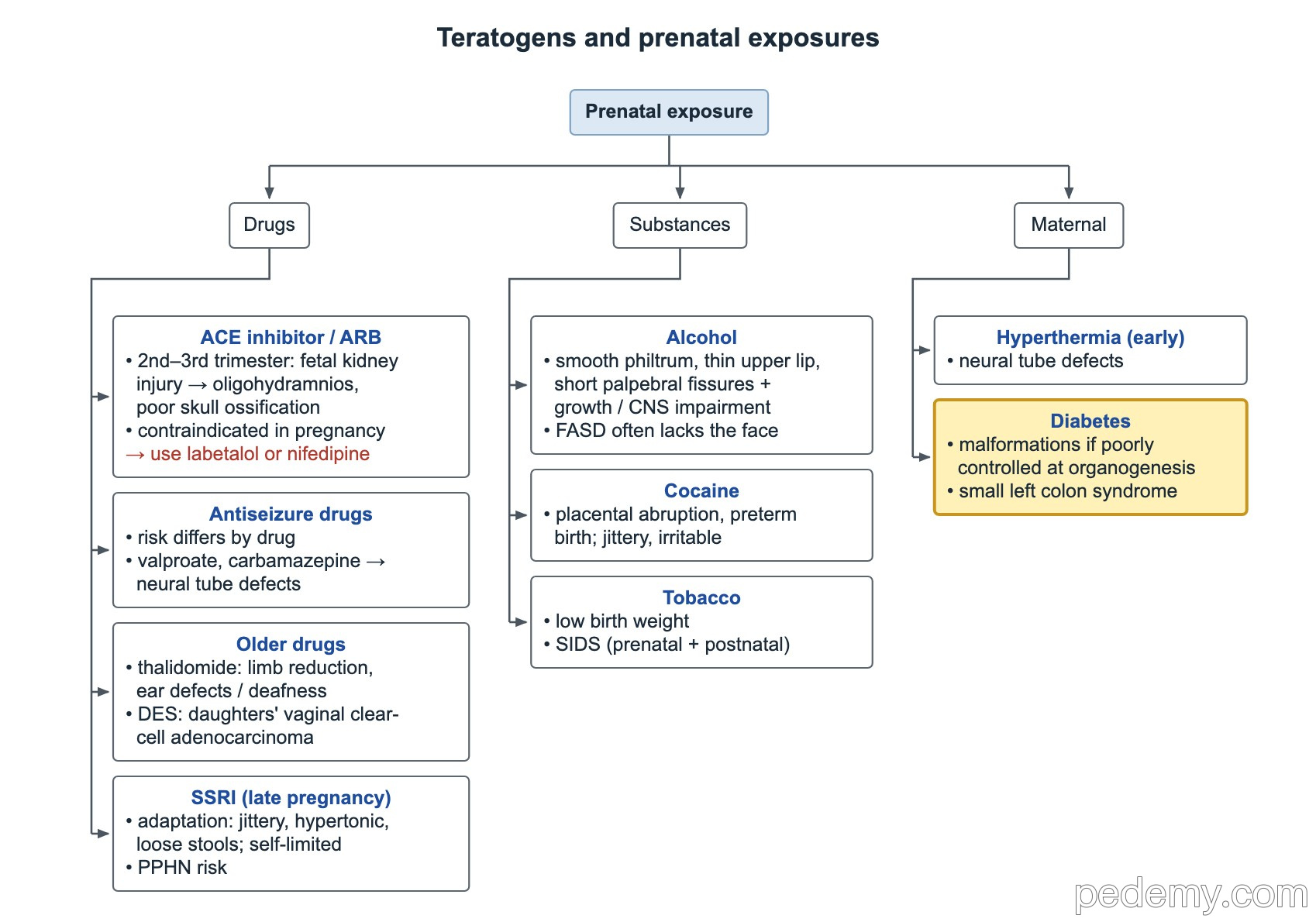
Pregestational diabetes raises the risk of structural malformations, especially when glucose control is poor during organogenesis in early pregnancy. Good control before conception lowers that risk.
- Caudal regression syndrome: absent sacrum, lumbar vertebral anomalies and weak lower limbs.
- Heart defects and septal hypertrophic cardiomyopathy; neural tube defects; small left colon syndrome.
- Fetal hyperinsulinism → macrosomia, shoulder dystocia and newborn hypoglycemia.
- Marked hyperthermia in early pregnancy (high fever, hot tubs) raises the risk of neural tube defects.
Common questions
Which antiseizure drug is most dangerous in pregnancy?
Valproate carries the highest risk of neural tube defects, other malformations and lower IQ. Risk is drug-specific; lamotrigine and levetiracetam carry the lowest risk.
Can ACE inhibitors be used in pregnancy?
No. ACE inhibitors and ARBs are avoided in all trimesters because they injure the fetal kidneys. Labetalol or nifedipine are used instead.
Does fetal alcohol spectrum disorder always show in the face?
No. Most affected children do not have the classic facial features; the diagnosis rests on growth, brain and behavior findings plus exposure.
How is neonatal opioid withdrawal treated?
Non-drug care comes first: rooming-in, swaddling, skin-to-skin and feeding on demand. Oral morphine or methadone is added only if symptoms persist.
Study this topic
Sources
- Hoyme et al. 2016: Updated clinical guidelines for diagnosing fetal alcohol spectrum disorders (Pediatrics)
- AAP 2020: Neonatal opioid withdrawal syndrome (Pediatrics)
- ACOG Clinical Practice Guideline 5 (2023): Treatment and management of mental health conditions during pregnancy and postpartum
- ACOG Practice Bulletin 203: Chronic hypertension in pregnancy (2019)
- AAP 2018: Marijuana use during pregnancy and breastfeeding (Pediatrics)
Written for Pedemy in our own words from the sources above; checked November 2026. For education only, not medical advice; check doses and local protocols before treating a patient. Pedemy is independent and not affiliated with or endorsed by the organizations cited.