

Main decision tree
Size, gestational age and infant mortality
Key points
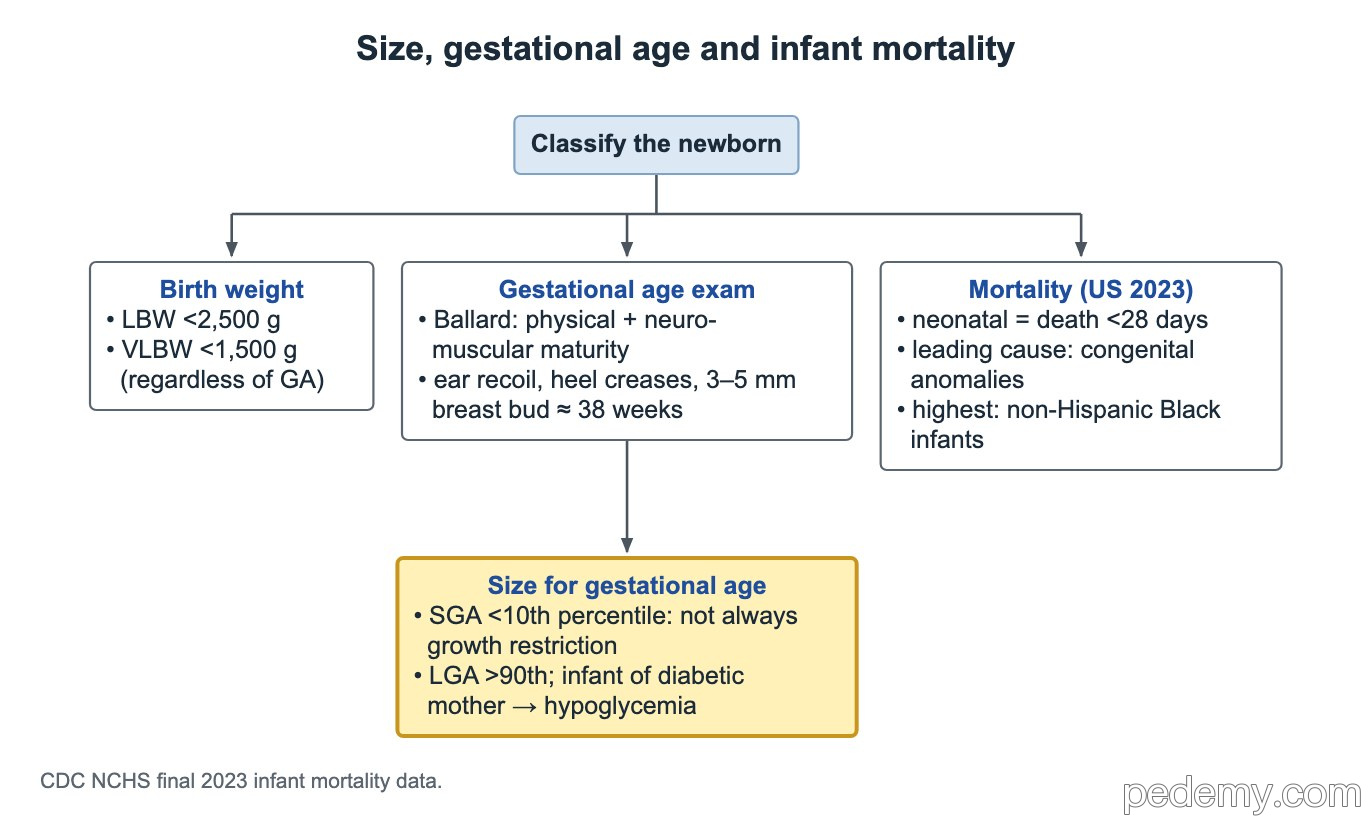
- Low birth weight is below 2500 g and very low birth weight below 1500 g, whatever the gestational age.
- Small for gestational age is below the 10th percentile; large for gestational age is above the 90th percentile.
- Neonatal deaths are deaths before 28 days; the leading cause of US infant death (2023) is congenital malformations.
- Vitamin K: one IM dose within 6 hours of birth prevents vitamin K deficiency bleeding.
- The umbilical cord normally has 2 arteries and 1 vein and falls off in 1–2 weeks; after 3 weeks is delayed.
- Low-risk sacral dimple: 5 mm or less, within 2.5 cm of the anus, no other skin marker.
- Stretched penile length below 2.0–2.5 cm in a term boy is micropenis and needs endocrine evaluation.
Birth weight and size for gestational age
- SGA does not always mean fetal growth restriction: some babies are constitutionally small.
- A large infant of a diabetic mother is at risk of early hypoglycemia; check glucose.
- Gestational age after birth is estimated with the New Ballard Score, which combines physical and neuromuscular maturity.
- Ear recoil, heel creases and a 3–5 mm breast nodule with a nearly covered clitoris fit about 38 weeks.
- Smooth soles without creases point to less than 32 weeks.
- Post-term babies look alert, with dry peeling skin, long nails, little subcutaneous fat and meconium staining.
| Term | Definition |
|---|---|
| Low birth weight | Below 2500 g, regardless of gestational age |
| Very low birth weight | Below 1500 g, regardless of gestational age |
| Small for gestational age (SGA) | Birth weight below the 10th percentile for gestational age |
| Large for gestational age (LGA) | Birth weight above the 90th percentile for gestational age |
Infant mortality terms
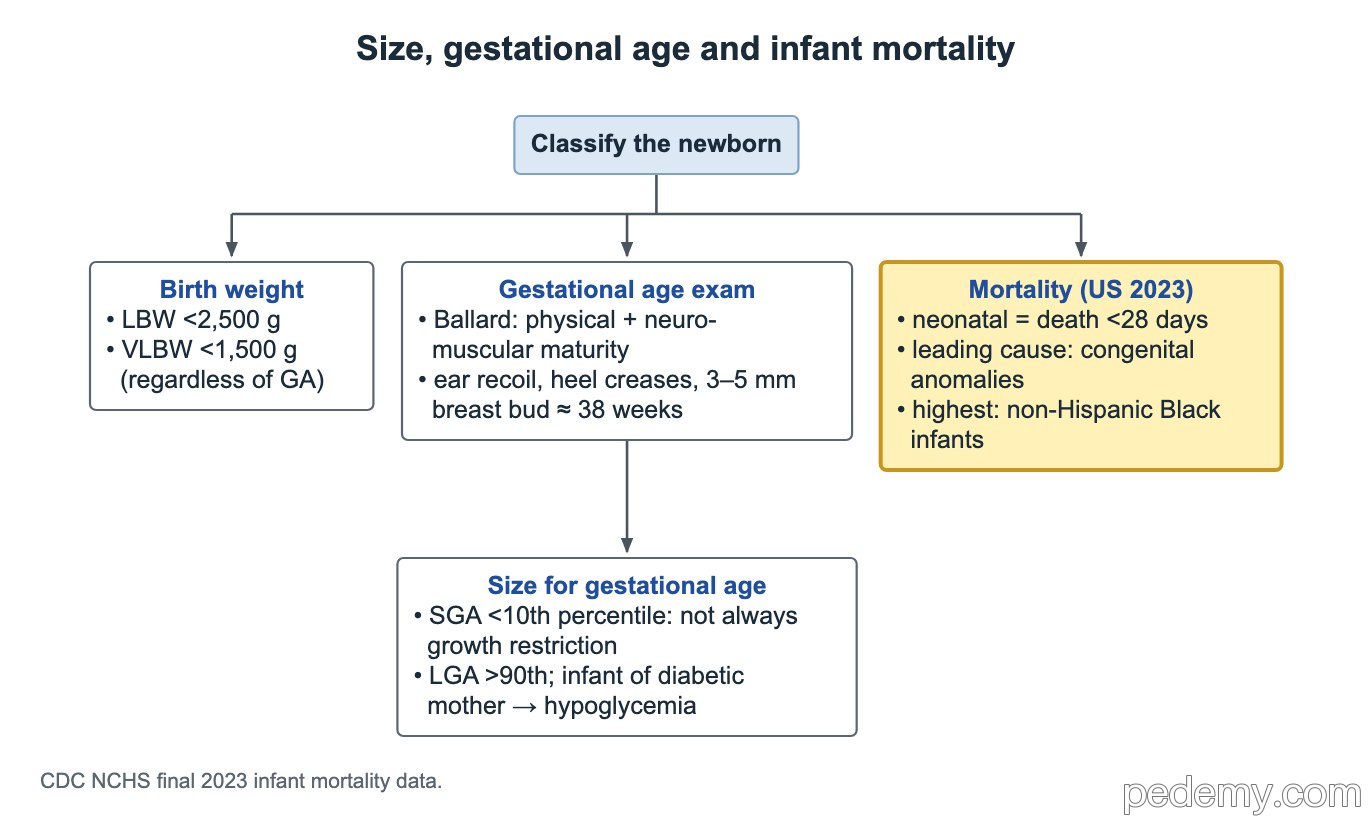
- Neonatal mortality: deaths before 28 days of age. Infant mortality: deaths before 1 year.
- In final US 2023 data, the leading cause group of infant death is congenital malformations, deformations and chromosomal abnormalities.
- Among the major reported race and ethnicity groups, non-Hispanic Black infants have the highest infant mortality.
Vitamin K and circumcision
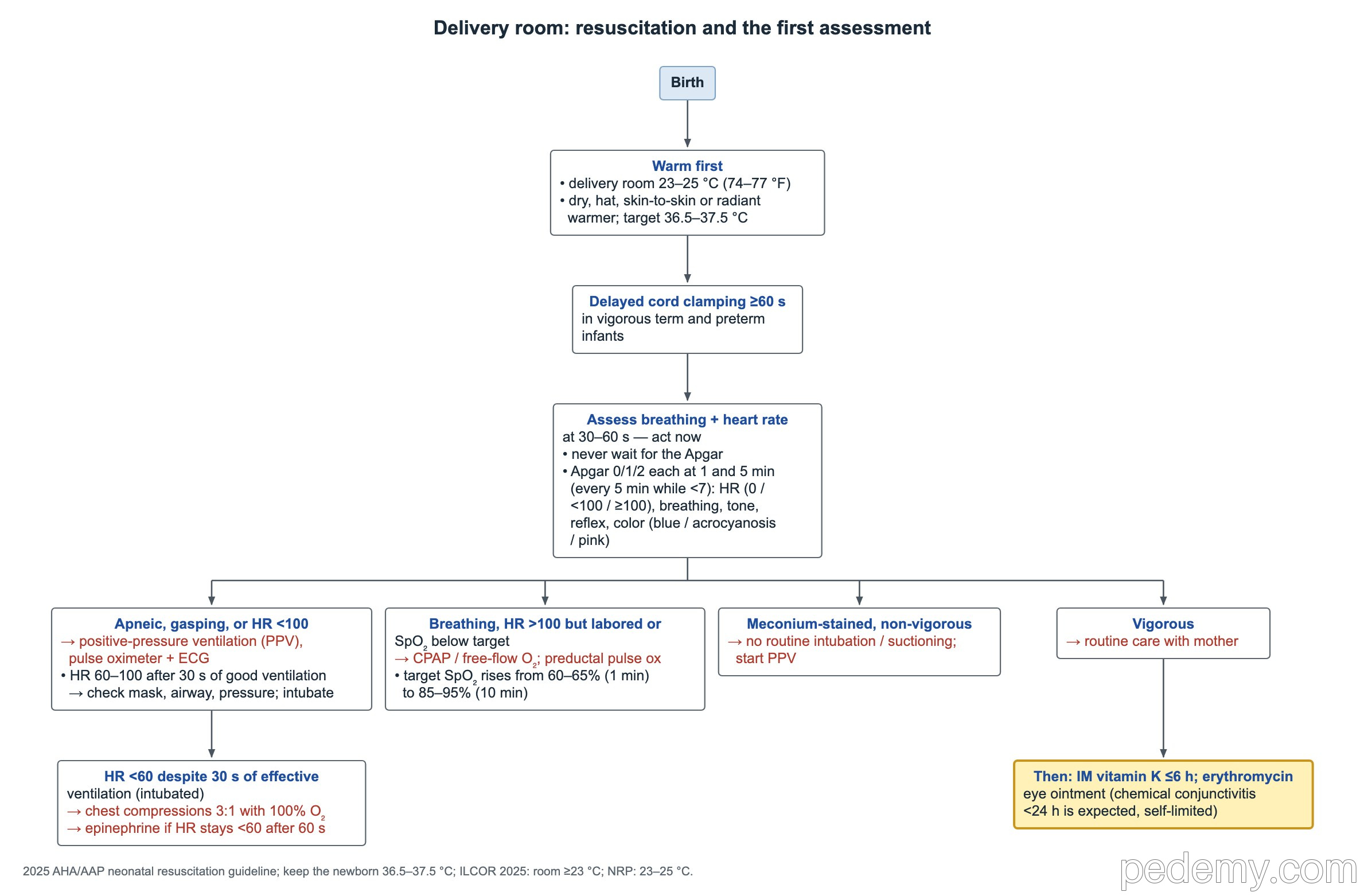
Newborns have low vitamin K stores and breast milk contains little. The AAP (2022) recommends a single IM dose within 6 hours of birth: 1 mg for babies over 1500 g and 0.3–0.5 mg/kg for smaller babies.
- Refusing vitamin K risks vitamin K deficiency bleeding, including late bleeding at 2–12 weeks with intracranial hemorrhage.
- Oral vitamin K regimens are less effective than the single IM dose.
- Circumcision lowers the risk of urinary tract infection in infancy and of HIV, HSV-2 and HPV infection later; it does not protect against gonorrhea, chlamydia or syphilis (AAP 2012).
Umbilical cord and stump
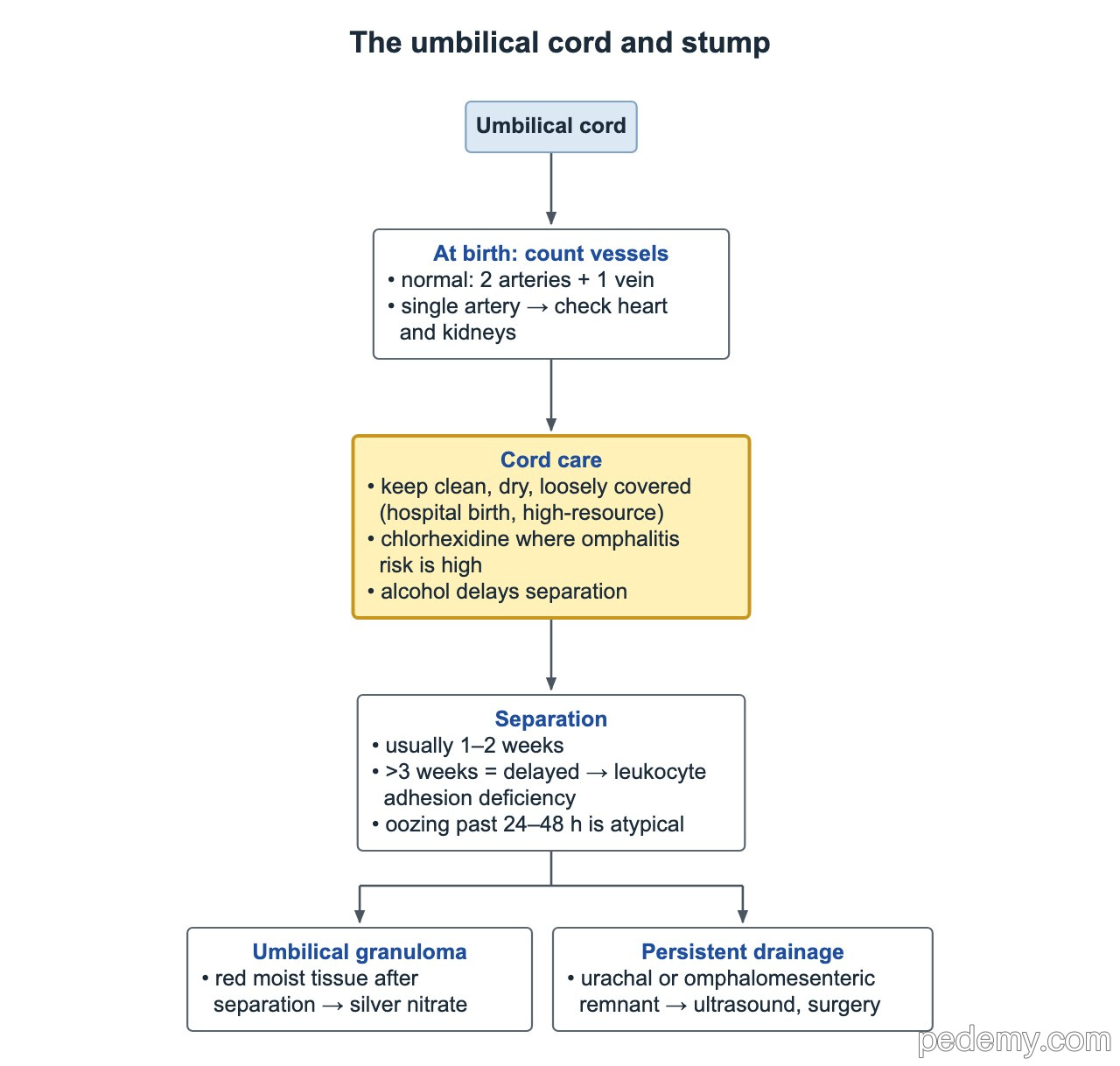
- A normal cord has 2 arteries and 1 vein. A single umbilical artery raises the risk of renal, cardiac and GI anomalies; with an otherwise normal examination, routine renal ultrasound is no longer recommended.
- Hospital births in high-resource settings: dry cord care (clean, dry, loosely covered). Routine alcohol delays separation.
- Chlorhexidine helps only in home births and low-resource settings with high omphalitis rates.
- The stump falls off in 1–2 weeks; separation after 3 weeks is delayed (think leukocyte adhesion deficiency).
- Oozing that lasts more than 1–2 days after separation is abnormal and needs a bleeding work-up.
- Moist red nodule after separation without cellulitis: umbilical granuloma → silver nitrate (protect the skin). A red mucus-secreting lesion that persists is an umbilical polyp → excision.
- Ongoing drainage (urine or stool) suggests a urachal or omphalomesenteric remnant → ultrasound and surgery.
Sacral dimples and spinal markers
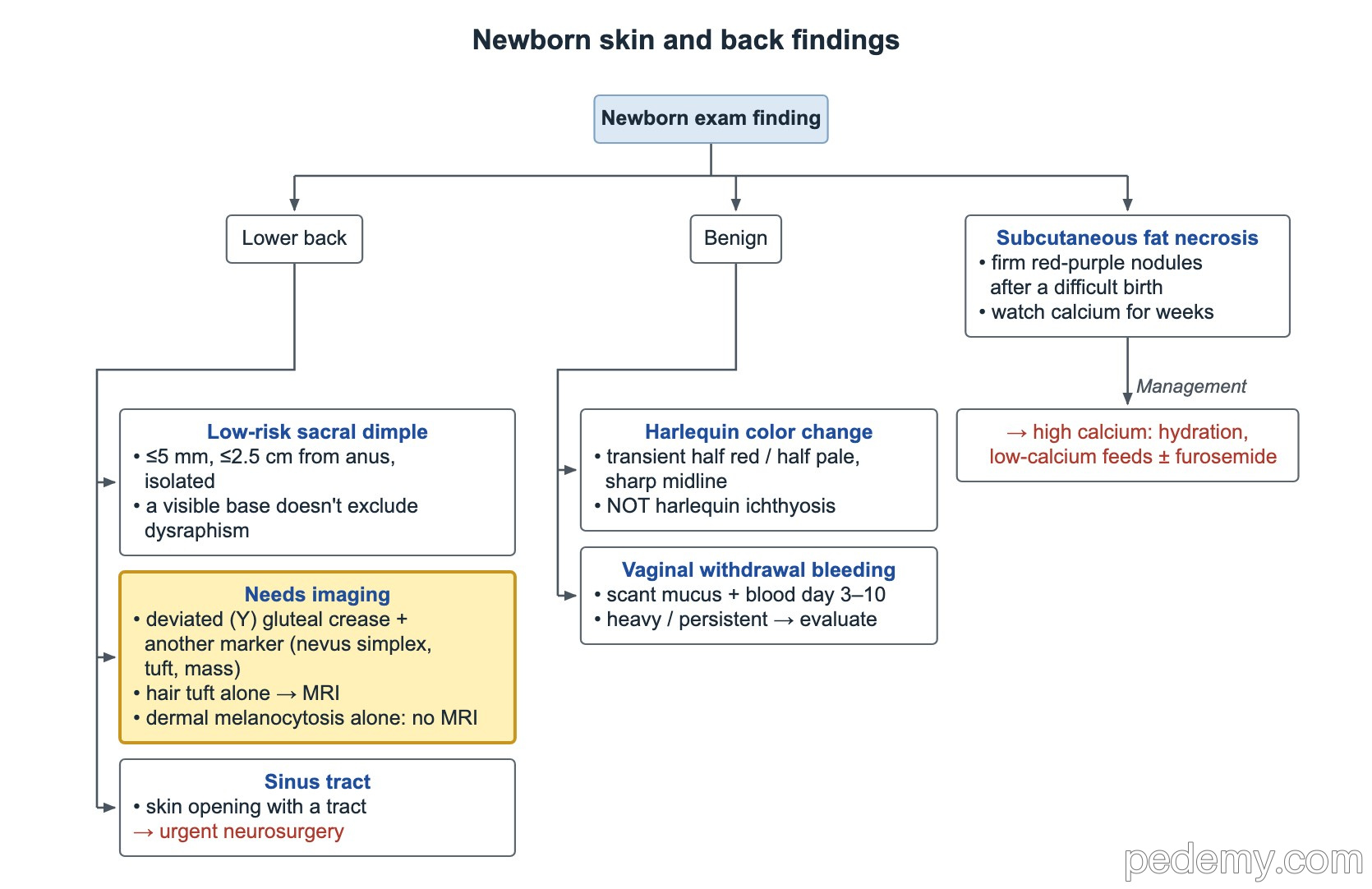
- Low-risk coccygeal dimple: 5 mm or less, within 2.5 cm of the anus, isolated; no imaging.
- Seeing the floor of a dimple does not rule out spinal dysraphism.
- Image the spine for a hair tuft, or a deviated (Y-shaped) gluteal cleft with another marker such as a nevus simplex, hemangioma or fatty mass; MRI is the definitive test.
- Dermal melanocytosis (blue-gray patch) alone does not need imaging.
- A pit with a sinus tract or drainage → prompt neurosurgery referral (infection and meningitis risk).
Benign skin and genital findings
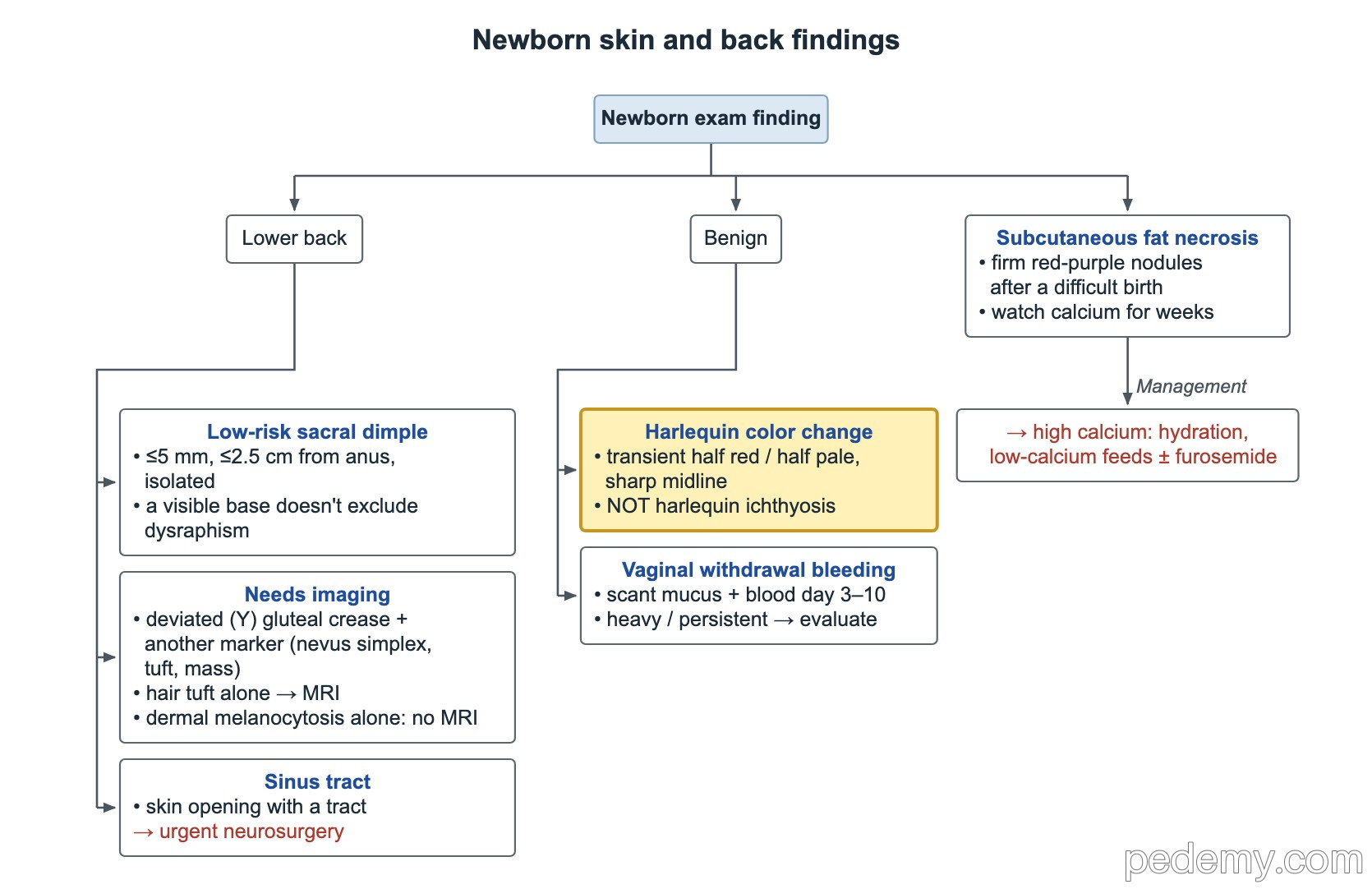
- High calcium after fat necrosis: hydration, low-calcium feeds and, if needed, furosemide.
| Finding | What it is | Action |
|---|---|---|
| Harlequin color change | Sudden, sharply demarcated redness of the dependent half of the body for minutes, often in preterm babies; not harlequin ichthyosis | None |
| Vaginal bleeding in the first 1–2 weeks | Withdrawal from maternal estrogen | Reassure; evaluate if heavy or persistent |
| Hymenal tag | Normal variant in up to 10% of newborn girls | None |
| Subcutaneous fat necrosis | Firm red-purple nodules after a difficult birth, preeclampsia or therapeutic hypothermia | Observe; check calcium every 1–2 weeks for up to 6 months |
| Craniotabes | 'Ping-pong ball' softening of the parietal bone; normal in preterm babies | Think of congenital syphilis or rickets if marked or persistent |
Other findings on the newborn examination
| Finding | Key point |
|---|---|
| Developmental dysplasia of the hip | Highest risk in girls born breech (about 12%); after 3 months, limited abduction and the Galeazzi sign (unequal knee heights) are most useful |
| Extra digit | A bony articulation with the hand needs orthopedic consultation |
| Micropenis | Stretched length below 2.0–2.5 cm at term; endocrine evaluation (pituitary and testosterone). Palpable liver edge, spleen tip and lower kidney poles are normal |
| Umbilical hernia | Observe; refer if incarcerated or symptomatic, still enlarging after 1–2 years, or still present at about 5 years |
| Congenital muscular torticollis | Firm, non-tender mass in the lower sternocleidomastoid with head tilt; stretching and physiotherapy; examine the hips |
| Natal teeth | Over 90% are early primary teeth; remove only if loose (aspiration risk) or injuring feeding |
| Ranula | Bluish, fluctuant swelling under the tongue, lateral to the midline (sublingual gland pseudocyst) |
| Cystic hygroma | Soft, compressible posterior neck mass that transilluminates; linked with Turner syndrome and trisomies 21, 18 and 13 |
Common questions
What birth weight is low birth weight?
Below 2500 g, whatever the gestational age. Very low birth weight is below 1500 g.
When should the umbilical cord fall off?
Usually at 1–2 weeks. Separation after 3 weeks is delayed and can be a sign of leukocyte adhesion deficiency.
Which sacral dimples need an ultrasound or MRI?
Dimples larger than 5 mm, more than 2.5 cm from the anus, or with a hair tuft, sinus tract, mass, hemangioma or deviated gluteal cleft. A small, low, isolated dimple needs no imaging.
Study this topic
Sources
- AAP 2022: Vitamin K and the newborn infant (Pediatrics)
- AAP 2016: Umbilical cord care in the newborn infant (Pediatrics)
- AAP 2016: Evaluation and referral for developmental dysplasia of the hip in infants (Pediatrics)
- AAP Task Force on Circumcision 2012: Male circumcision, technical report (Pediatrics)
Written for Pedemy in our own words from the sources above; checked November 2026. For education only, not medical advice; check doses and local protocols before treating a patient. Pedemy is independent and not affiliated with or endorsed by the organizations cited.