

Main decision tree
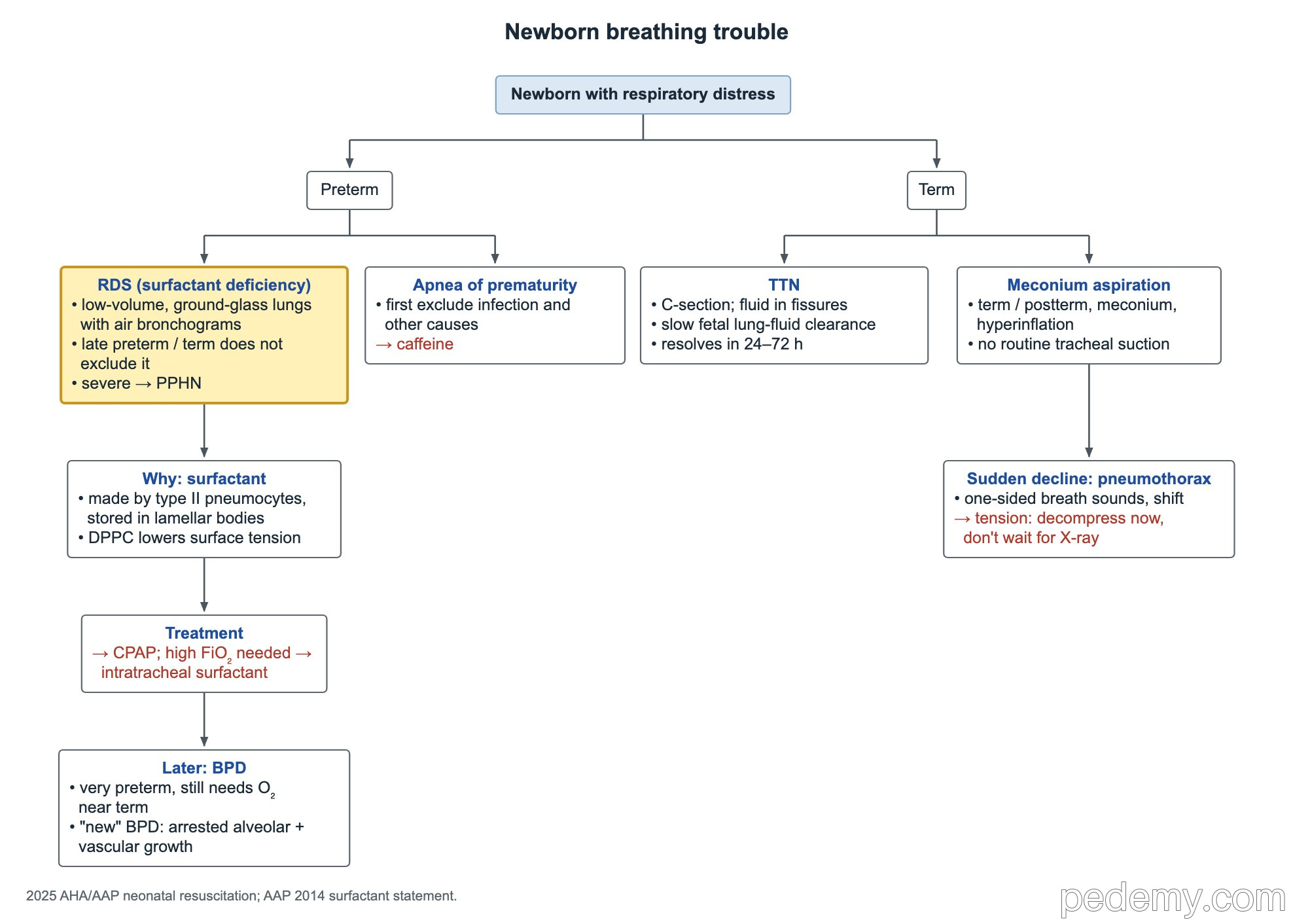
Newborn breathing trouble
Key points
- RDS: surfactant deficiency with low-volume, ground-glass lungs and air bronchograms; late preterm or term birth does not exclude it.
- Surfactant is made by type II pneumocytes, stored in lamellar bodies, and its main lipid DPPC lowers surface tension.
- TTN: cesarean birth without labor, fluid in the fissures, better within 24–72 hours.
- Meconium-stained fluid alone is not a reason for routine tracheal suction (AHA/AAP 2025).
- PPHN: pre-ductal SpO2 higher than post-ductal, structurally normal heart with right-to-left shunting.
- Unstable newborn with suspected tension pneumothorax: decompress now; do not wait for an X-ray.
- True apnea: a pause of 20 seconds or more, or shorter with bradycardia or desaturation; treat apnea of prematurity with caffeine after excluding other causes.
Respiratory distress syndrome (surfactant deficiency)
The tree splits newborn breathing trouble into preterm causes (RDS, apnea of prematurity) and term causes (TTN, meconium aspiration). RDS is the main preterm cause: without enough surfactant, alveoli collapse at the end of each breath.
- Classic picture: a preterm infant with grunting, retractions and rising oxygen need in the first hours.
- Chest X-ray: low lung volumes, diffuse ground-glass (granular) lungs and air bronchograms.
- Babies born at 35–37 weeks or at term can still have RDS, for example after elective cesarean birth or with maternal diabetes.
- Severe surfactant deficiency with refractory hypoxemia: suspect persistent pulmonary hypertension of the newborn (PPHN).
- Antenatal corticosteroids given to the mother before preterm birth lower the risk.
Surfactant: how it works and when to give it
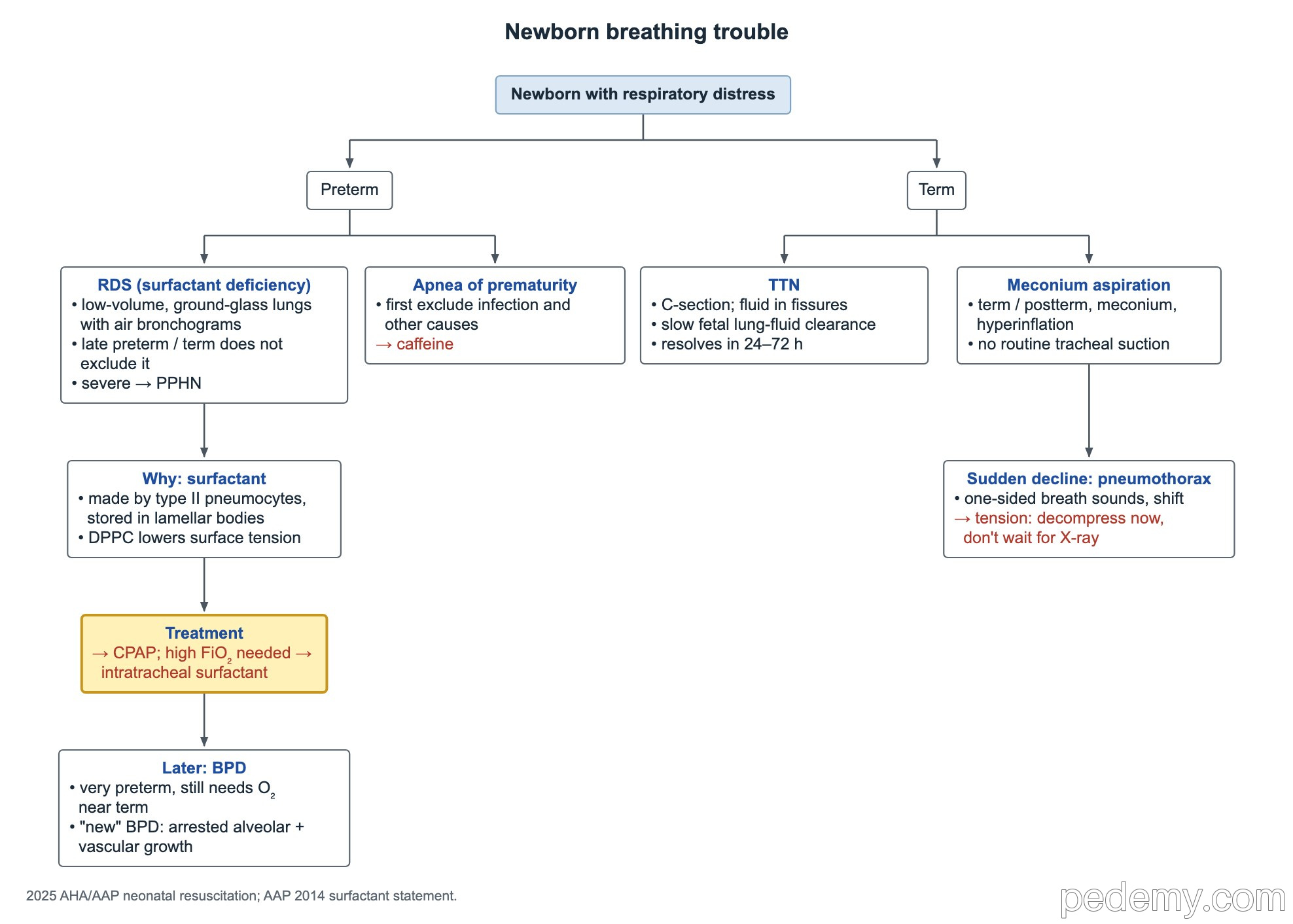
- Surfactant is made by type II pneumocytes and stored in lamellar bodies.
- Its main surface-active phospholipid is dipalmitoylphosphatidylcholine (DPPC). It lowers surface tension so alveoli stay open at end-expiration.
- First-line support for a preterm baby with RDS is CPAP from birth.
- If the oxygen need stays high on CPAP, give intratracheal surfactant with appropriate airway support. Example: a 36.5-week infant with ground-glass lungs on CPAP 8 and FiO2 100% with SpO2 91% needs surfactant.
- Intubated term infants with severe meconium aspiration also oxygenate better after surfactant.
Transient tachypnea of the newborn
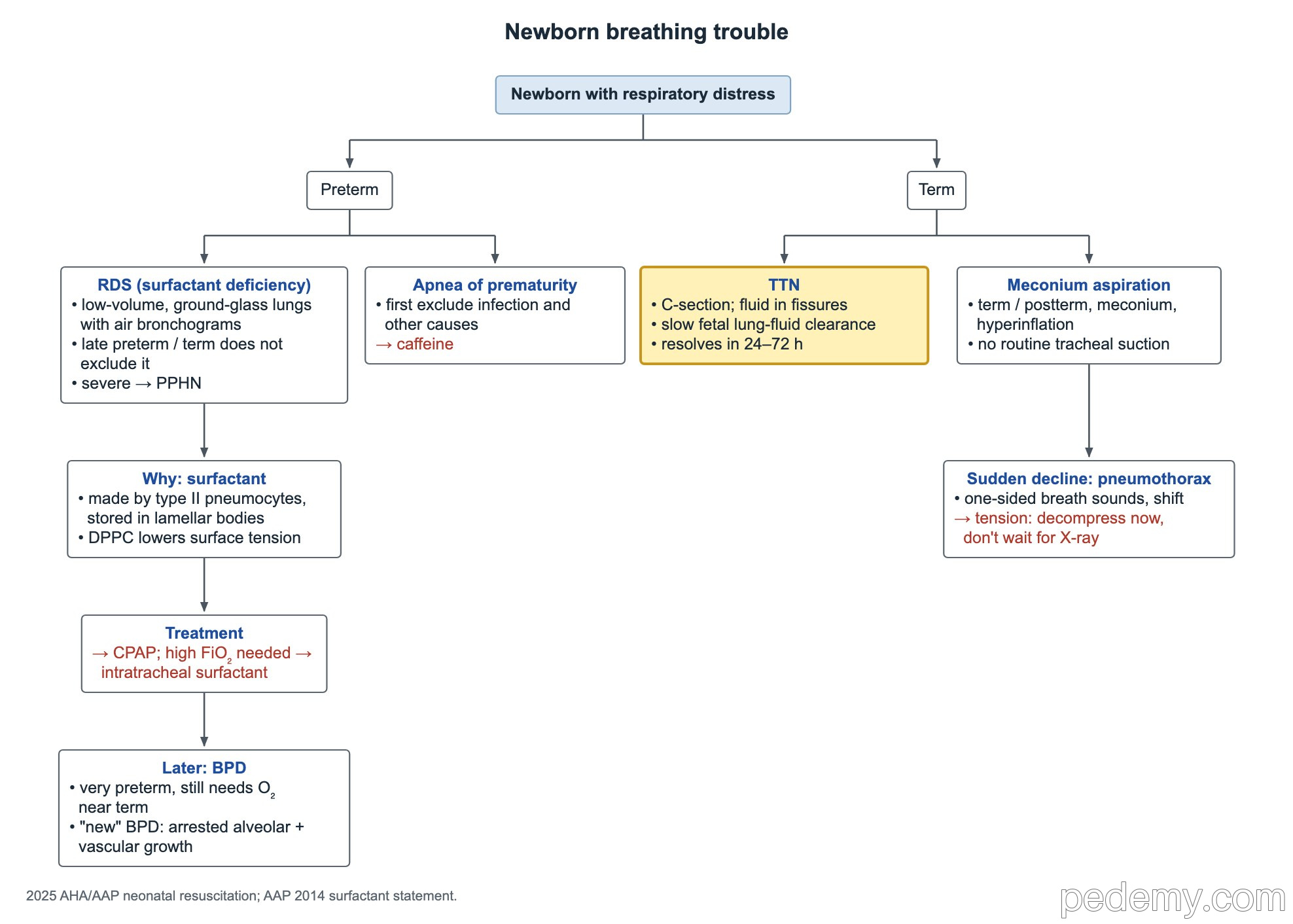
- Cause: delayed clearance of fetal lung fluid.
- Typical baby: born by cesarean without labor (also late preterm, maternal diabetes or asthma), tachypnea within the first 2 hours, mild grunting and retractions, otherwise normal and afebrile.
- Chest X-ray: fluid in the fissures and perihilar streaking, with normal or increased lung volume.
- It improves and resolves within about 24–72 hours. Give oxygen as needed; a typical case does not need antibiotics.
- Worsening after the first day, or a high oxygen need, points to another cause (RDS, pneumonia, PPHN).
Meconium aspiration and PPHN
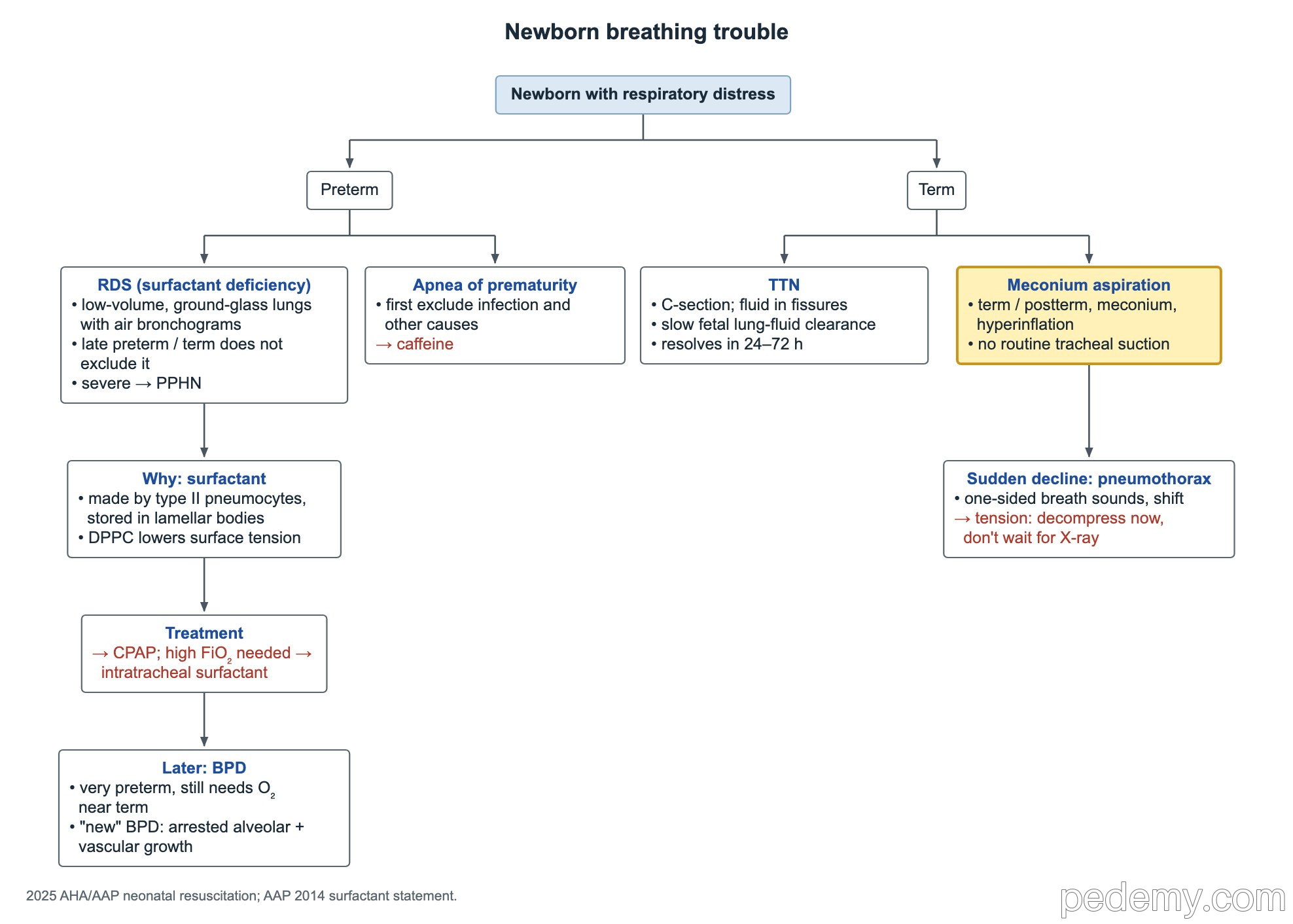
- Meconium aspiration syndrome: a term or post-term infant with meconium-stained fluid, distress soon after birth and hyperinflation with patchy infiltrates on X-ray.
- AHA/AAP 2025: meconium-stained fluid alone is not an indication for routine tracheal suction. Give the resuscitation that is indicated, with ventilation first.
- Severe cases: intratracheal surfactant if intubated, inhaled nitric oxide for PPHN, and ECMO if refractory.
- PPHN: labile hypoxemia with pre-ductal SpO2 higher than post-ductal SpO2.
- Echocardiogram in PPHN: structurally normal heart with right-to-left shunting across the ductus or foramen ovale and tricuspid regurgitation.
- PPHN care: oxygen and ventilation, avoid acidosis, inhaled nitric oxide; ECMO when these fail.
Pneumothorax and congenital diaphragmatic hernia
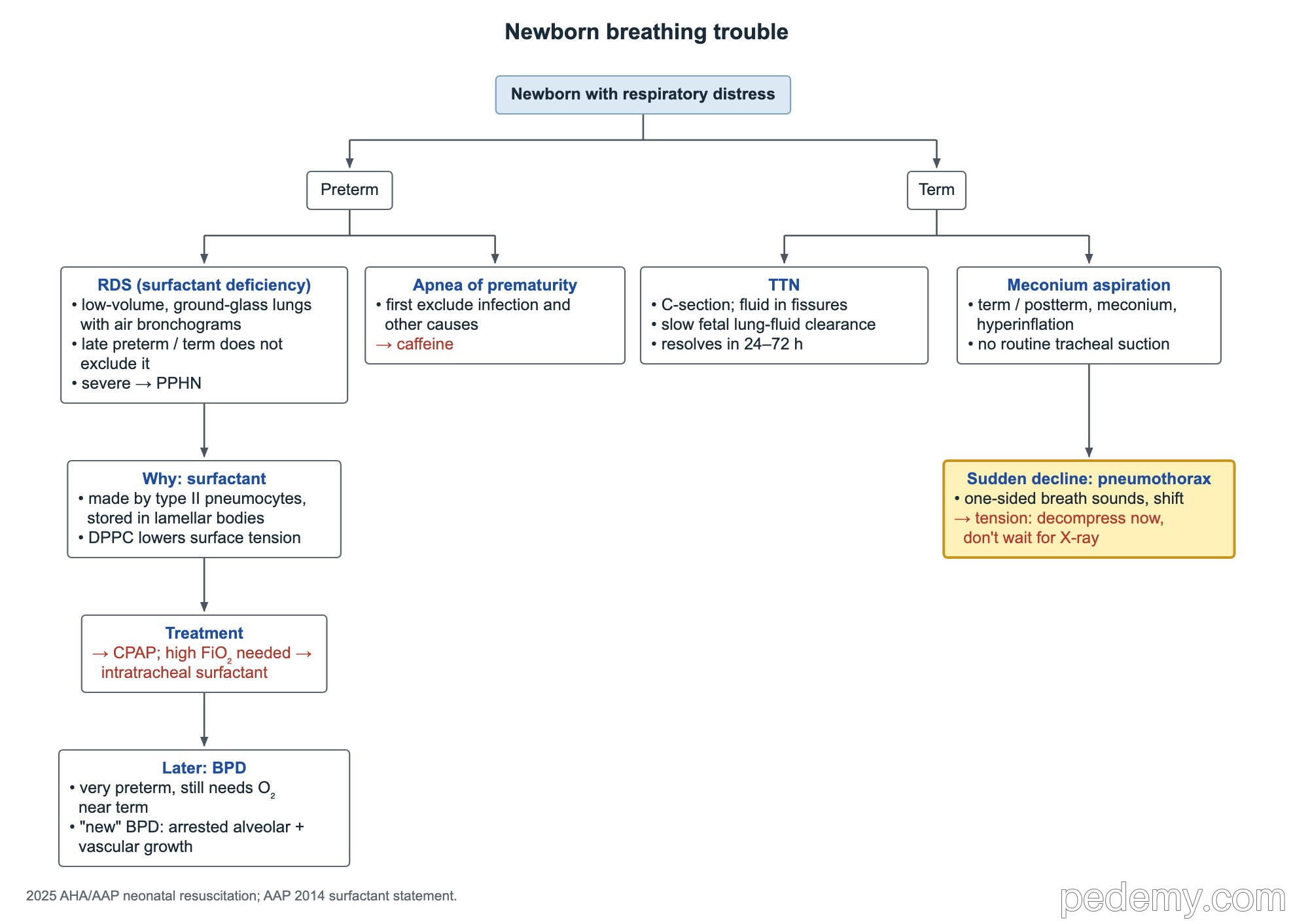
- Meconium aspiration or ventilation with sudden distress, one-sided poor air entry and mediastinal shift: pneumothorax.
- Unstable baby with suspected tension pneumothorax: urgent needle decompression. Do not wait for an X-ray.
- Small asymptomatic pneumothorax in a term baby saturating well in room air: observe color, perfusion and work of breathing. Give oxygen only to keep SpO2 in the target range.
- Congenital diaphragmatic hernia: respiratory distress, scaphoid abdomen, bowel sounds in the left chest and heart sounds shifted to the right.
- Most defects are left posterolateral (Bochdalek). Intubate at birth, avoid bag-mask ventilation, and decompress the stomach with an orogastric tube.
Apnea of prematurity and periodic breathing
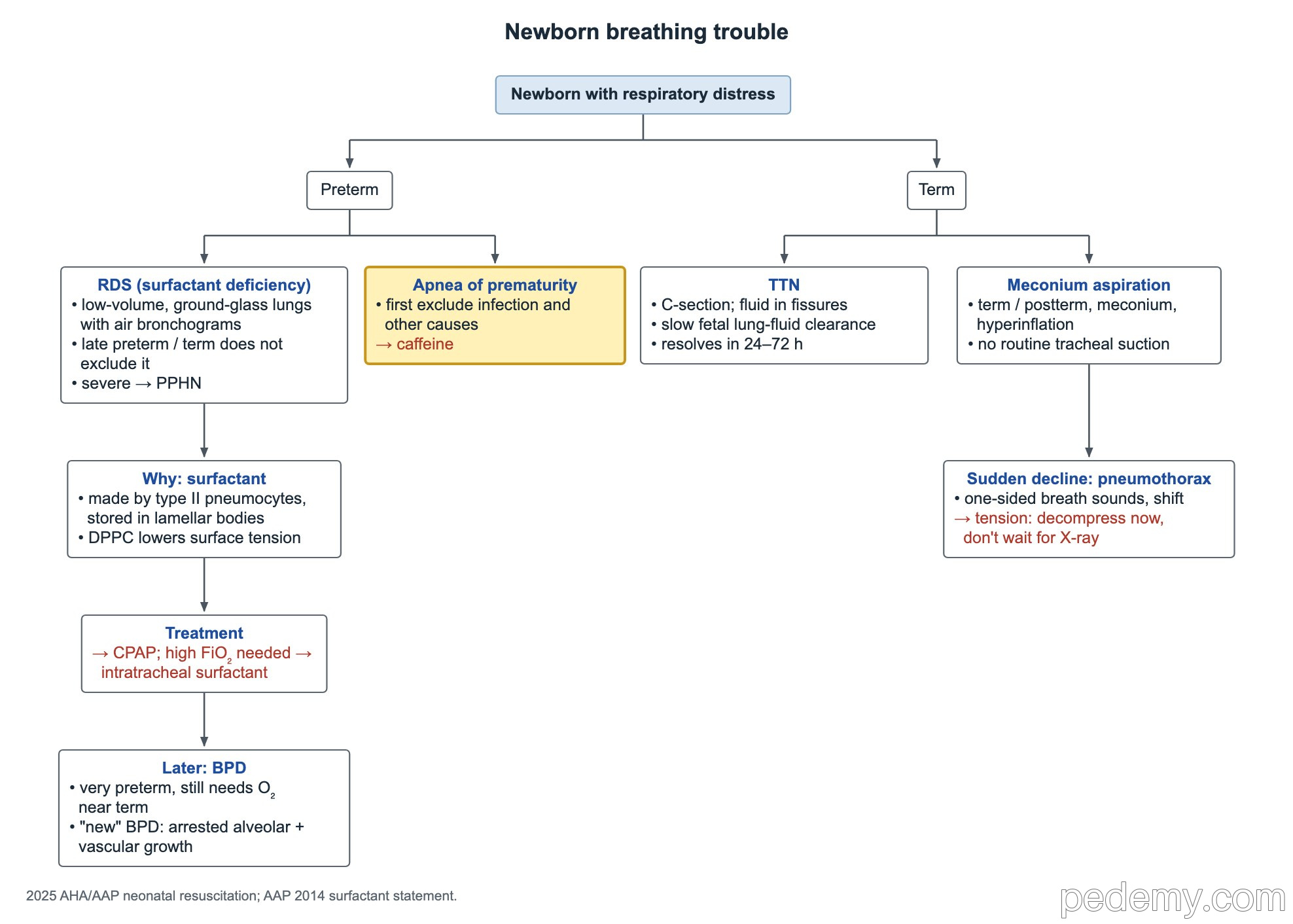
- New apnea in a preterm infant: evaluate for infection and other secondary causes (temperature instability, hypoglycemia, anemia, seizures, drugs) before calling it apnea of prematurity.
- Apnea and bradycardia that remain after other causes are excluded: start caffeine.
| Pattern | Definition | Management |
|---|---|---|
| Periodic breathing | Repeated pauses of 5–10 seconds with normal breathing between; only mild desaturation | Normal in preterm infants; no treatment |
| Apnea | Pause of 20 seconds or more, or shorter with bradycardia or desaturation | Exclude secondary causes, then caffeine (and CPAP if needed) |
Bronchopulmonary dysplasia and patent ductus arteriosus
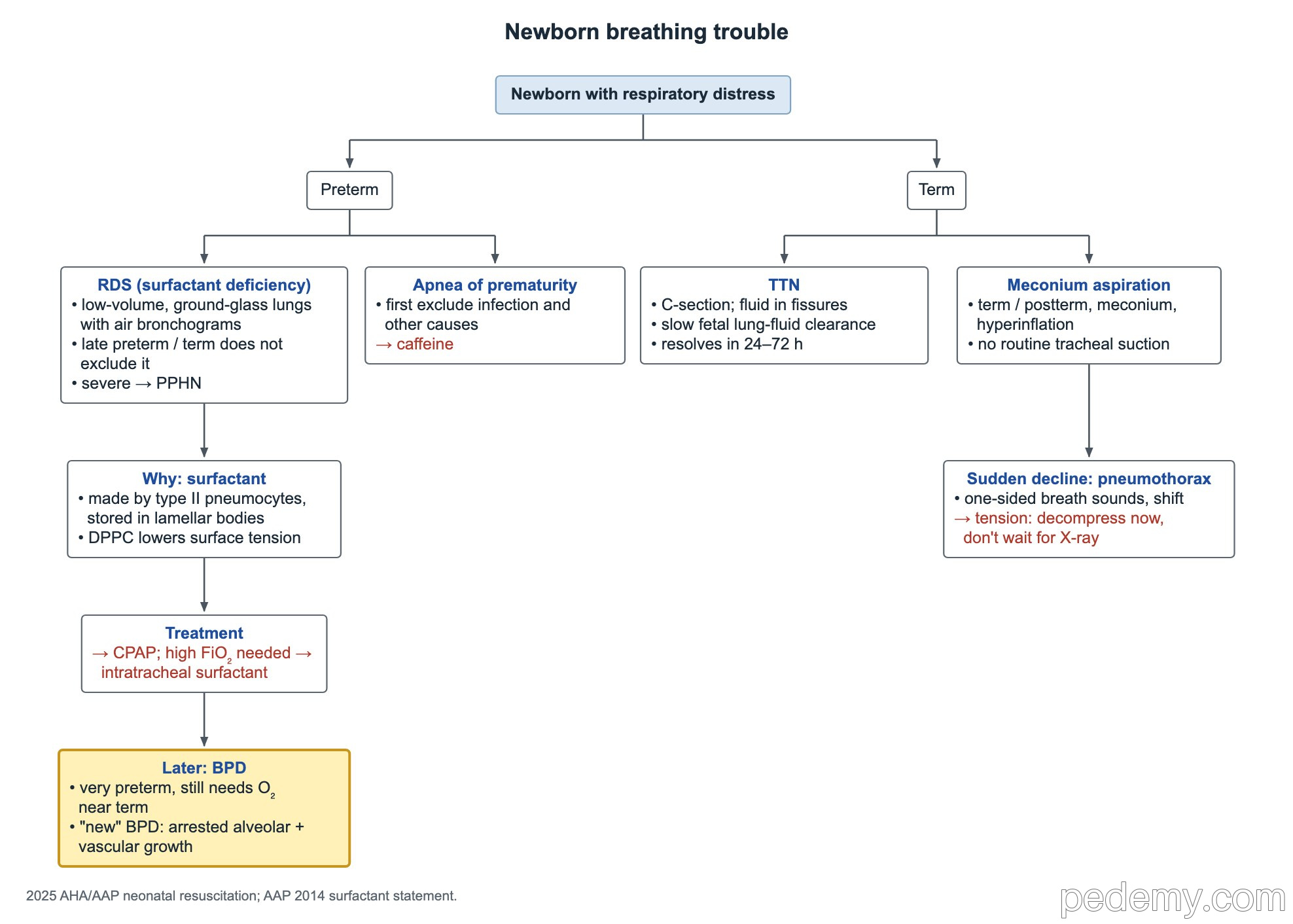
- BPD: a very preterm infant who still needs oxygen or respiratory support near term after RDS; it is assessed at 36 weeks postmenstrual age.
- "New" BPD mainly reflects impaired (arrested) alveolar and pulmonary vascular development, not only scarring from ventilation.
- PDA with RDS: an intubated preterm infant with a continuous murmur and bounding pulses.
- Hypoxia keeps the ductus open by blocking oxygen-induced constriction and keeping it responsive to prostaglandin E2.
- Confirm with an echocardiogram. Ibuprofen, indomethacin or acetaminophen are for a hemodynamically significant ductus.
Common questions
How long does transient tachypnea of the newborn last?
It usually improves within 24 hours and resolves within about 72 hours. Symptoms that worsen or last longer suggest another diagnosis.
Should a baby born through meconium-stained fluid be suctioned?
Not routinely. AHA/AAP 2025 neonatal resuscitation guidelines advise against routine tracheal suction; give the indicated resuscitation, with ventilation first.
What is the difference between periodic breathing and apnea in a preterm baby?
Periodic breathing is pauses of 5–10 seconds with normal breathing between and only mild desaturation; it needs no treatment. Apnea is a pause of 20 seconds or more, or a shorter pause with bradycardia or desaturation.
Study this topic
Sources
- AHA/AAP 2025: Part 5, Neonatal resuscitation (Circulation)
- AAP 2014: Surfactant replacement therapy for preterm and term neonates with respiratory distress (Pediatrics)
- AAP 2016: Apnea of prematurity (Pediatrics)
- AAP 2016: Patent ductus arteriosus in preterm infants (Pediatrics)
- AHA/ATS 2015: Pediatric pulmonary hypertension guidelines (Circulation)
Written for Pedemy in our own words from the sources above; checked November 2026. For education only, not medical advice; check doses and local protocols before treating a patient. Pedemy is independent and not affiliated with or endorsed by the organizations cited.