

Main decision tree
Acute kidney injury: where is the problem?
Key points
- KDIGO AKI: creatinine up ≥0.3 mg/dL within 48 hours, or ≥1.5 times baseline within 7 days, or urine output <0.5 mL/kg/h for 6 hours.
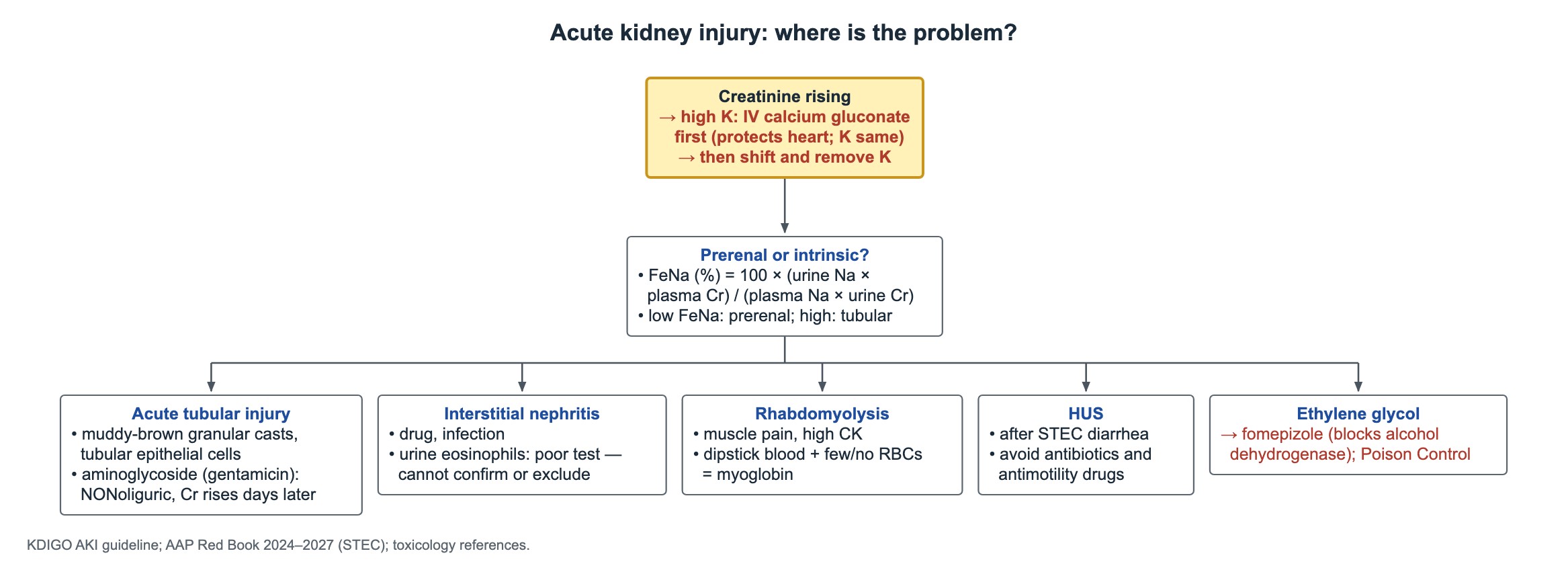
- Hyperkalemia with ECG changes, symptoms, K >7 mEq/L, or K 6–7 and rising: give IV calcium gluconate first.
- Calcium protects the heart but does not lower K; then shift K into cells and remove it from the body.
- FeNa (%) = 100 × (urine Na × plasma Cr) / (plasma Na × urine Cr); below 1% suggests prerenal, above 2% suggests tubular injury.
- Muddy-brown granular casts point to acute tubular injury; aminoglycosides cause nonoliguric injury days into therapy.
- Dipstick positive for blood with few or no RBCs on microscopy plus high CK = myoglobinuria from rhabdomyolysis.
- Bedside Schwartz eGFR = 0.413 × height (cm) / serum creatinine (mg/dL).
First step: dangerous potassium
In a child with a rising creatinine, check potassium and an ECG before anything else. Hyperkalemia is an emergency when there are symptoms, ECG changes, K above 7 mEq/L, or K of 6–7 mEq/L that is likely to keep rising.
Give IV calcium gluconate first, even if dialysis will be needed. Calcium stabilizes the cardiac membrane within minutes, but the potassium level stays the same.
- Shift K into cells: insulin with glucose, inhaled β-agonist (albuterol), sodium bicarbonate when acidotic.
- Remove K from the body: loop diuretic if the kidneys still make urine, a cation-exchange resin, or dialysis.
- Stop potassium in fluids and drugs that raise K. Tacrolimus and cyclosporine cause hyperkalemia.
- A well child with no risk factors and a high K: think pseudohyperkalemia from a hemolyzed or squeezed sample and repeat a free-flowing venous sample.
Define AKI and sort prerenal from intrinsic
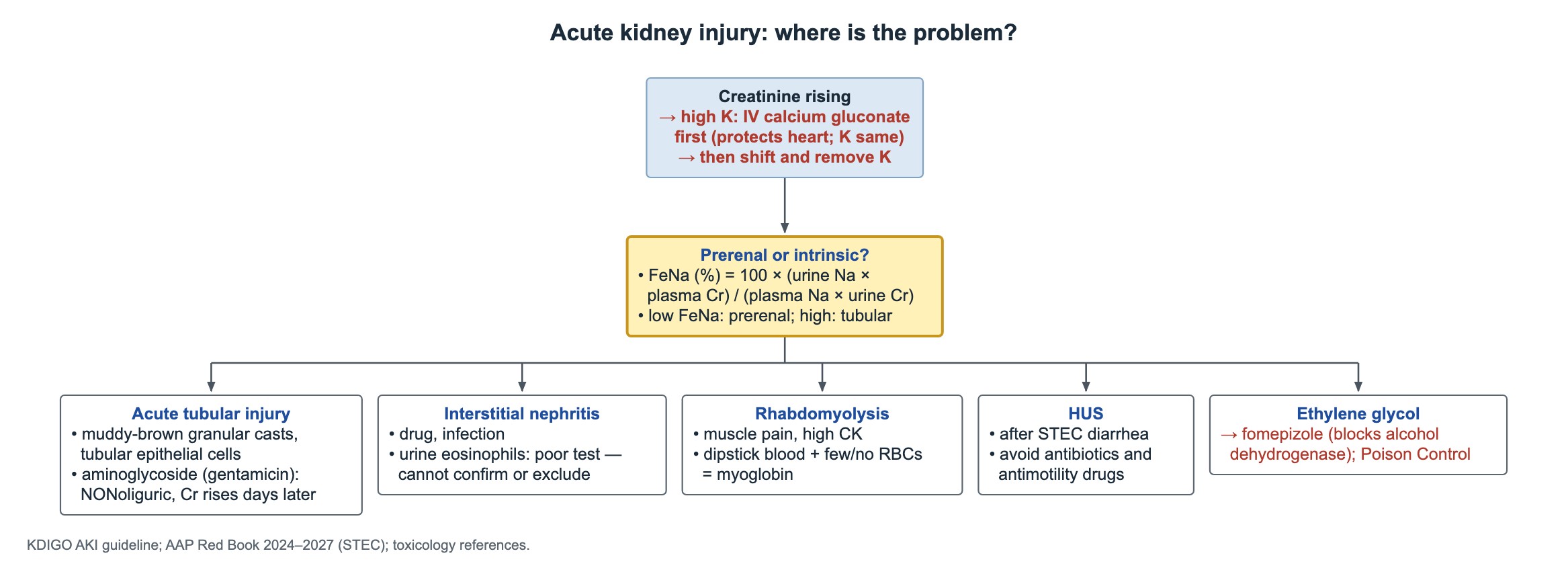
FeNa tells you whether the tubules still hold on to sodium. A low FeNa (under 1%) means the kidney is underperfused but the tubules work: prerenal. A high FeNa (over 2%) means the tubules are damaged. Diuretics raise FeNa and make it unreliable.
NSAIDs in a dehydrated child are a classic prerenal cause: they block prostaglandins that keep the afferent arteriole open, so renal blood flow falls. Hydrate first and avoid NSAIDs while the child is volume-depleted.
| KDIGO stage | Creatinine | Urine output |
|---|---|---|
| 1 | 1.5–1.9 × baseline, or rise ≥0.3 mg/dL | <0.5 mL/kg/h for 6–12 h |
| 2 | 2.0–2.9 × baseline | <0.5 mL/kg/h for ≥12 h |
| 3 | ≥3 × baseline, creatinine ≥4.0 mg/dL, dialysis, or eGFR <35 mL/min/1.73 m² under 18 years | <0.3 mL/kg/h for ≥24 h, or no urine for ≥12 h |
Acute tubular injury
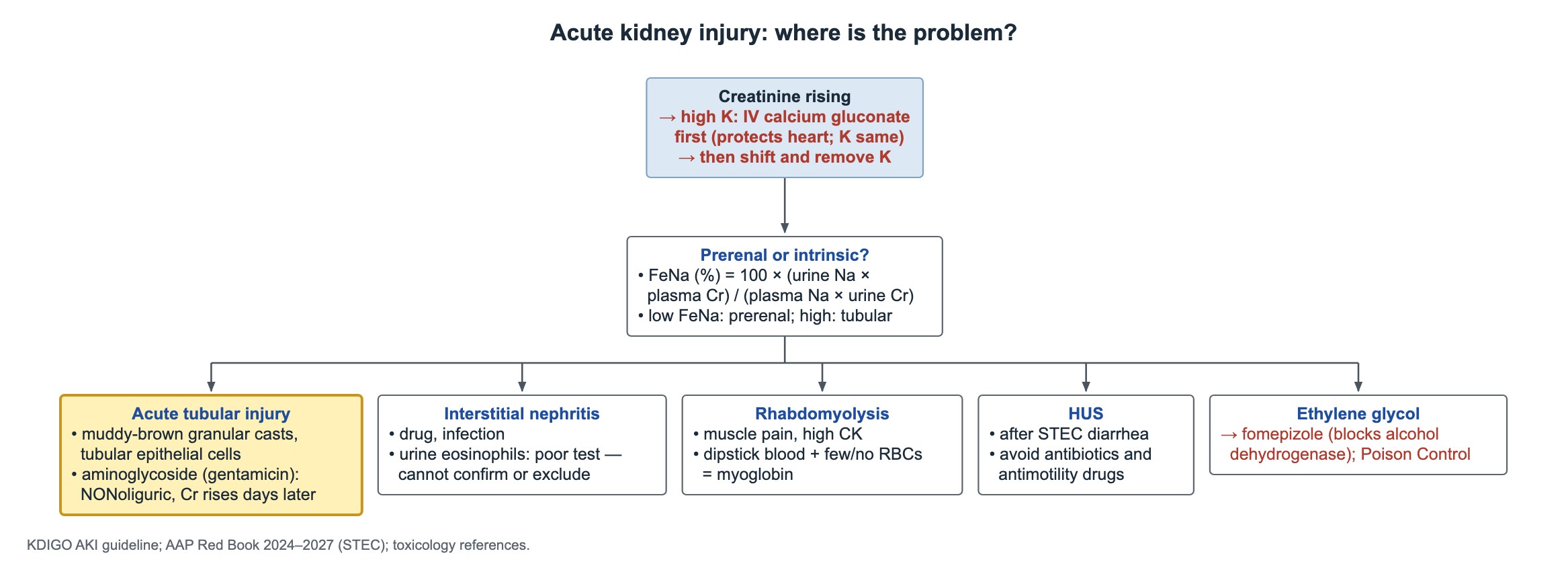
- Causes: prolonged ischemia (shock, sepsis, cardiac surgery) or nephrotoxins.
- Urine: muddy-brown granular casts, often with renal tubular epithelial cells.
- Aminoglycosides (gentamicin): creatinine rises after several days of therapy while urine output stays normal (nonoliguric injury).
- Prevention: monitor levels and creatinine, avoid combining nephrotoxins, and keep the child well hydrated.
Interstitial nephritis and rhabdomyolysis
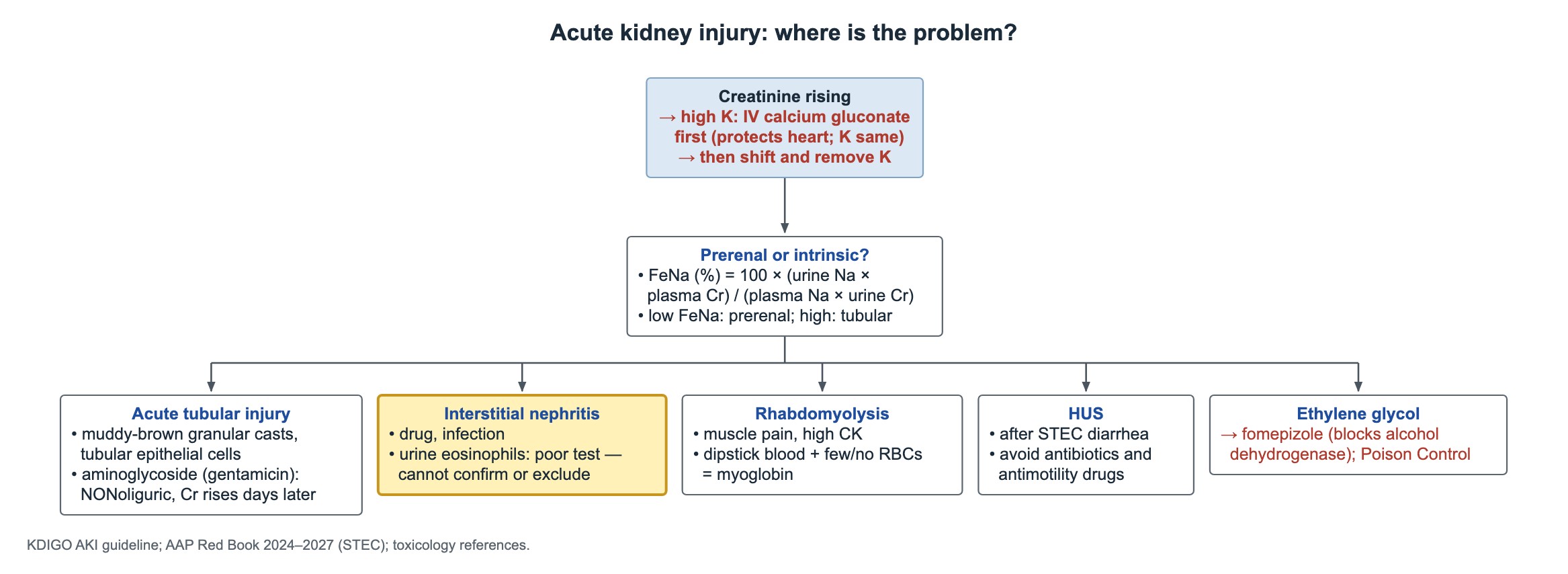
Acute interstitial nephritis follows a drug (β-lactams, NSAIDs, proton pump inhibitors) or an infection. Fever, rash and pyuria may appear, but often do not. Urine eosinophils perform poorly: they cannot confirm or exclude AIN. Stop the likely drug; biopsy confirms the diagnosis when needed.
In rhabdomyolysis the child has muscle pain and a very high CK. The dipstick reads positive for blood, but microscopy shows few or no RBCs, because the dipstick detects the heme in myoglobin. Treat with generous IV fluids.
Hemolytic uremic syndrome after STEC diarrhea
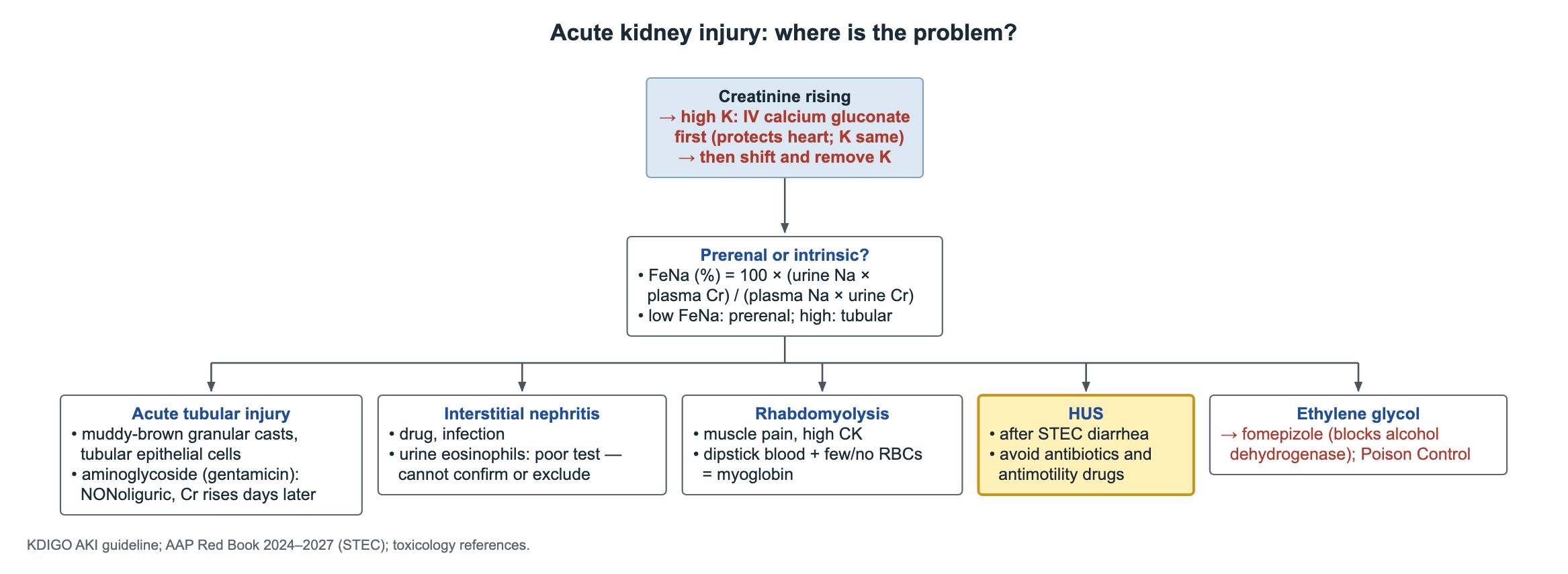
HUS is the triad of microangiopathic hemolytic anemia, low platelets and AKI. In children it usually follows Shiga toxin–producing E. coli (STEC) diarrhea, often bloody, about a week earlier.
- Avoid antibiotics and antimotility drugs when STEC infection is suspected: both are linked to a higher risk of HUS.
- Give IV fluids early during the diarrhea phase and watch the CBC, smear and creatinine.
- Care is supportive: fluids, blood transfusion, and dialysis when needed.
Ethylene glycol poisoning
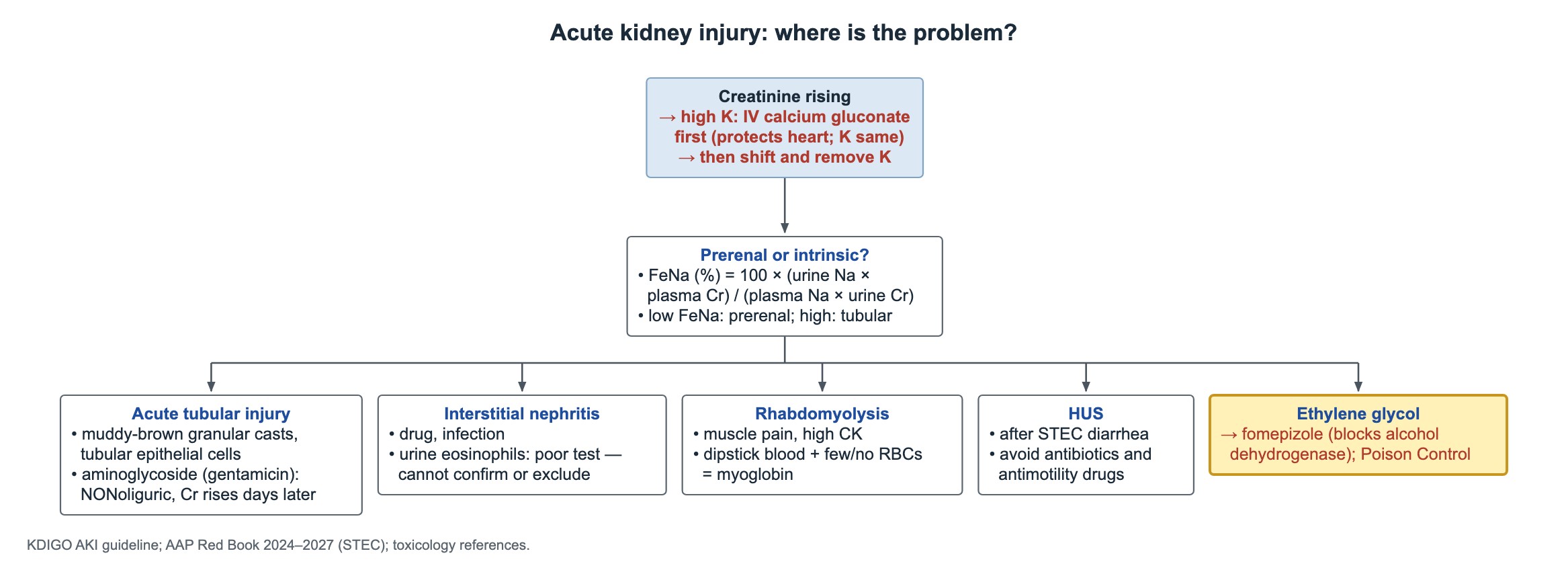
Ethylene glycol (antifreeze) causes a high anion gap metabolic acidosis with a raised osmolal gap and AKI from calcium oxalate crystals. Give fomepizole, which blocks alcohol dehydrogenase so toxic metabolites are not made, and call Poison Control (1-800-222-1222). Hemodialysis removes the toxin in severe cases.
Estimating GFR and kidney transplant basics
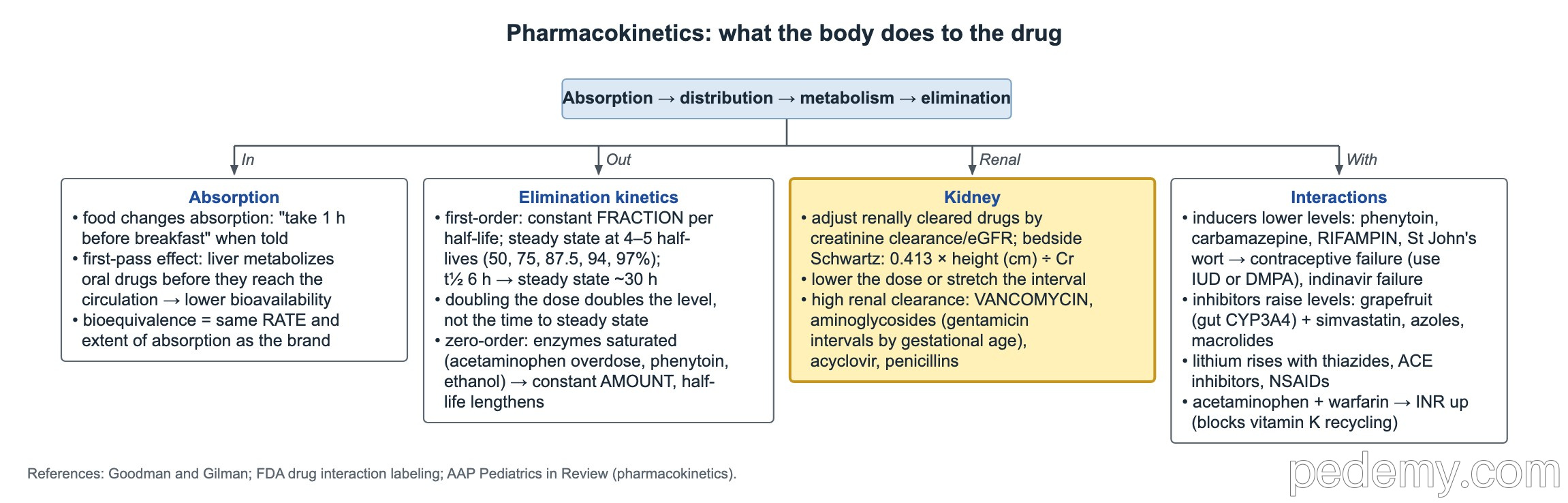
- Bedside Schwartz: eGFR (mL/min/1.73 m²) = 0.413 × height (cm) / serum creatinine (mg/dL).
- Use eGFR to adjust doses of renally cleared drugs (vancomycin, aminoglycosides, acyclovir, penicillins): lower the dose or stretch the interval.
- Living-donor kidneys last longer than deceased-donor kidneys, shorten the wait and can allow transplant before dialysis.
- A key nonmedical requirement for transplant is strong family support for strict medicines and follow-up.
Common questions
What is the first treatment for hyperkalemia in a child?
If there are ECG changes, symptoms or a very high K, give IV calcium gluconate first to protect the heart. Then shift potassium into cells (insulin with glucose, albuterol) and remove it (diuretic, resin or dialysis).
How do you calculate FeNa?
FeNa (%) = 100 × (urine Na × plasma creatinine) / (plasma Na × urine creatinine). Below 1% suggests prerenal AKI; above 2% suggests tubular injury.
What is the bedside Schwartz equation?
eGFR = 0.413 × height in cm / serum creatinine in mg/dL, giving mL/min/1.73 m².
Study this topic
Sources
- KDIGO Clinical Practice Guideline for Acute Kidney Injury (Kidney Int Suppl 2012)
- Schwartz GJ et al. New equations to estimate GFR in children with CKD (J Am Soc Nephrol 2009)
- Pierce CB et al. Age- and sex-dependent equations to estimate GFR in children and young adults (Kidney Int 2021)
Written for Pedemy in our own words from the sources above; checked November 2026. For education only, not medical advice; check doses and local protocols before treating a patient. Pedemy is independent and not affiliated with or endorsed by the organizations cited.