

Main decision tree
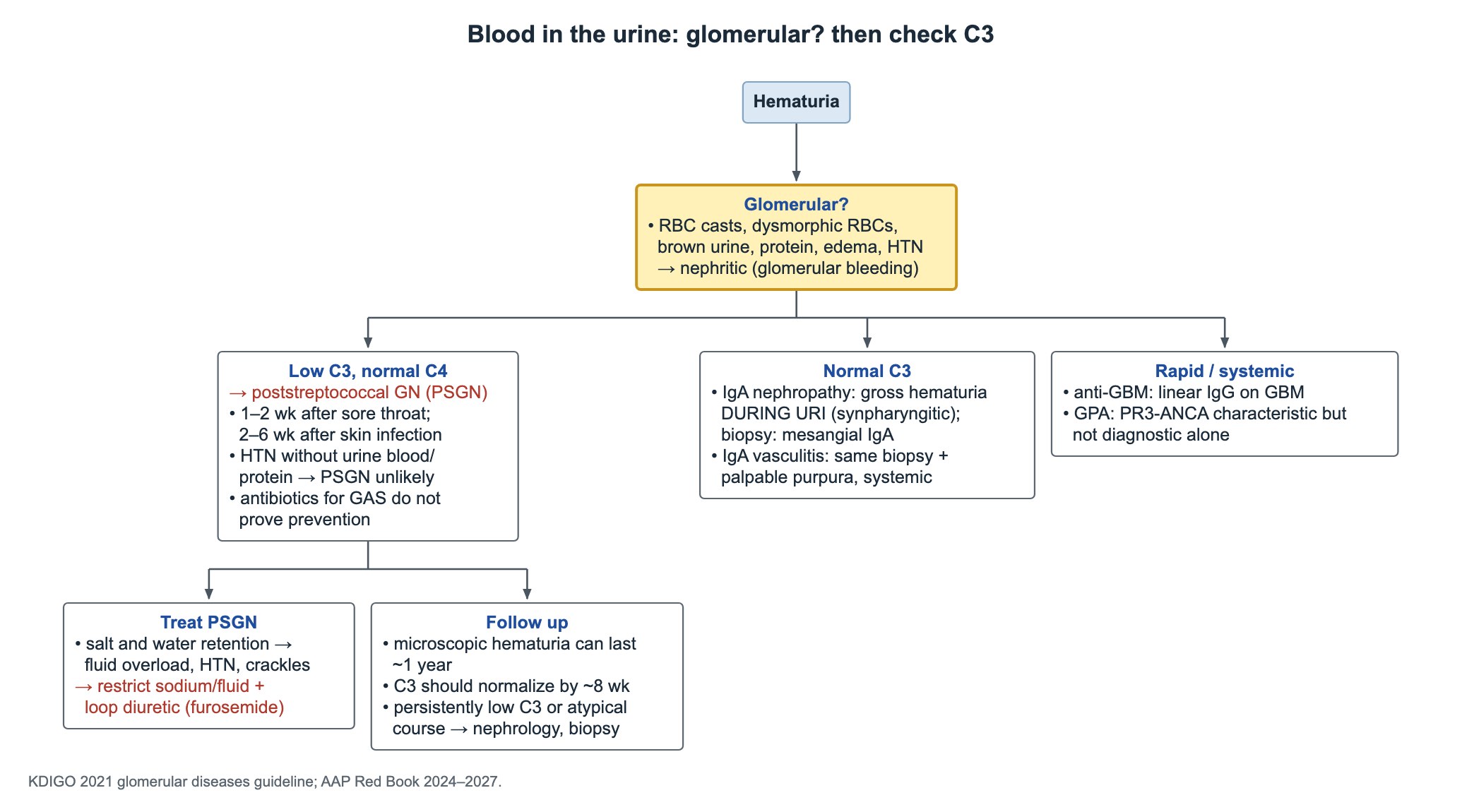
Blood in the urine: glomerular? then check C3
Key points
- RBC casts and dysmorphic RBCs = glomerular bleeding (nephritic process).
- PSGN: low C3 with normal C4, about 1–2 weeks after strep throat or 3–6 weeks after strep skin infection.
- PSGN edema and hypertension come from salt and water retention: restrict sodium and fluid and give furosemide.
- C3 should return to normal by about 8 weeks; still low → refer to nephrology for another glomerular disease.
- Microscopic hematuria can persist for 1–2 years after PSGN and is the last finding to clear.
- IgA nephropathy: gross hematuria during or within 1–2 days of a respiratory infection, with normal C3.
- Anti-GBM disease shows linear IgG along the basement membrane; PR3-ANCA is typical of GPA but not diagnostic alone.
Is the bleeding glomerular?
Glomerular bleeding gives brown or cola-colored urine, RBC casts and dysmorphic RBCs, often with protein, edema or high blood pressure. Bright red urine with clots and normal-shaped RBCs suggests a lower urinary tract source.
Once you call it glomerular, check C3 and C4. A low C3 with normal C4 points to postinfectious GN; a normal C3 points to IgA nephropathy or IgA vasculitis; a rapid rise in creatinine or lung or systemic signs needs urgent work-up for anti-GBM disease or ANCA vasculitis.
Poststreptococcal glomerulonephritis
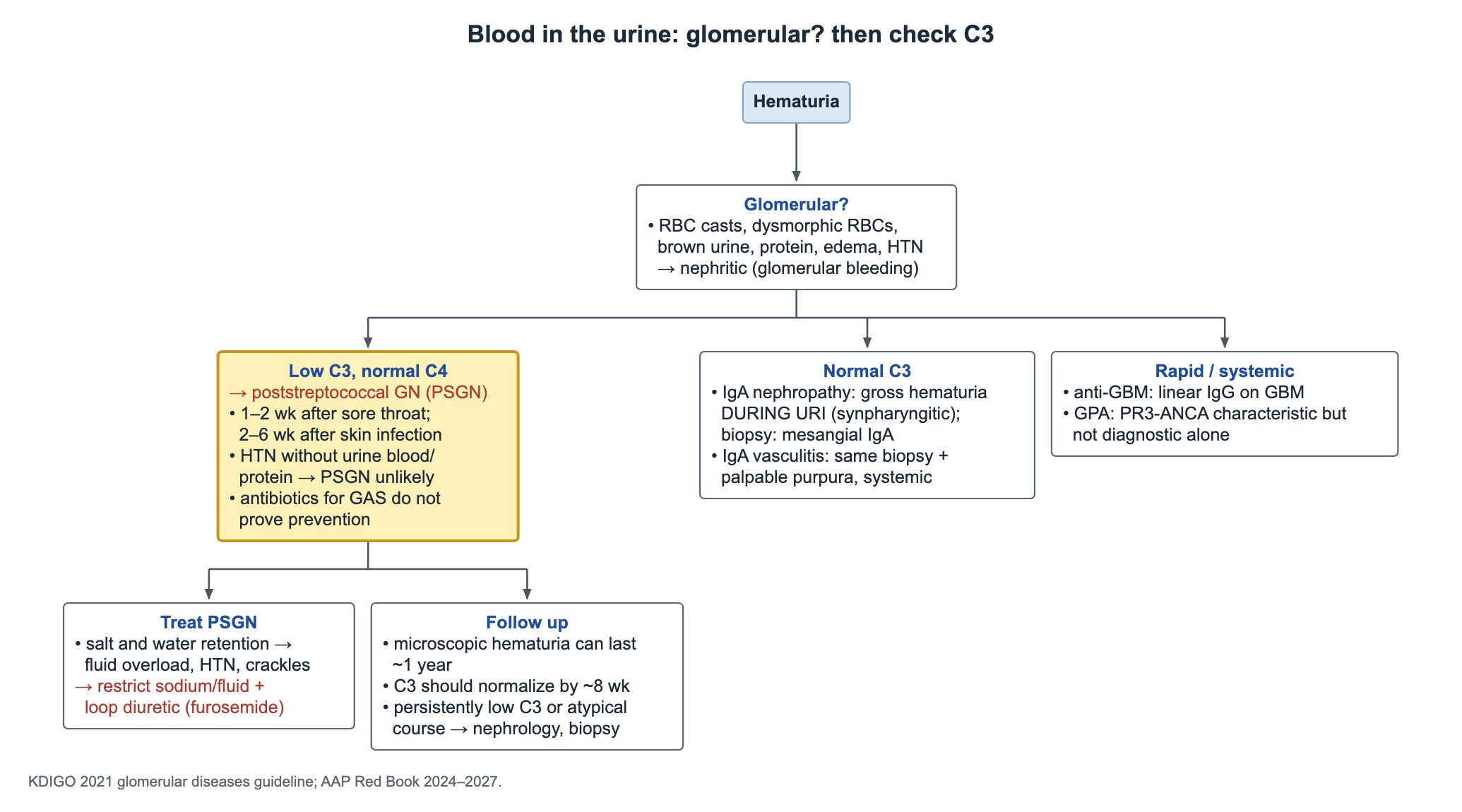
- Typical child: school age, cola urine, edema and high blood pressure after a recent strep infection.
- Latent period: about 1–2 weeks after pharyngitis and about 3–6 weeks after impetigo.
- Labs: low C3, normal C4, RBC casts; evidence of recent strep (ASO after throat infection, anti-DNase B after skin infection).
- Hypertension after strep with a urinalysis that has no blood or protein makes PSGN unlikely.
- Antibiotics for strep infection are still given, but there is not enough evidence to say they prevent PSGN.
Treating PSGN
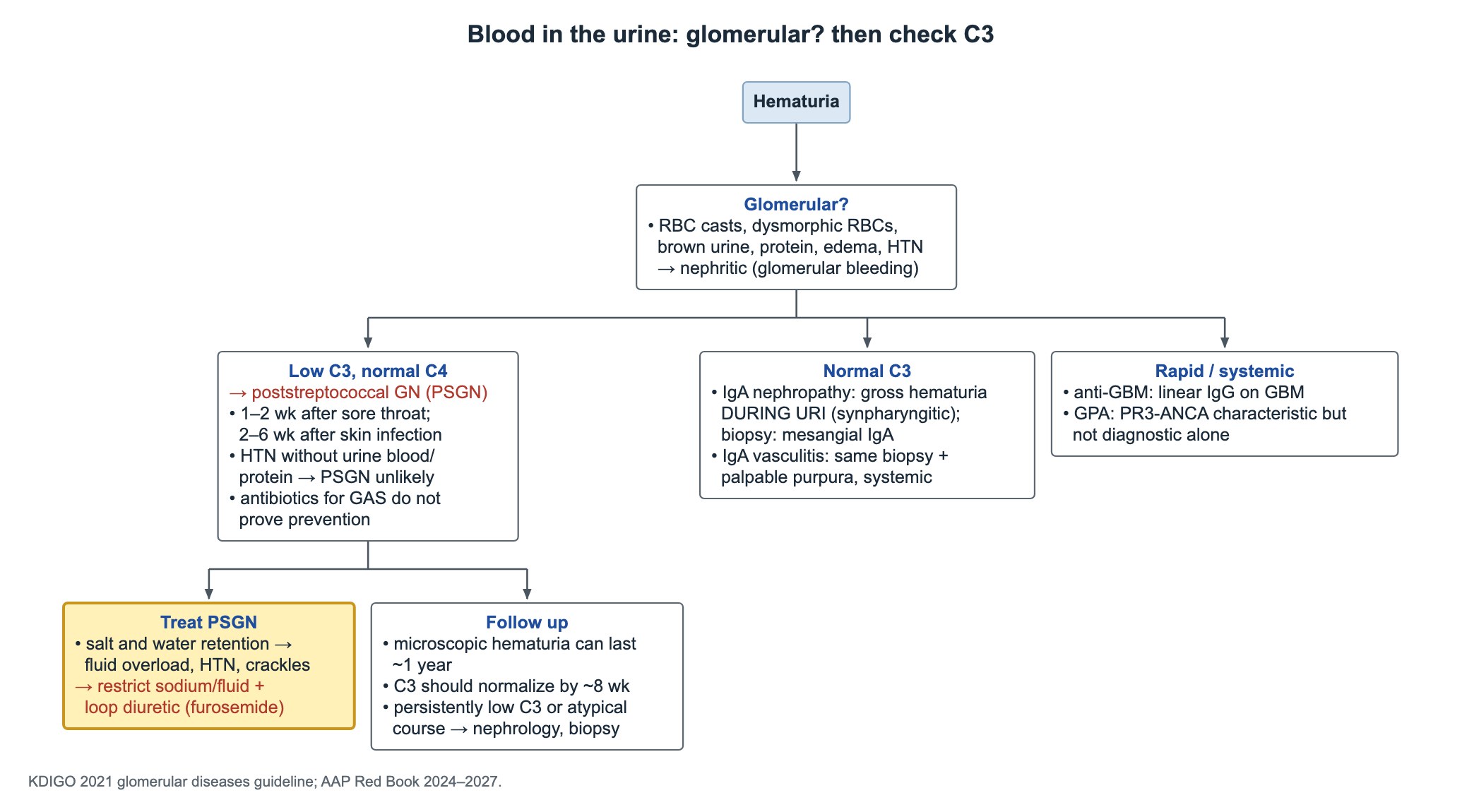
The kidney holds on to salt and water, so the child becomes volume overloaded: edema, hypertension and, in severe cases, lung crackles and heart failure.
Treatment is supportive: restrict sodium and fluid and give a loop diuretic (furosemide). Add an antihypertensive if blood pressure stays high. Dialysis is rarely needed. Steroids have no role in typical PSGN.
Follow-up after PSGN
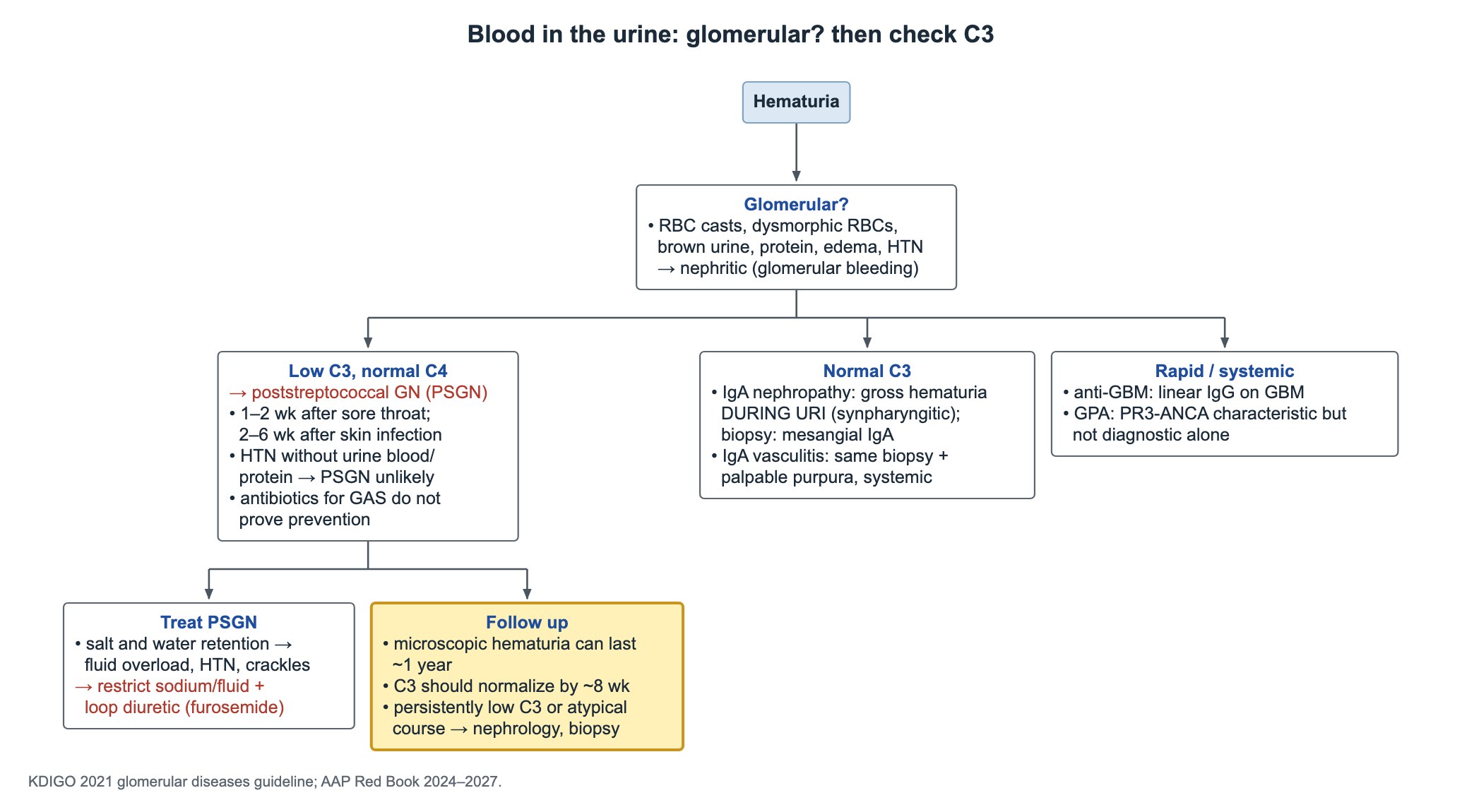
- Edema and hypertension usually settle within 1–2 weeks.
- C3 should return to normal by about 8 weeks.
- Persistently low C3, heavy proteinuria or falling kidney function → nephrology referral and possible biopsy (C3 glomerulopathy, lupus nephritis).
- Microscopic hematuria is the last finding to clear and can last 1–2 years.
IgA nephropathy and IgA vasculitis
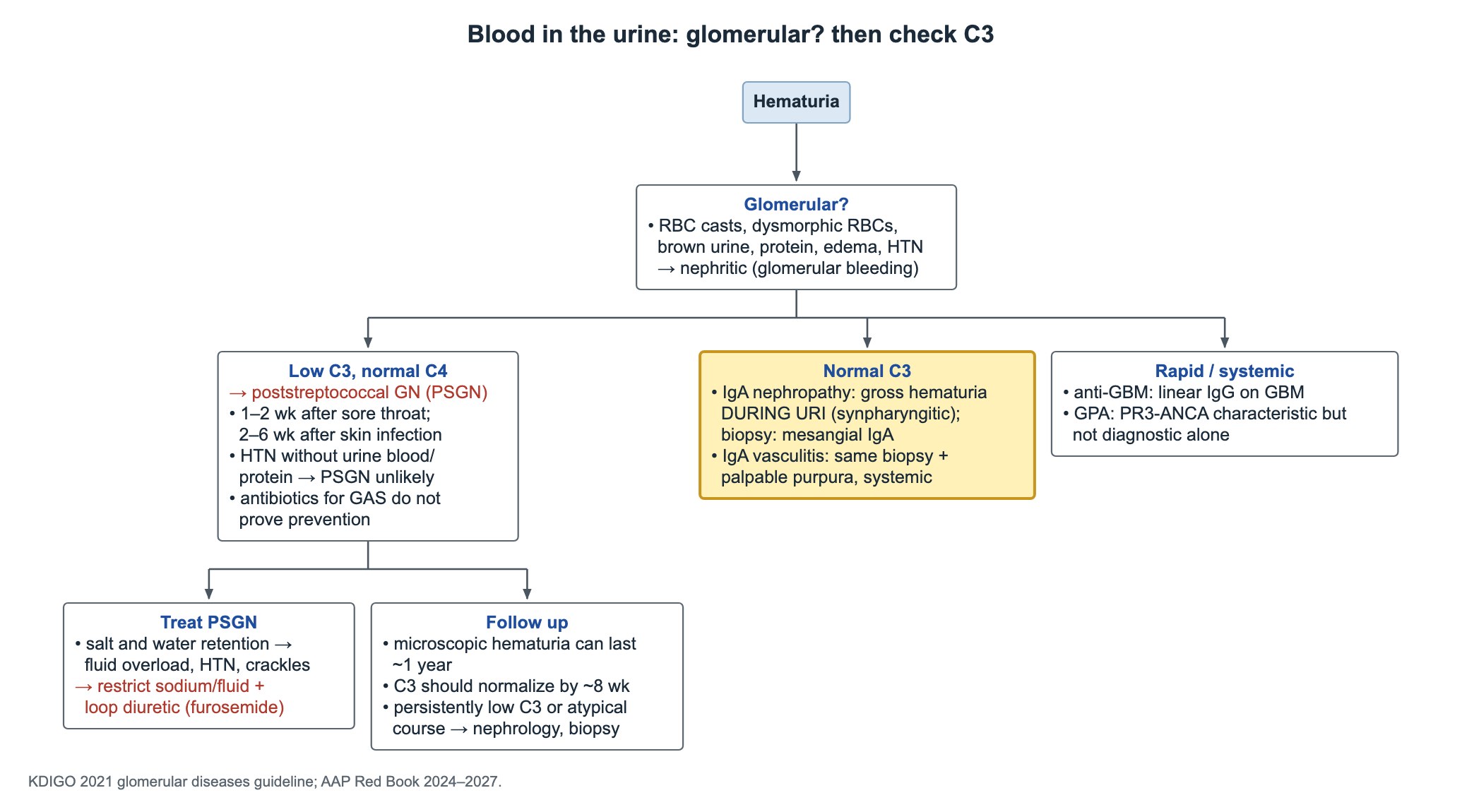
IgA nephropathy causes gross hematuria during an upper respiratory infection or within 1–2 days of it (synpharyngitic), unlike the 1–3 week delay of PSGN. C3 is normal. When a biopsy is done, it shows dominant or codominant mesangial IgA.
IgA vasculitis (Henoch-Schönlein purpura) can show the same kidney biopsy. What separates it is the systemic picture: palpable purpura on the legs and buttocks, with joint pain or abdominal pain.
Rapidly progressive and systemic glomerulonephritis
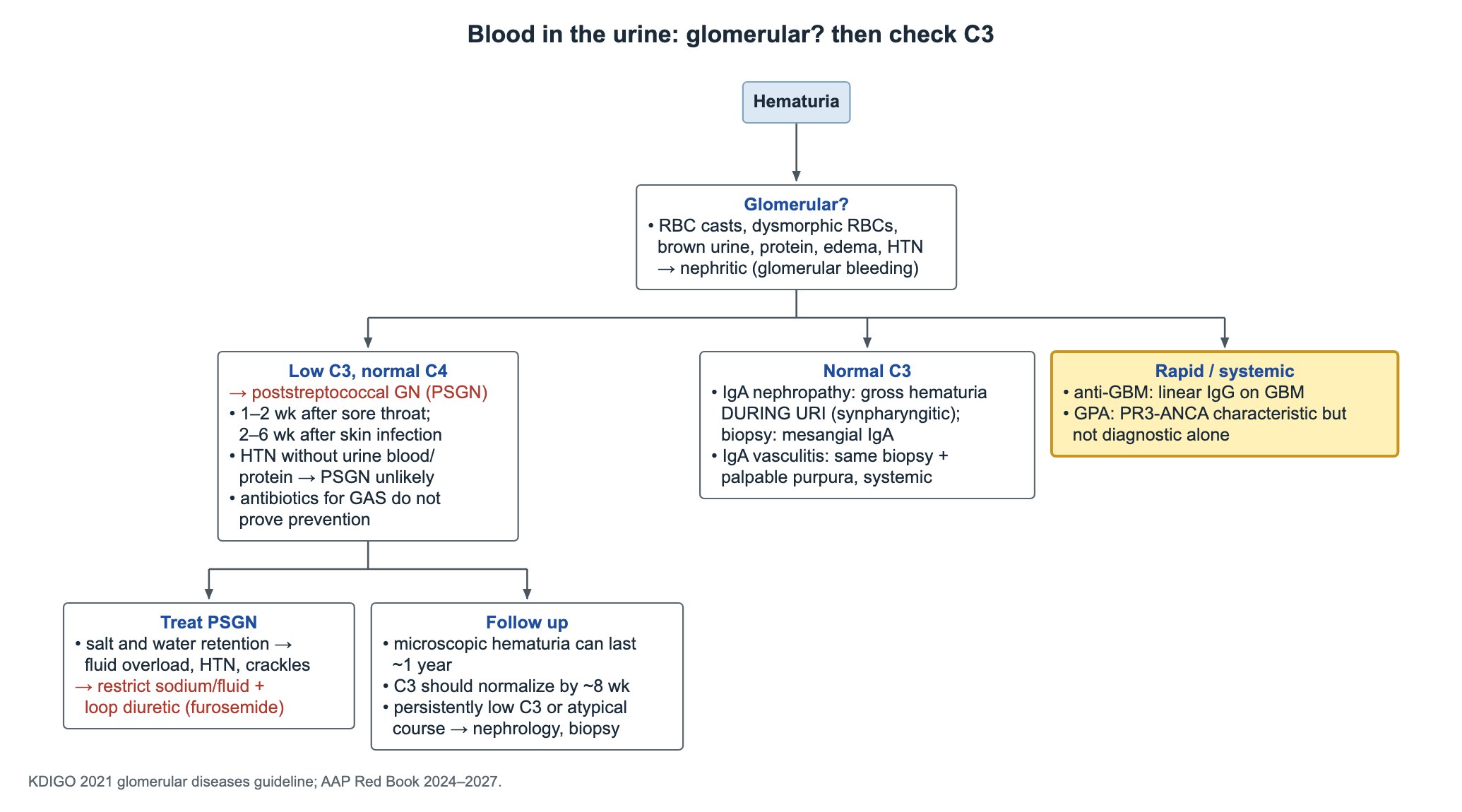
| Disease | Key finding |
|---|---|
| Anti-GBM disease | Linear IgG along the glomerular basement membrane on immunofluorescence; may bleed into the lungs |
| Granulomatosis with polyangiitis | PR3-ANCA is characteristic, but a positive ANCA alone does not make the diagnosis |
| Immune-complex GN (lupus, PSGN, IgA) | Granular deposits rather than linear staining |
Common questions
How long after strep throat does PSGN start?
About 1–2 weeks after strep throat and about 3–6 weeks after a strep skin infection.
When should C3 return to normal after PSGN?
By about 8 weeks. A C3 that stays low needs nephrology review for another glomerular disease.
How do you tell IgA nephropathy from PSGN?
IgA nephropathy causes gross hematuria during or within 1–2 days of a respiratory infection with a normal C3. PSGN starts 1–6 weeks after strep infection with a low C3.
Study this topic
Sources
- KDIGO 2021 Clinical Practice Guideline for the Management of Glomerular Diseases (Kidney Int)
- CDC: Post-streptococcal glomerulonephritis
Written for Pedemy in our own words from the sources above; checked November 2026. For education only, not medical advice; check doses and local protocols before treating a patient. Pedemy is independent and not affiliated with or endorsed by the organizations cited.