

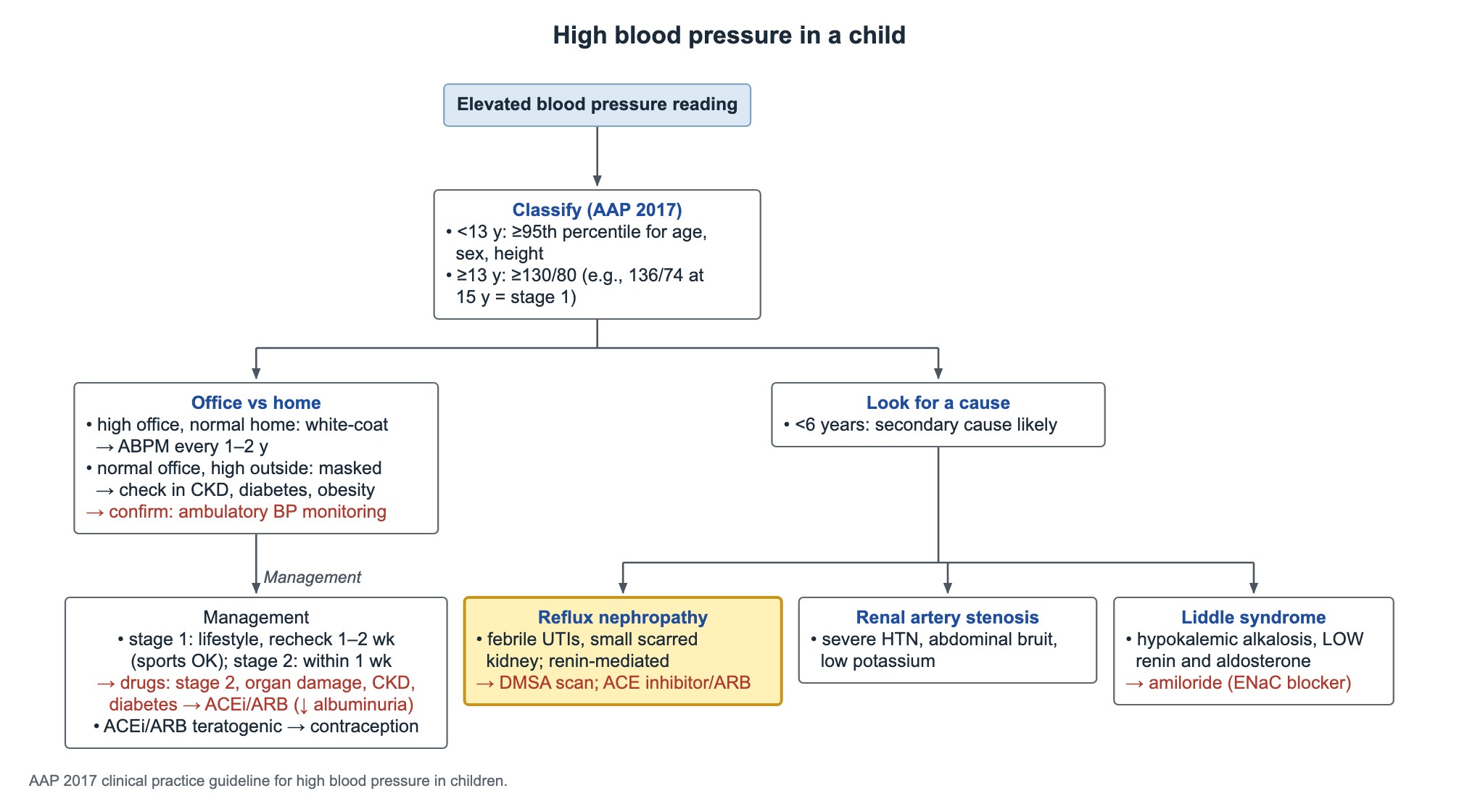
Main decision tree
High blood pressure in a child
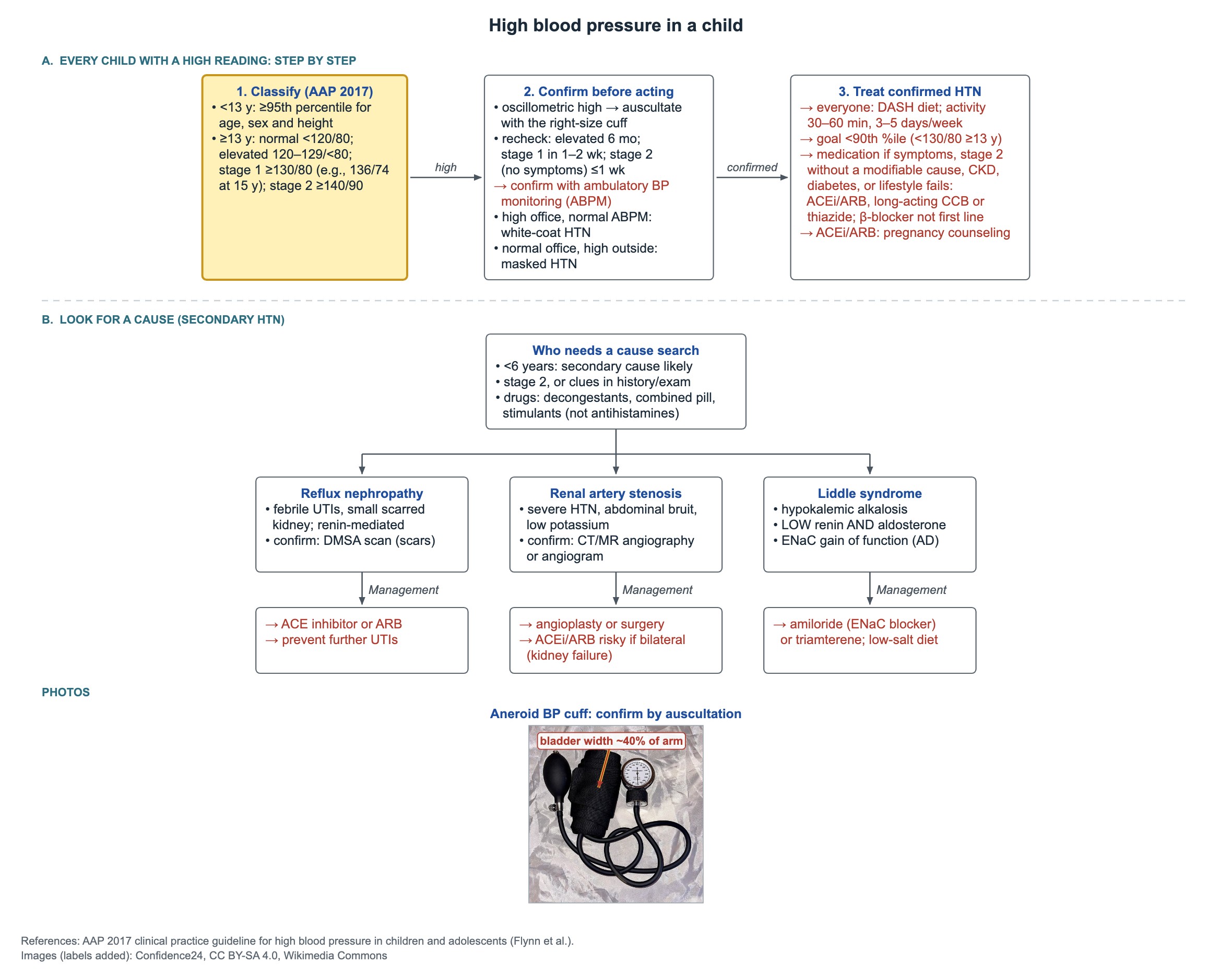
Key points
- Age 13 and older: normal <120/<80, elevated 120–129/<80, stage 1 130/80–139/89, stage 2 ≥140/90 mm Hg.
- Age 1 to <13: hypertension is ≥95th percentile or ≥130/80 mm Hg, whichever is lower.
- Recheck: elevated BP in 6 months, stage 1 in 1–2 weeks, stage 2 within 1 week (sooner or ED if symptomatic).
- Confirm hypertension with ambulatory BP monitoring (ABPM) before treating; do not order labs after one high reading.
- First-line drugs: ACE inhibitor, ARB, long-acting calcium channel blocker or thiazide; β-blockers are not first line.
- Treatment goal: <90th percentile, or <130/80 mm Hg at age 13 and older.
- Hypertension under 6 years old suggests a secondary cause.
Classify the reading
The AAP 2017 guideline uses percentile tables (by age, sex and height) for children under 13 and adult-style cut-offs from age 13. Screen at every preventive visit from age 3, and at every visit for children with obesity, diabetes, kidney disease, aortic arch disease or drugs that raise BP.
- Use the higher category of systolic or diastolic. Example: 136/74 at age 15 is stage 1 by the systolic value.
| Category | Age 1 to <13 years | Age ≥13 years |
|---|---|---|
| Normal | <90th percentile | <120/<80 |
| Elevated | ≥90th to <95th percentile, or 120/80 to <95th (whichever is lower) | 120–129/<80 |
| Stage 1 | ≥95th percentile to <95th + 12 mm Hg, or 130/80–139/89 (whichever is lower) | 130/80–139/89 |
| Stage 2 | ≥95th percentile + 12 mm Hg, or ≥140/90 (whichever is lower) | ≥140/90 |
Confirm before acting
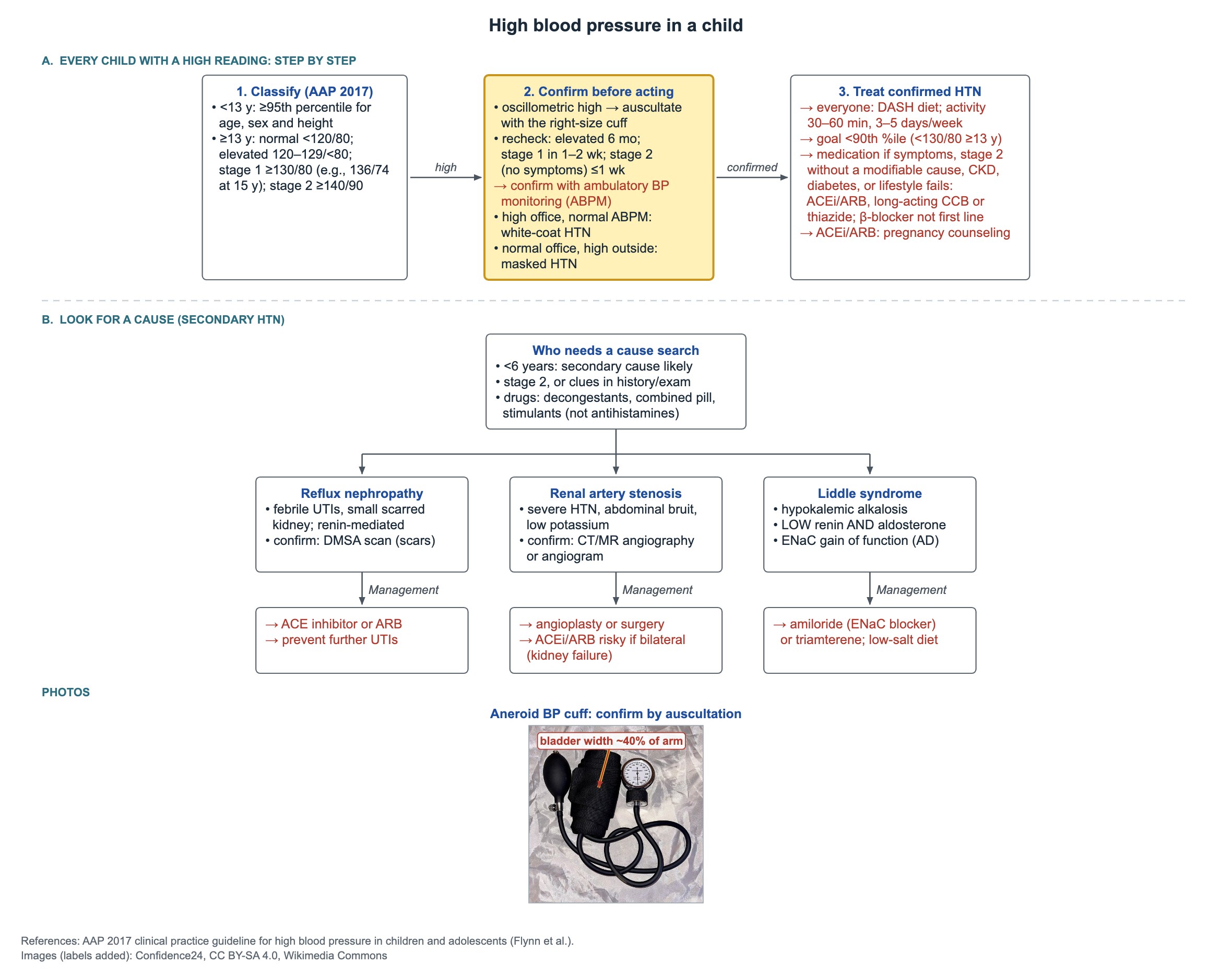
- A high oscillometric reading is repeated by auscultation with a cuff whose bladder width is about 40% of the arm circumference.
- Elevated BP: lifestyle advice, repeat in 6 months.
- Stage 1 without symptoms: lifestyle advice, repeat in 1–2 weeks. Normal sports and activity continue.
- Stage 2: repeat or refer within 1 week. Symptoms, or BP more than 30 mm Hg above the 95th percentile (≥180/120 in teens), need emergency care.
- Do not start labs or stop medicines after a single high reading; confirm hypertension first.
- Routine ECG is not recommended. Get an echocardiogram when drug treatment is being considered, to look for left ventricular hypertrophy.
White-coat and masked hypertension
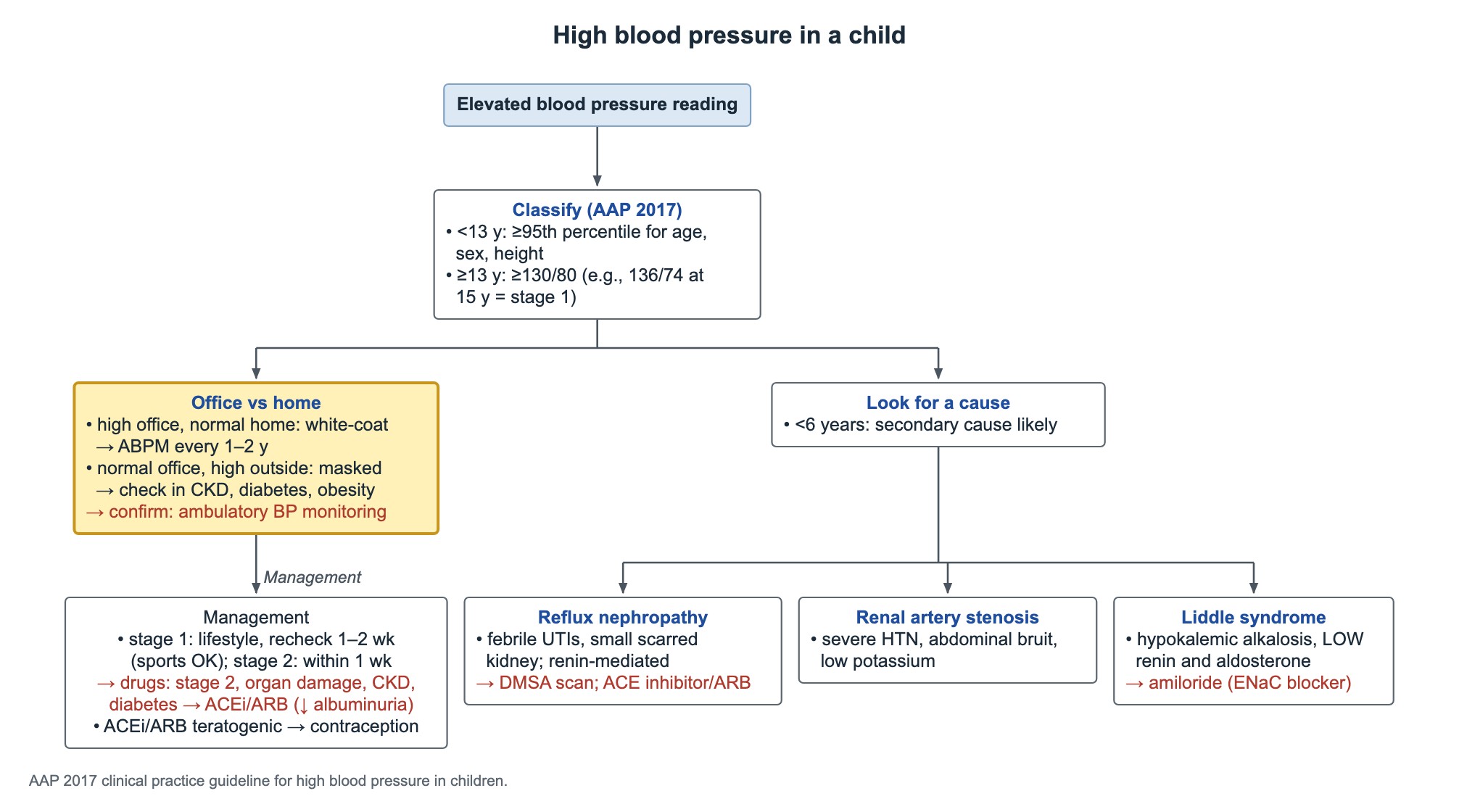
Ambulatory BP monitoring (ABPM) over 24 hours is the best test to confirm hypertension and sort out the office effect.
| Pattern | Office BP | ABPM | What to do |
|---|---|---|---|
| White-coat hypertension | High | Normal | No drugs; repeat ABPM every 1–2 years |
| Masked hypertension | Normal | High | Look for it in CKD, diabetes, obesity and repaired coarctation |
| Ambulatory hypertension | High | High | Evaluate and treat |
Treat confirmed hypertension
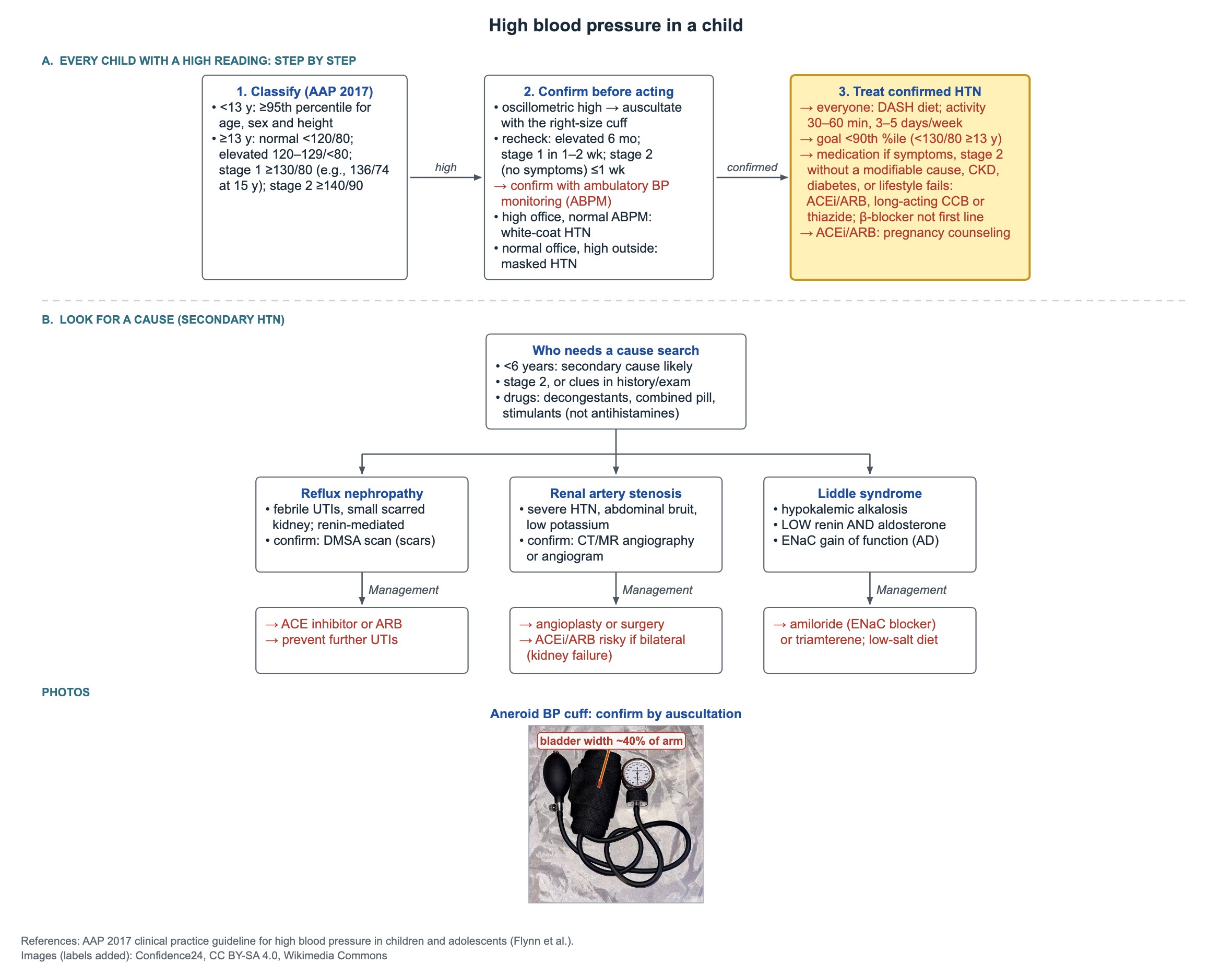
- Everyone: DASH-style eating (fruits, vegetables, low-fat dairy, whole grains, lean protein, less salt) and moderate to vigorous activity 30–60 minutes on 3–5 days a week.
- Start medicine for symptomatic hypertension, stage 2 hypertension without a modifiable cause, CKD, diabetes, or hypertension that persists despite lifestyle changes.
- First-line classes: ACE inhibitor, ARB, long-acting calcium channel blocker, thiazide diuretic. β-blockers are add-on only.
- CKD with proteinuria or diabetes: choose an ACE inhibitor or ARB, which also lowers albuminuria.
- Goal: <90th percentile, or <130/80 mm Hg at age 13 and older.
- ACE inhibitors and ARBs harm the fetus: before starting them in anyone who could become pregnant, counsel, do a pregnancy test and discuss contraception.
Who needs a search for a cause
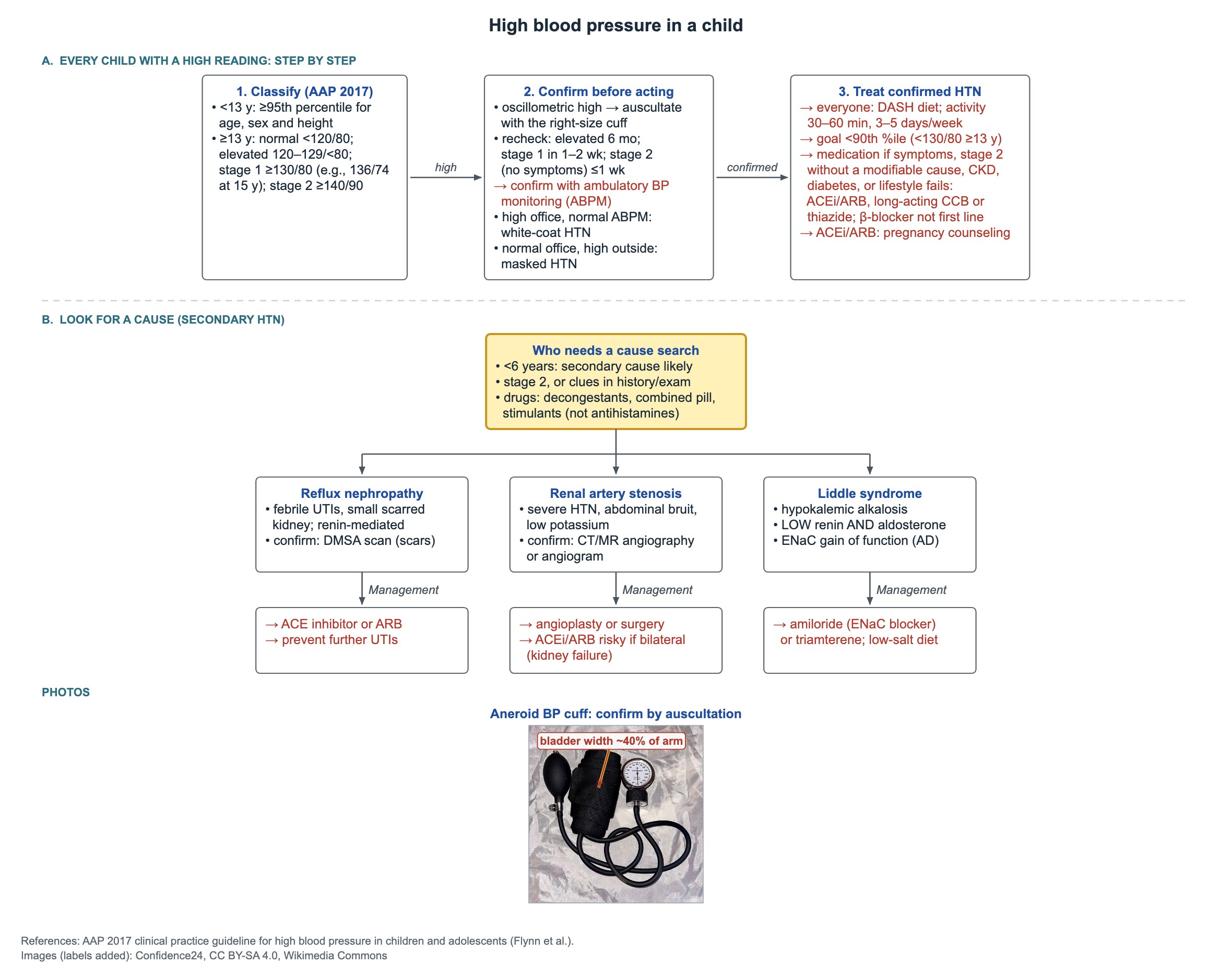
- Children under 6 years: a secondary cause is likely, most often kidney disease.
- Stage 2 hypertension or clues in the history or exam.
- Drugs that raise BP: decongestants (pseudoephedrine), combined estrogen–progestin pills, stimulants. Oral antihistamines do not usually raise BP.
- A teen with an unconfirmed high reading on a stimulant or the combined pill: confirm hypertension before stopping the medicine.
- Initial work-up once hypertension is confirmed: urinalysis, electrolytes, BUN and creatinine, lipids; kidney ultrasound in children under 6 or with abnormal urine or kidney function.
Three secondary causes to know
| Cause | Clues | Confirm | Treat |
|---|---|---|---|
| Reflux nephropathy (renal scarring) | Past febrile UTIs, small scarred kidney; scars release renin | DMSA scan shows cortical scars | ACE inhibitor or ARB, especially with proteinuria; prevent further UTIs |
| Renal artery stenosis | Severe hypertension, abdominal bruit, low potassium | CT or MR angiography, or angiography | Angioplasty or surgery; ACE inhibitors or ARBs can cause kidney failure if both sides are narrowed |
| Liddle syndrome | Early, familial hypertension with hypokalemic alkalosis and LOW renin and aldosterone (ENaC gain of function) | Genetic testing | Amiloride or triamterene and a low-salt diet; spironolactone does not work |
Common questions
What blood pressure is high for a teenager?
From age 13, 120–129/<80 is elevated, 130/80–139/89 is stage 1 hypertension and 140/90 or higher is stage 2.
What is white-coat hypertension in children?
High BP in the clinic with normal readings on ambulatory monitoring. It is not treated with drugs, but ABPM is repeated every 1–2 years.
What is the first-line medicine for high blood pressure in children?
An ACE inhibitor, ARB, long-acting calcium channel blocker or thiazide diuretic. Children with CKD, proteinuria or diabetes should get an ACE inhibitor or ARB.
Study this topic
Sources
- AAP 2017: Clinical practice guideline for screening and management of high blood pressure in children and adolescents (Pediatrics)
- AHA 2022: Ambulatory blood pressure monitoring in children and adolescents (Hypertension)
- ADA Standards of Care in Diabetes 2026: Children and adolescents (Diabetes Care)
Written for Pedemy in our own words from the sources above; checked November 2026. For education only, not medical advice; check doses and local protocols before treating a patient. Pedemy is independent and not affiliated with or endorsed by the organizations cited.