

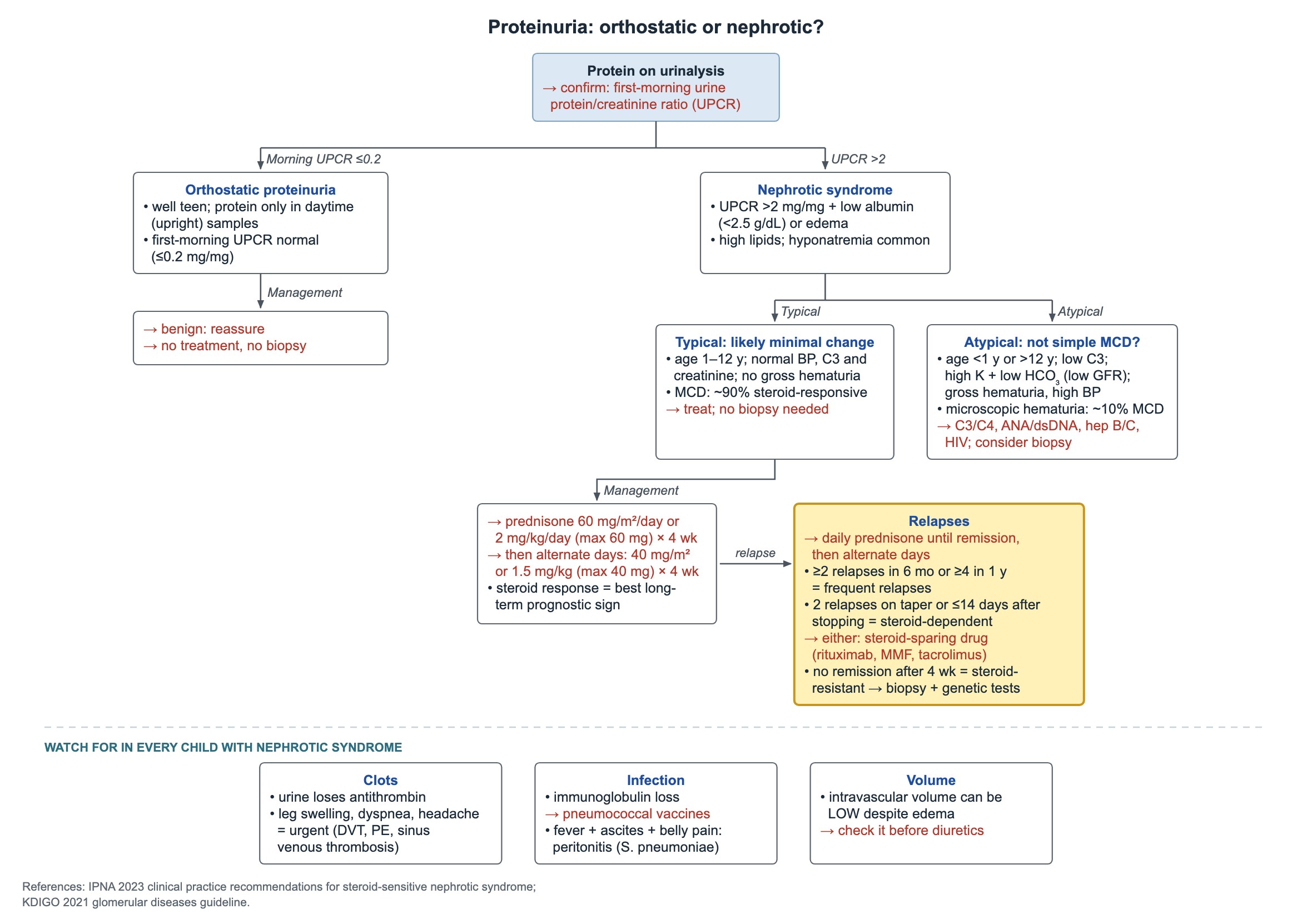
Main decision tree
Proteinuria: orthostatic or nephrotic?
Key points
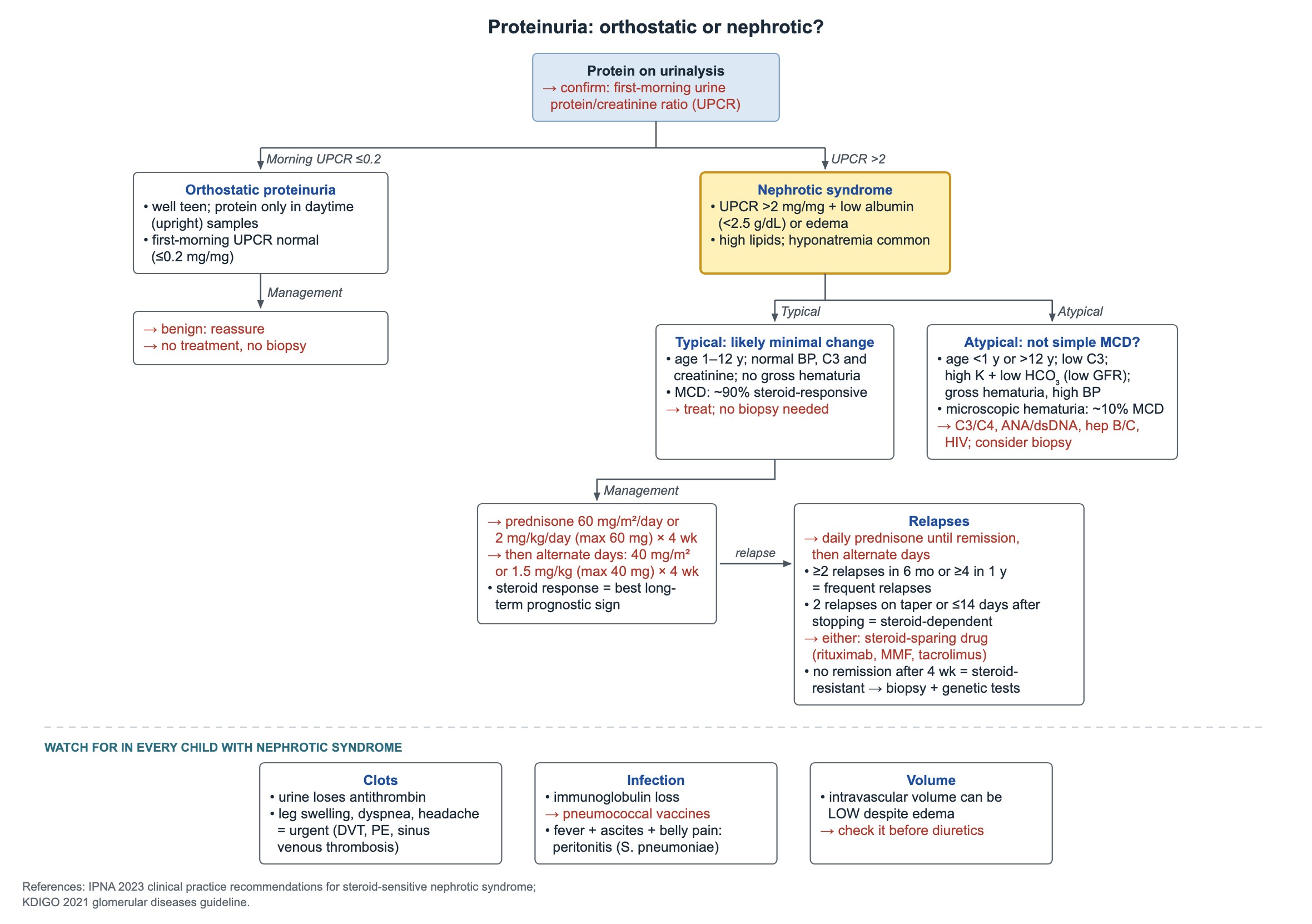
- Orthostatic proteinuria: first-morning UPCR ≤0.2 mg/mg with protein only in upright, daytime samples; benign.
- Nephrotic syndrome: UPCR ≥2 mg/mg (or 3+ dipstick) plus albumin <3.0 g/dL, or edema when albumin is not available.
- Minimal change disease is the usual lesion in young children; about 90% respond to steroids.
- Initial prednisone: 60 mg/m²/day or 2 mg/kg/day (max 60 mg) for 4 weeks, then 40 mg/m² or 1.5 mg/kg (max 40 mg) on alternate days.
- Steroid-dependent: 2 relapses during the taper or within 14 days of stopping steroids.
- No remission after 4 weeks of daily prednisone = steroid-resistant → biopsy and genetic testing.
- Main complications: thrombosis (antithrombin loss), infection such as pneumococcal peritonitis (IgG loss) and intravascular depletion.
What makes it nephrotic syndrome
Nephrotic syndrome has four features: heavy proteinuria, low serum albumin, edema and high lipids. The guideline definition is nephrotic-range proteinuria (UPCR 2 mg/mg or more, or 3+ on dipstick) with albumin below 3.0 g/dL, or with edema when albumin is not yet known.
Serum sodium is often low. The child retains water under ADH even though the body is overloaded with salt and water.
- A typical child is 1–10 years old with puffy eyes, then leg and scrotal or labial edema and 3+ to 4+ protein on dipstick.
- In a young child with a typical steroid-sensitive course, the lesion is almost always minimal change disease; no biopsy is needed before treatment.
Orthostatic proteinuria
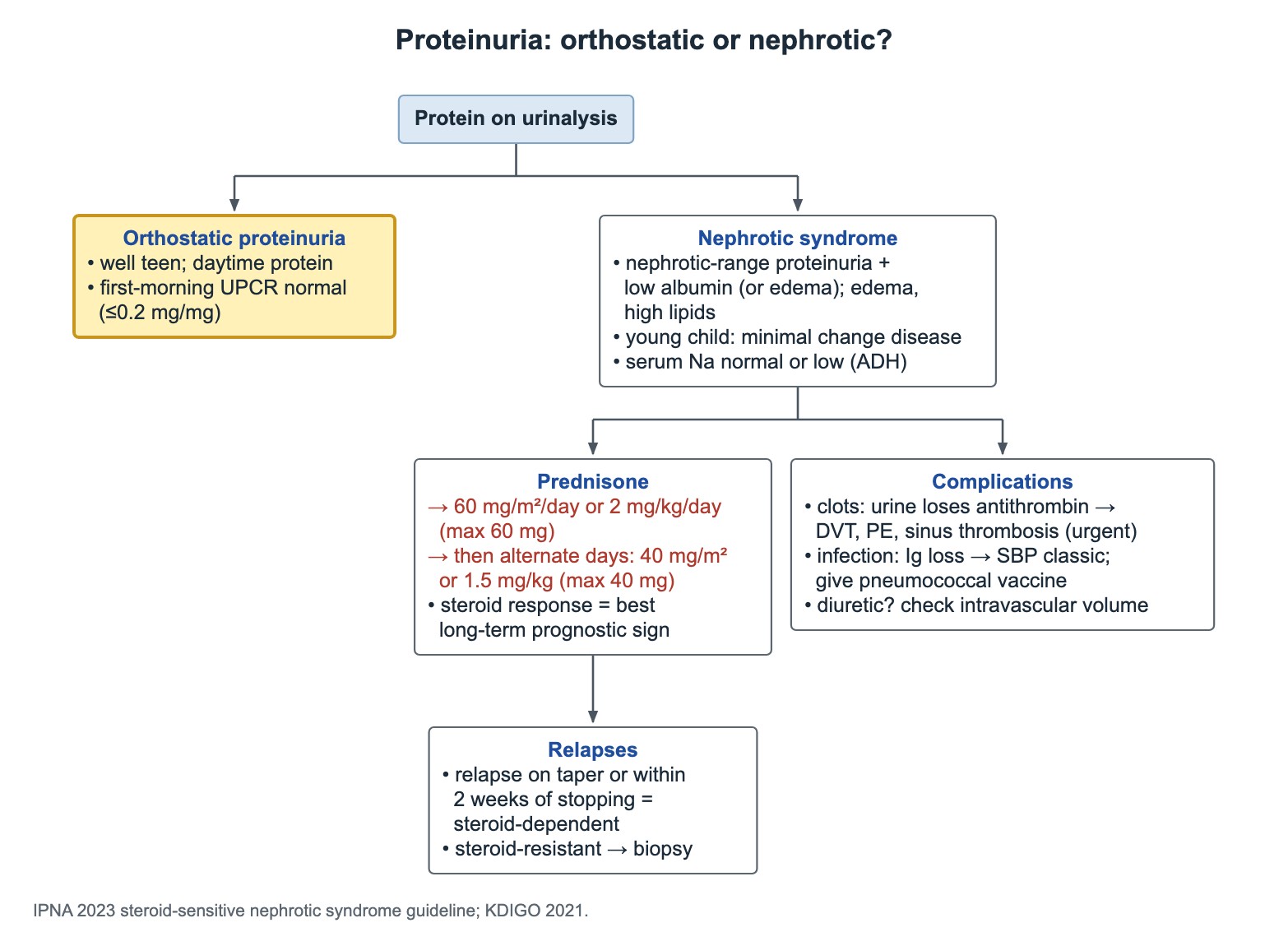
Many well teens have protein only in urine made while upright. Ask for a first-morning void collected right after waking. A first-morning UPCR of 0.2 mg/mg or less with protein in daytime samples confirms orthostatic proteinuria. It needs reassurance only: no treatment and no biopsy.
When it is not simple minimal change disease
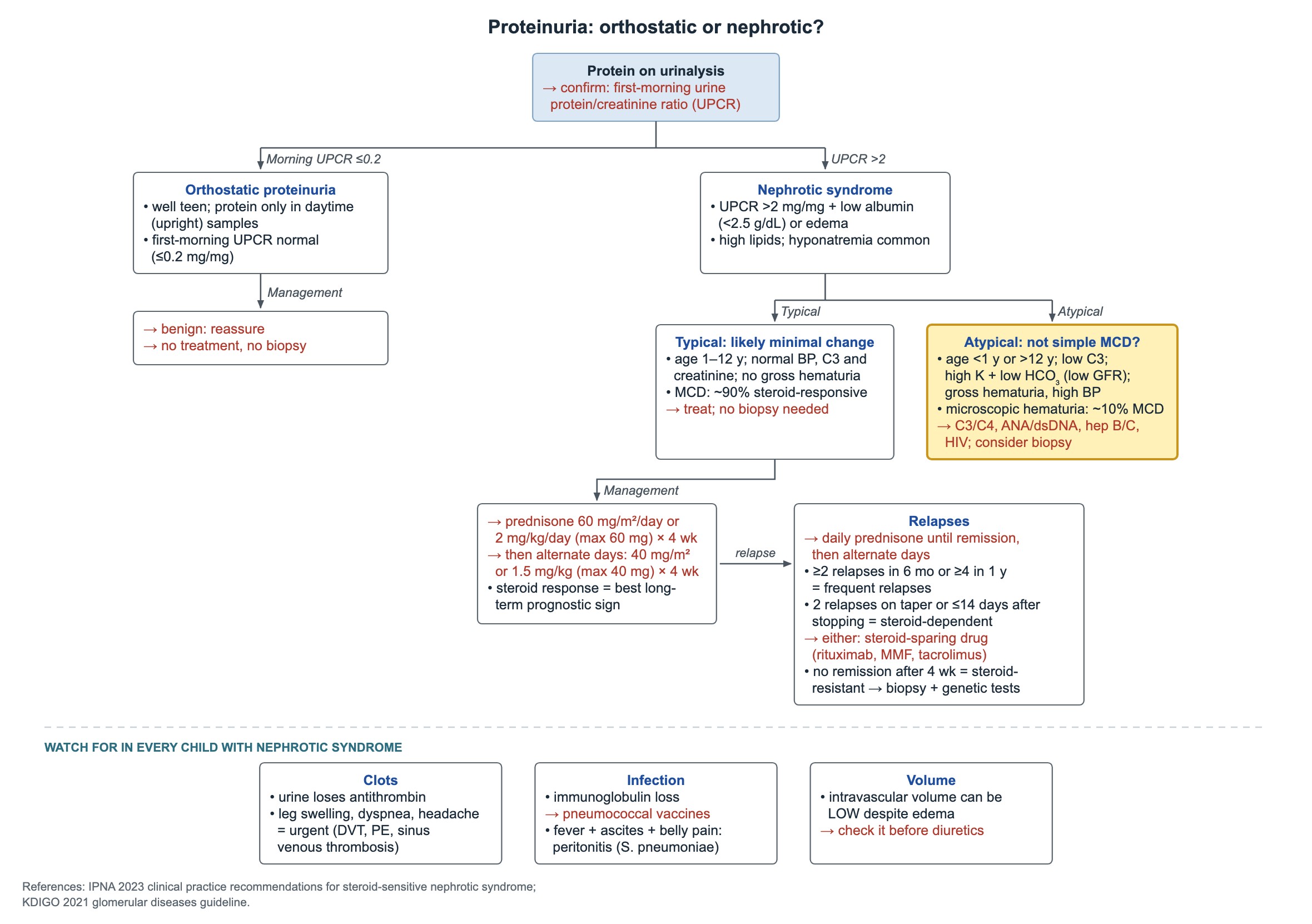
- Age under 1 year or over 12 years.
- Low C3: think lupus nephritis, membranoproliferative GN or postinfectious GN.
- Gross hematuria, high blood pressure or a raised creatinine. Microscopic hematuria alone does not exclude MCD: about 10% of children with MCD have it.
- Hyperkalemia and low bicarbonate in an edematous child suggest a low GFR (AKI or CKD), not typical MCD.
- Tests for a secondary cause: C3 and C4, ANA and anti-dsDNA, hepatitis B and C, HIV; consider biopsy.
First-episode steroid treatment
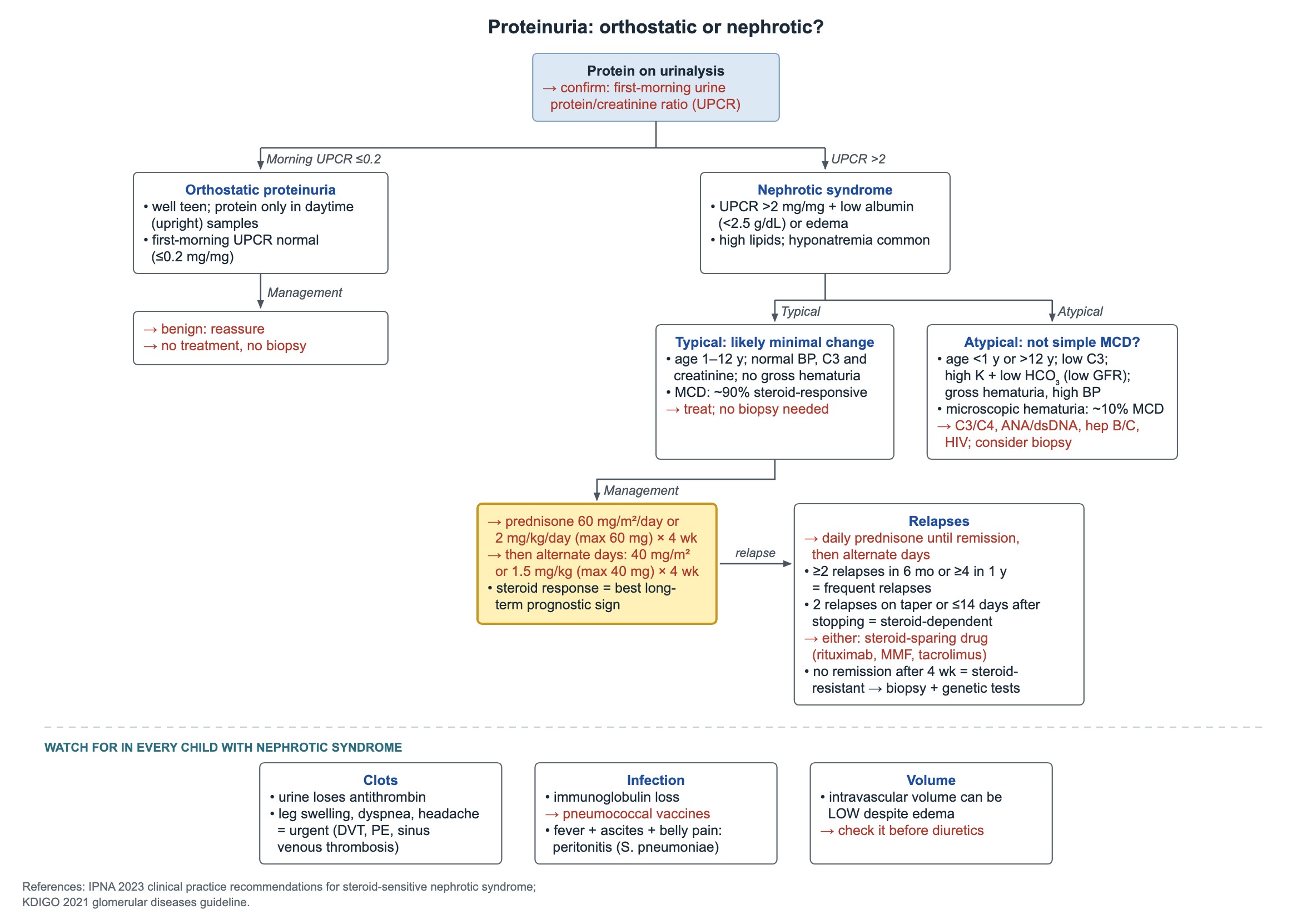
- Prednisone or prednisolone 60 mg/m²/day or 2 mg/kg/day (maximum 60 mg/day) for 4 weeks.
- Then 40 mg/m² or 1.5 mg/kg on alternate days (maximum 40 mg per dose) for 4 weeks.
- About 90% of children with MCD go into remission, usually within 2–3 weeks.
- Response to the first steroid course is the strongest predictor of long-term outcome.
- Remission: UPCR ≤0.2 mg/mg or negative or trace dipstick on 3 days in a row.
Relapses, steroid dependence and resistance
| Term | Definition | Next step |
|---|---|---|
| Relapse | Return of nephrotic-range proteinuria (3+ dipstick or UPCR ≥2 mg/mg) for 3 days in a row | Daily prednisone until remission, then alternate days |
| Frequently relapsing | ≥2 relapses in the first 6 months after the first remission, or repeated relapses within any 12 months | Steroid-sparing drug |
| Steroid-dependent | 2 relapses during the taper or within 14 days of stopping | Steroid-sparing drug (rituximab, mycophenolate, tacrolimus or another agent) |
| Steroid-resistant | No complete remission after 4 weeks of daily prednisone | Kidney biopsy and genetic testing |
Complications to watch for
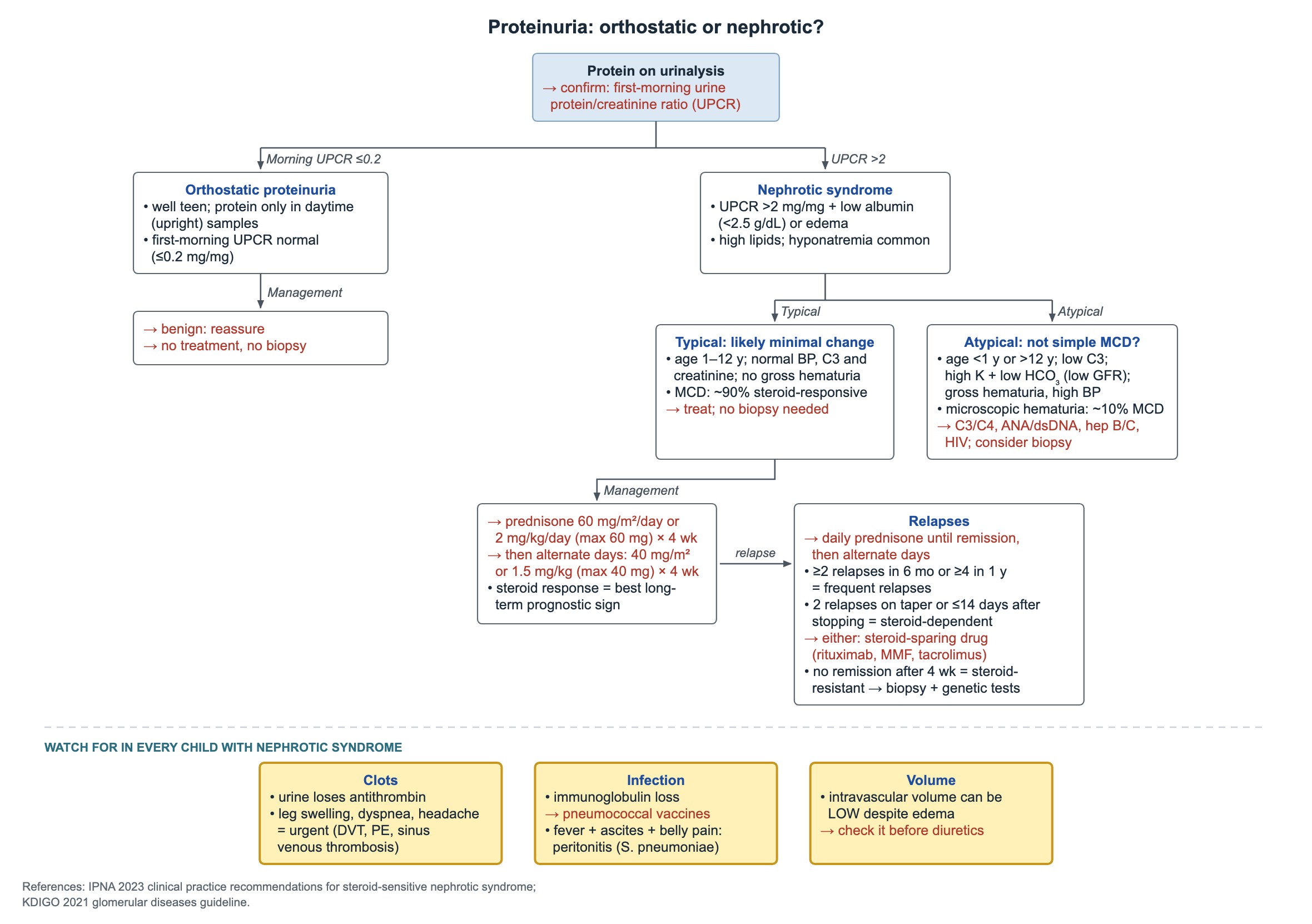
- Clots: urine loss of antithrombin and other anticoagulant proteins raises the risk of DVT, pulmonary embolism and cerebral venous sinus thrombosis. New one-sided leg swelling, breathlessness or severe headache is urgent.
- Infection: loss of IgG and complement in the urine. Fever, ascites and abdominal pain suggest spontaneous bacterial peritonitis, often from Streptococcus pneumoniae.
- Vaccines: nephrotic syndrome is a risk condition for extra pneumococcal vaccine doses; give yearly inactivated influenza vaccine and avoid live vaccines while on high-dose steroids.
- Volume: the child can be edematous yet intravascularly depleted. Check perfusion and intravascular volume before giving a diuretic.
- Steroid-resistant disease with anasarca has the highest risk of thrombosis, along with infection and dyslipidemia.
Common questions
What is the prednisone dose for childhood nephrotic syndrome?
60 mg/m²/day or 2 mg/kg/day (maximum 60 mg) for 4 weeks, then 40 mg/m² or 1.5 mg/kg (maximum 40 mg) on alternate days for 4 weeks.
What urine protein/creatinine ratio is nephrotic range in children?
A UPCR of 2 mg/mg or more (about 200 mg/mmol). A normal value is 0.2 mg/mg or less.
What is orthostatic proteinuria?
Protein in the urine only when upright, with a normal first-morning UPCR (≤0.2 mg/mg). It is benign and needs no treatment.
Study this topic
Sources
- KDIGO 2025 Clinical Practice Guideline for the Management of Nephrotic Syndrome in Children (Kidney Int)
- KDOQI US commentary on the KDIGO 2025 nephrotic syndrome in children guideline (Am J Kidney Dis 2026)
- IPNA clinical practice recommendations for steroid-sensitive nephrotic syndrome (Pediatr Nephrol 2023)
Written for Pedemy in our own words from the sources above; checked November 2026. For education only, not medical advice; check doses and local protocols before treating a patient. Pedemy is independent and not affiliated with or endorsed by the organizations cited.