

Main decision tree
Normal-gap acidosis: gut or kidney?
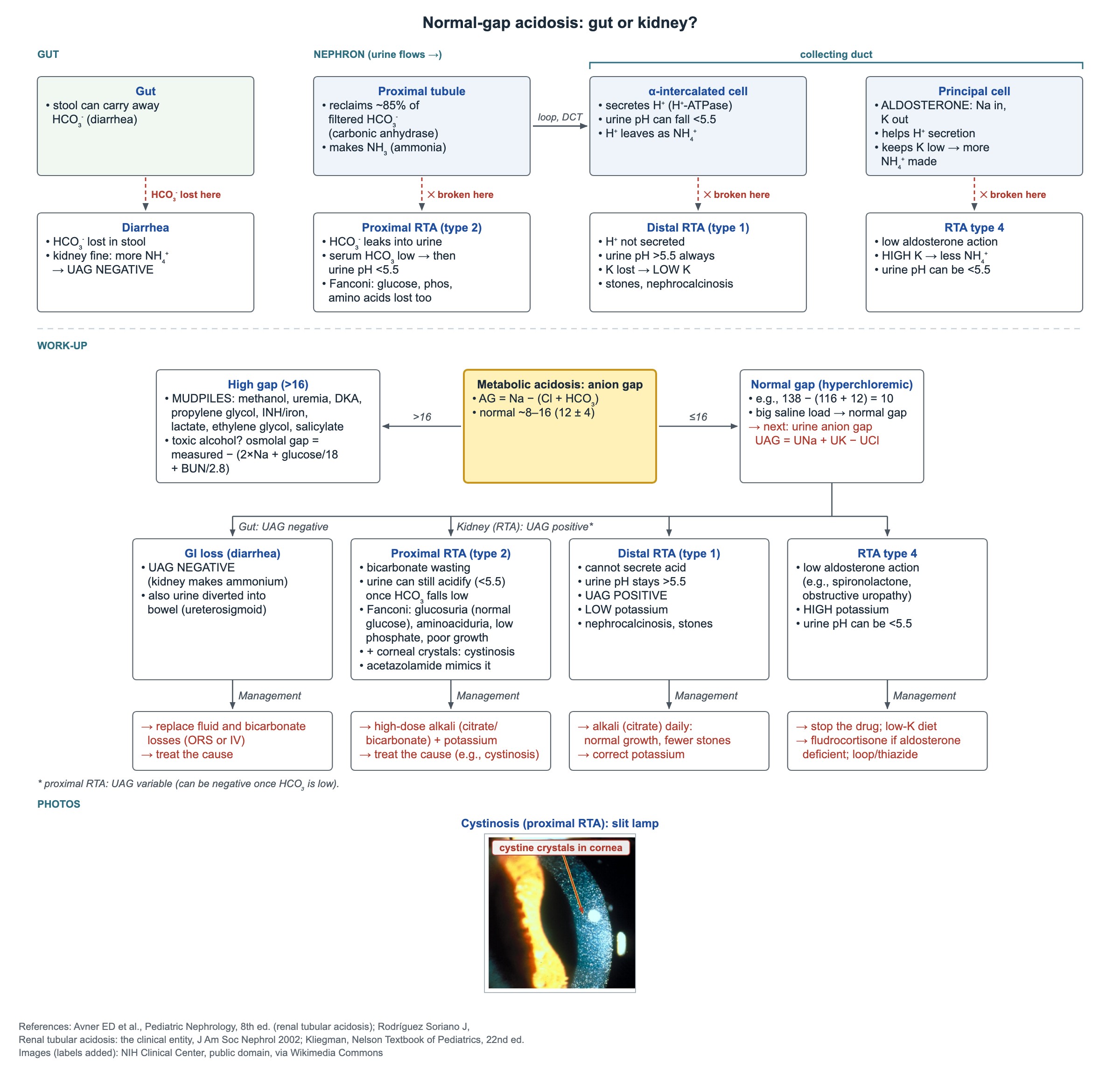
Key points
- Anion gap = Na − (Cl + HCO₃); normal about 8–16 mEq/L (12 ± 4).
- Winter formula: expected PCO₂ = 1.5 × HCO₃ + 8 (± 2); a higher PCO₂ means an added respiratory acidosis.
- High-gap causes: MUDPILES (methanol, uremia, DKA, propylene glycol, iron or isoniazid, lactate, ethylene glycol, salicylates).
- Normal-gap acidosis: negative urine anion gap = gut loss (diarrhea); positive = renal tubular acidosis.
- Distal (type 1) RTA: low K, urine pH always >5.5, nephrocalcinosis and stones; type 4 RTA: high K.
- Fanconi syndrome = generalized proximal tubule failure; with corneal crystals think cystinosis.
- Bartter (thick ascending limb, loop-diuretic-like) has high urine calcium; Gitelman (distal tubule, thiazide-like) has low Mg and low urine calcium.
Start with the anion gap
Anion gap (AG) = Na − (Cl + HCO₃), in mEq/L, leaving out potassium. The normal range is about 8–16 mEq/L. A gap above 16 means an unmeasured acid has been added; a gap of 16 or less with a high chloride is a normal-gap (hyperchloremic) acidosis.
- Example: Na 138, Cl 116, HCO₃ 12 → AG 10: normal-gap acidosis.
- Example: infant with diarrhea, Na 142, Cl 121, HCO₃ 8 → AG 13: normal-gap acidosis from stool bicarbonate loss.
- Large volumes of normal saline cause a hyperchloremic normal-gap acidosis.
- Acetazolamide (carbonic anhydrase inhibitor) and urinary diversion into bowel (ureterosigmoidostomy) also cause normal-gap acidosis.
Is breathing compensating?
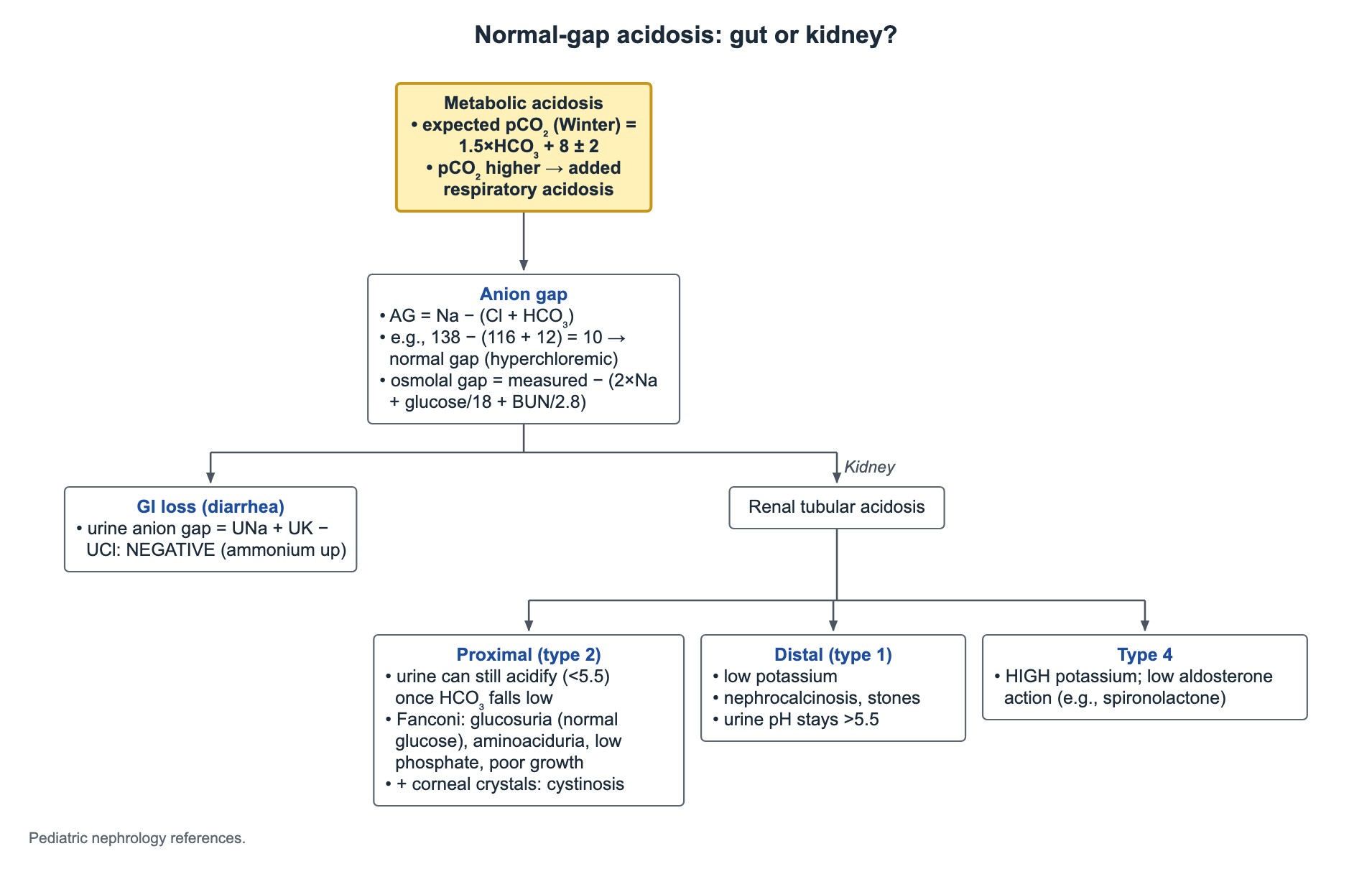
In metabolic acidosis the lungs blow off CO₂. Winter formula predicts the PCO₂: 1.5 × HCO₃ + 8, plus or minus 2. Example: HCO₃ 8 → expected PCO₂ 20 (18–22), so a measured PCO₂ of 22 is appropriate.
A PCO₂ above the predicted range means a second, respiratory acidosis (the child is tiring or not breathing enough). Below the range means an added respiratory alkalosis. Compensation cannot push PCO₂ much below 10–15 mm Hg.
High anion gap acidosis
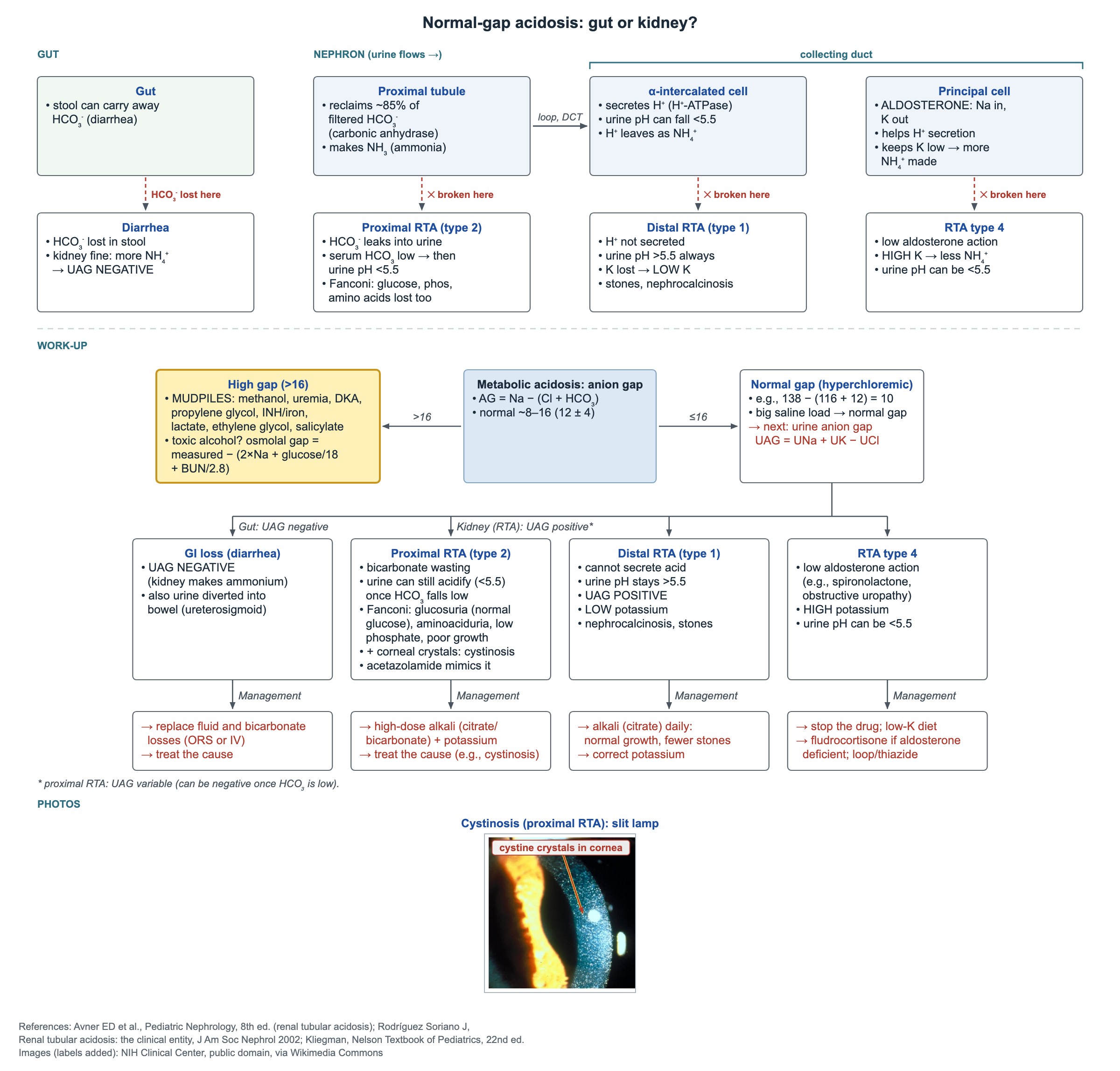
- MUDPILES: methanol, uremia, DKA, propylene glycol, iron or isoniazid, lactic acidosis, ethylene glycol, salicylates.
- Suspect a toxic alcohol when the osmolal gap is high.
- Osmolal gap = measured osmolality − (2 × Na + glucose/18 + BUN/2.8), with glucose and BUN in mg/dL.
Normal-gap acidosis: gut or kidney?
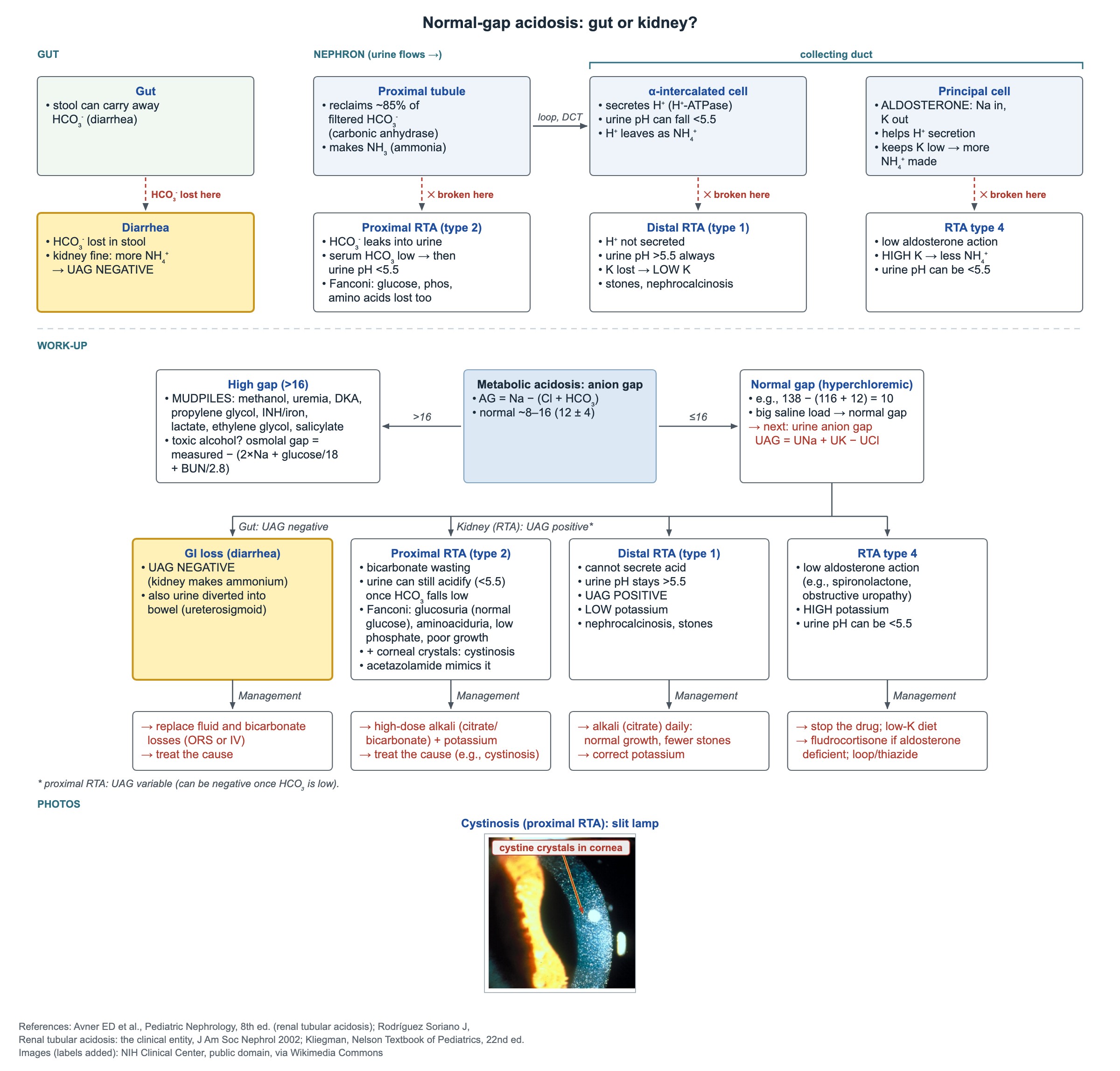
Once GI bicarbonate loss is excluded, a hyperchloremic normal-gap acidosis should make you think of renal tubular acidosis.
Urine anion gap (UAG) = urine Na + urine K − urine Cl. It estimates urine ammonium. With diarrhea the kidney works normally and makes more ammonium chloride, so the UAG is negative. In distal RTA the kidney cannot excrete acid, so the UAG is positive.
- Diarrhea: UAG negative; replace fluid and bicarbonate losses with ORS or IV fluid.
- Proximal RTA: UAG can be negative once bicarbonate has fallen low, so read it with the other findings.
Proximal (type 2) RTA and Fanconi syndrome
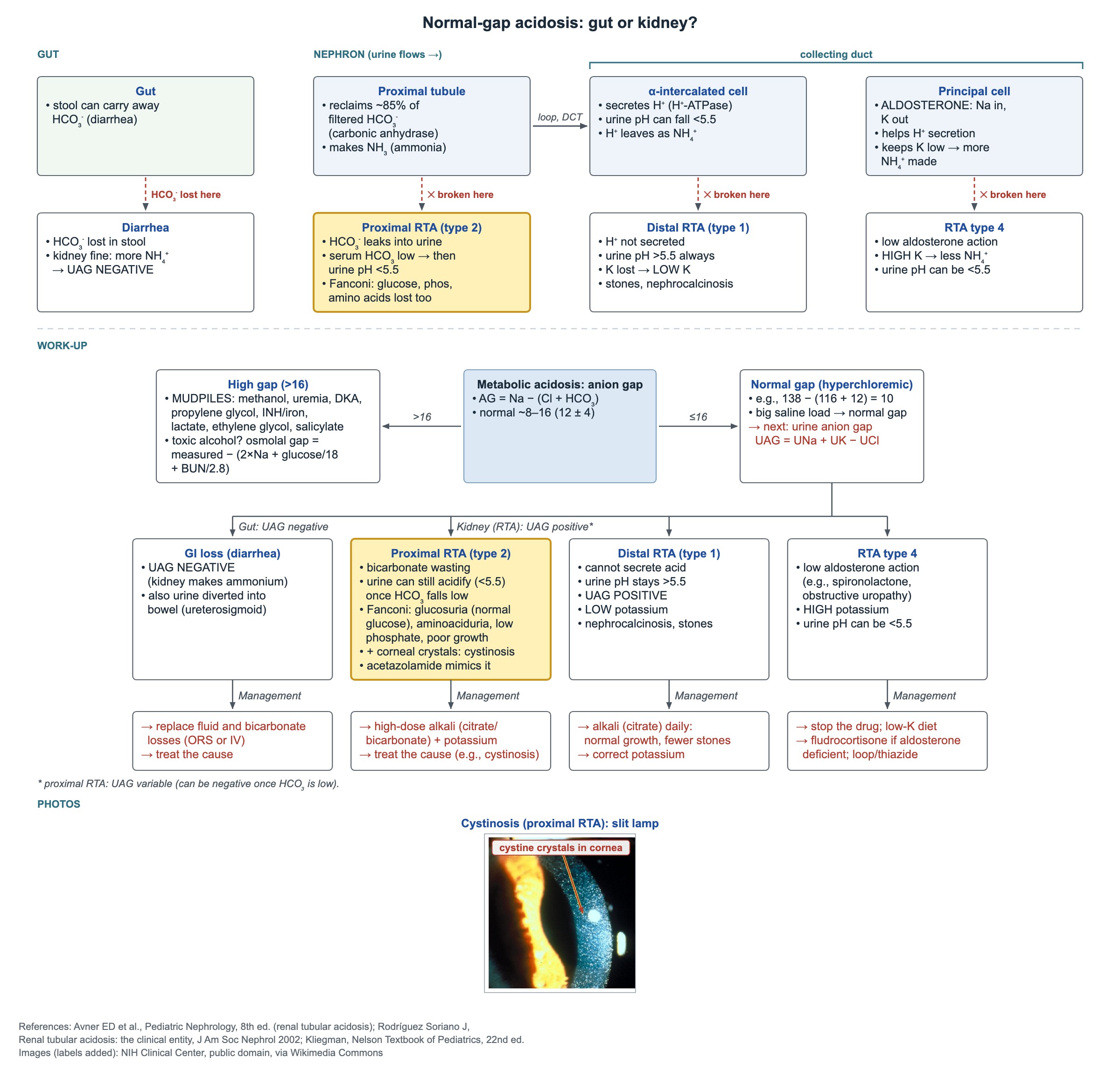
- The proximal tubule normally reclaims about 85% of filtered bicarbonate. In type 2 RTA bicarbonate leaks into the urine until serum HCO₃ falls below the lowered threshold.
- An acidic urine pH (<5.5) does not exclude proximal RTA: urine acidifies once serum bicarbonate is low.
- Fanconi syndrome is generalized proximal tubule failure: glucosuria with normal blood glucose, phosphaturia, aminoaciduria and bicarbonate loss, often with poor growth and rickets.
- A young child with Fanconi syndrome, poor growth and later photophobia from corneal crystals: think cystinosis.
- Treatment: high-dose alkali (citrate or bicarbonate) plus potassium, and treatment of the cause.
Distal (type 1) and type 4 RTA
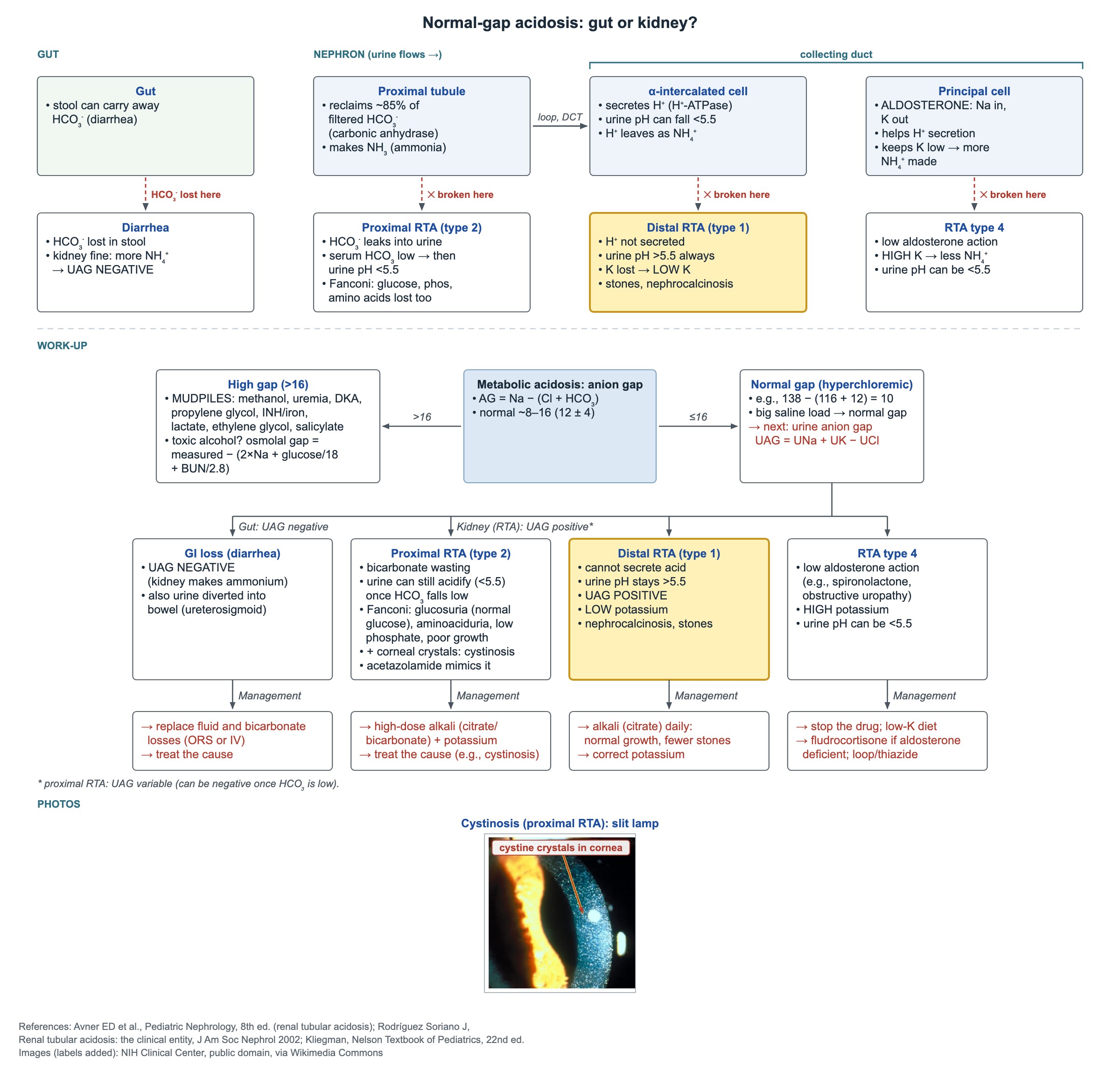
Before calling hyperkalemia real in a well child, rule out pseudohyperkalemia: a hemolyzed, squeezed fingerstick sample with a normal ECG should be repeated as a free-flowing venous sample.
| Feature | Distal (type 1) | Type 4 |
|---|---|---|
| Problem | α-intercalated cells cannot secrete H⁺ | Low aldosterone action, less ammonium made |
| Potassium | Low | High |
| Urine pH | Always >5.5 | Can be <5.5 |
| Urine anion gap | Positive | Positive |
| Other | Nephrocalcinosis, calcium stones, poor growth | Spironolactone, obstructive uropathy, aldosterone deficiency |
| Treatment | Daily alkali (citrate) for normal growth and fewer stones; correct K | Stop the drug, low-K diet, fludrocortisone if aldosterone is deficient |
Hypokalemic alkalosis: Bartter and Gitelman
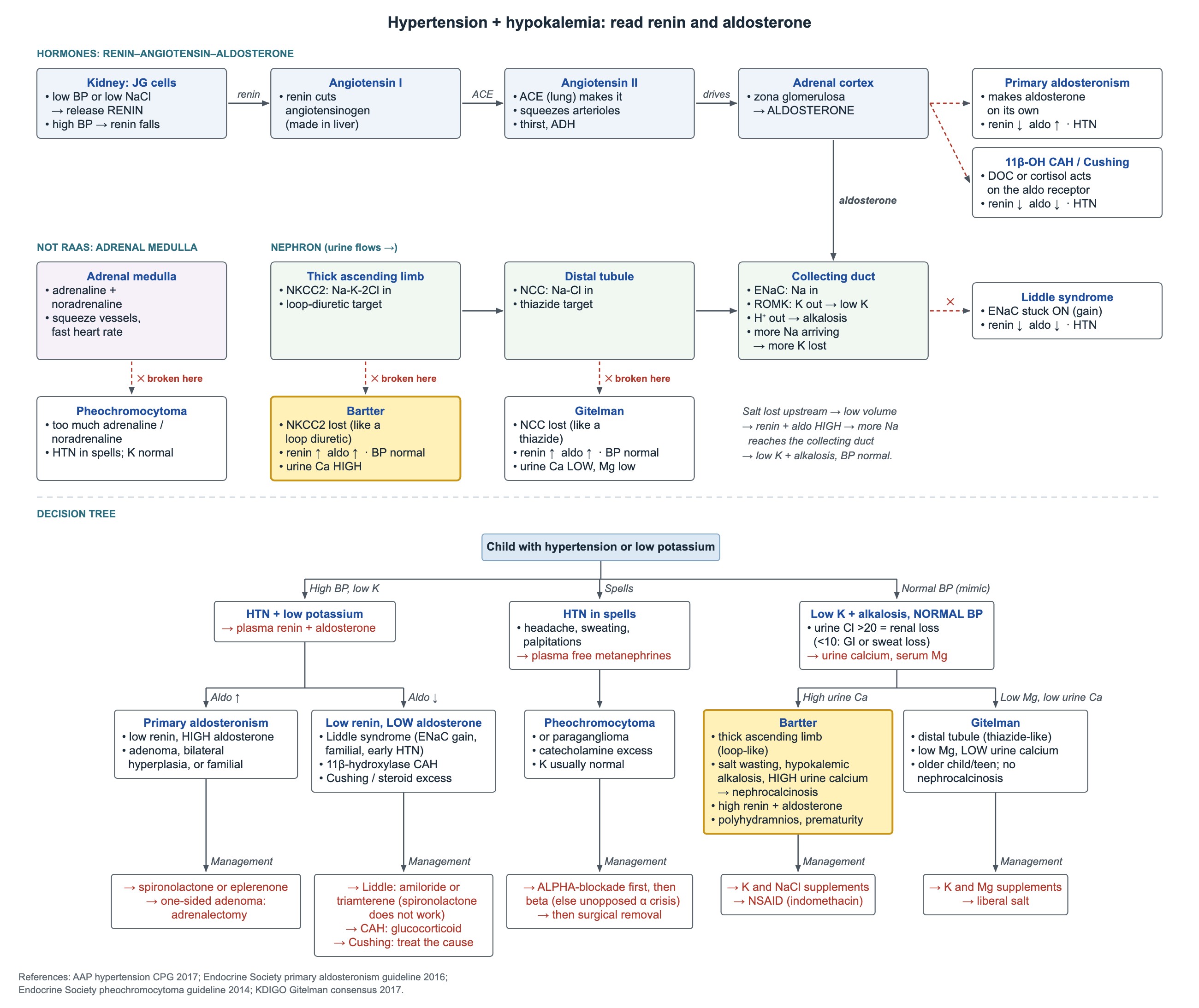
In hypochloremic metabolic alkalosis, spot urine chloride shows where the chloride is lost. Below 10 mEq/L means GI or skin (sweat) loss, such as vomiting or cystic fibrosis. Above 20 mEq/L means renal loss: diuretics, Bartter or Gitelman syndrome. Both syndromes have high renin and aldosterone with normal or low blood pressure.
| Feature | Bartter syndrome | Gitelman syndrome |
|---|---|---|
| Site and transporter | Thick ascending limb (NKCC2) | Distal convoluted tubule (NCC) |
| Mimics | Loop diuretic | Thiazide diuretic |
| Age | Newborn or infant; polyhydramnios and prematurity | Older child or teen |
| Urine calcium | High, with nephrocalcinosis | Low |
| Serum magnesium | Usually normal | Low |
| Treatment | K and NaCl supplements, NSAID (indomethacin) | K and Mg supplements, liberal salt |
Common questions
What is a normal anion gap?
About 8–16 mEq/L (12 ± 4), using Na − (Cl + HCO₃).
What is Winter's formula?
Expected PCO₂ = 1.5 × HCO₃ + 8, ± 2. A measured PCO₂ above this range means a coexisting respiratory acidosis.
How do you tell Bartter from Gitelman syndrome?
Gitelman has low serum magnesium and low urine calcium and presents later. Bartter has high urine calcium with nephrocalcinosis and often presents in newborns after polyhydramnios.
Study this topic
Sources
- Konrad M et al. Diagnosis and management of Bartter syndrome: ERKNet consensus (Kidney Int 2021)
- Blanchard A et al. Gitelman syndrome: KDIGO Controversies Conference consensus (Kidney Int 2017)
Written for Pedemy in our own words from the sources above; checked November 2026. For education only, not medical advice; check doses and local protocols before treating a patient. Pedemy is independent and not affiliated with or endorsed by the organizations cited.