

Main decision tree
Which formula or diet, and what it can miss
Key points
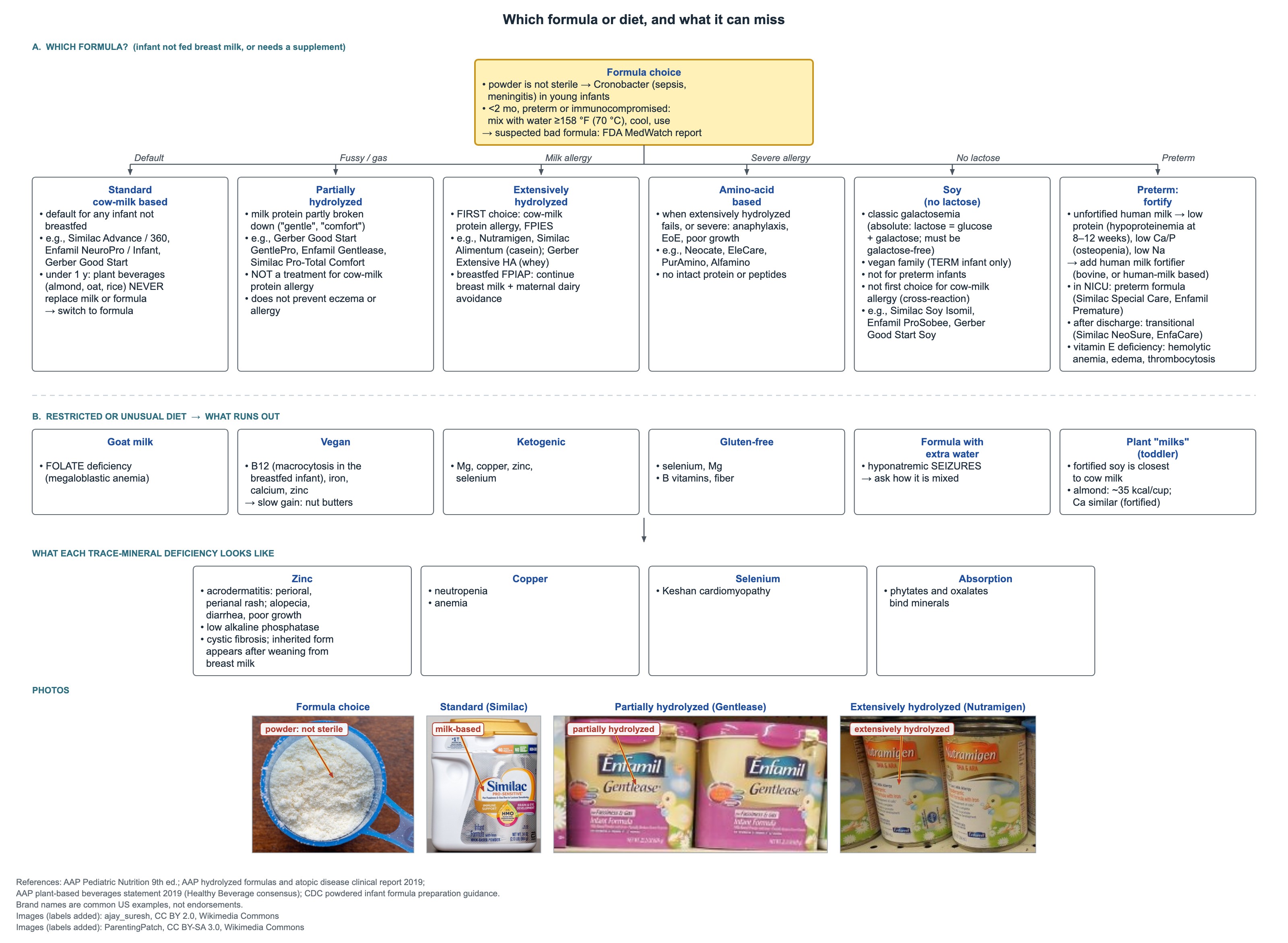
- Powdered formula is not sterile: Cronobacter can cause sepsis and meningitis in young infants.
- Infants under 2 months, preterm or immunocompromised: mix powder with water at 158 °F (70 °C) or hotter, then cool.
- Cow's milk protein allergy: extensively hydrolyzed formula first; amino acid-based if that fails or the allergy is severe.
- Soy formula: classic galactosemia, vegan families (term infants); not for preterm infants ≤1800 g.
- Goat's milk causes folate deficiency; a vegan diet risks B12, iron, calcium and zinc.
- Over-diluted formula causes hyponatremic seizures: usual mix is 1 scoop of powder per 2 oz of water.
- Zinc: perioral and perianal rash, hair loss, diarrhea, low alkaline phosphatase. Copper: neutropenia and anemia.
Choosing a formula
Start with the reason the baby needs something other than standard formula. Most fussiness and gas do not need a special formula.
- A breastfed infant with food protein-induced allergic proctocolitis can keep breastfeeding while the parent avoids dairy.
- Powdered formula can carry Cronobacter sakazakii, which causes sepsis and meningitis in young infants.
- For infants under 2 months, preterm or immunocompromised infants: use liquid formula if possible, or mix powder with water at 158 °F (70 °C) or hotter, cool it and use it promptly.
- Suspected illness from a contaminated formula: report to the FDA through MedWatch.
| Formula | Use it for |
|---|---|
| Standard cow's milk-based | Default for any infant who is not breastfed |
| Partially hydrolyzed | Comfort or fussy feeding; it does not treat cow's milk protein allergy or prevent eczema |
| Extensively hydrolyzed | First choice for cow's milk protein allergy and FPIES |
| Amino acid-based | Allergy not controlled on extensively hydrolyzed formula, or severe: anaphylaxis, eosinophilic esophagitis, poor growth |
| Soy (lactose-free) | Classic galactosemia; vegan family with a term infant |
| Preterm formula or fortified human milk | Preterm infants |
Soy formula: when it fits
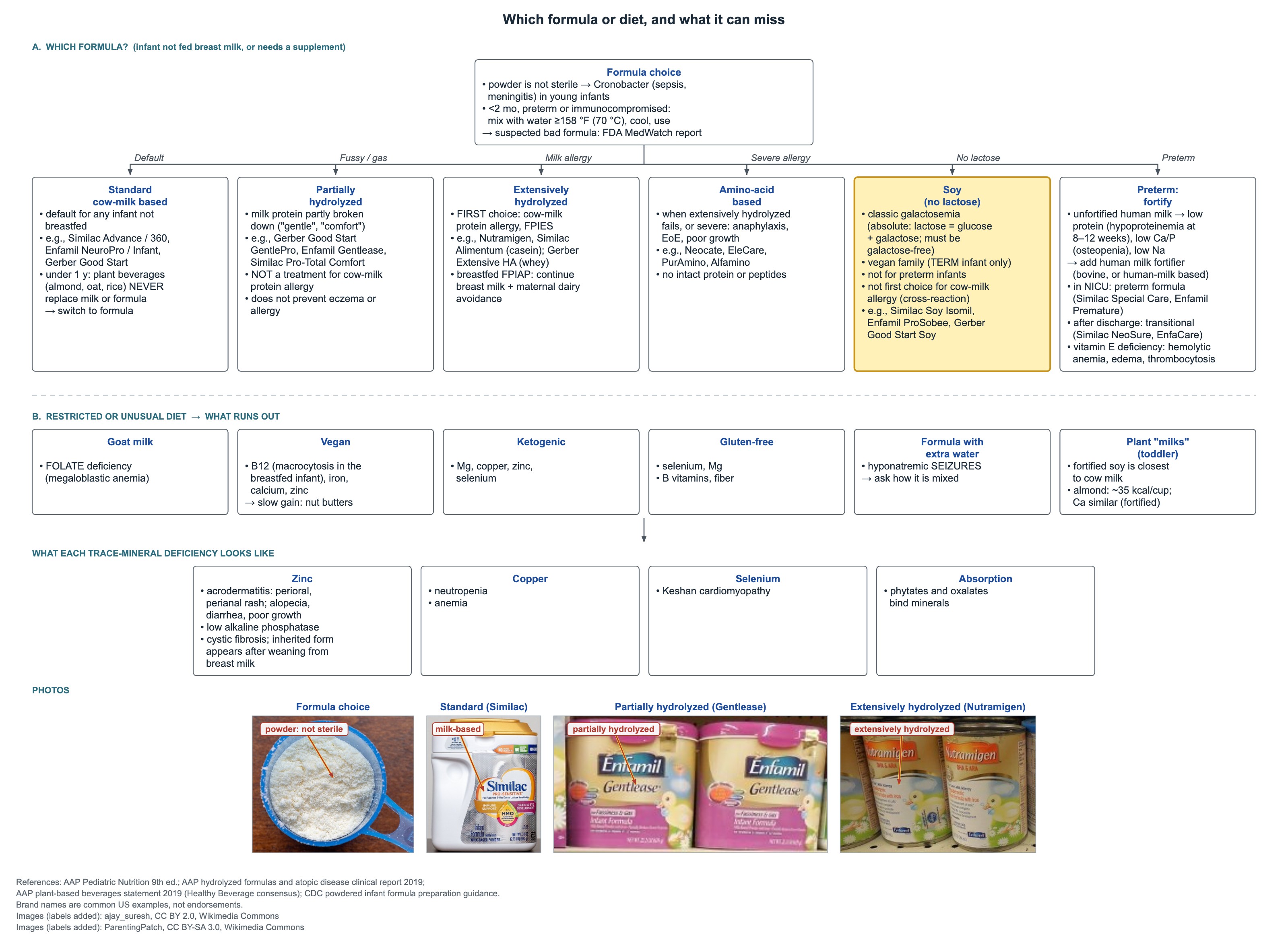
- Classic galactosemia: the infant must avoid lactose (glucose + galactose), so soy formula is the standard choice.
- Vegan family with a term infant: soy formula is appropriate.
- Not for preterm infants (birth weight ≤1800 g): poorer bone mineralization and growth.
- Not the first choice for cow's milk protein allergy, because some infants react to soy as well.
Preterm infants: why human milk needs fortifier
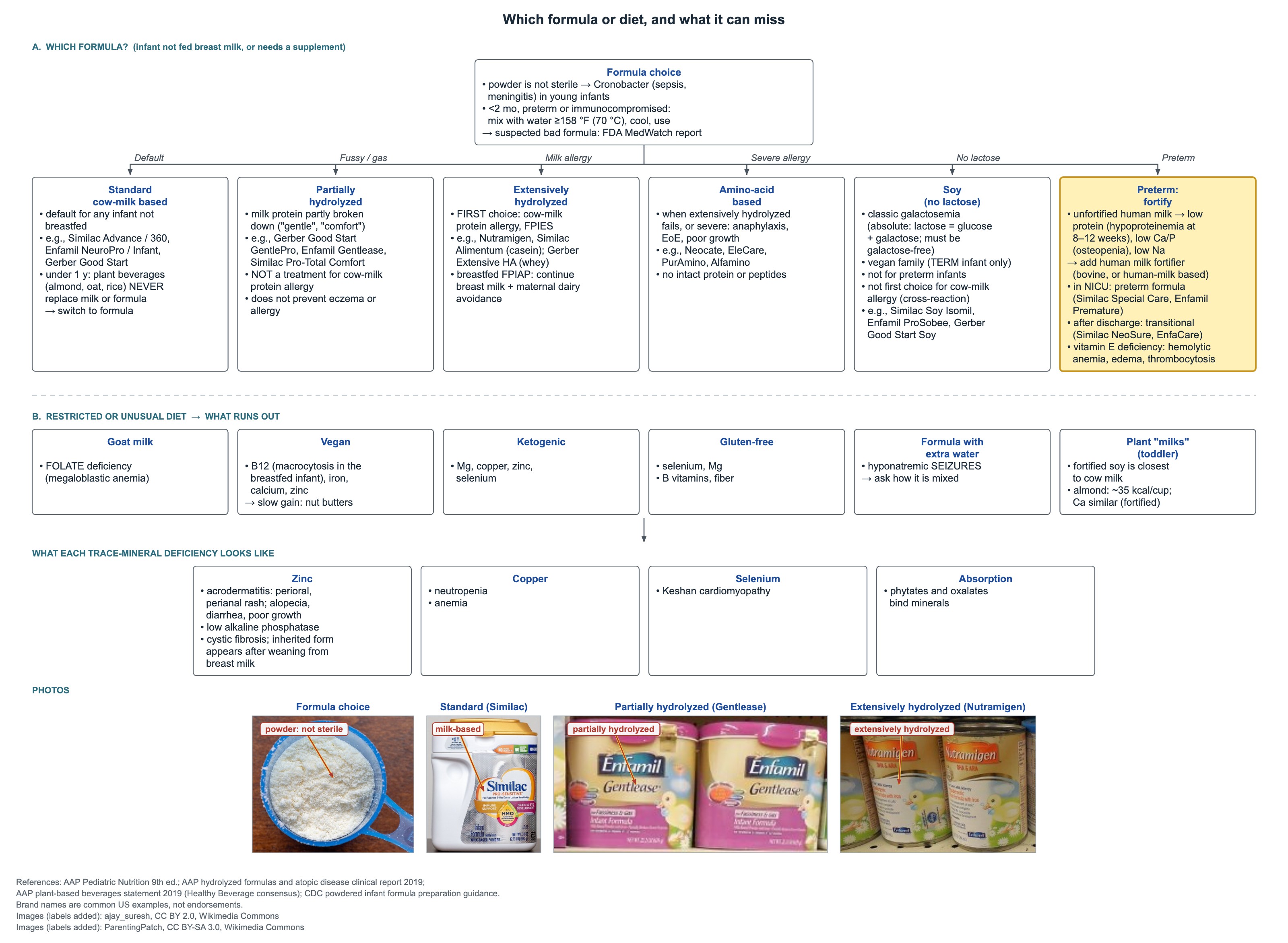
Human milk alone does not meet a preterm baby's high needs for protein and minerals.
- Long-term unfortified human milk leads to hypoproteinemia at about 8–12 weeks, low calcium and phosphorus (osteopenia) and low sodium.
- Add human milk fortifier (bovine or human milk-based); use preterm formula when human milk is not available.
- After discharge, some infants use a transitional formula.
- Vitamin E deficiency in preterm infants causes hemolytic anemia, edema and thrombocytosis.
Restricted diets: what runs out
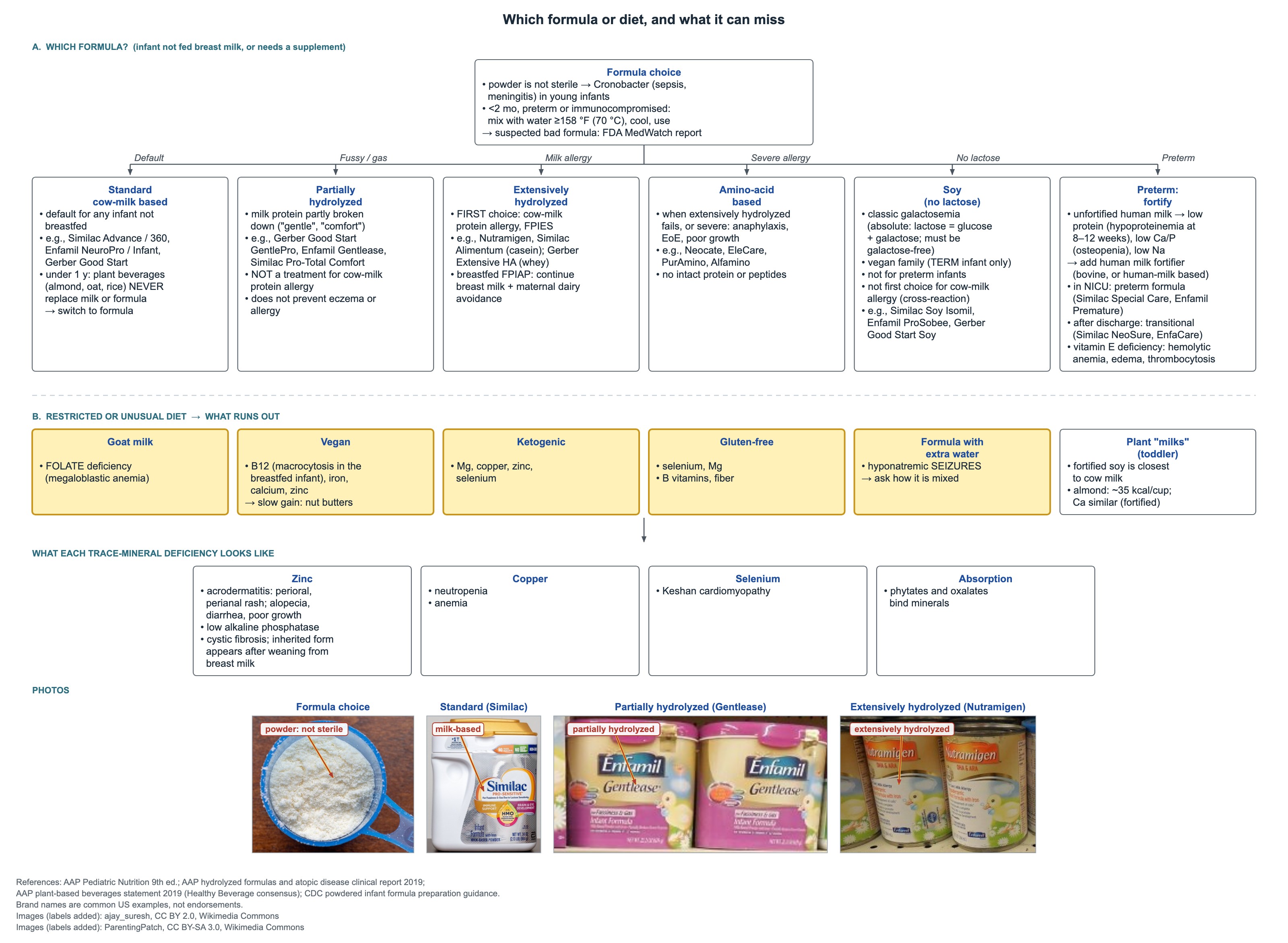
- A neonate with seizures and sodium near 118 mEq/L: ask how the formula is mixed. Standard powder is 1 scoop per 2 oz of water.
- Vegan toddler on almond milk losing weight percentiles: add calorie- and fat-dense plant foods such as nut butters, avocado and legumes.
| Diet | Nutrients at risk |
|---|---|
| Goat's milk (unmodified) | Folate, causing megaloblastic anemia |
| Strict vegan | Vitamin B12 (macrocytosis in a breastfed infant), iron, calcium, zinc |
| Ketogenic | Magnesium, copper, zinc, selenium |
| Strict gluten-free | B vitamins, magnesium, selenium, fiber |
| Formula mixed with extra water | Sodium: hyponatremia and seizures |
Trace-mineral deficiencies
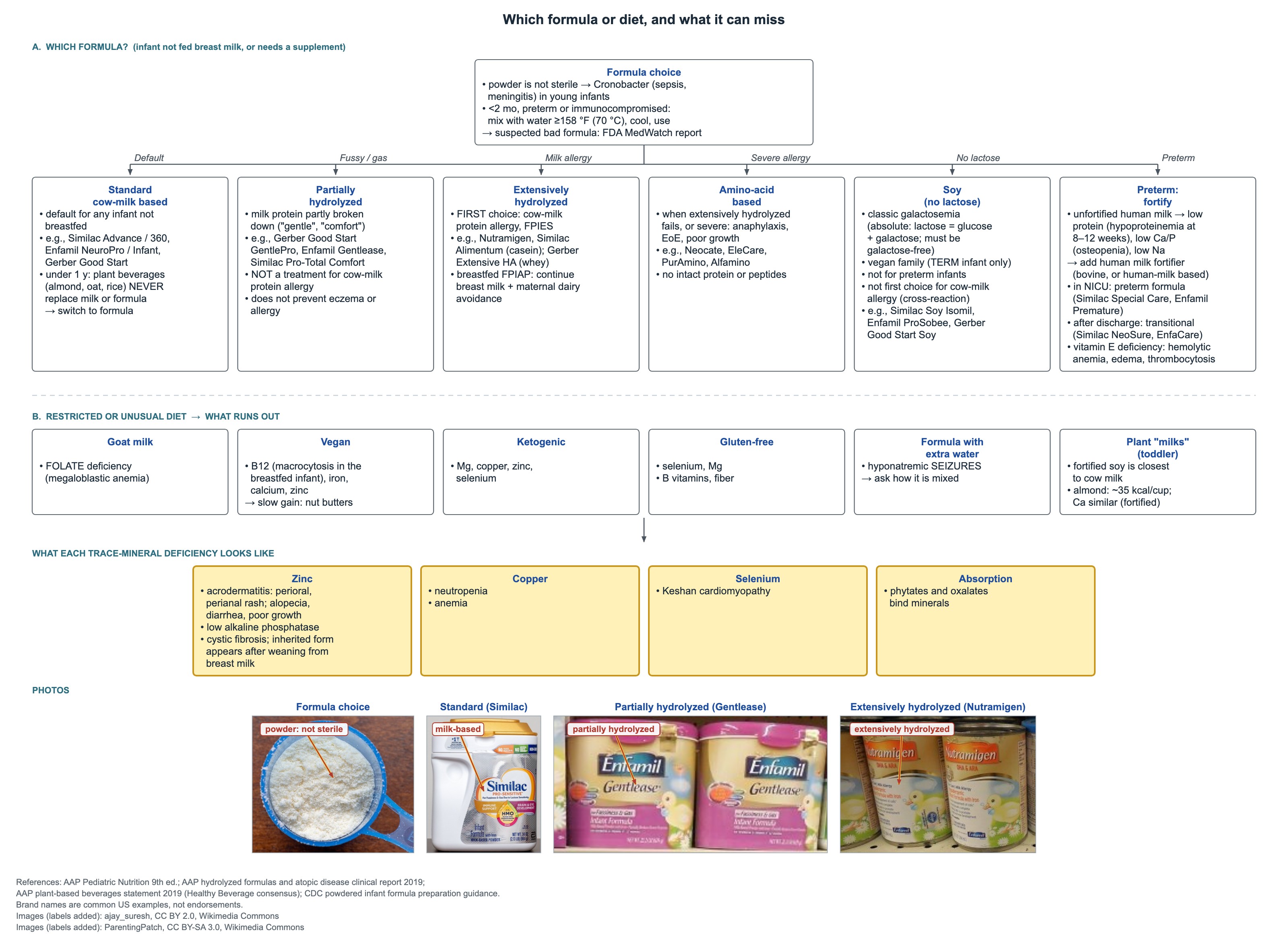
Phytates and oxalates in plant foods bind minerals such as zinc, iron and calcium and lower their absorption.
| Mineral | Clues |
|---|---|
| Zinc | Perioral and perianal scaly rash (acrodermatitis), hair loss, diarrhea, poor growth; low alkaline phosphatase. Seen in cystic fibrosis; the inherited form appears after weaning from breast milk |
| Copper | Neutropenia and anemia on a restricted diet |
| Selenium | Keshan disease, a cardiomyopathy |
Common questions
What formula is best for cow's milk protein allergy?
Extensively hydrolyzed formula first. Use an amino acid-based formula if symptoms continue or the reaction is severe. Soy and partially hydrolyzed formulas are not first-line.
When is soy formula recommended?
For classic galactosemia and for term infants of vegan families. It is not recommended for preterm infants.
Why is goat's milk unsafe for infants?
Unmodified goat's milk is low in folate and other nutrients, so infants can develop megaloblastic anemia.
Study this topic
Sources
- AAP: Use of soy protein-based formulas in infant feeding (Pediatrics 2008)
- AAP 2019: Early nutritional interventions and atopic disease, including hydrolyzed formulas (Pediatrics)
- NIH Office of Dietary Supplements: Zinc fact sheet for health professionals
- CDC: About Cronobacter infection
Written for Pedemy in our own words from the sources above; checked November 2026. For education only, not medical advice; check doses and local protocols before treating a patient. Pedemy is independent and not affiliated with or endorsed by the organizations cited.