

Main decision tree
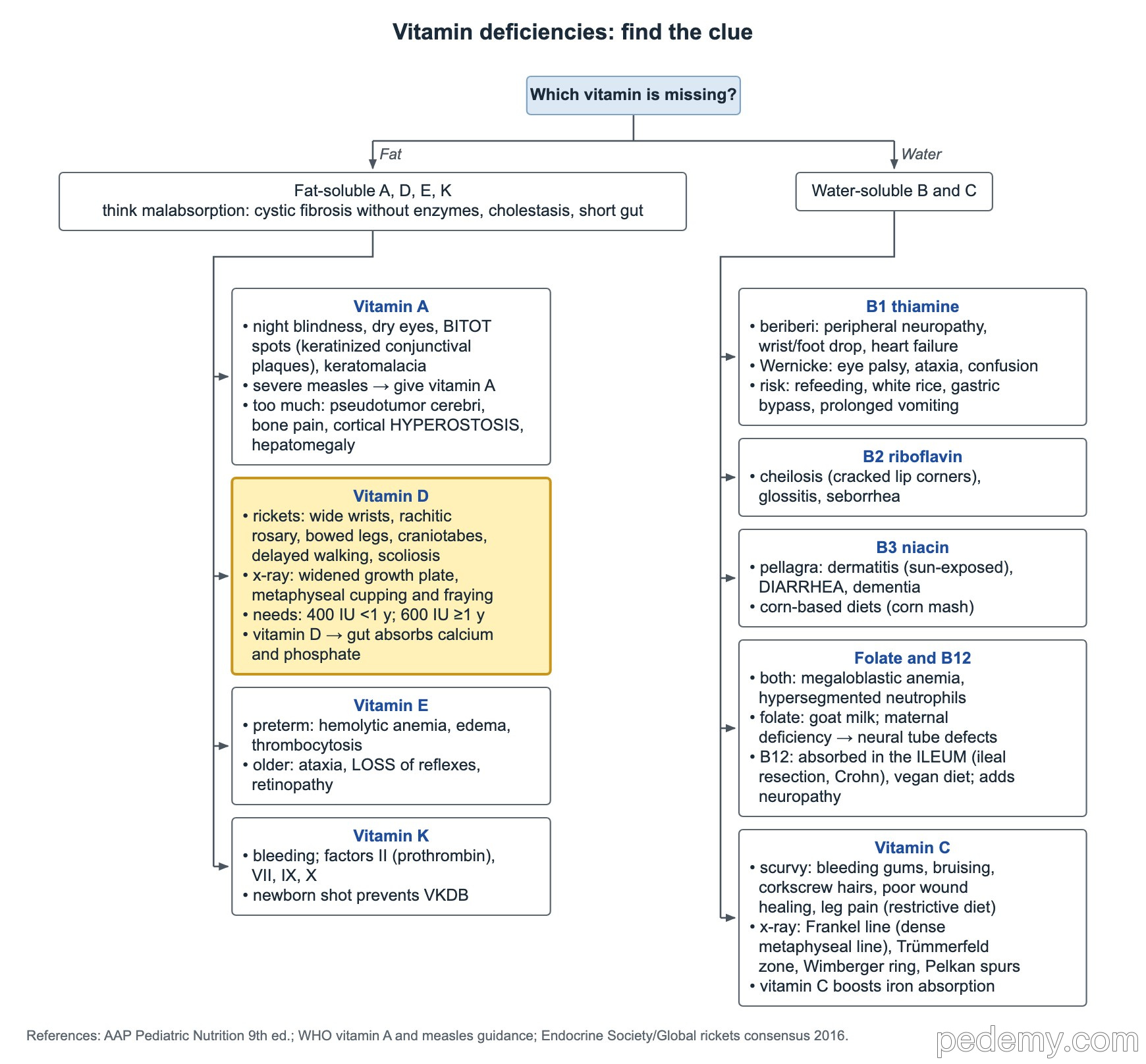
Vitamin deficiencies: find the clue
Key points
- Vitamin D need: 400 IU/day under 1 year, 600 IU/day from 1 year.
- Rickets x-ray: widened growth plate with metaphyseal cupping and fraying.
- Vitamin A: night blindness and Bitot spots; give vitamin A in severe measles; excess causes cortical hyperostosis.
- Vitamin E deficiency in preterm infants: hemolytic anemia, edema, thrombocytosis.
- Thiamine: beriberi and Wernicke (eye palsy, ataxia, confusion); risk after gastric bypass or prolonged vomiting.
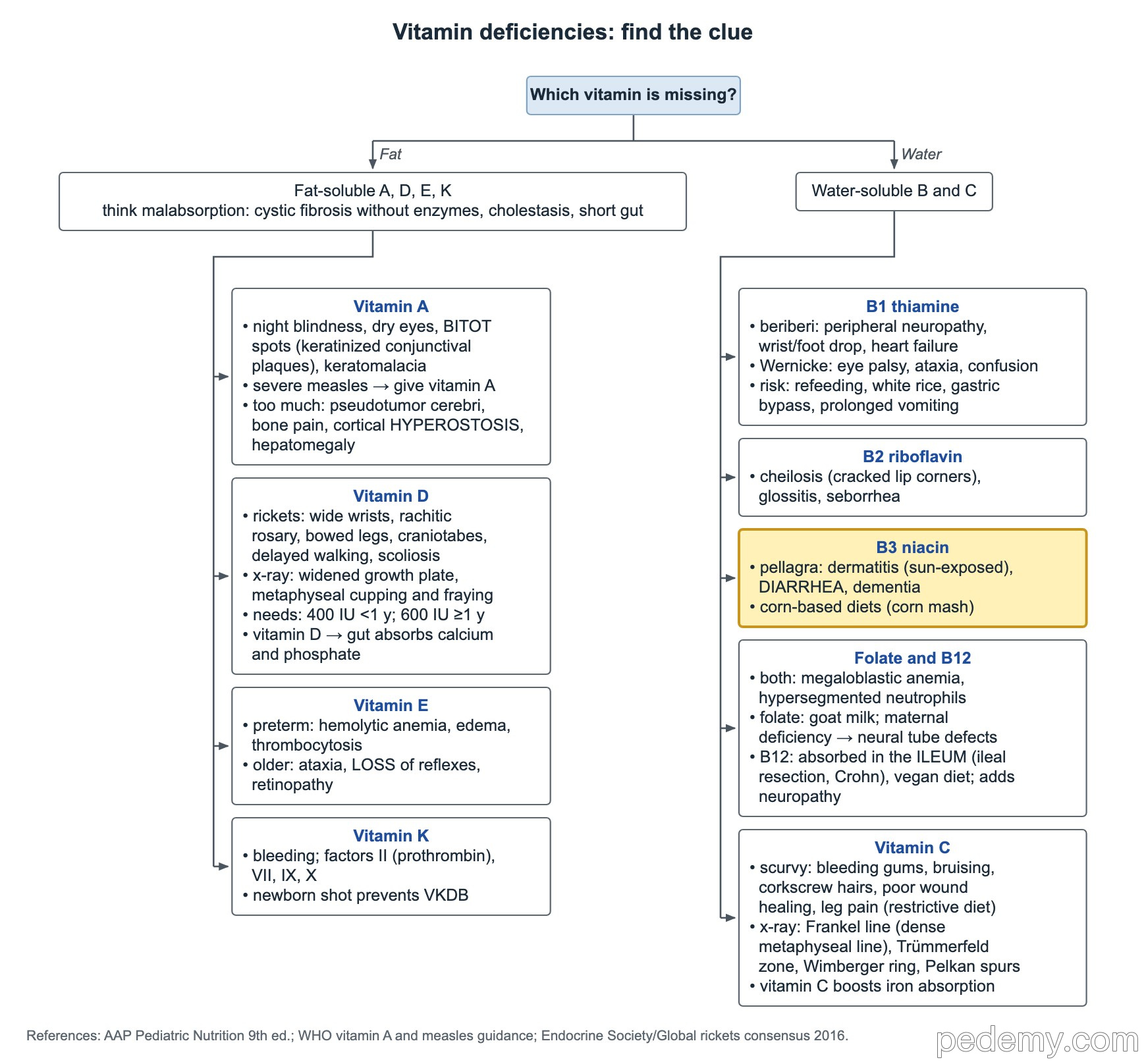
- Niacin (pellagra): dermatitis, diarrhea, dementia, classically with corn-based diets.
- Scurvy: bleeding gums, corkscrew hairs, bruising; Frankel line on x-ray.
Vitamin D and rickets
Active vitamin D makes the gut absorb calcium and phosphate. Without it, the growing ends of bones do not mineralize, which is rickets.
Fat malabsorption (cholestasis, cystic fibrosis, short gut) raises the risk, as do exclusive breastfeeding without supplements and dark skin with little sun.
- Clinical signs: wide wrists, rachitic rosary, bowed legs, craniotabes (soft skull bones), delayed walking, scoliosis.
- X-ray: widened growth plates with metaphyseal cupping and fraying.
- Daily need: 400 IU under 1 year, 600 IU from 1 year.
Vitamin A: deficiency and excess
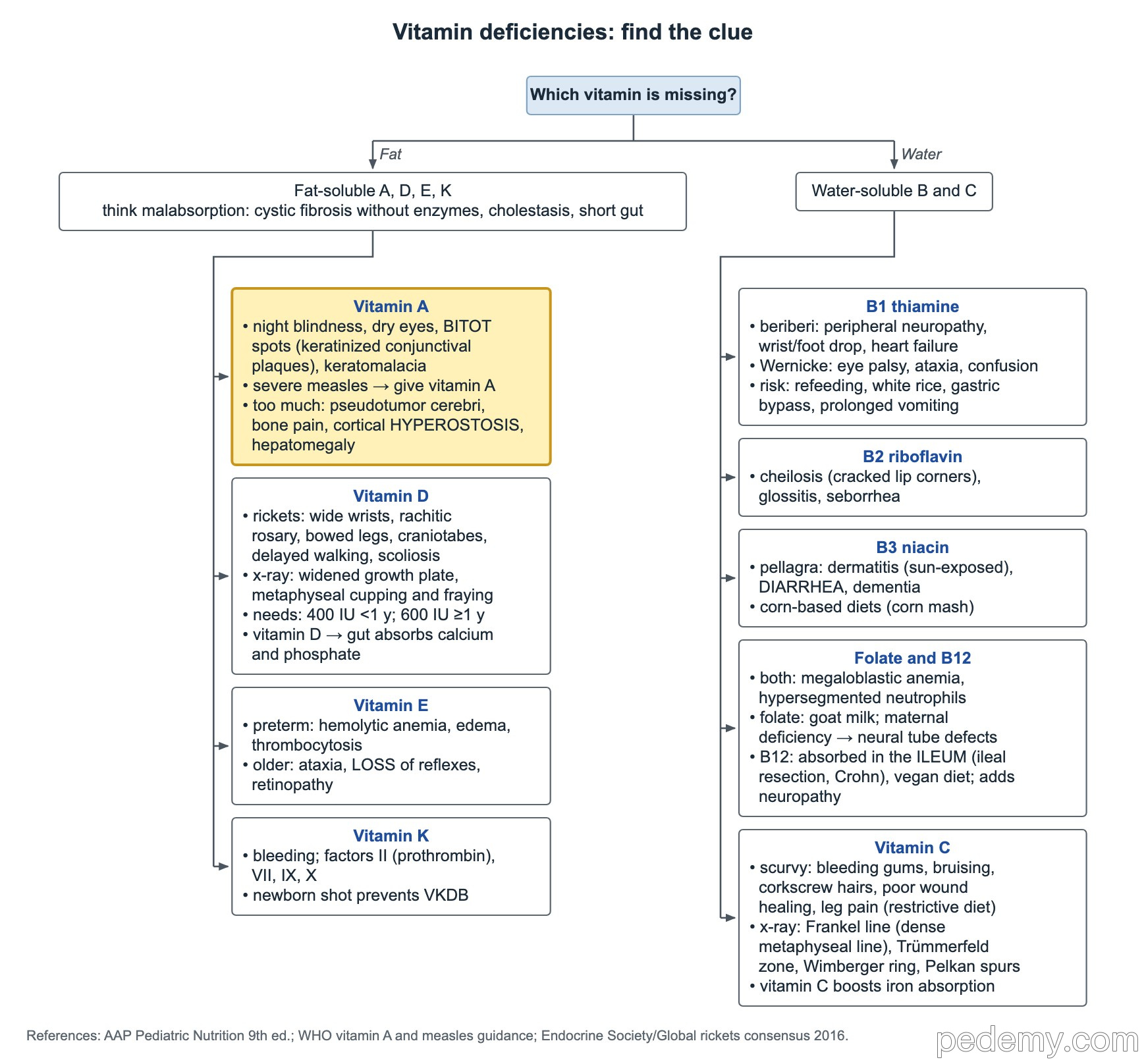
- Deficiency: night blindness, dry eyes, Bitot spots (keratinized plaques on the conjunctiva), keratomalacia, dry scaly skin.
- Typical setting: fat malabsorption such as cystic fibrosis.
- Low vitamin A makes measles more severe; children with severe measles should get vitamin A.
- Excess: pseudotumor cerebri, bone pain with cortical hyperostosis, hepatomegaly.
Vitamins E and K
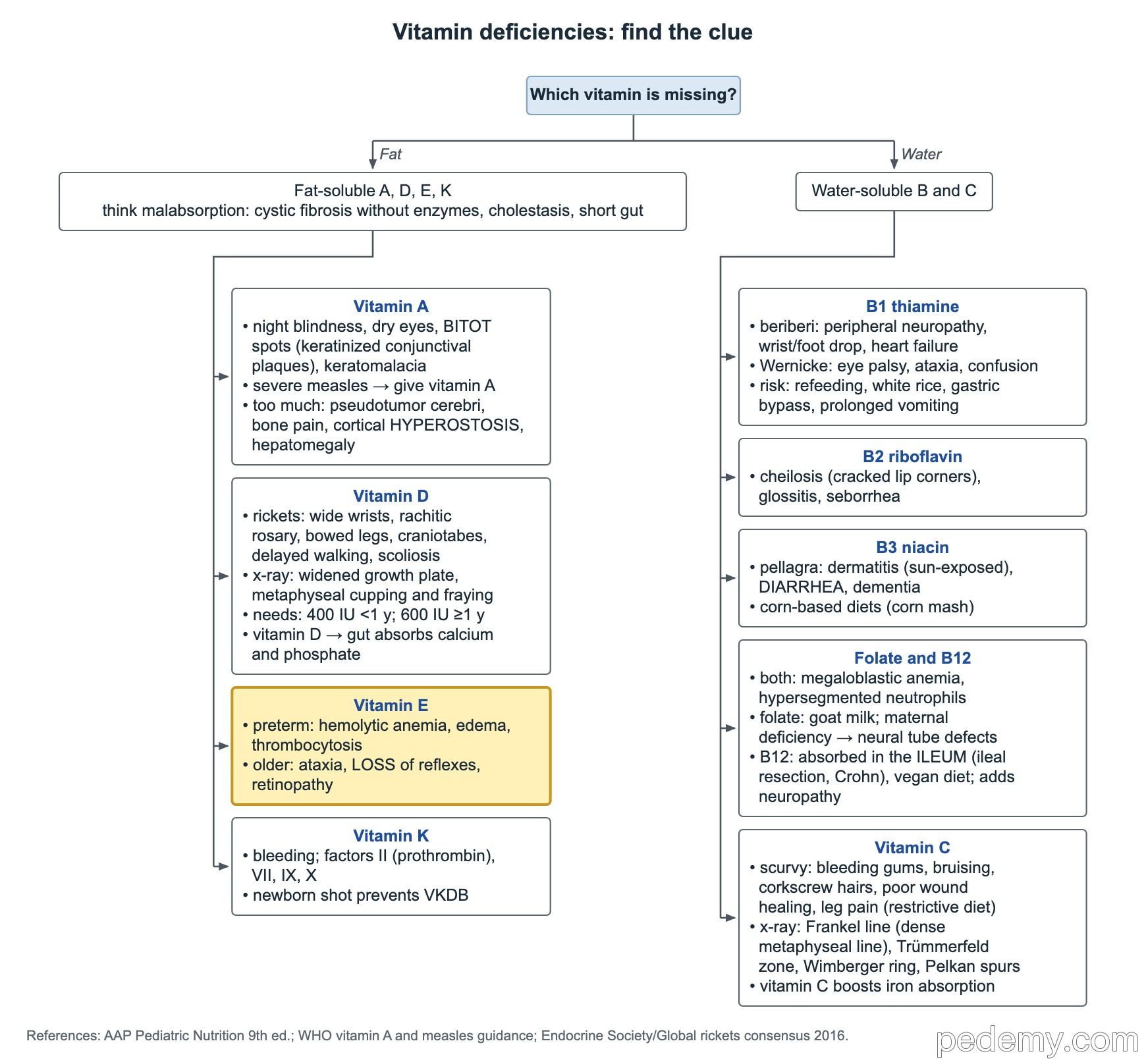
- Vitamin E, preterm infant: hemolytic anemia, edema and thrombocytosis.
- Vitamin E, older child: ataxia, loss of reflexes, retinopathy; usually from fat malabsorption.
- Vitamin K: bleeding from low factors II, VII, IX and X; the newborn shot prevents vitamin K deficiency bleeding.
Thiamine (B1): beriberi and Wernicke
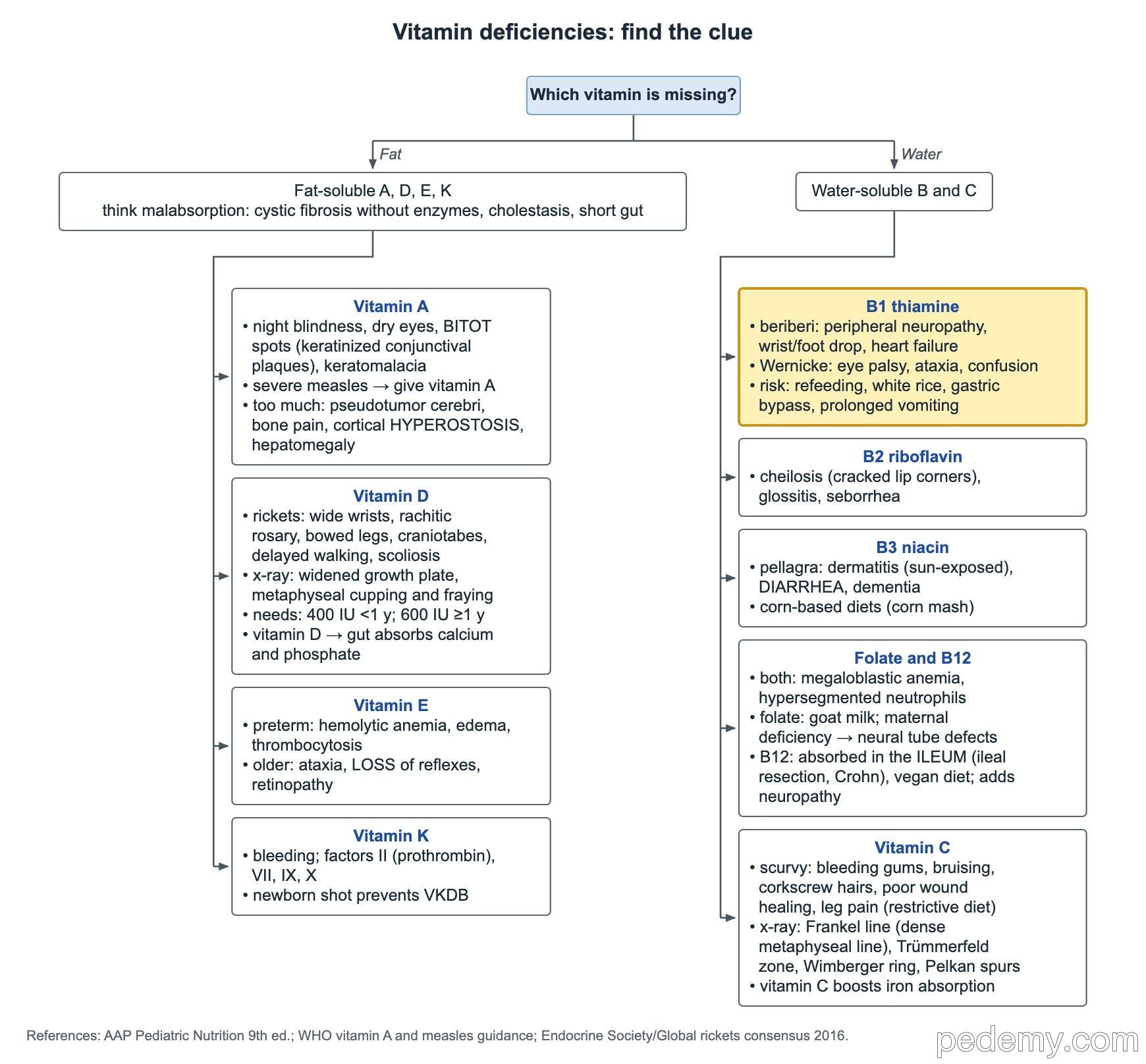
- Dry beriberi: peripheral neuropathy with wrist or foot drop.
- Wet beriberi: high-output heart failure.
- Wernicke encephalopathy: ophthalmoplegia, ataxia and confusion.
- At-risk patients: refeeding, white-rice diets, teens after gastric bypass or with prolonged vomiting.
Riboflavin (B2) and niacin (B3)
- Riboflavin: cheilosis (cracked lip corners), glossitis (sore tongue), seborrheic dermatitis.
- Niacin deficiency is pellagra: dermatitis on sun-exposed skin, diarrhea, dementia.
- Pellagra follows corn-based diets, which are low in niacin and tryptophan.
Folate and vitamin B12
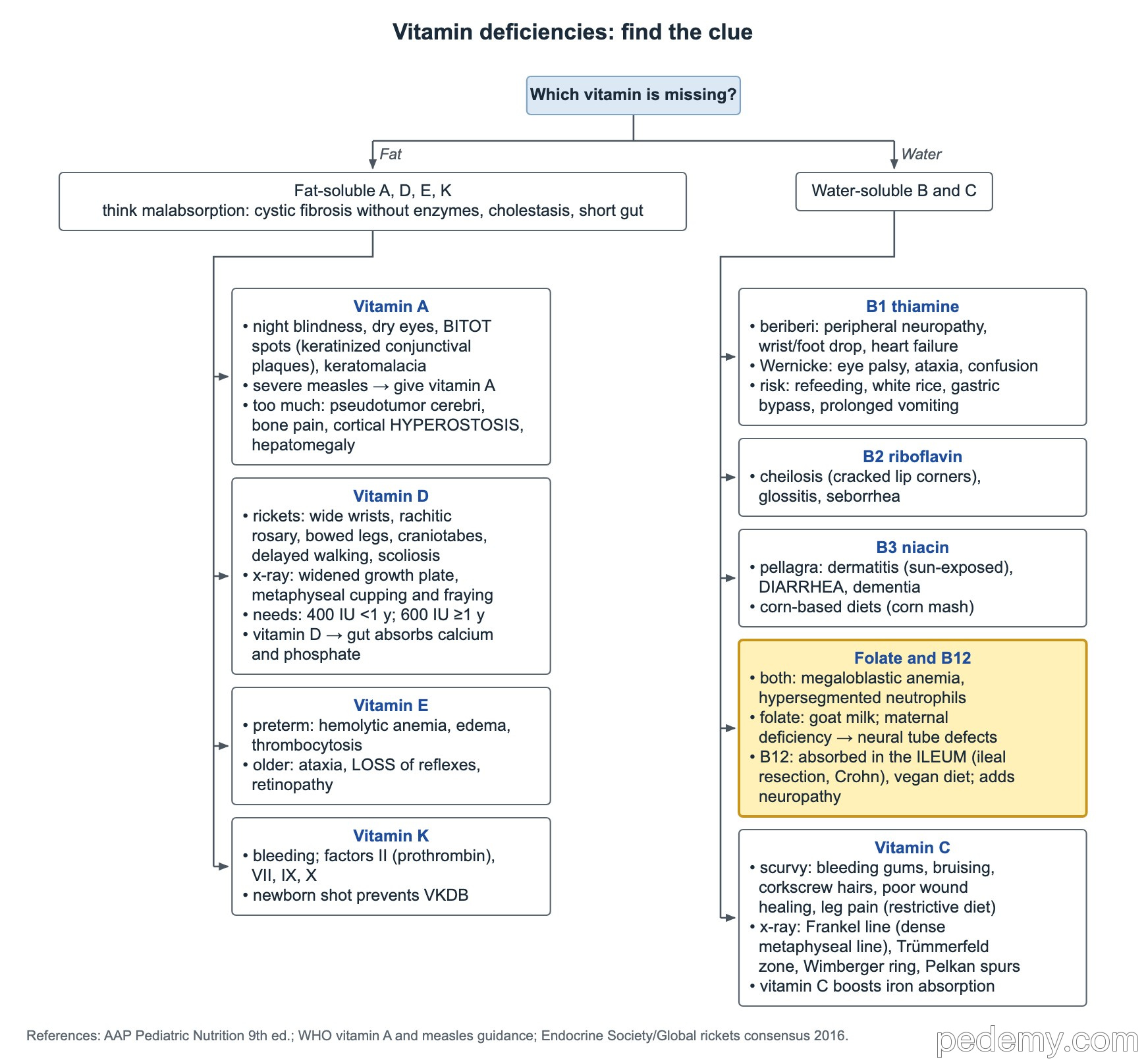
- Both cause megaloblastic anemia with hypersegmented neutrophils; B12 deficiency also causes neuropathy.
- Folate: low in goat's milk. Low maternal folate is linked to neural tube defects; anyone who could become pregnant should take 0.4–0.8 mg (400–800 mcg) of folic acid daily.
- B12: absorbed in the terminal ileum, so ileal resection or Crohn disease raise risk.
- Exclusively breastfed infant of a vegan mother: macrocytic anemia from B12 deficiency; supplement both.
Vitamin C: scurvy
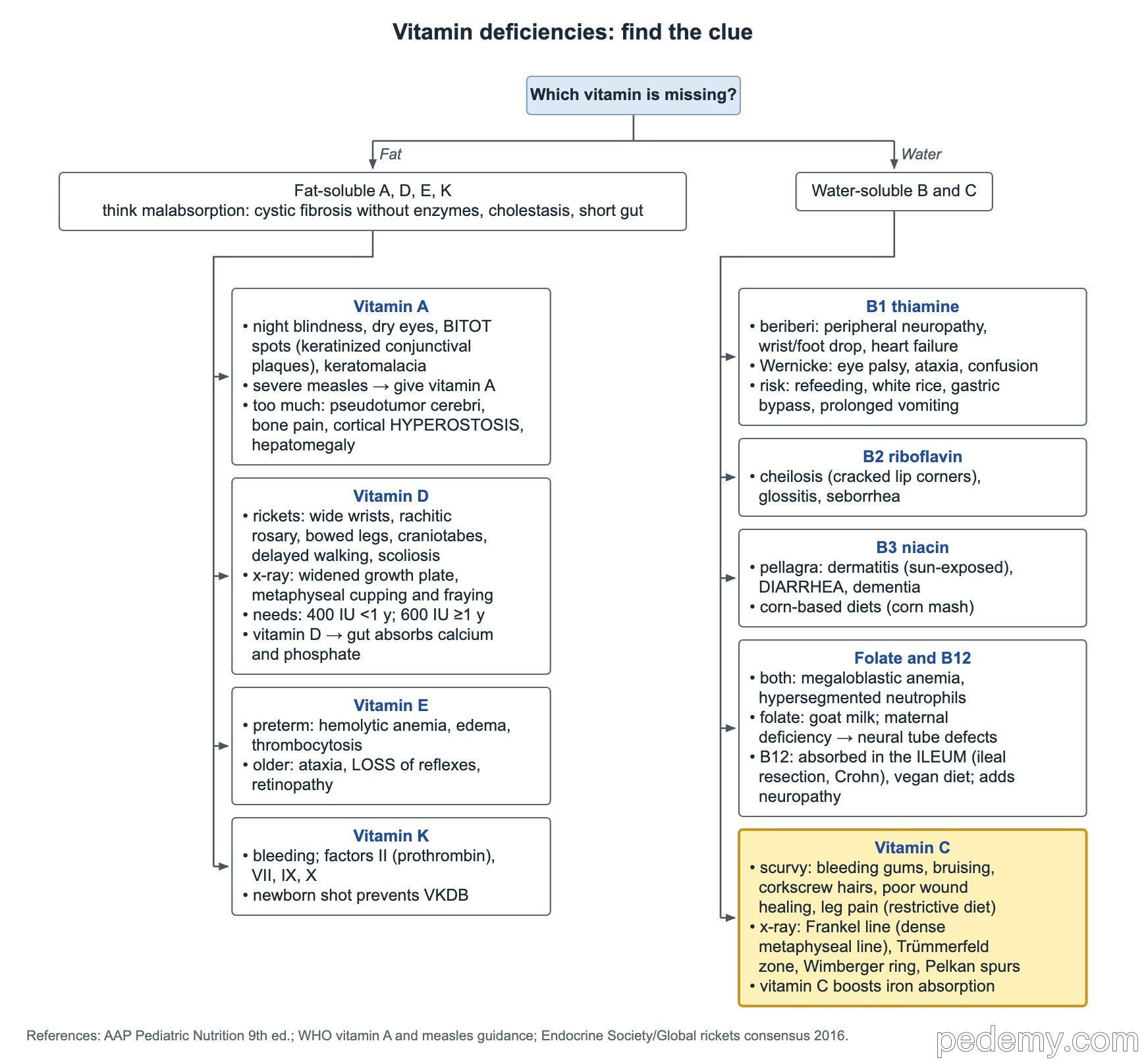
Vitamin C is needed to make collagen, so deficiency weakens capillaries, gums and bone. Today it is seen mostly in children with very restrictive diets, such as some autistic children.
- Clues: bleeding gums, easy bruising, corkscrew hairs, poor wound healing, leg pain and refusal to walk.
- X-ray: Frankel line (dense line at the metaphysis), Trümmerfeld zone, Wimberger ring, Pelkan spurs.
- Vitamin C (or animal protein) given with oral iron improves iron absorption; give iron 1 hour before or 2 hours after milk or calcium.
Common questions
How much vitamin D does a child need?
400 IU a day in the first year and 600 IU a day from 1 year on.
What are the signs of rickets?
Wide wrists, bowed legs, a rachitic rosary on the chest, craniotabes and late walking. X-rays show widened growth plates with cupped, frayed metaphyses.
Why give vitamin A in measles?
Low vitamin A makes measles more severe. Vitamin A for children with severe measles lowers complications and deaths.
Study this topic
Sources
- Global consensus recommendations on prevention and management of nutritional rickets (J Clin Endocrinol Metab 2016)
- AAP: Prevention of rickets and vitamin D deficiency in infants, children and adolescents (Pediatrics 2008)
- NIH Office of Dietary Supplements: Vitamin A fact sheet for health professionals
- USPSTF 2023: Folic acid to prevent neural tube defects
Written for Pedemy in our own words from the sources above; checked November 2026. For education only, not medical advice; check doses and local protocols before treating a patient. Pedemy is independent and not affiliated with or endorsed by the organizations cited.