

Main decision tree
Health care after foster placement
Key points
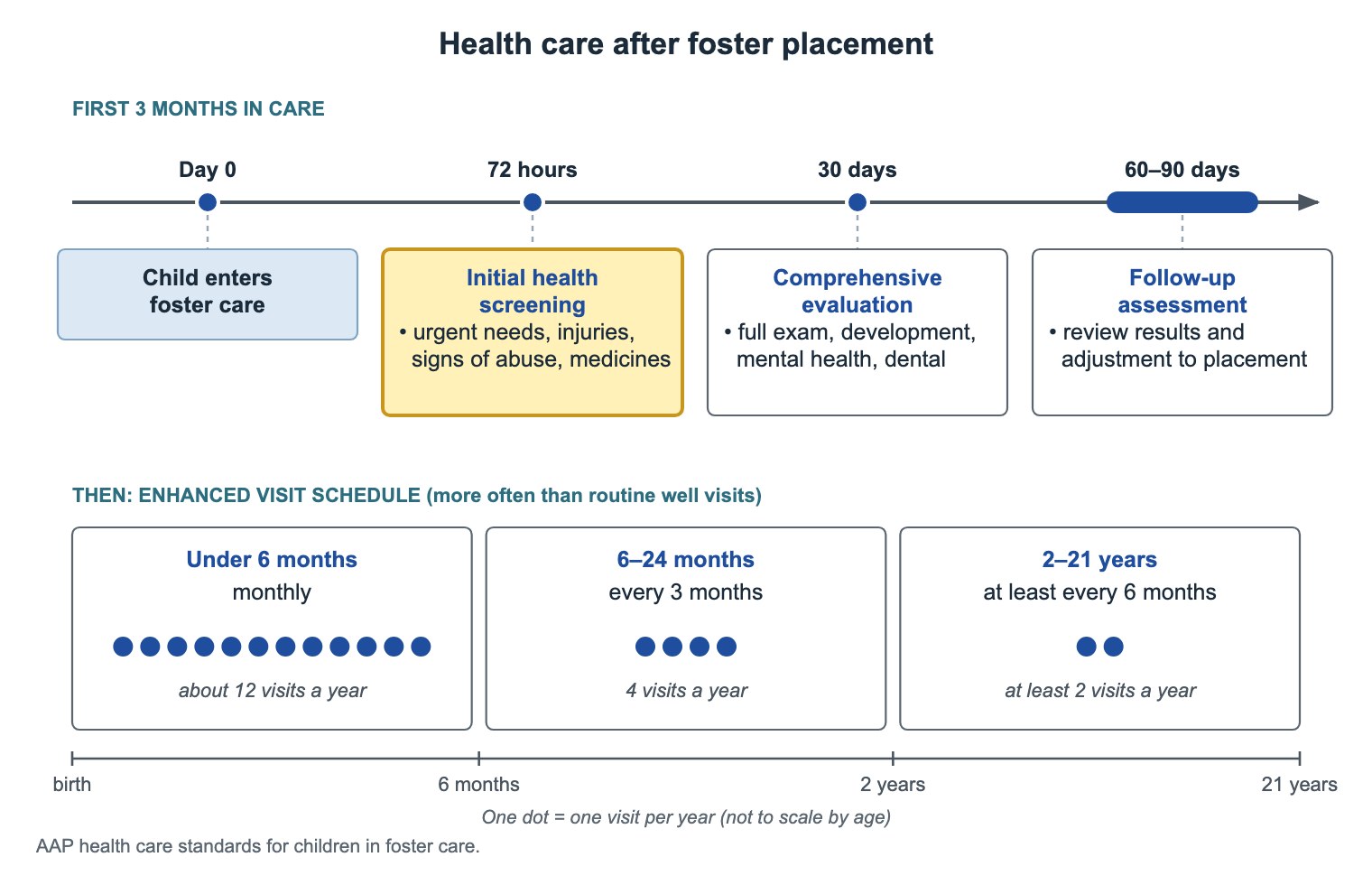
- Initial health screening within 72 hours of placement.
- Comprehensive evaluation within 30 days: catch-up vaccines, labs including lead, dental, hearing, vision, development and mental health.
- Follow-up assessment within 60–90 days of entry into care.
- Enhanced schedule: monthly under 6 months, every 3 months at 6–24 months, at least every 6 months at 2–21 years.
- The foster care agency, not the foster parent, consents to non-urgent care such as vaccines; emergencies are treated without consent.
- A child who re-enters care more than 90 days after discharge needs the full initial evaluation again.
Initial health screening: within 72 hours
The first visit finds urgent needs: injuries, signs of abuse or neglect, acute and chronic illness, and medicines that must not stop.
- Full growth measures: weight and height, plus head circumference in children under 36 months.
- A full skin check and an external anogenital exam at this visit; do not defer it.
- Ask for current medicines, allergies and any known diagnoses.
- A child returning to care more than 90 days after leaving it gets this full initial evaluation again.
Comprehensive evaluation: within 30 days
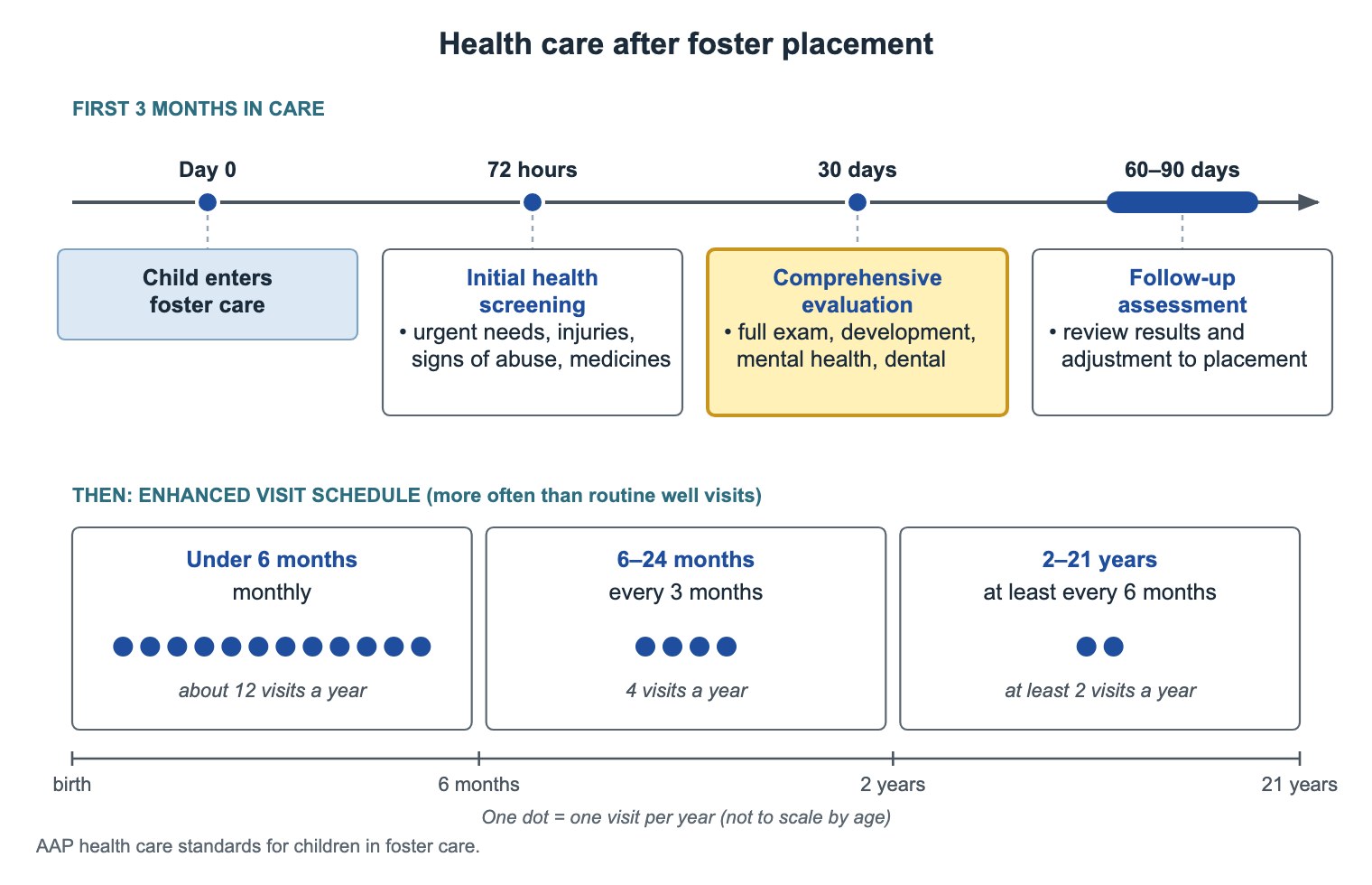
- Immunizations: review records and start catch-up vaccines at this visit.
- Screening labs at this visit, including blood lead and, by risk, tests for HIV, hepatitis B and C, syphilis and TB.
- Dental, hearing and vision screening.
- Developmental and mental health assessment, including trauma symptoms.
- Educational needs and school progress.
Follow-up assessment: 60–90 days
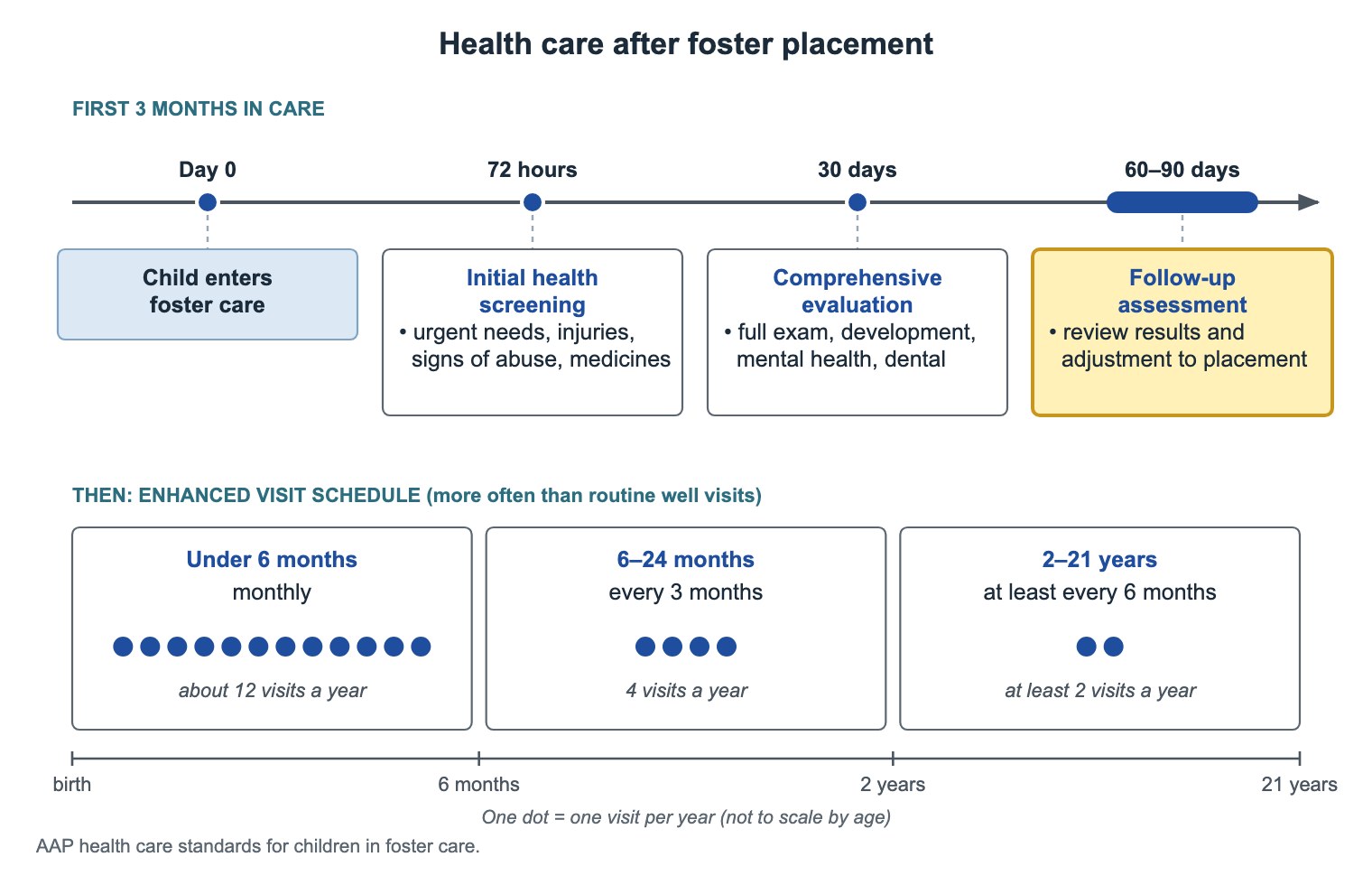
Within 60–90 days of entering care, review the results of earlier tests and referrals and see how the child is adjusting to the placement.
The enhanced visit schedule
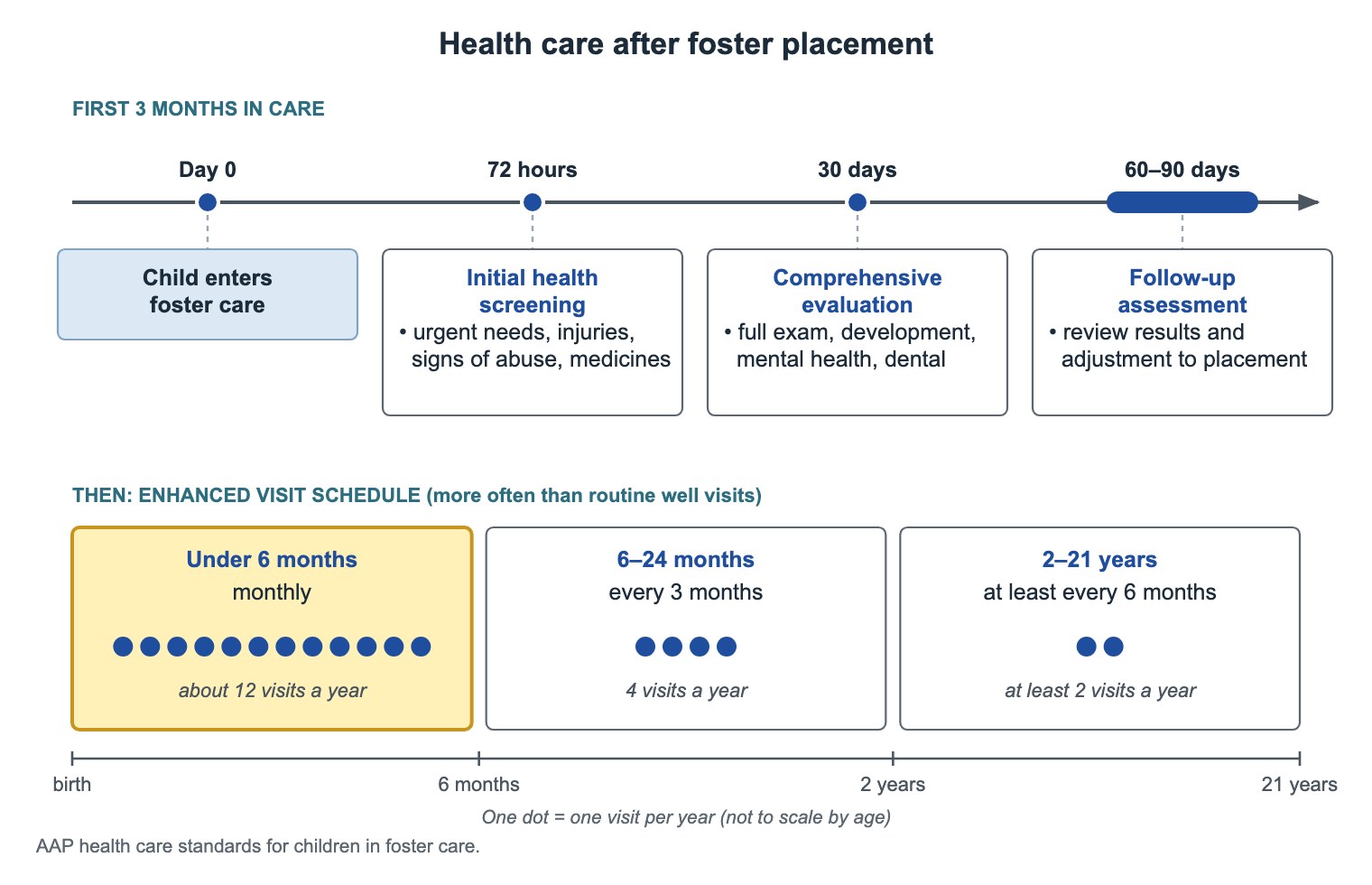
Children in foster care are seen more often than the routine well-child schedule, because needs change with each placement.
| Age | Visits |
|---|---|
| Under 6 months | Monthly (about 12 a year) |
| 6–24 months | Every 3 months (4 a year) |
| 2–21 years | At least every 6 months (2 a year) |
Consent and records
- A child in state custody: the foster care agency official (or a court-appointed guardian) consents to non-urgent care, including vaccines.
- A foster parent generally cannot consent to non-urgent care unless a court has made them the guardian.
- In kinship foster care, birth parents usually keep legal guardianship unless a court transfers it.
- A birth parent saying they want vaccines is not enough; consent must be documented.
- Emergency care is given without waiting for consent.
- Adolescents can usually consent themselves to reproductive health care, STI and HIV testing and substance use care, depending on state law.
- Keep the signed medical consent form and the caseworker's contact details in the chart.
Common questions
How soon after placement does a foster child need a health visit?
Within 72 hours for an initial screen, then a comprehensive evaluation within 30 days and a follow-up within 60–90 days.
Can a foster parent consent to vaccines?
Generally no. Consent for non-urgent care such as vaccines comes from the foster care agency or a court-appointed guardian. Emergency care does not need consent.
Study this topic
Sources
- AAP 2015: Health care issues for children and adolescents in foster care and kinship care (Pediatrics)
- AAP: Healthy Foster Care America
Written for Pedemy in our own words from the sources above; checked November 2026. For education only, not medical advice; check doses and local protocols before treating a patient. Pedemy is independent and not affiliated with or endorsed by the organizations cited.