

Main decision tree
Universal screening at well visits
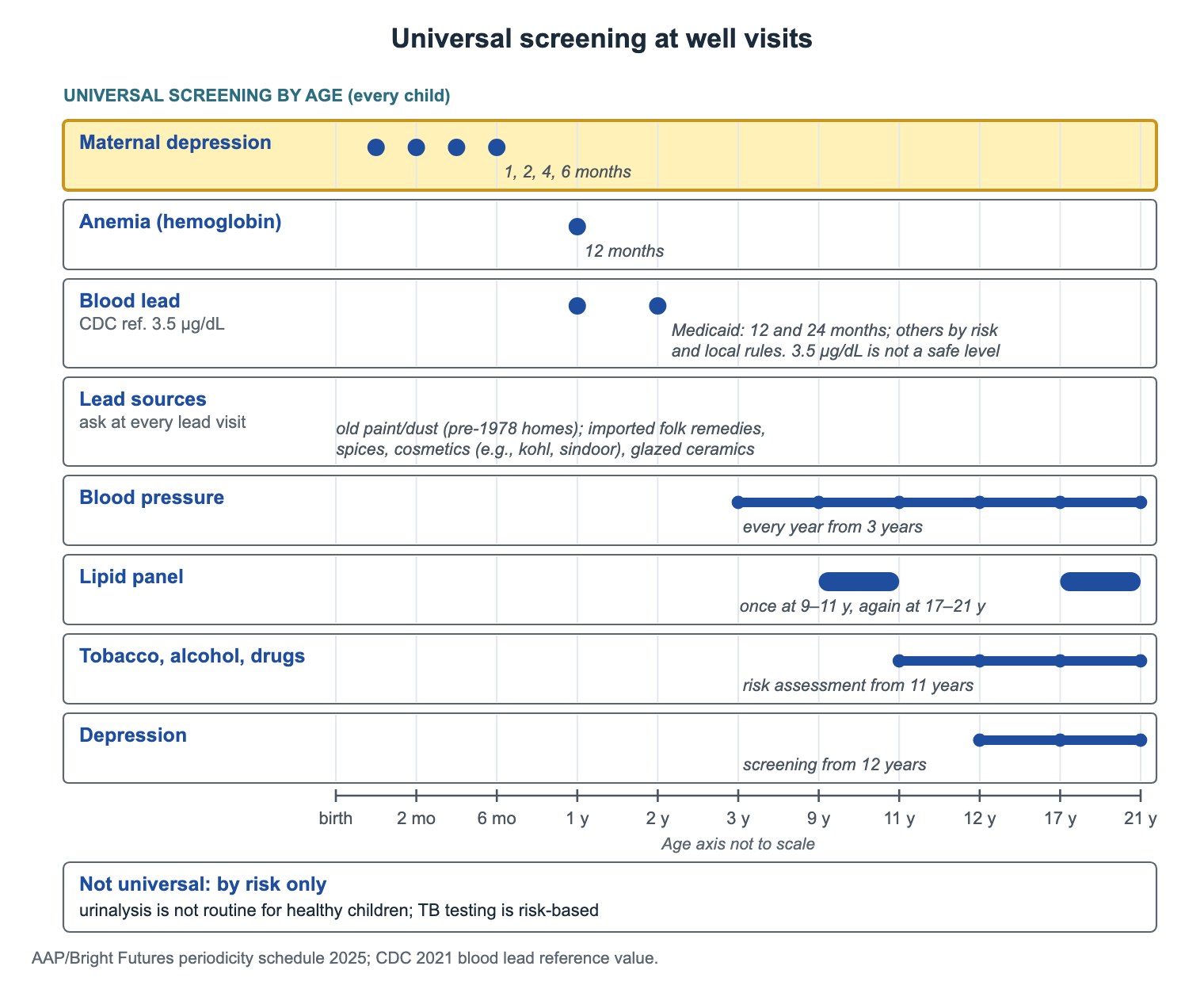
Key points
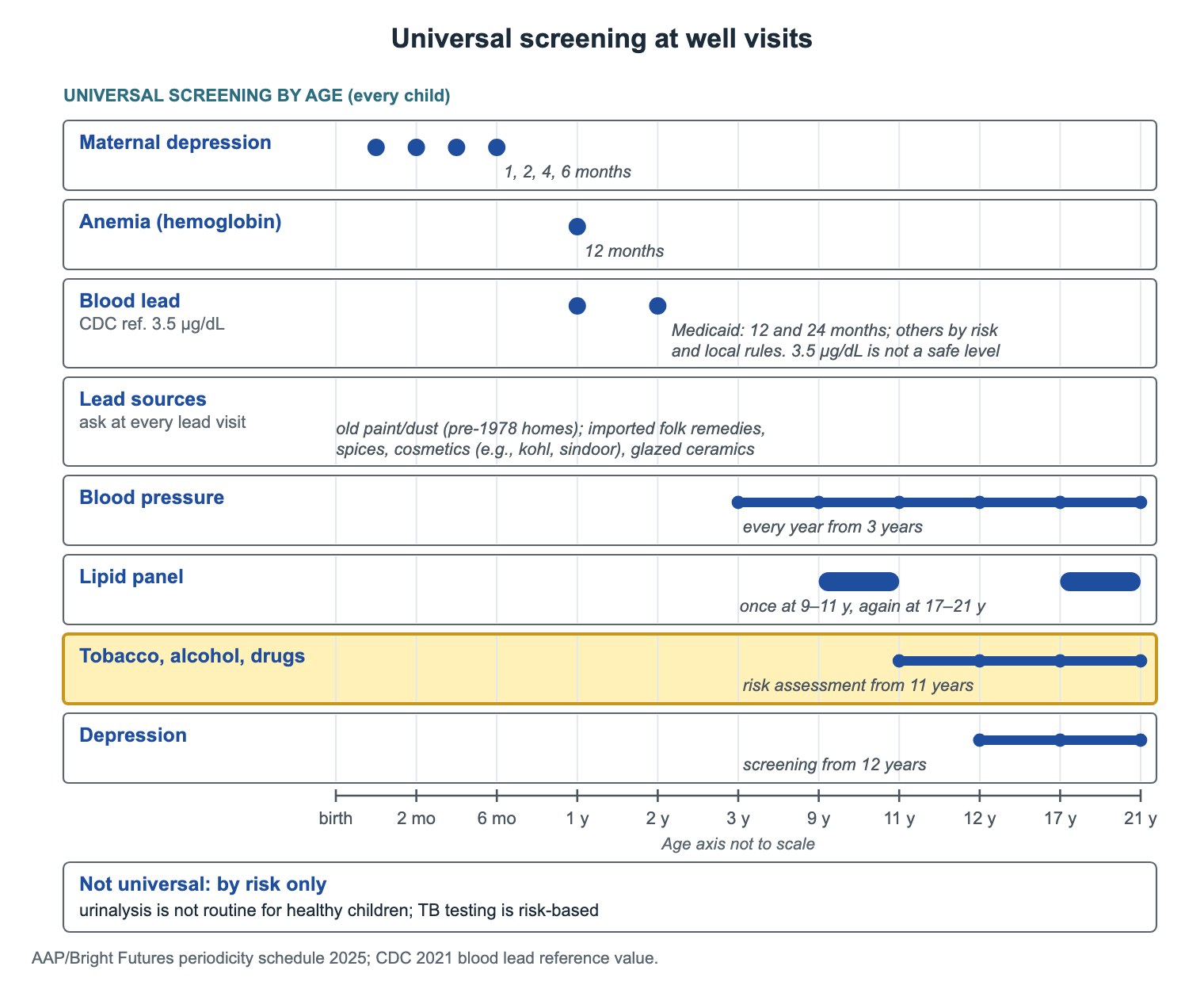
- Maternal depression screening at the 1, 2, 4 and 6 month visits.
- Universal hemoglobin screening at about 12 months.
- Blood lead: CDC reference value 3.5 µg/dL; Medicaid children are tested at 12 and 24 months.
- Blood pressure every year from 3 years; at every visit before 3 if the child has risk factors.
- Universal lipid screening once at 9–11 years and again at 17–21 years.
- Tobacco, alcohol and drug risk assessment yearly from 11 years; depression screening yearly from 12 years.
- Not routine for healthy children: dipstick urinalysis and TB testing (TB is risk-based).
Newborn and infant screens
The timeline shows the universal screens by age. Each row is done for every child at the marked visits; the bottom box lists tests that are done only for risk.
- Newborn blood spot screen: finds treatable disorders before symptoms appear. Each state sets its own panel, guided by the federal Recommended Uniform Screening Panel (RUSP).
- A newborn screen drawn before 24 hours of age must be repeated, because some disorders can be missed early.
- Maternal (postpartum) depression: screen the parent at the 1, 2, 4 and 6 month visits.
- Anemia: universal hemoglobin at about 12 months, with a risk assessment for iron deficiency at other visits.
Lead screening
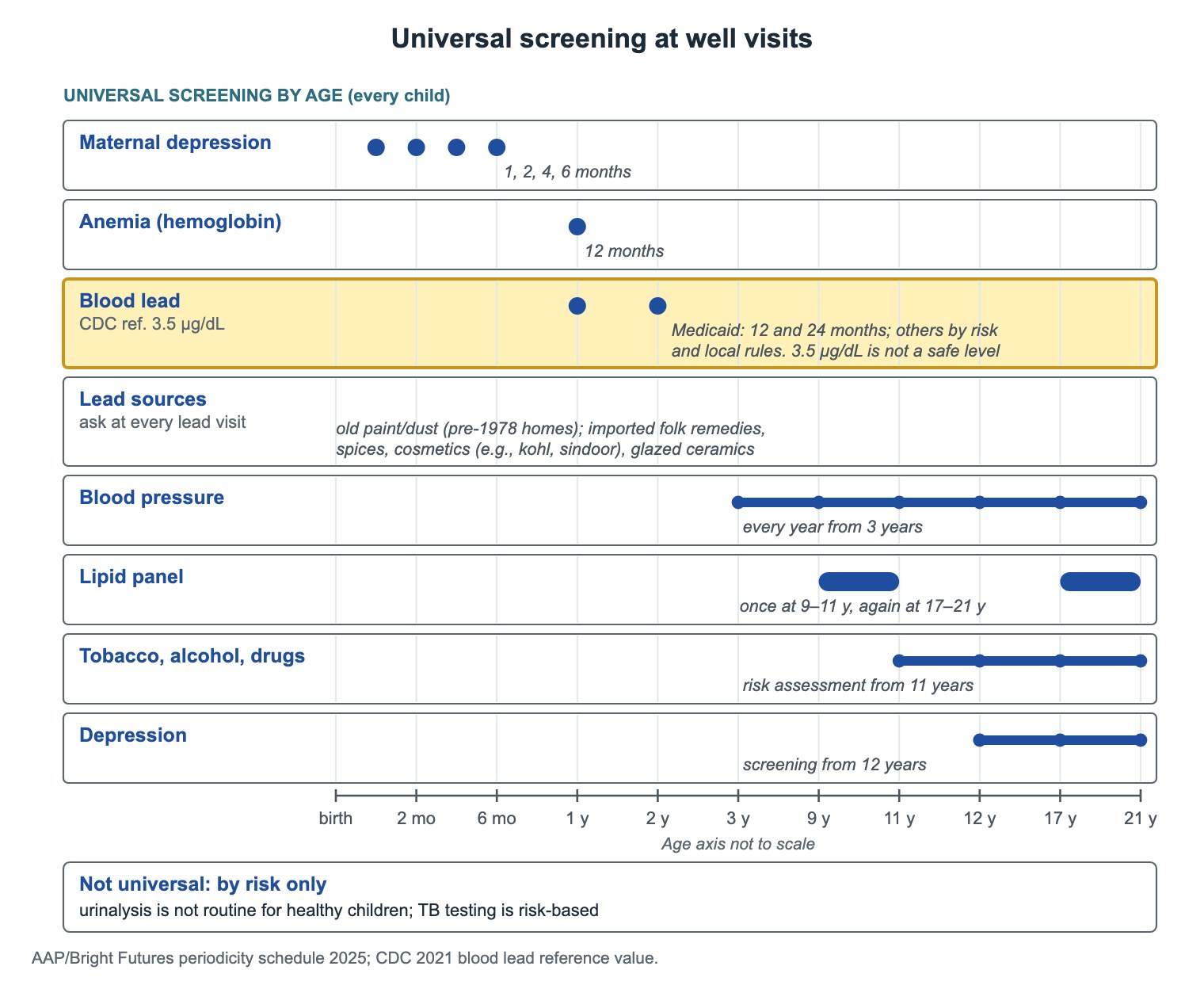
The CDC blood lead reference value is 3.5 µg/dL. It marks the top 2.5% of US children and is a trigger for follow-up, not a safe level: no blood lead level is known to be safe.
Children on Medicaid need a blood lead test at 12 and 24 months. Other children are tested based on risk questions and state or local rules. Refugees, recent immigrants and internationally adopted children get a blood lead test whatever the questionnaire shows.
Most children with high lead have no symptoms. A high fingerstick (capillary) result can be a false positive from lead on the skin, so confirm it with a venous sample. The higher the result, the sooner you confirm.
- A capillary level of exactly 3.5 µg/dL is not normal: it is at the reference value and needs venous confirmation.
- Confirmed level ≥3.5 µg/dL: find and remove the source, educate the family, check nutrition (iron, calcium) and development, and report to the health department.
- Sources to ask about: old paint and dust in homes built before 1978, imported folk remedies (greta, azarcon, Ayurvedic medicines), imported spices, cosmetics such as kohl, surma and sindoor, and glazed ceramics.
- A child in a newly built home with high lead, especially a recent arrival from abroad, points to a remedy, spice or cosmetic source.
- Recalled foods can also carry lead, such as the 2023 cinnamon applesauce pouches.
| Capillary blood lead | Venous confirmation within |
|---|---|
| 3.5–9 µg/dL | 3 months |
| 10–19 µg/dL | 1 month |
| 20–44 µg/dL | 2 weeks |
| ≥45 µg/dL | 48 hours |
Blood pressure screening and technique
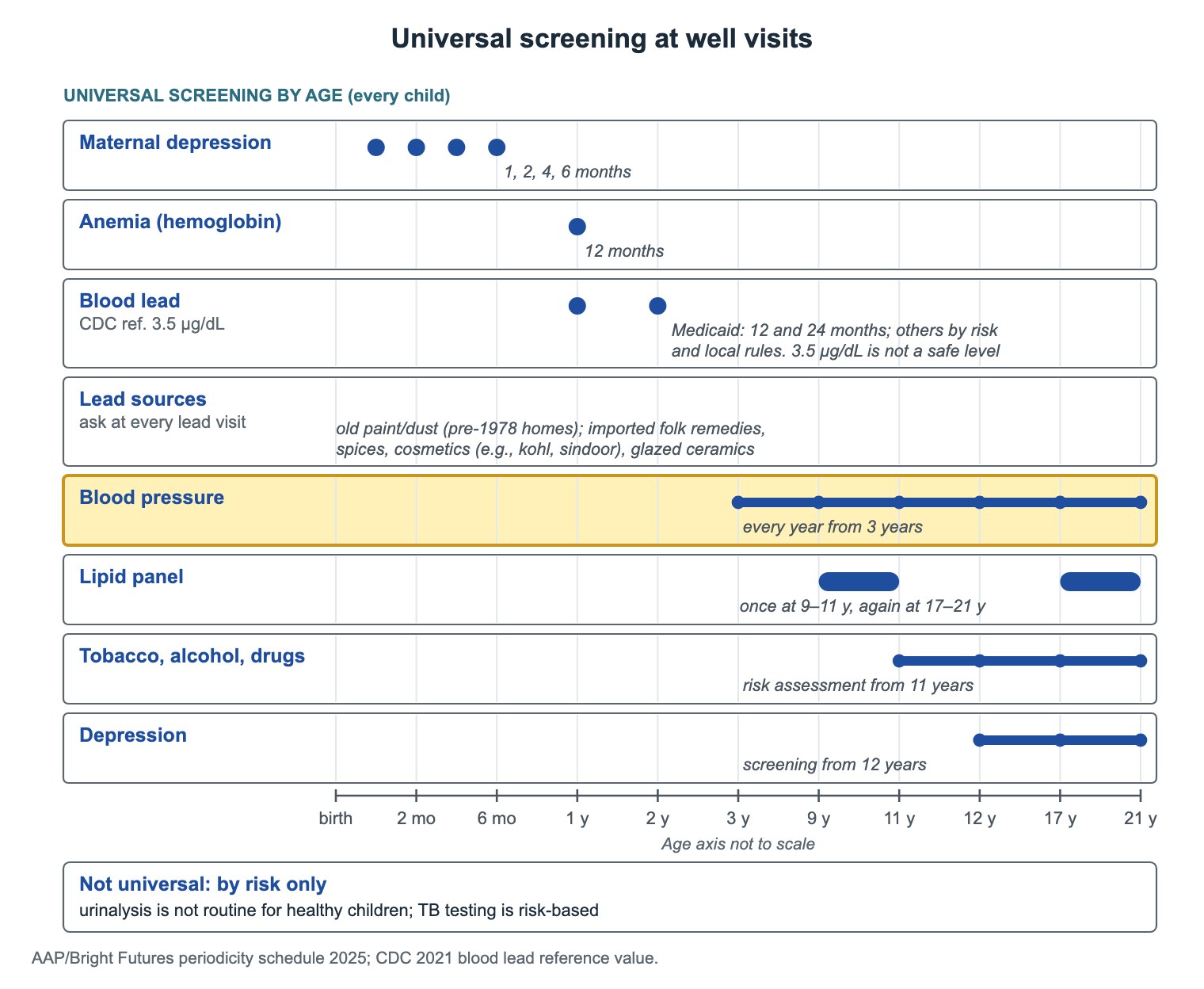
Healthy children have their blood pressure checked once a year from 3 years of age. Children under 3 have it checked at every visit if they have risk factors such as NICU care or prematurity, congenital heart disease, or kidney or urologic disease.
Hypertension is diagnosed only after high readings on 3 separate visits, measured with correct technique.
- Position: seated with the back supported, feet flat and legs uncrossed, right arm supported at heart level.
- Cuff: choose by arm circumference. The bladder width is about 40% of the arm circumference and the bladder length covers 80–100% of it.
- A cuff that is too small gives a falsely high reading.
- A high oscillometric (automated) reading must be confirmed by manual auscultation.
| Adolescents ≥13 years | Blood pressure (mm Hg) |
|---|---|
| Normal | <120/<80 |
| Elevated | 120/<80 to 129/<80 |
| Stage 1 hypertension | 130/80 to 139/89 |
| Stage 2 hypertension | ≥140/90 |
| Treatment goal | <130/80 |
Lipid screening and when to start a statin
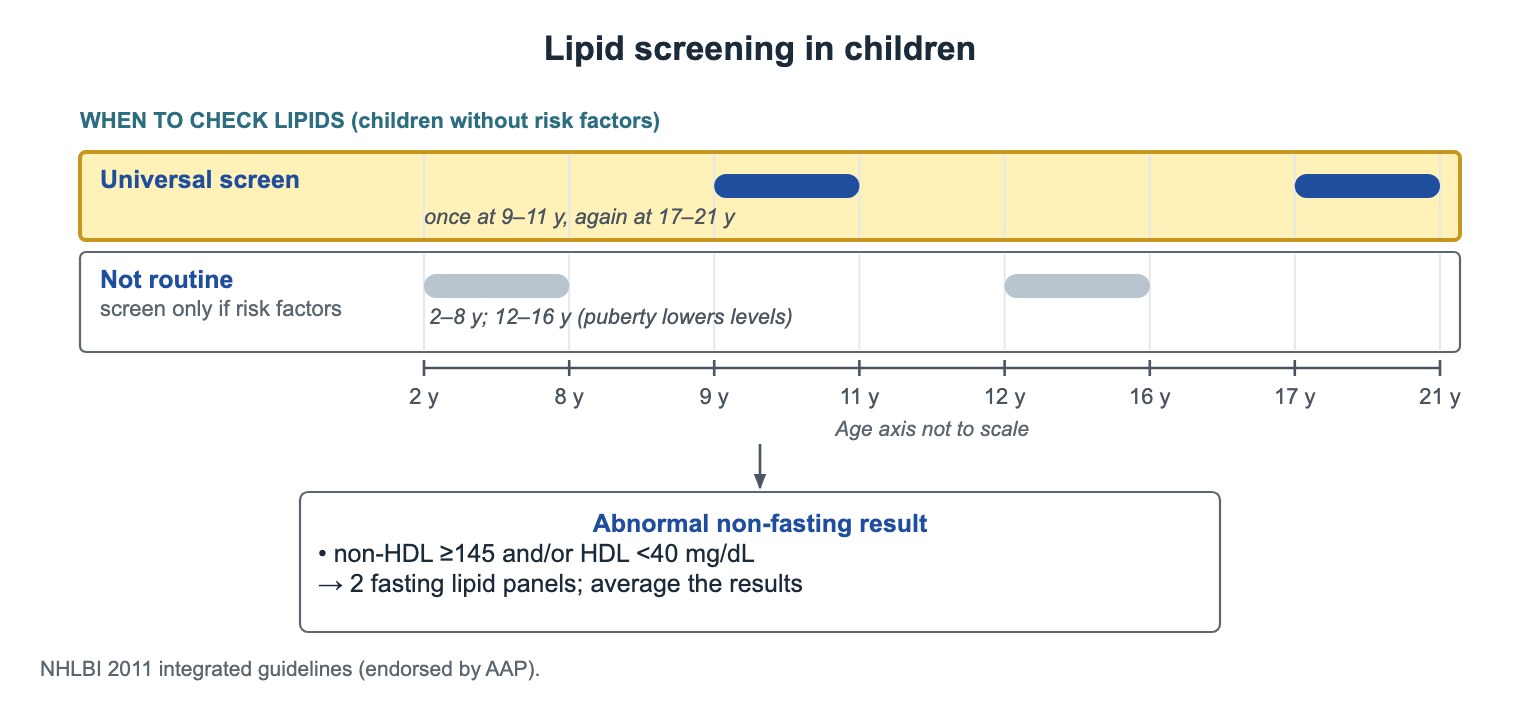
Every child has a lipid panel once at 9–11 years and again at 17–21 years. A non-fasting panel is fine for the universal screen.
Routine screening is not done at 2–8 years or 12–16 years unless the child has risk factors. Levels fall during puberty, so a screen at 12–16 years can miss a lipid disorder.
Earlier, targeted screening starts from age 2 (and by age 10) when there is a family history of dyslipidemia or premature cardiovascular disease, or the child has risk factors such as diabetes, hypertension, obesity or smoking.
Premature cardiovascular disease means onset in a male relative before 55 years or a female relative before 65 years.
- Abnormal screen: non-HDL cholesterol ≥145 mg/dL and/or HDL <40 mg/dL. The same applies to LDL ≥130 mg/dL or total cholesterol ≥200 mg/dL.
- After an abnormal screen, get 2 fasting lipid panels and average the results before deciding on treatment.
- Start with diet and activity. A statin is considered, usually from age 10, when LDL stays ≥190 mg/dL despite lifestyle changes.
- A lower LDL can also qualify: ≥160 mg/dL with a family history of premature CVD or added risk factors, or ≥130 mg/dL with 2 high-level risk factors (such as type 2 diabetes or BMI ≥97th percentile), or 1 high-level plus 2 moderate-level risk factors.
- On a statin: check fasting lipids, ALT and CK at baseline and again about 4 weeks after starting; ask about muscle pain or weakness at each visit.
Adolescent screens: substance use and depression
- Tobacco, alcohol and drug use: risk assessment every year from about 11–12 years, earlier if there are concerns. A validated tool such as CRAFFT is used for teens.
- Depression: universal screening every year from 12 years, for example with the PHQ-A (PHQ-9 modified for adolescents).
- Suicide risk screening is also recommended from 12 years.
- A positive screen leads to a brief intervention, safety assessment and referral as needed.
Tests that are not universal
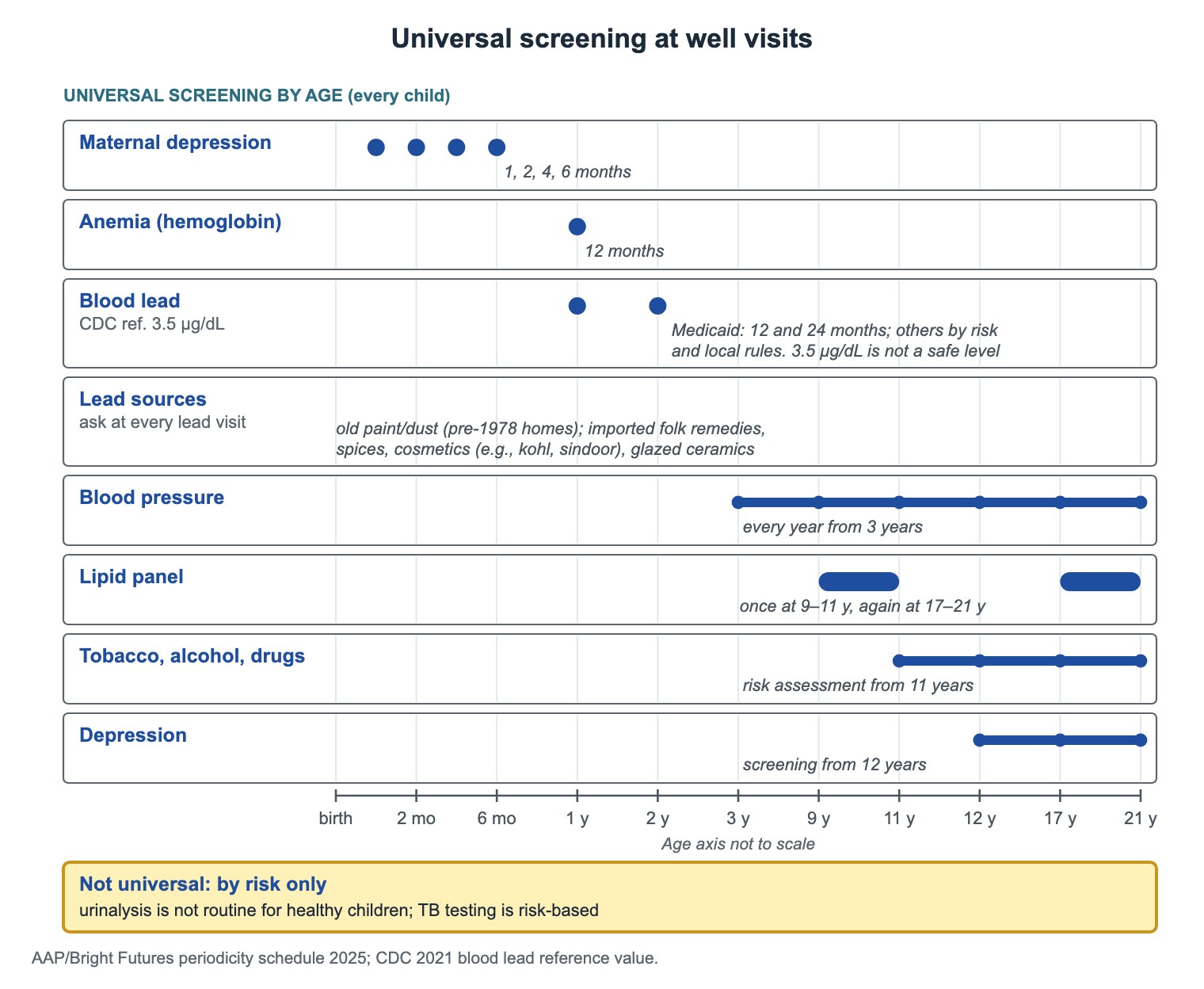
- Dipstick urinalysis is not recommended for healthy children without symptoms.
- TB testing is risk-based, not universal. Ask about birth or travel in a high-burden country, contact with a person with TB, and other exposures.
- IGRA is the preferred TB infection test, especially in a child who received BCG, because BCG can cause a false-positive tuberculin skin test.
- A positive TB test is followed by a chest x-ray and a symptom review to separate latent infection from active disease.
Physical activity and everyday exposures
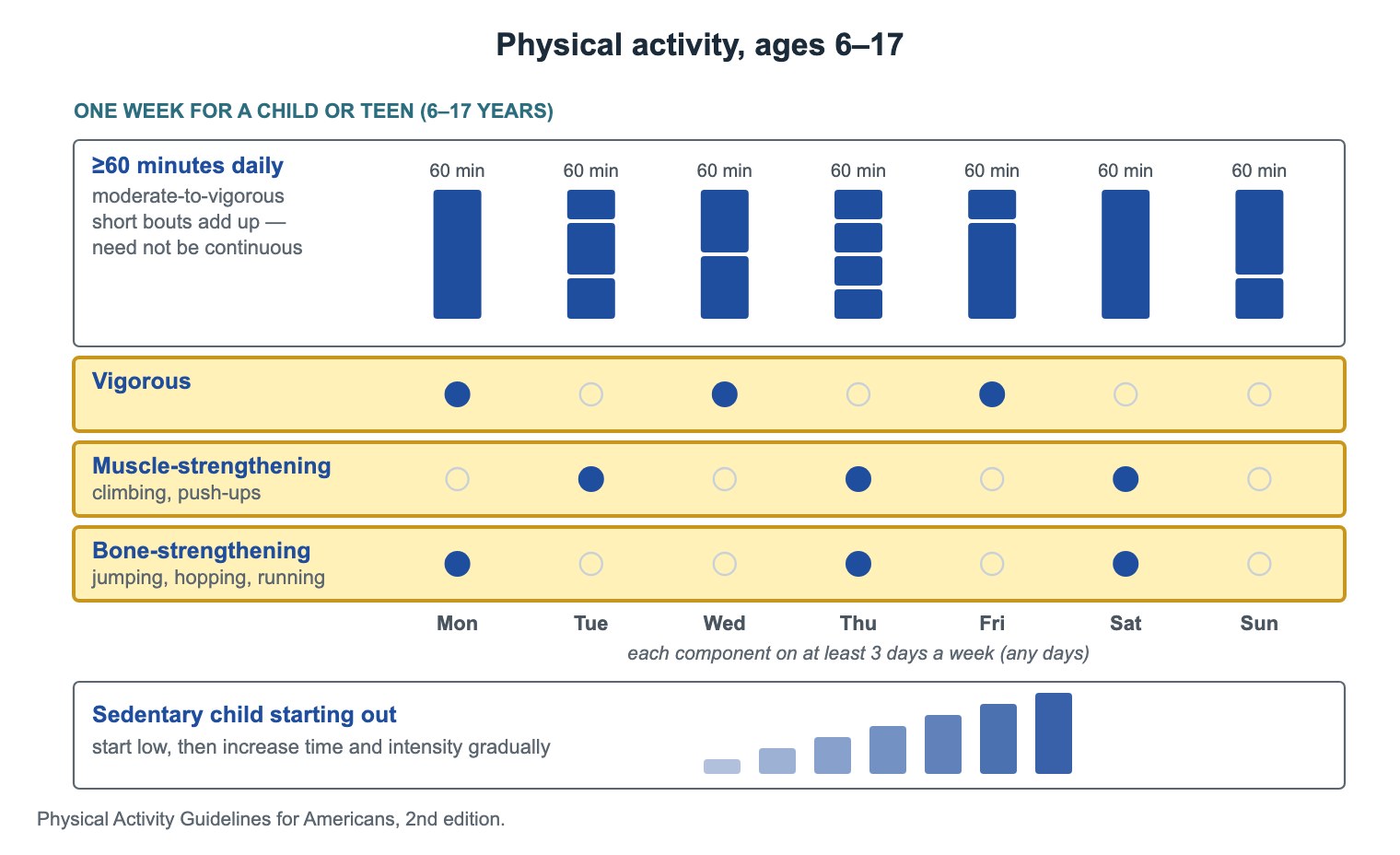
Children and teens aged 6–17 need at least 60 minutes of moderate-to-vigorous activity every day. Short bouts add up; the 60 minutes do not have to be in one session.
- On at least 3 days a week, include vigorous activity, muscle-strengthening activity (climbing, push-ups) and bone-strengthening activity.
- Bone-strengthening activity is impact or weight-bearing: jumping, hopping, running.
- An inactive child starts low and builds up time and intensity gradually.
- Plastics: do not microwave food or drinks in plastic and do not put plastic in the dishwasher, because heat releases bisphenols and phthalates.
Common questions
At what age is lead screening done?
Children on Medicaid get a blood lead test at 12 and 24 months. Other children are tested based on risk questions and local rules. A capillary level ≥3.5 µg/dL is confirmed with a venous sample.
When should children have cholesterol checked?
Every child once at 9–11 years and again at 17–21 years. Children with a family history of early heart disease or high cholesterol, or other risk factors, are screened from age 2.
When do children start having blood pressure checked?
Every year from 3 years of age. Children under 3 with risk factors, such as NICU care or heart or kidney disease, have it checked at every visit.
At what age does depression screening start?
Universal depression screening starts at 12 years and is repeated every year.
Study this topic
Sources
- AAP/Bright Futures: Recommendations for Preventive Pediatric Health Care (periodicity schedule)
- CDC: Updated blood lead reference value of 3.5 µg/dL (MMWR 2021)
- AAP: Prevention of Childhood Lead Toxicity (Pediatrics 2016)
- AAP 2017: Clinical practice guideline for high blood pressure in children and adolescents (Pediatrics)
- NHLBI Expert Panel: Integrated guidelines for cardiovascular health and risk reduction in children (Pediatrics 2011)
Written for Pedemy in our own words from the sources above; checked November 2026. For education only, not medical advice; check doses and local protocols before treating a patient. Pedemy is independent and not affiliated with or endorsed by the organizations cited.