

Main decision tree
Pain without inflammation; hypermobility
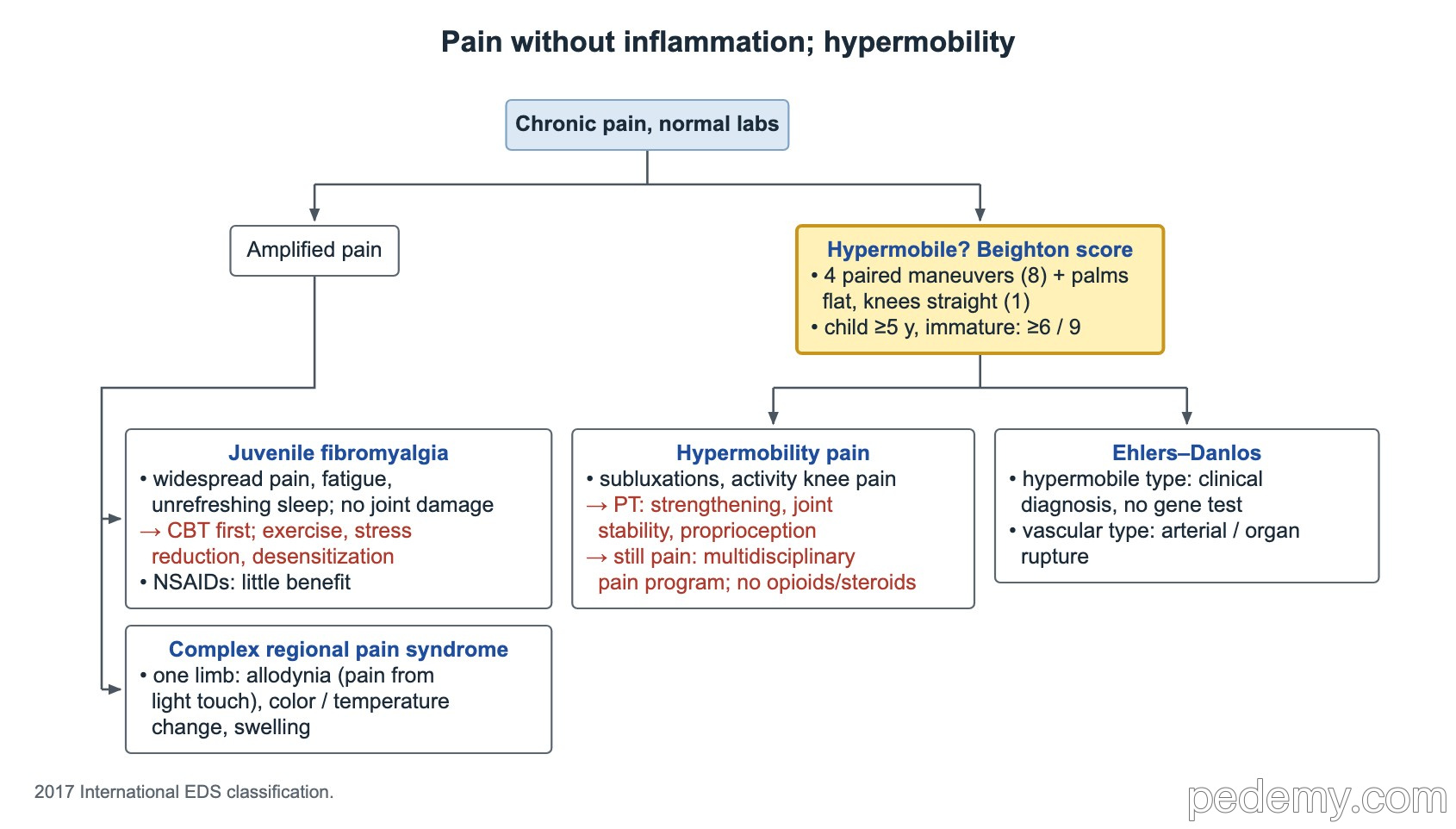
Key points
- Beighton score: 4 paired maneuvers (8 points) plus palms flat on the floor with knees straight (1 point).
- Children ≥5 years who are not yet biologically mature need a Beighton score of ≥6/9 for generalized hypermobility.
- Do not diagnose hEDS in a prepubertal child; use the label pediatric generalized joint hypermobility.
- hEDS is a clinical diagnosis with autosomal dominant inheritance and no known gene; vascular EDS (COL3A1) risks arterial, bowel and uterine rupture.
- Hypermobility pain: physical therapy for strength, joint stability and proprioception; no opioids or oral steroids.
- Juvenile fibromyalgia and CRPS: CBT and graded activity; NSAIDs give little benefit and immobilization makes CRPS worse.
- ME/CFS: fatigue, post-exertional malaise and unrefreshing sleep plus cognitive impairment or orthostatic intolerance.
Is the child hypermobile? The Beighton score
Start with chronic pain and normal inflammatory labs. Then ask whether the joints are unusually flexible. The Beighton score is the standard bedside check.
- Child ≥5 years, not biologically mature: ≥6/9 = generalized joint hypermobility (2023 pediatric framework).
- After puberty up to age 50: ≥5/9 (2017 hEDS criteria).
| Maneuver | Points |
|---|---|
| Thumb bends back to touch the forearm | 1 each side |
| Little finger bends back beyond 90° | 1 each side |
| Elbow hyperextends more than 10° | 1 each side |
| Knee hyperextends more than 10° | 1 each side |
| Palms flat on the floor with knees straight | 1 |
Hypermobility with pain
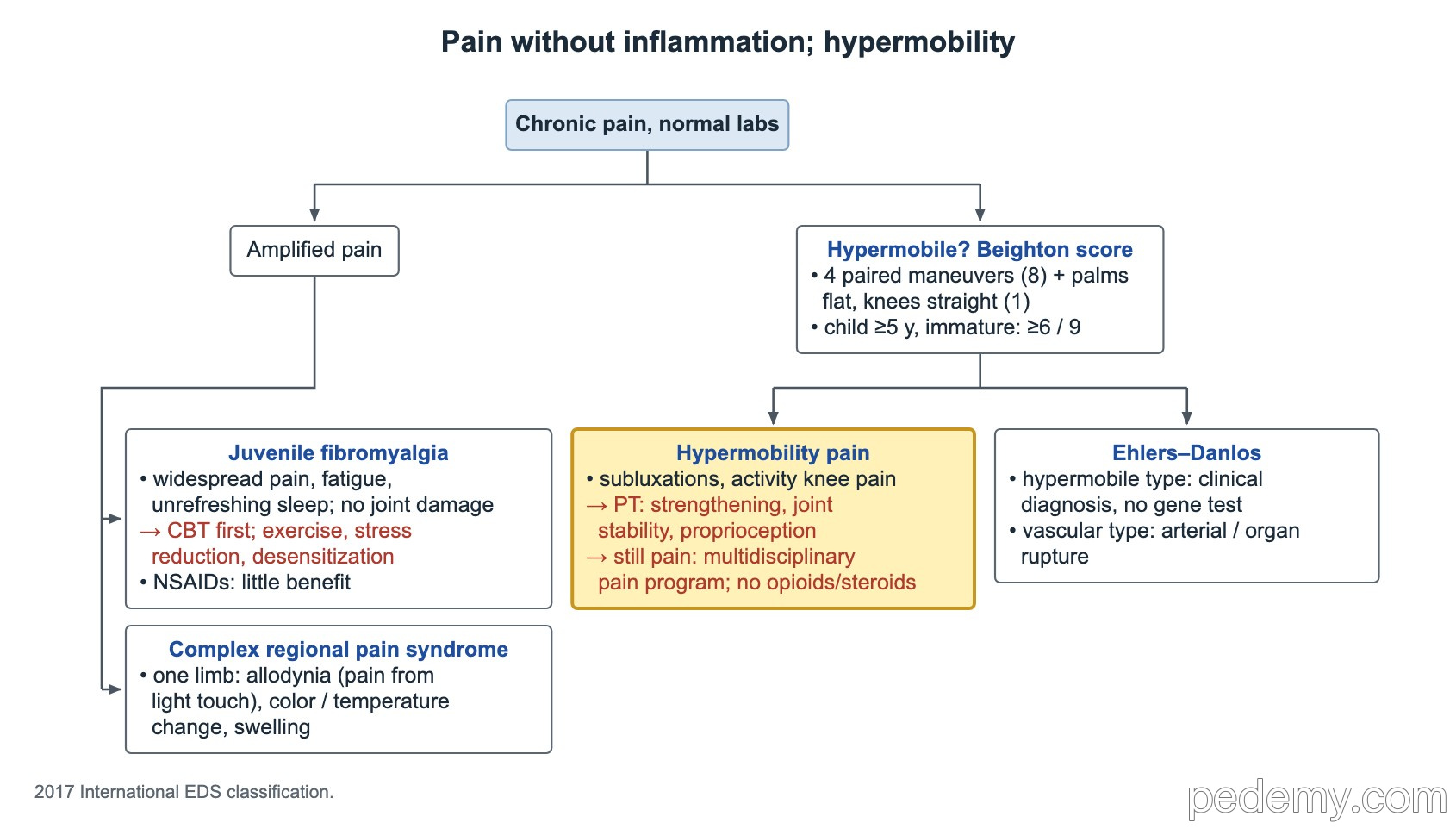
Hypermobile children often have recurrent subluxations, knee pain with activity and ankle sprains. Treatment is active, not passive.
- Physical therapy is first-line: build muscle strength, joint stabilization and proprioception.
- Keep the child active and in school and sports, with pacing.
- Pain that keeps worsening despite good physical therapy: refer to a multidisciplinary pain program.
- Avoid opioids and oral steroids: they do not help this pain and cause harm.
Ehlers–Danlos syndromes
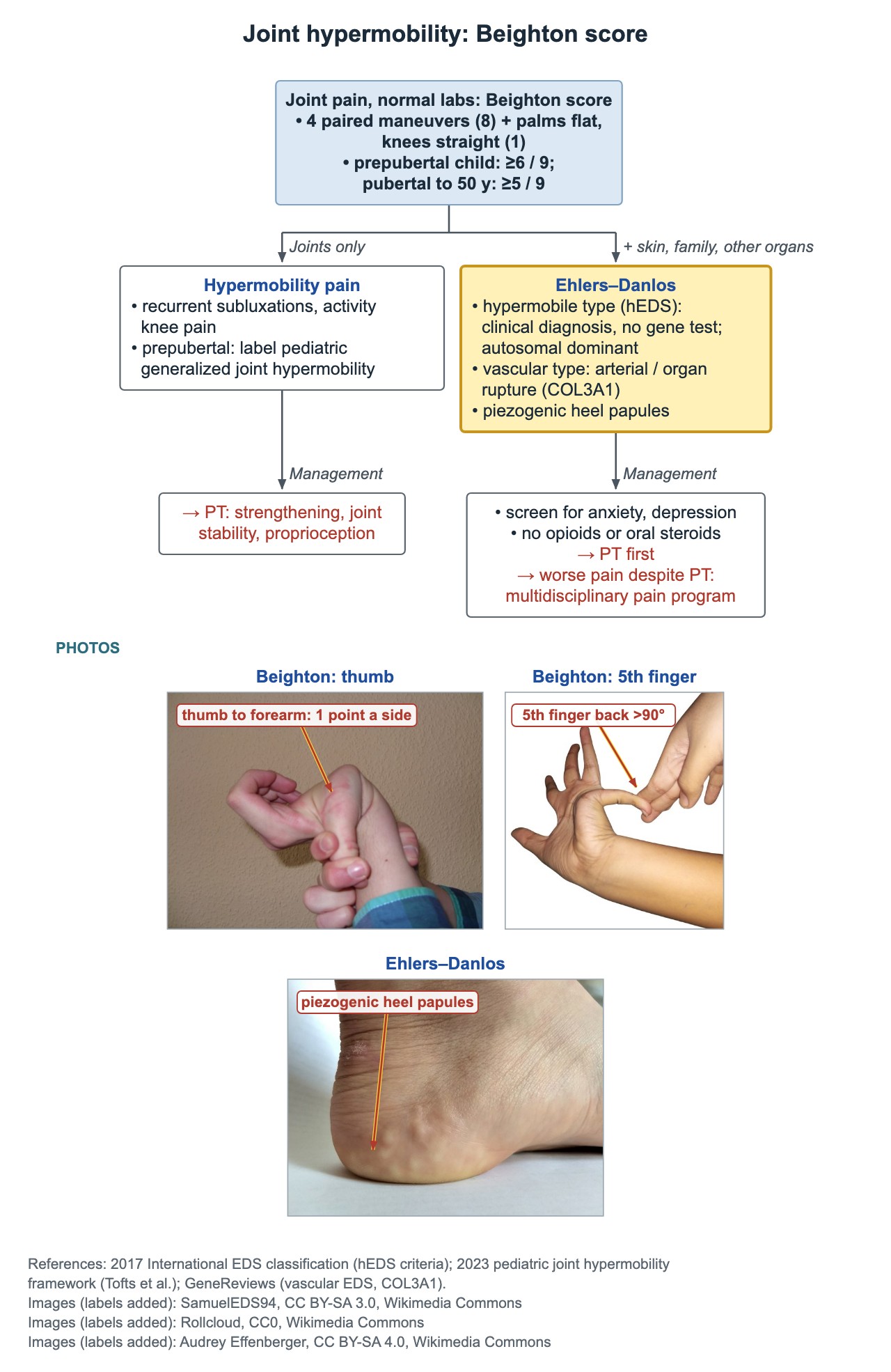
Hypermobility plus skin, family or other organ features raises the question of Ehlers–Danlos syndrome (EDS).
- Hypermobile EDS (hEDS): diagnosed by the 2017 clinical criteria; no confirmatory gene test; autosomal dominant inheritance.
- Supportive skin signs: soft, mildly stretchy skin, atrophic scars, stretch marks and piezogenic papules (soft fat herniations on the heels when standing).
- hEDS is reserved for biologically mature adolescents. A prepubertal child with these features is labeled pediatric generalized joint hypermobility or a pediatric hypermobility spectrum disorder.
- Vascular EDS (COL3A1): thin, translucent skin, easy bruising and risk of arterial, bowel or uterine rupture; confirm by genetic testing.
Caring for a teen with hEDS
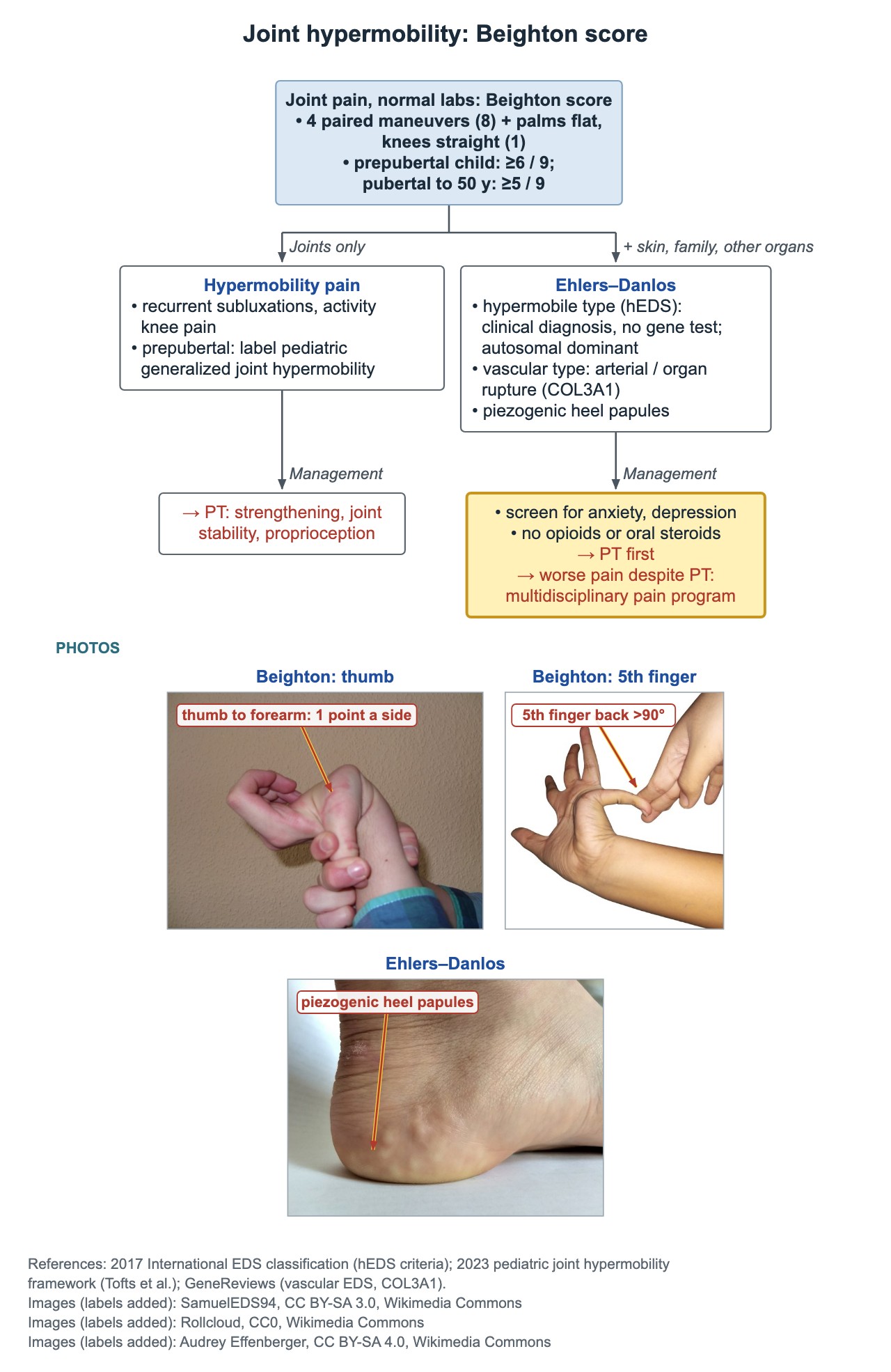
- Screen for anxiety and depression, which are common.
- Physical therapy first; avoid opioids and oral steroids for chronic pain.
- Worsening pain despite physical therapy: multidisciplinary pain program (physical therapy, CBT, school plan).
Juvenile fibromyalgia and amplified pain
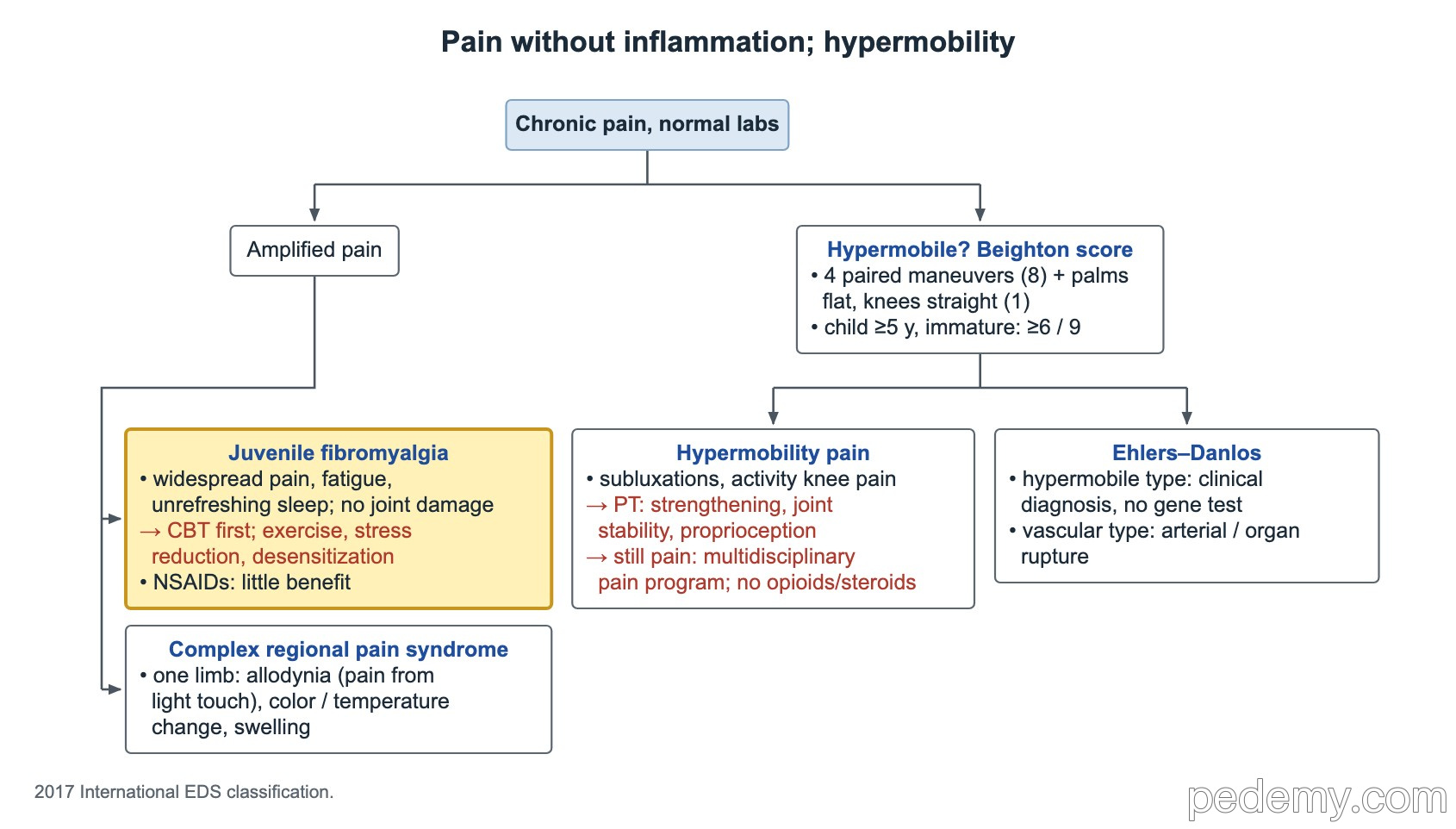
A teen with widespread pain for 3 months or more, fatigue, poor and unrefreshing sleep and school absence, but no arthritis and normal labs, fits juvenile fibromyalgia or diffuse amplified musculoskeletal pain. It does not damage joints.
Adult ACR 2016 criteria use a widespread pain index plus a symptom severity score; tender-point counts are no longer used.
- CBT has the best evidence among psychological treatments.
- Regular aerobic exercise, a sleep routine, stress reduction and desensitization.
- NSAIDs give little benefit; avoid opioids.
Complex regional pain syndrome
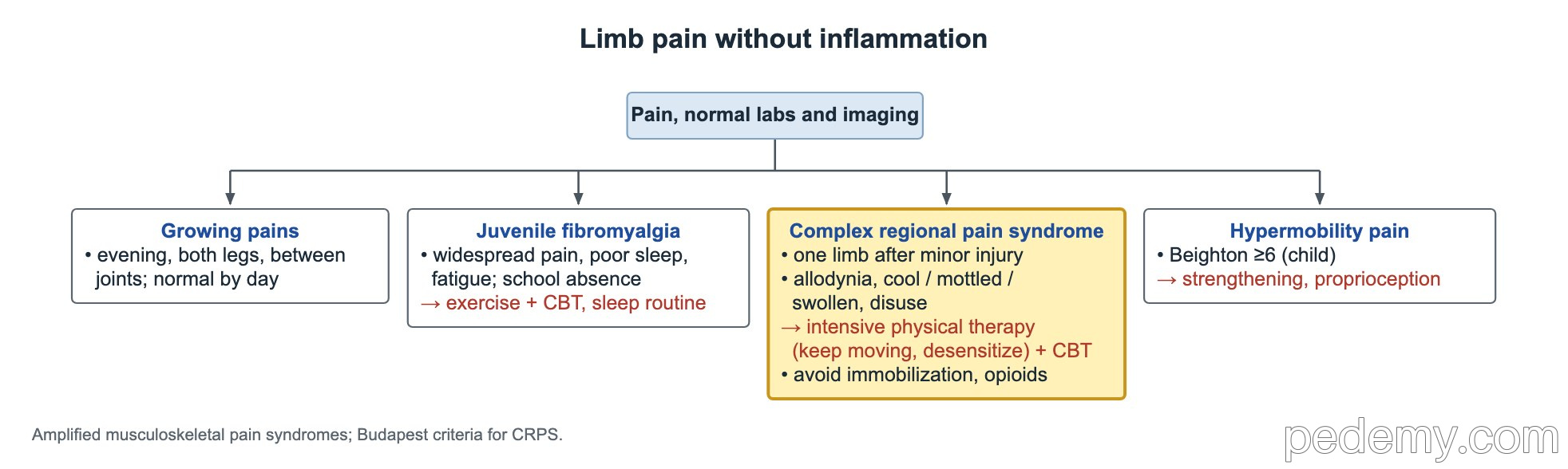
CRPS usually affects one limb, often weeks after a minor injury such as a sprain. The limb is very sensitive, swollen and cool or mottled, and the child guards it. Labs are normal. Diagnosis uses the Budapest clinical criteria.
- Allodynia: pain from a stimulus that is normally painless, such as light touch or a sock.
- Color and temperature change, swelling, sweating change and disuse.
- First-line: intensive physical therapy (keep moving, desensitize) together with CBT.
- Avoid immobilization, casts and opioids.
ME/CFS or fibromyalgia?
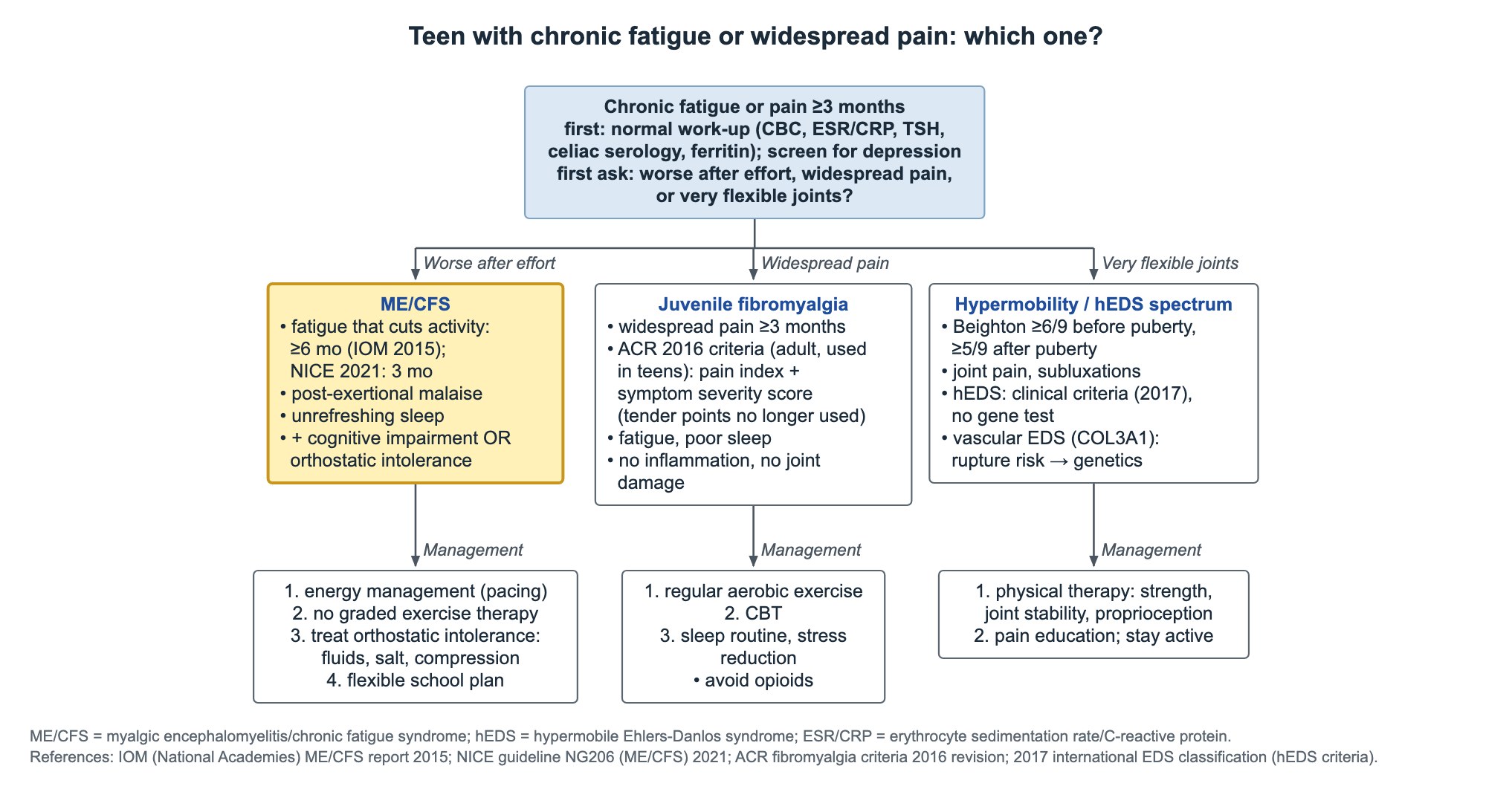
First rule out other causes with a basic workup (CBC, ESR or CRP, TSH, celiac serology, ferritin) and screen for depression. Then ask: is it worse after effort, is the pain widespread, or are the joints very flexible?
- ME/CFS (IOM 2015): substantial loss of activity with fatigue, post-exertional malaise and unrefreshing sleep, plus cognitive impairment or orthostatic intolerance.
- Management: energy management (pacing), treatment of orthostatic intolerance with fluids, salt and compression, and a flexible school plan.
- Do not use fixed, escalating graded exercise programs in ME/CFS; post-exertional malaise is the core feature.
Common questions
What Beighton score means hypermobility in a child?
For a child aged 5 years or more who is not yet biologically mature, a score of 6 or more out of 9. After puberty the cut-off is 5 out of 9.
Can a young child be diagnosed with hypermobile Ehlers–Danlos syndrome?
Not before biological maturity. A prepubertal child with hEDS-like features is labeled pediatric generalized joint hypermobility or a pediatric hypermobility spectrum disorder and reassessed later.
Do NSAIDs help juvenile fibromyalgia?
Little. CBT, regular exercise, sleep routines and stress reduction are the main treatments.
Study this topic
Sources
- Pediatric joint hypermobility: a diagnostic framework and narrative review (Orphanet J Rare Dis 2023)
- The 2017 international classification of the Ehlers–Danlos syndromes (Am J Med Genet C)
- Institute of Medicine 2015: Beyond myalgic encephalomyelitis/chronic fatigue syndrome
Written for Pedemy in our own words from the sources above; checked November 2026. For education only, not medical advice; check doses and local protocols before treating a patient. Pedemy is independent and not affiliated with or endorsed by the organizations cited.