

Main decision tree
Periodic fever and MAS
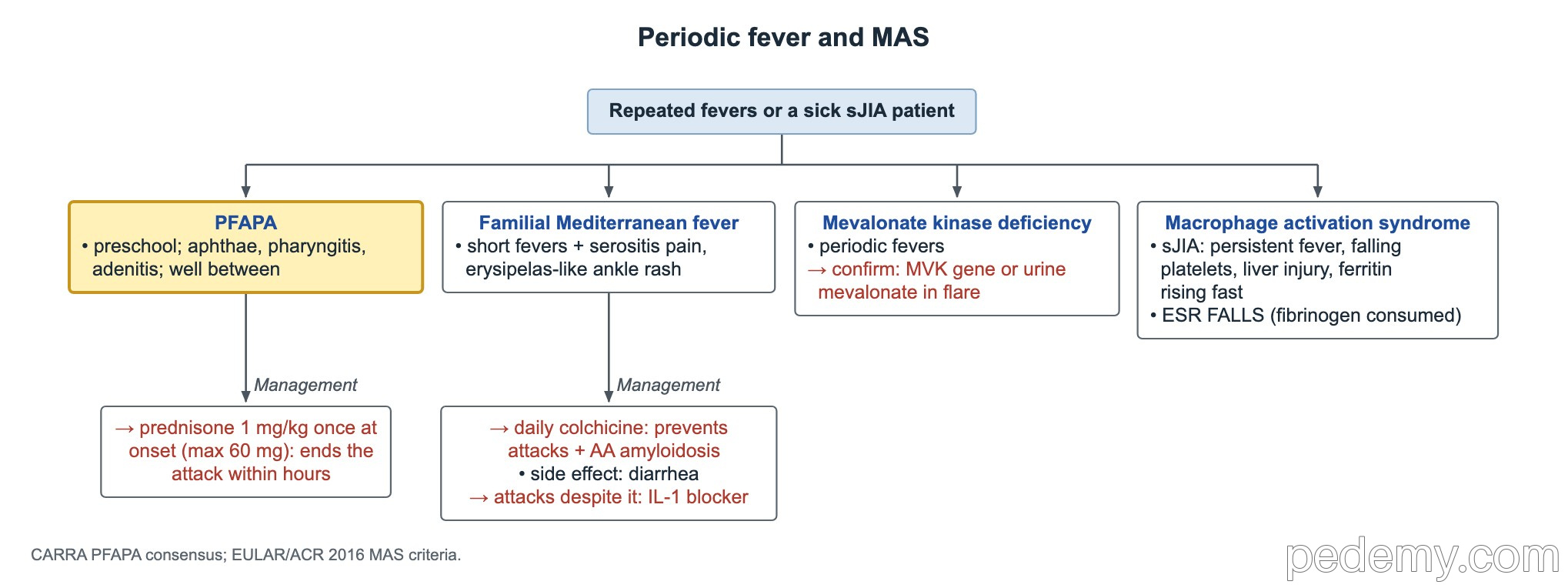
Key points
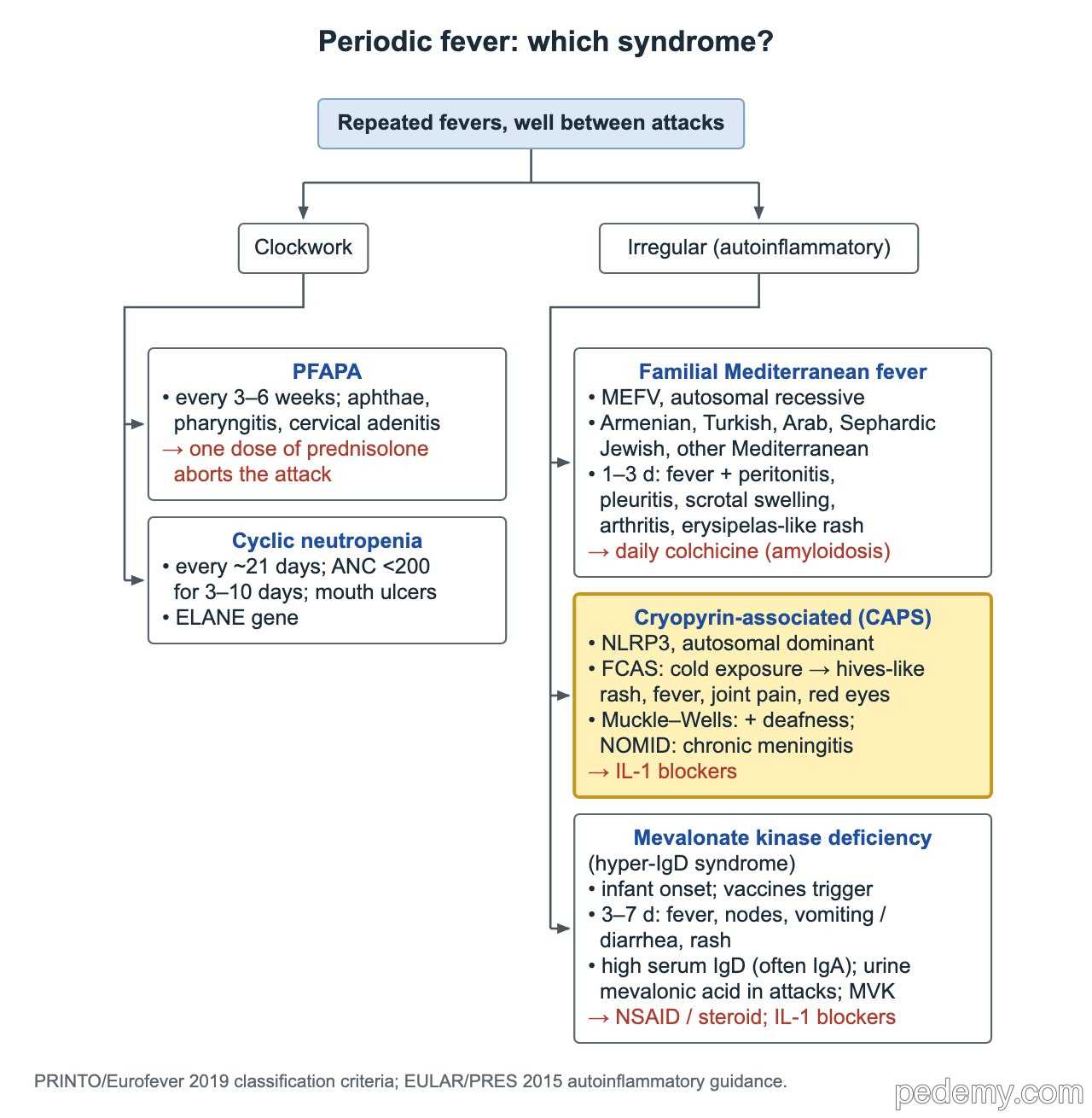
- PFAPA: preschool child, clockwork fevers every 3–6 weeks with aphthae, pharyngitis and cervical adenitis; well between.
- PFAPA attack: one dose of prednisone or prednisolone 1 mg/kg (maximum 60 mg) ends the fever within hours.
- FMF: MEFV, autosomal recessive; 1–3 day fevers with serositis; clinical diagnosis even if genetic testing is negative.
- FMF: daily colchicine prevents attacks and AA amyloidosis; diarrhea is the commonest side effect; IL-1 blocker if attacks continue.
- Mevalonate kinase deficiency: infant onset, 3–7 day fevers often after vaccines; confirm with MVK genetics or high urine mevalonic acid in a flare.
- CAPS (NLRP3): cold-triggered hive-like rash, fever, joint pain and red eyes; treat with IL-1 blockers.
- MAS in sJIA: persistent fever, falling platelets, liver injury and rapidly rising ferritin; the ESR falls as fibrinogen is consumed.
PFAPA: the commonest periodic fever
PFAPA stands for periodic fever, aphthous stomatitis, pharyngitis and cervical adenitis. It starts in the preschool years. Fevers come like clockwork every 3–6 weeks and last a few days. The child is well between episodes and grows normally.
- Abortive treatment (CARRA): prednisone or prednisolone 1 mg/kg once at attack onset, maximum 60 mg; the fever ends within hours.
- Steroids can shorten the time to the next episode.
- Very frequent episodes: tonsillectomy is an option.
- Look-alike: cyclic neutropenia, with fevers and mouth ulcers about every 21 days; check serial neutrophil counts (ELANE gene).
Familial Mediterranean fever
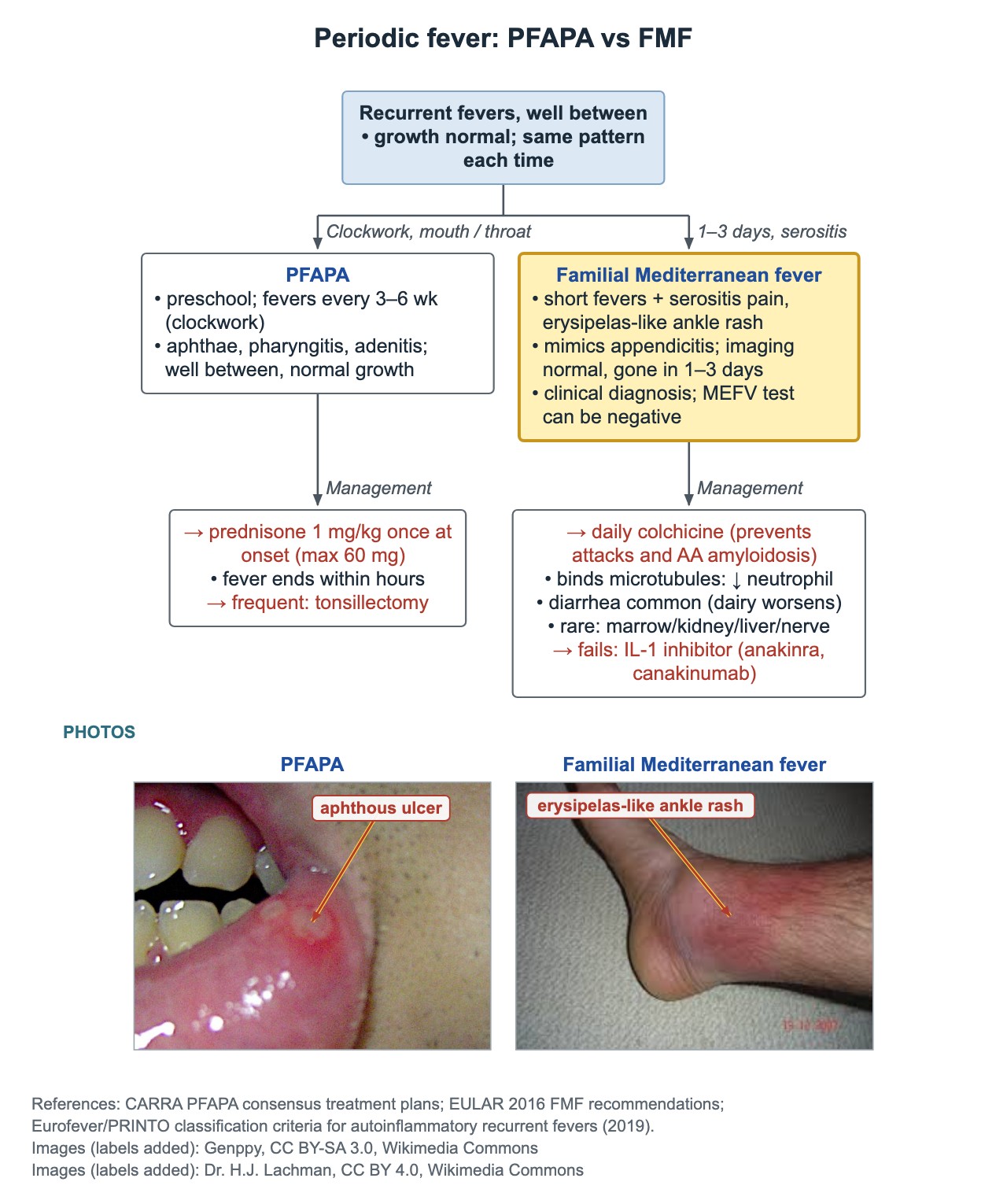
FMF is the commonest monogenic autoinflammatory disease. It is autosomal recessive (MEFV) and most common in Armenian, Turkish, Arab, Sephardic Jewish and other Mediterranean families.
- Attacks last 1–3 days: fever with peritonitis, pleuritis, scrotal swelling or ankle/knee arthritis.
- Erysipelas-like red rash over the ankle or foot.
- Abdominal attacks mimic appendicitis, with guarding and rigidity, but imaging is usually normal and pain resolves in 1–3 days.
- FMF is a clinical diagnosis: typical attacks without a pathogenic MEFV variant do not exclude it.
FMF treatment: colchicine
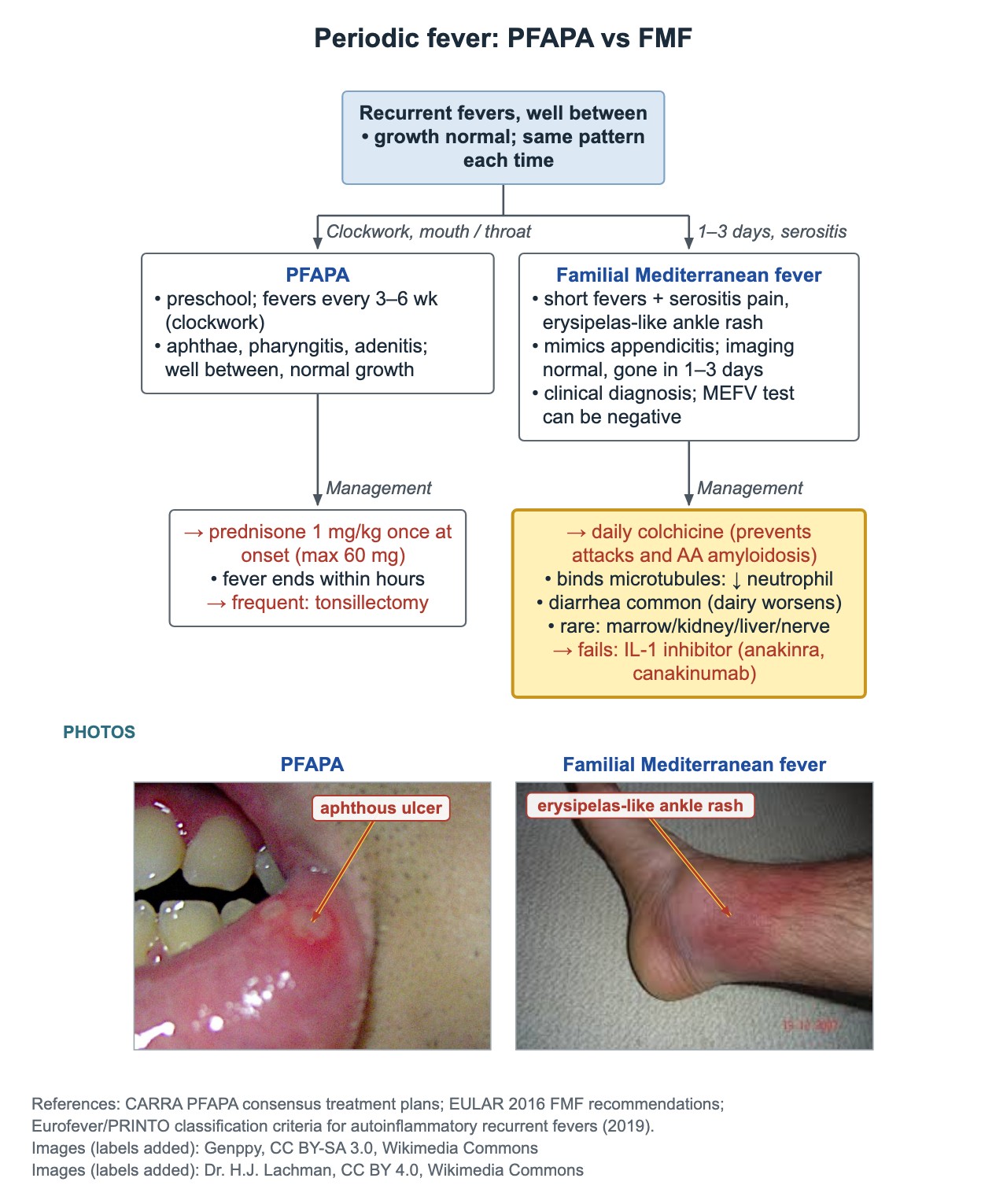
- Daily lifelong colchicine prevents attacks and AA amyloidosis.
- Mechanism: binds microtubules and blocks neutrophil chemotaxis and activation.
- Commonest side effect: diarrhea (dairy can worsen it).
- Rare serious toxicity: bone marrow suppression, kidney and liver injury, neuropathy or myopathy.
- Attacks despite good adherence: add an IL-1 inhibitor (anakinra or canakinumab).
- Untreated FMF: AA amyloidosis of the kidney, first seen as proteinuria and leading to kidney failure; check urine protein during follow-up.
Mevalonate kinase deficiency (hyper-IgD syndrome)
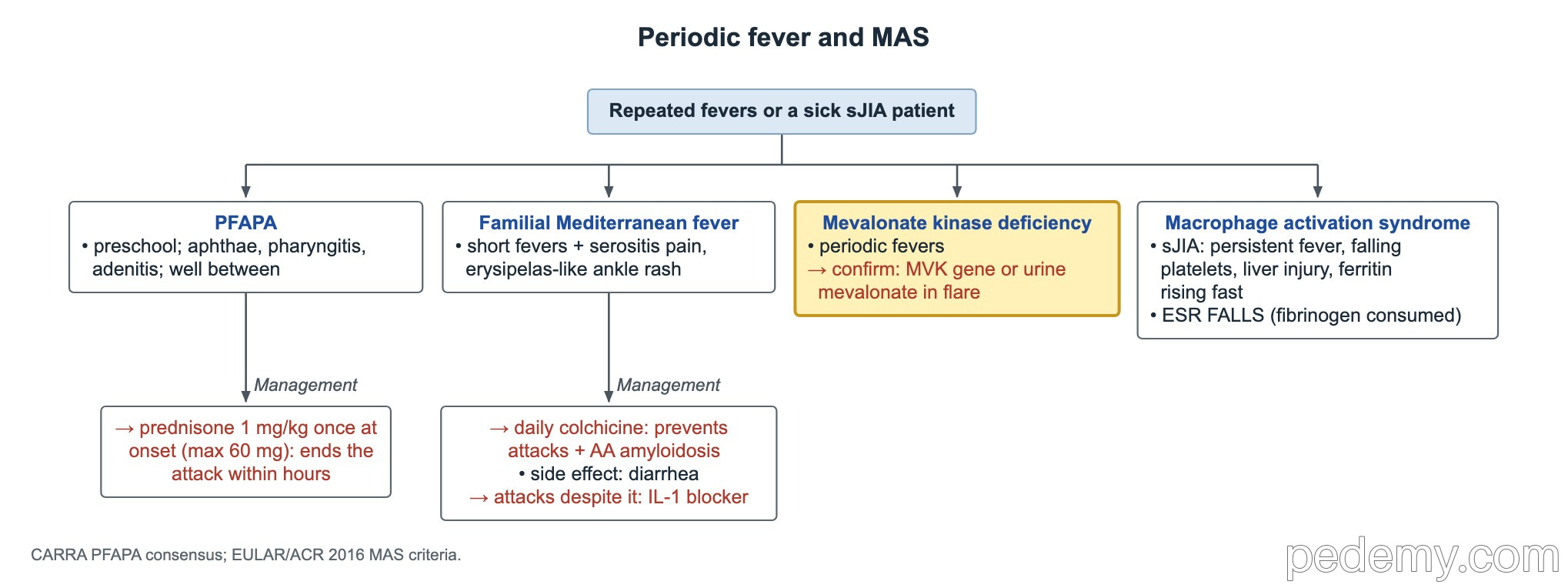
- Onset in infancy; fevers last 3–7 days with cervical nodes, abdominal pain, vomiting, diarrhea, rash and mouth ulcers.
- Classic triggers: vaccinations, infections, trauma and surgery.
- Confirm with MVK gene testing or high urine mevalonic acid during a flare.
- High serum IgD is not specific: it also occurs in other periodic fevers, Hodgkin lymphoma, infections and immunodeficiency.
- Flares: NSAIDs, glucocorticoids or anakinra; canakinumab is FDA-approved for prevention.
- Near-complete enzyme loss (mevalonic aciduria) adds developmental delay and dysmorphic features.
- Untreated disease can cause AA amyloidosis; proteinuria is the first sign.
- Recurrent episodes that look like incomplete Kawasaki disease should raise the question of an autoinflammatory fever such as MKD.
Cryopyrin-associated periodic syndromes (CAPS)
All forms come from gain-of-function NLRP3 variants (autosomal dominant). IL-1 blockers control the disease.
| Form | Features |
|---|---|
| Familial cold autoinflammatory syndrome | From infancy: cold exposure → hive-like rash, fever, joint pain, red eyes |
| Muckle–Wells syndrome | Recurrent rash and fever plus sensorineural deafness; amyloidosis risk |
| NOMID (CINCA) | Neonatal onset, chronic aseptic meningitis, bony overgrowth, the most severe form |
Macrophage activation syndrome
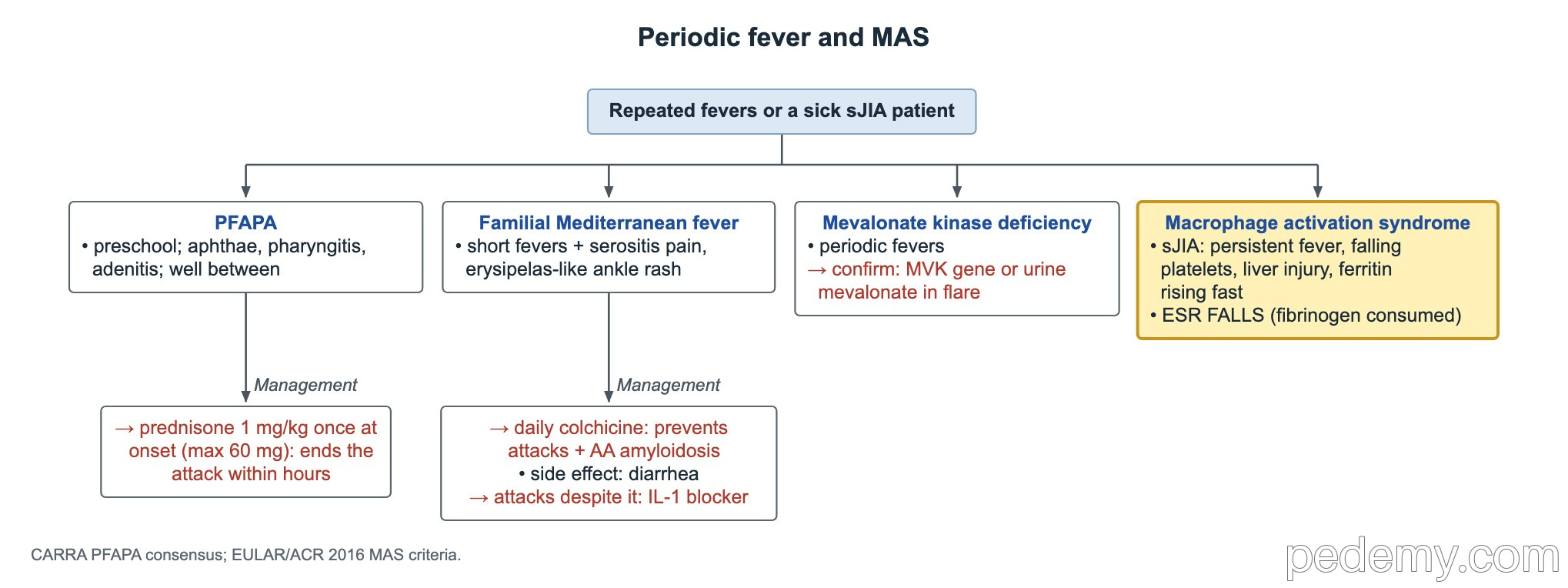
MAS is a form of secondary hemophagocytic lymphohistiocytosis. In a child with systemic JIA it shows up as fever that will not settle, falling blood counts, liver injury and a ferritin that climbs fast. Treat it as an emergency with the rheumatology team.
- The ESR falls even as inflammation worsens, because fibrinogen is consumed.
- 2016 classification criteria in febrile sJIA: ferritin >684 ng/mL plus any 2 of platelets ≤181,000/µL, AST >48 U/L, triglycerides >156 mg/dL, fibrinogen ≤360 mg/dL.
- Treatment: high-dose glucocorticoids, often with anakinra or cyclosporine.
Common questions
How is PFAPA treated?
One dose of prednisone or prednisolone, 1 mg/kg (maximum 60 mg), at the start of an attack usually ends the fever within hours. Tonsillectomy is an option for very frequent episodes.
Can familial Mediterranean fever be diagnosed with a negative gene test?
Yes. FMF is a clinical diagnosis. Typical attacks without a pathogenic MEFV variant do not rule it out.
Why does the ESR fall in macrophage activation syndrome?
Fibrinogen is consumed, and the ESR depends largely on fibrinogen. A falling ESR with rising ferritin and falling platelets in sJIA is a warning sign.
Study this topic
Sources
- EULAR/PReS recommendations for the management of familial Mediterranean fever: 2024 update (Ann Rheum Dis 2025)
- 2016 classification criteria for macrophage activation syndrome complicating systemic JIA (Ann Rheum Dis)
- 2021 ACR guideline: JIA oligoarthritis, TMJ arthritis and systemic JIA with and without MAS (Arthritis Rheumatol 2022)
Written for Pedemy in our own words from the sources above; checked November 2026. For education only, not medical advice; check doses and local protocols before treating a patient. Pedemy is independent and not affiliated with or endorsed by the organizations cited.