

Main decision tree
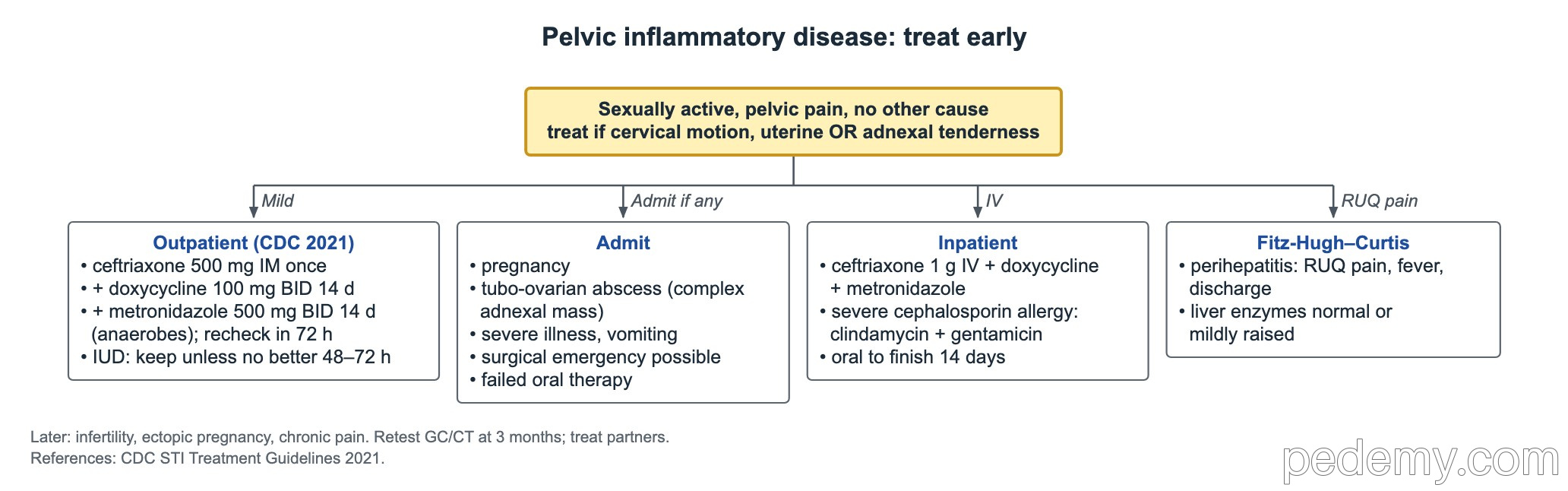
Pelvic inflammatory disease: treat early
Key points
- Start empiric PID treatment for cervical motion, uterine or adnexal tenderness in a sexually active teen with no other cause.
- Outpatient (CDC 2021): ceftriaxone 500 mg IM once + doxycycline 100 mg twice daily + metronidazole 500 mg twice daily, both for 14 days.
- Admit for pregnancy, tubo-ovarian abscess, severe illness or vomiting, a possible surgical emergency, or failed oral therapy.
- Severe cephalosporin allergy in hospital: clindamycin plus gentamicin.
- An IUD can stay in unless there is no improvement after 48–72 hours.
- Fitz-Hugh–Curtis: right upper quadrant pain from perihepatitis; liver enzymes normal or mildly raised.
- Syphilis in pregnancy with penicillin allergy: desensitize, then give penicillin.
When to treat for PID
The tree starts with a sexually active adolescent who has pelvic pain with no other cause. Cervical motion tenderness, uterine tenderness or adnexal tenderness, any one of them, is enough to start empiric treatment. Waiting for more findings misses mild cases.
Test for gonorrhea and chlamydia (NAAT), HIV and syphilis, and do a pregnancy test. Treat partners, and retest for gonorrhea and chlamydia 3 months later.
- Supporting findings: fever above 38.3 °C (101 °F), cervical discharge, many white cells on wet mount, raised ESR or CRP.
- Late complications: infertility, ectopic pregnancy and chronic pelvic pain.
Outpatient treatment
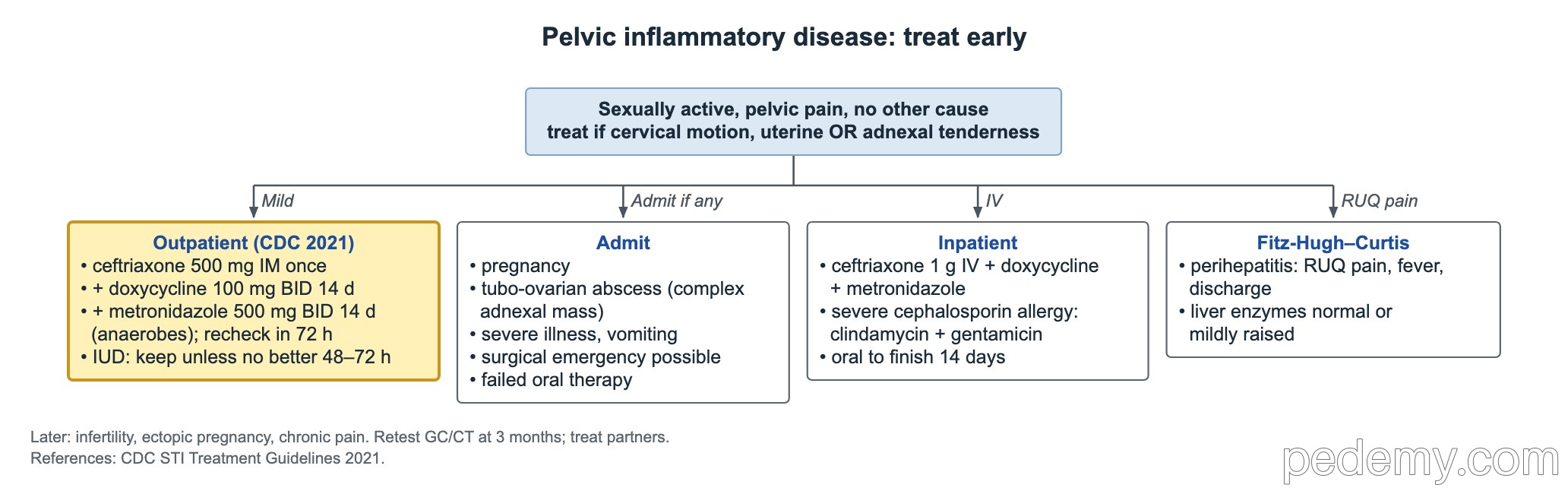
Therapy must cover gonorrhea, chlamydia and anaerobes. CDC added metronidazole to the standard regimen in 2021. The total course is 14 days.
- Ceftriaxone 500 mg IM once (1 g if 150 kg or more).
- Plus doxycycline 100 mg by mouth twice daily for 14 days.
- Plus metronidazole 500 mg by mouth twice daily for 14 days.
- Recheck within 72 hours; no improvement means admission and reassessment.
- IUD in place: leave it unless the patient has not improved after 48–72 hours of treatment.
Admission and IV treatment
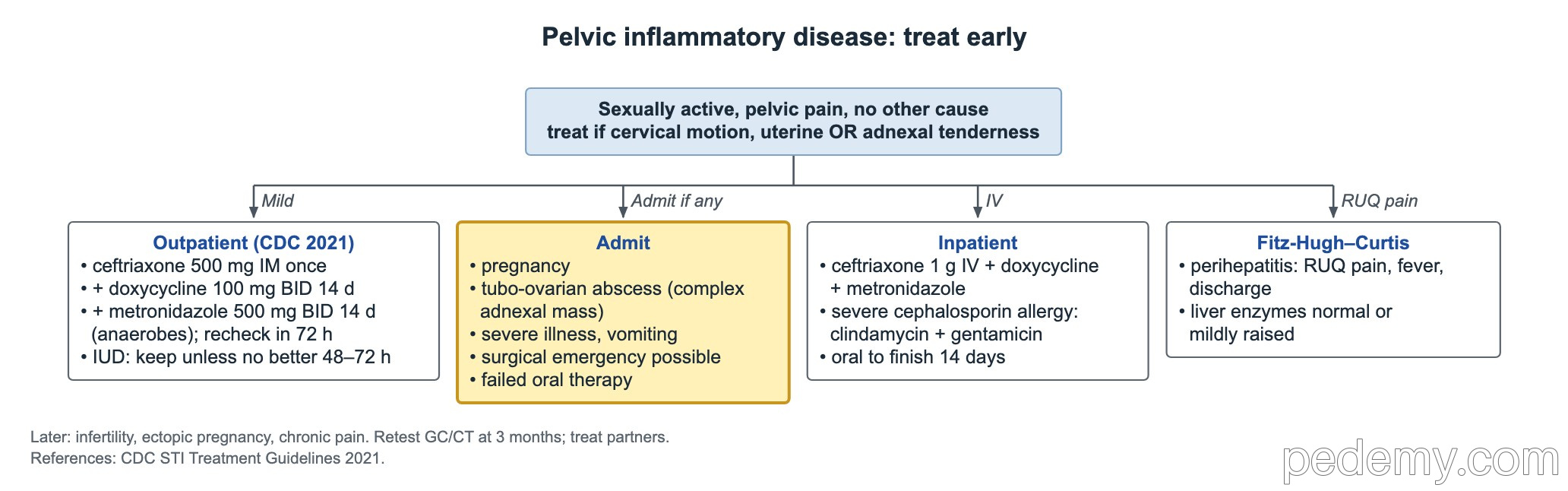
- Admit for any of: pregnancy, tubo-ovarian abscess (complex adnexal mass), severe illness, nausea and vomiting or high fever, a surgical emergency that cannot be excluded (such as appendicitis), or failure of oral therapy.
- IV regimen: ceftriaxone 1 g IV every 24 hours plus doxycycline plus metronidazole. Cefoxitin 2 g IV every 6 hours plus doxycycline is an alternative.
- Severe cephalosporin allergy: clindamycin plus gentamicin.
- After 24–48 hours of clinical improvement, switch to oral doxycycline plus metronidazole to finish 14 days.
- Tubo-ovarian abscess (for example, a 5-cm complex adnexal mass with fever and vomiting): admit for IV antibiotics; drain if it does not improve.
Fitz-Hugh–Curtis syndrome
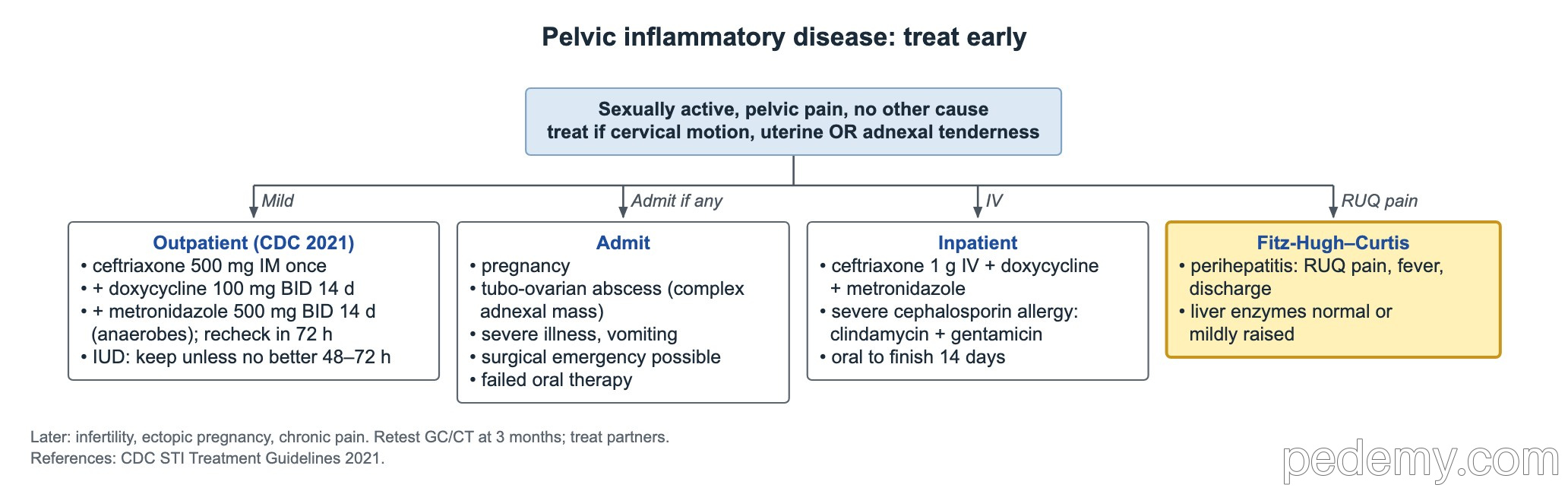
PID can spread to the liver capsule (perihepatitis). The teen has right upper quadrant pain, often pleuritic, with fever and vaginal discharge. Aminotransferases are usually normal or only mildly raised, which helps separate it from hepatitis and cholecystitis. Treat as PID.
Genital infections and delivery
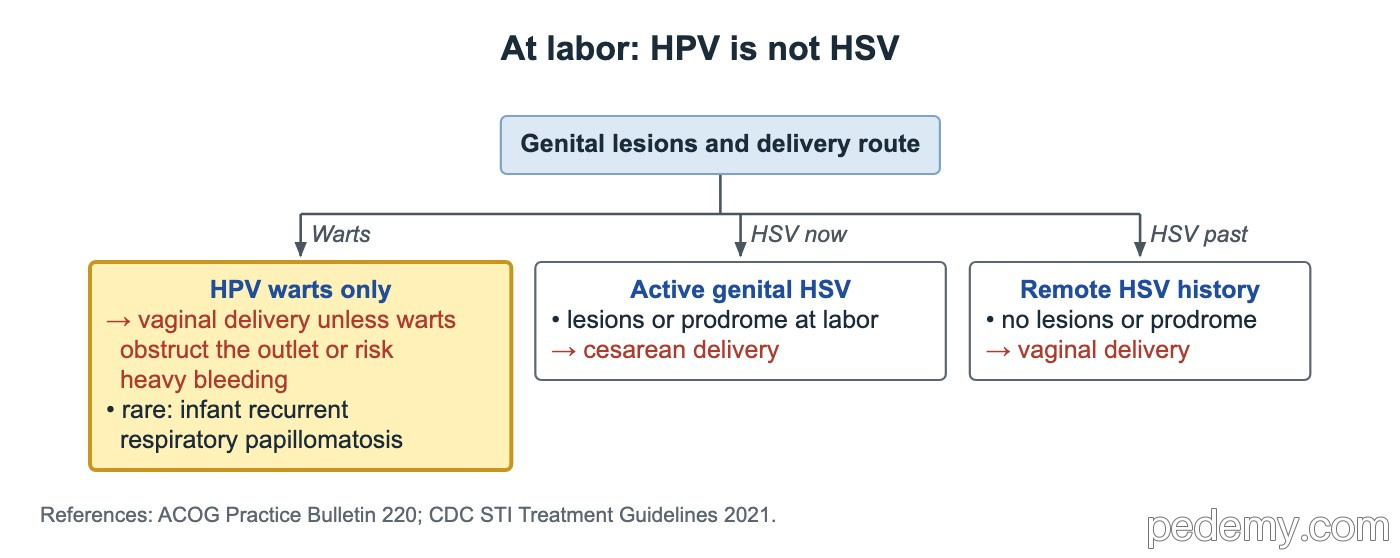
- Maternal HPV rarely causes recurrent respiratory (laryngeal) papillomatosis in the infant; cesarean is not done to prevent it.
- Syphilis in pregnancy: benzathine penicillin G is the only treatment that reliably treats the fetus. With a penicillin allergy, desensitize and then give penicillin.
- Sheehan syndrome: after delivery with massive bleeding, pituitary infarction causes hypotension, vomiting and dizziness; failure to lactate is an early clue.
| Situation at labor | Delivery |
|---|---|
| Genital warts (HPV) only | Vaginal delivery, unless warts obstruct the pelvic outlet or would bleed heavily |
| Active genital HSV lesions or prodromal symptoms | Cesarean delivery |
| Past genital HSV, no lesions or prodrome | Vaginal delivery |
Common questions
What is the CDC outpatient treatment for PID?
Ceftriaxone 500 mg IM once, plus doxycycline 100 mg twice daily and metronidazole 500 mg twice daily, both for 14 days.
Does an IUD need to be removed for PID?
No. Leave it in place unless the patient does not improve within 48 to 72 hours of treatment.
Can a woman with genital warts have a vaginal delivery?
Yes, unless the warts block the birth canal or would cause heavy bleeding.
Study this topic
Sources
- CDC: Sexually Transmitted Infections Treatment Guidelines, 2021 (MMWR Recomm Rep)
- CDC: Pelvic inflammatory disease, STI treatment guidelines
Written for Pedemy in our own words from the sources above; checked November 2026. For education only, not medical advice; check doses and local protocols before treating a patient. Pedemy is independent and not affiliated with or endorsed by the organizations cited.