

Main decision tree
Genital ulcers: painful or painless?
Key points
- Any genital ulcer: test for syphilis, HSV (NAAT/PCR of the lesion) and HIV.
- Primary or secondary syphilis: benzathine penicillin G 2.4 million units IM once; non-pregnant with penicillin allergy: doxycycline 100 mg twice daily for 14 days.
- BV: at least 3 of 4 Amsel criteria (thin gray discharge, pH >4.5, positive whiff test, clue cells); treat with metronidazole 500 mg twice daily for 7 days, also in pregnancy.
- Trichomoniasis: frothy yellow-green discharge, strawberry cervix; women get metronidazole 500 mg twice daily for 7 days and partners are treated.
- Screen all sexually active females under 25 years for chlamydia and gonorrhea every year.
- Gonorrhea: ceftriaxone 500 mg IM once; chlamydia: doxycycline 100 mg twice daily for 7 days; treat partners from the last 60 days.
- Anogenital warts first appearing in an older child (for example age 4) need an evaluation for sexual abuse.
Genital ulcers: painful or painless?
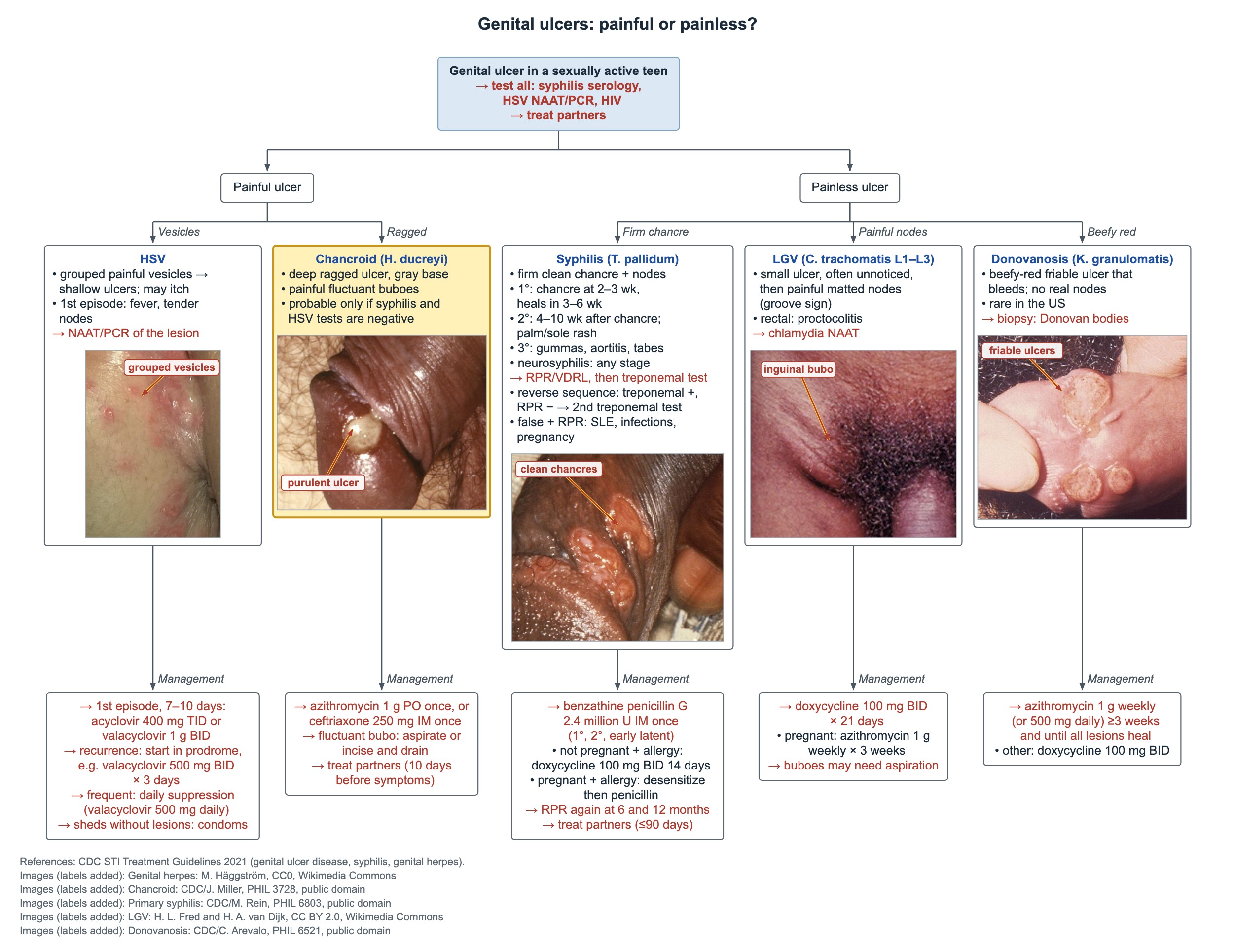
Start with pain. Painful ulcers are usually herpes or chancroid; painless ones are syphilis, lymphogranuloma venereum (LGV) or donovanosis. The look of the ulcer is only a guide: test every teen with a genital ulcer for syphilis, HSV and HIV.
Chancroid is a diagnosis of exclusion. It is probable only when the ulcers are painful and typical and the tests for syphilis and HSV are negative.
- Herpes recurrences: start treatment in the prodrome, for example valacyclovir 500 mg twice daily for 3 days.
- Frequent herpes recurrences: daily suppression, for example valacyclovir 500 mg once daily.
- HSV is shed without lesions, so condoms and suppression lower the risk to partners.
- Chancroid: treat partners who had sex with the patient in the 10 days before symptoms began.
| Cause | Ulcer and nodes | Test | Treatment |
|---|---|---|---|
| Herpes simplex virus | Grouped painful vesicles that become shallow ulcers, may itch; first episode often has fever and tender nodes | NAAT/PCR of the lesion | First episode 7–10 days: acyclovir 400 mg three times daily or valacyclovir 1 g twice daily |
| Chancroid (Haemophilus ducreyi) | Deep, ragged, painful ulcer with a gray base; painful fluctuant buboes | Exclude syphilis and HSV | Azithromycin 1 g orally once or ceftriaxone 250 mg IM once; aspirate or drain fluctuant buboes |
| Syphilis (Treponema pallidum) | Painless, firm, clean-based chancre with firm regional nodes | RPR or VDRL, then a treponemal test | Benzathine penicillin G 2.4 million units IM once |
| LGV (Chlamydia trachomatis L1–L3) | Small painless ulcer, often missed, then painful matted inguinal nodes (groove sign); rectal exposure causes proctocolitis | Chlamydia NAAT | Doxycycline 100 mg twice daily for 21 days |
| Donovanosis (Klebsiella granulomatis) | Painless, beefy-red, friable ulcer that bleeds easily; no prominent nodes; rare in the US | Biopsy: Donovan bodies | Azithromycin 1 g weekly or 500 mg daily for at least 3 weeks and until the lesions heal |
Syphilis: stages, tests and treatment
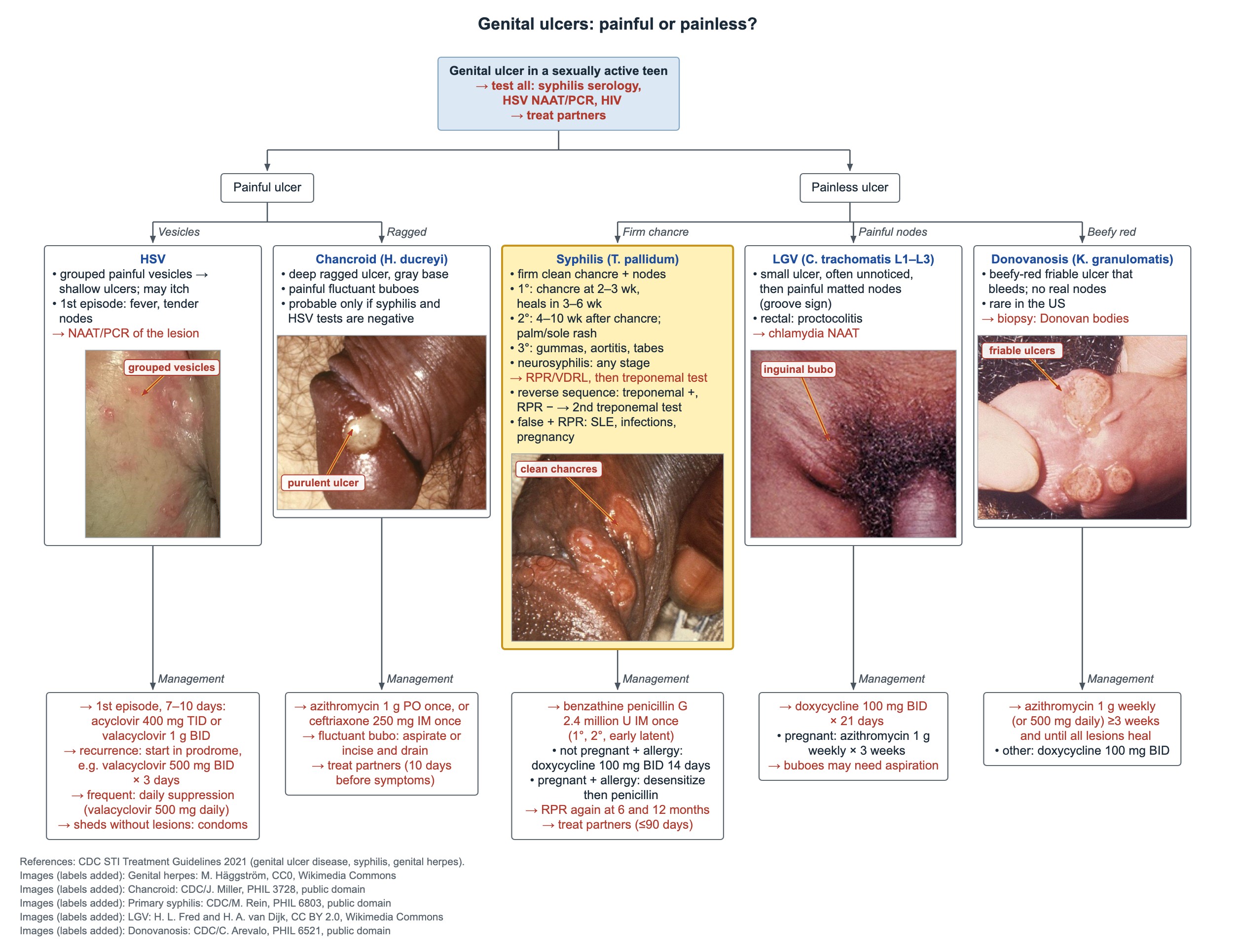
- Traditional order: a nontreponemal test (RPR or VDRL) first, then a treponemal test to confirm.
- Reverse sequence: treponemal test positive but RPR negative → do a second, different treponemal test (for example TP-PA).
- False-positive RPR or VDRL: connective-tissue disease such as SLE, other infections, pregnancy.
- Primary, secondary or early latent syphilis: benzathine penicillin G 2.4 million units IM once.
- Non-pregnant, penicillin allergy: doxycycline 100 mg twice daily for 14 days.
- Pregnant with penicillin allergy: desensitize, then give penicillin.
- Test every adolescent with syphilis for HIV.
- Repeat the RPR at 6 and 12 months; treat partners from the last 90 days presumptively.
| Stage | Timing | Findings |
|---|---|---|
| Primary | Chancre 2–3 weeks after exposure; heals on its own in 3–6 weeks | Painless, firm, clean chancre with regional nodes |
| Secondary | 4–10 weeks after the chancre | Non-itchy red-brown macules, including the palms and soles; also condylomata lata, mucous patches, nodes |
| Latent | After secondary signs settle | No signs; positive serology only |
| Tertiary | Years later | Gummas, aortitis, tabes dorsalis (posterior column degeneration) |
| Neurosyphilis | Any stage | Cranial nerve, eye or ear findings, meningitis; higher risk with advanced HIV |
Vaginal discharge: four patterns
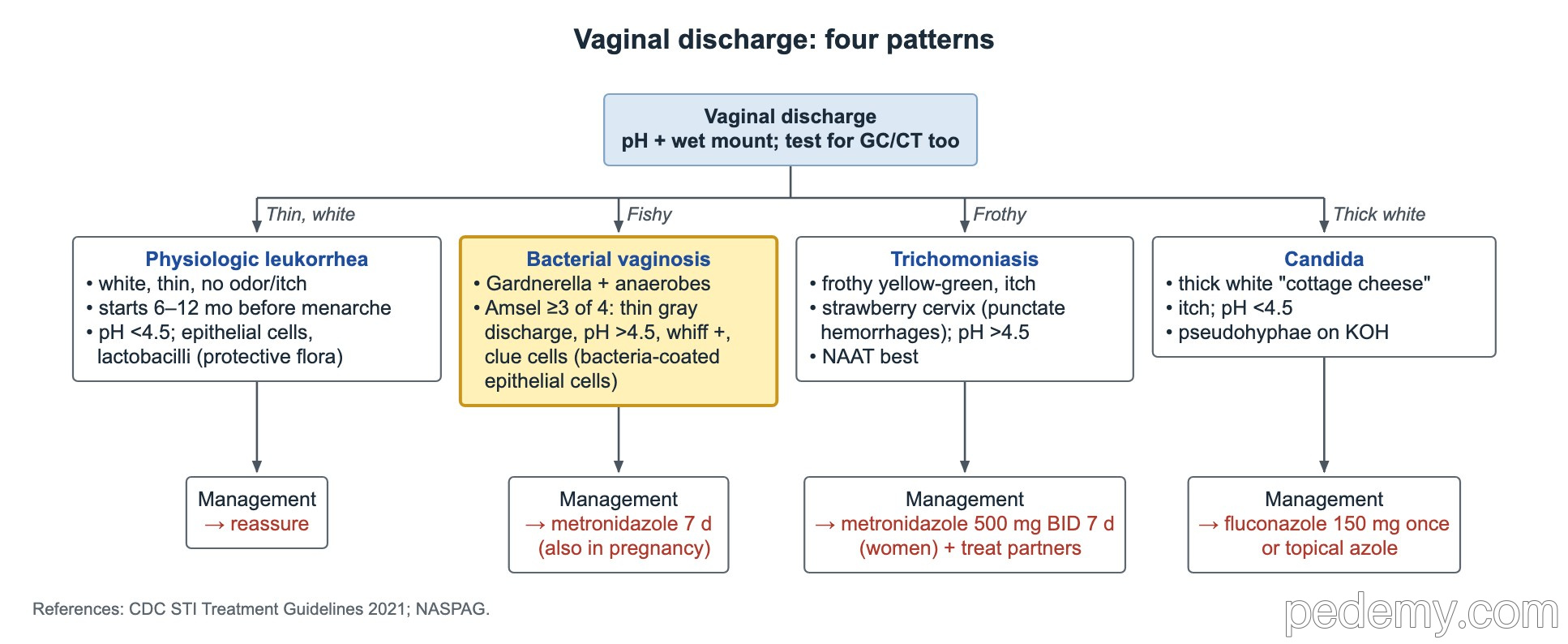
Check the vaginal pH and look at a wet mount, and send gonorrhea and chlamydia NAATs too, because cervicitis can also cause discharge.
Normal vaginal flora is dominated by Lactobacillus species, which keep the pH below 4.5. In bacterial vaginosis (BV) the lactobacilli are replaced by Gardnerella vaginalis and anaerobes.
- Amsel criteria for BV (need at least 3 of 4): thin homogeneous discharge, pH >4.5, positive whiff test, clue cells.
- Clue cells are vaginal epithelial cells coated with adherent bacteria.
- Pregnant adolescent with symptomatic BV: treat with metronidazole, 500 mg orally twice daily for 7 days or vaginal gel.
| Pattern | Discharge and signs | pH and microscopy | Treatment |
|---|---|---|---|
| Physiologic leukorrhea | White, thin, no odor or itch; starts 6–12 months before menarche | pH <4.5; epithelial cells, lactobacilli | Reassure |
| Bacterial vaginosis | Thin, gray, homogeneous, fishy odor | pH >4.5; clue cells; positive whiff test | Metronidazole 500 mg orally twice daily for 7 days (also in pregnancy) or metronidazole vaginal gel |
| Trichomoniasis | Frothy, yellow-green, malodorous; itch and irritation; strawberry cervix | pH >4.5; motile trichomonads; NAAT is best | Women: metronidazole 500 mg twice daily for 7 days; treat partners |
| Candida | Thick white "cottage cheese"; itch | pH <4.5; pseudohyphae on KOH | Fluconazole 150 mg orally once or a topical azole |
Trichomoniasis
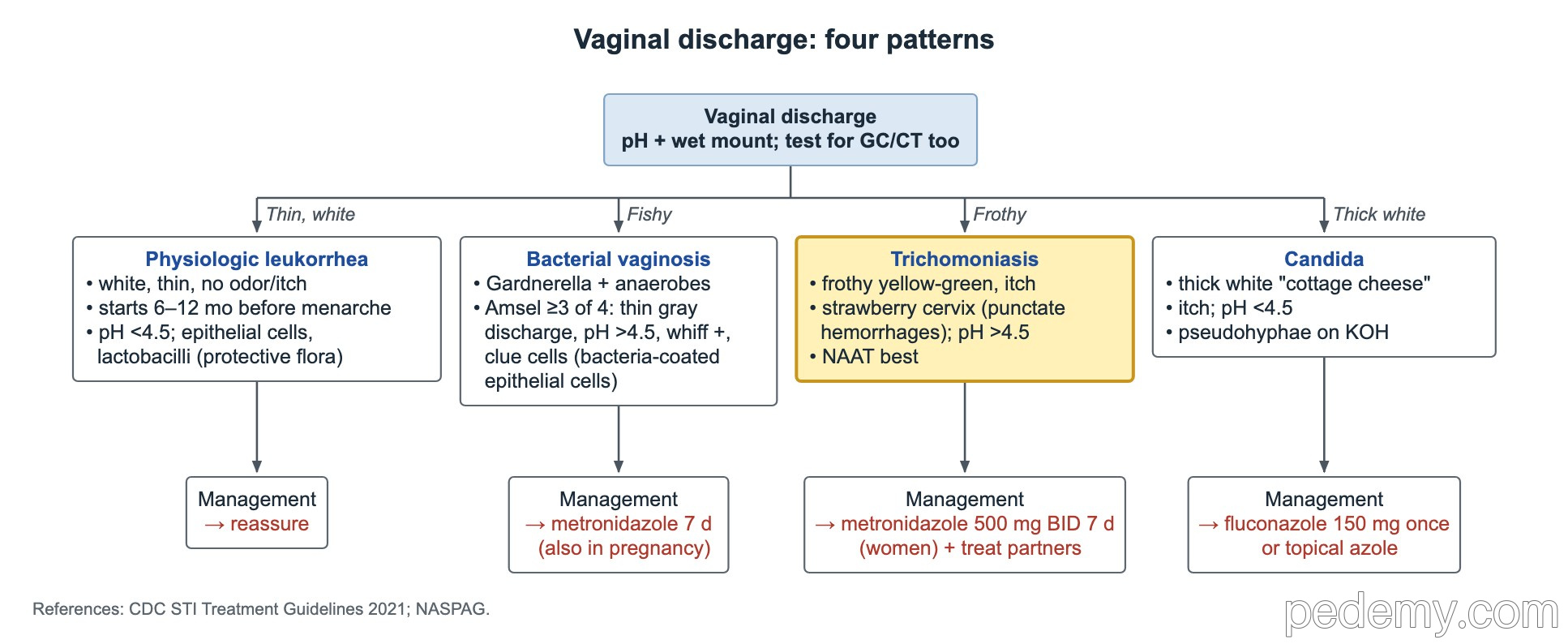
Trichomonas vaginalis causes a frothy, malodorous, yellow-green discharge with vulvar irritation. The strawberry cervix is made of punctate hemorrhages on the cervix. NAAT is the most sensitive test; a wet mount misses many cases.
- Women: metronidazole 500 mg orally twice daily for 7 days.
- Men: metronidazole 2 g orally once.
- Treat sexual partners as well to prevent reinfection; avoid sex until both are treated and symptoms are gone.
- Retest women about 3 months after treatment because reinfection is common.
STI screening in adolescents
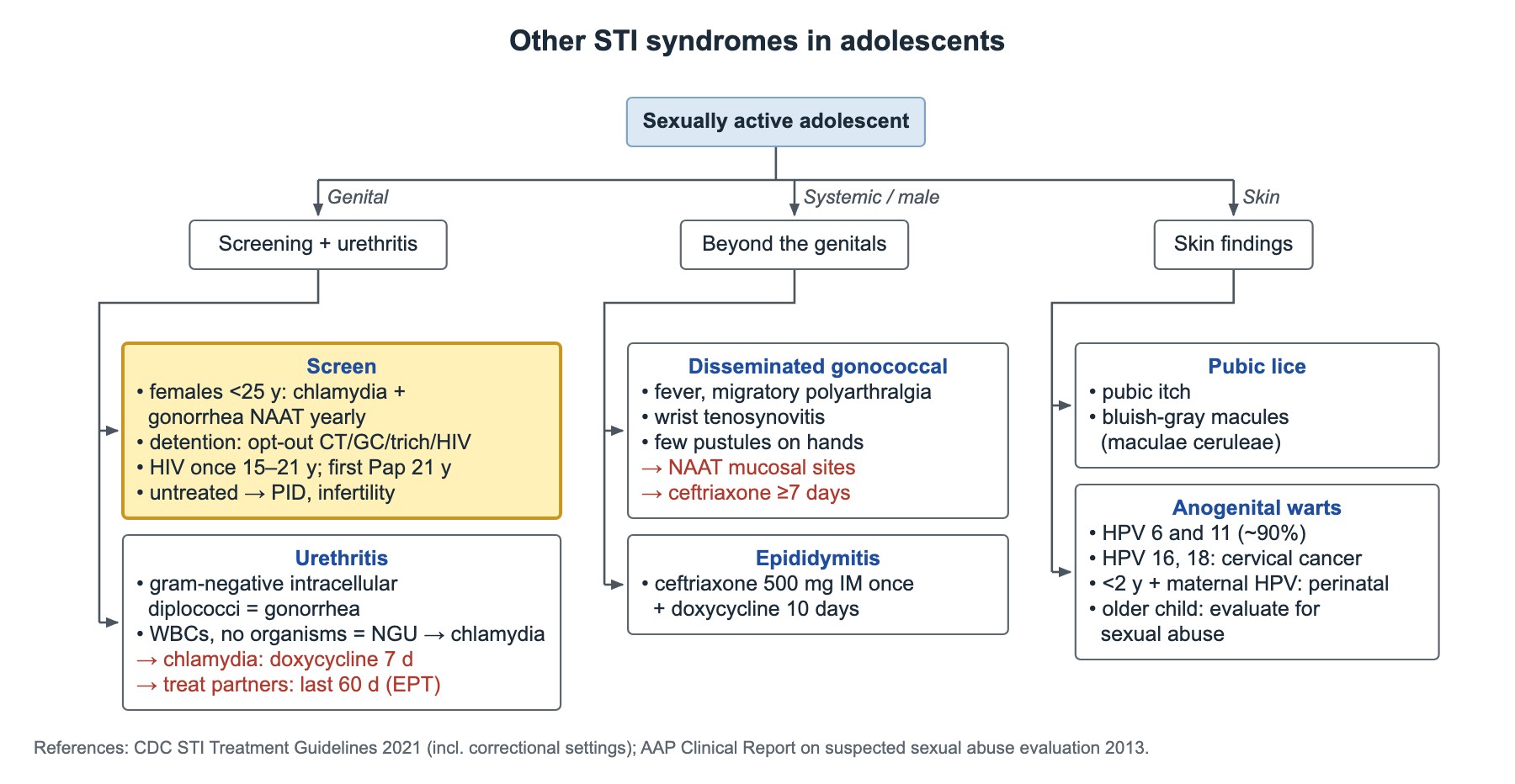
Most chlamydia and gonorrhea infections in young women cause no symptoms. Left untreated, they can lead to pelvic inflammatory disease (PID), ectopic pregnancy, chronic pelvic pain and infertility.
- Sexually active females under 25 years: chlamydia and gonorrhea NAAT every year (urine or vaginal swab).
- HIV: test every adolescent at least once, between 15 and 21 years; USPSTF screens everyone aged 15–65 years, and earlier with risk.
- First cervical cancer screening (Pap test): age 21, whatever the sexual history.
- Juvenile detention intake: opt-out testing for chlamydia, gonorrhea, trichomonas and HIV; hepatitis B and C as indicated; syphilis according to local rates.
- After treatment for chlamydia, gonorrhea or trichomonas, retest about 3 months later.
- Doxycycline PEP (200 mg within 72 hours after sex) is offered to men who have sex with men and transgender women who had syphilis, chlamydia or gonorrhea in the past 12 months.
Urethritis, gonorrhea and chlamydia
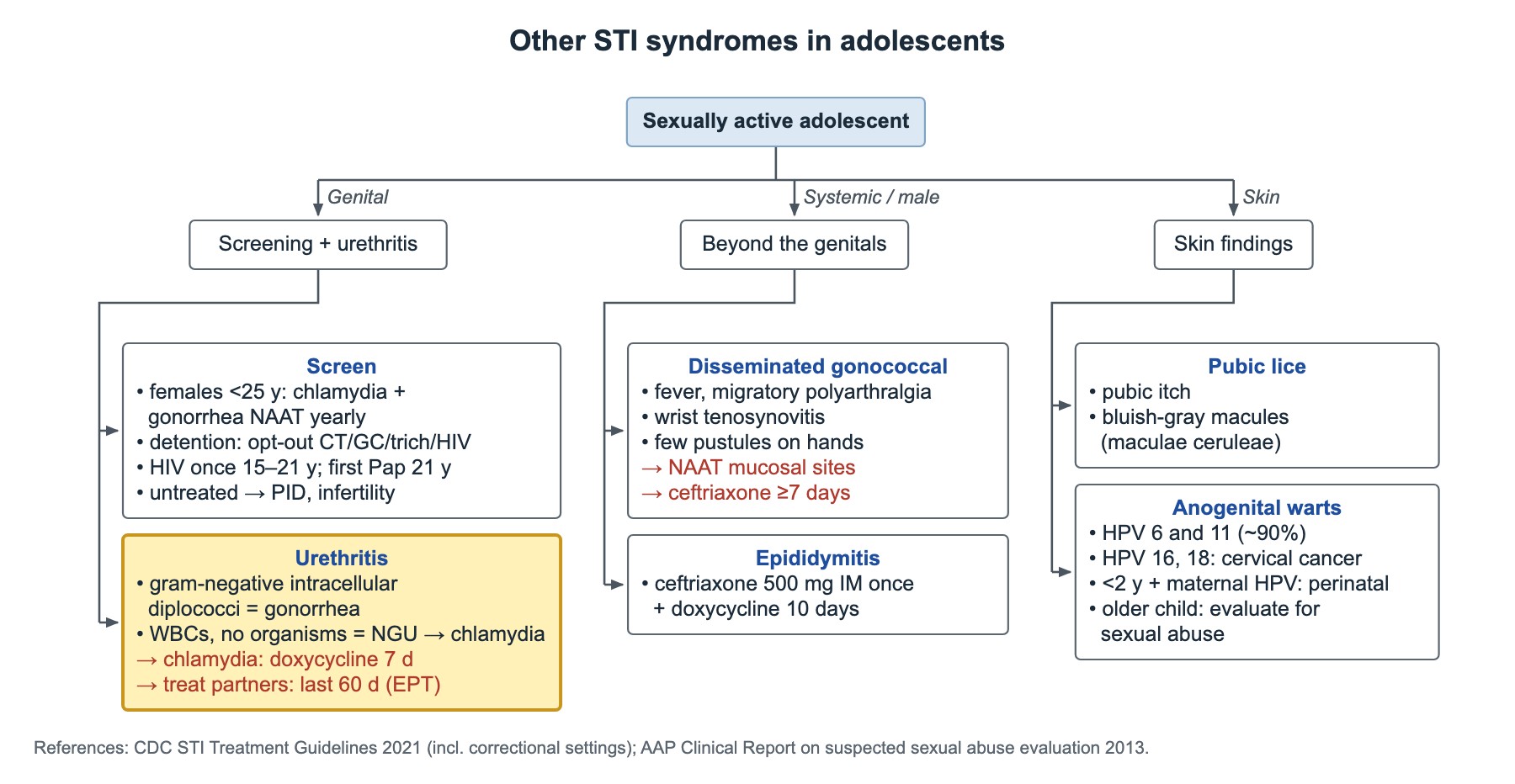
- Gram stain of urethral discharge with intracellular gram-negative diplococci → gonococcal urethritis.
- WBCs but no organisms → nongonococcal urethritis; the classic cause is Chlamydia trachomatis.
- Gonorrhea: ceftriaxone 500 mg IM once (1 g if 150 kg or more); add doxycycline if chlamydia has not been excluded.
- Chlamydia: doxycycline 100 mg orally twice daily for 7 days.
- Treat all partners from the last 60 days; expedited partner therapy (giving the patient medicine for the partner) is an option where allowed.
- Epididymitis in a teen with insertive vaginal sex only: ceftriaxone 500 mg IM once plus doxycycline 100 mg twice daily for 10 days.
- Disseminated gonococcal infection (arthritis–dermatitis syndrome): fever, migratory polyarthralgia, wrist tenosynovitis and a few pustules on the hands.
- In DGI, find the organism with NAAT of mucosal sites (urethra, cervix, rectum, throat) plus blood and joint cultures; treat with ceftriaxone 1 g IV or IM daily for at least 7 days in total.
Anogenital warts and pubic lice
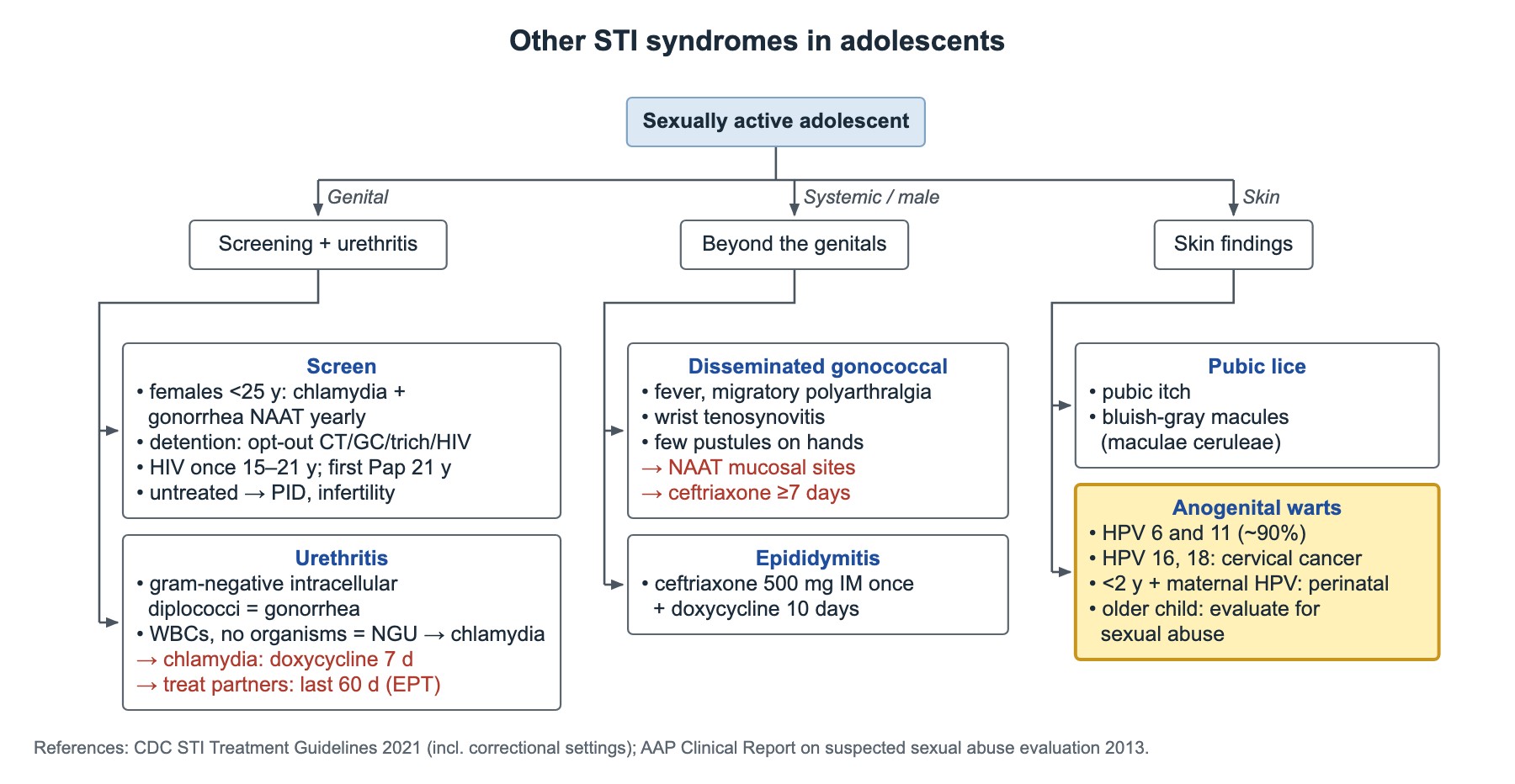
- HPV types 6 and 11 cause about 90% of genital warts; types 16 and 18 cause most cervical cancers.
- HPV vaccine is routine at 11–12 years and can start at 9.
- Warts that first appear before about age 2 in a child whose mother had HPV are most likely perinatal (vertical).
- Warts that first appear in an older child, for example a 4-year-old, need an evaluation for sexual abuse by a child abuse specialist.
- Pubic lice (pediculosis pubis): pubic itch, with small bluish-gray macules (maculae ceruleae) on the lower abdomen and thighs.
- Treat pubic lice with permethrin 1% cream rinse or pyrethrins with piperonyl butoxide, washed off after 10 minutes; treat partners from the last month and test for other STIs.
Common questions
How do you tell BV from trichomoniasis?
Both have a pH above 4.5. BV gives a thin gray fishy discharge with clue cells and a positive whiff test; trichomoniasis gives a frothy yellow-green discharge, irritation, a strawberry cervix and motile trichomonads or a positive NAAT.
What is the treatment for primary syphilis?
Benzathine penicillin G 2.4 million units IM once. Non-pregnant patients with penicillin allergy can take doxycycline 100 mg twice daily for 14 days; pregnant patients are desensitized and given penicillin.
How often should sexually active teens be screened for chlamydia?
Every year for sexually active females under 25 years, and again about 3 months after any treated infection.
Study this topic
Sources
- CDC: Sexually transmitted infections treatment guidelines, 2021 (MMWR Recomm Rep)
- USPSTF 2021: Screening for chlamydia and gonorrhea (JAMA)
- CDC 2024: Doxycycline postexposure prophylaxis for bacterial STI prevention (MMWR Recomm Rep)
Written for Pedemy in our own words from the sources above; checked November 2026. For education only, not medical advice; check doses and local protocols before treating a patient. Pedemy is independent and not affiliated with or endorsed by the organizations cited.