

Main decision tree
Inborn errors of immunity 1: antibody and complement
Key points
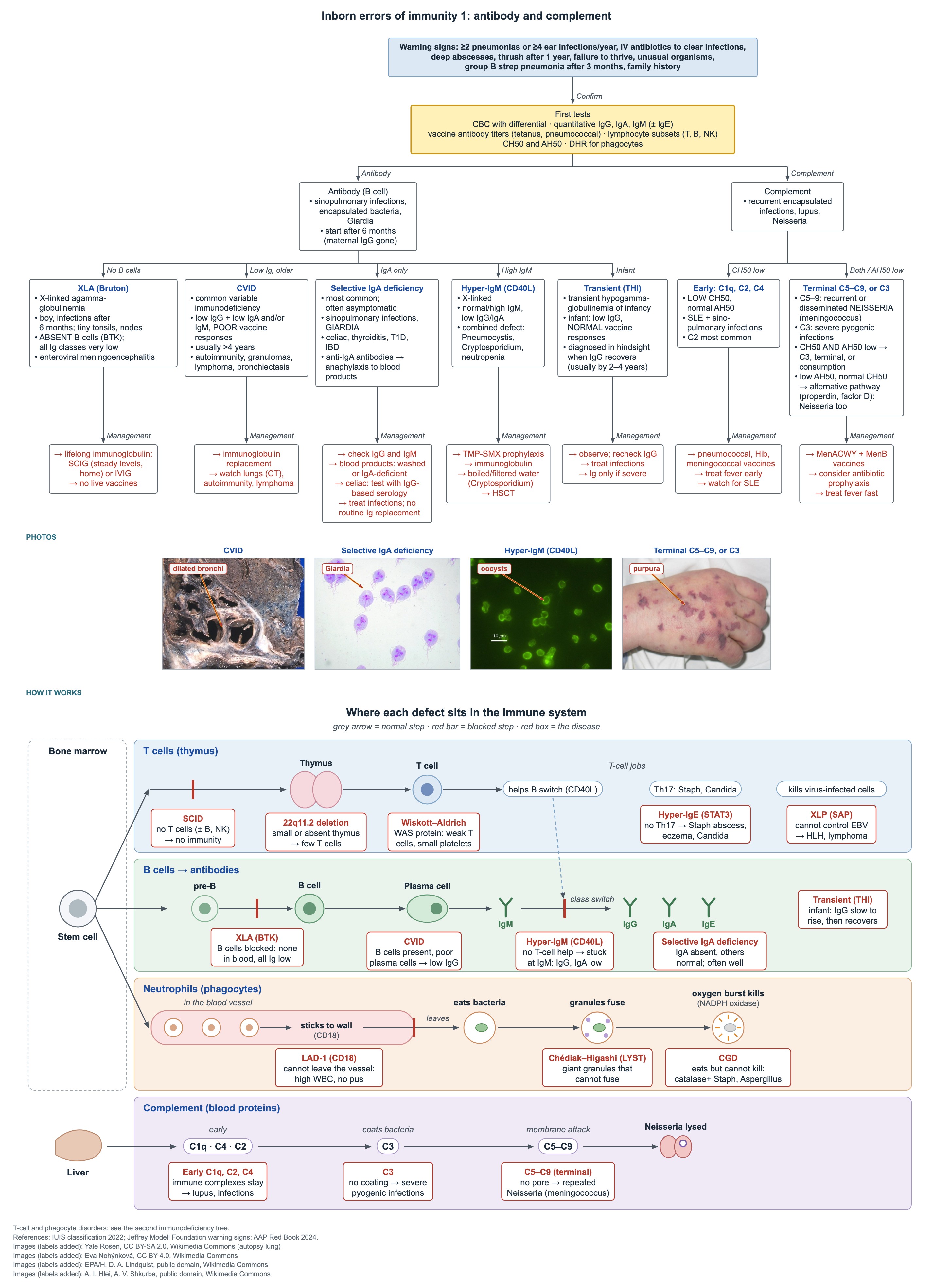
- First tests: CBC with differential, quantitative IgG, IgA, IgM, and vaccine titers (tetanus, diphtheria, pneumococcal).
- Under about 6 months, total IgG mostly reflects maternal IgG and cannot rule out an antibody defect.
- XLA: boys, absent B cells, all immunoglobulins very low, tiny tonsils; lifelong immunoglobulin replacement.
- CVID: low IgG plus low IgA and/or IgM with poor vaccine responses, usually after age 4 years.
- Selective IgA deficiency: anti-IgA antibodies can cause anaphylaxis to blood products; give washed or IgA-deficient products.
- Hyper-IgM (CD40L): low IgG and IgA, normal or high IgM, Pneumocystis risk → TMP-SMX prophylaxis.
- Transient hypogammaglobulinemia of infancy is diagnosed only in hindsight, once IgG recovers.
When to suspect an antibody defect and what to order
- Warning signs: 2 or more pneumonias or 4 or more ear infections a year, IV antibiotics to clear infections, deep abscesses, failure to thrive, unusual organisms, family history.
- First tests: CBC with differential and quantitative IgG, IgA and IgM, compared with age-specific normal ranges.
- Beyond levels: vaccine antibody titers to tetanus, diphtheria and pneumococcus test whether the B cells actually work.
- Add lymphocyte subsets (T, B, NK cells) when levels are low; CH50 and AH50 for complement; DHR for phagocytes.
Why IgG misleads in young infants
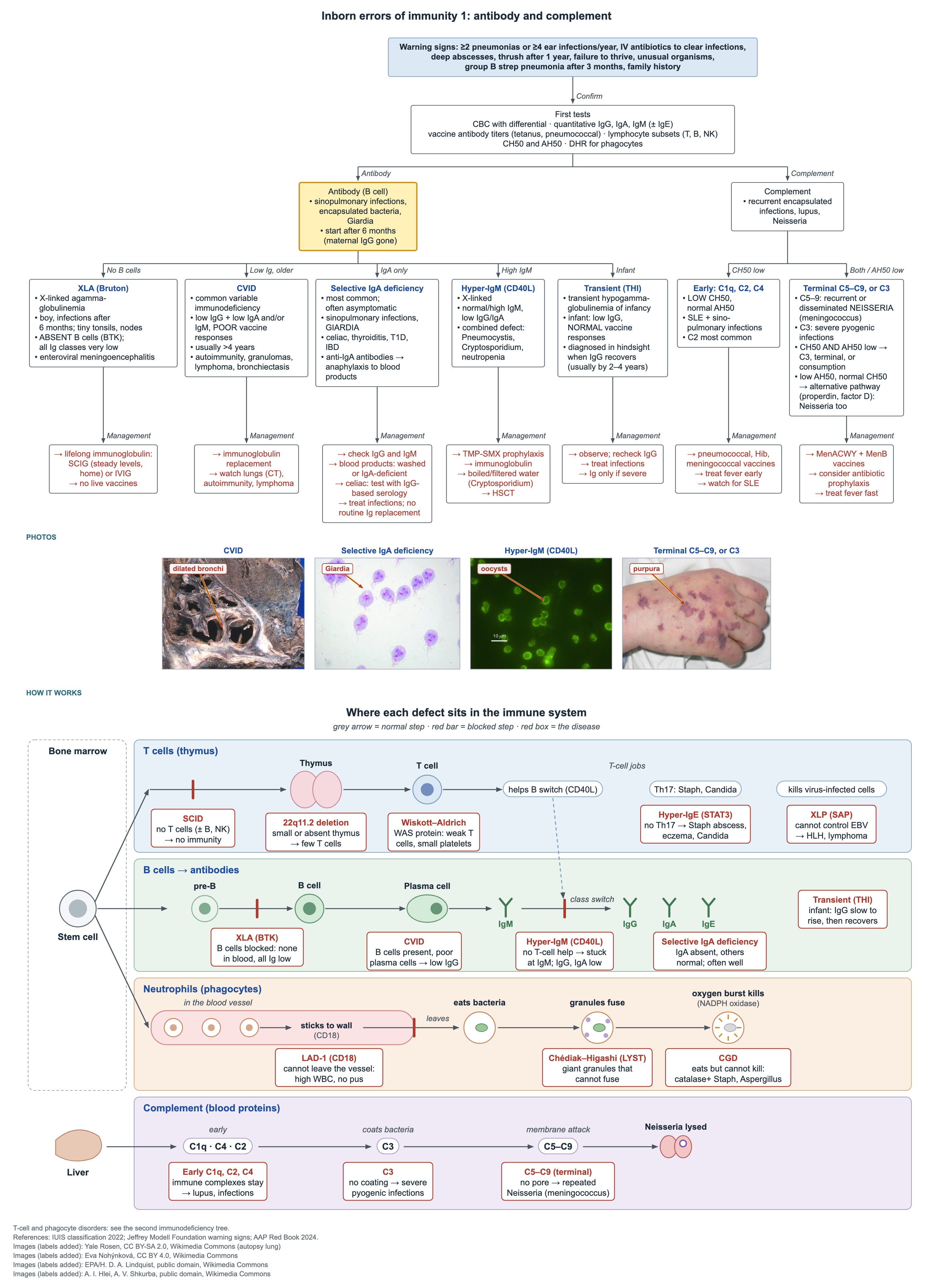
Maternal IgG crosses the placenta and protects the baby for the first months. In a 6-week-old with a severe infection, a normal total IgG mostly reflects the mother's antibody, so it neither proves nor excludes an antibody defect.
This is why most antibody deficiencies present after about 6 months of age, and why B-cell counts and genetic tests are more useful early.
X-linked agammaglobulinemia (Bruton)
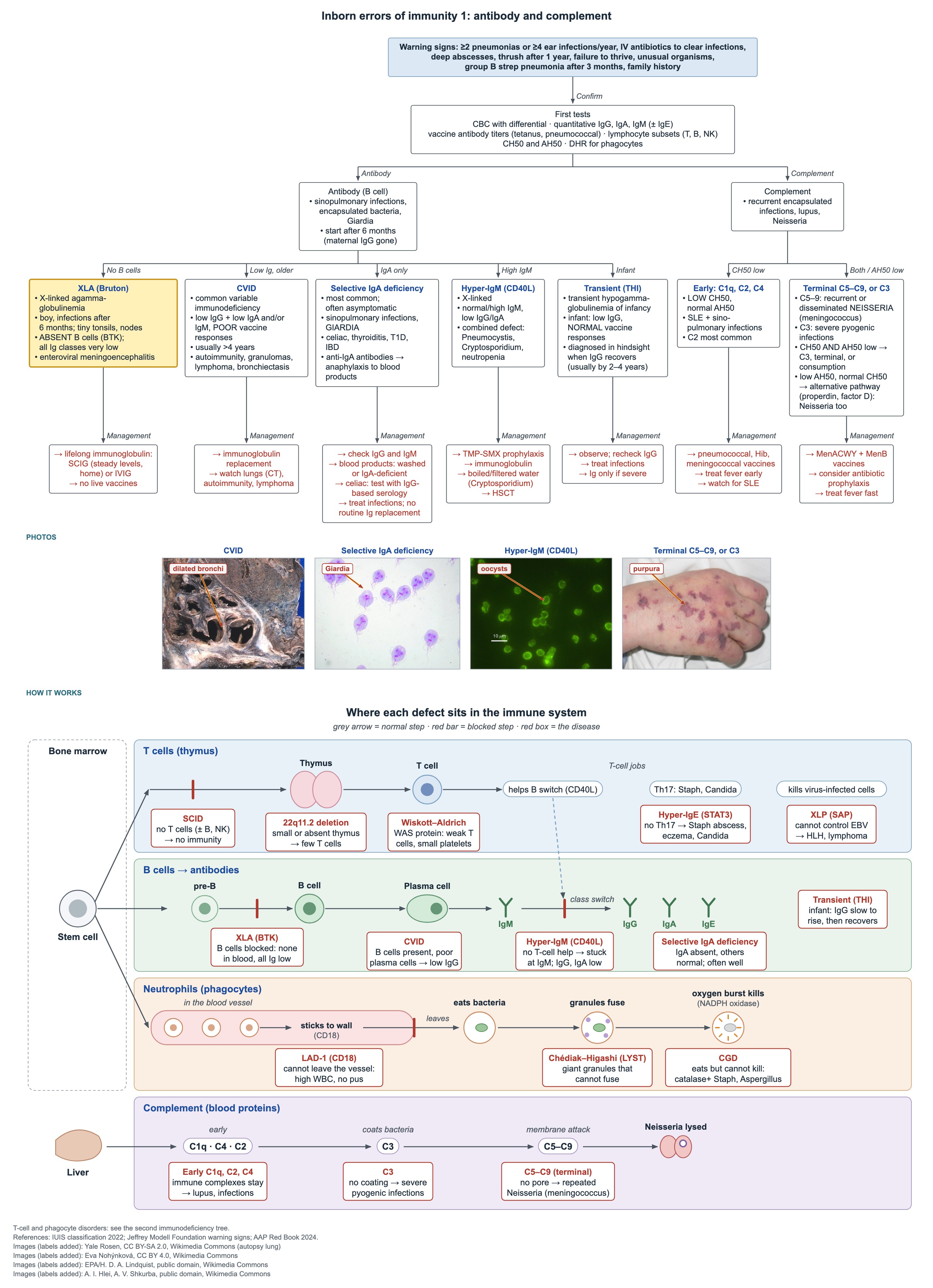
- BTK gene defect blocks B-cell development: B cells are nearly absent and all immunoglobulin classes are very low.
- Boys with infections starting after 6 months: otitis, sinusitis, pneumonia with encapsulated bacteria.
- Clue on exam: very small or absent tonsils and lymph nodes.
- Feared viral infection: chronic enteroviral meningoencephalitis.
- Treatment: lifelong immunoglobulin replacement, IV or subcutaneous, at doses that keep trough IgG in range; no live vaccines.
Common variable immunodeficiency (CVID)
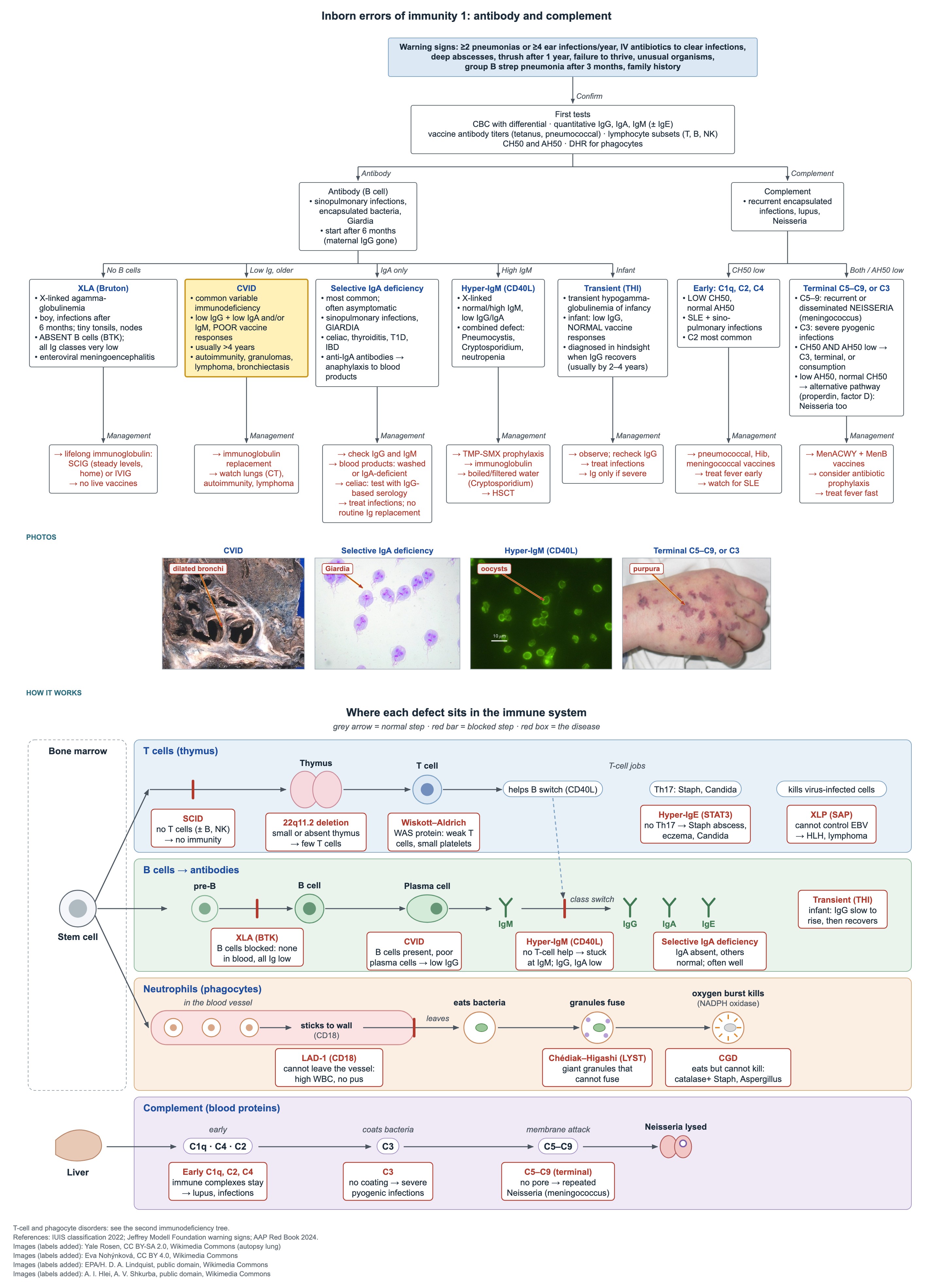
CVID shows low IgG plus low IgA and/or IgM, poor vaccine responses and normal or low B cells. It is usually diagnosed after age 4 years, often in teens or adults, after recurrent sinus and lung infections.
Treatment is immunoglobulin replacement, IV or subcutaneous, under specialist care. Watch the lungs for bronchiectasis and watch for autoimmunity, granulomas and lymphoma.
Selective IgA deficiency
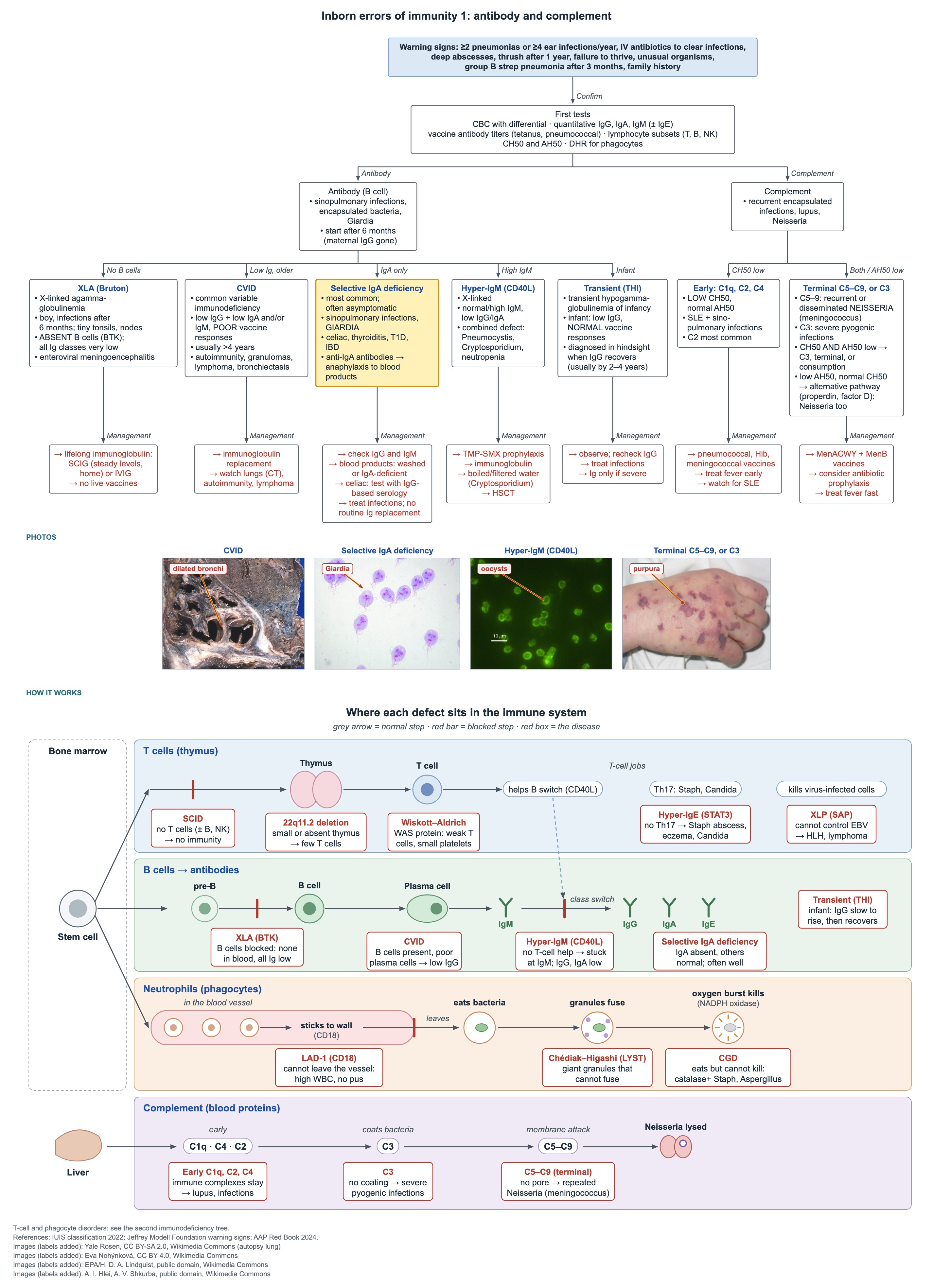
- The most common primary immunodeficiency; most children have no symptoms.
- Diagnosis needs a very low IgA (under 7 mg/dL) with normal IgG and IgM in a child 4 years or older.
- Low IgA confirmed on repeat → check IgG and IgM to rule out CVID.
- Infections: sinus and lung infections, and Giardia gut infection.
- Linked autoimmune disease: celiac disease, autoimmune thyroiditis, type 1 diabetes and inflammatory bowel disease.
- Celiac screening: IgA tTG is falsely negative; use IgG-based serology.
- Anaphylaxis to a transfusion plus recurrent infections → check quantitative immunoglobulins for IgA deficiency.
IgA deficiency and blood products
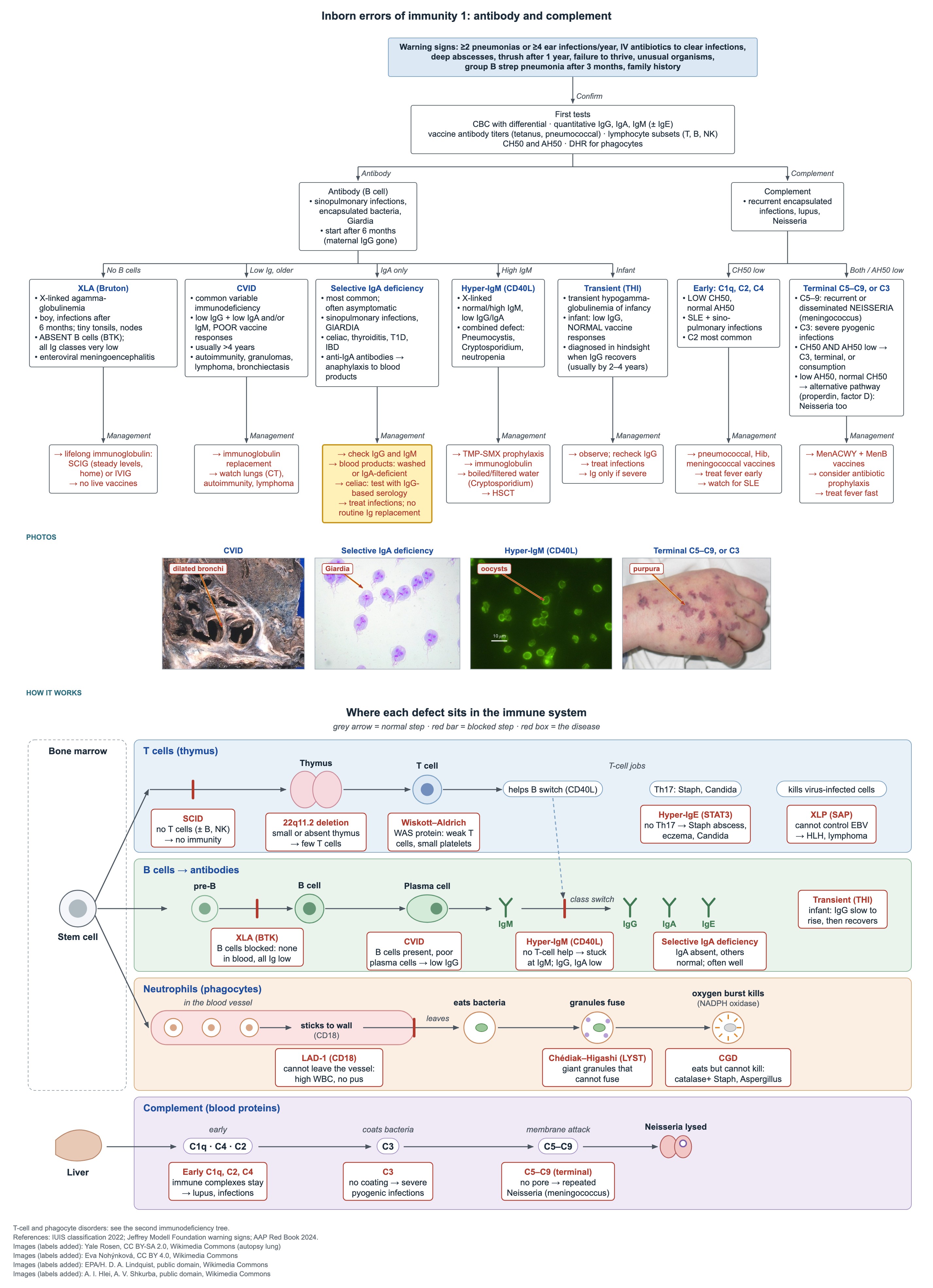
Some patients make anti-IgA antibodies. IgA in donor plasma can then trigger anaphylaxis.
When transfusion is needed, use washed red cells or products from IgA-deficient donors. Routine immunoglobulin replacement is not used; treat infections as they occur.
Hyper-IgM syndrome and transient hypogammaglobulinemia
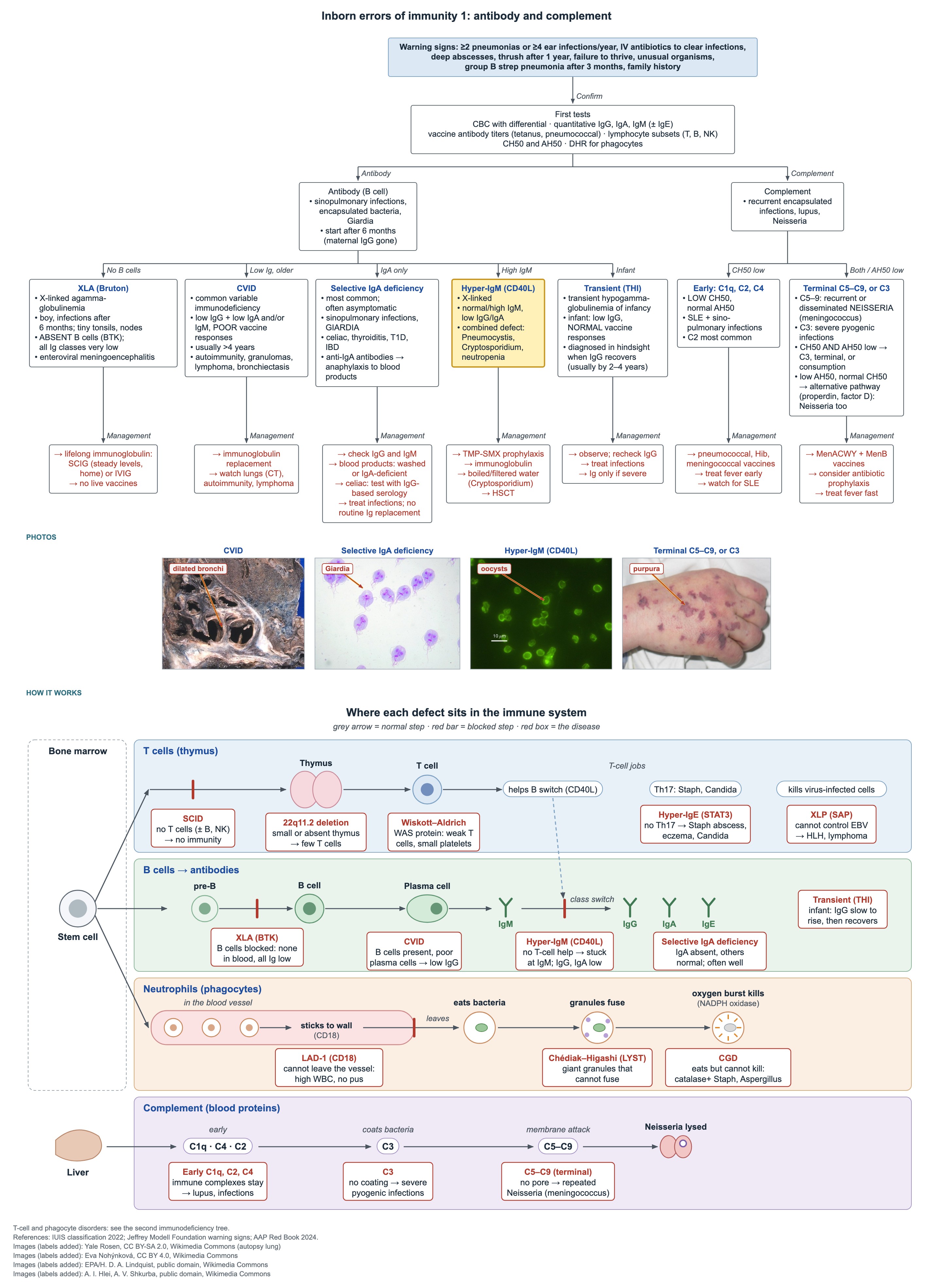
| X-linked hyper-IgM (CD40L) | Transient hypogammaglobulinemia of infancy | |
|---|---|---|
| Immunoglobulins | Low IgG and IgA; normal or high IgM | Low IgG for age; vaccine responses normal |
| Mechanism | No T-cell help for class switching: a combined defect | Slow rise of the infant's own IgG |
| Infections | Pneumocystis, Cryptosporidium (liver and bile duct disease), neutropenia | Mild, usually sinopulmonary |
| Management | TMP-SMX prophylaxis, immunoglobulin, boiled or filtered water, stem cell transplant | Observe, recheck IgG, treat infections; immunoglobulin only in selected severe cases |
| Outcome | Lifelong without transplant | IgG recovers, usually by 2–4 years; diagnosis is confirmed only then |
Common questions
What tests check for antibody deficiency in a child?
Quantitative IgG, IgA and IgM with age-based ranges, a CBC, and vaccine titers to tetanus, diphtheria and pneumococcus. B-cell counts are added when levels are low.
Is IgA deficiency serious?
Most children have no symptoms. Some get sinus, lung or Giardia infections, autoimmune disease such as celiac disease, or reactions to blood products.
What is the difference between XLA and CVID?
XLA starts in infancy in boys and has almost no B cells. CVID usually starts after age 4 years, B cells are present, and the problem is poor antibody production and vaccine response.
Study this topic
Sources
- 2025 Inborn errors of immunity practice parameter, Joint Task Force on Practice Parameters (Ann Allergy Asthma Immunol)
- Immune Deficiency Foundation: Primary immunodeficiency information for clinicians
Written for Pedemy in our own words from the sources above; checked November 2026. For education only, not medical advice; check doses and local protocols before treating a patient. Pedemy is independent and not affiliated with or endorsed by the organizations cited.