

Main decision tree
Inborn errors of immunity 2: T cells and phagocytes
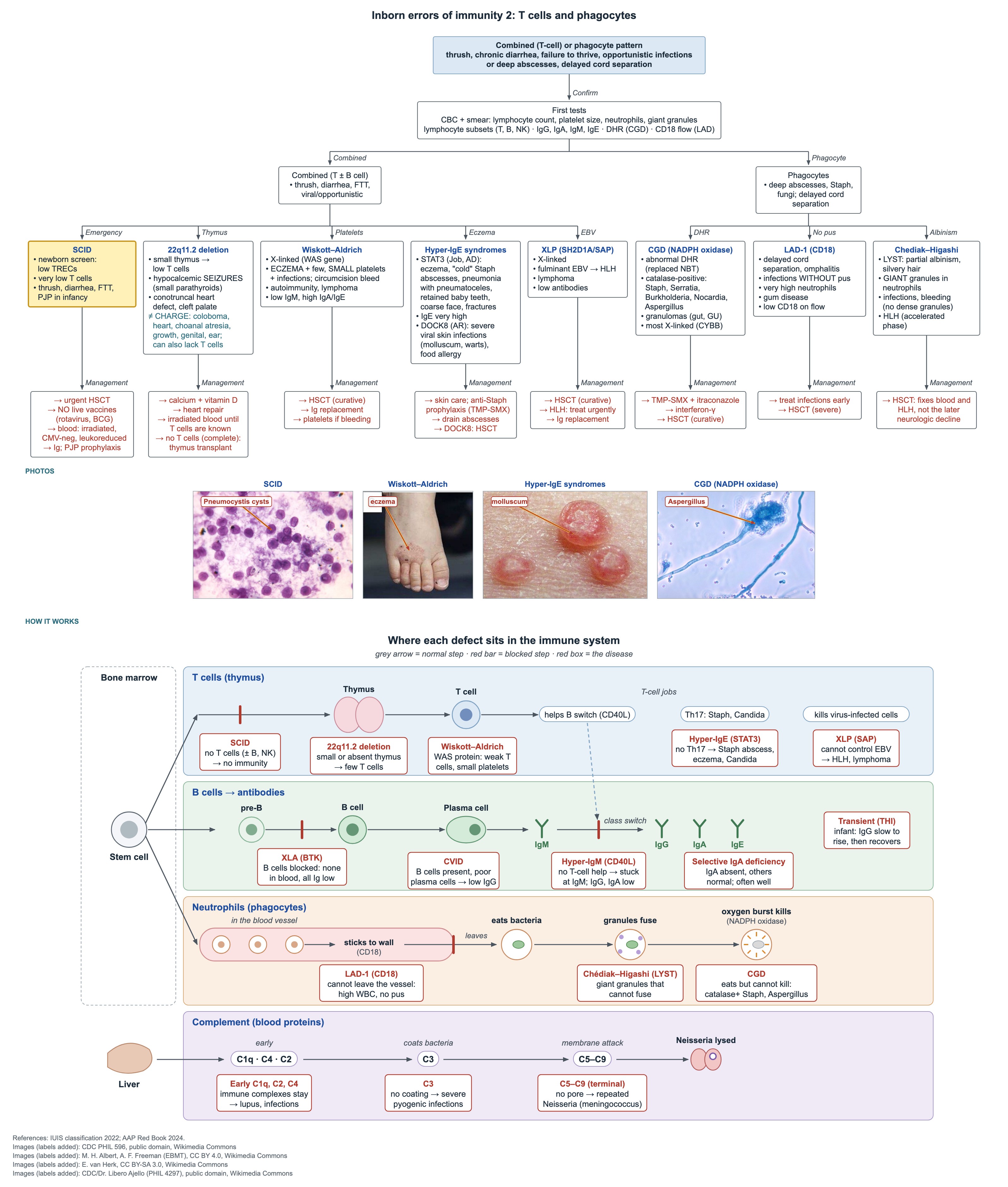
Key points
- SCID: persistent thrush, chronic diarrhea, failure to thrive and severe or opportunistic infections in infancy.
- Newborn screening finds SCID by low T-cell receptor excision circles (TRECs).
- Suspected SCID: no live vaccines (rotavirus, BCG); irradiated, CMV-negative, leukoreduced blood; urgent transplant referral.
- 22q11.2 deletion: conotruncal heart defect, cleft palate, hypocalcemia from hypoparathyroidism, T-cell lymphopenia; confirm with chromosomal microarray.
- Wiskott–Aldrich: eczema, infections and thrombocytopenia with SMALL platelets; low IgM, high IgA and IgE.
- STAT3 hyper-IgE: eczema, cold Staph aureus abscesses, pneumatoceles, retained primary teeth, very high IgE.
- XLP1 (SAP): fulminant EBV infection, HLH and lymphoma.
Severe combined immunodeficiency (SCID)
SCID is an immune emergency. Infants have persistent thrush, chronic diarrhea, growth failure and severe or opportunistic infections such as Pneumocystis pneumonia in the first months.
Every US state screens newborns for SCID by measuring TRECs, DNA circles made by new T cells leaving the thymus. A low TREC result needs urgent lymphocyte subsets and immunology review.
- Hold all live vaccines, including rotavirus and BCG, until immune evaluation is complete.
- Blood products: irradiated, CMV-negative and leukoreduced, coordinated with the blood bank.
- Start Pneumocystis prophylaxis and immunoglobulin replacement; avoid exposure to sick contacts.
- Definitive treatment: hematopoietic stem cell transplant, best before infections take hold.
22q11.2 deletion (DiGeorge) and CHARGE
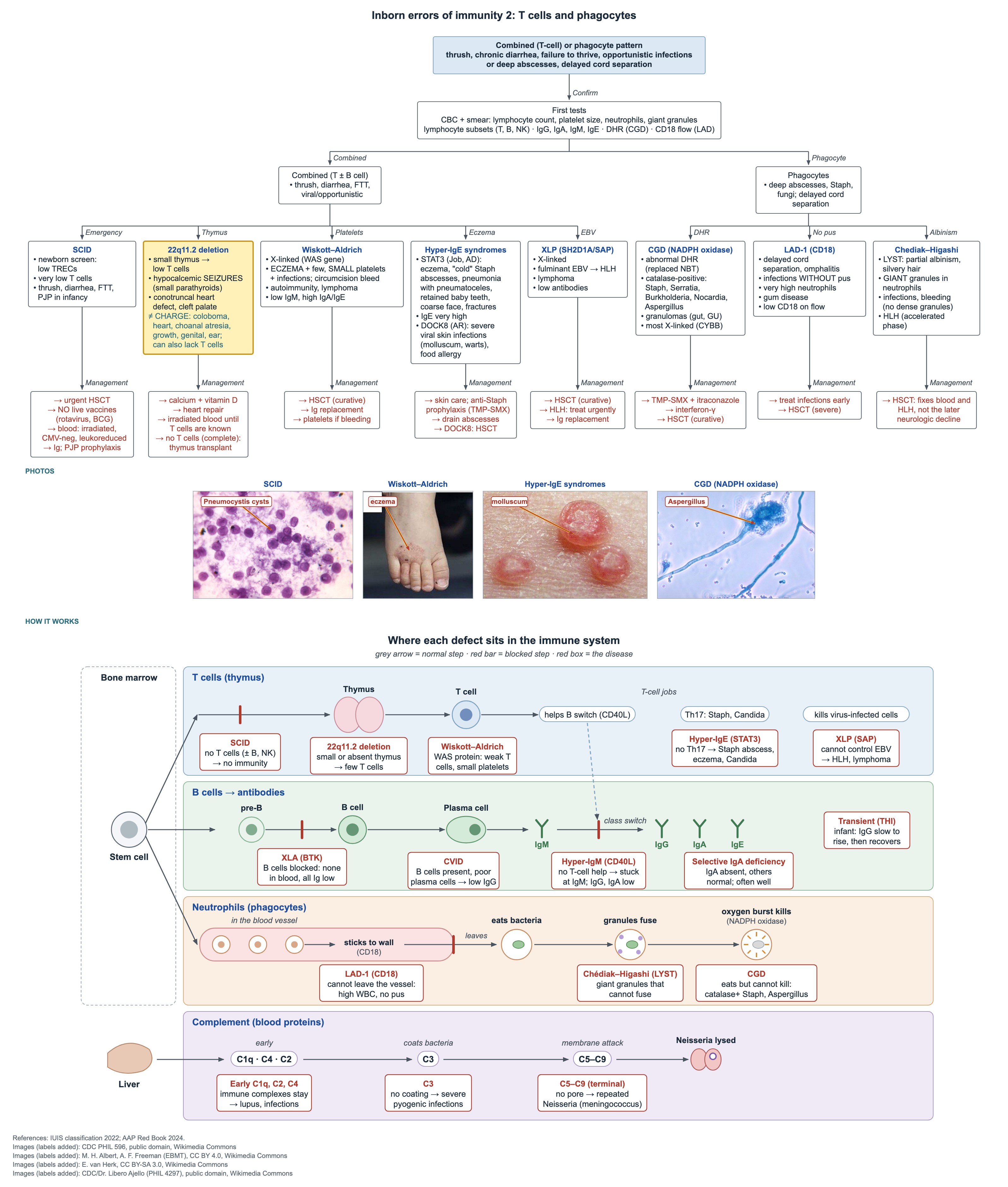
- Features: conotruncal heart defect (tetralogy of Fallot, truncus arteriosus, interrupted aortic arch), cleft palate, low-set ears, hypocalcemia, low T cells.
- Immune defect: thymic hypoplasia or aplasia → T-cell lymphopenia; most children have mild defects that improve.
- Early danger: hypocalcemic seizures from parathyroid hypoplasia; low calcium prolongs the QT interval.
- Treat with calcium and vitamin D; use irradiated blood until T cells are known to be adequate.
- Complete DiGeorge (no T cells) needs thymus transplant.
- CHARGE syndrome (coloboma, heart defect, choanal atresia, growth restriction, genital hypoplasia, ear anomalies) can also cause severe T-cell lymphopenia.
Confirming 22q11.2 deletion
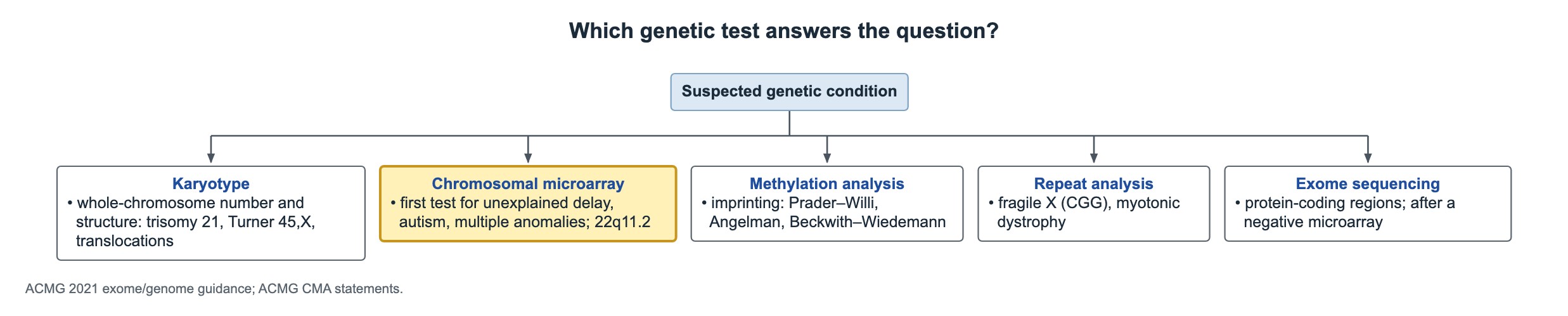
Chromosomal microarray is the confirmatory test for suspected 22q11.2 deletion. A routine karyotype misses this small deletion.
Hypocalcemia in these infants comes from hypoparathyroidism, so check calcium, PTH and an ECG early.
Wiskott–Aldrich syndrome
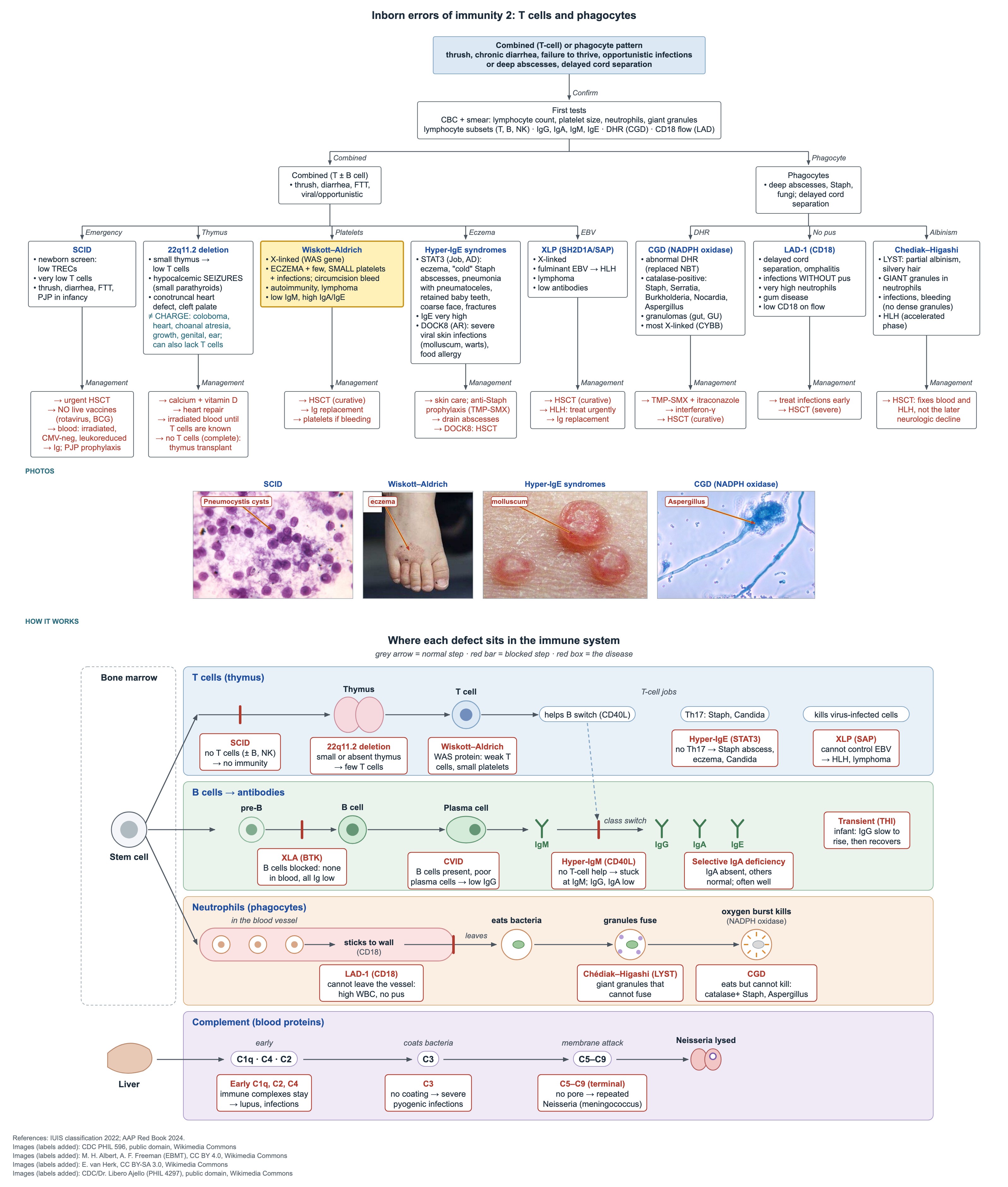
- X-linked (WAS gene): boys with the triad of recurrent infections, eczema and thrombocytopenia.
- Platelets are both few and SMALL; this separates WAS from immune thrombocytopenia, where platelets are large.
- Bleeding clue: prolonged bleeding after circumcision, bloody diarrhea, petechiae.
- Immunoglobulins: low IgM, high IgA and IgE.
- Later risks: autoimmunity and lymphoma.
- Treatment: stem cell transplant is curative; immunoglobulin replacement and platelets for bleeding meanwhile.
Hyper-IgE syndromes (STAT3 and DOCK8)
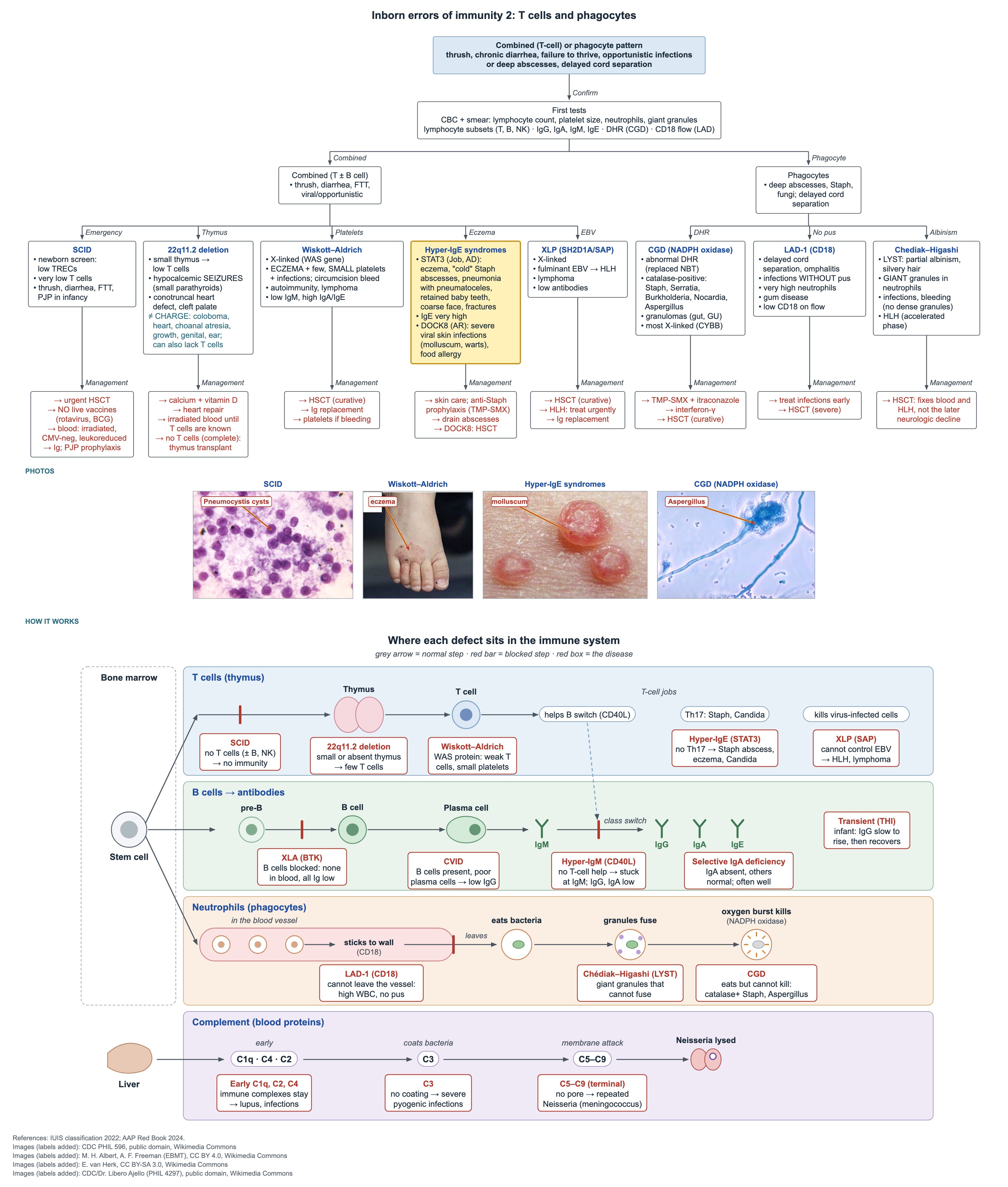
The defect in STAT3 blocks Th17 cells, which normally recruit neutrophils against Staph and Candida. Abscesses are 'cold' because they cause little redness or warmth.
| STAT3 (autosomal dominant, Job syndrome) | DOCK8 (autosomal recessive) | |
|---|---|---|
| Skin | Eczema; recurrent cold Staphylococcus aureus abscesses | Severe eczema; extensive viral skin infections (molluscum, warts, herpes) |
| Lungs and other | Pneumonia with pneumatoceles; retained primary teeth, coarse face, fractures, scoliosis | Prominent food allergy; high cancer risk |
| Labs | Very high IgE, eosinophilia | High IgE, eosinophilia, low T cells |
| Management | Skin care, anti-Staph prophylaxis (TMP-SMX), drain abscesses | Stem cell transplant |
CD40-ligand deficiency and X-linked lymphoproliferative disease
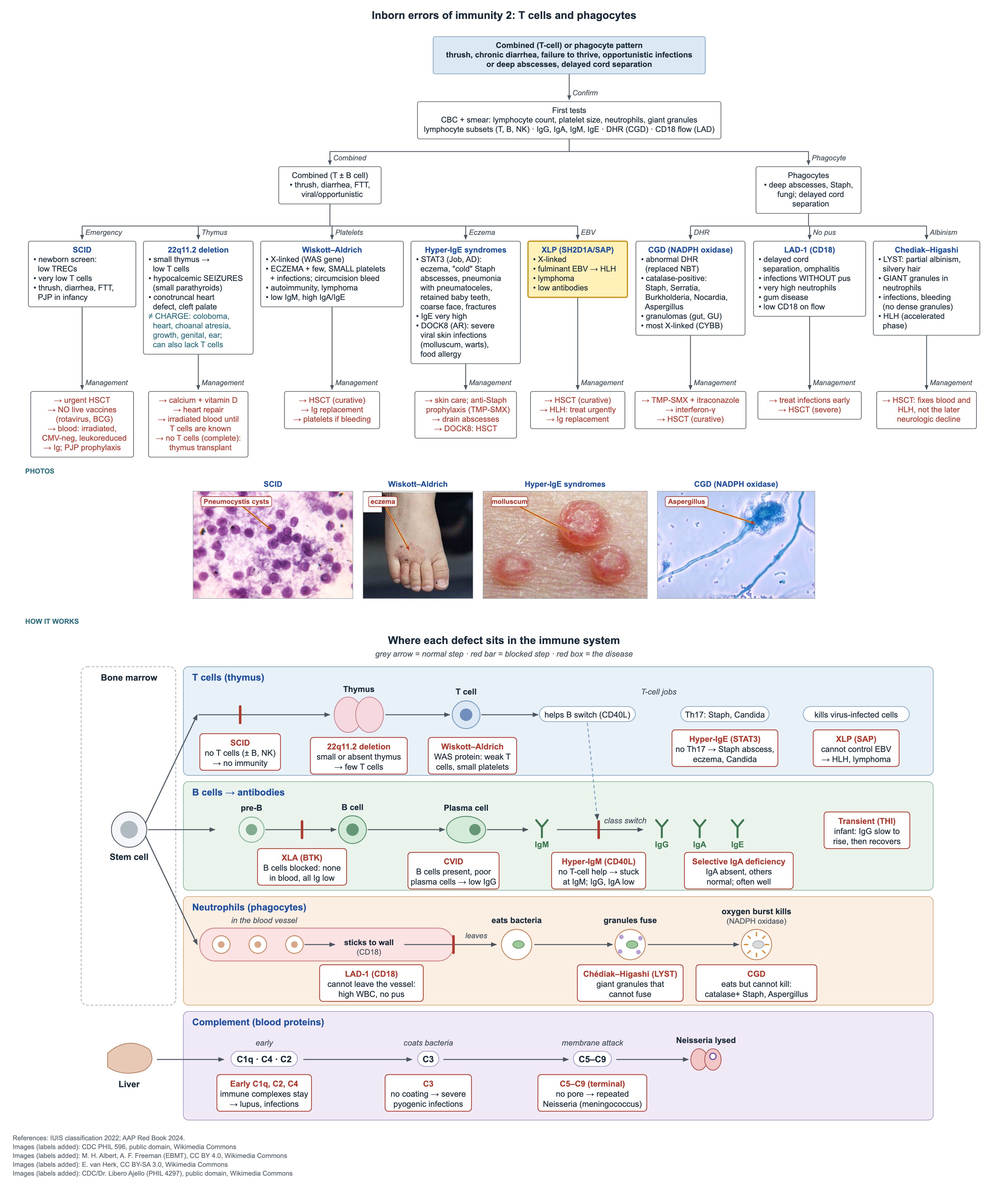
CD40-ligand deficiency (X-linked hyper-IgM) is a combined defect, not only a switching defect. T cells cannot signal through CD40 to B cells or macrophages, so children get Pneumocystis and Cryptosporidium infections as well as low IgG and IgA with normal or high IgM.
X-linked lymphoproliferative disease type 1 (SH2D1A/SAP deficiency) leaves boys unable to control Epstein–Barr virus. EBV infection can cause fulminant mononucleosis and hemophagocytic lymphohistiocytosis (HLH); survivors are at risk of lymphoma and low antibodies. Stem cell transplant is curative.
Common questions
How does the newborn screen detect SCID?
It measures T-cell receptor excision circles (TRECs) in the dried blood spot. Very low TRECs mean few new T cells and need urgent follow-up.
Can a baby with a positive SCID screen get the rotavirus vaccine?
No. Hold rotavirus and all other live vaccines until immunology has evaluated the infant.
Why are platelets small in Wiskott–Aldrich syndrome?
The WAS protein shapes the platelet skeleton; without it platelets are small and quickly destroyed, giving thrombocytopenia with a low mean platelet volume.
Study this topic
Sources
- 2025 Inborn errors of immunity practice parameter, Joint Task Force on Practice Parameters (Ann Allergy Asthma Immunol)
- Immune Deficiency Foundation: Primary immunodeficiency information
Written for Pedemy in our own words from the sources above; checked November 2026. For education only, not medical advice; check doses and local protocols before treating a patient. Pedemy is independent and not affiliated with or endorsed by the organizations cited.