

Main decision tree
Drug reaction: read the timing and the pattern
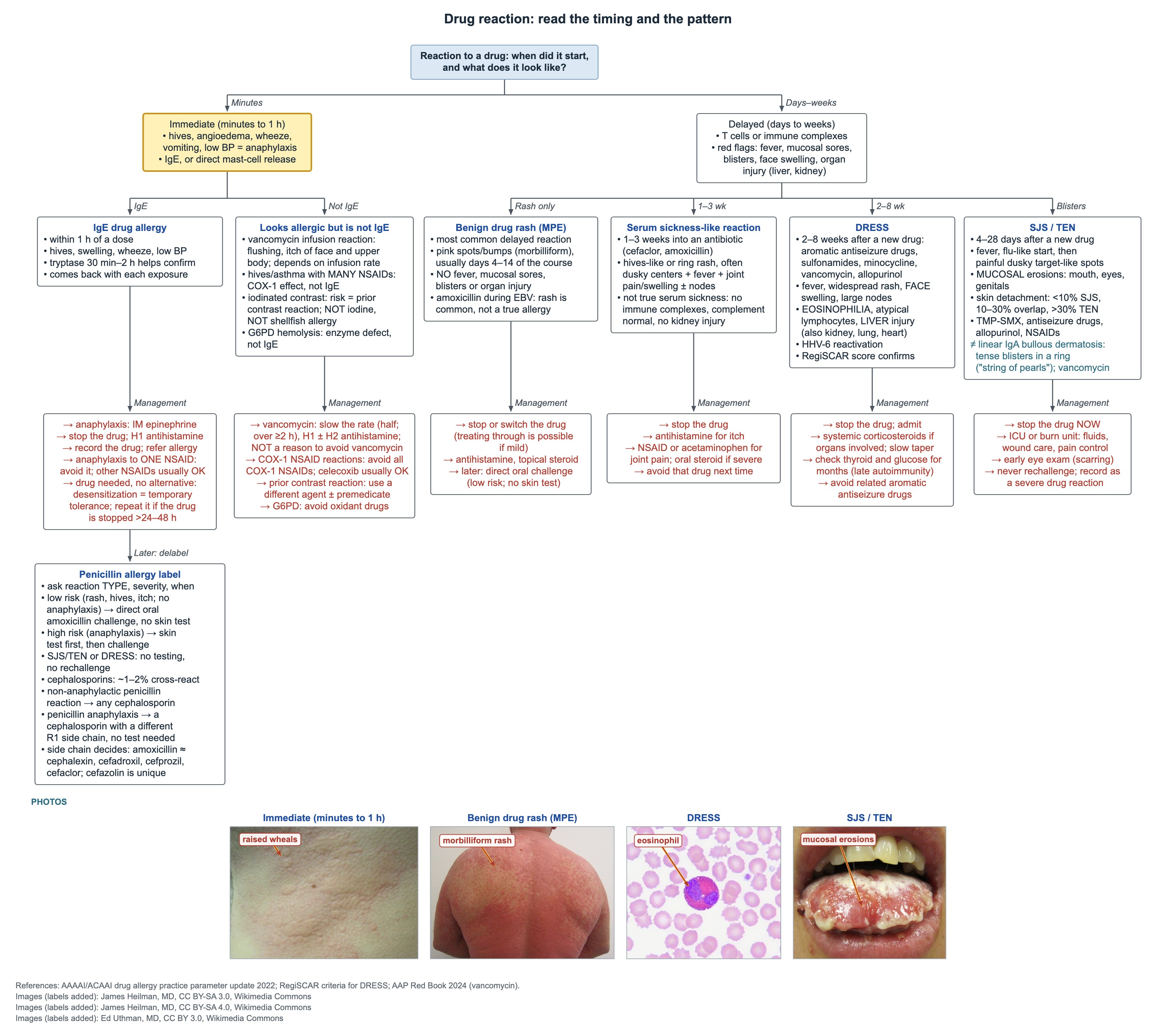
Key points
- Clarify any penicillin label: reaction type, severity and timing.
- Low-risk history (rash, hives or itch, no anaphylaxis) → direct oral amoxicillin challenge, no skin test.
- Penicillin anaphylaxis → skin testing first, then a supervised oral amoxicillin challenge if negative.
- Non-anaphylactic penicillin reaction → any cephalosporin can be given; after anaphylaxis choose a dissimilar R1 side chain (cefazolin).
- Serum sickness-like reaction: rash, fever, joint pain about 1–3 weeks into an antibiotic, with normal complement and no proteinuria.
- DRESS: 2–8 weeks after a new drug; fever, facial swelling, eosinophilia, liver injury, HHV-6 reactivation; stop drug, systemic steroids.
- Vancomycin flushing is an infusion reaction, not allergy: slow the rate and pretreat with an antihistamine.
Read the timing and the pattern
Immediate reactions start within about 1 hour of a dose: hives, angioedema, wheeze, vomiting or low blood pressure. They come from IgE or direct mast-cell release and treat like anaphylaxis when severe.
Delayed reactions start days to weeks later and are driven by T cells or immune complexes. Look for red flags: fever, mucosal sores, blisters, facial swelling or organ injury.
- When a drug is essential and no alternative exists, desensitization gives temporary tolerance.
- Tolerance lasts only while the drug is given regularly; if doses stop for more than 24–48 hours, desensitization must be repeated.
Penicillin labels, cross-reactivity and delabeling
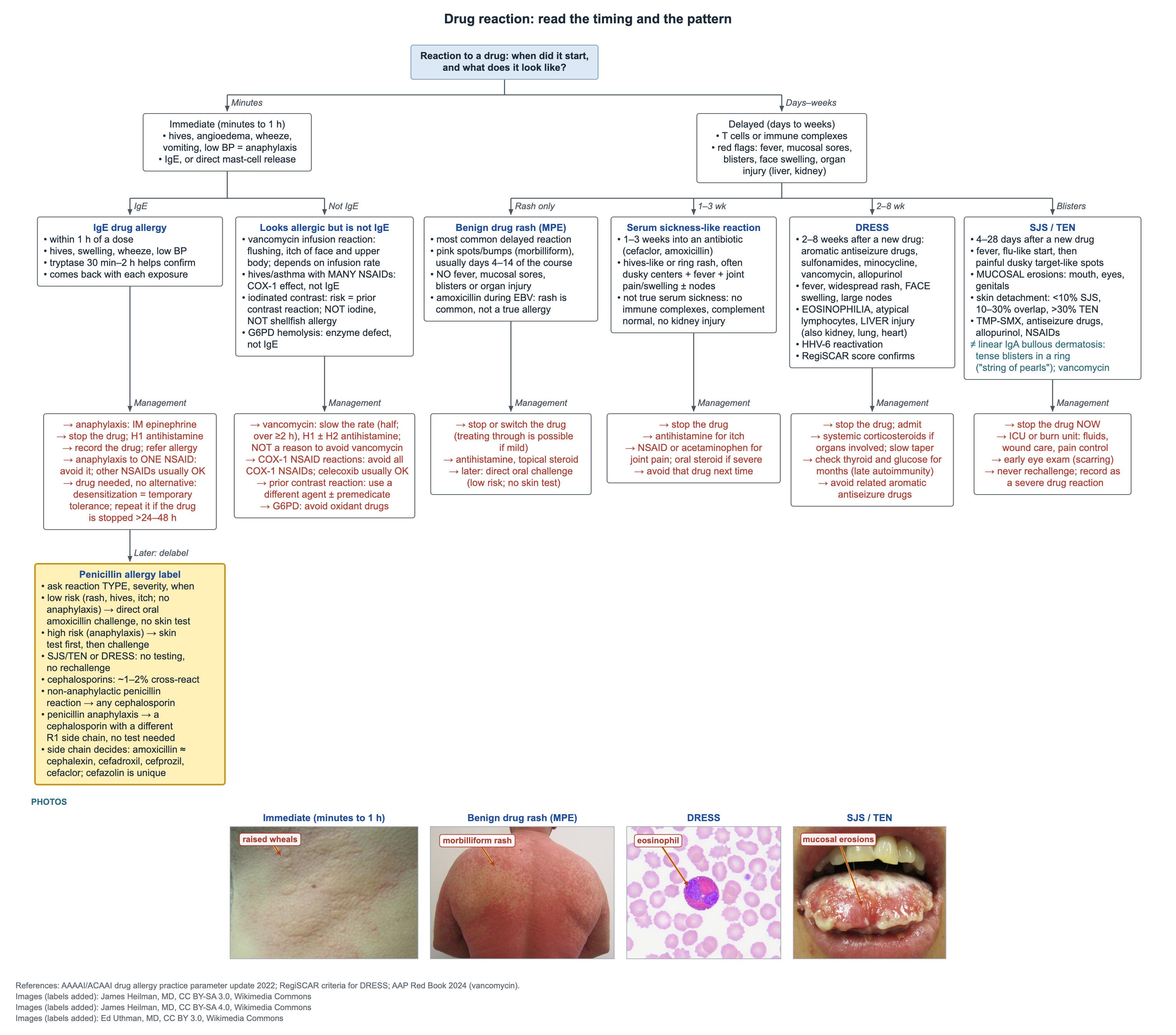
- First ask what happened, how severe it was and when.
- Low risk (remote rash, hives or itch, no anaphylaxis): a direct oral amoxicillin challenge removes the label; no skin test needed.
- High risk (anaphylaxis): penicillin skin testing first; if negative, a supervised oral amoxicillin challenge.
- SJS/TEN or DRESS to penicillin: no testing and no rechallenge.
- Penicillin–cephalosporin cross-reactivity is about 1–2% and is driven by similar R1 side chains, not the shared beta-lactam ring.
- Non-anaphylactic penicillin reaction: any cephalosporin can be given without special precautions.
- Penicillin anaphylaxis: choose a cephalosporin with a dissimilar R1 side chain, such as cefazolin, without testing.
- Amoxicillin shares its side chain with cephalexin, cefadroxil, cefprozil and cefaclor; cefazolin's side chain is unique.
- Carbapenems and aztreonam can be given to penicillin-allergic patients.
Reactions that look allergic but are not IgE
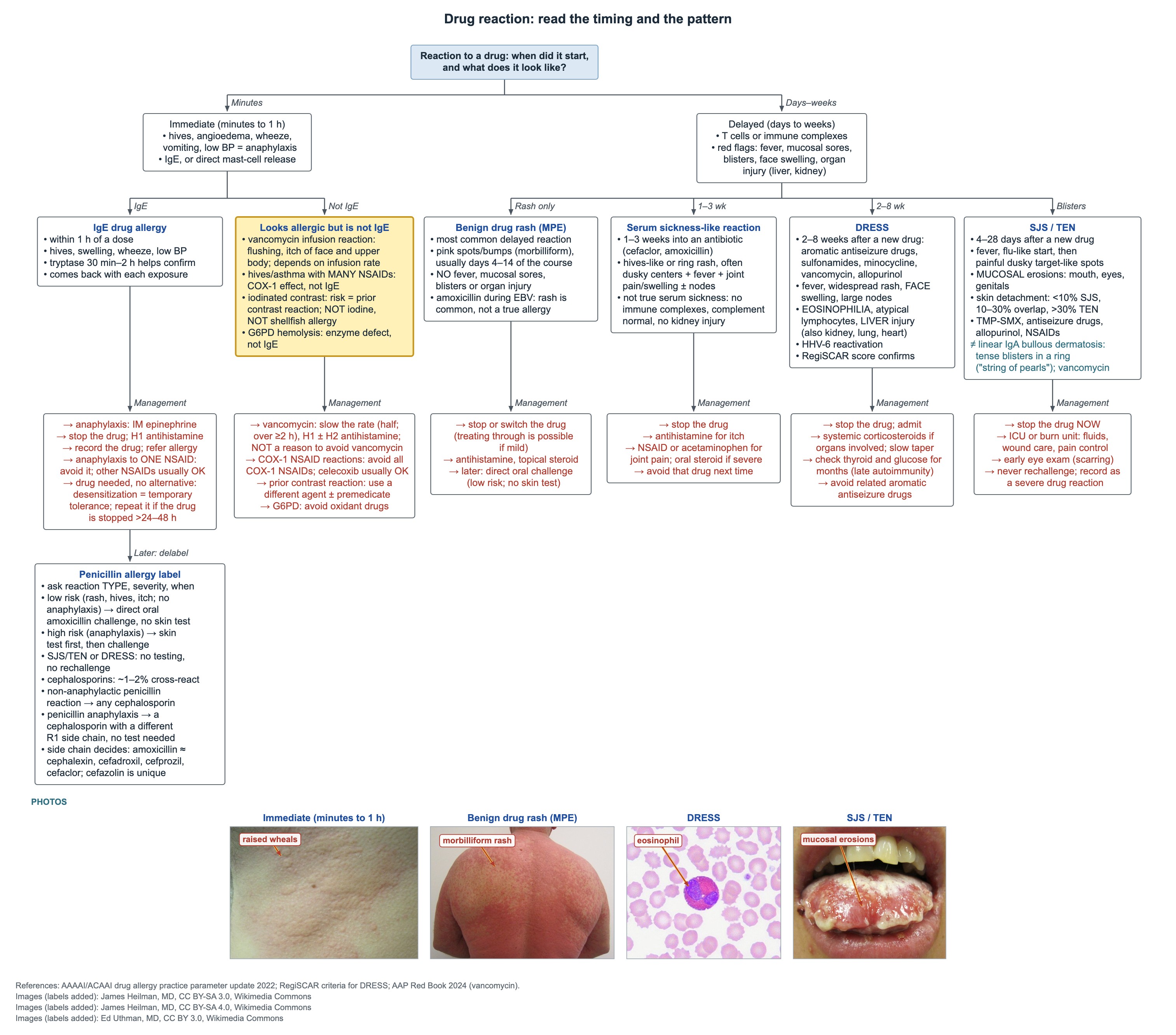
| Reaction | Key facts | What to do |
|---|---|---|
| Vancomycin infusion reaction | Flushing and itch of the face and upper body, sometimes low blood pressure; depends on the infusion rate | Slow the rate (often to half, over 2 hours or more) and give an H1 antihistamine; for the next dose, pretreat with diphenhydramine and infuse slowly. Not a reason to avoid vancomycin. |
| NSAID reactions | Anaphylaxis to one NSAID (for example ibuprofen) is drug-specific | Avoid that NSAID and structurally similar ones (naproxen and other propionic acids); unrelated NSAIDs are usually tolerated |
| Iodinated contrast | Main risk factor is a prior contrast reaction; shellfish or iodine allergy is not a risk | Use a different agent; premedicate in selected cases |
| G6PD hemolysis | Enzyme defect, not allergy | Avoid oxidant drugs |
Re-giving vancomycin after an infusion reaction
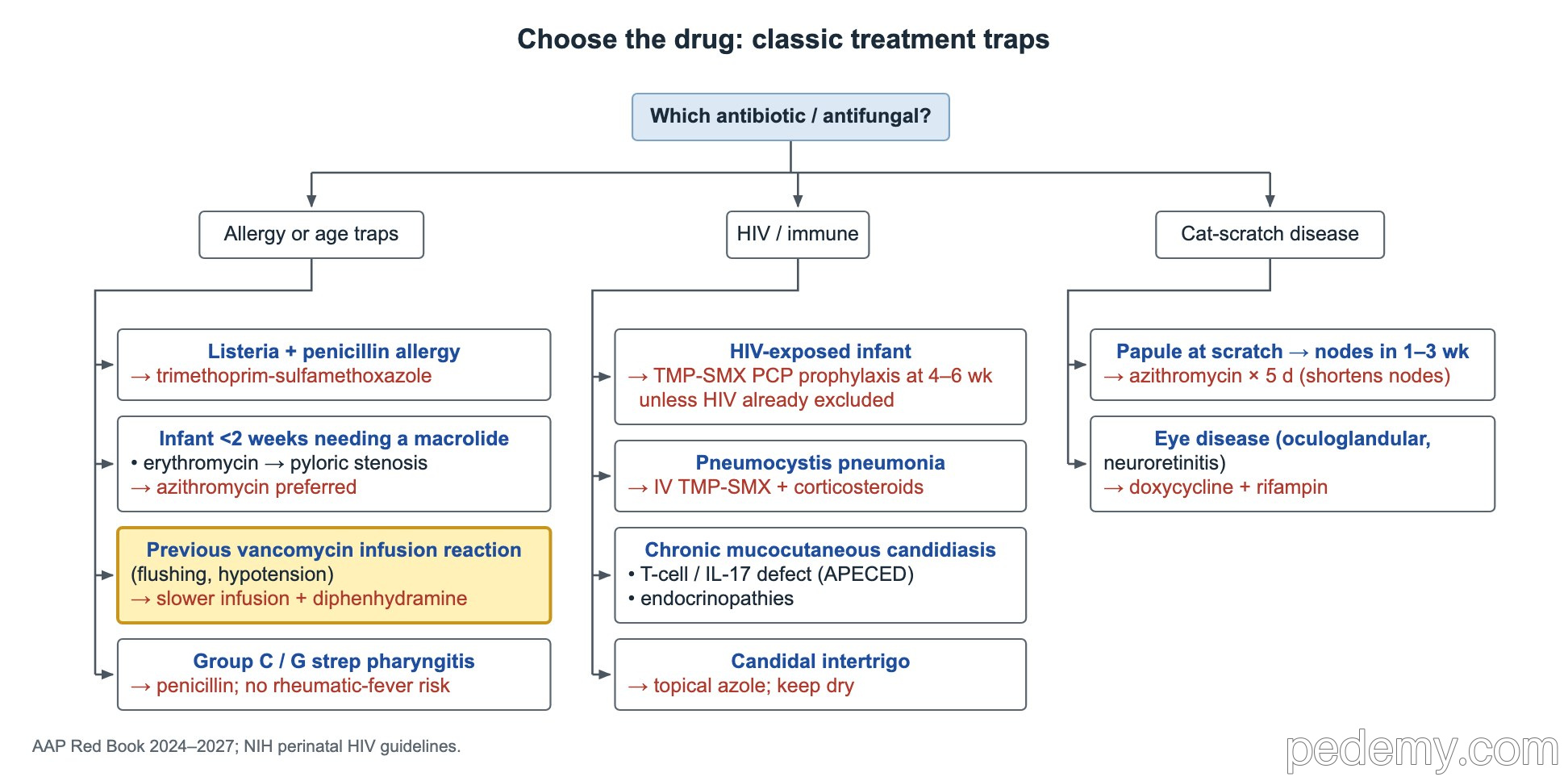
A child who had flushing and low blood pressure during a previous vancomycin infusion can usually receive it again. Pretreat with diphenhydramine and give the infusion more slowly.
Serum sickness-like reaction
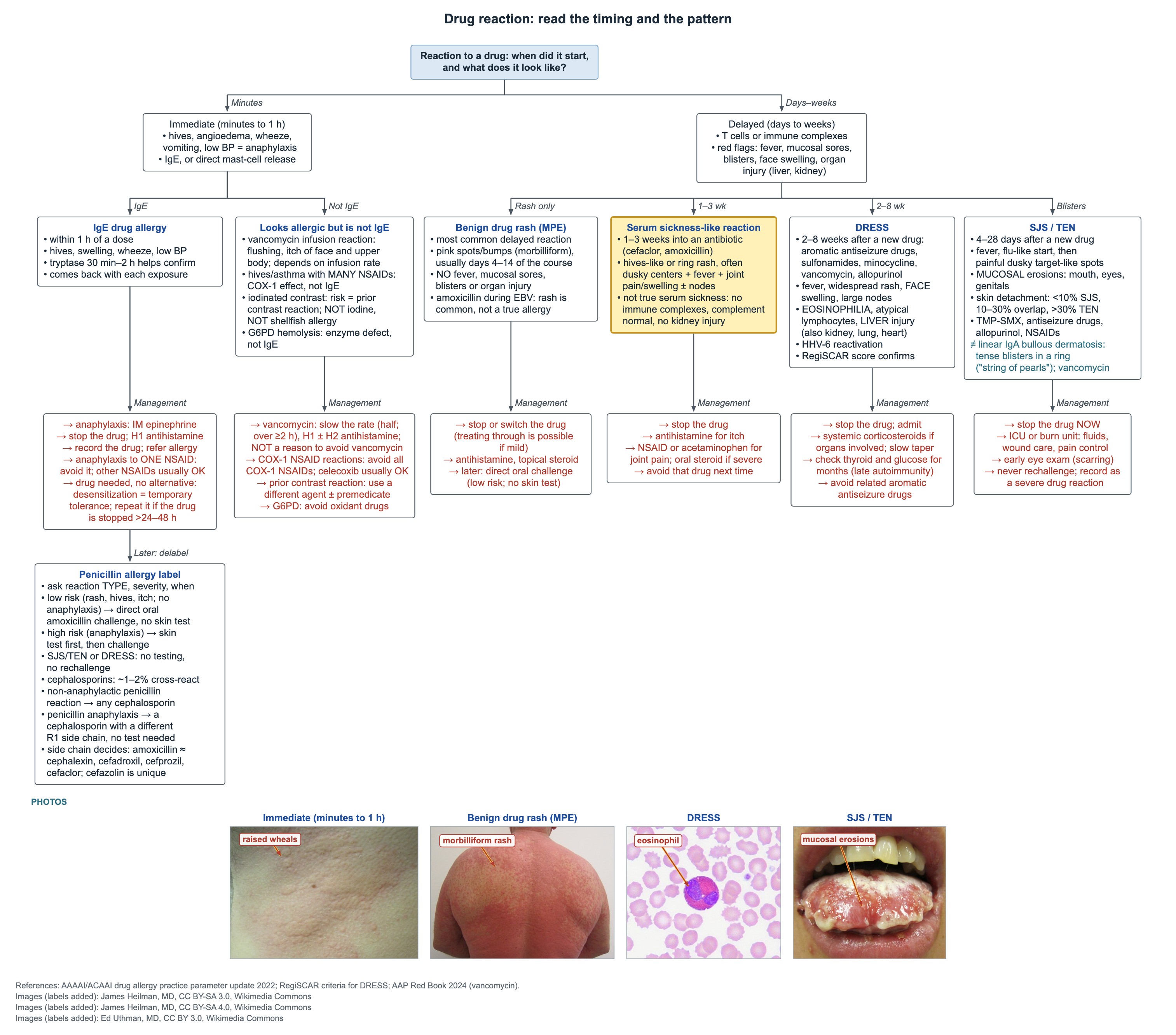
- Starts about 1–3 weeks into an antibiotic, classically cefaclor or amoxicillin.
- Hive-like or ring-shaped rash, often with dusky centers, plus fever, joint pain or swelling and lymphadenopathy.
- Not true serum sickness: complement is normal and there is no significant proteinuria or kidney injury. If those are present, look for true serum sickness or another systemic disease.
- Stop the drug; antihistamine for itch; acetaminophen or an NSAID for pain and fever; oral steroid only if severe.
- Avoid that drug next time.
DRESS
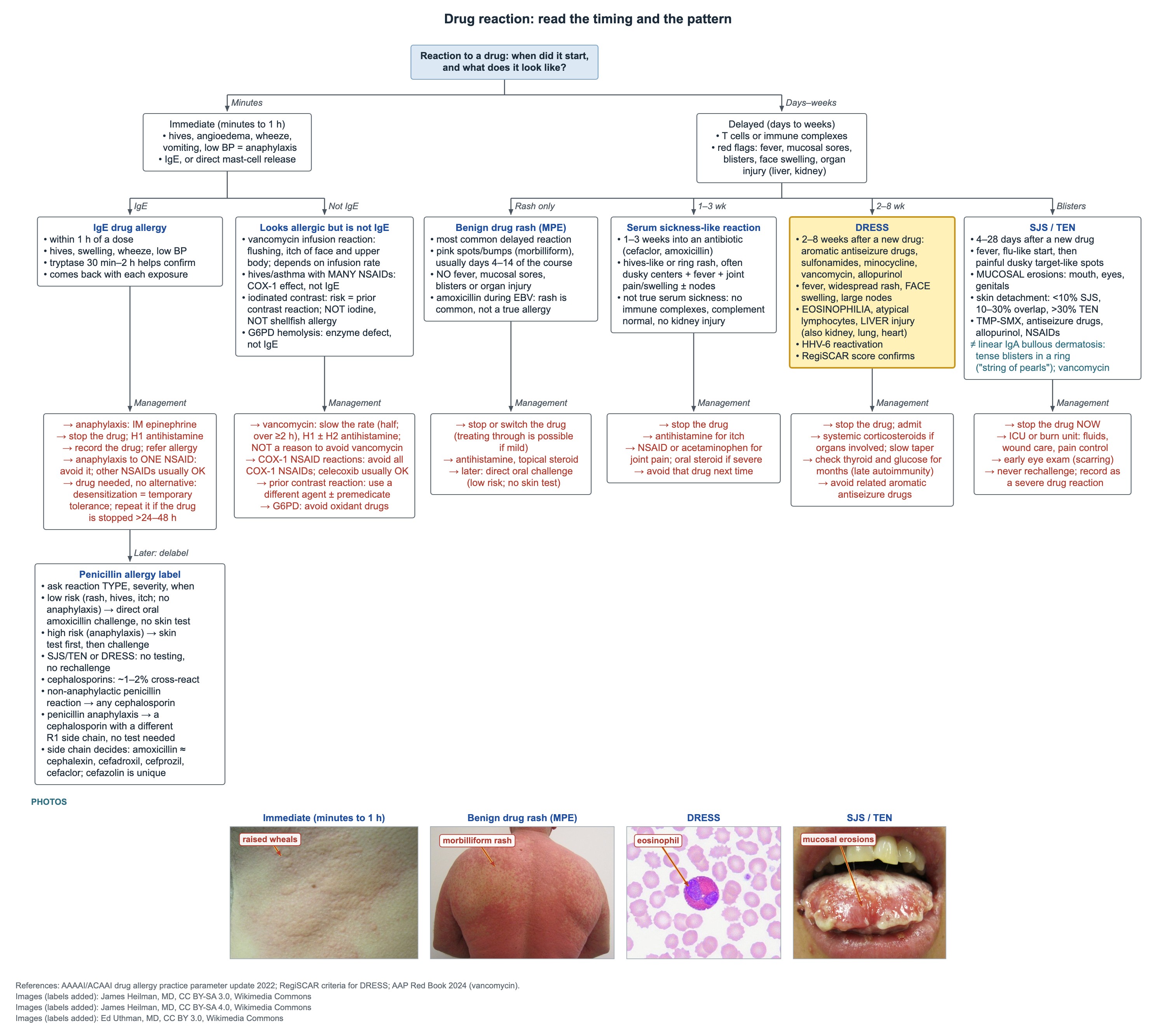
- Onset 2–8 weeks after a new drug: aromatic antiseizure drugs (lamotrigine, carbamazepine, phenytoin), sulfonamides, minocycline, vancomycin, allopurinol.
- Fever, widespread rash, facial swelling, large lymph nodes, eosinophilia, atypical lymphocytes and liver injury; kidney, lung or heart can be involved.
- Human herpesvirus 6 (HHV-6) reactivation is typical; the RegiSCAR score supports the diagnosis.
- Treatment: stop the drug and admit; systemic corticosteroids (such as oral prednisone) when organs are involved, with a slow taper.
- Check thyroid function and glucose for months afterward: autoimmune disease can appear late.
SJS/TEN, linear IgA dermatosis and fixed drug eruption
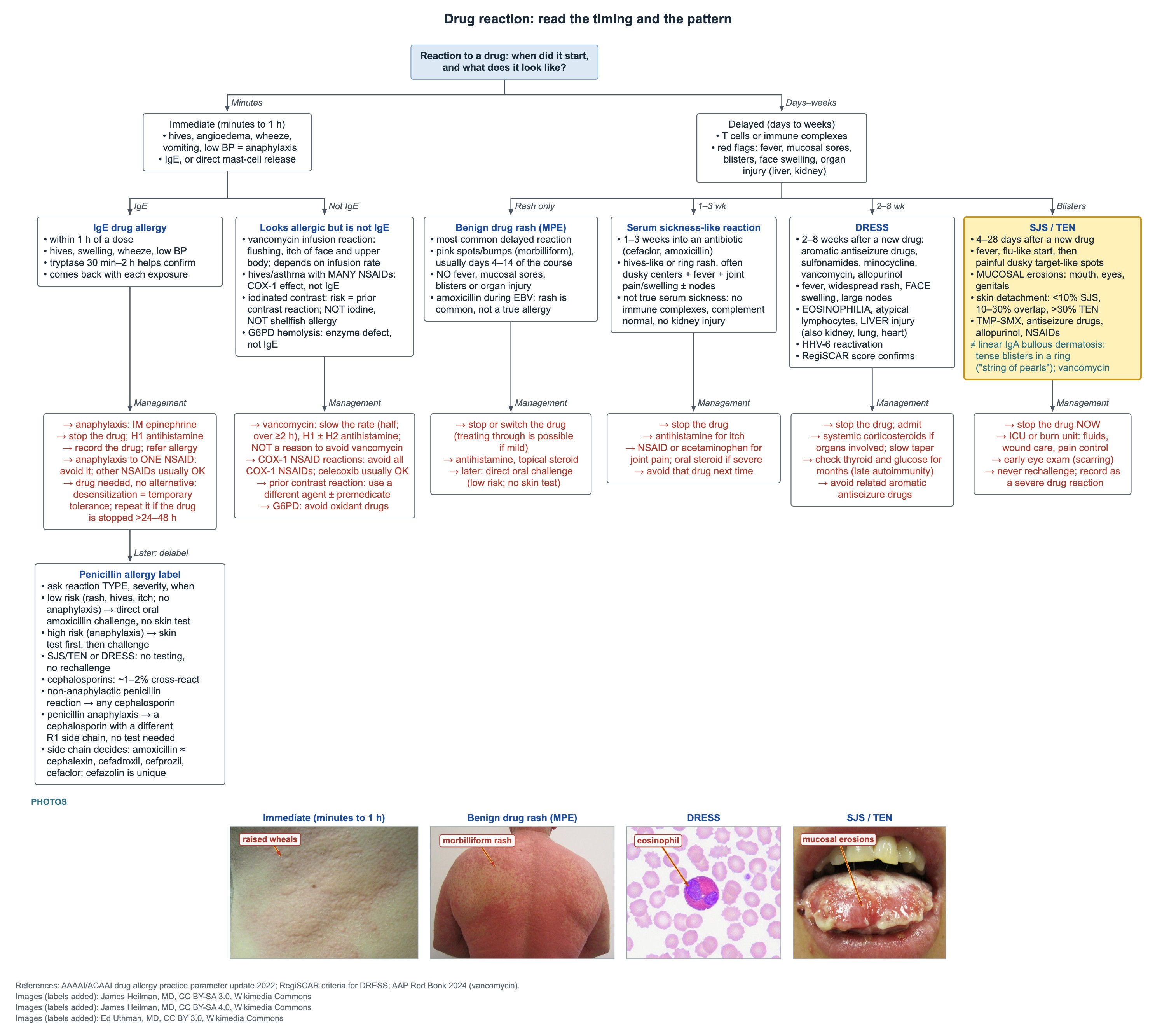
- SJS/TEN: 4–28 days after a new drug; flu-like start, then painful dusky target-like spots and mucosal erosions of the mouth, eyes and genitals.
- Skin detachment: under 10% SJS, 10–30% overlap, over 30% TEN. Common causes: TMP-SMX, antiseizure drugs, allopurinol, NSAIDs.
- Management: stop the drug now, ICU or burn-unit care, early eye exam; never rechallenge.
- Linear IgA bullous dermatosis: tense blisters in a ring ('string of pearls') with linear IgA on biopsy; vancomycin is the classic drug.
- Fixed drug eruption: a dusky violet patch that recurs at the same spot with each dose; TMP-SMX is the commonest antibiotic cause.
Common questions
Can a child with penicillin allergy take a cephalosporin?
After a non-anaphylactic reaction, yes, any cephalosporin. After anaphylaxis, choose one with a different side chain, such as cefazolin.
How is a penicillin allergy label removed in children?
Low-risk histories go straight to a supervised oral amoxicillin challenge. A history of anaphylaxis needs penicillin skin testing first.
Is red man syndrome a vancomycin allergy?
No. It is a rate-related infusion reaction. Slow the infusion and give an antihistamine; vancomycin can still be used.
Study this topic
Sources
- AAAAI/ACAAI Joint Task Force: Drug allergy, a 2022 practice parameter update (J Allergy Clin Immunol)
- Drug allergy practice parameter updates to incorporate into your clinical practice (J Allergy Clin Immunol Pract 2023)
Written for Pedemy in our own words from the sources above; checked November 2026. For education only, not medical advice; check doses and local protocols before treating a patient. Pedemy is independent and not affiliated with or endorsed by the organizations cited.