

Main decision tree
Immune system basics and hypersensitivity types
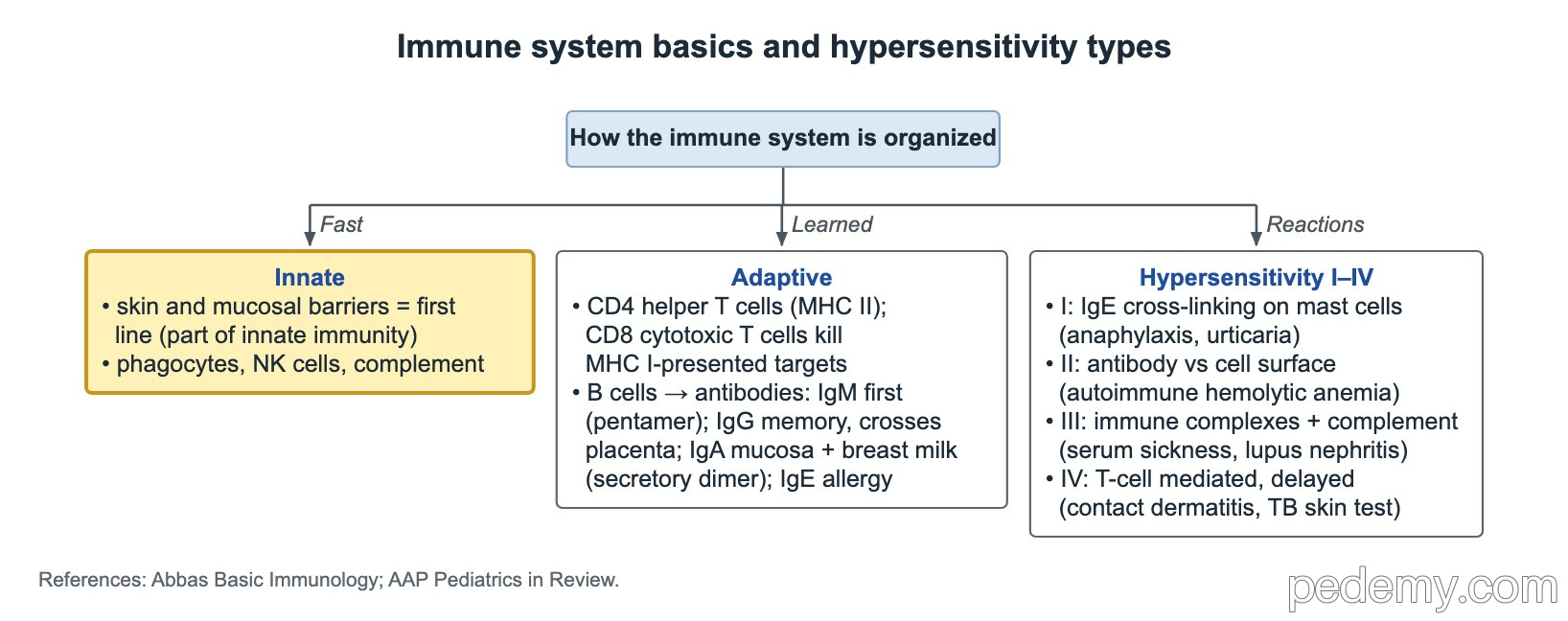
Key points
- Skin and mucosal barriers are the first line of innate immunity, with phagocytes, NK cells and complement.
- CD8 cytotoxic T cells kill cells that show antigen on MHC class I; CD4 helper T cells see MHC class II.
- IgM comes first and is a pentamer; IgA is a secretory dimer in mucosa and breast milk; only IgG crosses the placenta.
- Hypersensitivity: I = IgE on mast cells, II = antibody to a cell surface, III = immune complexes, IV = T cells, delayed.
- Serum sickness (type III): fever, itchy rash and joint pain 1–2 weeks after a foreign protein such as equine antivenom.
- Allergic rhinitis: an intranasal corticosteroid is first line; stop second-generation antihistamines about 1 week before skin-prick tests.
- After allergy shots (SCIT), watch the child for at least 30 minutes in an office with epinephrine on hand.
Innate and adaptive immunity
Innate immunity is fast and does not need prior exposure. Skin and mucosal barriers are part of it, not separate from it: they are its physical and chemical first line. Behind them sit phagocytes, natural killer (NK) cells and complement.
Adaptive immunity is slower the first time but learns and remembers. T cells handle cell-mediated immunity; B cells become plasma cells that make antibodies.
- CD4 helper T cells recognize antigen on MHC class II and direct the response.
- CD8 cytotoxic T cells recognize antigen on MHC class I and kill virus-infected or malignant cells.
- Unusual viral or fungal infections with failure to thrive point to a T-cell (cellular) defect.
| Antibody | What to remember |
|---|---|
| IgM | First antibody in a primary response; secreted as a pentamer |
| IgG | Main memory antibody; the only class that crosses the placenta |
| IgA | Mucosal secretions and breast milk; secretory dimer |
| IgE | Binds mast cells and basophils; allergy and parasites |
Hypersensitivity types I–IV
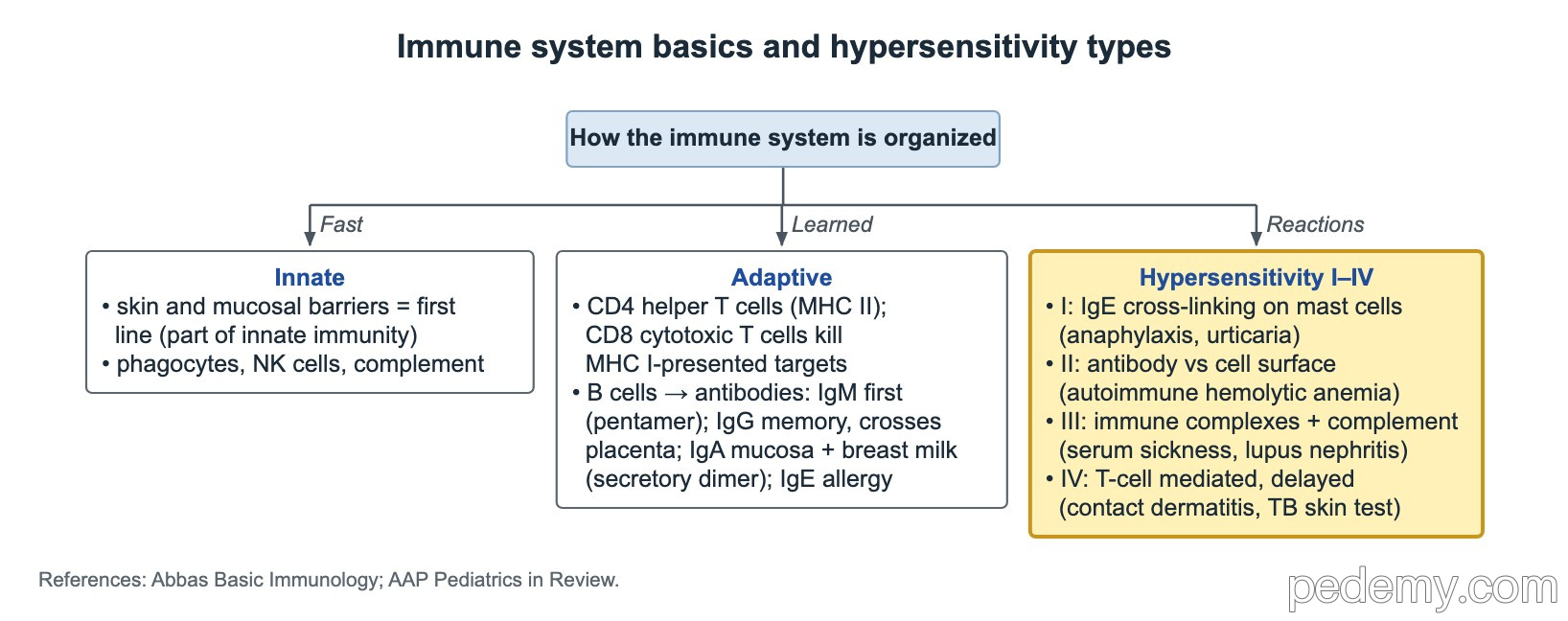
Sort a reaction by what drives it: IgE, antibody against a fixed target, circulating immune complexes, or T cells. Types I to III are antibody-mediated and type IV is the only cell-mediated one.
- Serum sickness: fever, an itchy rash and joint pain 1–2 weeks after a foreign protein, classically equine (horse-derived) antivenom or antitoxin.
- The delay is the time needed to make antibodies that then form complexes with the antigen still in the blood.
| Type | Mechanism | Examples |
|---|---|---|
| I (immediate) | Allergen cross-links IgE on mast cells and basophils, which release histamine and other mediators within minutes | Anaphylaxis, urticaria, allergic rhinitis |
| II (cytotoxic) | Antibody binds a cell-surface or tissue-bound antigen | Autoimmune hemolytic anemia |
| III (immune complex) | Soluble antigen–antibody complexes deposit in tissue and activate complement | Serum sickness, lupus nephritis |
| IV (delayed) | T-cell-mediated inflammation over 48–72 hours | Contact dermatitis, tuberculin skin test |
Allergic rhinitis: recognize it
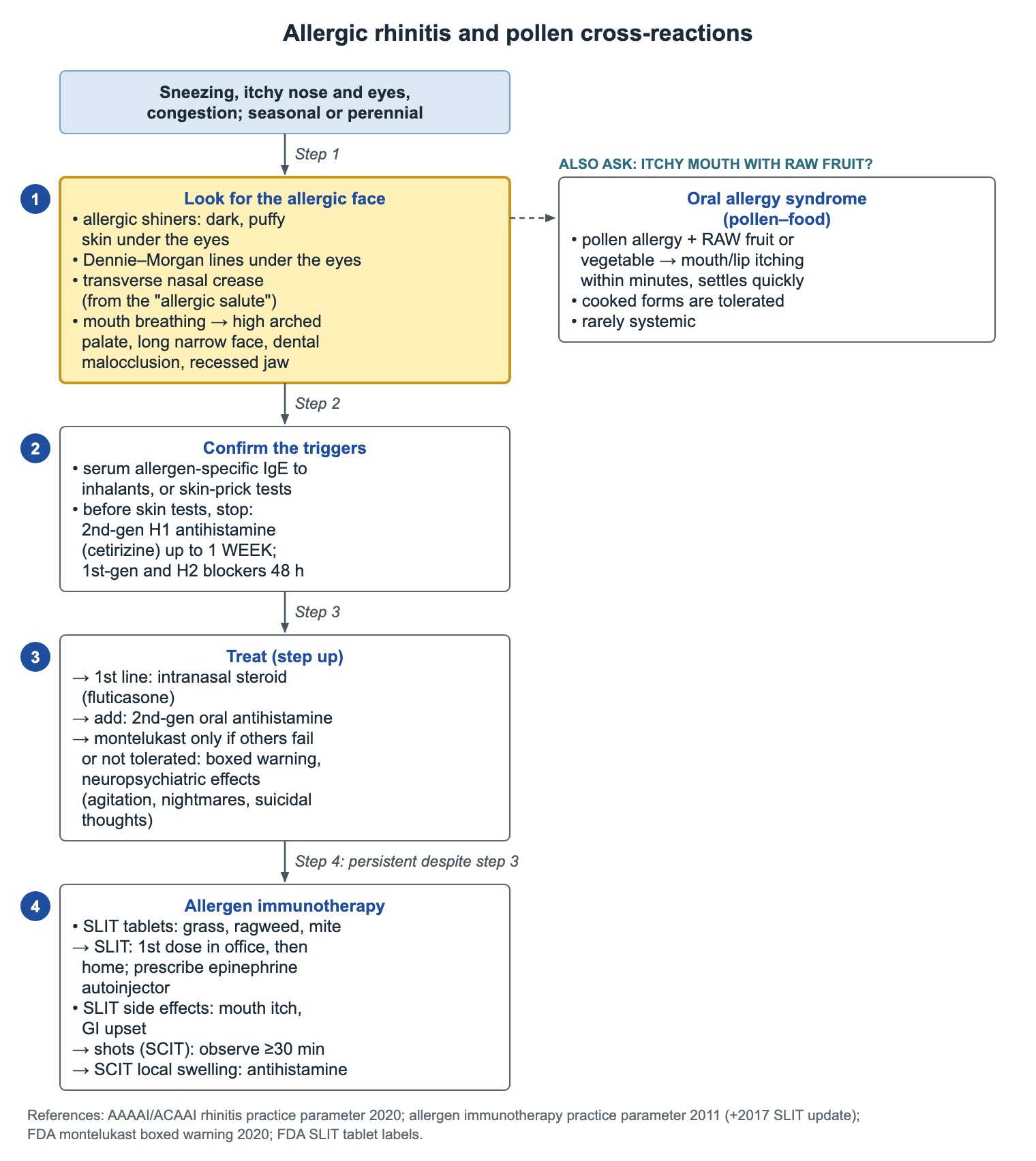
Think of allergic rhinitis in a child with sneezing, an itchy nose and eyes, clear rhinorrhea and congestion, either in a season or all year round. On exam the nasal mucosa is pale or bluish and boggy.
- Allergic shiners: dark, puffy skin under the eyes from venous congestion.
- Dennie–Morgan lines: extra creases under the lower eyelids.
- Transverse nasal crease from repeatedly rubbing the nose upward (the allergic salute).
- Long-standing mouth breathing: high arched palate, long narrow face, dental malocclusion and a recessed lower jaw.
- Oral allergy syndrome: pollen allergy plus mouth or lip itching within minutes of raw fruit or vegetables; cooked forms are tolerated and systemic reactions are rare.
Confirming the triggers
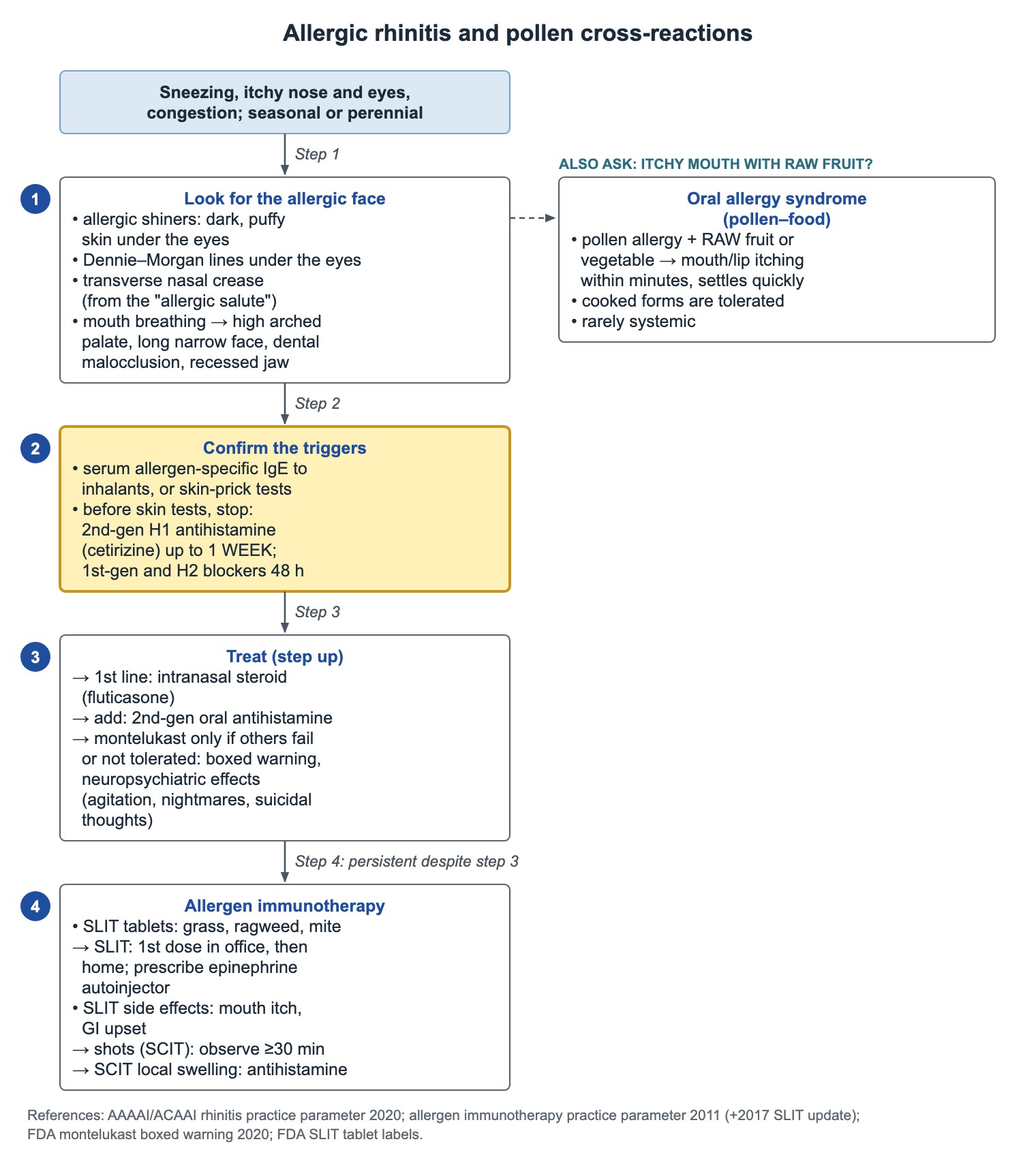
The diagnosis is clinical. Testing confirms which inhalants matter when you plan avoidance or immunotherapy, or when empiric treatment fails. Routine food allergy testing is not part of the rhinitis work-up.
- Serum allergen-specific IgE to environmental inhalants (dust mite, pollens, molds, pet dander), or skin-prick testing.
- Antihistamines blunt the skin test wheal: stop second-generation H1 antihistamines such as cetirizine about 1 week before.
- Stop first-generation H1 antihistamines and H2 blockers 48 hours before.
- A child who took cetirizine 3 days ago should not be skin tested today; reschedule or use serum IgE.
Treatment: step up
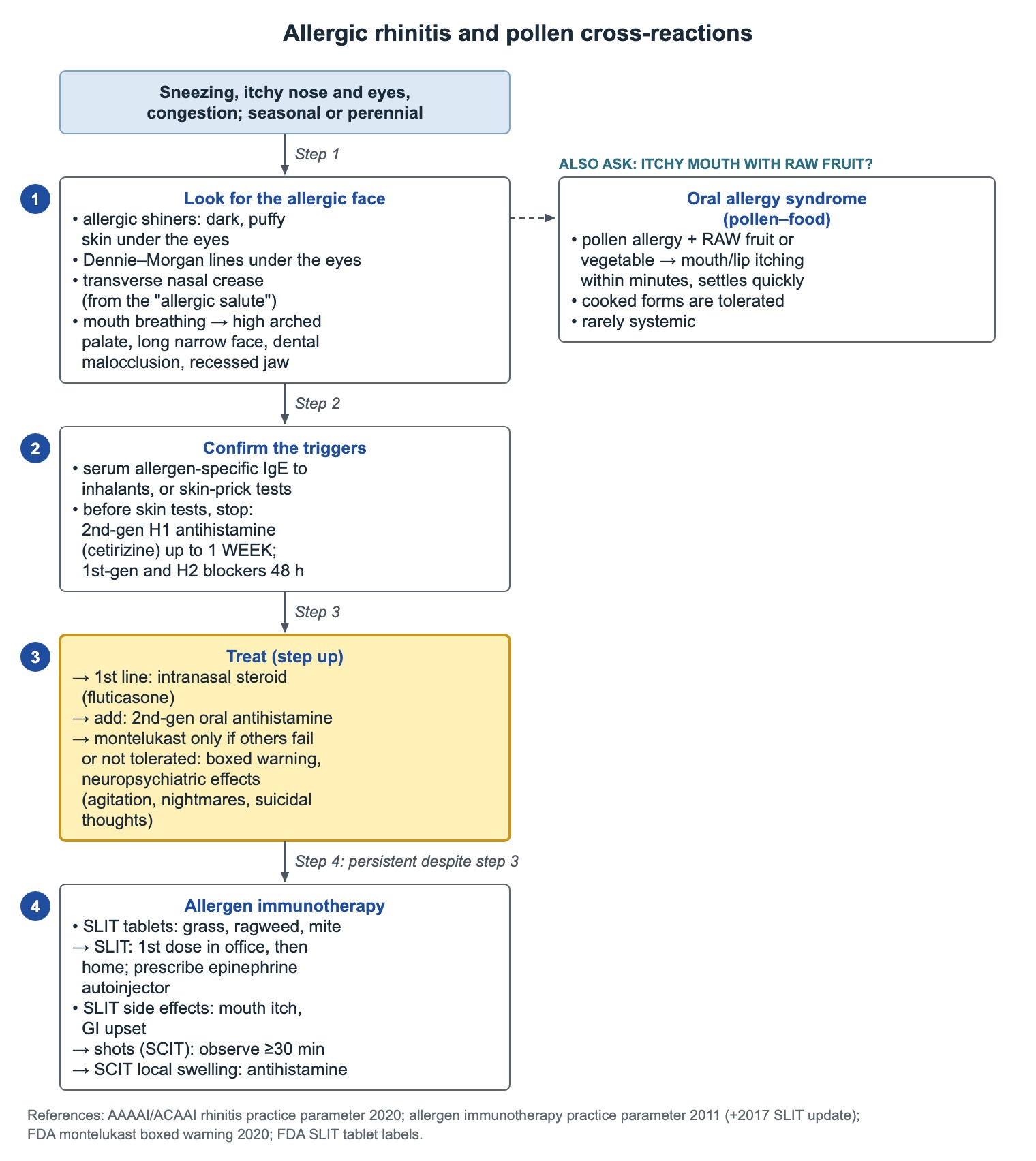
- First line for persistent allergic rhinitis: an intranasal corticosteroid such as fluticasone, used daily.
- Add or use a second-generation oral antihistamine (cetirizine, loratadine, fexofenadine) for itch and sneezing; an intranasal antihistamine plus intranasal steroid works better than either alone.
- Montelukast only when other treatments fail or are not tolerated: it carries an FDA boxed warning for neuropsychiatric effects such as agitation, nightmares and suicidal thoughts.
- Avoid long courses of topical decongestants (rebound congestion) and never use depot corticosteroid injections.
Allergen immunotherapy
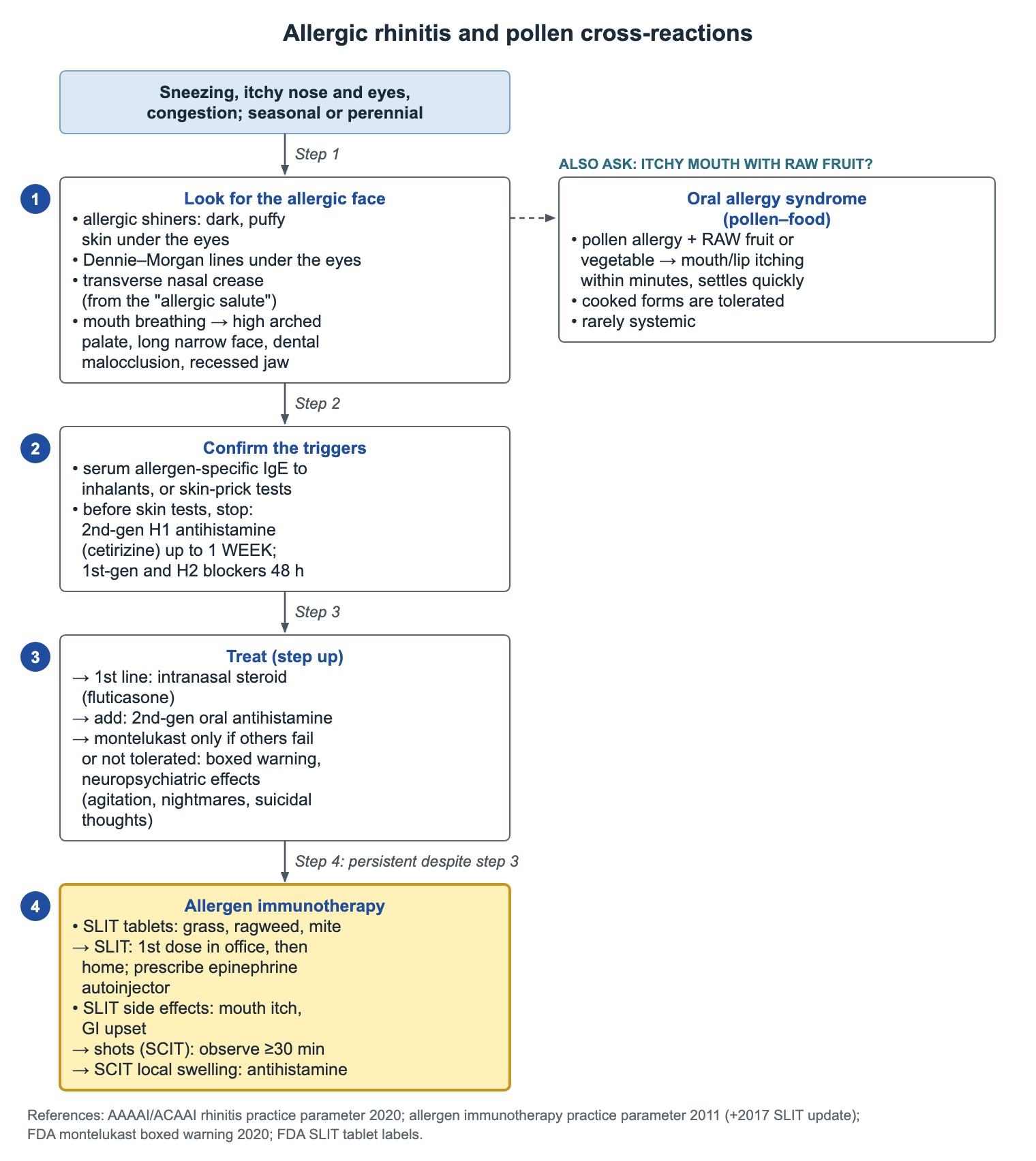
Immunotherapy is the only treatment that changes the allergic response itself. Offer it when symptoms persist despite medicines and testing confirms the trigger. It comes as tablets under the tongue (SLIT) or as shots (SCIT).
| Sublingual tablets (SLIT) | Shots (SCIT) | |
|---|---|---|
| Allergens | Grass pollen, short ragweed, dust mite | Many inhalant allergens, mixed to the patient |
| Where given | First dose in the office, later doses at home; prescribe an epinephrine autoinjector | Every dose in a medical office |
| Common side effects | Mouth and throat itching or swelling, GI upset | Local swelling and itch at the injection site |
| Safety step | Stop and call if throat swelling, trouble swallowing or breathing | Observe at least 30 minutes with epinephrine on hand; oral antihistamine premedication reduces local reactions |
When infections suggest an immune defect
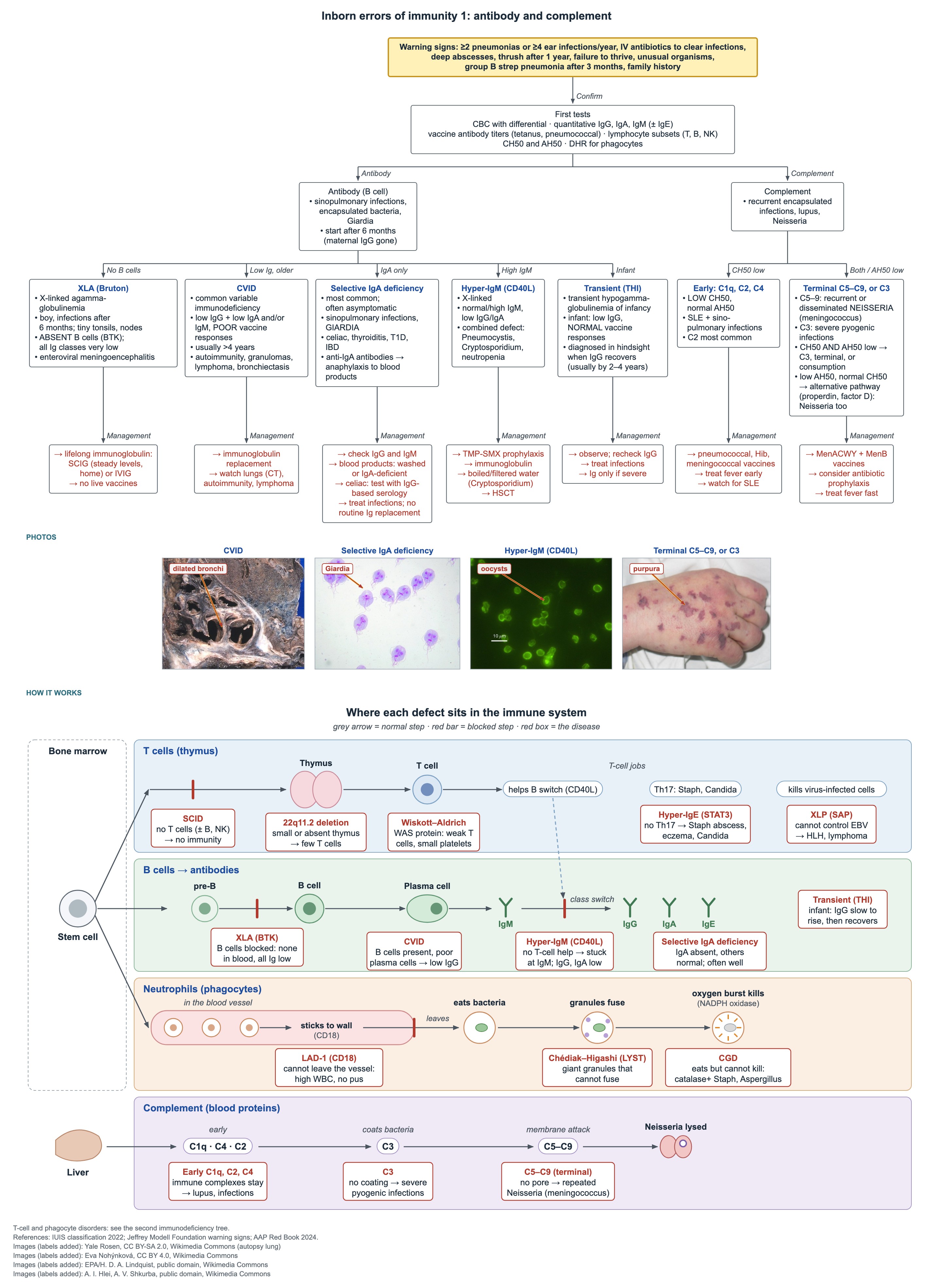
Most children with frequent colds are normal. Look for an inborn error of immunity when infections are too many, too severe, too unusual or too hard to clear.
- 2 or more pneumonias, or 4 or more ear infections, in a year.
- Needing IV antibiotics to clear infections.
- Deep skin or organ abscesses.
- Persistent thrush (candidiasis) after age 1.
- Group B streptococcal pneumonia after 3 months of age, or other unusual organisms.
- Failure to thrive, or a family history of immune deficiency.
- First tests: CBC with differential and quantitative IgG, IgA and IgM; then vaccine antibody titers, lymphocyte subsets and complement (CH50, AH50) as the pattern suggests.
Common questions
What is the difference between type III and type IV hypersensitivity?
Type III is caused by antigen–antibody complexes that deposit in tissue and activate complement, as in serum sickness. Type IV is caused by T cells and appears 48–72 hours after exposure, as in contact dermatitis or a positive TB skin test.
How long should cetirizine be stopped before allergy skin testing?
About 1 week. First-generation antihistamines and H2 blockers need to be stopped for 48 hours.
What is the first-line treatment for allergic rhinitis in children?
A daily intranasal corticosteroid such as fluticasone. A second-generation antihistamine can be added; montelukast is reserved for when other treatments fail.
Study this topic
Sources
- AAAAI/ACAAI 2020: Rhinitis 2020, a practice parameter update (J Allergy Clin Immunol)
- AAAAI/ACAAI 2017: Sublingual immunotherapy, focused practice parameter update (Ann Allergy Asthma Immunol)
- AAAAI/ACAAI 2011: Allergen immunotherapy, a practice parameter third update (J Allergy Clin Immunol)
- AAAAI/ACAAI/CIS 2025: Inborn errors of immunity practice parameter (Ann Allergy Asthma Immunol)
Written for Pedemy in our own words from the sources above; checked November 2026. For education only, not medical advice; check doses and local protocols before treating a patient. Pedemy is independent and not affiliated with or endorsed by the organizations cited.