

Main decision tree
Screens and media: what to advise for the age
Key points
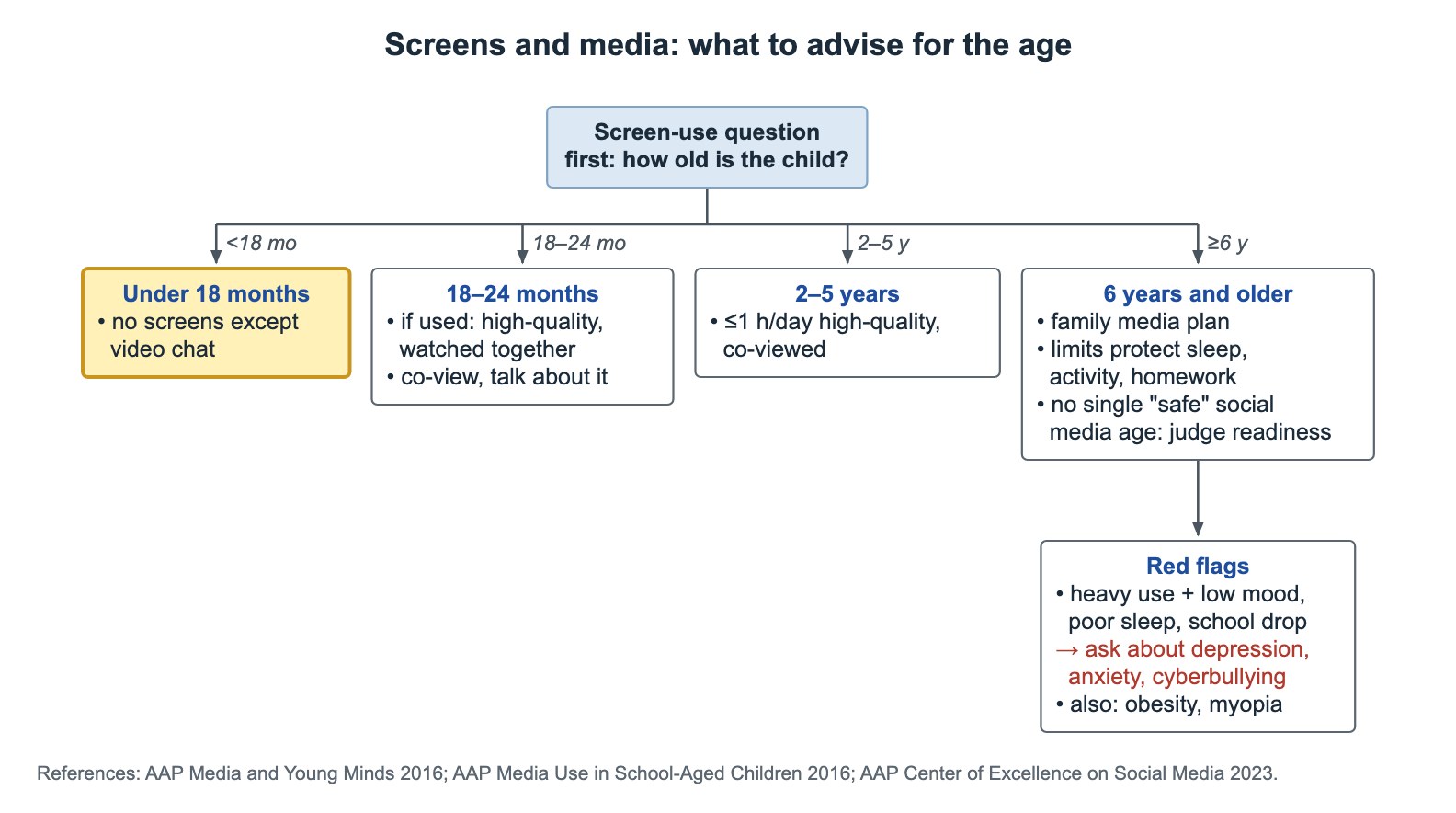
- Under 18 months: no screens except video chat; 18–24 months: high-quality content watched together; 2–5 years: about 1 hour a day of quality content, co-viewed.
- School refusal: parents know, morning stomachaches or headaches that ease later and on weekends; the goal is a prompt return to school.
- Truancy: absences hidden from the parents; screen for substances, conduct and home problems.
- Children understand that death is permanent and universal at about 5–7 years; say "died", not "sleeping".
- Prolonged grief disorder in children: intense yearning and loss of function 6 months or more after the death.
- Screen mothers for postpartum depression at the 1-, 2-, 4- and 6-month visits; EPDS 10 or more is positive.
- Bullying = repeated aggression with a power imbalance; racism is a social determinant of health.
Screens and media by age
Infants and toddlers learn language from live talk and play, not from video. So-called educational baby videos do not teach them.
The AAP's 2026 policy on digital ecosystems moves the focus from minutes alone to how media is designed and used: content quality, using media together, and whether screens push out sleep, movement and family time.
- The AAP family media plan sets written screen rules for everyone at home; it is also the first step for a teen who spends hours online without signs of depression.
- Handing a toddler a phone to stop a tantrum rewards the tantrum.
- Heavy use is linked to shorter, poorer sleep, obesity and, with much near work and little outdoor time, myopia.
- Heavy use with low mood, poor sleep, falling grades or fewer friends: ask about depression, anxiety and cyberbullying.
| Age | Advice |
|---|---|
| Under 18 months | No screen media except video chat |
| 18–24 months | If used: high-quality content, watched together, talking about it |
| 2–5 years | About 1 hour a day or less of high-quality content, co-viewed |
| 6 years and older | Family media plan; limits protect sleep, physical activity and homework; no single safe age for social media, judge readiness |
School refusal, truancy and falling grades
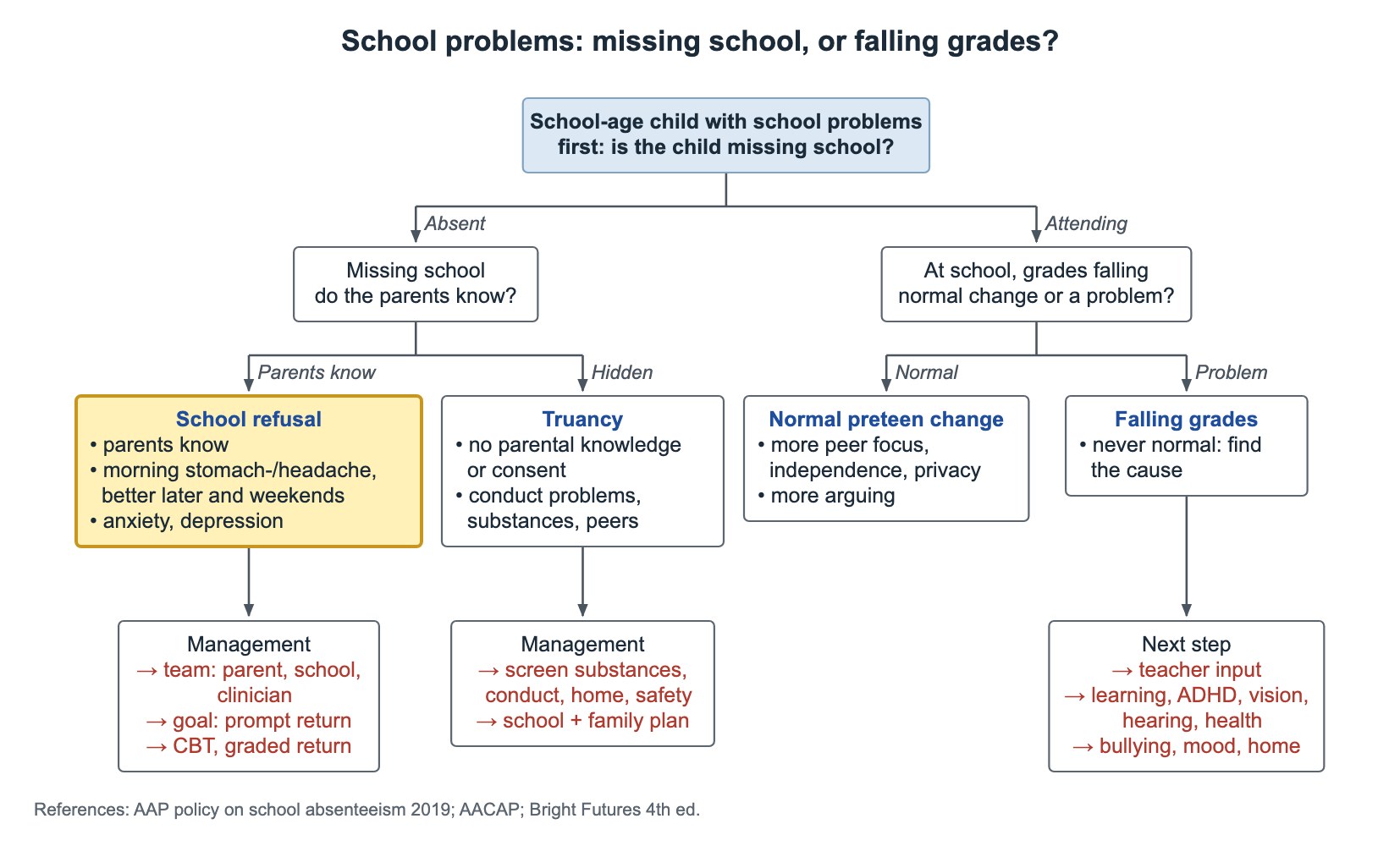
First ask whether the child is missing school, and whether the parents know.
- An 8-year-old who refuses school because she fears something bad will happen to her mother, and will not sleep alone, has separation anxiety disorder.
- Normal preteen change: more time with friends, more wish for independence and privacy, more arguing.
- A fall in school performance is never normal: get teacher input and assess learning, ADHD, vision, hearing, health, bullying, mood and home life.
| School refusal | Truancy | |
|---|---|---|
| Parents know? | Yes | No knowledge or consent |
| Typical picture | Morning stomachaches or headaches that ease later in the day and on weekends; anxiety or depression | Conduct problems, substance use, peer problems |
| Management | Team of parent, school and clinician; goal is a prompt return; CBT and a graded return | Screen for substances, conduct, home and safety; school and family plan |
Divorce and other big family changes
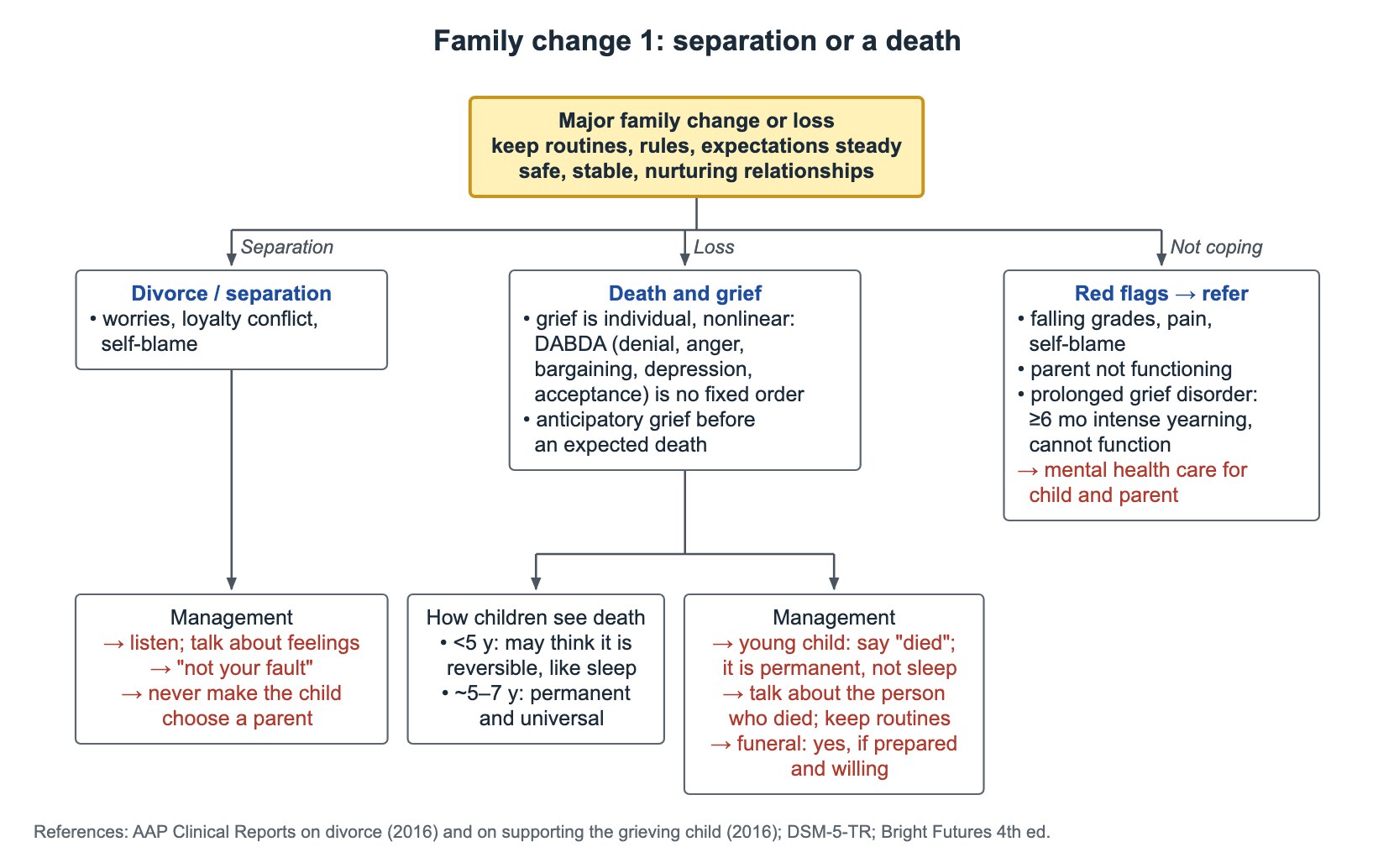
In any big change (a move, separation, deployment, new baby or loss), keep daily routines, house rules and expectations as steady as possible. A safe, stable, nurturing relationship with a caregiver is what best buffers the stress.
- Tell the child together, simply and honestly, that the separation is not their fault and what will stay the same.
- Listen and talk about the child's feelings; acting out often reflects worry, loyalty conflict or self-blame.
- Never ask the child to choose between parents.
- Falling grades, recurrent pain with a normal exam, or self-blame: refer to a qualified mental health professional.
Grief and how children understand death
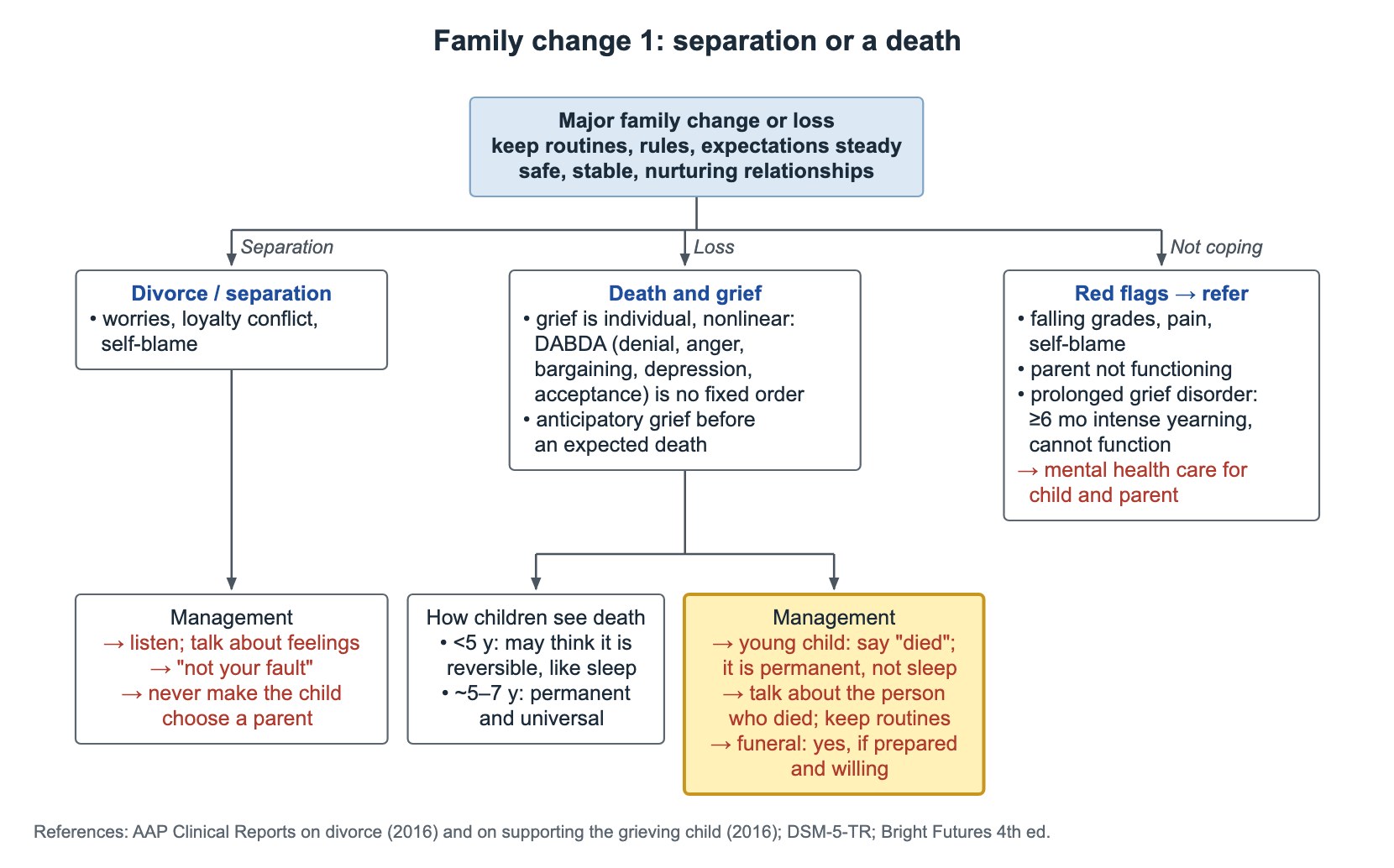
Children under about 5 years may think death is reversible, like sleep, so a 4-year-old may keep asking when a grandparent will come back. Most understand that death is permanent and universal by about 5–7 years.
Grief has no fixed order or timeline; the classic stages are not a sequence, and grief often returns at milestones and anniversaries. Anticipatory grief is mourning that starts before an expected death, such as for a child in comfort-focused care.
- Use clear words: say the person died, their body stopped working and they cannot come back. Avoid "sleeping" or "went away".
- Talk openly about the person who died and keep usual routines for surviving siblings.
- A child who wants to attend the funeral can, after hearing what will happen, with a trusted adult beside them.
- Refer child and parent for counseling when the child is still struggling months later or a parent cannot function.
- Prolonged grief disorder: daily intense yearning, avoidance of reminders, feeling part of oneself died and loss of function, lasting 6 months or more after the death in children and teens (12 months in adults).
Parental depression, adoption and chronic illness
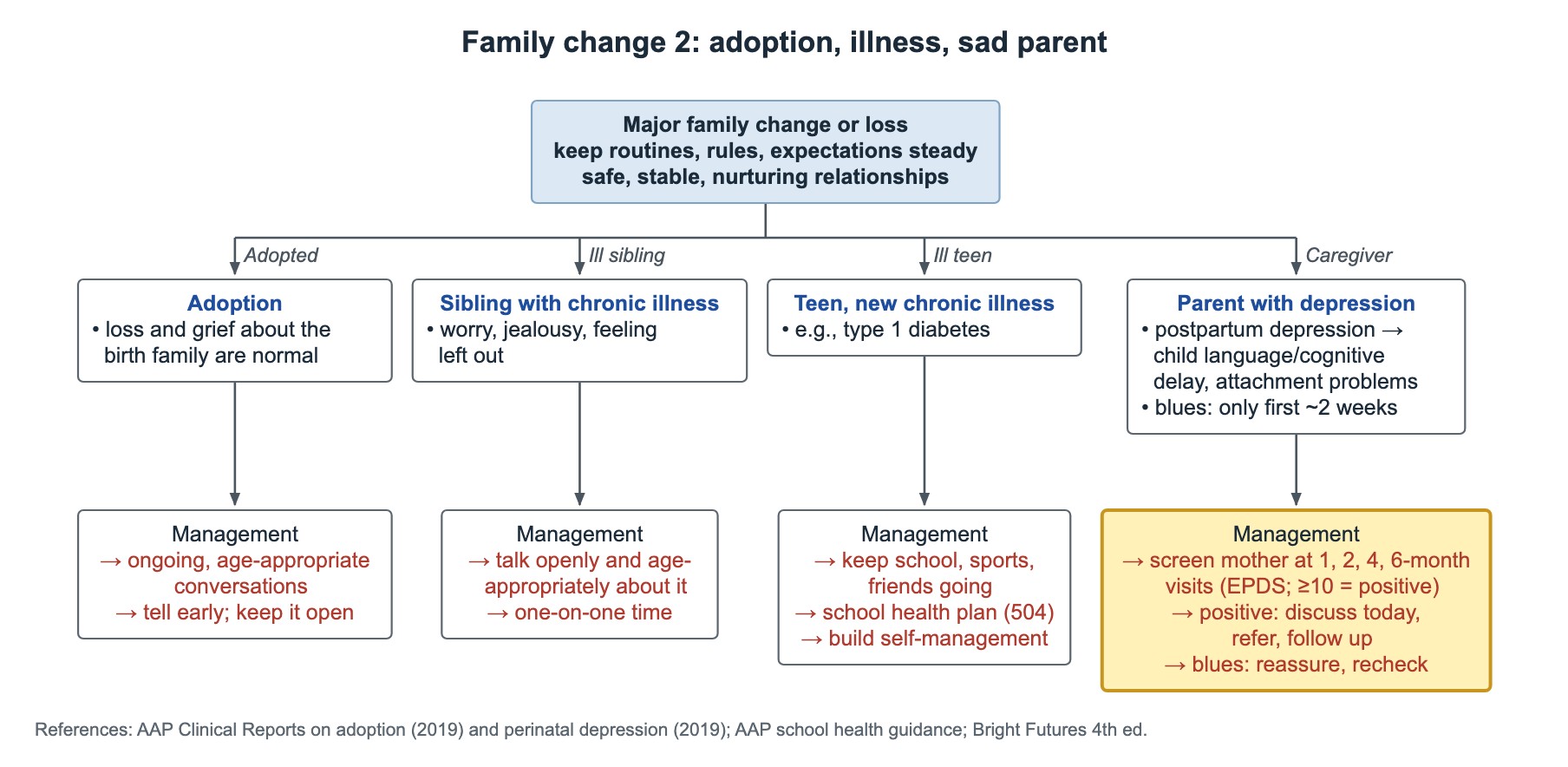
Postpartum depression in a parent raises the infant's risk of cognitive and language delay and attachment problems. The pediatric visit is often the only place a mother is seen in the first months.
- Screen the mother with the Edinburgh Postnatal Depression Scale (EPDS) at the 1-, 2-, 4- and 6-month visits; 10 or more is positive.
- Positive screen without thoughts of harm: discuss it the same day, refer for mental health care and follow up.
- Mood swings only in the first 2 weeks after birth: baby blues; reassure and recheck.
- Adoption: use ongoing, age-appropriate conversations from early on; feelings of loss and grief about the birth family are normal, even in a loving home.
- Sibling with a chronic illness: talk openly and age-appropriately about the illness and give the well child one-on-one time.
- Teen with a new chronic illness such as type 1 diabetes: keep school, sports and friends going with a school health plan (504 plan), and keep the same rules as before and as for siblings.
Bullying and cyberbullying
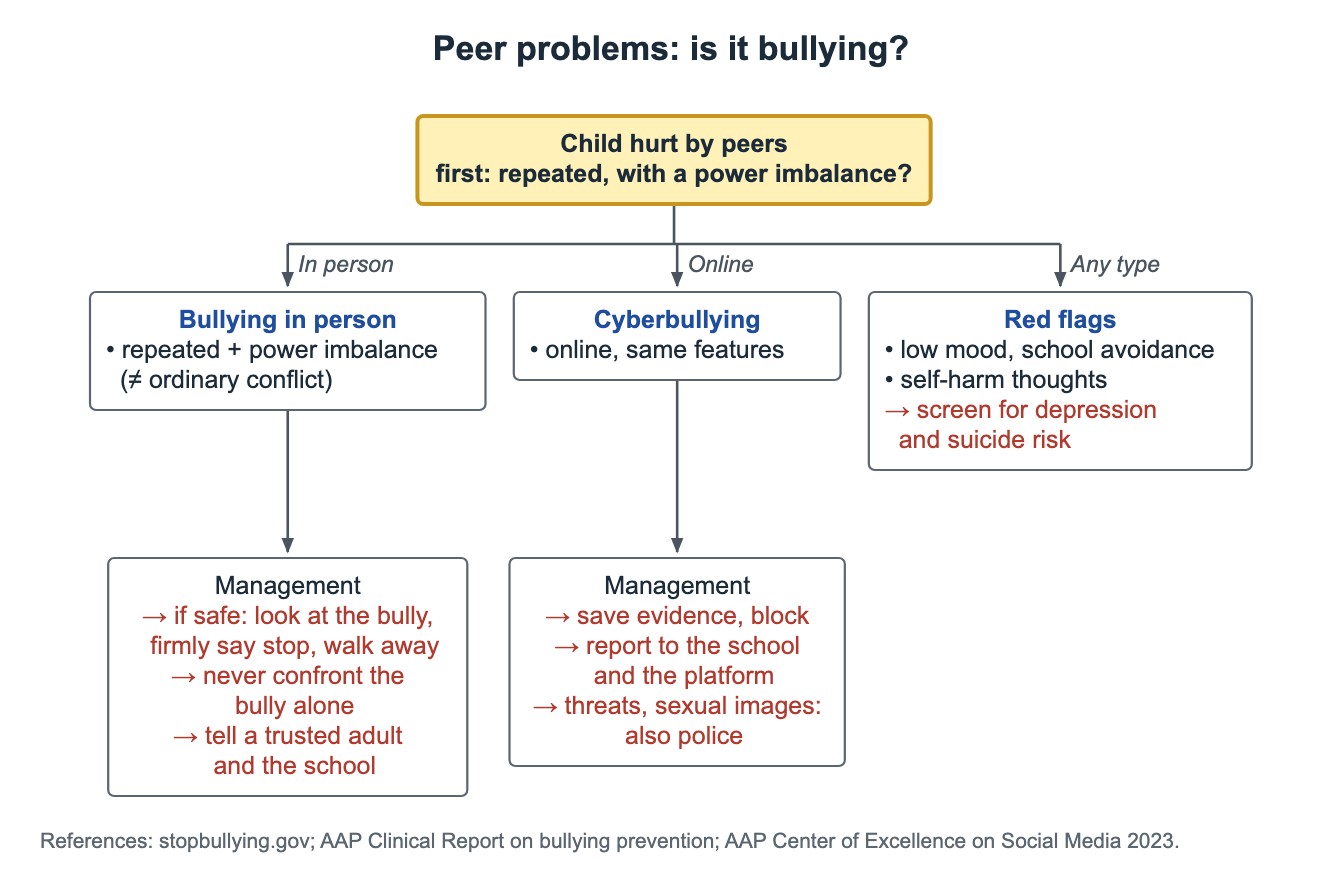
Bullying is unwanted aggression that is repeated (or likely to be) and involves a power imbalance. Without both, it is ordinary peer conflict. Ask about bullying, including cyberbullying, and racism in routine social and mental health screening.
- In the moment, if safe: look at the bully, calmly and firmly say stop, and walk away; never confront the bully alone.
- Ongoing shoving or threats: tell a trusted adult and bring in school staff.
- Cyberbullying: save evidence, block, and report it to the school and the platform; threats or sexual images also go to the police.
- Low mood, school avoidance or self-harm thoughts: screen for depression and suicide risk.
Common questions
How much screen time is OK for a 2-year-old?
From 2 to 5 years, the AAP advises about 1 hour a day or less of high-quality content, watched with a parent. Under 18 months, avoid screens except video chat.
What is the difference between school refusal and truancy?
In school refusal the parents know about the absences, which are usually driven by anxiety. In truancy the absences are hidden from the parents and often come with conduct or substance problems.
When do children understand that death is permanent?
Most children understand that death is permanent and universal by about 5–7 years. Younger children may expect the person to come back.
Study this topic
Sources
- AAP 2026: Digital ecosystems, children, and adolescents, policy statement (Pediatrics)
- AAP 2016: Media and young minds (Pediatrics)
- AAP 2024: Supporting the grieving child and family (Pediatrics)
- AAP 2019: Incorporating recognition and management of perinatal depression into pediatric practice (Pediatrics)
- AAP 2019: The impact of racism on child and adolescent health (Pediatrics)
Written for Pedemy in our own words from the sources above; checked November 2026. For education only, not medical advice; check doses and local protocols before treating a patient. Pedemy is independent and not affiliated with or endorsed by the organizations cited.
Social needs, racism and safety
Ask about social needs at every visit, privately and without judgment, and act on any positive answer.
Racism is a social determinant of health. In childhood it is linked to poorer mental health, chronic disease, higher infant mortality and less preventive care. It works at three levels: institutional (structural), personally mediated, and internalized, when a child absorbs negative stereotypes about their own group.