

Main decision tree
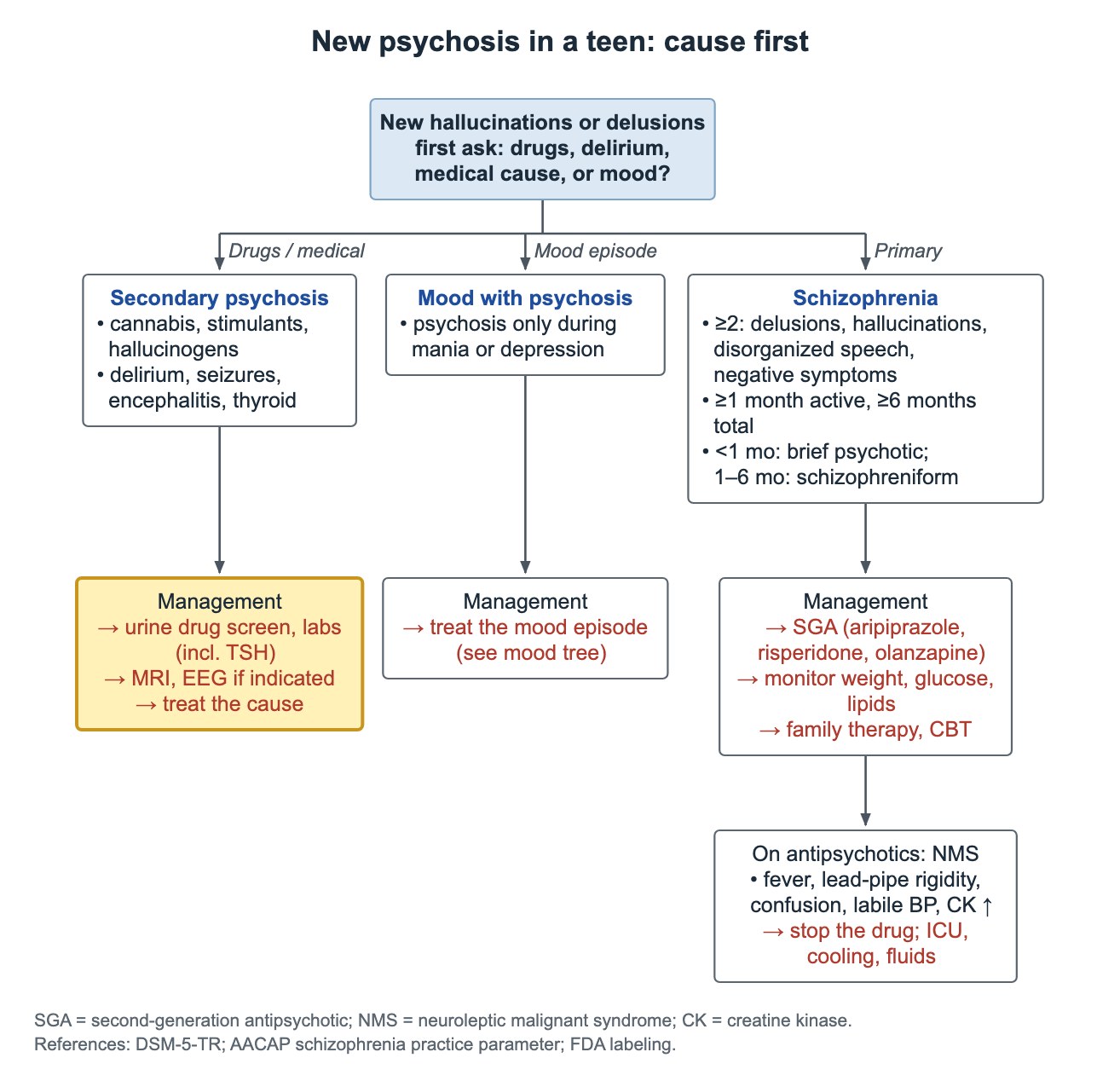
New psychosis in a teen: cause first
Key points
- First workup for new psychosis with a normal neurologic exam: urine drug screen and basic labs, including TSH.
- MRI or EEG only if there are focal signs, seizures, confusion or other atypical features.
- Brief psychotic disorder: under 1 month; schizophreniform: 1–6 months; schizophrenia: 6 months or more in total.
- Schizophrenia needs at least 2 core symptoms with at least 1 month of active symptoms.
- First-line medicine: a second-generation antipsychotic such as aripiprazole, risperidone or olanzapine.
- Monitor weight, glucose and lipids on any antipsychotic.
- Neuroleptic malignant syndrome: fever, lead-pipe rigidity, confusion, labile BP and very high CK → stop the drug.
New psychosis: look for a cause first
Ask first: drugs, delirium, a medical illness, or a mood episode? Secondary causes are common in teens and are treatable.
- Substances: cannabis (especially high-potency products), stimulants, hallucinogens, synthetic cannabinoids and cathinones.
- Medical: delirium, seizures, encephalitis (including anti-NMDA receptor encephalitis) and thyroid disease.
- First tests: urine drug screen and basic labs with TSH.
- MRI or EEG only if the exam or history is atypical: focal signs, seizures, confusion or fluctuating alertness.
- Mood disorder with psychotic features: psychosis occurs only during mania or depression; treat the mood episode.
Brief psychotic disorder, schizophreniform or schizophrenia?
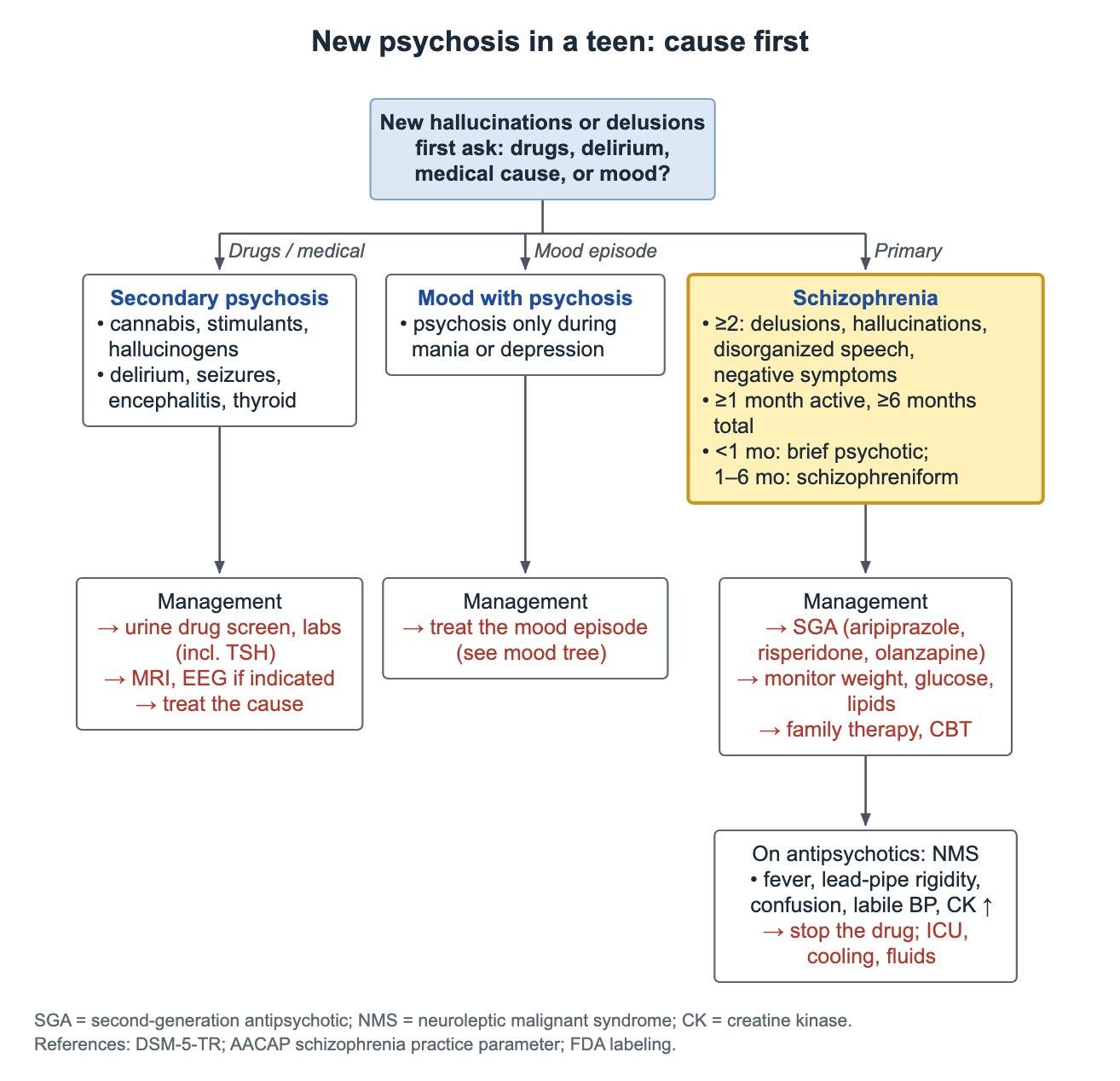
Schizophrenia needs at least 2 of these: delusions, hallucinations, disorganized speech, grossly disorganized or catatonic behavior, and negative symptoms. At least one must be delusions, hallucinations or disorganized speech.
A prodrome of social withdrawal and falling grades often comes months before frank psychosis; it counts toward the 6 months.
| Diagnosis | Total duration |
|---|---|
| Brief psychotic disorder | At least 1 day and under 1 month, with full return to baseline |
| Schizophreniform disorder | 1 to 6 months |
| Schizophrenia | At least 6 months in total, with at least 1 month of active symptoms and declining function |
Treatment of schizophrenia
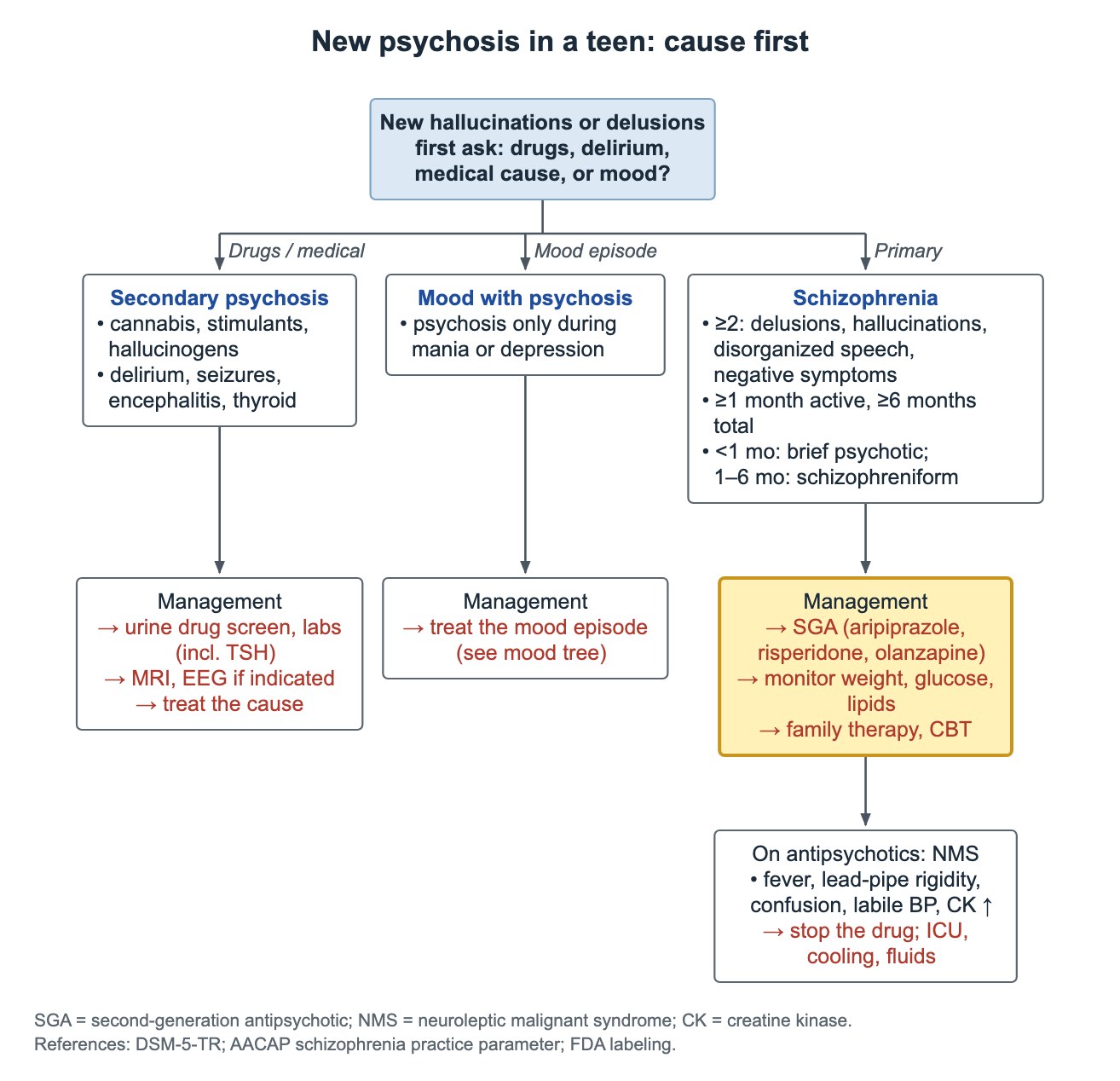
- First-line: a second-generation antipsychotic, such as aripiprazole, risperidone or olanzapine (FDA-approved for schizophrenia from 13 years).
- Check weight, BMI, glucose and lipids at baseline and during treatment; olanzapine causes the most weight gain.
- Also watch for prolactin rise (risperidone), sedation and movement side effects.
- Combine medicine with family psychoeducation, CBT and school support.
- Clozapine is for schizophrenia that has not responded to 2 adequate antipsychotic trials.
Neuroleptic malignant syndrome
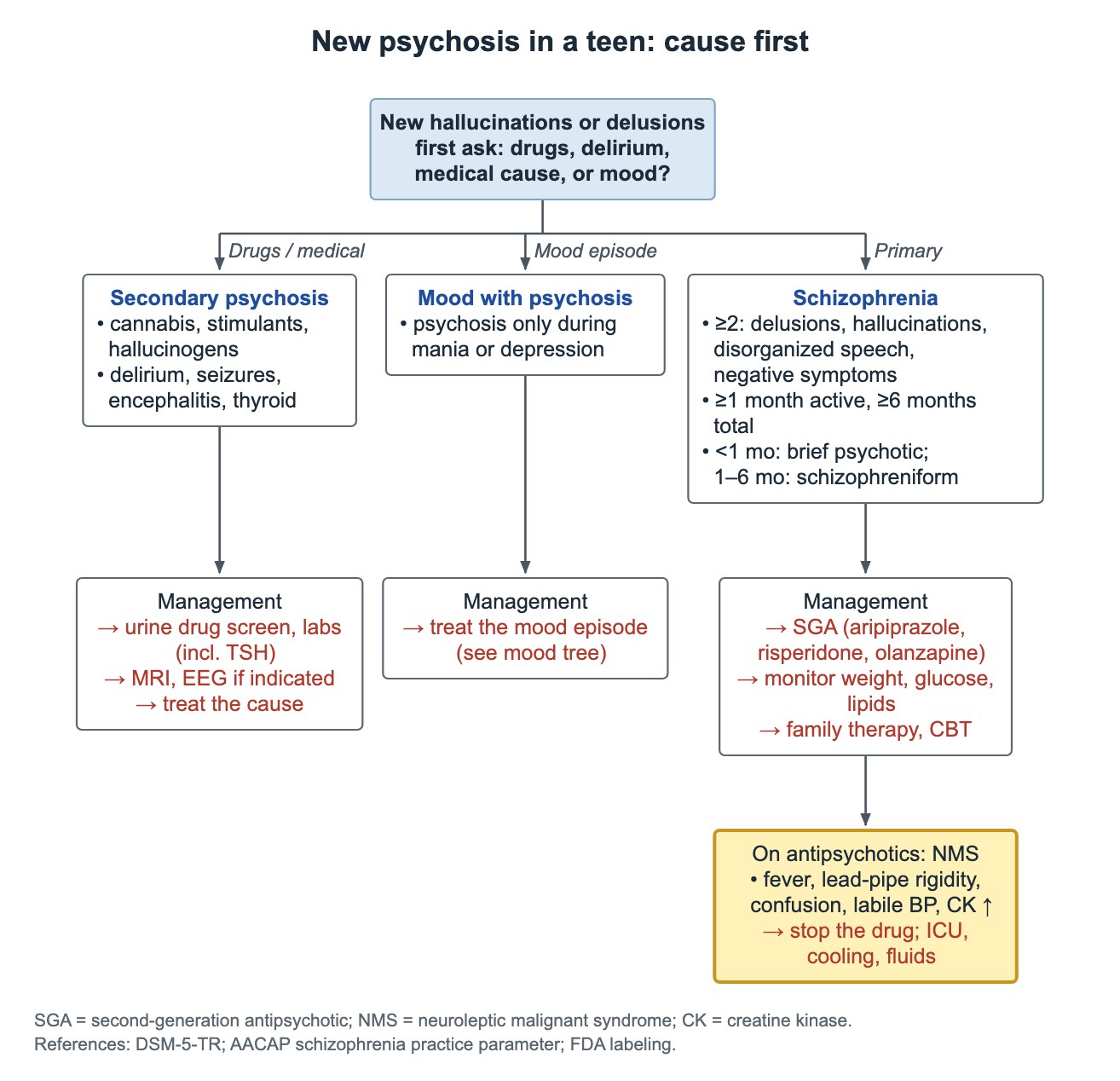
NMS is a rare, life-threatening reaction to dopamine-blocking drugs. It usually starts within days of starting or raising the dose, most classically with high-potency drugs such as haloperidol, but it also occurs with second-generation antipsychotics.
- Signs: high fever, lead-pipe rigidity, confusion, labile or high blood pressure, sweating and tachycardia.
- Labs: very high CK; myoglobinuria may lead to kidney injury.
- Treatment: stop the antipsychotic, admit to the ICU, cool, give IV fluids; dantrolene or bromocriptine in severe cases.
- Serotonin syndrome, by contrast, follows serotonergic drugs and shows clonus and hyperreflexia rather than lead-pipe rigidity.
Common questions
What tests should be done for new psychosis in a teenager?
A urine drug screen and basic labs including TSH. MRI or EEG are added only when there are focal neurologic signs, seizures, confusion or other atypical features.
What is the difference between schizophreniform disorder and schizophrenia?
Duration. Schizophreniform disorder lasts 1 to 6 months; schizophrenia lasts 6 months or more in total.
What are the signs of neuroleptic malignant syndrome?
Fever, lead-pipe rigidity, confusion, unstable blood pressure and a very high CK after starting or increasing an antipsychotic.
Study this topic
Sources
- AACAP practice parameter: schizophrenia in children and adolescents (JAACAP 2013)
- Neuroleptic malignant syndrome in children and adolescents on atypical antipsychotics: a review (J Child Adolesc Psychopharmacol 2009)
Written for Pedemy in our own words from the sources above; checked November 2026. For education only, not medical advice; check doses and local protocols before treating a patient. Pedemy is independent and not affiliated with or endorsed by the organizations cited.