

Main decision tree
Child sleep problem: what is normal for the age?
Key points
- AASM sleep per 24 hours (with naps): 4–12 months 12–16 h, 1–2 years 11–14 h, 3–5 years 10–13 h, 6–12 years 9–12 h, 13–18 years 8–10 h.
- Newborns under 1 month fall asleep into active (REM-like) sleep; older infants and children enter non-REM sleep first.
- Put infants and toddlers down drowsy but awake; a consistent bedtime routine is the first step for bedtime battles and insomnia.
- Night terrors and sleepwalking come from deep non-REM sleep in the first third of the night; the child is hard to wake and has no memory.
- Nightmares come from REM sleep in the last third of the night; the child wakes fully, remembers the dream and is easily comforted.
- Night terrors at a set time each night: scheduled awakenings 15–30 minutes before the usual time.
- Snoring or witnessed apneas with parasomnias, or brief stereotyped clustered events, need a sleep study or an EEG.
Normal sleep by age
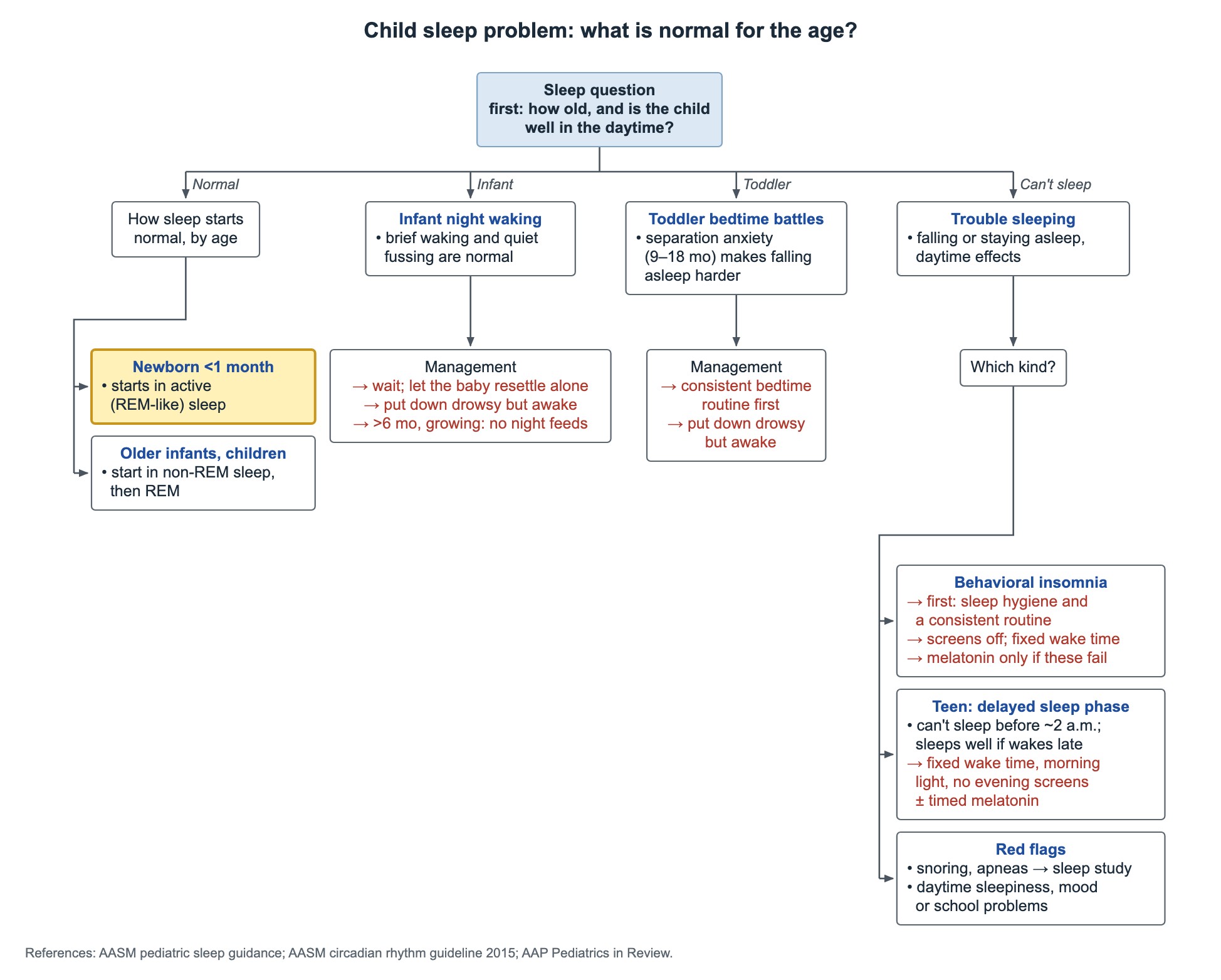
Start every sleep question with two things: the child's age and whether the child is well in the daytime. Many complaints are normal for the age.
Sleep onset changes in the first months. A newborn under 1 month falls asleep straight into active, REM-like sleep. From early infancy on, children enter non-REM sleep first and reach REM later in each cycle.
- Brief night wakings with quiet fussing are normal in infants.
- Separation anxiety at 9–18 months makes falling asleep harder; it is a normal stage.
- Daytime sleepiness, mood or school problems suggest the child is not getting enough good sleep.
How much sleep children need
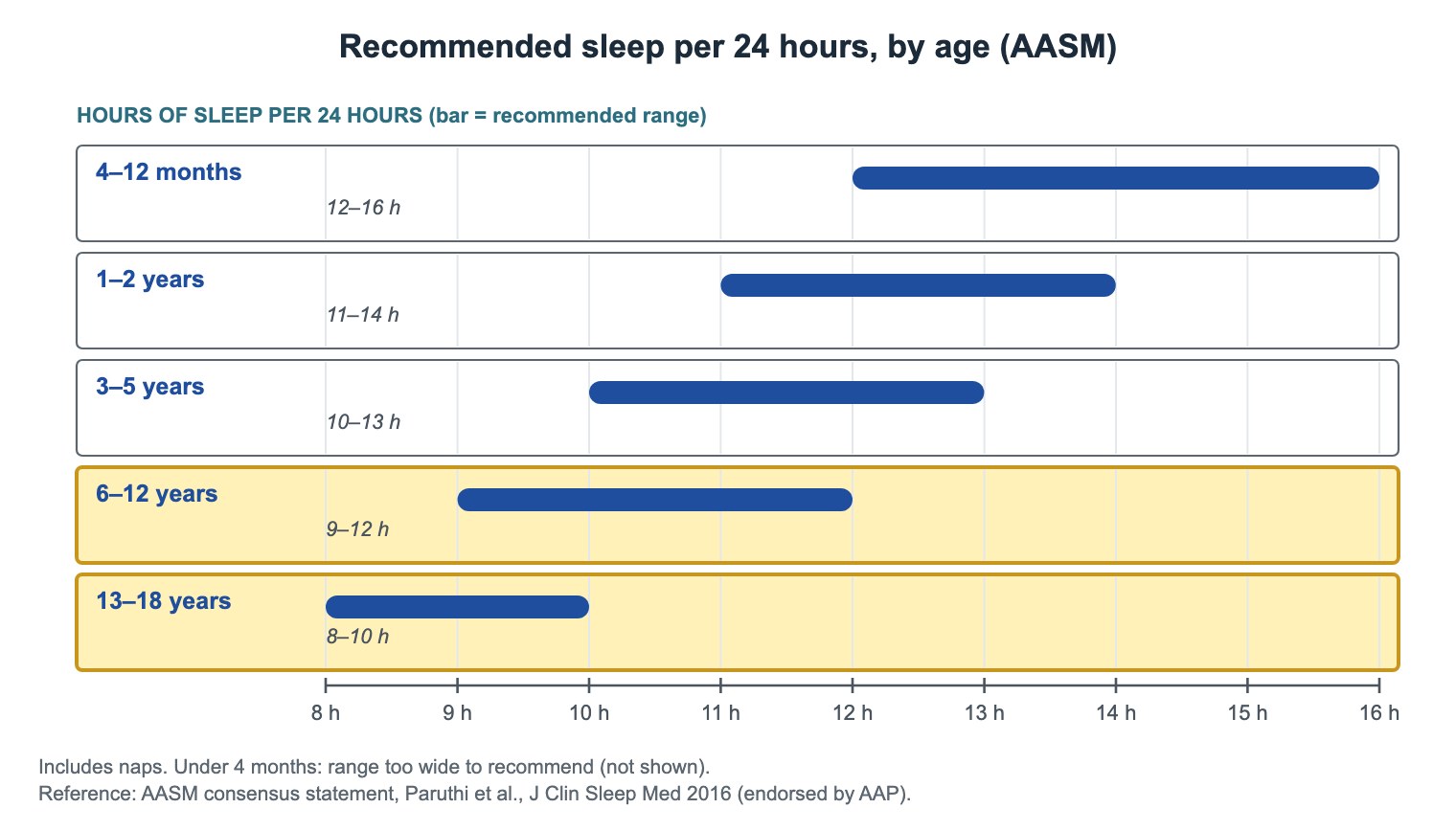
The American Academy of Sleep Medicine set these ranges in 2016, and the AAP endorsed them. Totals include naps. No range is given under 4 months because normal sleep varies too widely.
| Age | Sleep per 24 hours |
|---|---|
| 4–12 months | 12–16 hours |
| 1–2 years | 11–14 hours |
| 3–5 years | 10–13 hours |
| 6–12 years | 9–12 hours |
| 13–18 years | 8–10 hours |
Infant night waking
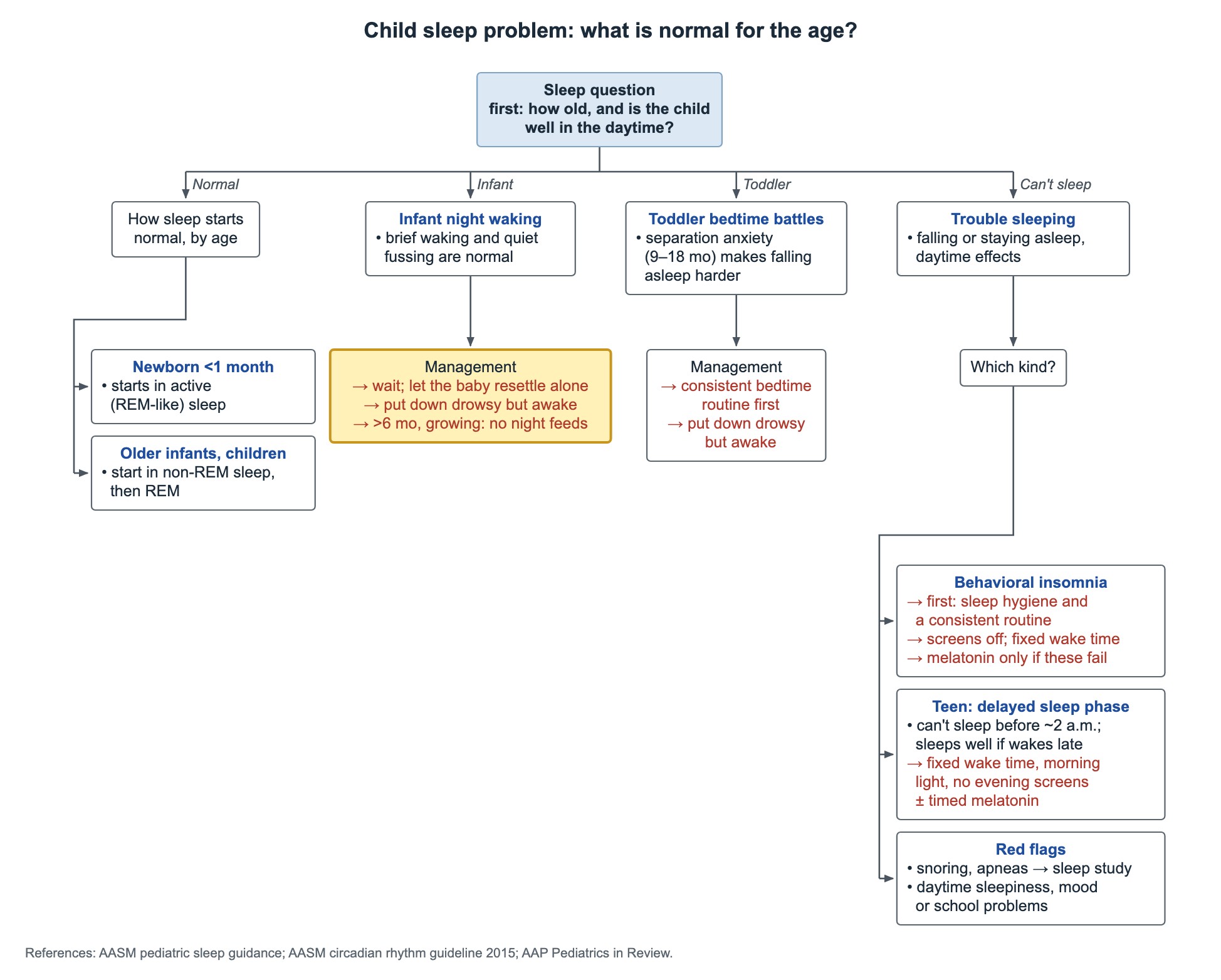
All infants wake briefly between sleep cycles. A baby who learns to fall asleep alone can settle again without help.
- When the baby fusses quietly at night, wait before going in and let the baby resettle alone.
- Put the baby down drowsy but still awake, so falling asleep does not depend on feeding or rocking.
- A healthy, growing infant older than 6 months does not need night feeds; feeding at each waking keeps the wakings going.
- Safe sleep still applies: on the back, in the baby's own crib or bassinet, with nothing soft in it.
Toddler bedtime battles
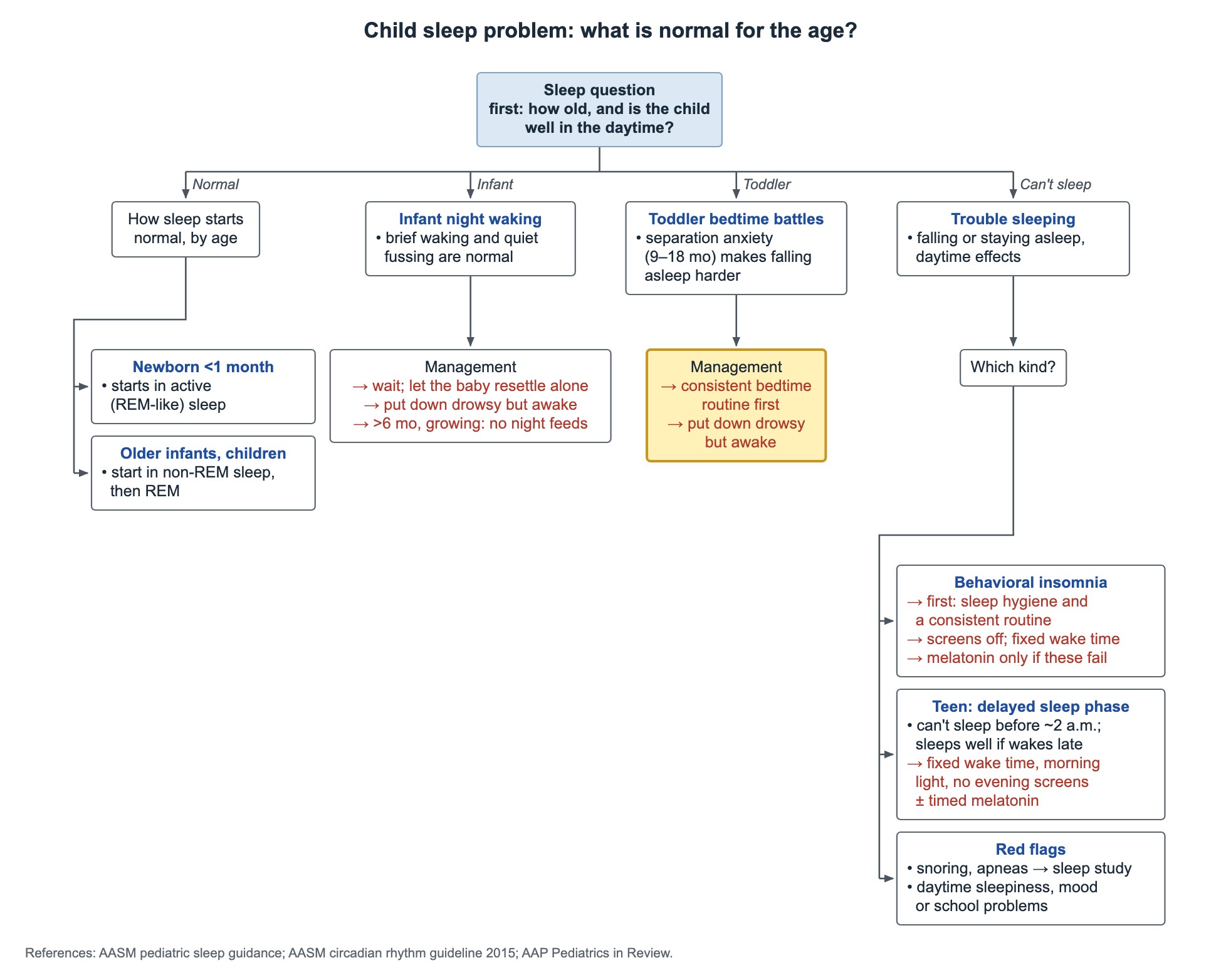
A toddler who calls out and gets out of bed after lights-out usually has an irregular bedtime and no settled routine. Separation anxiety, strongest at 9–18 months, adds to it.
- First step: the same bedtime every night and a short, calm routine (bath, teeth, book, bed).
- Put the child in bed drowsy but awake, so the child learns to fall asleep alone.
- Set calm, firm limits: return the child to bed quietly with little attention.
- Praise staying in bed the next morning.
Insomnia and delayed sleep phase
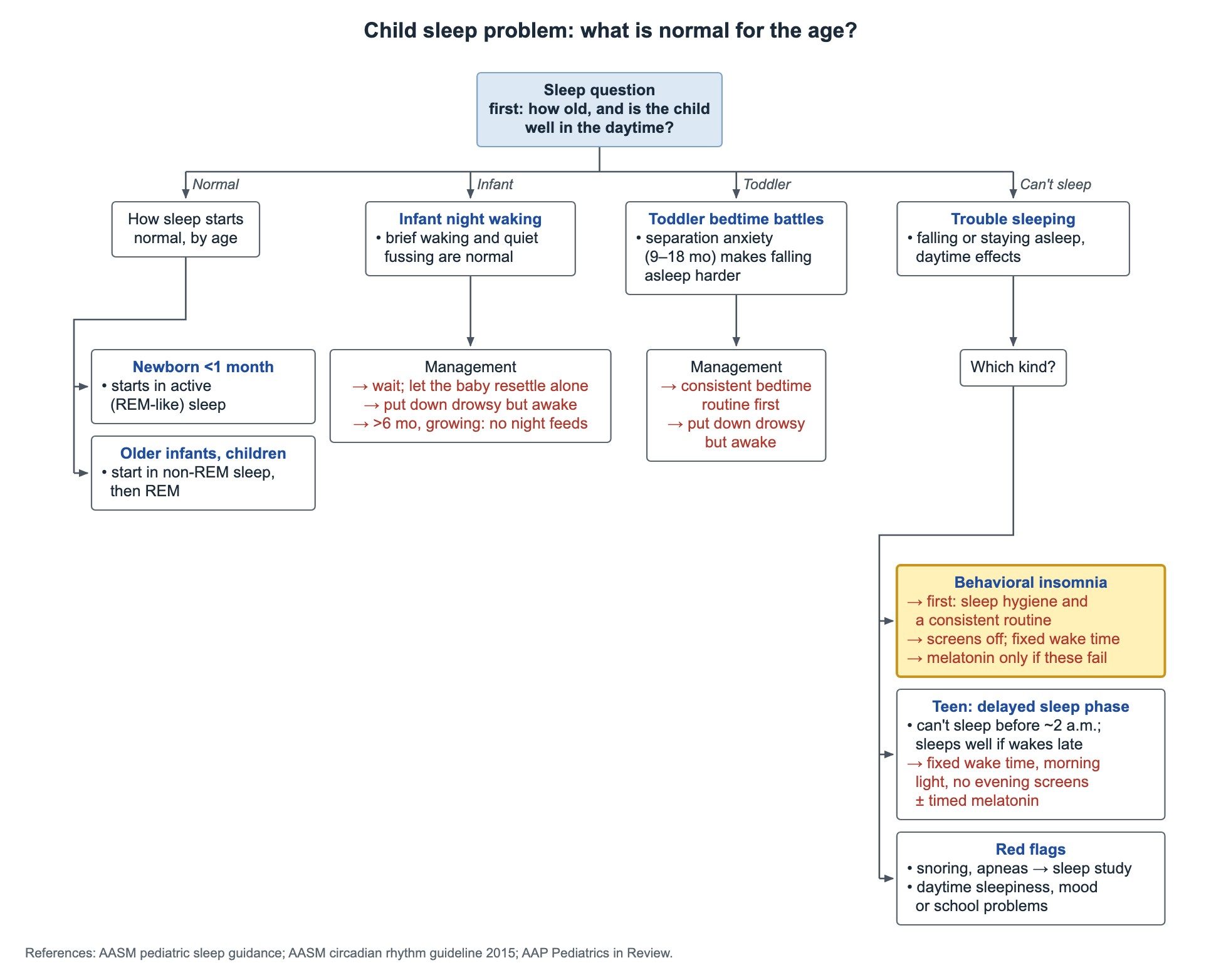
Behavioral insomnia in a school-age child usually comes with irregular bedtimes and screens in bed. Healthy sleep habits and a steady routine are the foundation of treatment.
Delayed sleep–wake phase disorder is common in teens. The teen cannot fall asleep before about 2 a.m. and cannot wake for school, but sleeps normally when allowed to wake late, for example at 11 a.m. The body clock is shifted later; sleep itself is normal.
| Problem | Treatment |
|---|---|
| Behavioral insomnia | Sleep hygiene and a consistent routine first; screens out of the bedroom; fixed wake time; melatonin only if these fail |
| Delayed sleep–wake phase (teen) | Fixed wake time every day, bright morning light, no evening screens; melatonin timed in the early evening can help |
| Snoring, witnessed apneas | Think of obstructive sleep apnea; sleep study (polysomnography) |
Night terrors, nightmares and sleepwalking
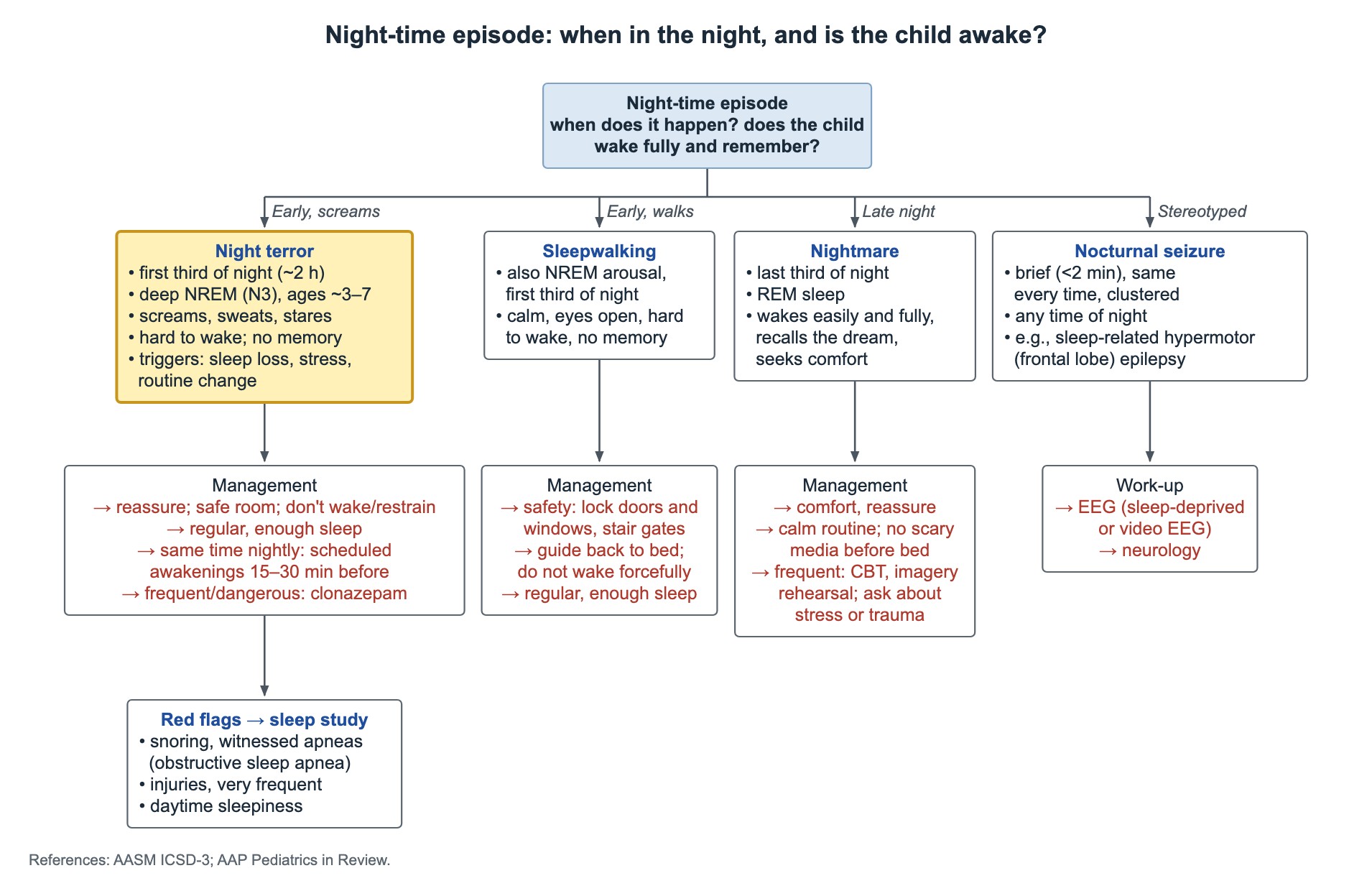
Ask two questions: when in the night does it happen, and does the child wake fully and remember it?
Night terrors are most common at about 3–7 years. The child screams, sweats and stares, with flushing, a fast heart rate, fast breathing and wide pupils, but is hard to wake and has no memory in the morning. Sleep loss, stress and changes in routine make them more frequent.
| Feature | Night terror | Sleepwalking | Nightmare | Nocturnal seizure |
|---|---|---|---|---|
| Sleep stage | Deep non-REM (N3) | Deep non-REM | REM | Any |
| Time of night | First third (about 2 hours after sleep onset) | First third | Last third | Any time |
| Child during event | Screams, sweats, stares; inconsolable | Calm, eyes open, walks | Wakes fully and seeks comfort | Brief (under 2 minutes), same every time, clustered |
| Memory | None | None | Recalls the dream | Varies |
| Next step | Reassure; safety | Safety: locks, stair gates | Comfort; calm routine | EEG and neurology |
Managing night terrors and when to test
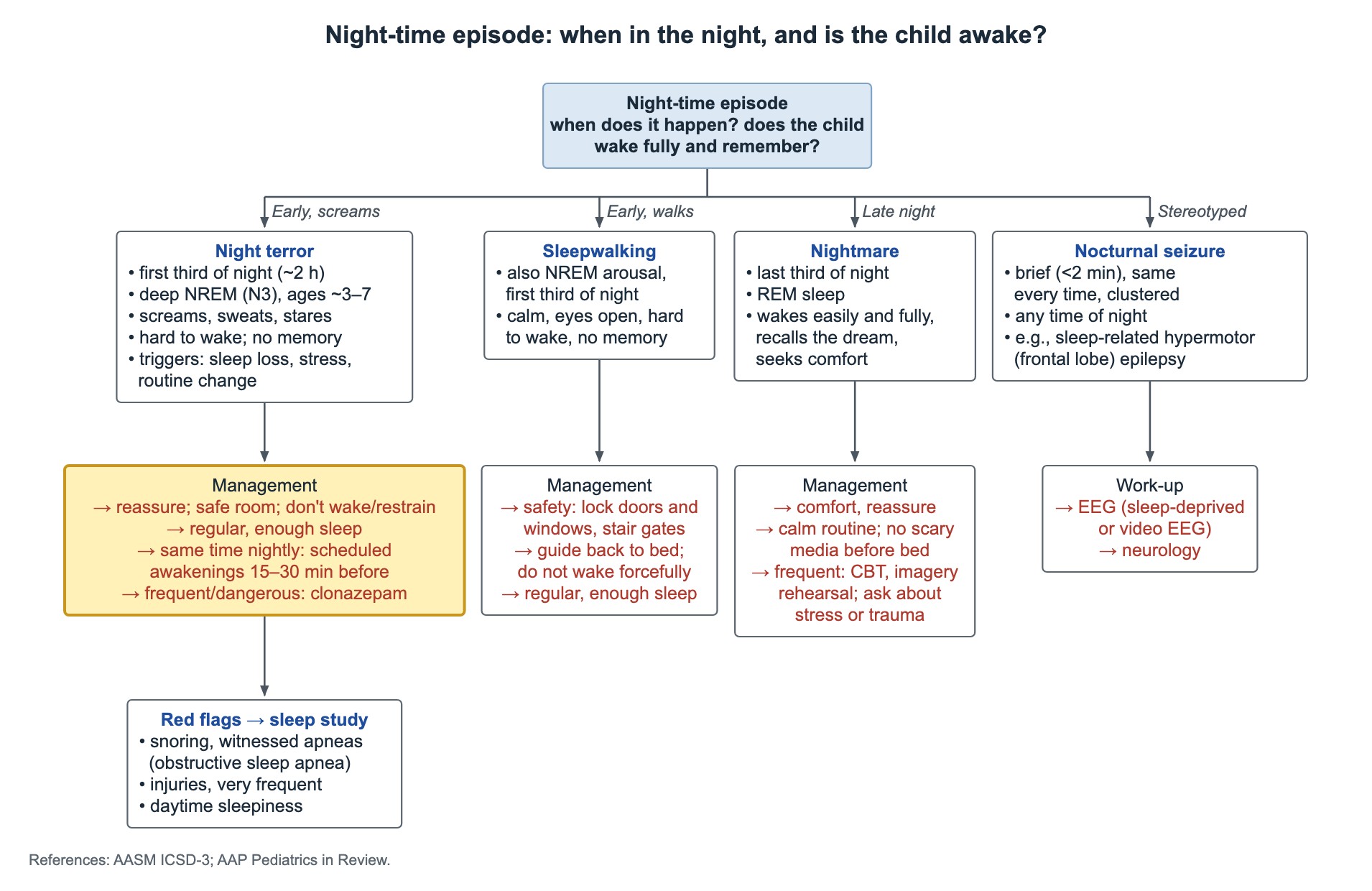
Obstructive sleep apnea fragments sleep and can trigger night terrors, so ask about snoring. Snoring, witnessed apneas, injuries, very frequent events or daytime sleepiness call for a formal sleep study.
Brief (under 2 minutes), stereotyped events that cluster in the night suggest sleep-related hypermotor epilepsy, formerly called nocturnal frontal lobe epilepsy. Get a sleep-deprived or video EEG and a neurology referral.
- First line for typical night terrors: reassure the parents, make the room safe, and do not wake or restrain the child.
- Make sure the child gets regular, enough sleep, because sleep loss triggers events.
- Terrors at a predictable time almost every night: scheduled awakenings 15–30 minutes before the usual time.
- Clonazepam only for frequent or dangerous events when behavior measures fail.
- Sleepwalking: lock doors and windows, use stair gates, guide the child back to bed without forcing them awake.
- Frequent nightmares: calm routine, no scary media before bed; ask about stress or trauma; CBT with imagery rehearsal helps.
Common questions
What is the difference between a night terror and a nightmare?
A night terror comes from deep non-REM sleep in the first third of the night; the child is hard to wake and has no memory. A nightmare comes from REM sleep in the last third of the night; the child wakes fully, remembers the dream and can be comforted.
Should you wake a child during a night terror?
No. Keep the child safe and wait; waking can prolong the episode. If terrors happen at the same time every night, wake the child 15–30 minutes before the usual time.
How many hours of sleep does a teenager need?
8–10 hours per 24 hours for ages 13–18 years, by the AASM consensus endorsed by the AAP.
Study this topic
Sources
- AASM 2016: Recommended amount of sleep for pediatric populations (J Clin Sleep Med)
- AASM 2015: Treatment of intrinsic circadian rhythm sleep-wake disorders (J Clin Sleep Med)
- AAP 2012: Diagnosis and management of childhood obstructive sleep apnea (Pediatrics)
Written for Pedemy in our own words from the sources above; checked November 2026. For education only, not medical advice; check doses and local protocols before treating a patient. Pedemy is independent and not affiliated with or endorsed by the organizations cited.