

Main decision tree
Physical symptoms, work-up done: which disorder?
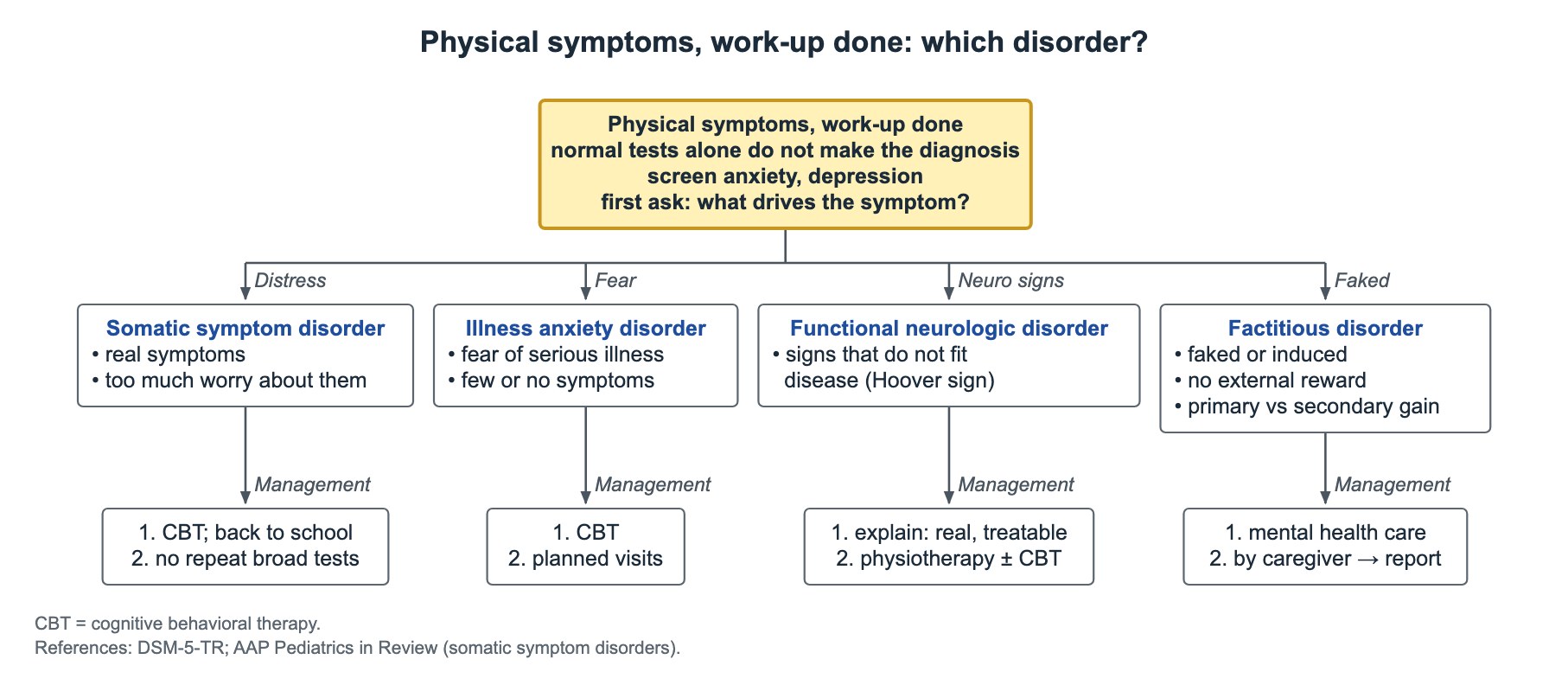
Key points
- Screen every child with ongoing unexplained physical complaints for anxiety and depression.
- Somatic symptom disorder: distressing symptoms plus excessive thoughts, worry or behavior about them for usually 6 months or more.
- Illness anxiety disorder: fear of a serious illness for 6 months or more with few or no symptoms.
- Functional neurologic disorder: real symptoms with positive exam signs that do not fit known disease, such as a positive Hoover sign.
- Factitious disorder: symptoms faked or induced with no external reward; malingering is faking for an external reward.
- Goal of treatment is restored daily function and school attendance, not a cure of every symptom.
- CBT is the evidence-based therapy; avoid repeating broad tests once the work-up is done.
Physical symptoms after a normal work-up
Do a focused evaluation guided by the history and exam. Once it is done, explain the findings and look at what drives the symptom.
Screen for anxiety and depression with validated tools: they often present as bellyaches, headaches or fatigue. School-morning stomach pain with a normal evaluation, missed school and constant worry points to anxiety.
| Disorder | Core feature |
|---|---|
| Somatic symptom disorder | Real symptoms, too much worry and behavior about them |
| Illness anxiety disorder | Fear of serious illness, few or no symptoms |
| Functional neurologic disorder | Neurologic signs that do not fit disease |
| Factitious disorder | Symptoms faked or induced, no external reward |
| Malingering | Symptoms faked for an external reward (not a mental disorder) |
Somatic symptom disorder
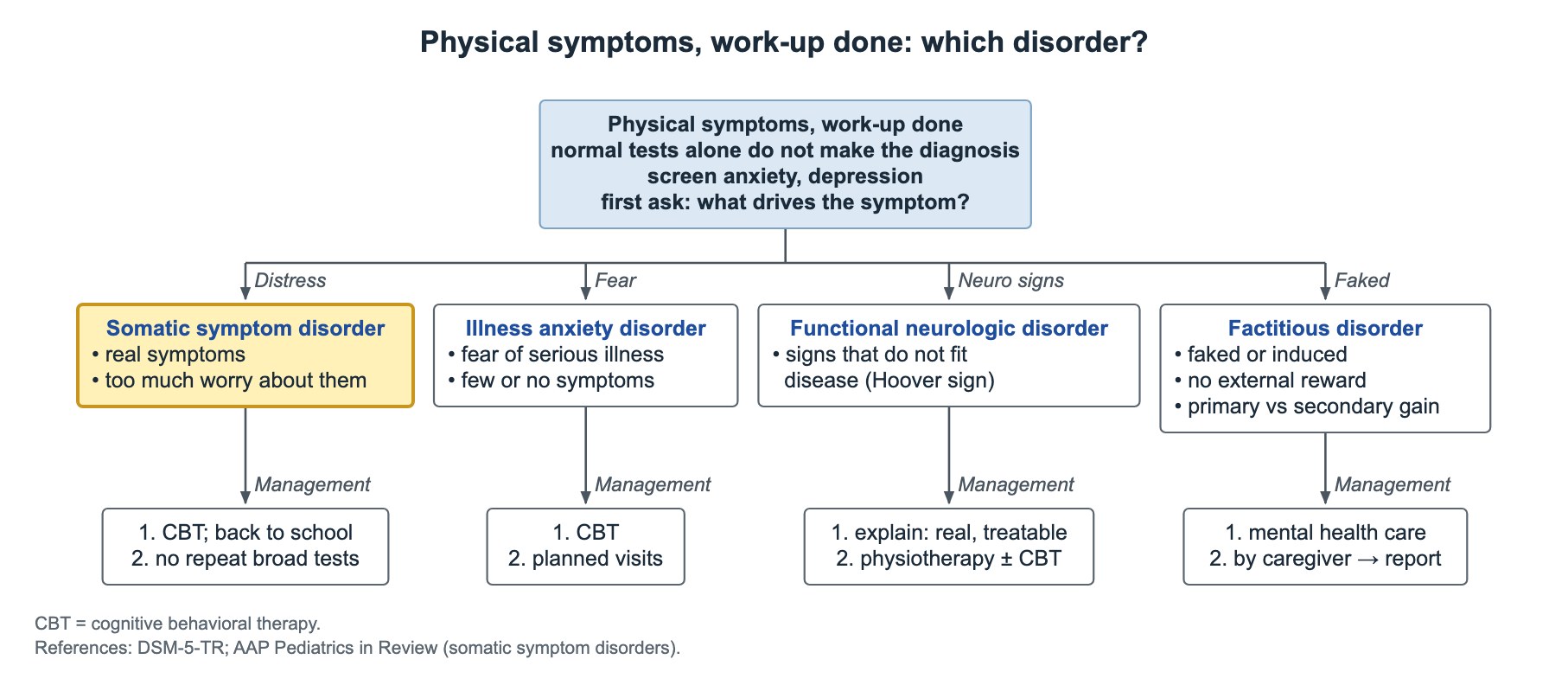
Somatic symptom disorder is one or more distressing physical symptoms with excessive thoughts, anxiety or behavior about them, usually for 6 months or more. The symptoms are real; the response to them is out of proportion.
A medical illness may coexist, so the diagnosis rests on the thoughts and behaviors, not on normal tests alone. Illness anxiety is different because symptoms are minor or absent.
Managing somatic symptom disorder
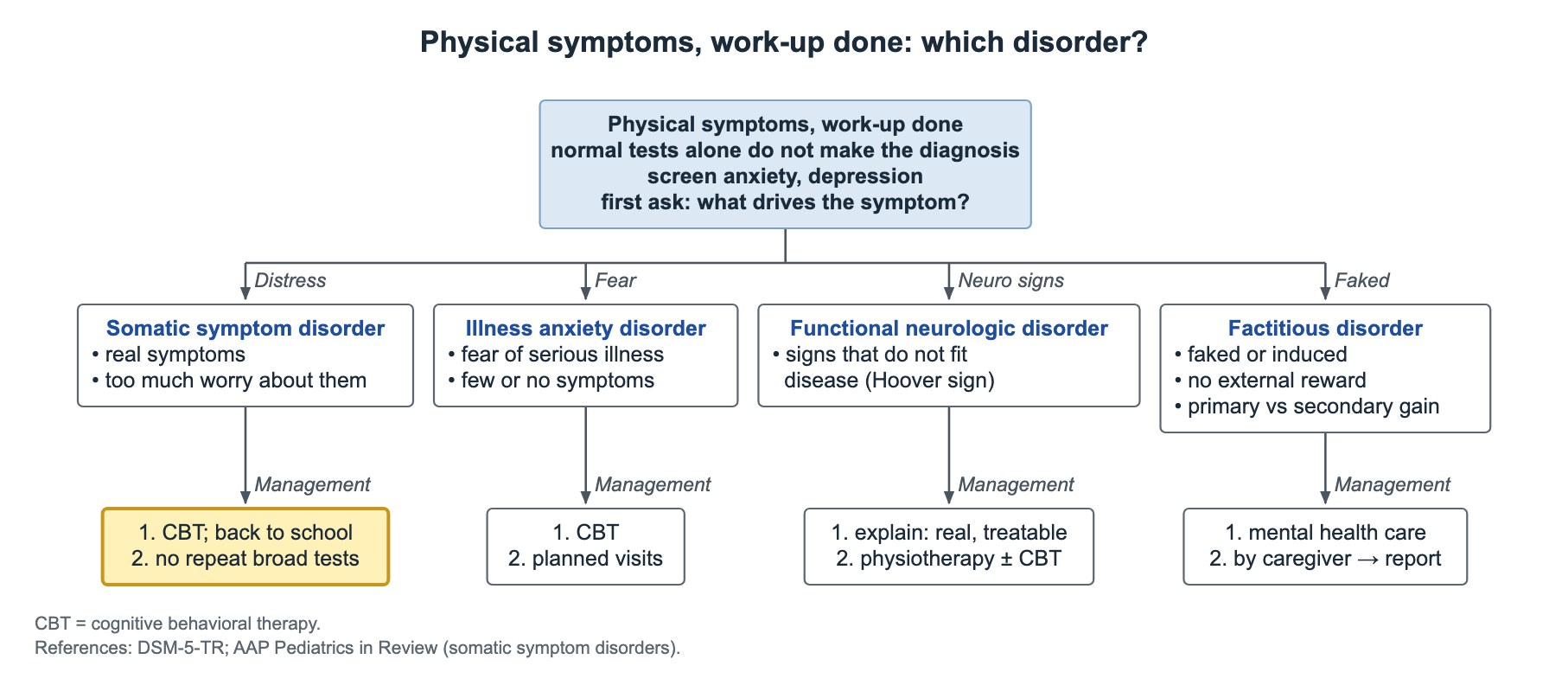
- Main aim: restore daily function, including a quick return to school.
- CBT is the evidence-based psychotherapy; it can include relaxation and coping skills.
- Once a thorough work-up is done, do not reorder broad tests for unchanged symptoms; repeated tests reinforce worry.
- See the child at regular planned visits rather than only when symptoms flare.
- Treat coexisting anxiety or depression.
Illness anxiety disorder
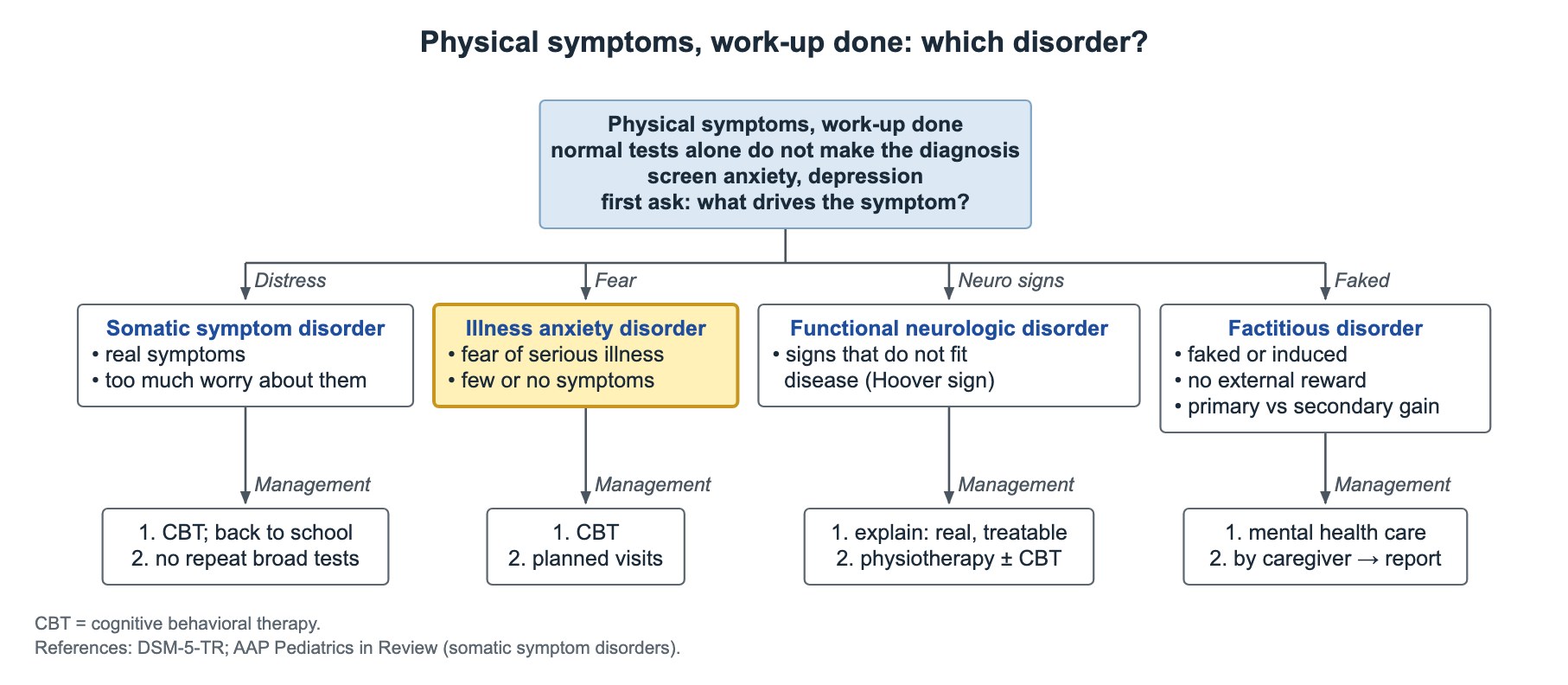
Illness anxiety disorder is a fear of having or getting a serious illness for 6 months or more, with few or no physical symptoms. The child or family checks often or avoids doctors.
Management is CBT and regular planned visits with one clinician.
Functional neurologic disorder (conversion disorder)
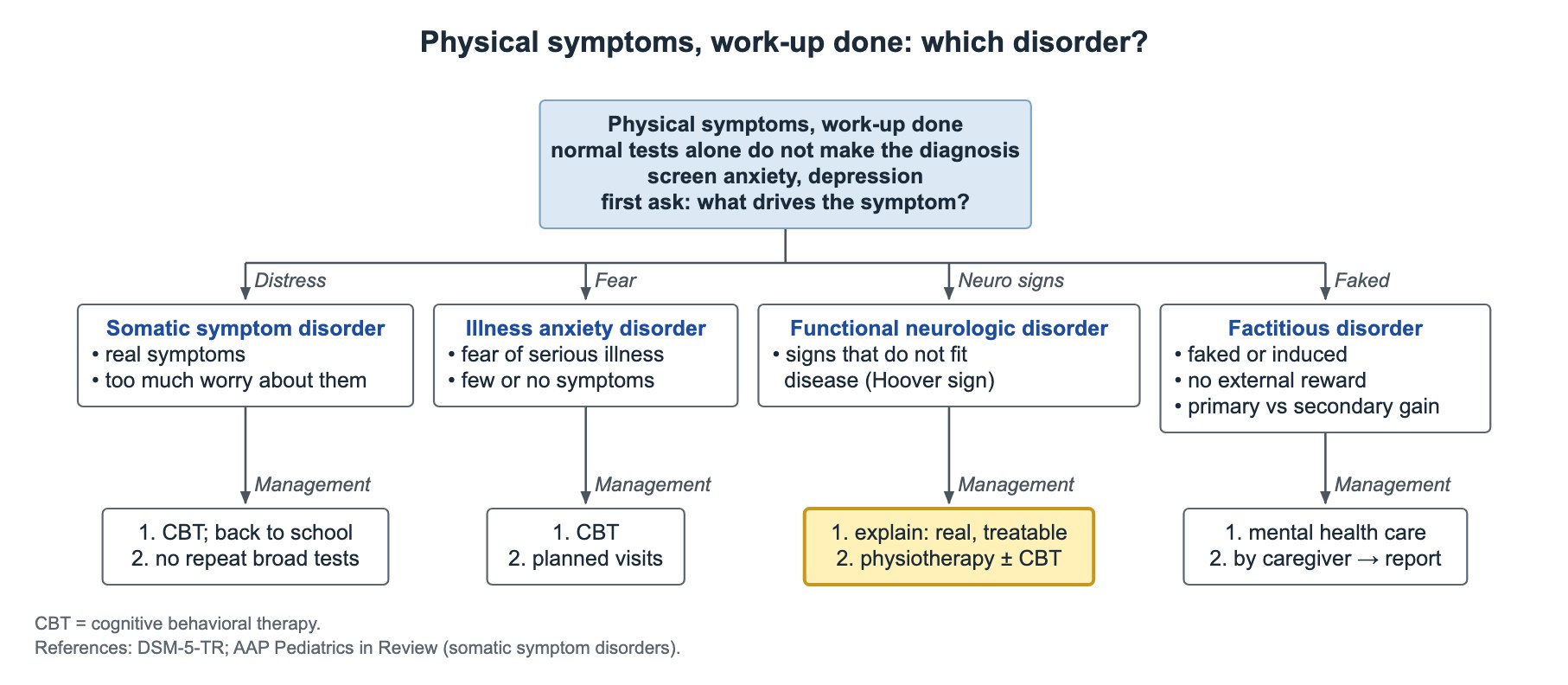
Functional neurologic disorder causes real motor or sensory symptoms, such as weakness, abnormal movements, nonepileptic seizures or sensory loss. The diagnosis rests on positive exam features that do not fit recognized neurologic disease, not only on normal tests. A stressor is not needed for the diagnosis.
- Hoover sign: hip extension is weak when tested directly but returns when the child flexes the opposite hip.
- Explain the diagnosis as real, common and treatable.
- Physiotherapy-led rehabilitation is the main treatment, with CBT when helpful.
Factitious disorder and gain
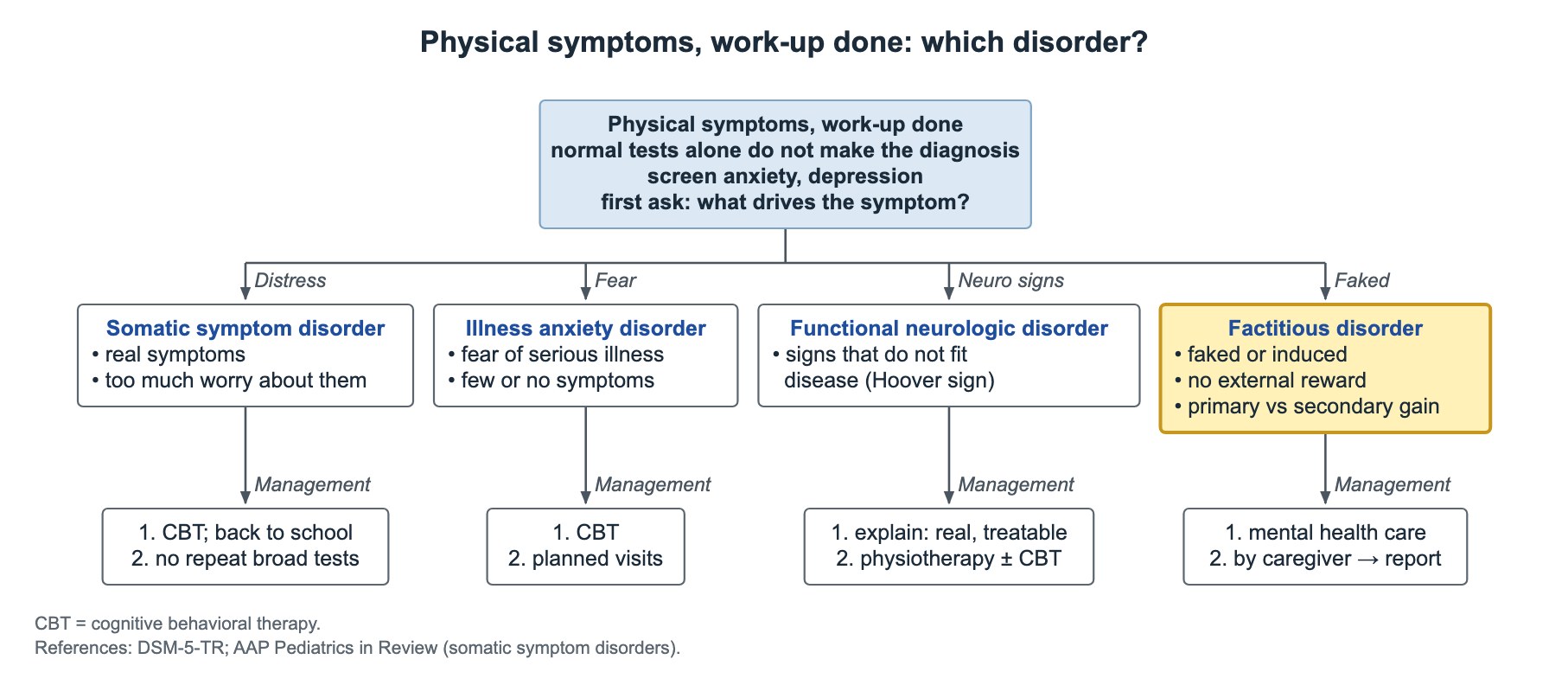
- Factitious disorder: symptoms are deliberately faked or induced with no obvious external reward. Refer for mental health care.
- Factitious disorder imposed on another (a caregiver fabricates or induces illness in a child) is child maltreatment: report to child protective services.
- Primary gain: the symptom relieves inner distress or conflict, such as leg weakness after a frightening event.
- Secondary gain: outside benefits, such as extra attention or missed tests. Secondary gain does not prove deliberate faking.
- Malingering: faking for an external reward, such as avoiding school or getting money.
Common questions
What is the difference between somatic symptom disorder and illness anxiety disorder?
In somatic symptom disorder the physical symptoms are prominent and cause excessive worry. In illness anxiety disorder the fear of illness dominates and symptoms are mild or absent.
What is the difference between primary and secondary gain?
Primary gain is relief of inner distress by the symptom. Secondary gain is an outside benefit such as attention or missed school; it does not mean the child is faking.
How is functional neurologic disorder treated in children?
Explain that the symptoms are real and treatable, then start physiotherapy-led rehabilitation, adding CBT when helpful.
Study this topic
Sources
- Malas et al.: Pediatric somatic symptom disorders (Curr Psychiatry Rep 2017)
- Espay et al.: Current concepts in diagnosis and treatment of functional neurological disorders (JAMA Neurol 2018)
Written for Pedemy in our own words from the sources above; checked November 2026. For education only, not medical advice; check doses and local protocols before treating a patient. Pedemy is independent and not affiliated with or endorsed by the organizations cited.