

Main decision tree
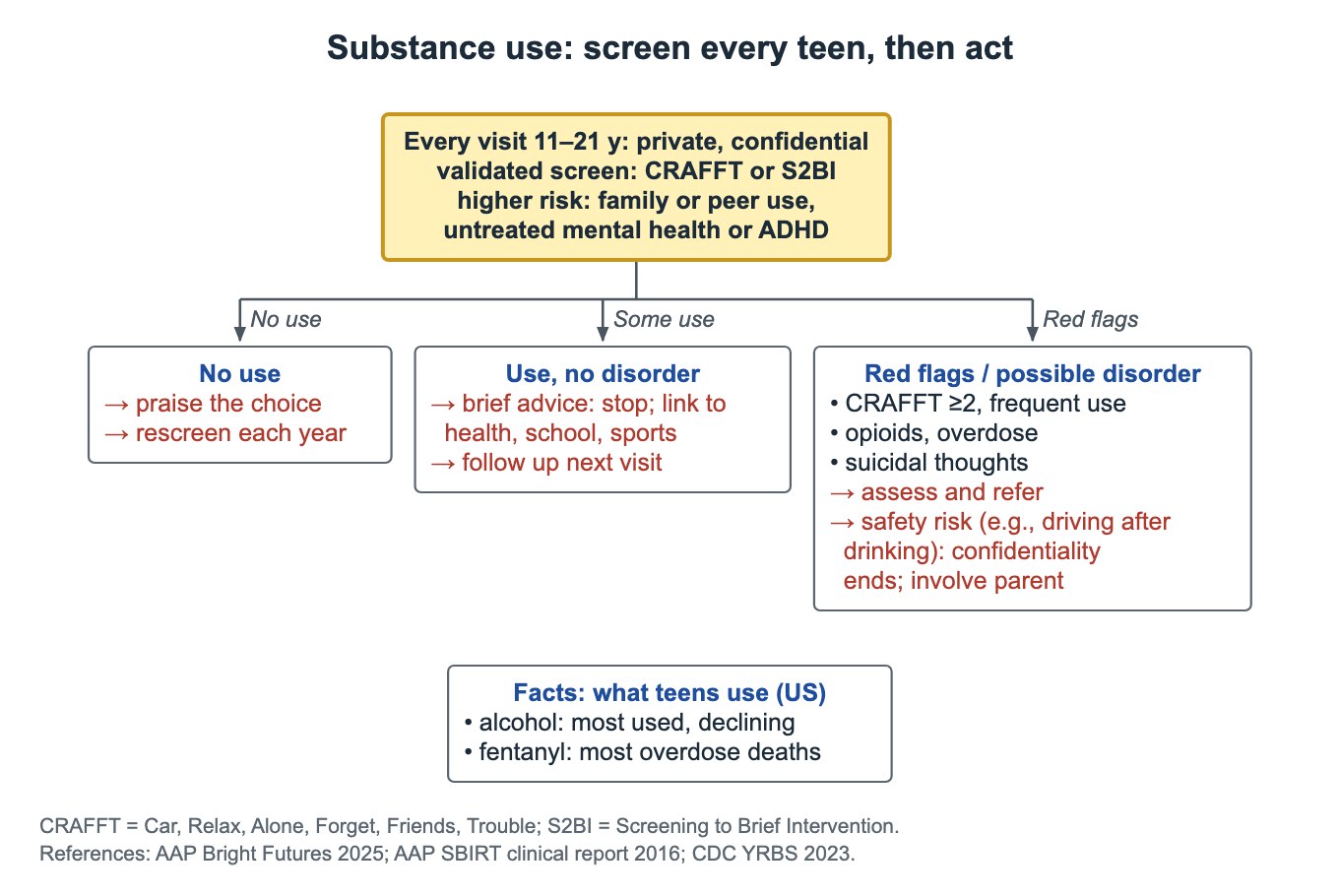
Substance use: screen every teen, then act
Key points
- Screen every patient 11–21 years privately with a validated tool such as CRAFFT or S2BI; CRAFFT score ≥2 needs further assessment.
- Alcohol is the substance US high-school students use most; illicit fentanyl causes most adolescent overdose deaths.
- Urine immunoassays are qualitative; confirm an unexpected positive with GC-MS; standard panels miss fentanyl, K2, bath salts and steroids.
- Opioid overdose: support breathing with bag-mask ventilation, then naloxone (IV 0.1 mg/kg, max 2 mg), repeated as needed.
- Opioid use disorder: buprenorphine plus behavioral counseling; naltrexone only after 7–10 opioid-free days.
- Sympathomimetic toxicity (hot, fast heart, high BP, big pupils): benzodiazepine first plus cooling; avoid beta-blockers in cocaine chest pain.
- Never stop long-term benzodiazepines abruptly (seizures); taper about 5–10% every 2–4 weeks.
Screening, brief intervention and drug testing
Interview the teen alone, with confidentiality explained, using a validated tool such as CRAFFT or S2BI. Do this at every visit from 11 to 21 years. Risk is higher with family or peer use and with untreated mental health problems or ADHD.
Teens who misuse prescription stimulants usually get them from friends or classmates, so counsel teens on ADHD medicine never to share pills.
- No use: praise the choice and rescreen each year.
- Use without a disorder (for example, alcohol once or twice in the past year with no CRAFFT problems): brief advice to stop, link it to health, school or sports goals, and recheck next visit.
- Red flags (CRAFFT ≥2, frequent use, opioids, overdose, suicidal thoughts): assess further and refer.
- Confidentiality ends when there is a safety risk, such as driving after drinking: involve a parent.
| Drug testing point | What to know |
|---|---|
| Consent | Test only with a clinical reason and the teen's knowledge; no covert testing; advise against secret home kits |
| Result type | Immunoassays are yes/no (qualitative); they do not show amount or timing |
| Confirmation | Unexpected positive → gas chromatography–mass spectrometry (GC-MS) |
| False positives | Bupropion → amphetamines; quinolones → opiates |
| Missed by standard panels | Fentanyl, synthetic cannabinoids (K2), cathinones (bath salts), anabolic steroids; often clonazepam and lorazepam → order comprehensive testing |
| How long positive | Cannabis up to ~30 days after daily use (fat-soluble); cocaine a few days; MDMA about 1–2 days (2–4 after heavy use) |
Alcohol, benzodiazepines and GHB
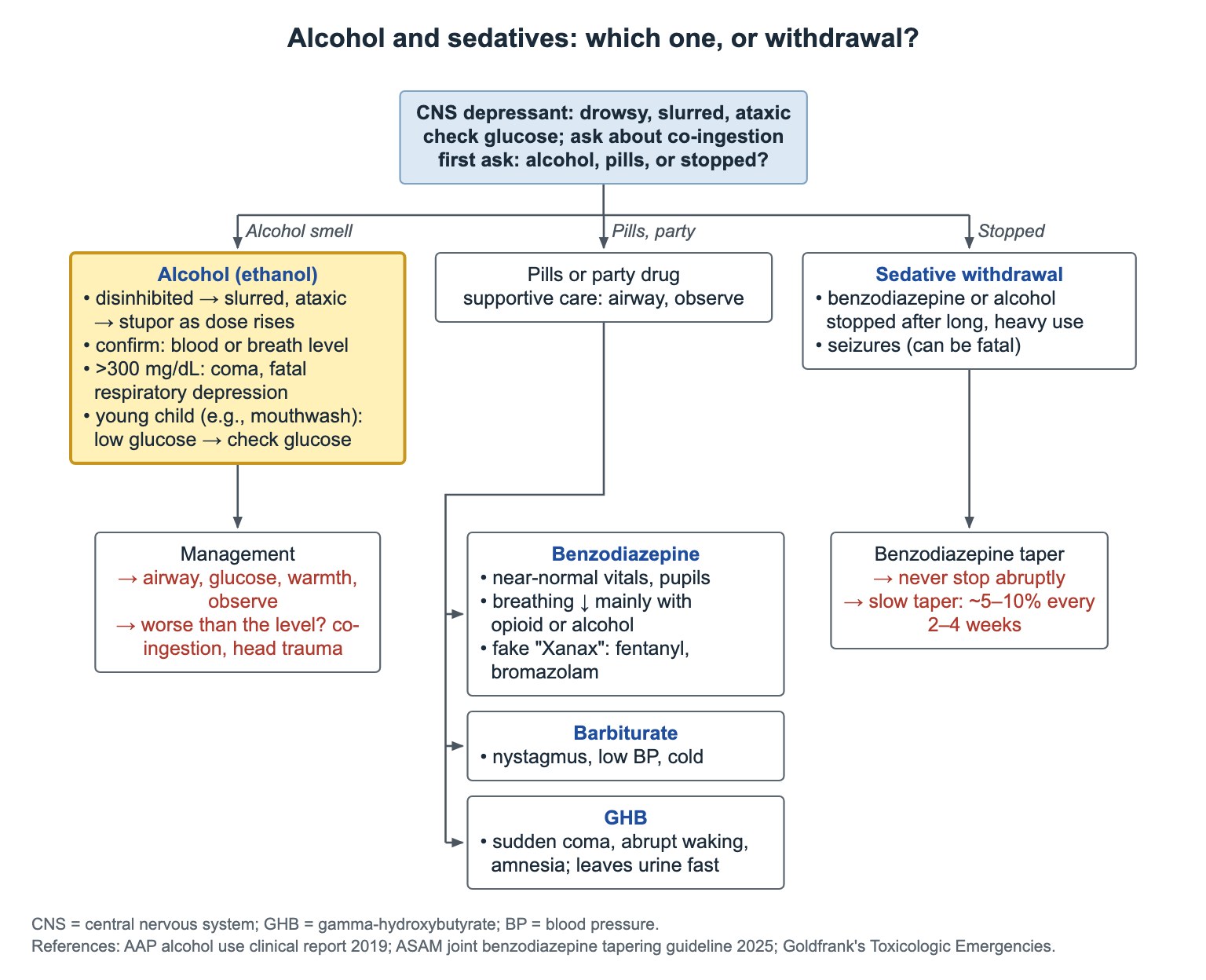
- Alcohol: disinhibition, then slurred speech and ataxia, then stupor as levels rise; confirm with a blood or breath alcohol level.
- Young child who drank ethanol (for example mouthwash): check point-of-care glucose first, because ethanol causes hypoglycemia.
- Responds less than the level explains (for example, 60 mg/dL but responds only to pain): look for co-ingestion or head trauma.
- Benzodiazepine overdose: sedation, slurred speech and ataxia with near-normal vital signs and pupils; breathing slows mainly with opioids or alcohol. Fake "Xanax" pills may contain fentanyl or bromazolam.
- GHB: sudden deep coma, then abrupt waking with amnesia hours later; it clears the urine quickly.
- Benzodiazepine withdrawal after long, heavy use can cause seizures and can be fatal: never stop abruptly; switch to a slow taper of about 5–10% every 2–4 weeks.
Cannabis, vaping and nicotine
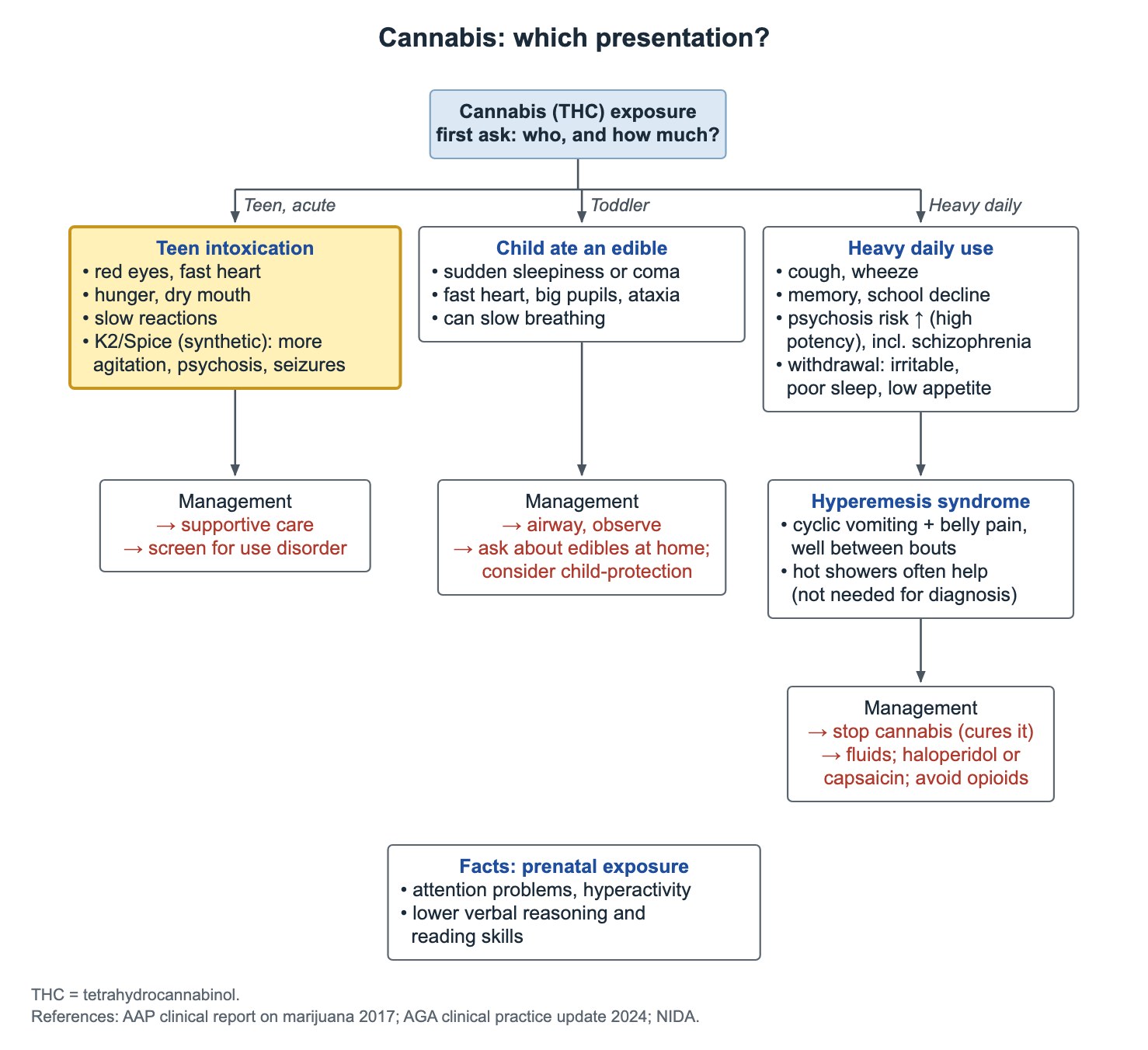
- Cannabis intoxication: red eyes, fast heart, increased appetite, dry mouth, slowed reactions and slurred speech.
- Synthetic cannabinoids (K2, Spice): more severe agitation, hallucinations, psychosis and seizures; not detected by the THC screen.
- Heavy daily use: cough and wheeze, memory and school decline, and a dose-dependent risk of psychosis, including later schizophrenia.
- Cannabinoid hyperemesis syndrome: daily use with repeated bouts of severe vomiting and well periods between; hot showers ease attacks; stopping cannabis is the definitive treatment.
- Withdrawal: cannabis lowers appetite; nicotine withdrawal raises it. Both cause irritability and poor sleep.
- E-cigarette use in teens raises the risk of later cigarette smoking.
- EVALI: cough, hypoxemia and bilateral ground-glass opacities without infection after vaping, most strongly linked to vitamin E acetate in THC products.
- Nicotine dependence: behavioral counseling for every teen, with nicotine replacement when dependence is moderate to severe.
Stimulants: methamphetamine, cathinones, MDMA, cocaine
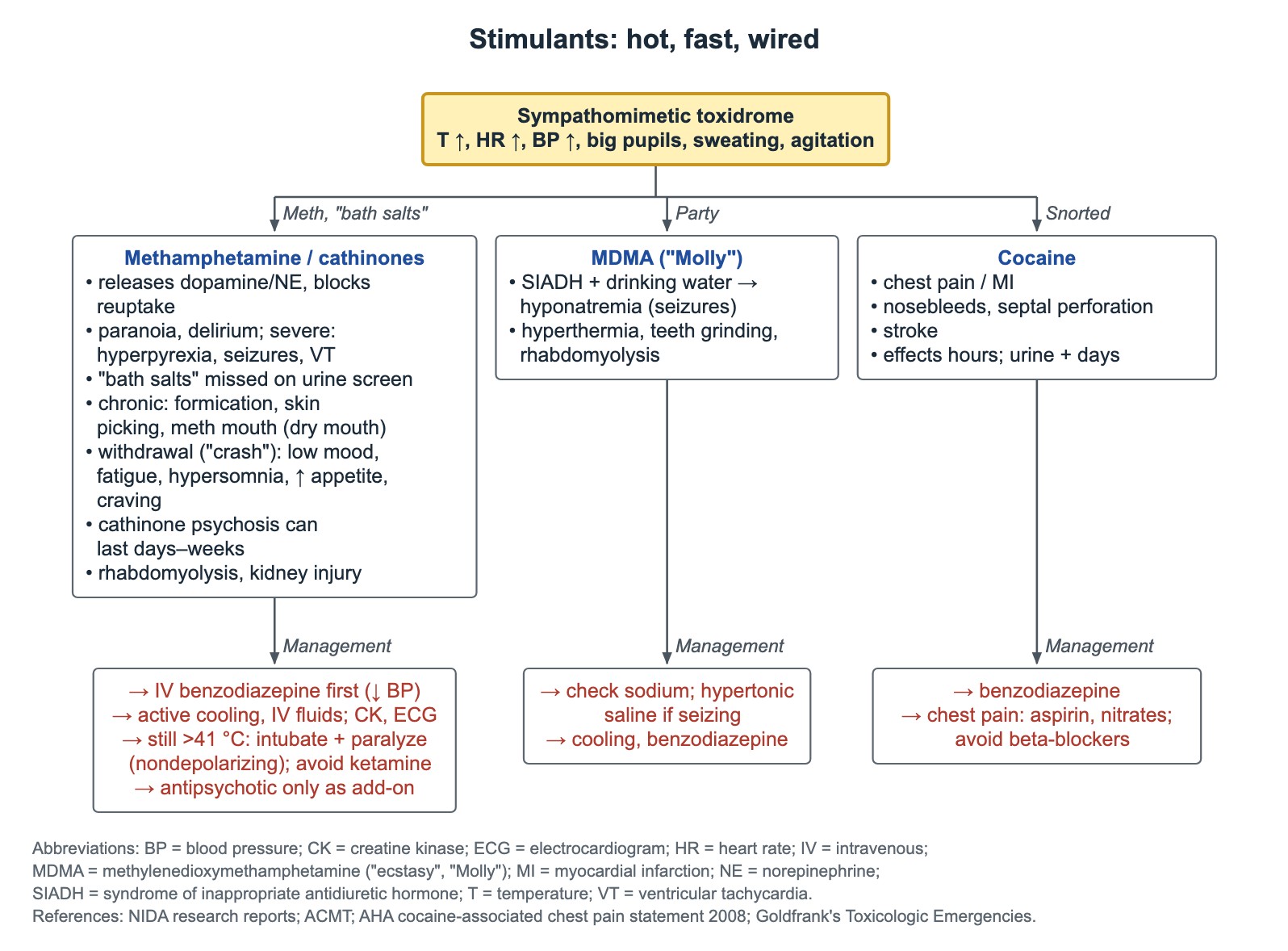
The sympathomimetic toxidrome is high temperature, fast heart rate, high blood pressure, dilated pupils, sweating and agitation.
- Methamphetamine ("speed"): paranoia; severe cases bring hyperthermia, seizures and ventricular arrhythmia. Chronic use causes "meth mouth" (rampant caries). The withdrawal "crash" brings low mood, hypersomnia, more appetite and craving.
- Synthetic cathinones (bath salts): severe combative agitation that can last days to weeks; seizures, rhabdomyolysis and kidney injury; missed by standard urine screens.
- MDMA ("Molly"): hyponatremia from ADH release plus heavy water drinking, with seizures; also hyperthermia, teeth grinding and rhabdomyolysis.
- Cocaine: effects last a few hours; urine stays positive a few days. Chest pain or MI, nosebleeds, septal perforation and stroke from blood pressure surges and vasospasm.
- Treatment: IV benzodiazepine first, active cooling and IV fluids; check CK and ECG. Temperature still above 41 °C (105.8 °F): intubate with nondepolarizing paralysis. Avoid ketamine for induction.
- Cocaine chest pain: benzodiazepine plus aspirin and nitrates; avoid beta-blockers.
- MDMA hyponatremia with seizures: hypertonic saline.
Opioids: overdose, withdrawal and use disorder
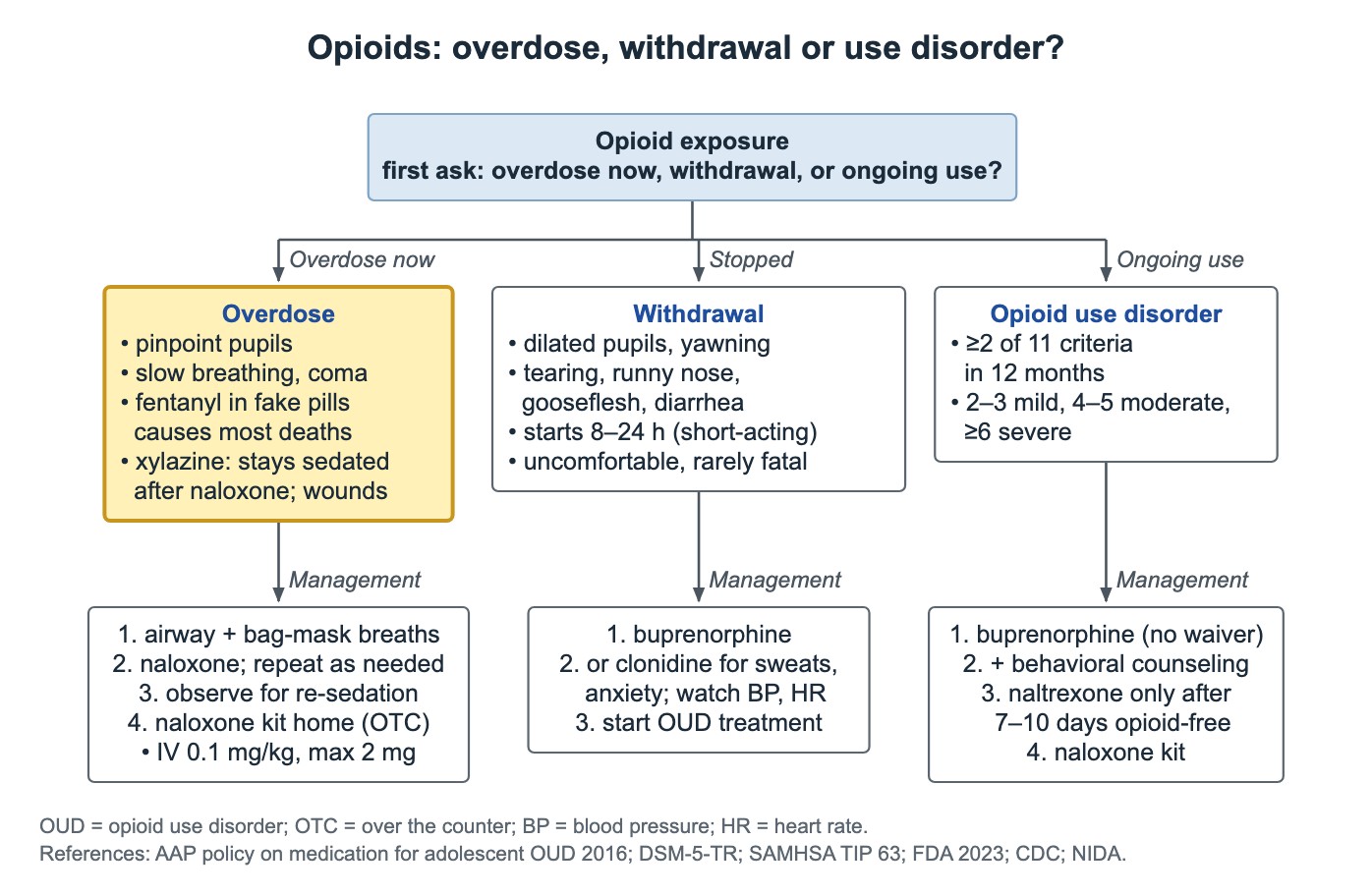
- Overdose: pinpoint pupils, slow breathing and coma. Most adolescent overdose deaths now involve illicit fentanyl, often in counterfeit pills made to look like oxycodone ("M30") or alprazolam.
- Treatment: open the airway and give bag-mask breaths, then naloxone (IV 0.1 mg/kg, max 2 mg), repeated as needed; observe for re-sedation.
- Xylazine adulterant: stays sedated and bradycardic after naloxone, with necrotic skin wounds; naloxone does not reverse it, so keep supporting breathing.
- Naloxone nasal spray has been sold over the counter since 2023; send every at-risk teen home with a kit.
- Withdrawal: dilated pupils, yawning, tearing, runny nose, gooseflesh and diarrhea, starting 8–24 hours after a short-acting opioid; uncomfortable, rarely fatal. Clonidine eases autonomic symptoms; watch for low BP and bradycardia.
- Opioid use disorder: at least 2 of 11 criteria in 12 months; 2–3 mild, 4–5 moderate, 6 or more severe.
- Treatment: buprenorphine (no special waiver needed) with behavioral counseling. Extended-release naltrexone only after 7–10 opioid-free days, to avoid precipitated withdrawal.
Hallucinogens, dextromethorphan and inhalants
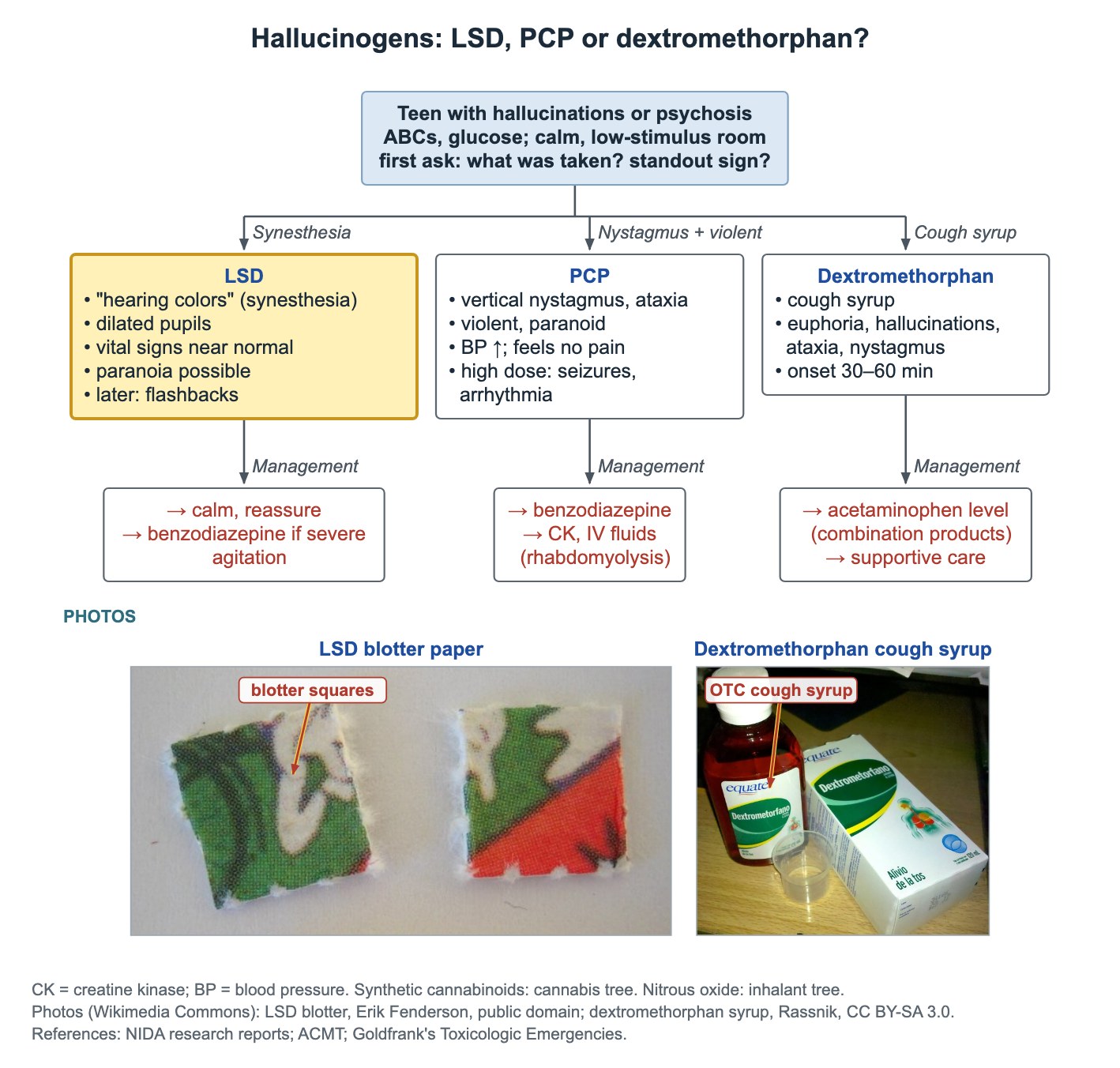
- LSD: synesthesia ("hearing colors"), dilated pupils, vivid hallucinations with near-normal vital signs; paranoia and aggression can occur; later flashbacks. Calm, reassure; benzodiazepine for severe agitation.
- PCP: vertical nystagmus, ataxia, violent paranoia, high BP and no pain; benzodiazepine, check CK and give IV fluids.
- Dextromethorphan (cough syrup): euphoria, hallucinations, ataxia and nystagmus 30–60 minutes after use; check an acetaminophen level because of combination products.
- Inhalant clues: rash around the mouth and nose, solvent smell, paint on skin, tearing, runny nose and drooling.
- Sudden sniffing death: the myocardium is sensitized to catecholamines → ventricular arrhythmia. After syncope, get an ECG and monitor; keep the teen calm.
- Chronic toluene: non-anion-gap metabolic acidosis with low potassium (distal RTA).
- Nitrites (poppers): methemoglobinemia with cyanosis despite oxygen, chocolate-brown blood and normal PaO2 → methylene blue.
- Nitrous oxide (whippets): brief euphoria; long inhalation causes hypoxia; repeated use inactivates vitamin B12 → neuropathy, ataxia or psychosis; stop use and give B12.
- Forceful inhalation can cause pneumothorax.
Anabolic-androgenic steroids
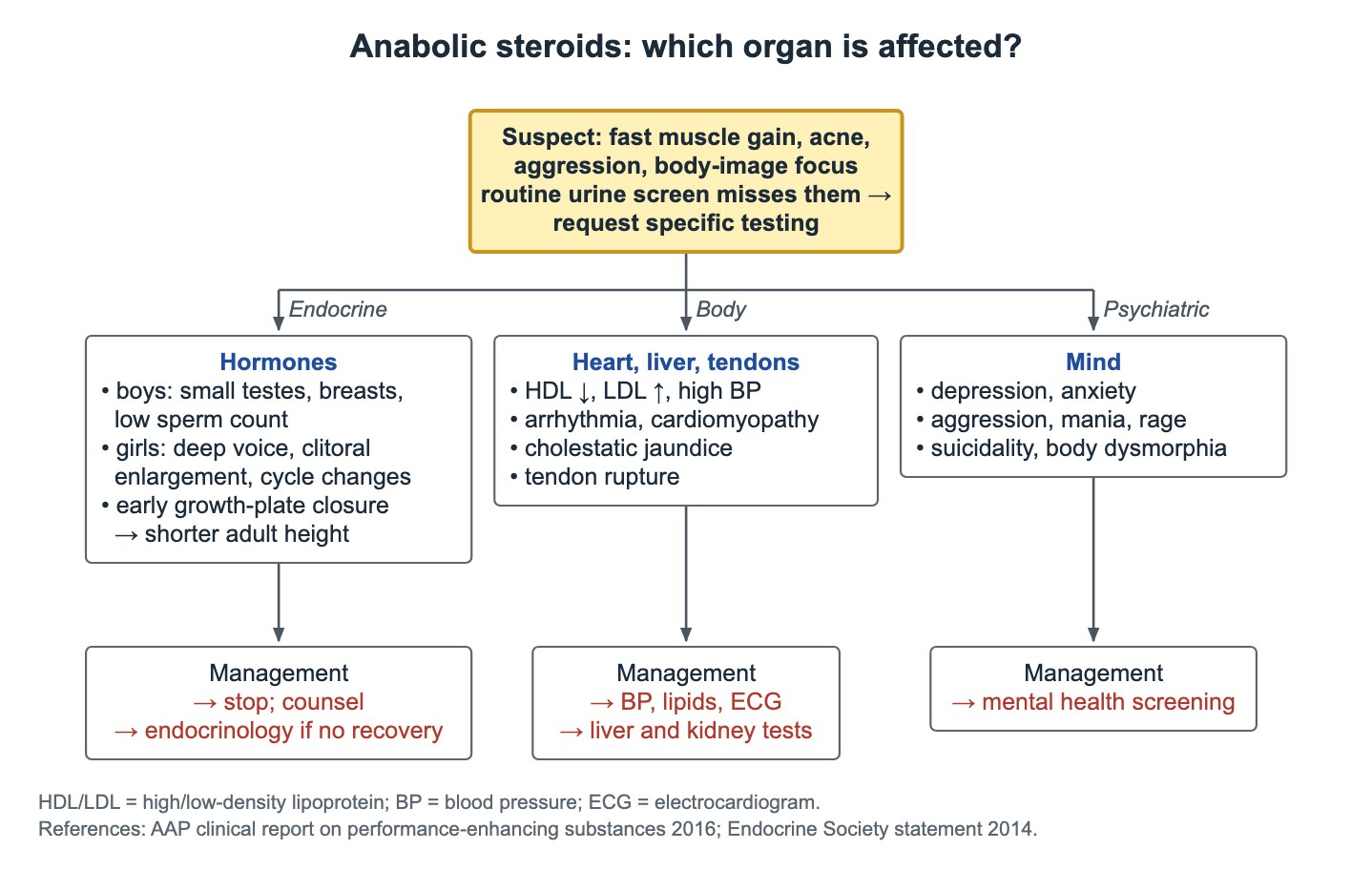
Suspect steroids with fast muscle gain, acne, aggression and a strong focus on body image. A routine urine drug screen does not detect them; request specific testing.
- Boys: testicular atrophy, gynecomastia and low sperm count. Girls: deep voice, clitoral enlargement and cycle changes.
- Early growth-plate closure → shorter adult height.
- Heart: HDL falls, LDL rises, high BP, arrhythmias and cardiomyopathy.
- Liver: cholestatic jaundice; also tendon rupture.
- Mind: depression, anxiety, aggression or mania, suicidality and muscle dysmorphia; screen mental health.
- Check BP, lipids, ECG, liver and kidney tests; refer to endocrinology if hormones do not recover after stopping.
Common questions
How do you screen adolescents for substance use?
Interview the teen privately and confidentially at every visit from 11 years with a validated tool such as CRAFFT or S2BI, then give brief advice, follow-up or referral based on the result.
Does a urine drug screen detect fentanyl?
No. The standard opiate immunoassay misses fentanyl, synthetic cannabinoids and bath salts; order specific or comprehensive testing.
What is the naloxone dose for children?
0.1 mg/kg IV, up to 2 mg per dose, repeated as needed after breathing is supported with bag-mask ventilation.
How long does marijuana stay in urine?
After daily use, urine THC can stay positive for up to about 30 days because THC is fat-soluble; after a single use it is usually a few days.
Study this topic
Sources
- AAP clinical report: Substance use screening, brief intervention, and referral to treatment (Pediatrics 2016)
- AAP clinical report: Testing for drugs of abuse in children and adolescents (Pediatrics 2014)
- AAP policy statement: Medication-assisted treatment of adolescents with opioid use disorders (Pediatrics 2016)
- AHA 2023 focused update: cardiac arrest or life-threatening toxicity due to poisoning (Circulation)
- AAP clinical report: Protecting children and adolescents from tobacco and nicotine (Pediatrics 2023)
Written for Pedemy in our own words from the sources above; checked November 2026. For education only, not medical advice; check doses and local protocols before treating a patient. Pedemy is independent and not affiliated with or endorsed by the organizations cited.