

Main decision tree
Adversity: PTSD, attachment disorder, or at risk?
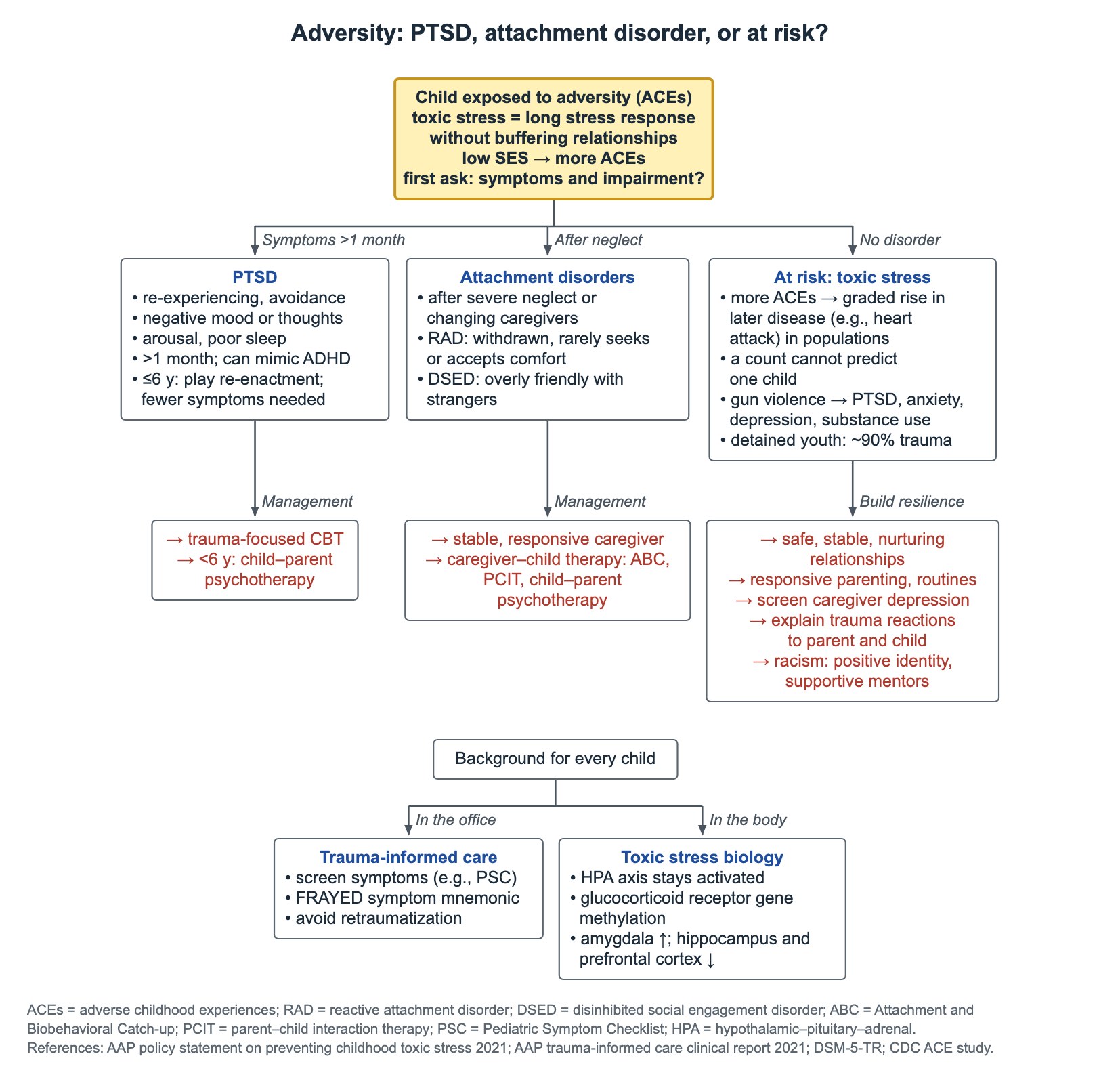
Key points
- Toxic stress = strong, frequent or prolonged stress activation without buffering relationships; tolerable stress is buffered by a caring adult.
- More ACEs → graded rise in adult disease and risky behavior, including ischemic heart disease; an ACE count cannot predict one child's outcome.
- Screen for trauma symptoms with a validated behavioral screen (eg, Pediatric Symptom Checklist), not an ACE checklist.
- PTSD: intrusion, avoidance, negative mood or thoughts and hyperarousal for more than 1 month; children 6 years and younger need fewer symptoms.
- Trauma-focused CBT for school-age children and teens with PTSD; child–parent psychotherapy for children under 6.
- After neglect: reactive attachment disorder = withdrawn, rarely seeks comfort; disinhibited social engagement disorder = overly friendly with strangers.
- About 90% of youth in juvenile detention have experienced trauma.
Adversity and toxic stress
Start every child exposed to adversity with one question: are there symptoms and impairment? Symptoms lasting more than 1 month point to PTSD, a history of severe neglect to an attachment disorder, and no disorder to a child at risk who needs resilience-building.
Stress responses come in three kinds. Positive stress is brief and mild. Tolerable stress is serious but time-limited and buffered by a supportive adult. Toxic stress is strong, frequent or prolonged activation of the stress response without buffering relationships.
- Low family socioeconomic status is linked to more ACEs, including maltreatment and neglect.
- The HPA (hypothalamic–pituitary–adrenal) axis stays activated, with prolonged cortisol exposure.
- Cortisol-driven epigenetic change: methylation of the glucocorticoid receptor gene alters later stress regulation.
- Brain effects: the amygdala becomes more active, while the hippocampus and prefrontal cortex become less active, affecting memory, learning and self-regulation.
Adverse childhood experiences (ACEs)
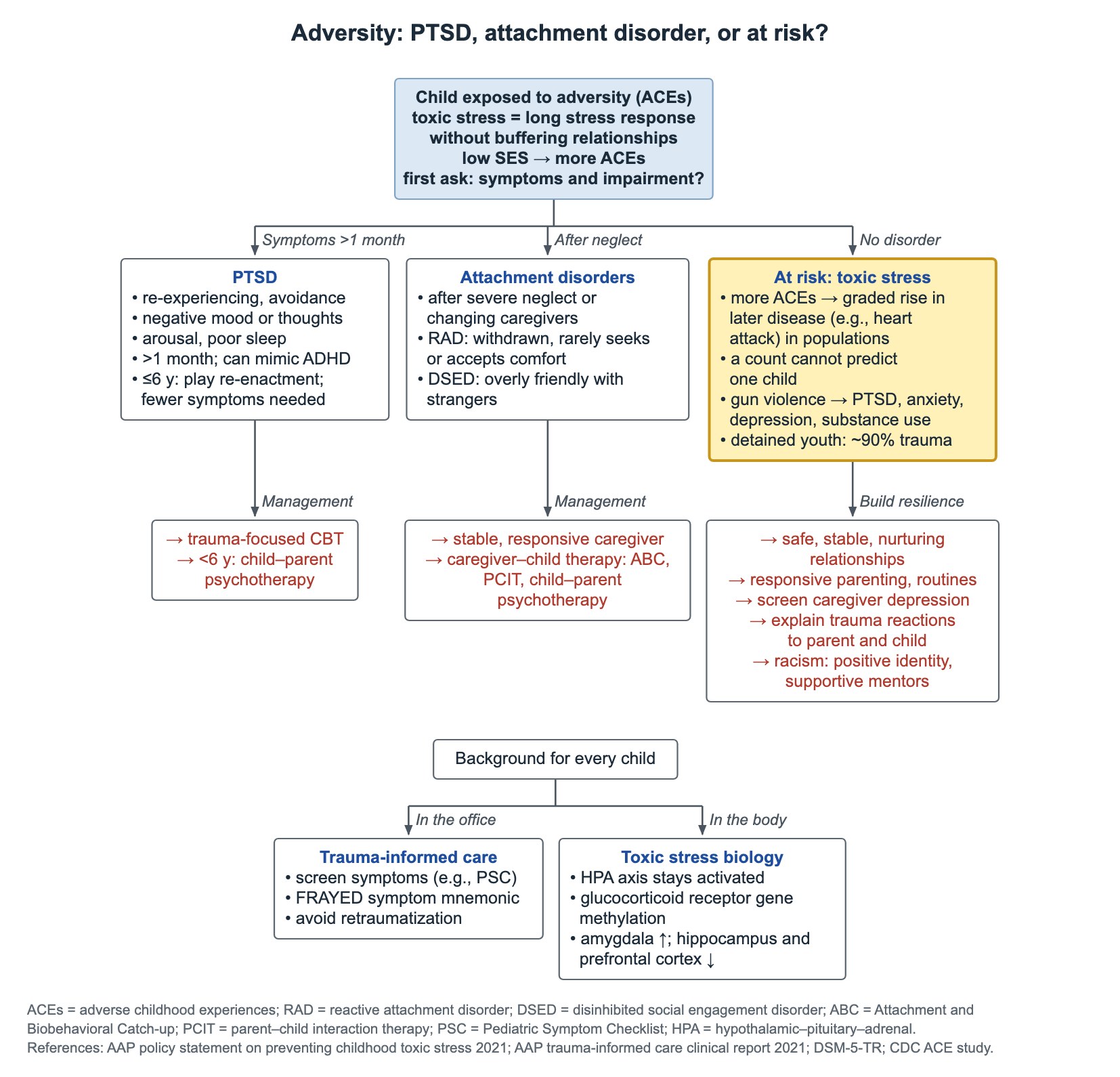
ACEs are potentially traumatic events before age 18: abuse (physical, emotional, sexual), neglect (physical, emotional) and household challenges such as parental mental illness, substance use, incarceration, intimate partner violence and parental separation or divorce.
In the CDC–Kaiser ACE Study, risk rose in a graded way with the number of ACEs. Adults with 4 or more ACEs had higher rates of ischemic heart disease (myocardial infarction), lung disease, cancer, depression, suicide attempts, and alcohol and drug misuse.
- The graded pattern holds for populations; an ACE count cannot predict an individual child's outcome, so do not use an ACE checklist to label a child.
- Children exposed to gun violence have higher later risk of PTSD, anxiety, depression, substance use and criminal activity.
- About 90% of youth in juvenile detention have experienced trauma; screen them for trauma symptoms.
Trauma-informed care in the office
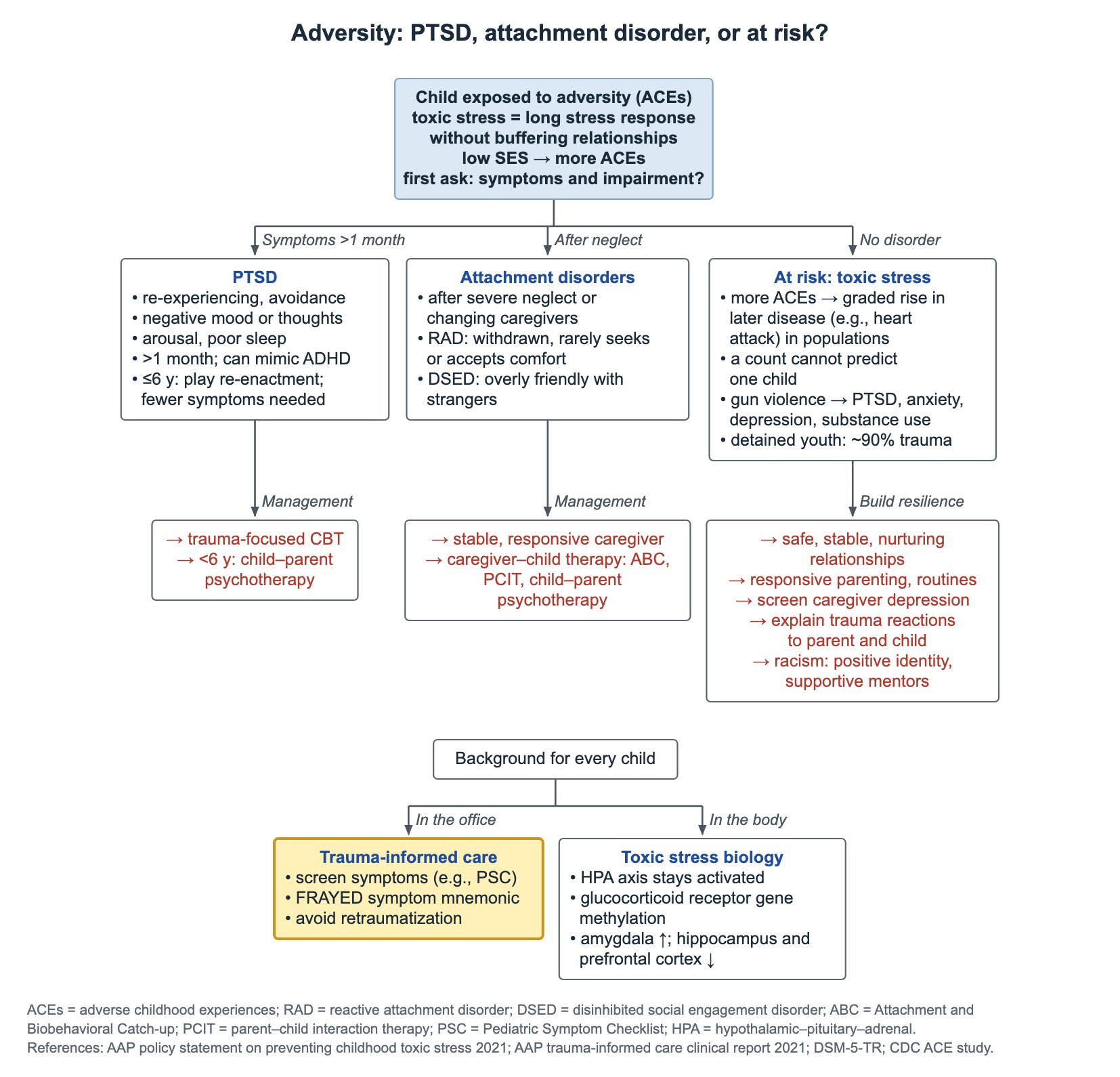
Trauma-informed care means understanding how trauma affects children and families, recognizing trauma symptoms, responding with support and referral, and avoiding retraumatization during care.
When a child has new sleep problems, irritability or behavior change after witnessing violence, the first step is a validated behavioral screen in the office, such as the Pediatric Symptom Checklist, rather than a count of ACEs.
| FRAYED | Trauma symptom in children |
|---|---|
| F: Frets and fears | Anxiety, fearfulness, worry |
| R: Regulation | Tantrums, mood swings, trouble calming down |
| A: Attachment | Clinginess, trouble trusting adults, indiscriminate friendliness |
| Y: Yawning and yelling | Sleep problems; aggression and outbursts |
| E: Educational | Learning problems, poor concentration, falling grades |
| D: Defeated or dissociated | Low mood, hopelessness, zoning out |
Building resilience
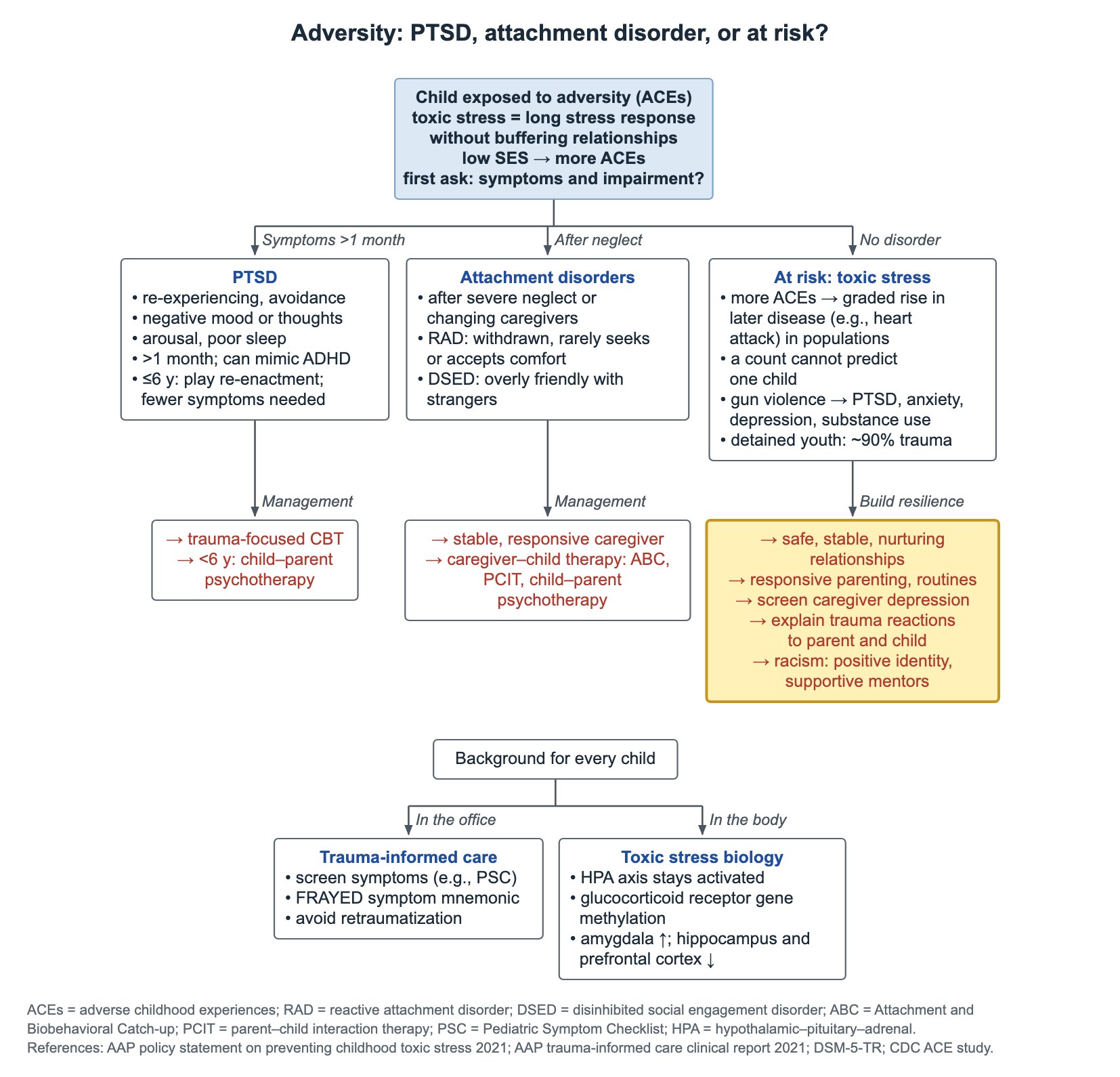
The key buffer against adversity is safe, stable, nurturing relationships and environments. The pediatrician's role is to strengthen these relationships, not only to find problems.
- Encourage responsive parenting and predictable routines.
- Screen the caregiver for depression: a depressed parent buffers stress less well, and treating the parent helps the child.
- Explain trauma reactions to both the child and the parent. A father who sees irritability and poor focus after a shooting as disobedience responds better once he understands them as trauma reactions.
- Racism is a source of toxic stress: promote a positive racial-ethnic identity and supportive mentors.
- Link families to community supports such as home visiting, early education and parenting programs.
Posttraumatic stress disorder (PTSD)
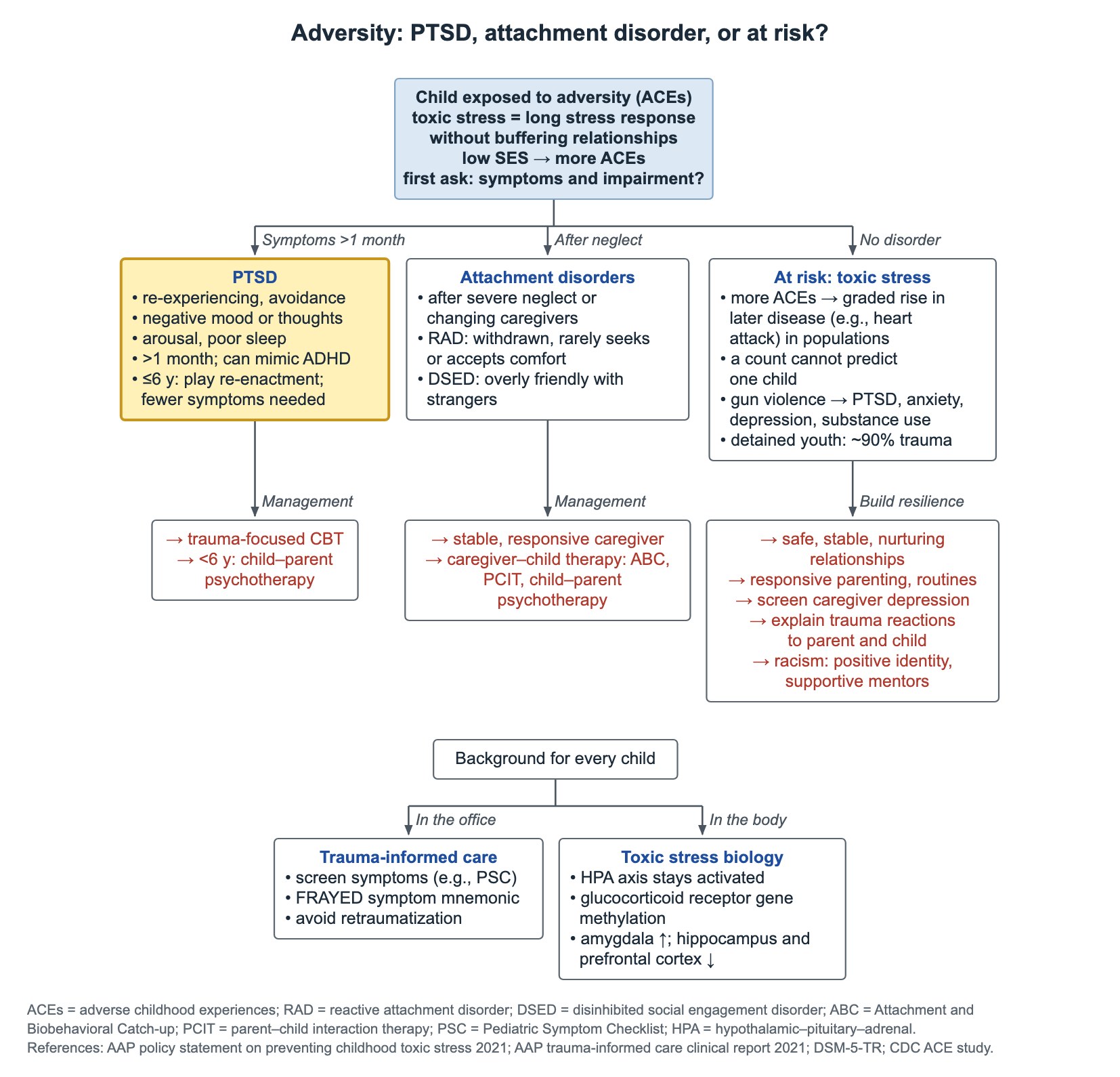
PTSD follows exposure to actual or threatened death, serious injury or sexual violence, by experiencing it, witnessing it or learning it happened to a close family member. For example, a 10-year-old bitten by a dog 3 months ago who has nightmares, avoids parks, feels detached, startles easily and has falling grades has PTSD.
- Intrusion: nightmares, flashbacks, distressing memories; in young children, trauma themes in repetitive play.
- Avoidance of reminders, places or people.
- Negative mood or thoughts: guilt, detachment, loss of interest.
- Arousal: hypervigilance, exaggerated startle, irritability, poor sleep and concentration.
- Symptoms last more than 1 month and impair function; between 3 days and 1 month after the event, the diagnosis is acute stress disorder.
- Dissociation (depersonalization or derealization) can occur and is a specifier of PTSD.
- Children 6 years and younger have separate criteria with fewer required symptoms; play re-enactment is typical.
- Inattention, irritability and poor sleep can mimic ADHD, so ask about trauma before diagnosing ADHD.
Treating PTSD
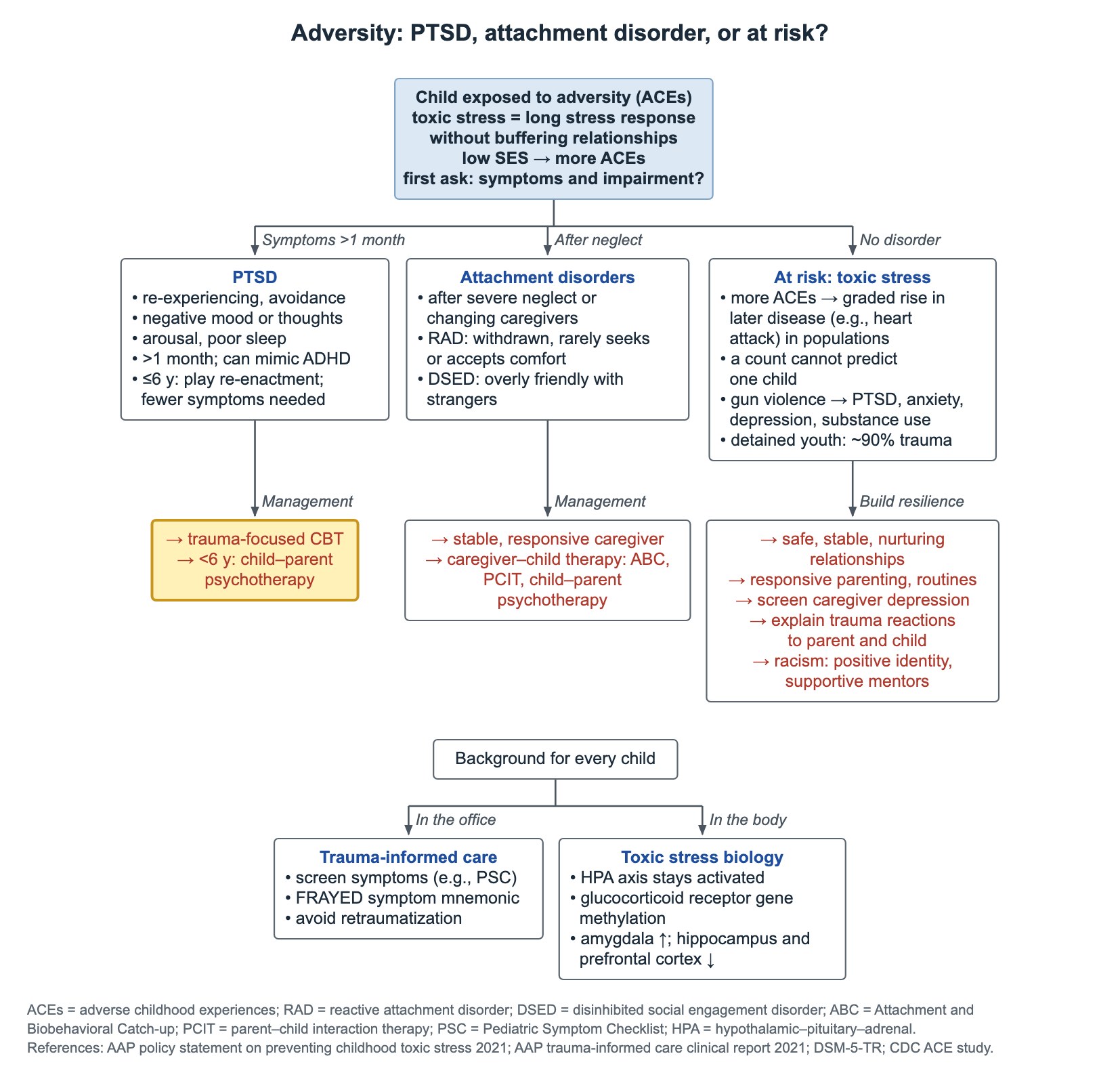
- School-age children and teens: trauma-focused cognitive behavioral therapy (TF-CBT), which includes the caregiver.
- Children under 6, such as a 3-year-old with nightmares, clinginess and tantrums after witnessing domestic violence: child–parent psychotherapy, a relationship-based therapy with the caregiver.
- Medicine is not first-line for PTSD in children; treat coexisting depression or anxiety as usual.
- Make sure the child is safe and the trauma has stopped; report suspected abuse to child protective services.
Attachment disorders after neglect
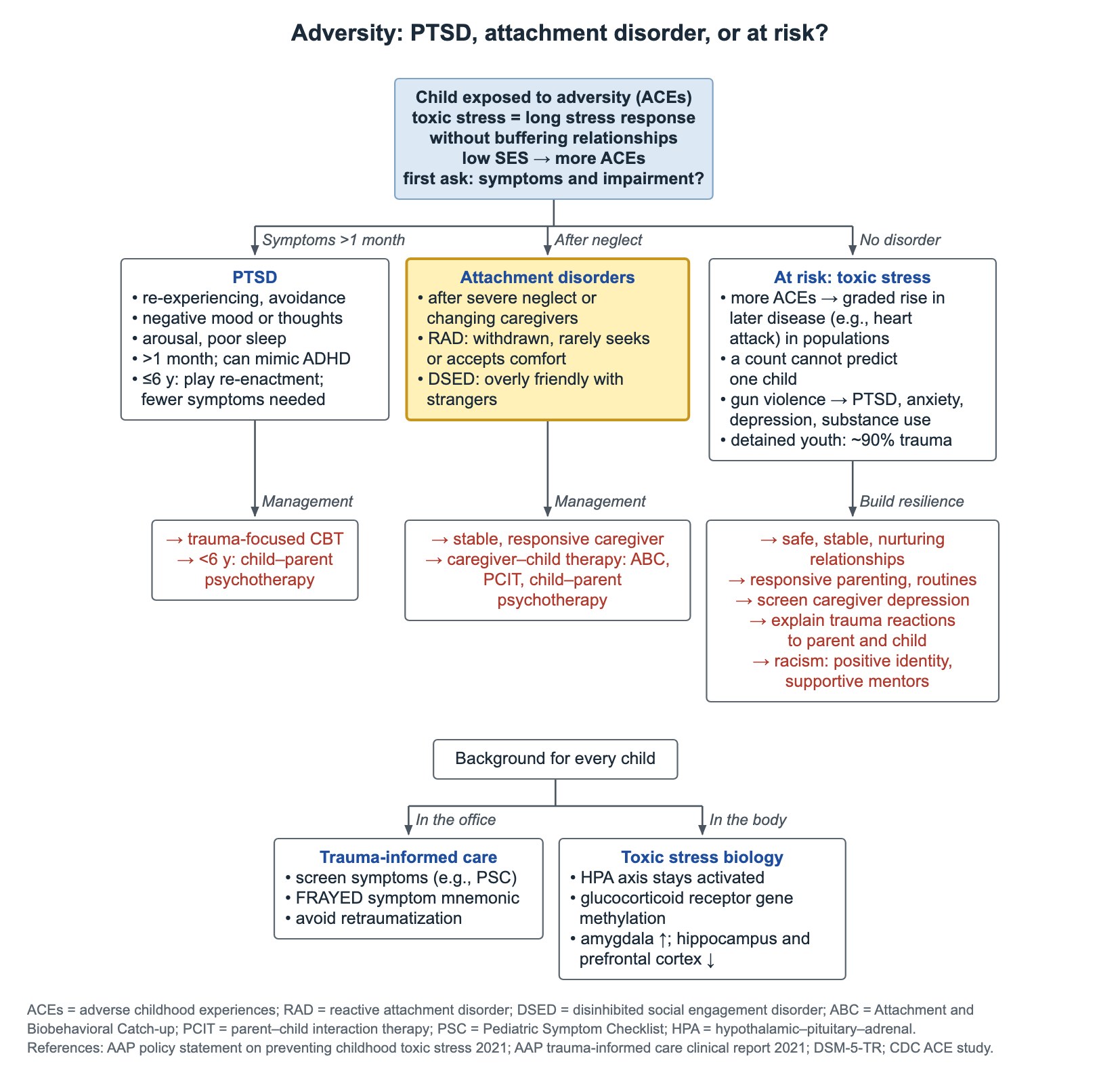
Both attachment disorders follow severe neglect, deprivation or repeated changes of caregiver, such as in institutional care. They are diagnosed in children with a developmental age of at least 9 months.
- Management starts with a stable, responsive caregiver.
- Caregiver–child therapies for preschoolers with trauma and attachment problems: Attachment and Biobehavioral Catch-up (ABC), parent–child interaction therapy (PCIT) and child–parent psychotherapy.
| Disorder | Picture |
|---|---|
| Reactive attachment disorder (RAD) | Withdrawn and inhibited; rarely seeks or accepts comfort from caregivers; limited positive emotion |
| Disinhibited social engagement disorder (DSED) | Overly friendly and physically familiar with strangers; would leave with a stranger without checking back with the caregiver |
Common questions
What is the difference between tolerable and toxic stress?
Both can involve serious adversity. Tolerable stress is time-limited and buffered by a supportive adult; toxic stress is prolonged stress activation without buffering relationships.
Should pediatricians screen children with an ACE score?
An ACE count shows population risk but cannot predict one child's outcome. Screen for trauma symptoms and family strengths with a validated tool, and focus on building safe, stable, nurturing relationships.
What is the first-line treatment for PTSD in children?
Trauma-focused cognitive behavioral therapy for school-age children and teens; child–parent psychotherapy for children under 6.
Study this topic
Sources
- AAP 2021: Trauma-informed care, clinical report (Pediatrics)
- AAP 2021: Preventing childhood toxic stress, policy statement (Pediatrics)
- AACAP: Practice parameter for PTSD in children and adolescents (JAACAP 2010)
- CDC: About adverse childhood experiences
Written for Pedemy in our own words from the sources above; checked November 2026. For education only, not medical advice; check doses and local protocols before treating a patient. Pedemy is independent and not affiliated with or endorsed by the organizations cited.