

Main decision tree
Weak or thick heart: cardiomyopathy and myocarditis
Key points
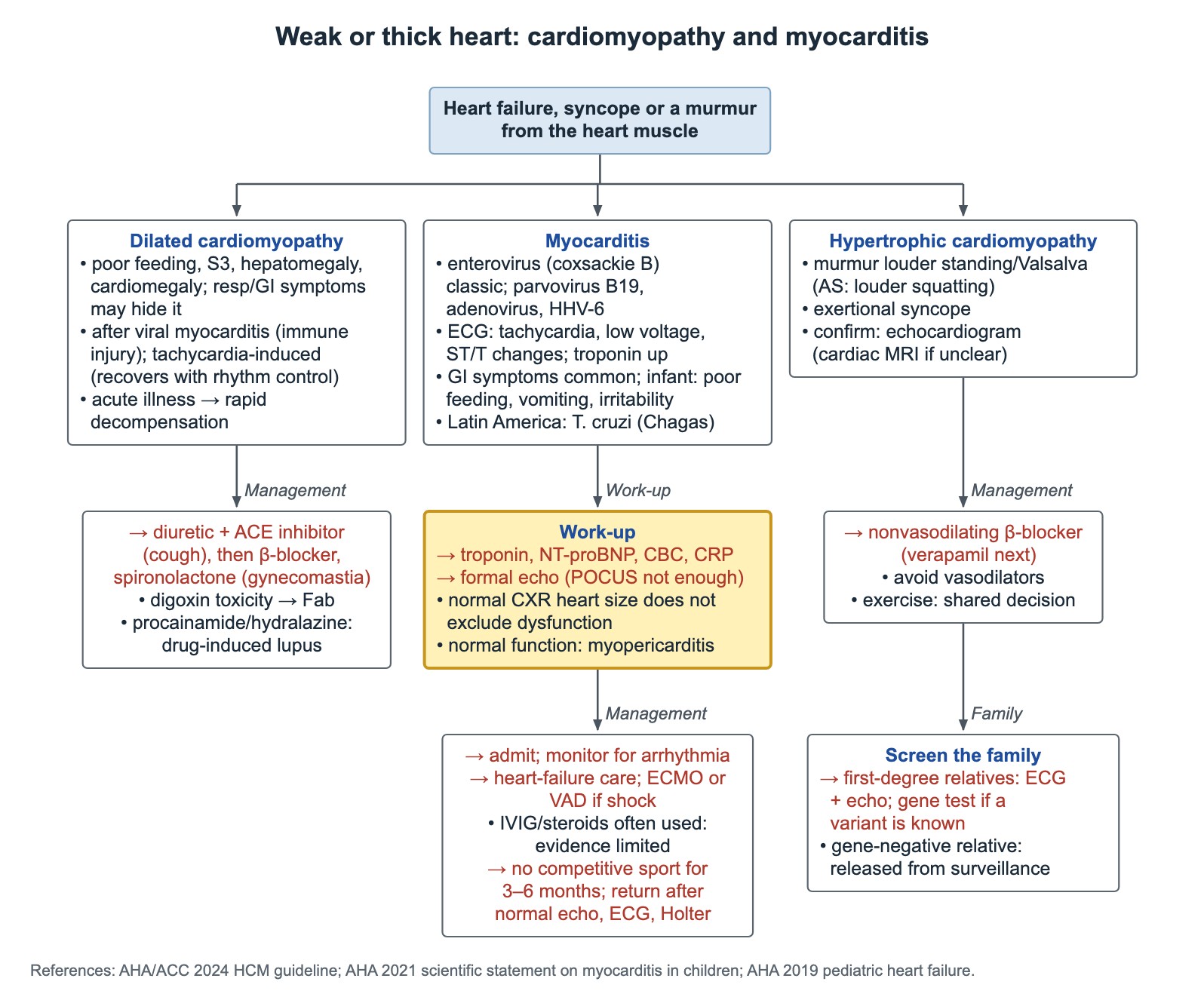
- Myocarditis: troponin, NT-proBNP, CBC, CRP and a formal echo; a normal chest X-ray or bedside POCUS does not rule out dysfunction.
- Myocarditis: no competitive sport for 3–6 months; return only after a normal echo, ECG and Holter.
- Obstructive HCM with symptoms: nonvasodilating β-blocker first, verapamil next; avoid vasodilators.
- Acute pericarditis in a teen: ibuprofen plus colchicine; avoid aspirin in young children.
- First episode of rheumatic fever: 2 major, or 1 major plus 2 minor Jones criteria, plus evidence of group A strep.
- Dental IE prophylaxis: amoxicillin 50 mg/kg (max 2 g) once, 30–60 minutes before; still useful up to 2 hours after.
- Universal lipid screening at 9–11 and 17–21 years; an abnormal result needs 2 fasting panels before drug decisions.
Myocarditis
Myocarditis is inflammation of the heart muscle, most often after a virus. Classic causes are enteroviruses such as coxsackie B; parvovirus B19, adenovirus and HHV-6 are now found often. In a child from Latin America, think of Trypanosoma cruzi (Chagas disease).
Children often look like they have a respiratory or stomach illness. Infants present with poor feeding, vomiting, irritability, fast breathing and a fast heart rate. Older children may have chest pain, abdominal pain, a gallop, hepatomegaly and weak pulses.
- ECG: sinus tachycardia, low QRS voltage, ST elevation or T-wave inversion; arrhythmias and AV block can occur.
- Blood tests: troponin and NT-proBNP (or BNP), with CBC, CRP and ESR.
- Imaging: a formal echocardiogram, even if bedside POCUS looks normal. A normal heart size on chest X-ray does not exclude dysfunction, because dilation develops later.
- Echo in severe cases: a dilated left ventricle with poor function. Cardiac MRI helps confirm the diagnosis.
- Chest pain, diffuse ST elevation and a mild troponin rise with normal function fits myopericarditis.
- Management: admit and monitor for arrhythmia; standard heart-failure care; ECMO or a VAD for shock. IVIG or steroids are often used but the evidence is limited.
- Sport: no competitive sport for 3–6 months; return after a normal echo, ECG and Holter.
Dilated and hypertrophic cardiomyopathy
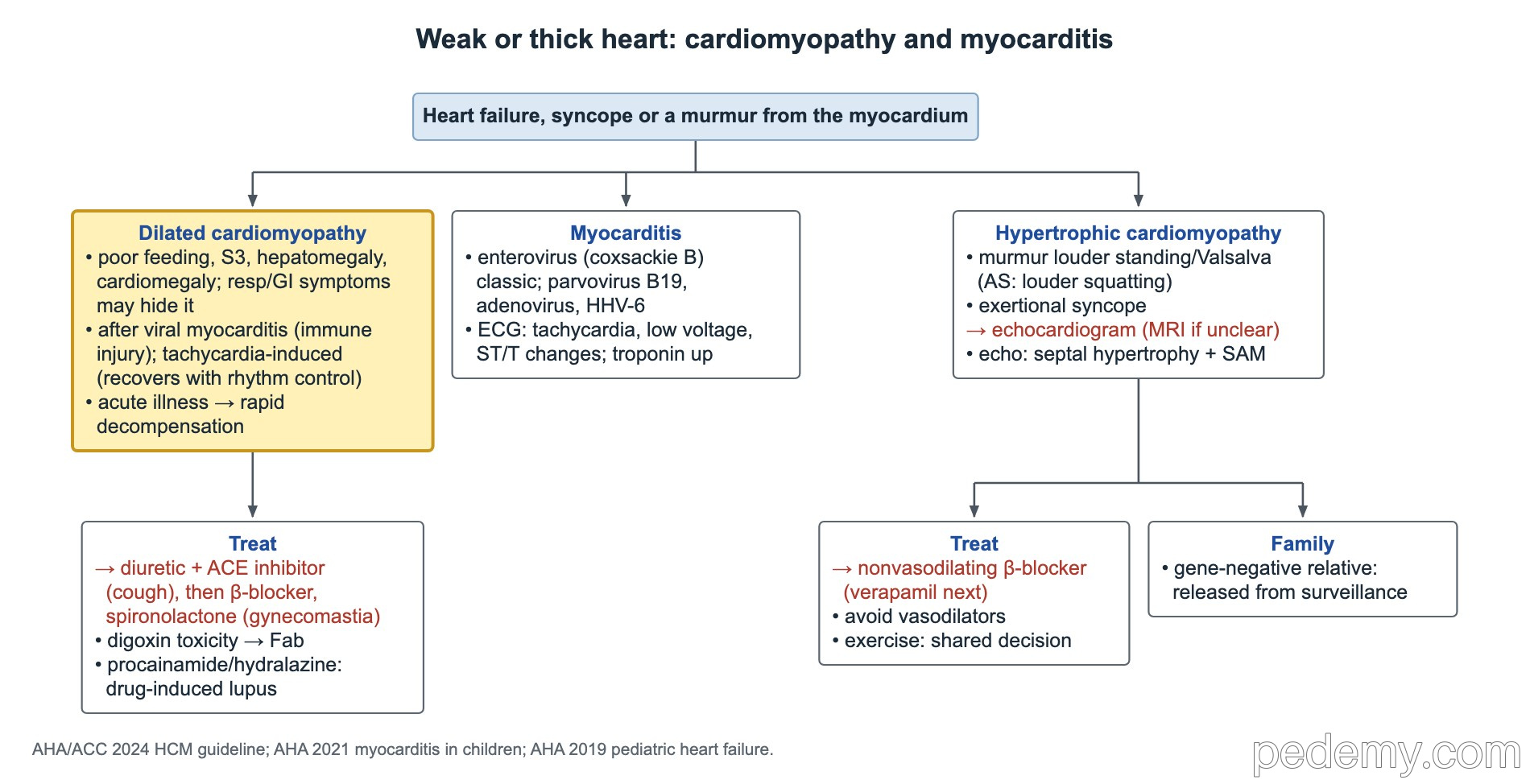
Dilated cardiomyopathy (DCM) is a large, weak left ventricle. A previously healthy toddler with an S3 gallop, hepatomegaly and cardiomegaly fits DCM. Pediatric heart failure is often missed because it looks like a respiratory or GI illness.
DCM can follow viral myocarditis: the virus injures the muscle, then an immune response keeps damaging it. A persistent fast rhythm can also cause DCM; this tachycardia-induced cardiomyopathy often recovers once the rate or rhythm is controlled. A child with stable chronic heart failure can decompensate quickly during an infection.
| Topic | What to know |
|---|---|
| DCM: first chronic drugs | Diuretic (furosemide) plus an ACE inhibitor; add a β-blocker and spironolactone once stable |
| ACE inhibitor side effect | Dry cough (bradykinin); switch to an ARB |
| Spironolactone side effect | Gynecomastia |
| Digoxin toxicity | Vomiting, bradycardia or arrhythmia, high potassium; give digoxin immune Fab |
| Procainamide, hydralazine | Can cause drug-induced lupus |
| HCM: clinical clues | Systolic murmur louder on standing or Valsalva (aortic stenosis gets louder on squatting); exertional syncope |
| HCM: first test | Echocardiogram for wall thickness and outflow gradient; cardiac MRI if the echo is unclear |
| HCM: classic echo | Asymmetric septal hypertrophy with systolic anterior motion (SAM) of the mitral valve |
| Obstructive HCM with symptoms | Nonvasodilating β-blocker (propranolol, nadolol); verapamil if not tolerated or not working; avoid vasodilators |
| HCM: exercise | Decided case by case with the specialist (shared decision-making), not an automatic ban |
| HCM: family | First-degree relatives get ECG and echo, plus genetic testing if a variant is known. A relative who tests negative for the family's variant can stop surveillance |
Pericarditis and postpericardiotomy syndrome
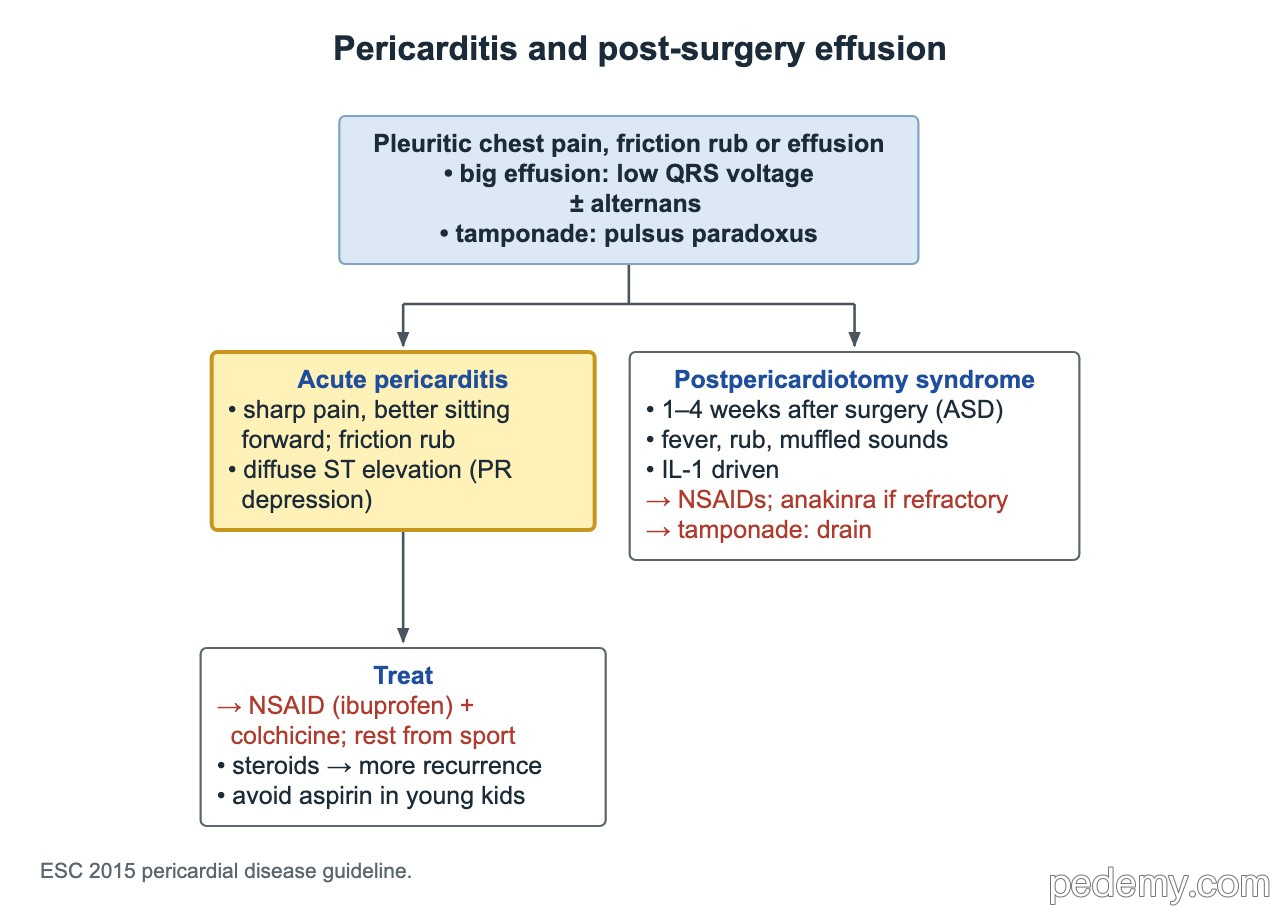
- Acute pericarditis: sharp pleuritic chest pain that improves sitting forward, a friction rub, and diffuse ST elevation with PR depression.
- Treatment of viral or idiopathic pericarditis in a teen: an NSAID such as ibuprofen plus colchicine, and rest from sport until it resolves. Steroids raise the recurrence rate. Avoid aspirin in young children.
- Large effusion: low QRS voltage, sometimes electrical alternans; a big round "water-bottle" heart on X-ray.
- Tamponade: pulsus paradoxus at the bedside; drain the fluid.
- Postpericardiotomy syndrome: fever, pleuritic chest pain, rub and muffled heart sounds 1–4 weeks after heart surgery (often ASD repair). It is driven by interleukin-1: NSAIDs first, anakinra if refractory.
Acute rheumatic fever
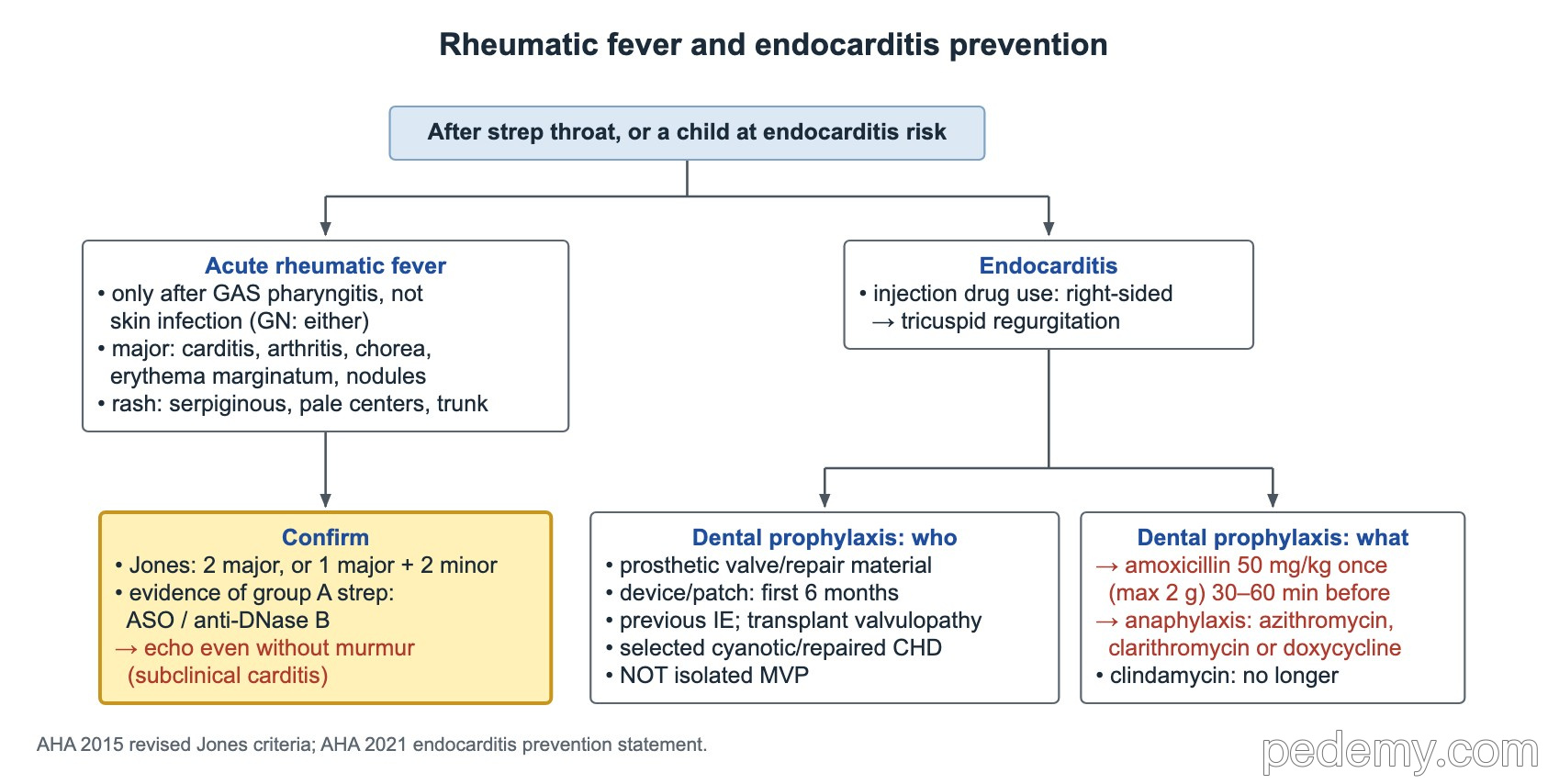
Rheumatic fever follows group A strep pharyngitis, not skin infection (post-streptococcal glomerulonephritis can follow either). Sydenham chorea can appear months after the sore throat.
- Major criteria: carditis (including subclinical carditis seen only on echo), polyarthritis, Sydenham chorea, erythema marginatum, subcutaneous nodules.
- Minor criteria in low-risk populations such as most of the US: polyarthralgia, fever ≥38.5 °C (101.3 °F), ESR ≥60 mm/h or CRP ≥3.0 mg/dL, and a prolonged PR interval.
- First episode: 2 major, or 1 major plus 2 minor, with evidence of a recent group A strep infection.
- Evidence of strep: raised ASO or anti-DNase B titer, or a positive throat culture or rapid test.
- Get a Doppler echo in every suspected case, even without a murmur, to find subclinical carditis.
- Erythema marginatum: pink, nonitchy, serpiginous rings with pale centers on the trunk and upper limbs.
Endocarditis: who needs dental prophylaxis?
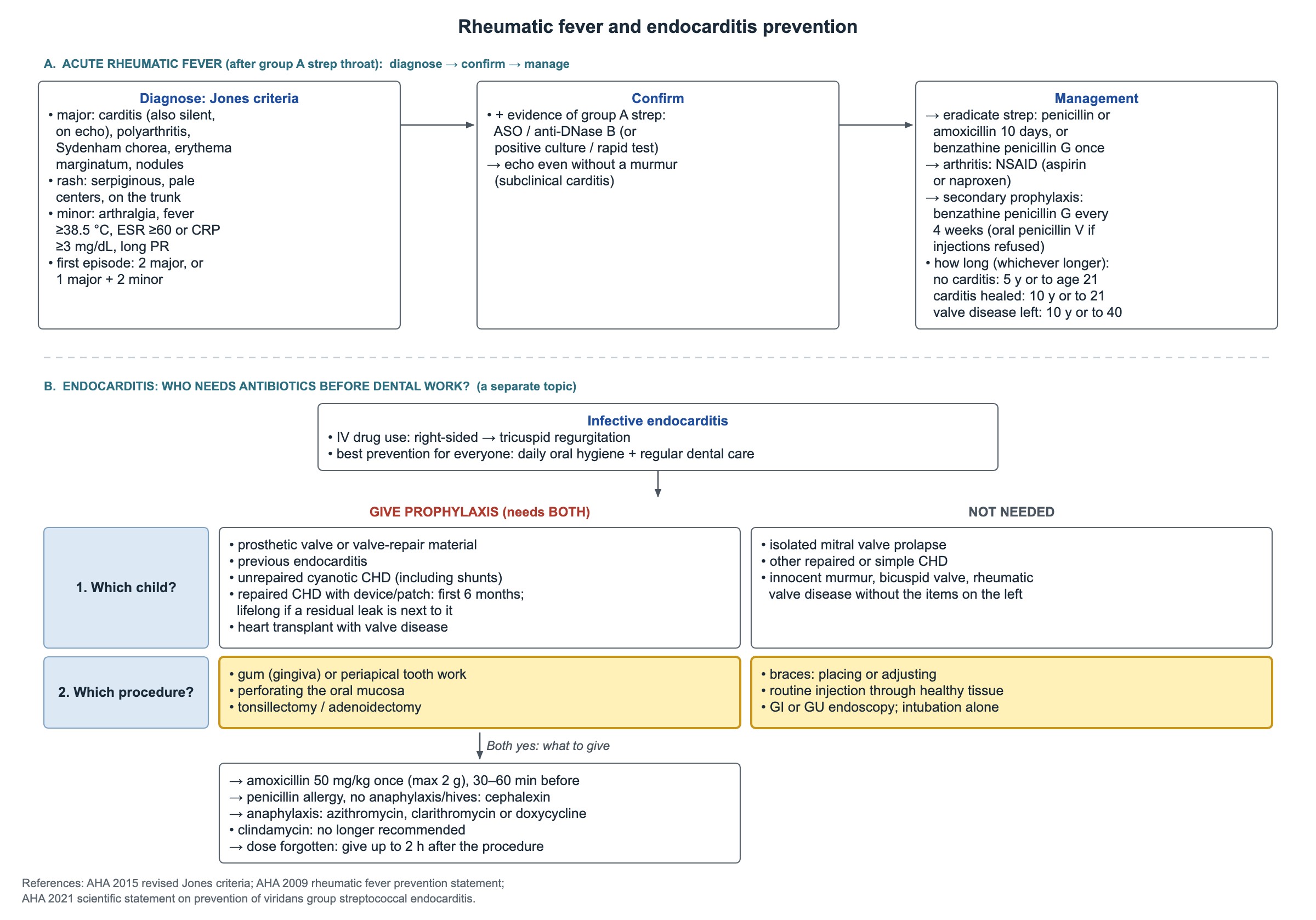
Prophylaxis is given only when both a highest-risk heart condition and a qualifying procedure are present. For everyone, good daily oral hygiene and regular dental care prevent more endocarditis than antibiotics do.
A teen who injects drugs with fever and a new holosystolic murmur at the left lower sternal border that grows with inspiration has tricuspid regurgitation from right-sided endocarditis, often S. aureus.
| Question | Give prophylaxis | Not needed |
|---|---|---|
| Which child? | Prosthetic valve or valve-repair material; previous endocarditis; unrepaired cyanotic CHD, including palliative shunts and conduits; repaired CHD with a device or patch in the first 6 months; a residual leak next to a patch or device (lifelong); heart transplant with valve disease | Isolated mitral valve prolapse; other repaired or simple CHD; bicuspid valve or rheumatic valve disease without the high-risk features |
| Which procedure? | Work on the gums or the tooth's periapical region; perforating the oral mucosa; tonsillectomy or adenoidectomy (respiratory mucosa is cut) | Placing or adjusting braces; routine injections through healthy tissue; GI or GU endoscopy or cystoscopy; intubation for anesthesia alone |
| What to give? | Amoxicillin 50 mg/kg (max 2 g) once, 30–60 minutes before. Penicillin allergy without anaphylaxis or hives: cephalexin. Anaphylaxis: azithromycin, clarithromycin or doxycycline | Clindamycin is no longer recommended |
| Dose forgotten? | Give it up to 2 hours after the procedure |
Coronary disease in children
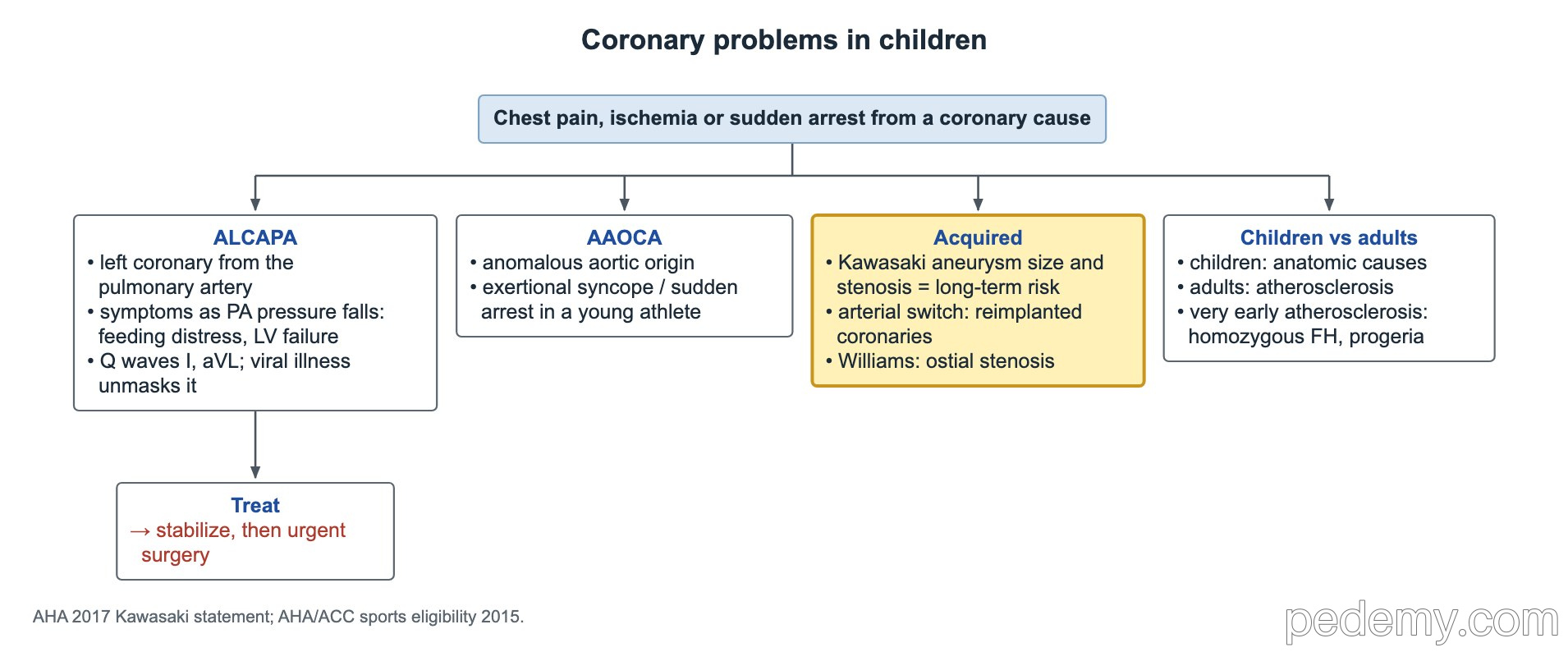
In children, coronary disease is usually anatomic: congenital anomalies or acquired injury. In adults it is atherosclerosis.
- Kawasaki disease: the main reason for IVIG is to prevent coronary aneurysms (about 25% without treatment, about 4% with IVIG in the first 10 days). Infants under 6 months have the highest aneurysm risk.
- After Kawasaki disease, the strongest predictor of long-term outcome is the largest aneurysm size and whether an aneurysm or stenosis persists.
- Low-dose aspirin after Kawasaki disease is not stopped automatically: it stops once the 4–6 week echo shows normal coronaries, and continues if aneurysms are present.
- After the arterial switch for d-TGA, the coronary arteries are moved as buttons to the new aorta; narrowing at the reimplanted ostia is the main childhood coronary risk, more than obesity or family history.
- Williams syndrome: supravalvar aortic stenosis can narrow the coronary ostia.
- Very early atherosclerosis: homozygous familial hypercholesterolemia and progeria.
Lipid screening and high blood pressure
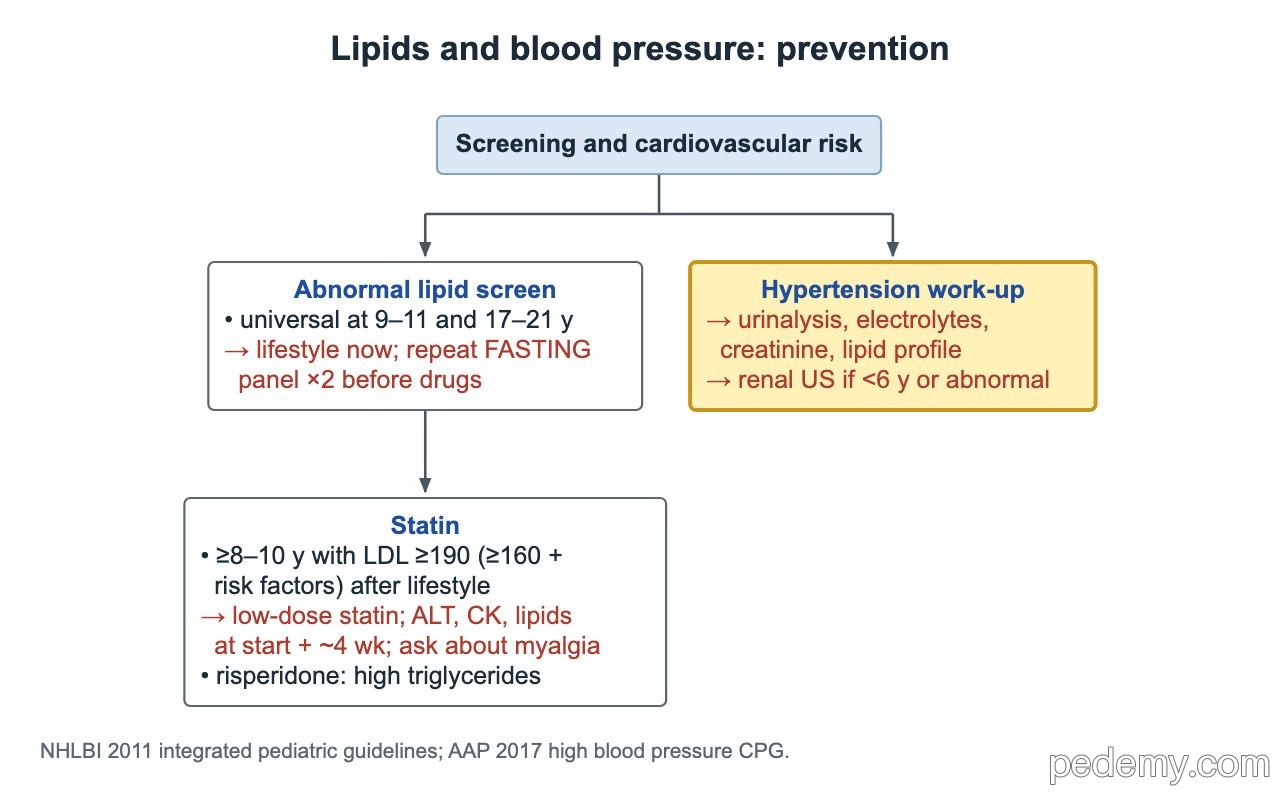
- Lipid screening: universal at 9–11 and again at 17–21 years; a nonfasting panel is fine for the first screen.
- Abnormal screen: start heart-healthy lifestyle changes now and repeat a fasting lipid panel; average 2 fasting results before any drug decision.
- Statin: usually from age 10 (8 in some familial hypercholesterolemia) when LDL stays ≥190 mg/dL after lifestyle change, or ≥160 mg/dL with a family history or other risk factors. Check ALT, CK and lipids at the start and after about 4 weeks; ask about muscle pain.
- Second-generation antipsychotics such as risperidone raise triglycerides and cause other dyslipidemia: monitor weight, glucose and lipids.
- Confirmed hypertension, every child: urinalysis, electrolytes and creatinine, and a lipid profile. Add fasting glucose or HbA1c (and ALT) if the child has obesity.
- Renal ultrasound for children under 6 years or with an abnormal urinalysis or creatinine. A routine ECG is not recommended; get an echo when drug treatment is being considered.
Common questions
Does a child with mitral valve prolapse need antibiotics before dental work?
No. Isolated mitral valve prolapse is not a highest-risk condition, so endocarditis prophylaxis is not recommended.
What antibiotic is used for dental endocarditis prophylaxis in children?
Amoxicillin 50 mg/kg by mouth (max 2 g) once, 30–60 minutes before the procedure. With anaphylaxis to penicillin, use azithromycin, clarithromycin or doxycycline. Clindamycin is no longer recommended.
When can a child return to sports after myocarditis?
Usually after 3–6 months, once the echo, ECG and Holter monitor are normal.
What are the Jones criteria for rheumatic fever?
Major: carditis, polyarthritis, chorea, erythema marginatum and subcutaneous nodules. A first episode needs 2 major, or 1 major plus 2 minor, with evidence of recent group A strep infection.
Study this topic
Sources
- AHA 2021: Prevention of viridans group streptococcal infective endocarditis (Circulation)
- AHA 2021: Diagnosis and management of myocarditis in children (Circulation)
- AHA/ACC 2024: Guideline for the management of hypertrophic cardiomyopathy (Circulation)
- AHA 2015: Revision of the Jones criteria for acute rheumatic fever (Circulation)
- AAP 2017: Clinical practice guideline for high blood pressure in children and adolescents (Pediatrics)
Written for Pedemy in our own words from the sources above; checked November 2026. For education only, not medical advice; check doses and local protocols before treating a patient. Pedemy is independent and not affiliated with or endorsed by the organizations cited.