

Main decision tree
Genetic skin clues
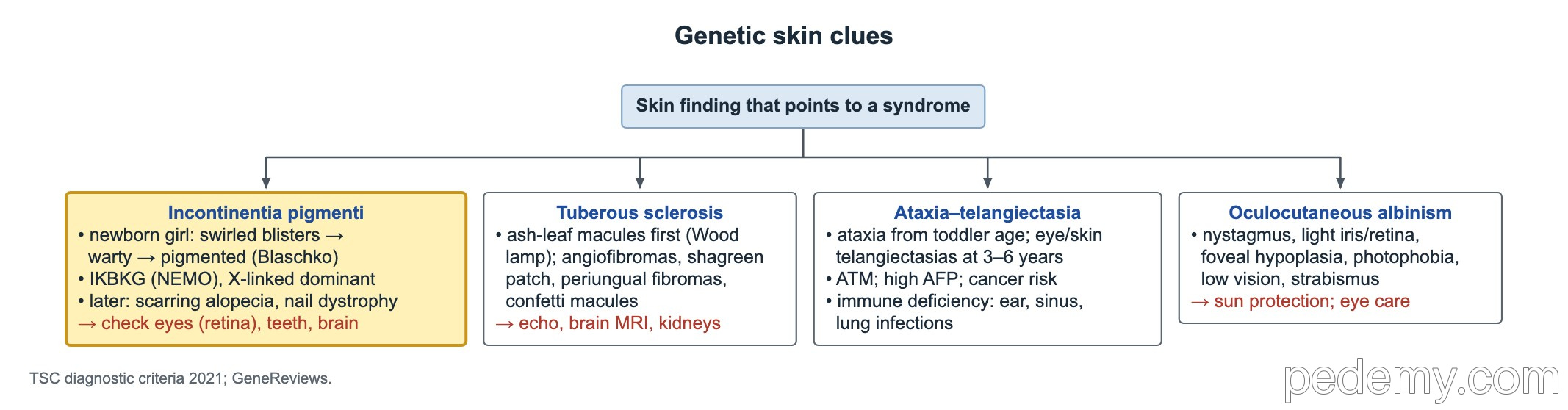
Key points
- Incontinentia pigmenti: newborn girl, blisters in swirls along Blaschko lines → warty → hyperpigmented streaks; IKBKG (NEMO), X-linked dominant, usually lethal in males.
- In incontinentia pigmenti, check the retina early (neovascularization), plus teeth and brain.
- Tuberous sclerosis: ash-leaf (hypomelanotic) macules are the earliest sign; 3 or more macules of at least 5 mm are a major criterion.
- Ataxia–telangiectasia: ataxia from toddler age, then eye and skin telangiectasias at 3–6 years; ATM gene, high AFP.
- Ataxia–telangiectasia brings immune deficiency (ear, sinus and lung infections) and a high lymphoma and leukemia risk.
- Oculocutaneous albinism: nystagmus, foveal hypoplasia, light iris, photophobia, low vision and strabismus.
- Epidermolysis bullosa simplex: newborn blisters at friction sites that heal without scars; keratin 5/14, split in the basal layer.
Incontinentia pigmenti
Incontinentia pigmenti is caused by IKBKG (NEMO) variants. It is X-linked dominant and usually lethal in male fetuses, so almost all patients are girls.
- Stage 1 (birth to first weeks): red blisters in lines and swirls along Blaschko lines.
- Stage 2: warty (verrucous) plaques in the same places.
- Stage 3: swirled hyperpigmented streaks that fade over years.
- Stage 4: pale, hairless, thin streaks in adults.
- Later hair and nail signs: scarring alopecia at the vertex and nail dystrophy.
- Check: dilated retinal exam soon after diagnosis (retinal neovascularization can cause blindness), dental exam (peg-shaped or missing teeth) and neurologic exam (seizures, stroke).
Tuberous sclerosis complex
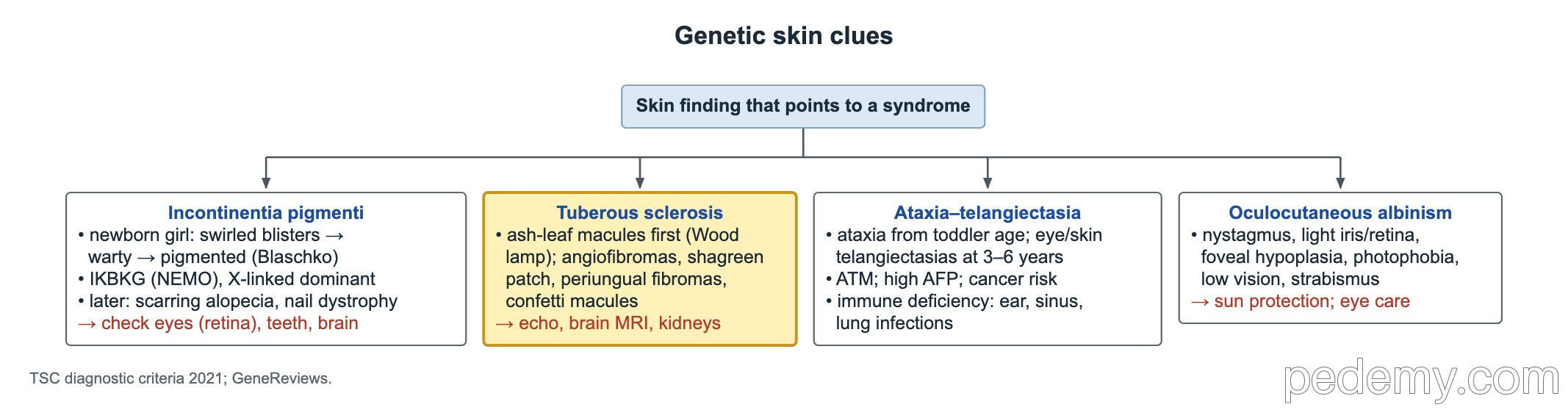
Ash-leaf macules are pale oval patches present at birth or in early infancy. They are often the first sign and are easier to see with a Wood lamp.
- Major skin criteria: 3 or more hypomelanotic macules of at least 5 mm, 3 or more facial angiofibromas, a shagreen patch, 2 or more ungual (periungual) fibromas.
- Minor skin criterion: confetti skin lesions (many tiny pale spots).
- Next steps: echocardiogram (rhabdomyomas), brain MRI and EEG, kidney imaging, eye exam.
Ataxia–telangiectasia
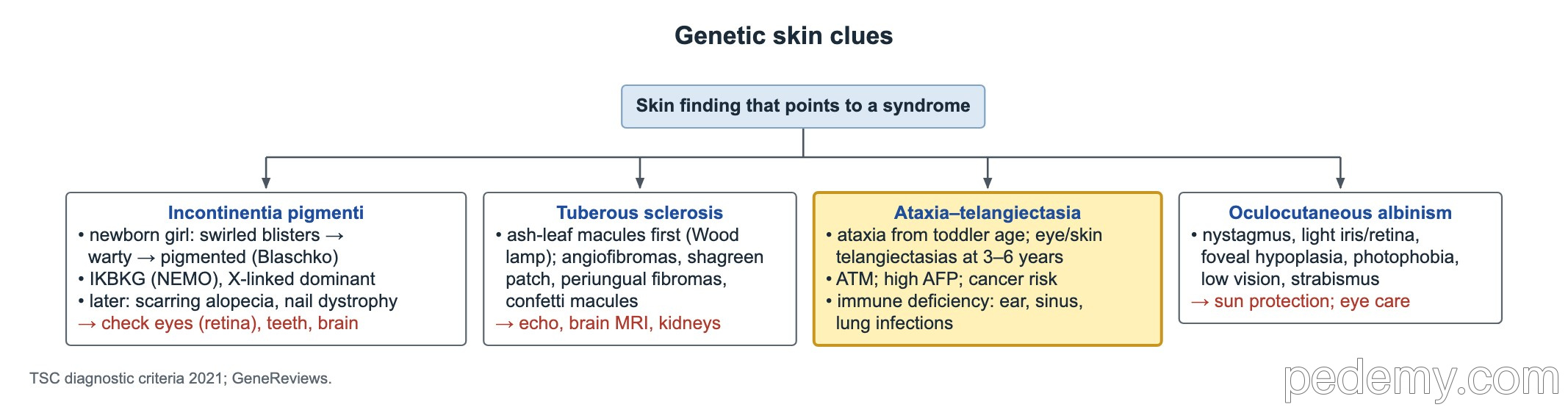
Ataxia starts when the toddler begins walking and slowly worsens. Telangiectasias of the bulbar conjunctivae and sun-exposed skin appear later, at about 3–6 years, so early ataxia is often mistaken for cerebral palsy.
- Gene: ATM (autosomal recessive DNA-repair defect).
- Lab clue: raised alpha-fetoprotein (AFP).
- Immune deficiency: recurrent ear, sinus and lung infections; low IgA, IgG2 and IgE are common.
- High risk of lymphoma and leukemia; radiation sensitivity, so limit x-rays and CT.
Oculocutaneous albinism
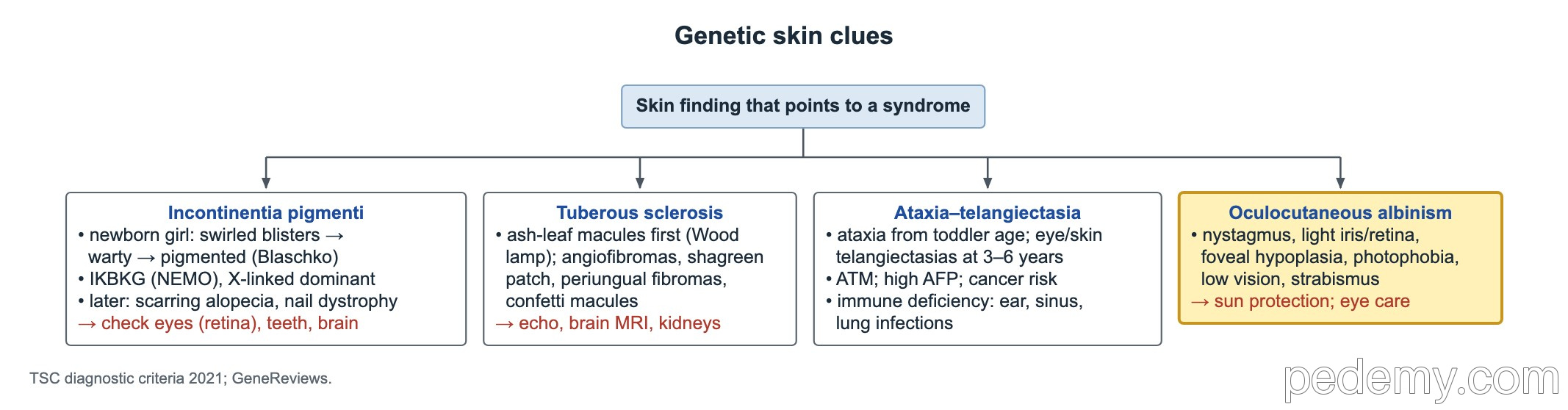
- Eyes: nystagmus, reduced iris and retinal pigment, foveal hypoplasia, photophobia, reduced visual acuity and strabismus.
- Skin and hair: little or no pigment, with a high risk of sunburn and skin cancer.
- Care: strict sun protection, regular eye care and skin checks.
Epidermolysis bullosa simplex
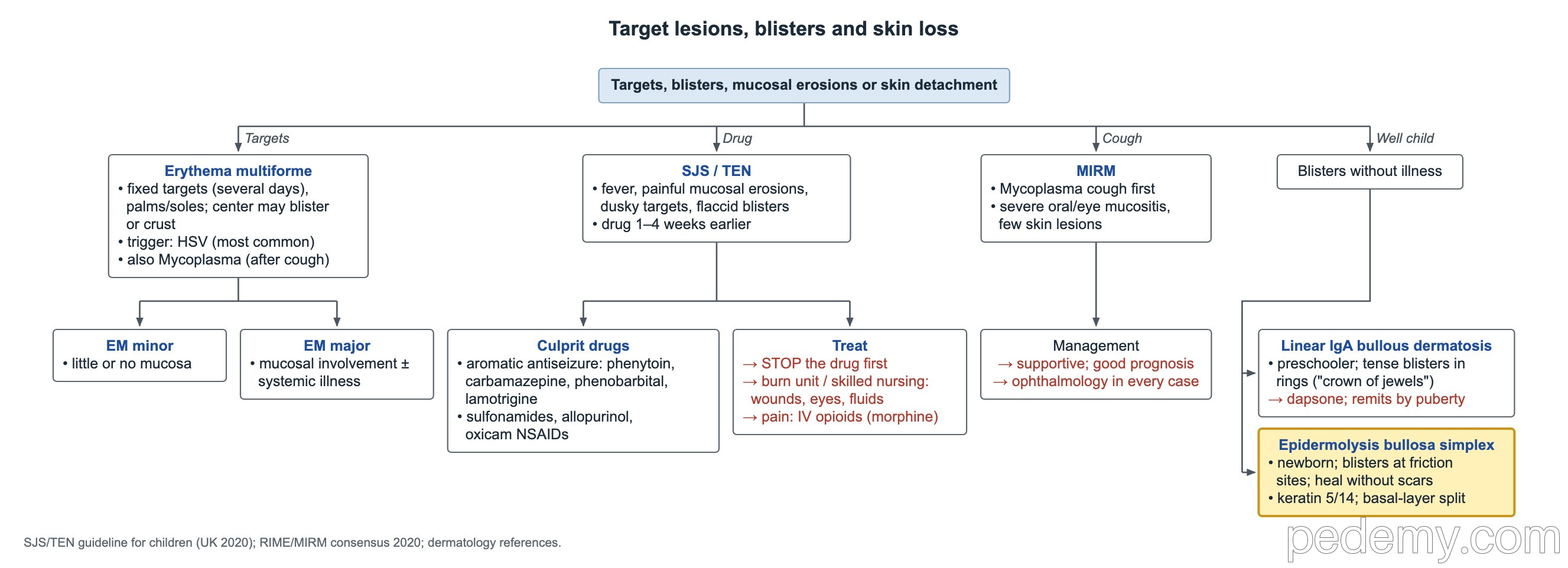
A newborn with blisters at friction sites, such as the heels and hands, that heal without scarring suggests epidermolysis bullosa simplex. Keratin 5 or 14 variants weaken the basal keratinocytes, so the split is in the basal layer of the epidermis.
Care is gentle handling, padding of friction sites, non-adhesive dressings and draining large blisters while leaving the roof in place.
Common questions
Why is incontinentia pigmenti seen almost only in girls?
It is X-linked dominant and the IKBKG variant is usually lethal in male fetuses. Rare affected boys have mosaicism or an extra X chromosome.
What is the earliest skin sign of tuberous sclerosis?
Hypomelanotic (ash-leaf) macules, present at birth or in infancy. A Wood lamp makes them easier to see. Facial angiofibromas usually appear later in childhood.
Study this topic
Sources
- Updated international tuberous sclerosis complex diagnostic criteria and surveillance recommendations (Pediatr Neurol, 2021)
- GeneReviews (NCBI Bookshelf): incontinentia pigmenti, ataxia-telangiectasia, oculocutaneous albinism, epidermolysis bullosa simplex
Written for Pedemy in our own words from the sources above; checked November 2026. For education only, not medical advice; check doses and local protocols before treating a patient. Pedemy is independent and not affiliated with or endorsed by the organizations cited.