

Main decision tree
Newborn: feeding or breathing trouble
Key points
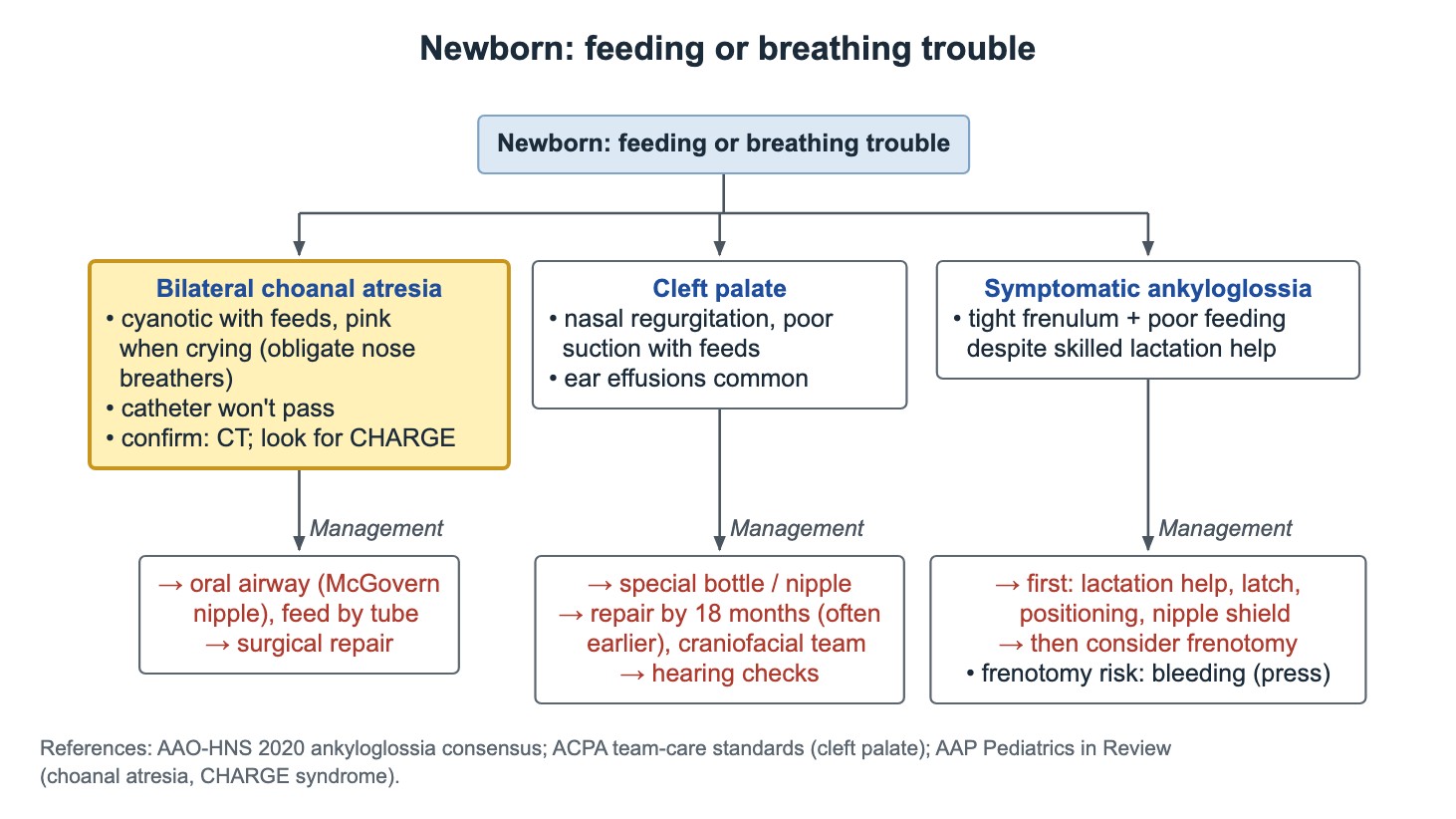
- Bilateral choanal atresia: cyanosis with feeds or at rest that improves with crying; a catheter will not pass either nostril.
- Choanal atresia: oral airway (McGovern nipple) now, CT to confirm, look for CHARGE syndrome.
- Isolated cleft lip and palate is usually nonsyndromic and multifactorial; repair the palate by about 18 months.
- Symptomatic tongue-tie: try skilled lactation help first; frenotomy only if feeding still fails. Main risk: minor bleeding.
- OSA: snoring plus pauses, restless sleep or daytime symptoms → overnight polysomnography (gold standard).
- Adenotonsillar hypertrophy is the main OSA risk (age 2–8 years); adenotonsillectomy is first line, CPAP if surgery fails or is not done.
- Central apnea on a sleep study → MRI brain (Chiari, brainstem lesion, hydrocephalus); CCHS is caused by PHOX2B variants.
Bilateral choanal atresia
Newborns are obligate nose breathers. With both choanae closed, the baby turns blue at rest or while feeding and pinks up when crying, because crying opens the mouth.
A soft catheter will not pass through either nostril into the pharynx. CT of the nose confirms the bony or mixed plate.
- Secure an oral airway now: a McGovern nipple (a nipple with the tip cut off) or an oral airway; feed by tube.
- Definitive treatment is surgical opening of the choanae.
- Look for CHARGE syndrome: coloboma, heart defect, choanal atresia, growth or developmental delay, genital and ear anomalies.
- Unilateral atresia is milder and often presents later with one-sided nasal discharge and blockage.
Cleft lip and cleft palate
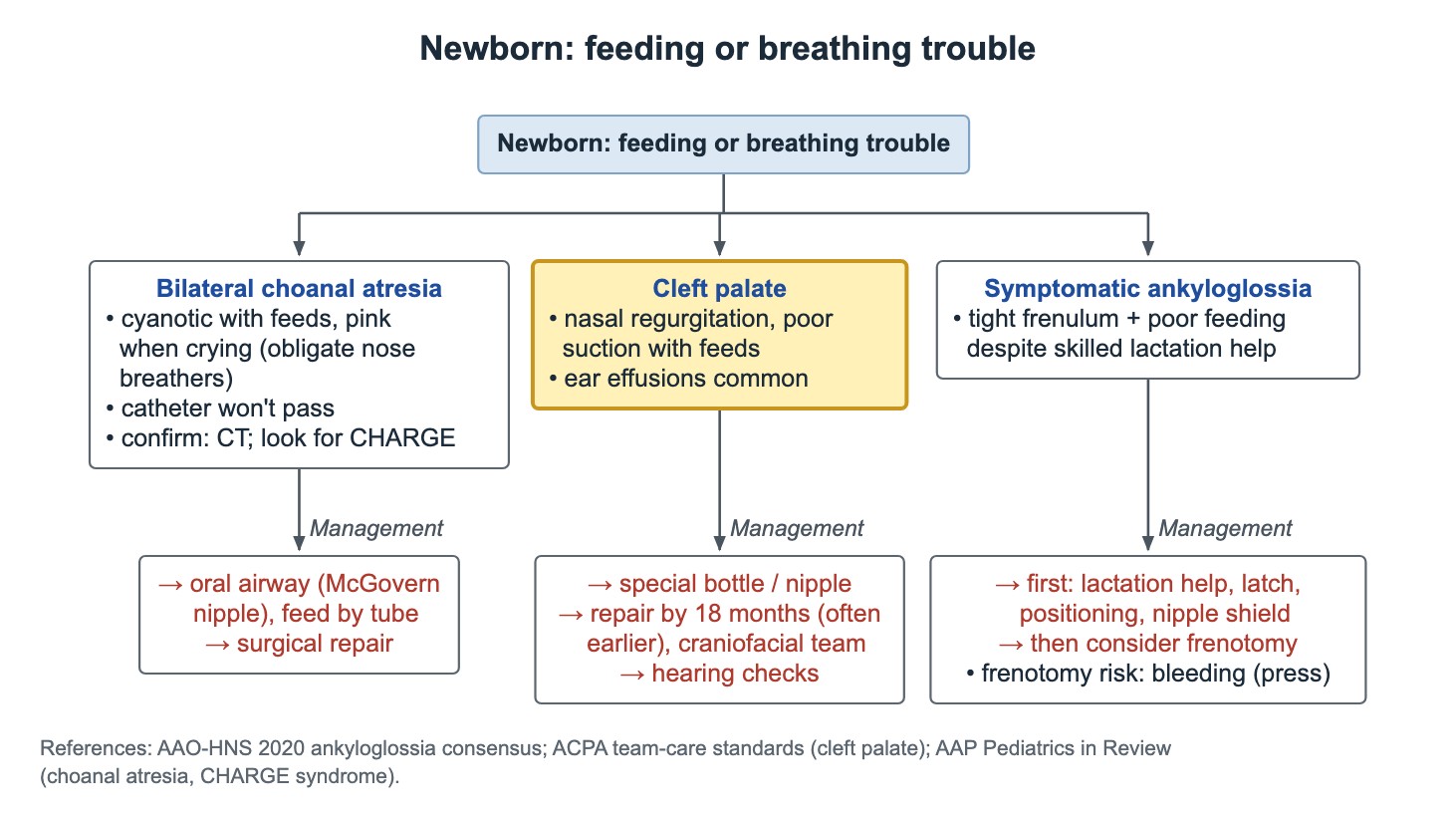
A cleft palate causes nasal regurgitation and weak suction during feeds. Most isolated cleft lip with or without cleft palate is nonsyndromic and multifactorial.
A cleft plus other findings suggests a syndrome, such as 22q11.2 deletion, Stickler syndrome or Van der Woude syndrome (lip pits).
- Feeding: special bottles and nipples; watch weight gain closely.
- Care is led by a cleft or craniofacial team.
- Palate repair by about 18 months of age, often earlier, to support normal speech.
- Middle-ear effusions are common: check hearing regularly.
Symptomatic tongue-tie (ankyloglossia)
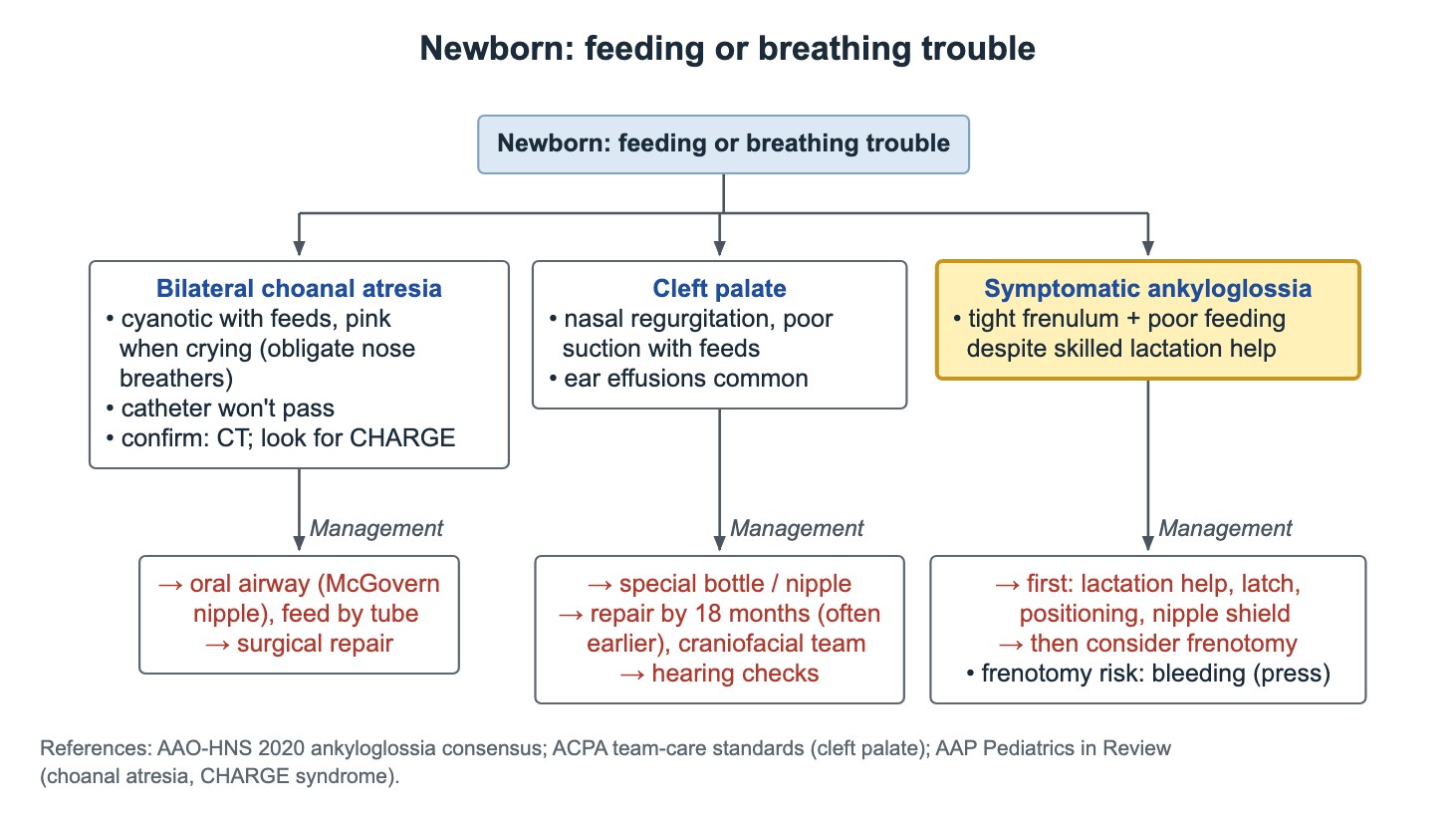
A short lingual frenulum matters only when it limits tongue movement and causes feeding problems. A short frenulum without symptoms needs no procedure.
The first step for a newborn with a poor latch is a lactation assessment, not frenotomy.
- First-line fixes: positioning, latch adjustment and, if needed, a temporary nipple shield.
- Consider frenotomy when feeding stays ineffective despite skilled lactation support.
- The most common frenotomy complication is bleeding, usually stopped with pressure.
Obstructive sleep apnea: who is at risk and how to confirm it
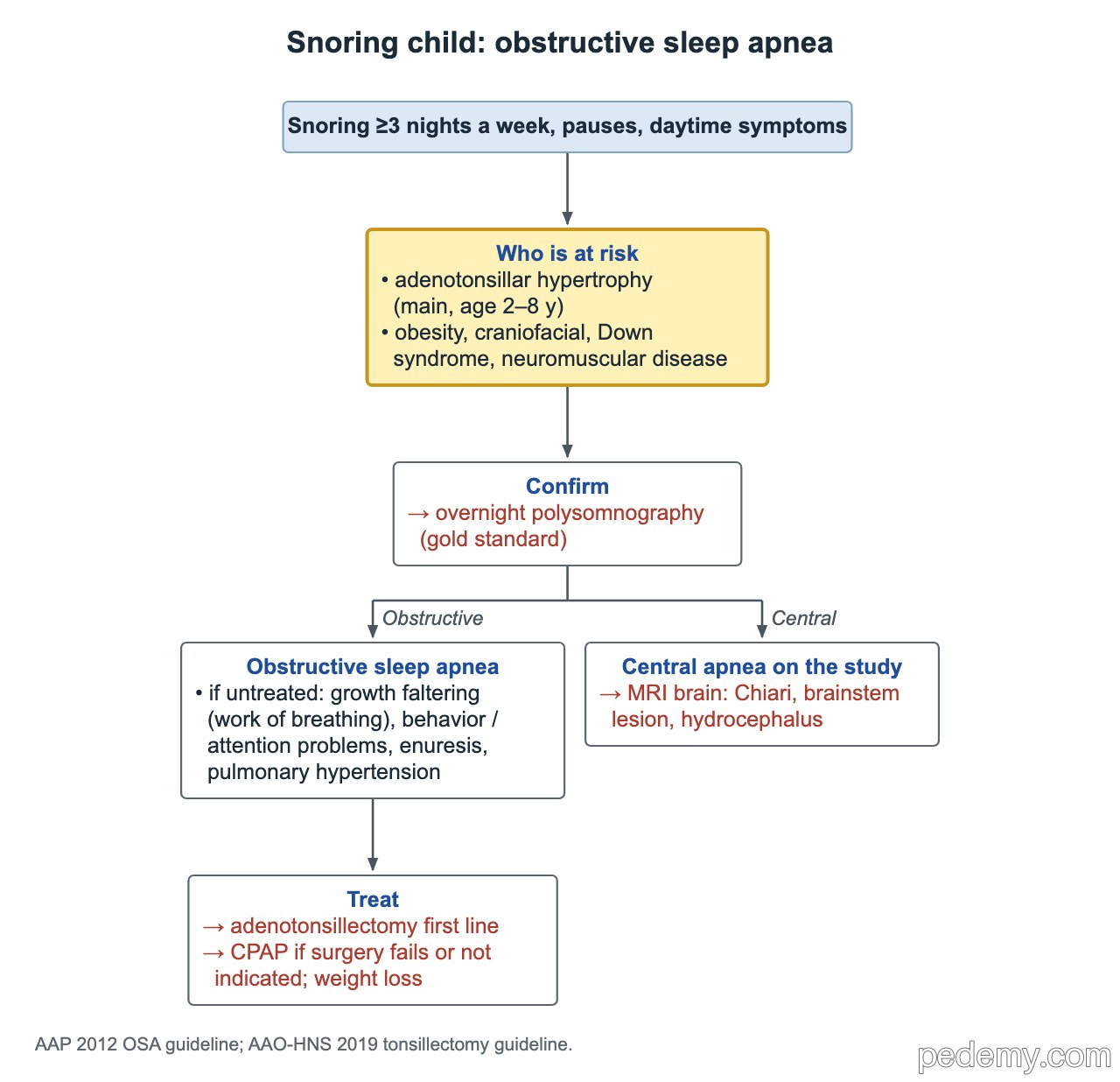
Ask about snoring at every well visit. Snoring on 3 or more nights a week with pauses, gasps, restless sleep, daytime sleepiness or behavior problems suggests OSA.
History and examination cannot reliably confirm OSA. Overnight polysomnography is the diagnostic standard; when it is not available, refer to a sleep specialist or ENT.
- Main risk: adenotonsillar hypertrophy, peaking at age 2–8 years.
- Other risks: obesity, craniofacial anomalies, Down syndrome, neuromuscular disease.
Consequences and treatment of OSA
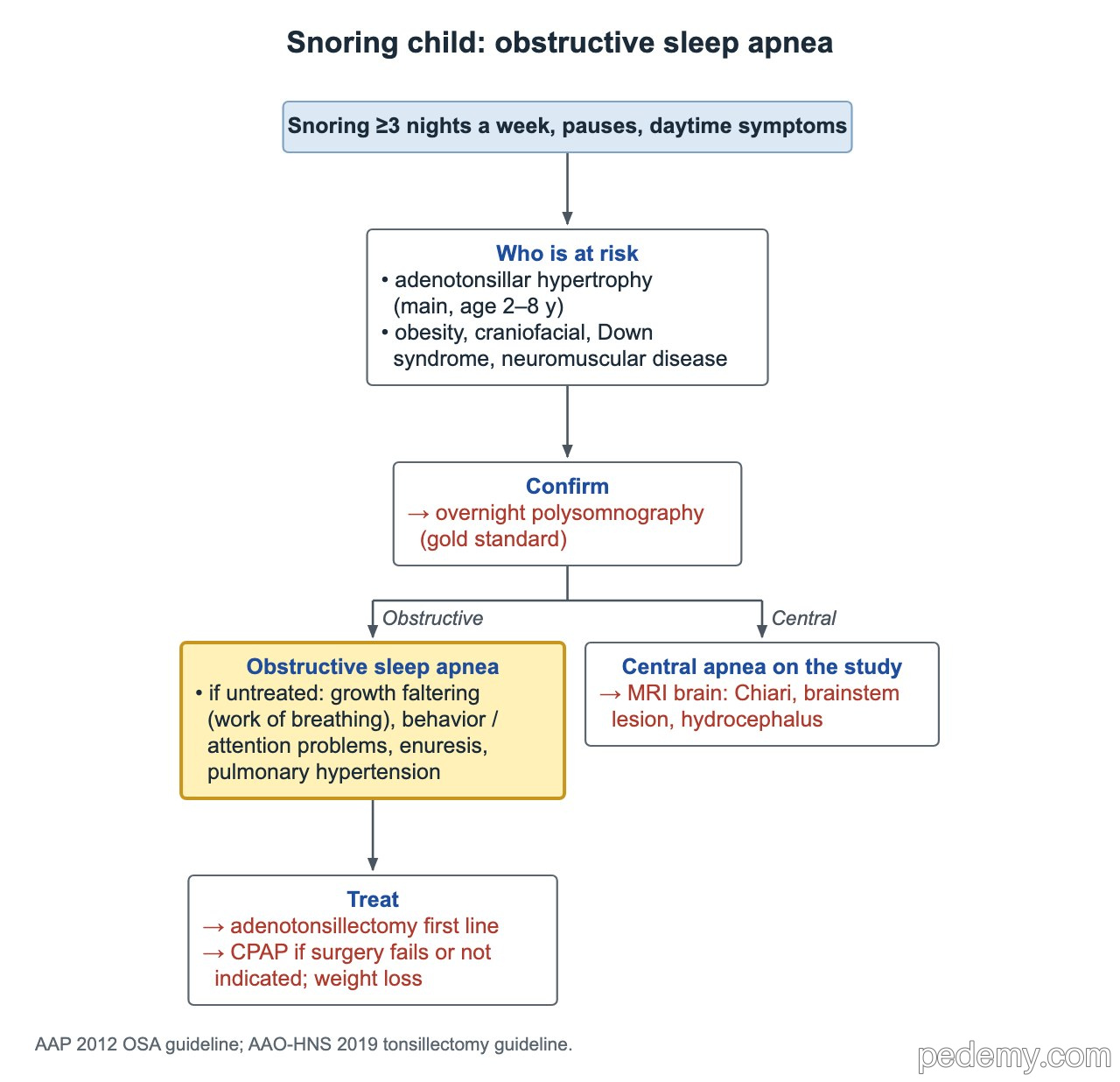
Untreated OSA can cause growth faltering from the high work of breathing and broken sleep. It also causes behavior and attention problems, enuresis and, when severe, pulmonary hypertension.
- Adenotonsillectomy is first-line treatment when the tonsils and adenoids are enlarged.
- CPAP if surgery is not done or OSA persists after surgery.
- Weight management in addition to other treatment for children with obesity.
- Intranasal steroids are an option for mild OSA.
- Observe overnight after surgery if high risk: age under 3 years, severe OSA, heart or airway problems, obesity or neuromuscular disease.
- Reassess after surgery; repeat the sleep study in high-risk children or if symptoms persist.
Central apnea on the sleep study
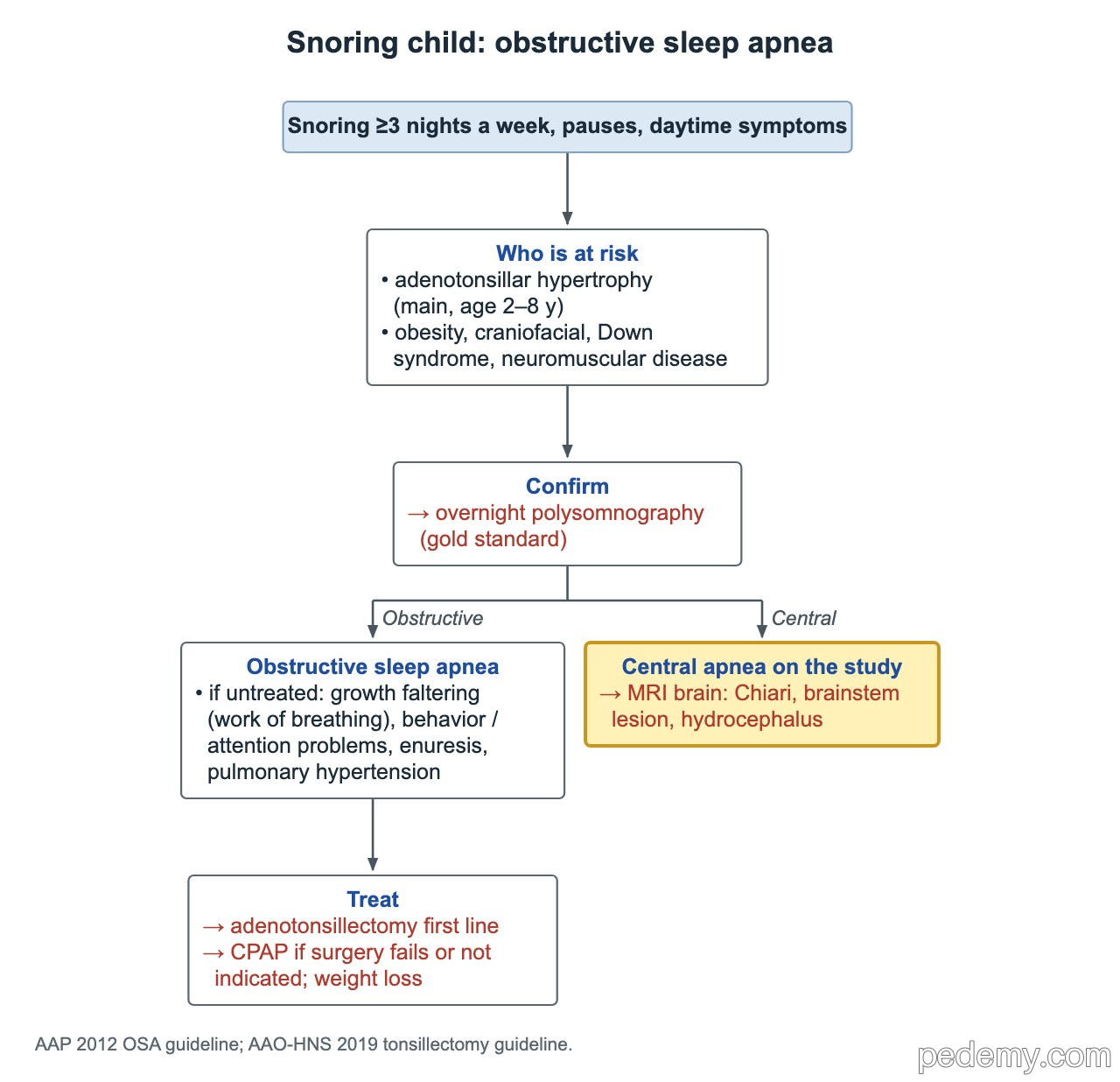
Central apneas are pauses without breathing effort. A child with central apnea, especially with headaches or neurologic signs, needs MRI of the brain to look for a Chiari malformation, a brainstem lesion or hydrocephalus.
Congenital central hypoventilation syndrome (CCHS) is caused by variants in the PHOX2B gene. Infants breathe poorly during sleep and may need lifelong ventilator support at night.
Common questions
How is obstructive sleep apnea diagnosed in children?
By overnight polysomnography, the gold standard. Snoring with pauses or daytime symptoms is the reason to order it; history alone cannot confirm OSA.
Does every tongue-tie need to be clipped?
No. Only a tongue-tie that causes feeding problems despite skilled lactation help should be considered for frenotomy.
When is a cleft palate repaired?
Usually by 18 months of age, often earlier, by a cleft or craniofacial team.
Study this topic
Sources
- AAP 2012: Diagnosis and management of childhood obstructive sleep apnea syndrome (Pediatrics)
- AAP 2024 clinical report: Identification and management of ankyloglossia and its effect on breastfeeding in infants (Pediatrics)
- AAP 2012 technical report: Childhood obstructive sleep apnea syndrome (Pediatrics)
Written for Pedemy in our own words from the sources above; checked November 2026. For education only, not medical advice; check doses and local protocols before treating a patient. Pedemy is independent and not affiliated with or endorsed by the organizations cited.