

Main decision tree
Nose: sinusitis, bleeding, foreign body
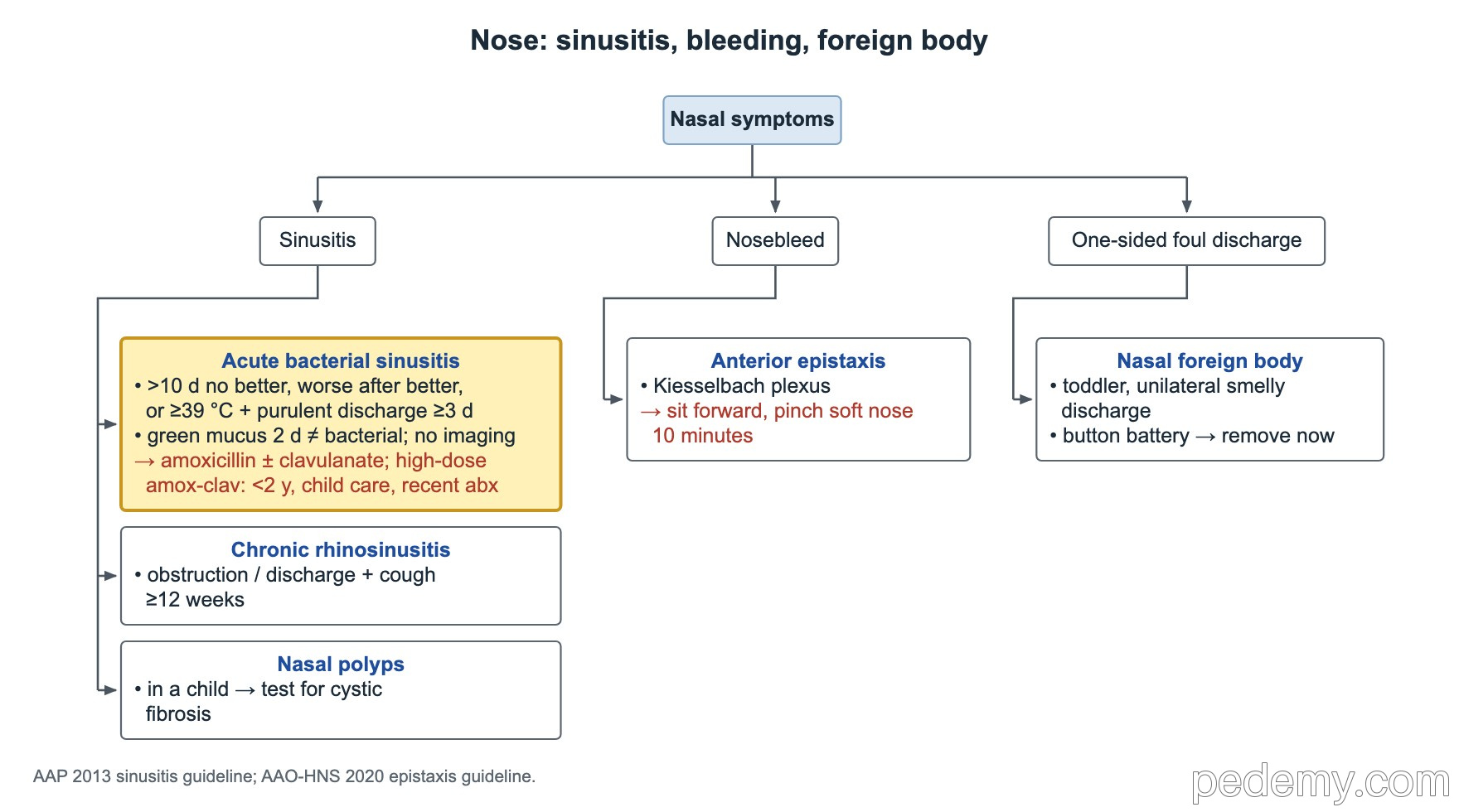
Key points
- Acute bacterial sinusitis: symptoms >10 days without improvement, worsening after improving, or fever ≥39 °C (102.2 °F) with purulent discharge for ≥3 days.
- Diagnosis is clinical: no imaging and no nasopharyngeal swab for uncomplicated sinusitis.
- Amoxicillin with or without clavulanate first; high-dose amoxicillin–clavulanate if under 2 years, in child care or recent antibiotics.
- Chronic rhinosinusitis: obstruction or discharge with cough for ≥12 weeks; CT (or endoscopy) confirms.
- Nasal polyps in a child → sweat chloride test for cystic fibrosis.
- Anterior nosebleed: sit forward and pinch the soft nose for at least 5 minutes (commonly 10); then oxymetazoline, cautery or packing.
- Septal hematoma after trauma needs urgent incision and drainage; a nasal button battery needs immediate removal.
Acute bacterial sinusitis: making the diagnosis
Most colds last 7–10 days and get better. Green or yellow mucus for 2 days is common in a viral cold and does not mean bacterial infection.
The diagnosis rests on one of 3 patterns. Imaging, nasopharyngeal swabs and cultures do not help: nasal flora contaminate swabs and do not reflect the organisms in the sinuses.
- Persistent: nasal discharge, daytime cough or both for more than 10 days without improvement.
- Worsening: new or worse discharge, cough or fever after initial improvement.
- Severe onset: fever ≥39 °C (102.2 °F) with purulent nasal discharge for at least 3 days in a row.
- Organisms: S. pneumoniae, nontypeable H. influenzae, M. catarrhalis.
Treatment, imaging and complications
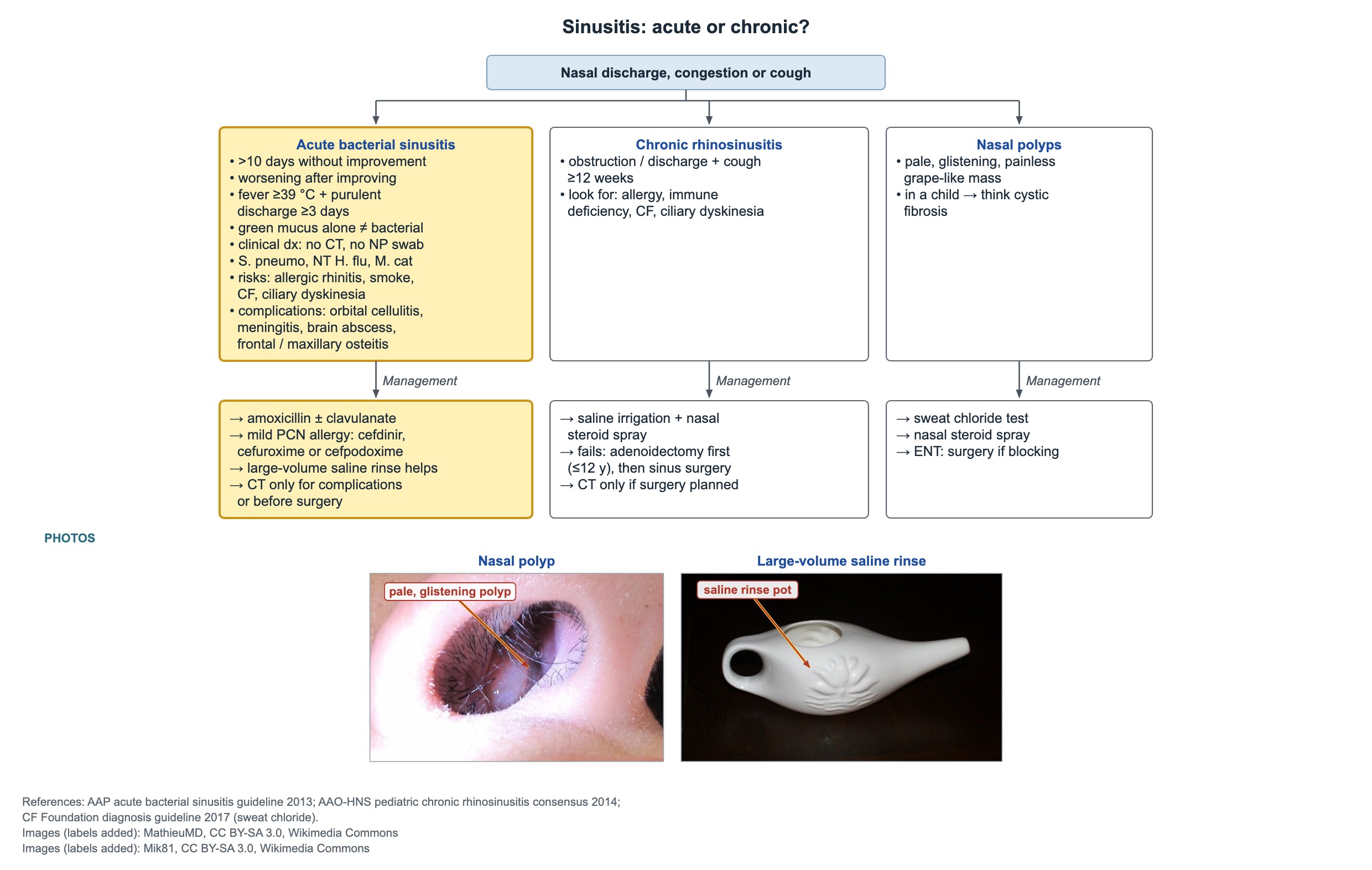
- First line: amoxicillin with or without clavulanate.
- High-dose amoxicillin–clavulanate (90 mg/kg/day of amoxicillin): age under 2 years, child care attendance or antibiotics in the past 4 weeks.
- Persistent illness: antibiotics or 3 more days of observation are both options; worsening or severe onset gets antibiotics.
- Non-severe penicillin allergy: cefdinir, cefuroxime or cefpodoxime.
- Adjunct with some benefit: large-volume saline irrigation.
- Contrast CT (orbit, sinuses, brain) only for a suspected orbital or intracranial complication, or for recurrent disease being considered for surgery.
- Serious complications: orbital cellulitis, meningitis, brain abscess, frontal or maxillary osteitis.
- Recurrent sinusitis: look for allergic rhinitis, cystic fibrosis, primary ciliary dyskinesia, immune deficiency and smoke exposure.
Chronic rhinosinusitis and nasal polyps
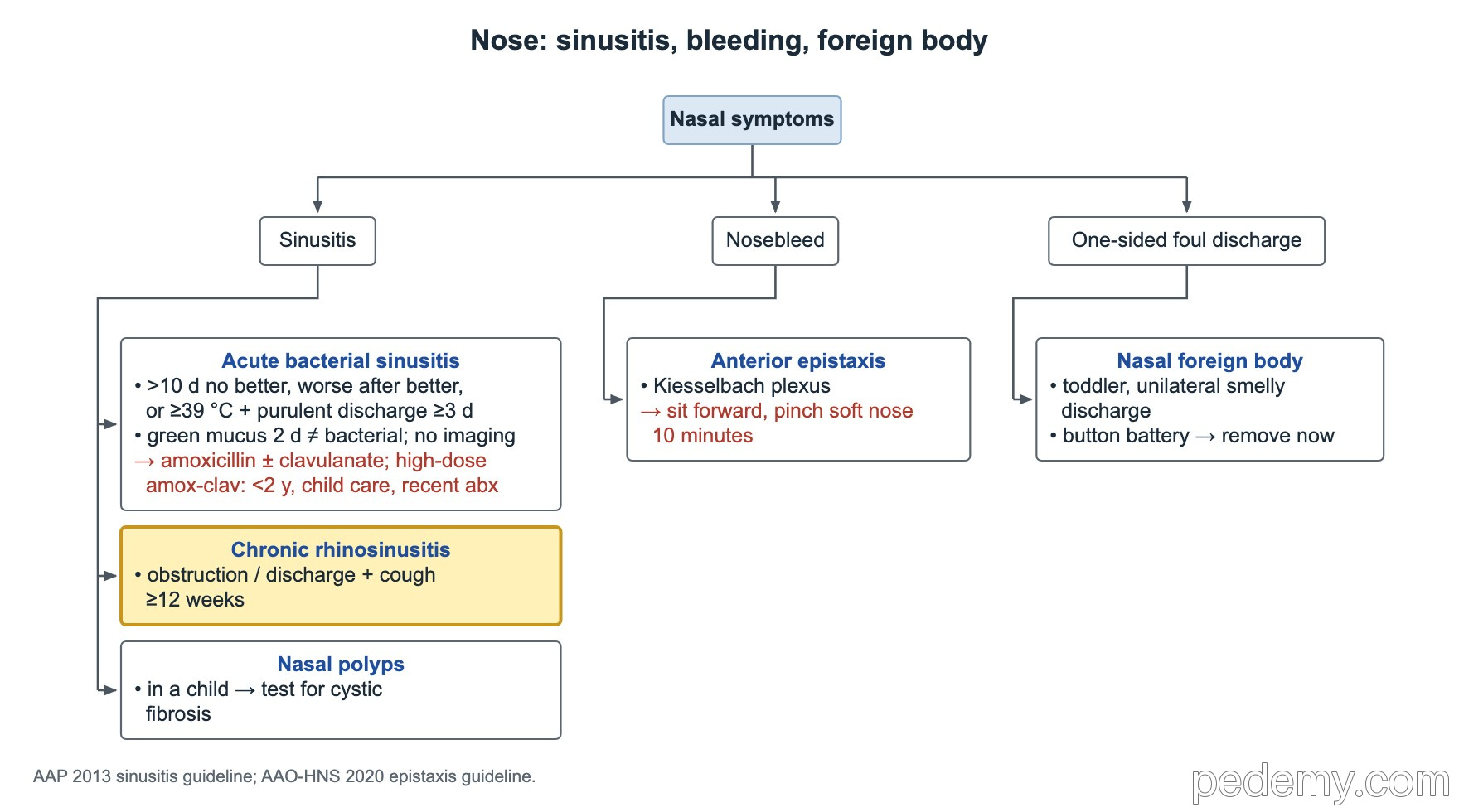
Chronic rhinosinusitis is nasal obstruction or purulent discharge with facial pressure or cough lasting 12 weeks or more. Teens may also lose their sense of smell. Staphylococcus aureus (toxins, biofilm) and anaerobes contribute.
Confirm with sinus CT or nasal endoscopy, especially when symptoms persist despite a nasal steroid.
- Treatment: saline irrigation and an intranasal steroid spray.
- If medical treatment fails: adenoidectomy first in children up to about 12 years, then endoscopic sinus surgery.
- Look for allergy, immune deficiency, cystic fibrosis and ciliary dyskinesia.
- Nasal polyps (pale, glistening, painless masses) in a child, especially with recurrent chest infections → sweat chloride test for cystic fibrosis.
Nosebleeds
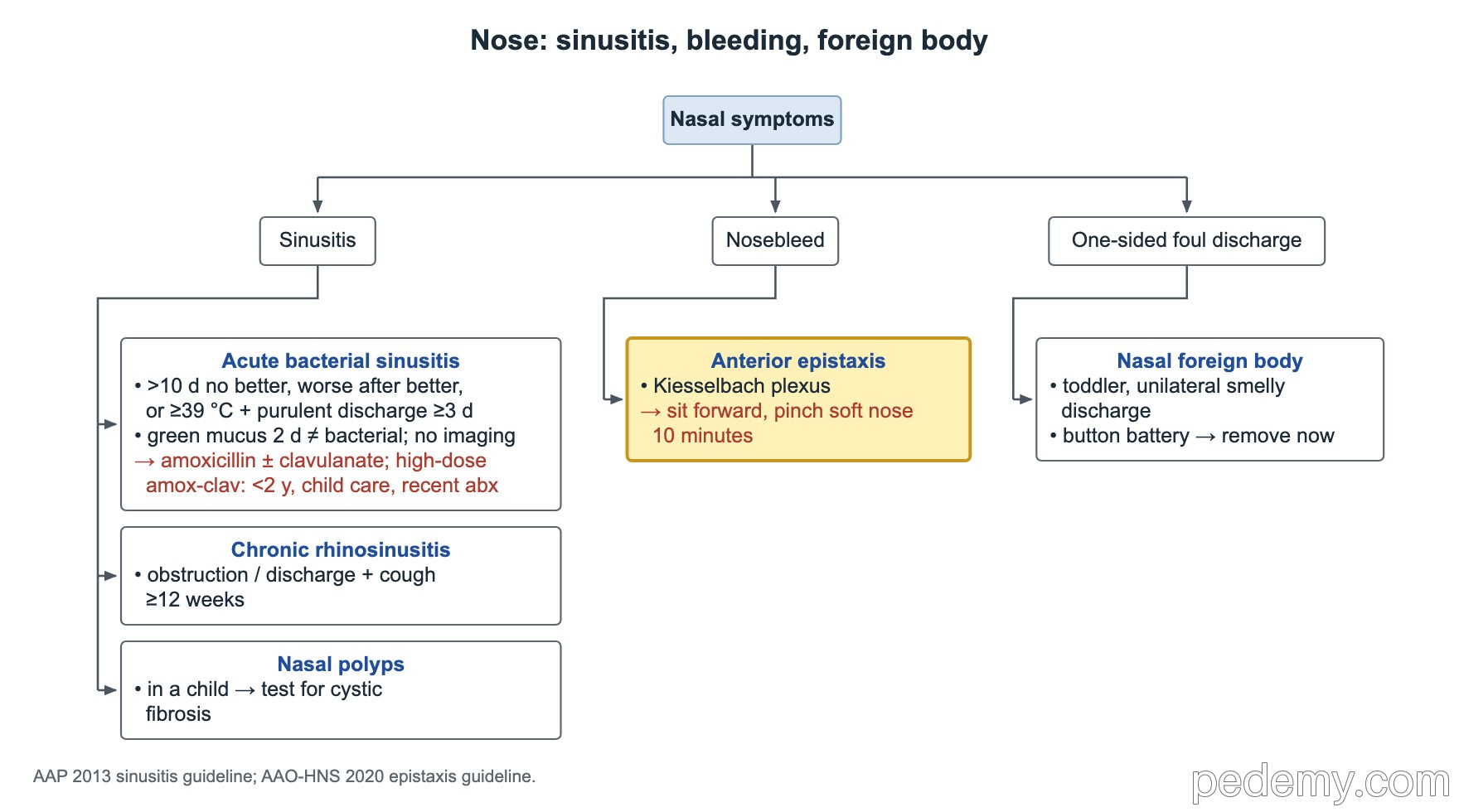
Most childhood nosebleeds are anterior, from Kiesselbach plexus on the front of the septum. Dry air, nose picking and colds are common triggers.
- First: sit up, lean forward and pinch the soft lower nose firmly and continuously for at least 5 minutes; 10 minutes is the usual advice.
- Still bleeding: topical vasoconstrictor (oxymetazoline) with renewed pressure.
- Then: cautery of a visible bleeding point, or packing.
- Recurrent or hard-to-stop bleeding: ask about bleeding disorders and anticoagulants; look for telangiectasias (hereditary hemorrhagic telangiectasia).
Septal hematoma after nasal trauma
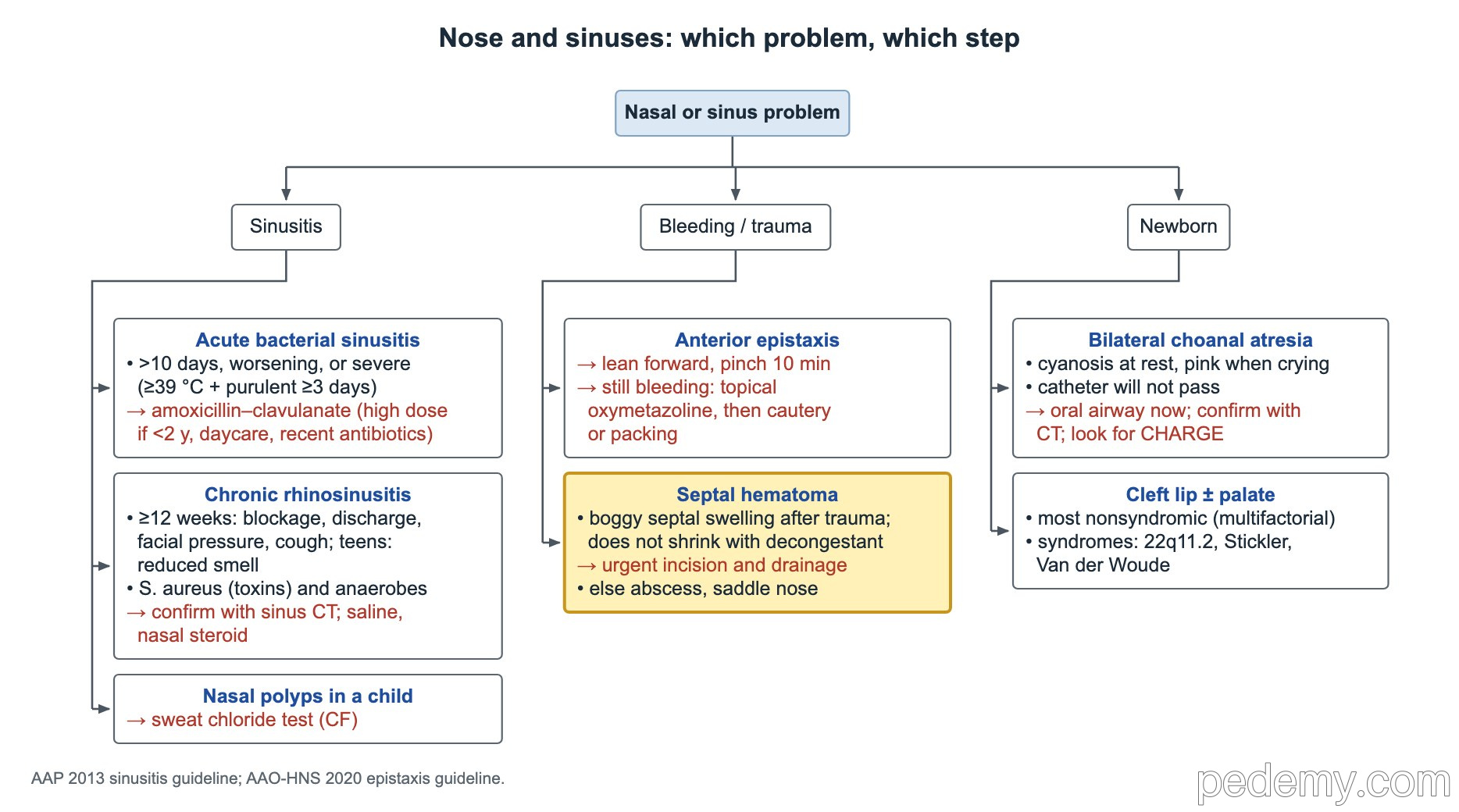
Always look inside the nose after nasal trauma. A boggy, swollen septum that does not shrink with a topical decongestant is a septal hematoma.
It needs urgent incision and drainage. Without drainage it can become a septal abscess and destroy cartilage, causing a saddle-nose deformity.
Nasal foreign body
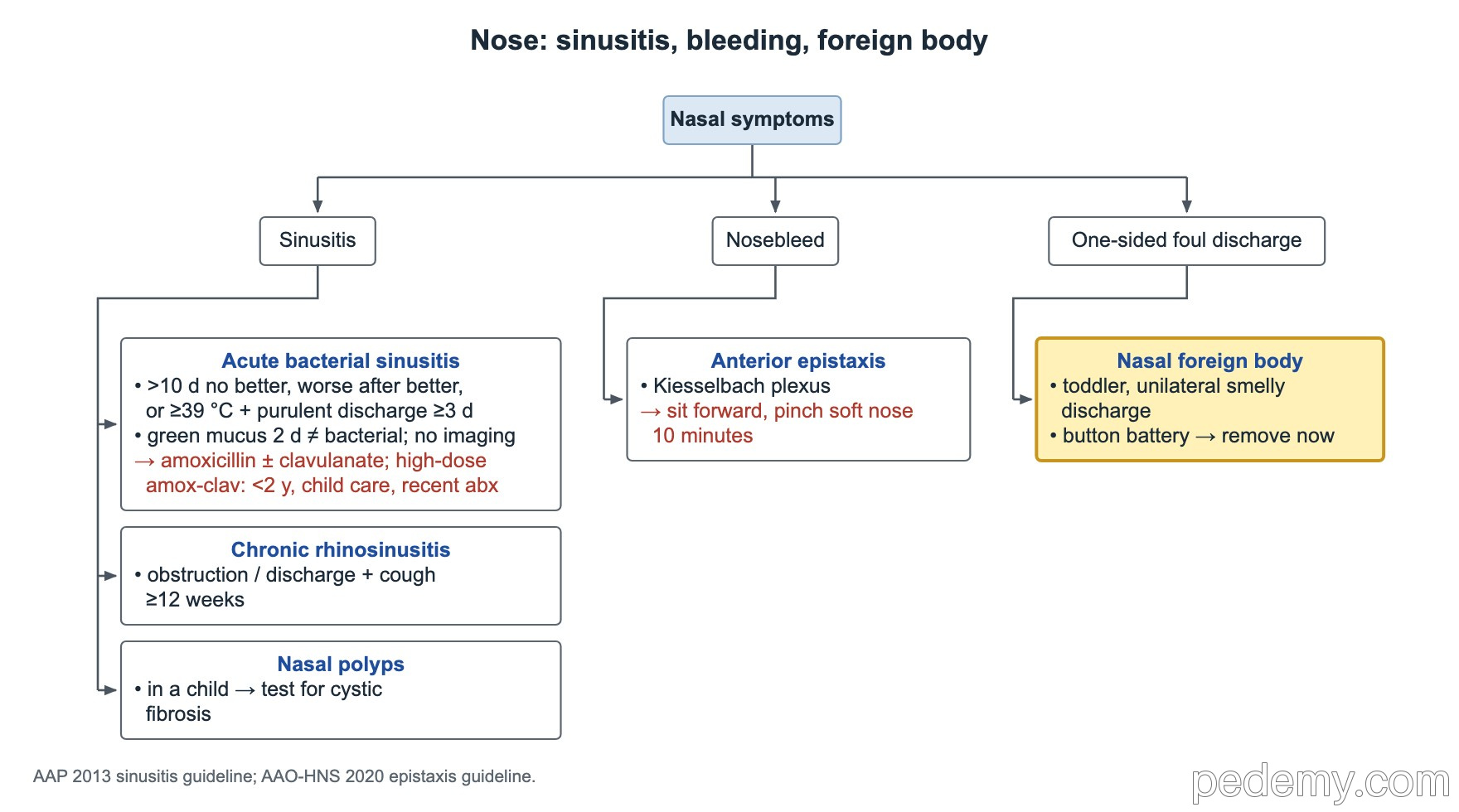
A toddler with foul-smelling discharge from only one nostril has a retained foreign body until proven otherwise.
- A button battery in the nose needs immediate removal: it causes tissue injury within hours.
- Paired magnets across the septum also need prompt removal.
Bilateral choanal atresia
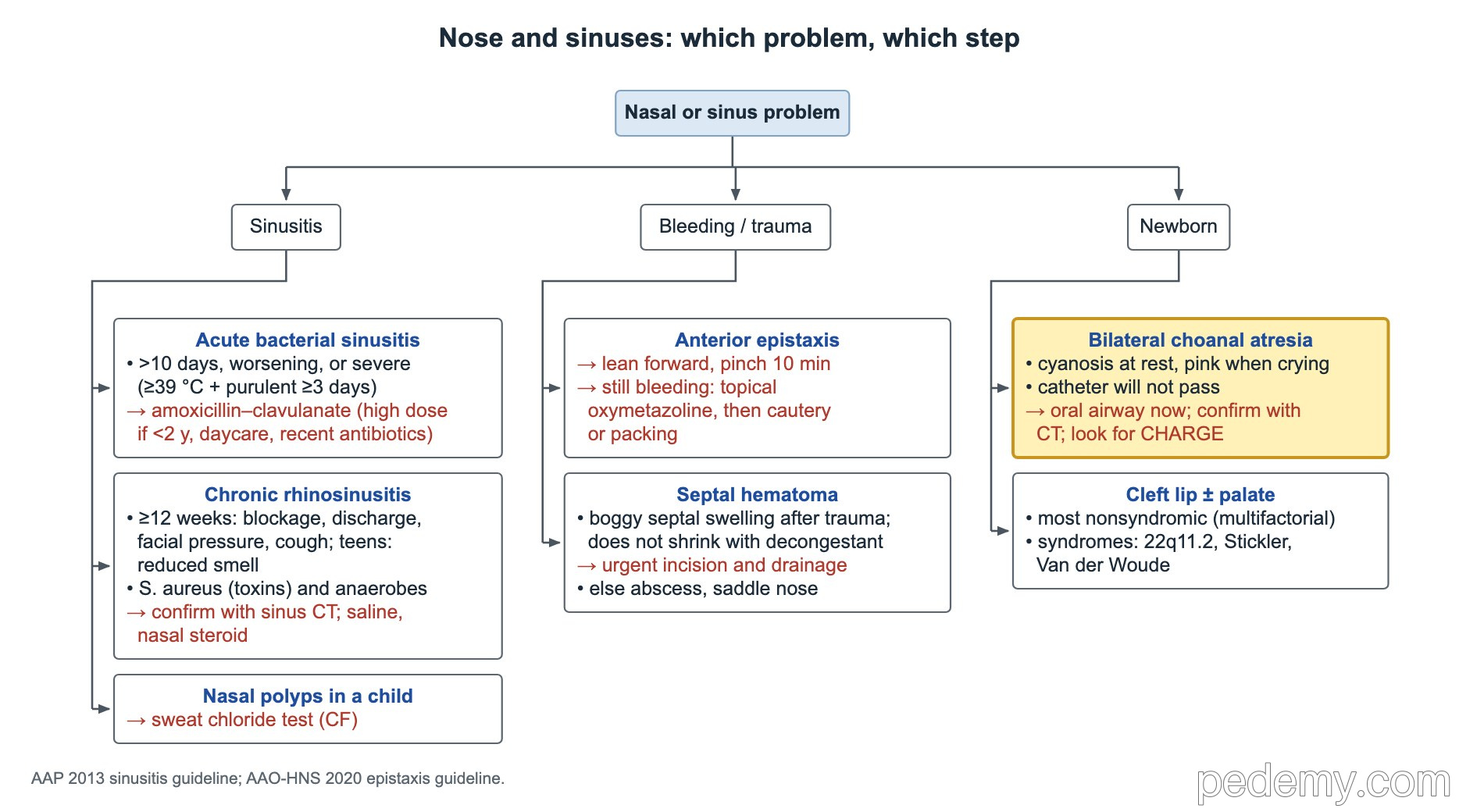
Newborns breathe through the nose. With both choanae blocked, the baby is cyanotic at rest and pink when crying, and a catheter will not pass through either nostril.
- Immediate step: oral airway, such as a McGovern nipple.
- Confirm with CT.
- Look for CHARGE syndrome.
Common questions
When is a sinus infection bacterial in a child?
When symptoms last more than 10 days without improvement, worsen after improving, or start with fever ≥39 °C and purulent discharge for at least 3 days.
Do children with sinusitis need a CT scan?
No. Uncomplicated acute sinusitis is a clinical diagnosis. CT is for suspected orbital or intracranial complications or planning surgery.
How do you stop a child's nosebleed?
Sit the child up, lean forward and pinch the soft part of the nose firmly without letting go for at least 5–10 minutes.
Study this topic
Sources
- AAP 2013: Clinical practice guideline for acute bacterial sinusitis in children aged 1 to 18 years (Pediatrics)
- AAO-HNS 2014: Clinical consensus statement: pediatric chronic rhinosinusitis
- AAO-HNS 2020: Clinical practice guideline: nosebleed (epistaxis)
Written for Pedemy in our own words from the sources above; checked November 2026. For education only, not medical advice; check doses and local protocols before treating a patient. Pedemy is independent and not affiliated with or endorsed by the organizations cited.